







Mobile Devices - Page 148
Mobile device news - smartphones, tablets, iPhone, Android, and foldables. Launches and trends from TweakTown. - Page 148
Stay Updated
Follow TweakTown for breaking tech news, reviews, and daily updates.


As an Amazon Associate, we earn from qualifying purchases. TweakTown may also earn commissions from other affiliate partners at no extra cost to you.
RumorTT: Samsung Galaxy S5 Prime and S5 vanilla launching Monday
A new report from BGR is suggesting that the rumors of alloy-framed Galaxy S5 smartphones exist might just be true. The report states that after two different cases popped up on Amazon recently, there will actually be two versions of the Galaxy S5 debuting next week. The report says that there will be the normal Galaxy S5, and then an alloy-framed model carrying the title Galaxy S5 Prime.
The Galaxy S4 Prime will feature a high-strength aluminum alloy chassis as well as quad HD Super AMOLED display which will measure in at 5.25-inches. Processing will be handled by a Qualcomm Snapdragon 2.5GHz quad-core processor or a Samsung 8-core Exynos chipset followed up by 3GB of DDR3 RAM. A new 16-megapixel camera will be on board with a 10-megapixel front facing camera for HD selfies. A 3,000 mAh battery, support for 4G LTE data speeds of up to 150Mbps, and Android 4.4 KitKat will also be featured.
In all honesty though, at this point, so many rumors are coming from every direction with different information each time, the best thing to do is just sit back and wait until Monday to see exactly what Samsung is showing off. We do know that the Galaxy S5 will make an appearance, and we do know that its camera and screen will be improved, and that Android KitKat will be on board. Everything else is up in the air at this point, and only time will reveal the true details.
Continue reading: RumorTT: Samsung Galaxy S5 Prime and S5 vanilla launching Monday (full post)
Sprint launches Wi-Fi calling, turns the select devices into IP phones
At some point in the next few weeks, Sprint will be issuing an update to the Samsung Galaxy Mega and Galaxy S4 Mini smartphones that will turn on a built-in feature that allows the phones to make and receive calls over Wi-Fi. This will effectively allow users to turn their smartphones into IP phones when connected to any Wi-Fi network, eliminating the need for an IP phone in your office or home.
Sprint says that the service will be free of charge for all Sprint customers, and that the IP calling will work with existing phone numbers so there is no need for a second account. When connected to a Wi-Fi network customer's calls will be routed over the internet instead of over the company's cellular network. This is expected to increase call quality and should lighten network loads considerably.
Sprint says that it will start the roll out with the Galaxy Mega and Galaxy S4 first before beginning the roll out to most Android-based smartphones on the company's network. No names have been given on which phones might receive the service next, but we suspect that most of the top-tier phones such as the Galaxy S4 and HTC One are on the shortlist. The concept of Wi-Fi calling is not new though as T-Mobile has been offering it since 2006. Industry analyst say that Sprint is prepping this service to help augment it's upcoming roll out of its upcoming HD Voice over LTE service which will see the current 2G Voice service discontinued.
Continue reading: Sprint launches Wi-Fi calling, turns the select devices into IP phones (full post)
Ubuntu-based smartphones coming from Meizu and BQ later this year
After its failed Indiegogo campaign, many though that Canonical would be unable to bring the Unbuntu Edge to reality, but a new partnership with Meizu and BQ, little known mobile phone OEMs, to bring Ubuntu's mobile OS to production devices. While Meizu and Bq are unrecognizable by most US readers, the companies are global powerhouse. Unfortunately no availability at any US carrier has been announced, but Canonical did say that the devices would be available online at several stores as well as on Ubuntu.com.
Canonical says that the first Ubuntu smartphone will launch later this year, but I suspect that it may not be branded as or have all the features of the Ubuntu Edge we all fell in love with during the Indiegogo campaign last year. Unfortunately, with past Ubuntu smartphone deadlines being passed by months, I would not hold my breath on a timely release, and would realistically look for a launch near or after the holiday season this coming winter. If China-based Meizu and Spanish-based BQ can pull it off in a timely manner, then Ubuntu smartphones could quickly grow to take over lower tier operating systems such as Samsung's delayed Tizen, or even Microsoft's Windows Phone.
Continue reading: Ubuntu-based smartphones coming from Meizu and BQ later this year (full post)
Jolla Sailfish OS reaches version 1.0 with phones heading to Europe
Jolla has been working to bring a new smartphone and operating system to market for a while. The first Sailfish smartphone was benchmarked back in November 2013. Those phones hit Finnish carrier DNA at roughly the same time. Jolla is now talking about its plans for the future.
Jolla says that Sailfish OS has reached version 1.0 and is now ready to ship globally. The operating system has been updated three times since it landed in Finland. Jolla will push out a fourth update for Sailfish in March.
"We're very excited to announce this. We've been working hard together with our user community to make the user experience of the Jolla smartphone and Sailfish OS effortless and distinct. We believe that Jolla now offers a truly viable option for all smartphone users. Naturally we are not stopping here, as we continue to provide monthly software updates to Jolla devices and Sailfish OS," says Marc Dillon, Co-Founder and COO of Jolla.
Continue reading: Jolla Sailfish OS reaches version 1.0 with phones heading to Europe (full post)
Google intros Project Tango, a phone that learns the world around it
Google has a new initiative called Project Tango, which comes in the form of a prototype Android smartphone that learns, and maps the world around it. Project Tango is in developers' hands so that they can truly harness the technology Google is working on.
Project Tango is capable of learning the dimensions of rooms and spaces, just by being moved inside of them. So if you're walking through your bedroom or lounge room, the smartphone would learn the shape of your home and its rooms. The point of this? Google could eventually give you very precise directions to a particular point through Maps or Navigation.
The new project comes from the Advanced Technology and Projects Group, one of the special pieces of Google and Motorola's puzzle that it kept through Lenovo purchasing Motorola from Google. Johnny Lee, leader of Project Tango says: "The goal of Project Tango is to give mobile devices a human-scale understanding of space and motion".
Continue reading: Google intros Project Tango, a phone that learns the world around it (full post)
Sprint updates Galaxy S4 and Galaxy Note 3 to Android 4.4 KitKat
It appears that Sprint has yet again beat its competition to being the first to bring Android 4.4 to its high-end smartphones. Earlier this week, Sprint became the first US carrier to release the Android KitKat update for the Galaxy S4 Today it announced that Galaxy Note 3 devices on its service have began receiving the KitKat treatment as well.
Similar to the update for the Galaxy S4, and HTC One, the download is just over 500MB and is available as an OTA download. Android 4.4 brings several new features to the Galaxy Note 3 as well, including music album art on the lock screen, launcher selection setting, a camera shortcut on the lock screen and an overall improved user interface. Notifications of the update should pop up automatically, but users can also check for the update within the settings menu. Galaxy Note 3 devices on the Sprint network should show firmware version N900PVPUCNAB after the update completes.
Continue reading: Sprint updates Galaxy S4 and Galaxy Note 3 to Android 4.4 KitKat (full post)
Microsoft Surface tablet with LTE tipped by FCC filing
The first time Microsoft stepped into the tablet market with the original Surface RT and Surface Pro tablets, the hardware didn't do so well. The Surface tablets were priced too high for many buyers and the Windows RT OS proved to be unpopular with consumers and hardware partners. Microsoft came back more recently with new versions of the Surface tablet including the Surface 2 and Surface Pro 2.
Those new tablets were received with mostly positive reviews and have proven more successful than the first versions. One thing that has been common since Microsoft launched the first Surface tablets is that the devices don't offer mobile broadband connectivity. The surface line has always been Wi-Fi only.
A new FCC filing has turned up that suggests Microsoft is getting ready to put 4G LTE connectivity under the hood of the Surface tablets. Microsoft's Panos Panay, VP of Surface at Microsoft had said in the past that a future Surface product would have LTE connectivity.
Continue reading: Microsoft Surface tablet with LTE tipped by FCC filing (full post)
Acer unveils new Liquid E3 and Z4 budget smartphones
Acer has pulled the covers off the latest smartphones to slip into the firms Liquid range. The last smartphone we talked about form Acer was the Liquid S2. That was the first smartphone to be able to record 4K video. We spent hands on time with the Liquid S2 last year.
Acer's latest Liquid devices include the Liquid E3 and Liquid Z4. The Liquid E3 is the more interesting of the two devices and has a 4.7-inch HD IPS screen. The smartphone also has an 8.9mm thick unibody. Acer fits it with a 2MP front camera with its own LED flash for selfie pics.
The rear camera of the smartphone is an f1.8 13MP unit with fast focus. The smartphone also uses a 1.2GHz quad-core processor 1GB of memory, 4GB of internal storage, Wi-Fi, and GPS. The E3 runs Android 4.2.2 and an upgrade to Android 4.4 KitKat is promised. Launch is set for April in Europe for €199.
Continue reading: Acer unveils new Liquid E3 and Z4 budget smartphones (full post)
Samsung to launch multiple Galaxy S5s, 'premium' with 2K display
We reported yesterday that the Samsung Galaxy S5 specs had arrived in leaked form, all but confirming its 2K display. But, what if Samsung were to release multiple Galaxy S5 models, with the 'premium' model arriving with the 2560x1440, or 2K, panel?
Samsung is expected to announce the Galaxy S5 next week, but not as we would originally have thought. We could expect multiple models to be announced, one that would be more along the lines of the Galaxy S4 possibly, with the second model being the 'premium' handset, sporting the 2K display. OLED-Display.net is reporting from an unnamed Korean industry insider that Samsung is planning a standard, and premium version of the Galaxy S5.
The standard version would feature a 1920x1080 display, while the premium model will feature the higher-res display, pumping 2560x1440 pixels onto the screen. Samsung has reportedly experienced issues manufacturing the 2K display, which means it will launch "a few months later". But I'm sure that the 560ppi display will be worth it.
Continue reading: Samsung to launch multiple Galaxy S5s, 'premium' with 2K display (full post)
LG introduces the G2 mini smartphone
We knew it was coming, but it is now official: LG has announced the G2 mini smartphone. LG's new G2 mini is the company's first ever "compact" smartphone, and will be unveiled in detail, at Mobile World Congress 2014 in Barcelona, Spain, next week.
The G2 mini features a 4.7-inch qHD IPS panel with a resolution of 960x540, comes in two SoC variants: with a 1.2GHz Qualcomm quad-core processor, or the 1.7GHz clocked NVIDIA quad-core Tegra 4i SoC. 8GB of on-board flash storage expandable through an SD card is available, 1GB of RAM, an 8-megapixel rear-facing camera (or 13-megapixel camera, depending on the market), and a front-facing 1.3-megapixel snapper.
A removable 2440mAh battery will be featured on the G2 mini, while Android 4.4 KitKat will serve as the OS. The new G2 mini will be LTE-capable, and will feature Bluetooth 4.0, Wi-Fi 802.11 b/g/n, and will come in four colors (depending on the region): Titan Black, Lunar White, Red and Gold.
Continue reading: LG introduces the G2 mini smartphone (full post)
Nokia Treasure Tag launches in April to track your stuff
Back in July of 2013, we first reported the rumor that Nokia was working on a product called the Treasure Tag. That rumor has now become reality with Nokia announced the Treasure Tag officially and offering up pricing and launch information. The Treasure Tag will launch in April.
Each of the tags will cost $29.90 in the US. The tags will work with Nokia smartphones and with iOS and Android devices via a third party app. Up to four Treasure Tags are supported at once allowing you to tag multiple items. Each of the Treasure Tags measures 30 x 30 x 10 mm and weighs 13g.
Treasure Tags sound an alarm if you walk away from either the smartphone used in the system or a device that you have tagged. The idea is that the alarm sound will let you know you left something behind. Both the smartphone and the tag alarm so you can find the lost item.
Continue reading: Nokia Treasure Tag launches in April to track your stuff (full post)
BlackBerry's Jakarta smartphone pictured in newly leaked images
It's been just over a year since BlackBerry first unveiled its BlackBerry 10 OS and accompanying hardware, and rumor has it that the company will be unveiling a new BB10 device aimed at the emerging markets during the 2014 Mobile World Congress. Originally known as project "Jakarta", the upcoming BlackBerry Z3 is said to be the company's budget-friendly entry-level smartphone that could combat already dirt-cheap Android smartphones.
Much like the Z10, the BlackBerry Z3 will be a touch-only smartphone with no physical buttons outside of the power and volume buttons. Additionally, the Z3's rear camera is positioned top left instead of being closer to the middle, while the entire rear will be coated in a grippy dot matrix pattern. Specs on the Z3 are rumored to include a 1.2GHz dual-core processor, 1.5GB of RAM, and an Adreno 350 graphics processor. A 720p resolution screen is likely as well as either 8GB or 16GB of RAM. No word on battery sizing has been leaked, but something in the 1300mAh range is possible, and MSRP could be as low as $150 per unit.
Continue reading: BlackBerry's Jakarta smartphone pictured in newly leaked images (full post)
LeakedTT: More Galaxy S5 specs surface, 2K screen confirmed
A new leak has sprung today regarding Samsung's upcoming Galaxy S5's display resolution. The next-gen smartphone was outed in a supposed screenshot of its system info screen that says the S5's screen will be of the 5.25-inch class, and will have a refresh rate of 60Hz. However, the big news is not the screen size, but rather the 1440x2560 pixel resolution the leak unveils.
This leak all but confirms that the Galaxy S5 will feature a full QHD 2K display with a pixel density of 560 pixels per inch, making it one of the sharpest screens ever featured on a smartphone. What this means for the consumer, is that unlike 720p and 1080p, you will not notice any "screen door effect" when looking at the display up close. This is because anything above 300 pixels per inch is undetectable by the human eye.
This new screen resolution from Samsung also demonstrates Android's ability to grow the smartphone marketplace and push the technology to new heights with every new generation. In just 2 generations we have went from 720p all the way up to 2K resolutions on main-stream phones, while Apple is still stuck on its Retina technology, that was first introduced on the fourth generation iPhone 4. With the seventh generation iPhone 5S still featuring the same technology, Samsung is the clear leader in display technology at the moment.
Continue reading: LeakedTT: More Galaxy S5 specs surface, 2K screen confirmed (full post)
T-Mobile makes steps in the right direction, fighting wireless rivals
T-Mobile is on the right track to better compete against the three bigger wireless carriers in the United States, though it will continue to be a drawn out, fierce battle. The company is putting pressure on AT&T and seeing results, with the company's sights set on attacking competitors and attracting new subscribers.
"T-Mobile was dying on the vine for years," industry analyst Jeff Kagan recently told TweakTown. "Then a little over a year ago they hired a new CEO, John Legere. He ran Global Crossing. He looked around at T-Mobile, the changing marketplace, and decided on a path. This has been successful for T-Mobile. They have seen the first couple quarters of growth in years. And hopefully they can continue to build."
Verizon Wireless and AT&T, the No. 1 and No. 2 wireless carriers in the United States, relying on "wireless, wire line, television using IPTV and a wide variety of different technologies and offerings. T-Mobile is just wireless. And a small wireless player at that," which forces T-Mobile to get a bit creative with their sales and marketing efforts. "I think T-Mobile can continue to grow going forward for a while. However they will likely remain the number four competitor. Unless they get acquired."
Continue reading: T-Mobile makes steps in the right direction, fighting wireless rivals (full post)
Taco Bell teasing mobile app that lets customers order from phones
If you have ever sat in a long line outside of a fast food restaurant and wished you could just place your order with your smartphone to speed the process up, then you might just be in luck. Taco Bell is reportedly beta testing a system that would let you place your order and even pay for it before ever even arriving at the store to pick it up.
According to the Los Angeles Times, Taco Bell is testing the mobile app at five of its locations in Orange County, California, and is preparing to ramp up the program to more markets and users over the course of the next several weeks. The report also says that based on the initial success of the program, the company could roll the system out to all of its locations in the US by the end of the year.
While other restaurants have online ordering similar to this, Taco Bell is tossing a interesting twist into the mix that involves GPS location tracking. After an order has been placed, the system will track the customer via the GPS sensor in their smartphone, and when the customer is within a few minutes of the Taco Bell location, it will alert employees to begin preparing the order. This allows customers to pick up their food much faster than traditional walk-in and drive-through methods, and will save both time and money for all parties involved.
Continue reading: Taco Bell teasing mobile app that lets customers order from phones (full post)
SoftBank and Sprint unlikely to receive approval to acquire T-Mobile
Sprint and SoftBank are trying to determine if a continued effort to acquire T-Mobile is worth the trouble, as antitrust officials want to keep as much competition alive as possible. Sprint CEO Dan Hesse and Chairman Masayoshi Son reportedly have met with U.S. Justice Department and Federal Communications Commission (FCC) officials, though trying to convince antitrust officials to approve the deal will be difficult.
When AT&T, currently the No. 2 U.S. wireless carrier, expressed interest in purchasing T-Mobile a few years ago, the deal was almost instantly shot down. It would be hard to imagine the No. 3 wireless carrier being allowed to successfully acquire T-Mobile, which is No. 4, especially after SoftBank purchased majority stake in the company.
"A few years ago only AT&T and Verizon were growing," said tech analyst Jeff Kagan. "At that time T-Mobile and Sprint were in trouble. Since that time things are starting to change. T-Mobile got a new CEO and has started to grow once again. Sprint has been acquired by Softbank and has not started to grow yet, but we are hoping to see that growth begin sooner rather than later."
Continue reading: SoftBank and Sprint unlikely to receive approval to acquire T-Mobile (full post)
Broadcom unveils new SoCs that could bring LTE to mid-range phones
For the most part, LTE connectivity has widely been reserved for the high-end smartphone market which is generally comprised of phones in the >$400 price range. Broadcom says that with the release of its new M320 and M340 system-on-chip processors, LTE could finally come to the low to mid-range smartphone market segment.
"We project that the LTE baseband market will register about 64 percent year-on-year growth in 2014 to reach over 500 million units," said Sravan Kundojjala, Senior Analyst, Handset Component Technologies service at Strategy Analytics. "Broadcom is one of the only players with a mature carrier-ready multimode LTE SoC, the engineering expertise and the worldwide scale required to deploy complete LTE platforms. The new Broadcom turnkey design will help accelerate the adoption of LTE worldwide and make high-performance, yet affordable devices available to the broader market."
The new M320 and M340 chips feature dual and quad-core processors respectively as well as 150Mb/s LTE radios built on board and Broadcom says that it has already integrated the processors with Android 4.4 KitKat, so OEMs will not have to worry about software support. While no mention was made of which OEMs might be utilizing the chips in upcoming phones, it did say that it has sent out sample units to "leading" manufacturers, so one would expect that to mean Samsung, HTC, Motorola, and Nokia have all gotten samples.
Continue reading: Broadcom unveils new SoCs that could bring LTE to mid-range phones (full post)
HTC to concentrate on $150-$300 smartphones this year
HTC had some bad times last year, but the Taiwanese smartphone maker is looking to right wrongs in 2014. HTC will make more mid-range smartphones this year, selling them for a cheaper price than its current models.
HTC's Chief Financial Officer, Chang Chia-Lin, said that the company will sell products in the $150-$300 price range in both existing and developing market. HTC hopes this will turn the company around from its problems from last year, where in saw its global market share drop to just 2%, its stock price dive 80%, and its profits slide 83% in Q2 of 2013, from the previous year. HTC co-founder and chairperson Cher Wang, when speaking with Reuters, said that HTC's "problem" last year was "concentrating on [its] flagship".
Out of HTC's entire range in China, just two of them retail for under $150 - where 21 of its handsets retail for over $500. Wang said that with HTC focusing on higher-end models, it saw the company miss "a huge chunk of the mid-tier markets" in 2013.
Continue reading: HTC to concentrate on $150-$300 smartphones this year (full post)
Indian retailer sold out of Moto G in less than one hour
The 16GB variant of the Moto G sold out in less than 60 minutes on Flipkart, an Indian e-commerce company. The 8GB version is still in stock, for now, but with the Moto G selling like cupcakes on Flipkart, I wouldn't expect it to stay there for long.
Motorola launched the Moto G in India last week, in partnership with Flipkart. Motorola announced that the Moto G would go on sale on February 6, at 12am, but the e-commerce company began selling the 8GB version before the clock reached midnight. When it opened sales of the 16GB version, it sold out within an hour. It sold out before some people could even reach the checkout.
It sold out quick because of the low amount of Moto G smartphones imported, with a reported 14,800 units of the 8GB version, and just 5,000 units of the 16GB version were imported into the country. Stock should be back by now, but it goes to show that a great smartphone at an even better price can break into emerging markets quick.
Continue reading: Indian retailer sold out of Moto G in less than one hour (full post)
Steve Wozniak says he never said Apple should make an Android phone
We reported earlier on that Apple co-founder, Steve Wozniak, said that Apple should think about making an Android-based smartphone, but it looks like we - along with most tech press - got it wrong.
In an e-mail to Gina Smith of aNewDomain, Wozniak said: "They got it quite wrong for their own reasons ... I'm used to things like this, (where the media turns) 'could' into 'should.' But the idea caught a lot of attention. It was just (my) independent idea ... I'm sure others have said it before but I get more attention".
Wozniak continued: "I was asked some general question as to BlackBerry. I said, as I have before, that I felt BlackBerry's best (plan) two years ago would have been to make an Android phone. I went into how the world seems to be Apple lovers and Apple non-lovers. I did say Apple 'could' make an Android phone. But I (said) total business decisions would be in the hands of knowledgeable Apple execs - not me".
Continue reading: Steve Wozniak says he never said Apple should make an Android phone (full post)
 Gaming monitors are next in line for a price hike as manufacturers can no longer absorb costs
 Linux 7.2 makes TSC support mandatory for x86 CPUs, but it's not like Windows 11's TPM 2.0 check
 ChatGPT can now build a timeline of everything you do on your Mac
 Redditor finds a working RTX 2080 Super in the dump, gets a huge free upgrade
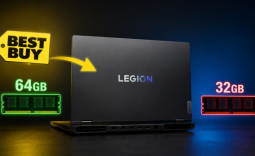 Redditor sends a gaming laptop with 64GB RAM for repair, comes back with 32GB RAM
 GPU Tweak III can now detect and shut down a PC when a 12V-2x6 graphics card goes over a certain current limit
 CPS PCCOOLER unveils all-in-one modular PC where you can replace the display and upgrade its hardware
 NVIDIA and LG are building a next-generation humanoid robot that will make its debut at CES 2027
 Intel will continue supplying Raptor Lake CPUs for 'years to come' thanks to the memory crisis
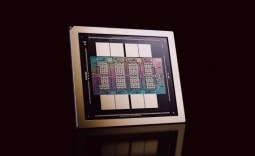 NVIDIA's next-gen 'Feynman' GPUs to be built with TSMC's 1.6 nm A16 process
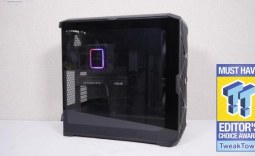 Cooler Master HAF II 500 Mid-Tower Chassis Review
 Corsair HS35 v3 Wireless Gaming Headset Review - An Affordable Winner
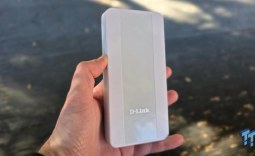 D-Link F518 5G Wi‑Fi 6 AX1800 Mobile Hotspot Review: All-Day Mobile Hotspot
 Bose Lifestyle Ultra Speaker Review - Impressively Detailed Room-Filling Sound
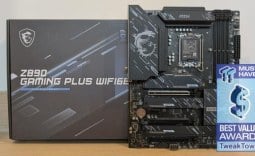 MSI Z890 Gaming Plus WIFI6E Review - Z890 for under $200
 Mortal Kombat (1995) 4K Ultra HD Blu-ray Review
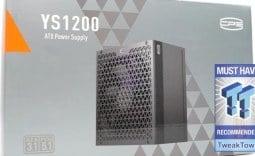 CPS PCCOOLER YS1200 ATX 3.1 80 PLUS Gold PSU Review
 ASRock X870E Taichi White Review: a premium AM5 motherboard with 10G LAN and WiFi 7
 Asetek Initium Pedal Modular Upgrades Review
 Thinkware U3000 Pro Review - Smart Dashcam with Wi-Fi quirks
 Using Multiple Monitors? Change these Windows settings for a Better Experience
 Windows Sandbox is The Windows Security Feature Most People Never Use
 I ditched the Windows 11 context menu for this open-source tool, and here's why
 Windows 11 may be encrypting your drive already, and I checked where my recovery key went
 GIGABYTE's 40 Days of INFINITY celebrates 40 Years of Innovation with stunning GeForce RTX graphics cards and rewards
 I swapped File Explorer for this free file manager and finally got the layout I wanted
 How to tell if someone has been using your Windows PC without your permission
 6 Task Manager tips for troubleshooting Windows performance problems
 ASUS ROG's 20th Anniversary Line-up of Premium PC Gaming Gear has Arrived - Here's Everything You Need to Know
 Six File Explorer tips every Windows user should know