







Learn about how TweakTown tests and reviews hardware. As an Amazon Associate, we earn from qualifying purchases. TweakTown may also earn commissions from other affiliate partners at no extra cost to you.
Stay Updated
Follow TweakTown for breaking tech news, reviews, and daily updates.


IGN to go up for auction, expected to sell for around $100 million
It looks like the News Corp. owned IGN Entertainment is to be sold off, after News Corp. failed to sell the company, according to people involved with both sides of negotiations, reports The Wall Street Journal. The media company is now launching the formal sales process of IGN.
News Corp. originally purchased IGN in 2005 for $650 million which includes websites such as IGN.com, GameSpy.com and TeamXbox.com with a few of those sites already sold. IGN is expected to receive around $100 million in the sales process, a huge loss compared to the $650 million purchase price in 2005. IGN have looked for help with investment bank Allen & Co. after multiple attempts at finding a partner failed.
Things aren't looking good for News Corp. who purchased MySpace six years ago for $580 million, selling it off last year for a pittance at just $35 million. The media company have been focusing more on digitizing their journalism properties, after some of their biggest digital acquisitions were overtaken by faster-moving rivals. IGN's chief executive Roy Bahat resigned from the company in August, saying in an email to his staff:
Continue reading: IGN to go up for auction, expected to sell for around $100 million (full post)
LeakedTT: Huawei's Ascend W1 Windows Phone 8 smartphone gets caught on camera
Japanese site Blog of Mobile have published images what they're claiming to be Chinese device maker Huawei's Ascend W1 Windows Phone 8 smartphone. The usual blurry images are included, but it looks to sport a bright polycarbonate body like Nokia's Lumia smartphones, as well as HTC's Windows Phone 8X and 8S.
Huawei's Ascend W1 is rumored to pack a 4-inch WVGA (800x480) display, a 1.2GHz dual-core processor, 5-megapixel rear-facing camera, VGA front-facing camera, 512MB of RAM, 4GB of internal storage and a 2000mAh battery.
It won't come close to beating most 4- to 5-inch phones, but it will give the entry-level Windows Phone 8 market something to look at when in the market for a WP8-based device.
Nintendo Wii U Pro Controller lasts up to 80 hours, won't be backwards compatible
Nintendo's Wii U Pro Controller is set to sport a battery life of around 80 hours from a single charge, according to Gamestop and Amazon. Coming from the current PS3 controller for example, that only lasts 20-25 hours from a single charge, this is some great news for gamers.
Nintendo haven't publicly announced this number, but retail giants Amazon and GameStop are using the specs in their product description, which probably came from Nintendo in the first place:
Nexus 7 becomes the UK's best-selling Android tablet
Google and ASUS' Jelly Bean-powered Nexus 7 tablet has now become the all-time best-selling Android tablet in the UK, just three months after its release. The news comes from mobile retailer Carphone Warehouse. Graham Stapleton, chief commercial officer at Carphone Warehouse says:
At its low price tag, it has little to no competition and consumers have been loving it. Amazon's Kindle Fire HD will go on sale in the European markets soon which should give Google some competition. Apple's new iPad mini will be announced next week which should also put pressure on Google's 7-inch tablet. Stapleton adds:
Continue reading: Nexus 7 becomes the UK's best-selling Android tablet (full post)
Apple's seventh-generation iPod Nano gets the iFixit teardown treatment
Another iFixit teardown is here, this time for Apple's seventh-generation iPod Nano. The teardown notes just how much work Apple's engineers put into the new iPod Nano to make it as thin as it is, with the teardown also noting that the battery has a rating of 0.8Wh, double the rating of the previous-gen Nano.
The teardown notes that the battery, Lightning connector and volume controls are all soldered directly to the logic board itself with the button cable and headphone jack attached, too. The LCD and digitizer glass aren't fused together, which will allow those two components to be replaced individually, if they were to fail.
iFixit found components from Apple, Broadcom (Bluetooth + FM Radio), NXP Semiconductors, Toshiba (NAND flash) and Texas Instruments (touchscreen controller). The teardown team found the seventh-generation iPod Nano very difficult to repair because of the amount of components soldered directly to the board. They've noted that the battery is particularly difficult to replace. Apple's devices are not really repair-friendly, but in order to get these devices increasingly thinner, we're only going to see more of this type of design.
Gary McKinnon hacked NASA looking for proof of UFOs, won't be extradited to the US due to Asperger's
UK citizen Gary McKinnon hacked NASA, the US Army and US Navy systems to the point of effectively crippling the entire US Army's Military District of Washington network. This attack had their systems down for 24 hours and affected over 2000 computers across many states.
At the same time, he gained access to a US Army server which was responsible for managing 2455 accounts, causing the systems to reboot and become inoperable. McKinnon hacked these systems over ten years ago, and has British officials refusing to send the hacker overseas due to concerns he may commit suicide, based on evaluations of McKinnon who suffers from Asperger's Syndrome and "depressive illness".
Because McKinnon's sentence is estimated at 60 years, mixed with his depressive illness, this is something the UK officials are saying will force McKinnon to take matters into his own hands. It has gone as far as making the UK push this as a matter of human rights.
Foxconn confirms they have employed underage workers
Back in August we reported on a story where the China Labor Watch were looking into Foxconn for employing children under the age of 16 at their factories, which is of course very illegal. China's legal working age is 16, and now the investigation has found that Foxconn did employee children under the age of 16.
Because Foxconn are a serious partner of Apple with production of most iDevices being made in the factories of Foxconn, Apple too have been taking flack for the underage issues. To this day the Cupertino-based company continue to be mixed into the issues of Foxconn's poor working conditions, riots, protests and even suicides.
The workers at Foxconn found from the investigation were as young as just 14, not only breaking Chinese labor laws, but Foxconn's own internal policies as well. Foxconn has said that they've now corrected the issue, and will take measures so that this type of misemployment never happens again. The China Labor Watch blamed the iDevice maker for turning a blind eye and not sufficiently vetting its workers, but it could be that Foxconn isn't entirely at fault here.
Continue reading: Foxconn confirms they have employed underage workers (full post)
WinZip 17 launches, includes cloud storage support with Google Drive, Dropbox, Facebook, SkyDrive and more
I remember the days of the original versions of WinZip, I was a huge, huge user of the software and I still use it to this day. Well, WinZip Computing have just launched WinZip 17, which is the industry's first singel application that is designer to "give users a better way to manage, protect and share files across all the ways we connect today - the cloud, social media and email".
WinZip 17 now features direct integration with cloud-based storage options like SkyDrive, Dropbox and Google Drive. This is great as you can zip your files up, saving space on your cloud storage, as well as offering 128- or 256-bit AES encryption making your files safer than ever in the cloud. WinZip 17 also allows you to both manage and share your files directly from the slow, where WinZip 17 can automatically create links to the files you want to send to friends or family over email.
WinZip 17 also ships with an updated UI, and more intuitive zipping and unzipping of files. WinZip 17 also allows you to send large files or even entire folders, quickly and securely. You can send up to 50MB with a free ZipSend Lite account or up to 2GB with a ZipSend Pro account. WinZip 17 also sports an enhanced compression and encryption engine which lets the software crunch numbers for zipping even quicker than before. WinZip is the only file utility software designed to harness the power of graphics processing units (GPUs) like Intel's third-generation Core processors, AMD A-Series APUs, AMD Radeon and NVIDIA GeForce GPUs.
Microsoft's Surface tablet compared to the competition, how does it fare?
I've got to admit, I wasn't that excited about Microsoft's Surface tablet when we first started hearing about it, but now that it's nearly here and we have found out more on Microsoft's iPad competitor, I'm beginning to get genuinely excited.
But, how does it fare in terms of specifications against the competition? Namely Apple's third-gen iPad and Samsung's pen-toting Galaxy Note 10.1 tablet? AllThingsD have made a great little chart comparing the tablets against each other, which you can see below.
So the new Surface tablet sports a 10.6-inch 1366x760-pixel screen, compared to the iPad's 9.7-inch 2048x1536 "Retina" display, the Surface loses out in resolution, but enjoys its slightly bigger and wider display. Surface only sports 720p front- and rear-facing cameras which is disappointing in this 5-megapixel-plus rear-facing camera world we now live in. Processor-wise, the Surface comes with NVIDIA's T30 SoC which is a quad-core design, compared to the third-gen iPad's dual-core A5X processor and Samsung's 1.4GHz quad-core Exynos chip.
New iPod touch "too thin" to fit an ambient light sensor
The new iPod touch has one feature curiously absent. If you've ever seen your old iPod touch screen brightness change when you walked out of a dark room into the sunlight, you'll know the feature I'm talking about. The new iPod touch will not have this capability and will instead force users to do it themselves.
According to Phil Schiller, this is due to the new iPod touch being just too thin to fit the required ambient light sensor. Without the sensor, the device has no way of knowing the relative brightnesses between locations and lacks the ability to adjust the screen brightness to compensate for the difference.
It's not that big of a deal, but the automatic brightness adjustment is a feature that I have come to take for granted on my iPhone. It's great for when I am using it at night and had the brightness all the way down and then wake up in a bright room. Instead of trying to see on a dark screen, it automatically brings the brightness up to a comfortable level.
Continue reading: New iPod touch "too thin" to fit an ambient light sensor (full post)
Chipworks takes a look inside the Lightning connector's authentication chip
When Apple introduced the new Lightning connector for the iPhone 5, many people were amazed at the cost they were charging for adapters and cables. Most people, myself included, figured that there would be knock-off cables available pretty quickly after launch, but this was before a tear-down was conducted on the cable.
As most now know, Apple included an authenticator chip inside the end of the Lightning cable which is making it harder for third-party cables to be made. Chipworks wasn't going to just let it sit there, so they instead have conducted a tear-down of the new cable's chip and found out some information in regards to its security.
The tear-down revealed that the chip included does seem to feature security in some form or another, though nothing like that found in modern printer cartridges. Chipworks found circuitry that is "consistent with a serial communication chip including some simple security features."
Microsoft Surface pricing outed as systems go up for pre-order
Pricing on the new Microsoft Surface RT tablets is now known as Microsoft has put the tablets up for pre-order and the general consensus is that the pricing is just a wee bit, OK, quite a bit, too high. However, there are arguments for the other side saying that it is just right. My fear is that if this is what a Windows RT device costs, imagine what a regular Windows tablet will cost.
As you can see in the picture above, the basic 32GB Windows RT Surface tablet will set you back a costly $499. Note that that does not include the keyboard cover. For that, you'll have to shell out an additional $100, bringing the total price up to $599. For $699, you can get a 64GB system with the keyboard cover.
Most people have taken to Twitter to express concern over the pricing. "Sadly it looks like I'm out for the new Microsoft Surface, the price is too high for the low end model" and "They've priced it too high if they're just trying to get into the market." What are your thoughts on the pricing? Too high, too low, or just right?
Continue reading: Microsoft Surface pricing outed as systems go up for pre-order (full post)
iPhone 5 and Galaxy S III face off in a Blendtec blender, which one will come out alive?
I'm surprised it took this long to see the iPhone 5 blended. Blendtec, which started blending iPhones and other weird objects on video back with the first iPhone, has traditionally been very prompt about attempting total destruction on the latest and greatest Apple product, so having to wait nearly a month has been devastating.
But that's OK because the founder and PR manager have returned from Down Under (yes, they were in Australia) and tossed in not just an iPhone 5, but the Samsung Galaxy S III in an attempt to make an epic face-off between the two flagship devices. Of course, by now, I figure you've already watched the video. If not, go watch it then return here. I'll wait.
Back? Good. As you saw in the video, the Galaxy S III held out a little bit longer than the iPhone 5 did. In fact, the iPhone 5 was destroyed almost from the very beginning whereas the Samsung Galaxy S III survived for a good little while there. So, what can we take away from this? If you happen to be working over a giant, over-powered blender, the Galaxy S III might just survive long enough for you to pull it out.
ASUS unveil the PadFone 2, is ready to take on the competition
ASUS teased us last week on their Facebook page about their PadFone 2, but now the day is finally here - introducing, the ASUS PadFone 2. Is it a smartphone? Yes. Can it be a tablet? Yes. It's the best of both worlds, and something revolutionary in an other wise same ol', same ol' smartphone world.
Not to say the rest of the phones on the market are boring, but ASUS are going out on a limb once again with the successor to the PadFone with PadFone 2. Spec wise, we're looking at ASUS' PadFone sporting a 4.7-inch 1280x720 Super IPS+ display, a 1.5GHz Qualcomm Snapdragon S4 quad-core processor, 2GB of RAM, a 13-megapixel rear-facing camera, up to 64GB of internal storage, backed up by 50GB of ASUS WebStorage.
All of this finds its way into a sleek-looking, 9mm thick device that weighs just 135g. Battery life should be quite good with its 2140mAh battery that ASUS reckon is good for 16 hours of 3G talk-time, and 13 hours of Wi-Fi web browsing.
Continue reading: ASUS unveil the PadFone 2, is ready to take on the competition (full post)
Microsoft intros Xbox Music, a cloud-based iTunes competitor
Microsoft may have released Zune which failed to really take off or compete with Apple's iTunes, but it looks like Microsoft is back yet again with a new competitor for Apple: Xbox Music.
Xbox Music is an all-in-one digital music service that will throw the 30 million tracks available to users through the Xbox 360 gaming console to Microsoft PCs, tablets and smartphones running the Redmond-based company's Windows 8 and Windows RT operating systems.
There are three parts of this new venture, the first is a free streaming service that will be ad-supported and limited to a certain number of hours after six months. A premium, unlimited, ad-free streaming option is also available at around $10 a month, and consumers will also have the option to simply purchase and download any track from the catalogue.
Continue reading: Microsoft intros Xbox Music, a cloud-based iTunes competitor (full post)
The top 5 things to be excited over Windows 8 for
Windows 8 is nearly here, folks - are you excited? It's going to be a mammoth launch from Microsoft, who are reportedly spending $1 billion or more on a huge marketing campaign stretching the globe. We're looking at the Surface tablet, Microsoft's iPad competitor, a new operating system, a smart device OS (Windows RT, Windows Phone 8) and more.
What should you be looking forward to? Well, a lot! I've compiled a list of five things I think you should be excited for - and as usual, this list is just a personal opinion.
1.) Proper touchscreen support in a Windows OS. Yes, there have been previous versions of Windows that support touchscreens, but Windows 8 has been built with touchscreens in mind.
Continue reading: The top 5 things to be excited over Windows 8 for (full post)
ASUS Taichi 21 dual-screen Windows 8-based notebook goes up for pre-order
ASUS have one of the most interesting Windows 8-based devices coming out this year, with their Taichi 21 dual-screen notebook. The ASUS Taichi 21 sports two 11.6-inch screens, both featuring 1920x1080-pixel IPS displays.
The first screen is where a notebook screen normally resides, in front of you, the user. The second one is on the rear of the screen, so when the lid on the notebook is closed it turns into an 11.6-inch touchscreen-capable Windows 8 tablet. It truly is a wonderful design. Both screens are IPS-based, meaning we'll see gorgeous color and viewing angles backed up by the Full HD 1080p resolution on each display.
Taichi 21's backside monitor supports 10-finger touch with an included stylus that offers 256 levels of pressure sensitivity. ASUS' Taichi 21 doesn't pack on the pounds, even though it packs dual screens where it measures in at just 0.7-inch thick, and 2.75lb with the included 6-cell battery.
Optical disk that can hold 1-2TB of data not far off
A new start-up has produced viable optical disks that can hold 1TB or 2TB of data, an incredible feat considering Blu-ray disks usually hold 25GB, or 50GB in a dual layer version. Magnetic spinning disc drives have just recently topped the 2TB barrier with 3TB and even 4TB drives finally being available on the market.
However, an optical disk will be much cheaper to purchase for data back-up, though it can only be written to once. But for back-up, this really doesn't pose any sort of problems. And, since it is a disc, data can be located upon the surface in mere seconds instead of the minutes it can take to wind through magnetic tape, the current standard for backing up data.
"A disc will be on the capacity scale of magnetic tapes used for archival data storage," said Kenneth D. Singer, the Ambrose Swasey professor of physics, and co-founder of Folio Photonics. "But, they'll be substantially cheaper and have one advantage: you can access data faster. You just pop the disc in your computer and you can find the data in seconds. Tapes can take minutes to wind through to locate particular data."
Continue reading: Optical disk that can hold 1-2TB of data not far off (full post)
Celeron processors to be powered by Ivy Bridge in Q1 2013
It always starts the same way with Intel: they release their new, high-end architecture to the top of the product line at the start. The remaining older silicon and design continues to be sold as the low-end chips to deplete supply. The failed high-end chips and excess supply then start trickling down into the lower-end chips.
Ivy Bridge was launched all the way back in April, a fair time ago considering the speed at which PC innovations continue to move at. It was only last month that Ivy Bridge finally made it into the Pentium line of Intel CPUs, and by Q1 2013, it will be nearing an entire year since the original launch of the architecture.
The new Celeron chips will reportedly be named G1610, G1610T and G1620. They will still feature two cores and 2 MB of L3 cache. They will also continue to lack Hyper-threading and Turbo Boost. The new Ivy Bridge models will support faster memory as well as a slight speed bump on the bottom model. The top two processors will feature a lower TDP.
Continue reading: Celeron processors to be powered by Ivy Bridge in Q1 2013 (full post)
Google updates Android developer console, hopes to make app publishing easier
Developers of Android applications will be pleased to hear that Google has heard your complaints and updated the Android developer console to make it easier to use. As the system stands, there are some significant difficulties seeing whether or not an app is published and is generally confusing to use.
"At its core, the Developer Console is how you put your app in front of hundreds of millions of Android users around the world, and track how your app is doing," the company said in a blog post. "We hope that with a streamlined publishing flow, new language options, and new user ratings statistics, you'll have better tools for delivering great Android apps that delight users."
Like most updates offered by companies, the new version is faster, sleeker, and easier to use, or so Google says. By the looks of it, this is true, though I'm no Android developer. The new version features loads of new analytics with charts and graphs everywhere. Developers can see data by device, country, language, carrier, Android version, or app version.
 Elder Scrolls 6 roadmap not affected by layoffs, Bethesda says
 Intel and AMD are locking Chinese customers into long-term CPU deals as server chip prices climb more than 40%
 Ubisoft CEO says Sony's PlayStation disc shutdown will not disturb the industry too much
 Vibe coding is flooding the App Store with new apps - on track for record submissions in 2026
 Geekbench 7 is out with CUDA support, smarter multi-core scoring, and new AI workloads across all major platforms
 GTA 6 physical copies in Japan have a 170-day expiration date
 Ubisoft believes remakes can be more profitable than new releases, after Black Flag Resynced exceeds expectations
 AMD is preparing the 8-core Ryzen 7 9800HX3D CPU for laptops with 96MB L3 cache
 Blizzard fires World of Warcraft game master for abusing god-like powers
 GIGABYTE adds CXMT DDR5 support to AM5 motherboards, supporting speeds up to 8200 MT/s
 Thrustmaster T.Flight HOTAS 5 MSFS Edition Review
 SteelSeries Arctis Nova Pro Omni Wireless Headset Review - One Headset to Rule Them All
 SteelSeries Arctis Nova 7 Wireless Gen 2 Headset Review - New and Improved, But Is It Enough?
 AMD Ryzen 7 7700X3D Review - Days of Future Past
 Samsung 990 2TB SSD Review - Ninth Gen QLC at PCIe Gen4 Speeds
 ASUS ExpertBook Ultra (Panther Lake) 14" Business Laptop Review
 ASUS ROG Raikiri II Xbox Wireless Controller Review - Ready to Take Control
 MOZA FMP18 Panel Bundle Review: authentic F/A-18 Hornet cockpit controls for flight sims
 Micron 6600 ION 245.76TB Enterprise SSD Review - Best in Class Programming Speeds
 MOZA MA3F EFCM Flight Control Module Review: authentic Airbus A320 autopilot panel for simulators
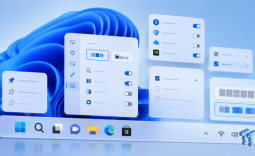 The Ultimate Guide to Personalizing Your Windows 11 Taskbar
 How to Turn Your Windows Laptop Into a Second Monitor with Miracast and Wireless Display in Minutes
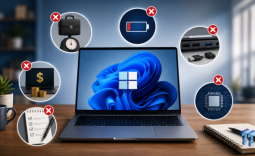 6 Mistakes to Avoid When Buying a Windows Laptop
 I capped Windows Update's bandwidth with Delivery Optimization, and my downloads stopped choking
 I use this decade-old free tool that finds files faster than Windows Search does
 I install and update most of my apps with this Windows command now, and I stopped downloading sketchy installers
 Hisense U6SF 65-inch MiniLED TV: High Performance Meets Leisurely Convenience
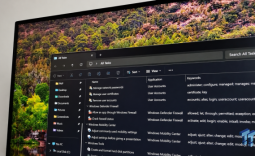 I stopped digging through Windows menus after I set up this one folder
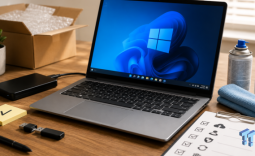 Don't sell your Windows laptop until you do these things
 6 PC cleaning mistakes to avoid for safer hardware maintenance