







Learn about how TweakTown tests and reviews hardware. As an Amazon Associate, we earn from qualifying purchases. TweakTown may also earn commissions from other affiliate partners at no extra cost to you.
Stay Updated
Follow TweakTown for breaking tech news, reviews, and daily updates.


Yearly Switch production reduced by 6 million units
Nintendo will reportedly miss its Switch hardware production target as worldwide markets continue to squeeze limited chip supply.

Sources close to production lines tell Nikkei Asia that only 24 million Switch consoles will be manufactured for Nintendo. The company had originally planed to produce at least 30 million units and this new revision sees a significant -20% reduction in supply. If accurate, this also means Nintendo will miss its internal Switch shipment target of 25.5 million for Fiscal Year 22.
The reduction is caused by a component shortage that's affecting production, manufacturing, and shipments of electronics ranging from video game consoles to graphics cards and phone processors. Microsoft and Sony have warned consumers that their respective consoles will also be limited through 2021 and 2022.
Continue reading: Yearly Switch production reduced by 6 million units (full post)
Death Stranding 2 may have been rebooted by Kojima
Hideo Kojima is re-writing a script that was created nearly a year ago, and it's possible Death Stranding 2's development has been rebooted.

Earlier this morning Hideo Kojima confirmed he is revising an old project to reflect the significant changes in his creative process brought on by COVID-19. Kojima explains his new process here.
"I'm reworking a project & script I wrote almost a year ago. The world situation, my environment, emotions last year are quite different now, so I can't put myself in the same world I was thinking of then. I have to bring it to the present. If I don't, it won't become a living thing," Kojima explained.
Continue reading: Death Stranding 2 may have been rebooted by Kojima (full post)
Earth had its oxygen stolen from it by a bombardment of asteroids
The new study published in the journal Nature Geoscience reveals that Earth was pummeled by asteroids and comets more often than previously thought, affecting the development of oxygen in the atmosphere.

Earth first began forming 4.6 billion years ago, and during its early formative years, it experienced regular asteroid and comet impacts; some asteroids had diameters of more than 6 miles. The study explored the impact these asteroids and comets had on the development of oxygen and found that the impacts delayed the time when oxygen started to accumulate in the atmosphere, and thus the timing of life that uses respiration to produce energy being supported.
When an asteroid or comet collides with Earth, a large vapor plume is created, and some of the vaporized rock within this plume begins to cool and fall back down to the Earth's surface. These ancient pieces of vaporized rock are around the size of sand but contain vital information for researchers. The study analyzed these particles to find out how often Earth was bombarded by a space-rocks and found that Earth was smacked with an impact every 15 million years, which was 10 times the rate of previously estimated models.
Continue reading: Earth had its oxygen stolen from it by a bombardment of asteroids (full post)
NASA explains what a nebula is with four incredible pictures
NASA is celebrating "Nebula November" and has decided to put out an informative video explaining exactly what nebulae are.

The video is titled "Hubble Field Guide to Nebulae" and has been posted to the NASA Goddard YouTube channel. The video explains that nebulae are comprised of gas and dust, primarily hydrogen and helium. Nebulae exist within the interstellar medium, the space between stars systems, and occur when the region of space has become dense enough to form clouds. The shift in density can occur from gravity pulling in all of the gas and dust in the area or a star spewing its contents out into the region.
According to NASA's blog post, there are several different types of nebulae. One is an "Emission Nebulae", which is appropriately named due to its ability to emit its own light. "Reflection Nebulae" reflect the light from nearby stars as the stars aren't powerful enough to ionize the nebula's gas, as opposed to an emission nebula that is powerful enough. There are also "Planetary Nebulae", "Supernova Remnants", and "Absorption Nebulae". To learn about how each of these nebulae forms and their characteristic features, check out this link here.
Continue reading: NASA explains what a nebula is with four incredible pictures (full post)
Hubble captures a phenomenal image of the 'Ghost of Cassiopeia'
It's "Nebula November", so expect a lot of incredible images of nebulas spotted by NASA's space telescopes!

To kick the month off strongly, NASA has released an image that was originally taken in August 2016 by the Hubble Space Telescope. Introducing the "Ghost of Cassiopeia" - officially named IC 63. This nebula resides in the constellation Cassiopeia the Queen, 550 light-years away from earth. The nebula has long veils of gas and dust, and features an eerie glow that NASA says may remind some people of "apparitions such as those reported by paranormal investigators".
Nothing paranormal is occurring here, as the space agency states that the glow is a result of hydrogen being bombarded with ultraviolet radiation from the nearby blue-giant star Gamma Cassiopeiae which isn't in this image. The interaction between the ultraviolet radiation and the hydrogen causes a red glow, while the blue glow is caused by light reflecting off the dust surrounding the nebula. If you are interested in reading more about the Ghost of Cassiopeia nebula, check out this link here.
Continue reading: Hubble captures a phenomenal image of the 'Ghost of Cassiopeia' (full post)
Hubble Space Telescope enters safe mode, NASA is investigating why
Close to the end of last month, the Hubble Space Telescope experienced an error code that automatically puts all of its instruments into safe mode.

NASA first detected the error code when Hubble science instruments issued it at 1:46 a.m EDT on October 23. According to the space agency, the error code indicates "the loss of a specific synchronization message. This message provides timing information the instruments use to respond to data requests and commands correctly."
The following morning the instruments were reset, and science operations were resumed, but then on October 25, more error codes were issued that indicated "losses of synchronization messages. As a result, the science instruments autonomously entered safe mode states as programmed." NASA states on its blog that team members are currently evaluating data and system diagrams to discover the cause of the error codes and the apparent synchronization issue.
Continue reading: Hubble Space Telescope enters safe mode, NASA is investigating why (full post)
NASA astronauts cook space tacos with food from out-of-this-world
Astronauts aboard the ISS don't exactly have a large selection of gourmet meals, but sometimes the researchers get a very nice meal to enjoy.

The astronauts recently enjoyed some homemade space tacos that featured ingredients from the freshly harvested chile peppers that were a part of NASA's Planet Habitat-04 experiment that plans on inspecting the feasibility of growing food in space ahead of long-term missions to the Moon and eventually Mars. At the moment, there isn't much known about growing food in space beside the lower yields for reasons unknown, according to NASA.
"Studies of fruit development in microgravity are limited, and NASA researchers have noted lower fruit development versus ground observations in this experiment for reasons that are not fully understood at this point", stated NASA. While the yield from this particular crop was lower than what would be gained if it was grown back on Earth, the astronauts were still able to enjoy a selection of tacos that included "fajita beef, rehydrated tomatoes & artichokes, and HATCH CHILE!", according to astronaut Megan McArthur.
Continue reading: NASA astronauts cook space tacos with food from out-of-this-world (full post)
NASA delays SpaceX's fourth crew launch to ISS over 'medical issue'
The launch of SpaceX's fourth crewed mission to the International Space Station has been delayed yet again, this time over a "medical issue".

The launch was initially planned to take place on Halloween but was delayed due to bad weather and rescheduled for Wednesday, November 3. However, another delay has hit SpaceX's Crew-3 mission as one of the crew members is experiencing a "minor medical issue". NASA's blog post states that this minor medical issue is not an emergency or related to COVID-19.
In its blog post, NASA goes on to state that both the Falcon 9 rocket and SpaceX Crew Dragon spacecraft are in "good shape" and will remain at Launch Complex 39A at Kennedy Space Center. Additionally, teams will continue to monitor the crew's health, which includes NASA astronauts Raja Chari, the mission commander; Tom Marshburn, pilot; and Kayla Barron, mission specialist; and ESA (European Space Agency) astronaut and mission specialist Matthias Maurer.
Continue reading: NASA delays SpaceX's fourth crew launch to ISS over 'medical issue' (full post)
ISS astronauts create a new life form in outer space for first time
Astronauts aboard the International Space Station have introduced a new life form to outer space for the very first time.

NASA astronauts introduced a new life form into outer space on Friday as the first chile peppers grown onboard the International Space Station were harvested. The Hatch chile pepper seeds were brought to the ISS aboard SpaceX's resupply mission that occurred back in June. After retrieving the seeds from the cargo, NASA astronaut Shane Kimbrough planted them in an Advanced Plant Habitat, a growth chamber that features more than 180 sensors and LED lights controlled by a crew back at the Kennedy Space Station.
After several months the peppers were ready to harvest, marking the station's first crop of chile peppers ever grown in space. The growth of the chile peppers was a part of the Plant Habitat-04 investigation, which consisted of evaluating the feasibility of conducting a 120-day plant growth within the habitat and demonstrating the Advanced Plant Habitat's environmental control systems, LED lighting systems, and sensor-controller water delivery system.
Continue reading: ISS astronauts create a new life form in outer space for first time (full post)
Battlefield 2042 has ray tracing, and it's totally exclusive to the PC
If you can believe that Battlefield 2042 is nearly here, then you'll be pleased -- or maybe disappointed -- to know that the PC version of the game is the only one that will have support for ray tracing.

NVIDIA will be super-powering Battlefield 2042 with support for both DLSS (Deep Learning Super Sampling) for AI-boosted performance, while Reflex technology will take care of your flick movement. Graphics-wise, EA DICE have used Ray-Traced Ambient Occlusion into Battlefield 2042, and it's only on the PC.
Battlefield 2042's inclusion of Ray-Traced Ambient Occlusion will "accurately adds shadows where game elements occlude light. Be that between a soldier and a wall, a tank and the tarmac, or foliage and the ground". You'll need the GPU chops to drive it: a DXR-capable graphics card, which of course is best on GeForce RTX with its dedicated RT Cores to boost ray tracing workloads.
Continue reading: Battlefield 2042 has ray tracing, and it's totally exclusive to the PC (full post)
Here's the PC system requirements for Call of Duty: Vanguard
It appears today is the day for the PC trailers of both of the largest first-person shooters of 2021: Battlefield 2042, and now Call of Duty: Vanguard. Check out the PC-focused trailer to Call of Duty: Vanguard below:

The PC trailer to Call of Duty: Vanguard was accompanied by the full PC system requirements, where we now know you won't need terabytes of storage to install Vanguard -- rather, 36GB of storage space is required for the Multiplayer/Zombie modes only, while 61GB is required for the Recommended/Competitive/Ultra 4K.
You're going to need an Intel Core i3-4340 or AMD FX-6300 processor or better, but the developer recommends an Intel Core i5-2500K or AMD Ryzen 5 1600X while competitive mode has the Core i7-8700K or AMD Ryzen 7 1800X processors, but at the top for Ultra 4K you're going to need an Intel Core i9-9900K or AMD Ryzen 9 3900X processor.
Continue reading: Here's the PC system requirements for Call of Duty: Vanguard (full post)
Call of Duty: Vanguard supports NVIDIA DLSS, and AMD FSR tech
EA DICE just unleashed their Battlefield 2042 "PC Tech Trailer" to detail some of the PC exclusive features of the game -- NVIDIA DLSS and Reflex tech, as well as ray tracing on the PC -- but now it's time for Call of Duty: Vanguard.

The new Call of Duty: Vanguard PC trailer details how Activision and Sledgehammer Games have added in not just NVIDIA DLSS (Deep Learning Super Sampling) but AMD FSR (FidelityFX Super Resolution) AI-boosted performance enhancements for Vanguard on the PC.
If you've pre-ordered the game, Call of Duty: Vanguard will start pre-loading the game on November 2 @ 10AM PT on the Battle.net Launcher. You will need 36GB of storage space at a minimum, while up to 64GB is required if you want the Hi-Rez Assets Cache and Ultra 4K resolution textures. The developer is recommending an Intel Core i9-9900K or AMD Ryzen 9 3900X for Ultra 4K gaming, and a GeForce RTX 3080 or AMD Radeon RX 6800 XT for Ultra 4K gaming in Call of Duty: Vanguard.
Continue reading: Call of Duty: Vanguard supports NVIDIA DLSS, and AMD FSR tech (full post)
Battlefield 2042 'PC Tech' trailer details: NVIDIA DLSS, Reflex tech
NVIDIA has published a new blog post talking about all things Battlefield 2042, detailing that the PC version of the game is the definitive version of the game (as always, really) and that their partnership with EA and DICE have enabled some delicious features for GeForce RTX GPU series owners, and PC gamers when it comes to Battlefield 2042.

In the new Battlefield 2042 PC Tech Trailer we find out that the PC version of the game has ray tracing, while the others do not. You won't need a GeForce RTX GPU for this, as Battlefield 2042 is using Ray-Traced Ambient Occlusion which means it'll work on AMD Radeon RX 6000 series and NVIDIA GeForce RTX 30 series graphics cards in Battlefield 2042 with ray tracing enabled.
NVIDIA GeForce RTX series GPU gamers will have something much more special: NVIDIA DLSS (Deep Learning Super Sampling) for AI-boosted performance in Battlefield 2042, as well as ultra-low-latency thanks to NVIDIA Reflex technology. Both NVIDIA DLSS and NVIDIA Reflex will both be featured in Battlefield 2042, alongside the ray tracing support on the PC.
Continue reading: Battlefield 2042 'PC Tech' trailer details: NVIDIA DLSS, Reflex tech (full post)
Call of Duty 2022: Modern Warfare 2 to add Hazard Zone mode to Warzone
Infinity Ward's new Modern Warfare reboot sequel will add a new game mode to Warzone, sources tell VideoGameChronicle.

Next year's Call of Duty game will reportedly be a sequel to 2019's Modern Warfare reboot. Like all modern Call of Duty games since Black Ops 4, the new Modern Warfare II will integrate directly in Warzone, the billion-dollar free-to-play titan that now serves as the core for the brand.
According to VGC, Modern Warfare II won't just add a new map like the upcoming WWII-themed Vanguard, but a new game mode that's reportedly similar to Battlefield 2042's Hazard Zone. The main objective of Hazard Zone sees a squad-based spin on battle royale set in a sprawling map with PvPvE combat and collection-based survival game mechanics.
Continue reading: Call of Duty 2022: Modern Warfare 2 to add Hazard Zone mode to Warzone (full post)
Consumers win right to repair all video game console optical drives
Consumers now have the right to repair and replace optical drives from any video games console that utilizes such drives.

Thanks to proponents like iFixit and The Repair Association, the Library of Congress will now allow consumers to repair and replace optical drives used in video game consoles under new exemptions made in the Digital Millennium Copyright Act (DMCA).
The arguments were presented in the government body's Eighth Triennial Section 1201 Proceeding (which is jam-packed full of interesting info on DMCA laws and exceptions), and a recommendation was officially made by the Register of Copyrights Shira Perlmutter.
Continue reading: Consumers win right to repair all video game console optical drives (full post)
Battlefront II actor may star in Uncharted dev's new Marvel game
Janina Gavankar is part of the new AAA action-adventure Marvel game from Uncharted creative director Amy Hennig.

Skydance New Media, a game development branch led by Naughty Dog and Visceral Games alum Amy Hennig, is making a new Marvel game. The project is described as a "narrative-driven, blockbuster action-adventure game" with an all-original storyline.
Now we know the game's first principal actor. Janina Gavankar, who portrayed Battlefront II's Iden Versio, is part of the new game and is likely a star. Thanks to job listings we also know the game is a singleplayer title.
Continue reading: Battlefront II actor may star in Uncharted dev's new Marvel game (full post)
Modern Warfare II reboot may borrow Mass Effect's biggest feature
New details surface on Call of Duty 2022, which is rumored to be a sequel to the recent Modern Warfare reboot.

Next year's Call of Duty will reportedly be a continuation of Infinity Ward's recent Modern Warfare reboot, which delivered controversial situations with heavy impact. It looks like Modern Warfare II will push the violence and drama even farther.
Twitter user RalphValve got ahold of a development brief from Infinity Ward that reveals a bunch of new details. Modern Warfare II will reportedly feature a new morality system that dynamically affects in-game events, storylines, and situations (not unlike Mass Effect's Paragon and Renegade system).
Continue reading: Modern Warfare II reboot may borrow Mass Effect's biggest feature (full post)
SEGA and Microsoft to trailblaze gaming's new frontier
SEGA's bold new business plan could be powered by Microsoft's Azure platform.

Today SEGA and Microsoft announced they might team up to trailblaze the new frontier of cloud gaming. SEGA wants to use Microsoft's Azure servers for its new billion-dollar Super Game class of video games, which are huge sprawling multi-year live games with tons of engagement and monetization. Microsoft in turn needs content for its Xbox cloud games program (which is rumored to have a Hideo Kojima game in the works).
SEGA may use Azure to not only power, host, and scale its online games, but to build them as well. Game developers can use Azure to create titles and SEGA's press release explicitly mentions it wants to establish a "next-generation games development environment."
Continue reading: SEGA and Microsoft to trailblaze gaming's new frontier (full post)
NASA's return to the Moon will be captured by National Geographic
NASA won't be returning to the Moon alone as it has announced it will be bringing along National Geographic to capture the moment for everyone back on Earth.

In a new blog post on the NASA website, the space agency announced it has entered in a non-reimbursable (no-exchange-of-funds) Space Act Agreement to collaborate with National Geographic on "audiovisual hardware to fly inside Orion and related support for the project." The news was announced by Kathy Lueders, associate administrator for the Space Operations Mission Directorate at NASA Headquarters in Washington, who said, "Returning humans to the Moon with Artemis II will inspire the next generation of explorers."
Adding, "This time, we are bringing partners and technologies that will create additional opportunities for the world to share in the experience along with our astronauts." The decision to go with National Geographic came after a competition was held where NASA took proposals from companies for a unique public engagement campaign that could be created for Artemis II, the first Artemis flight that will carry astronauts around the Moon and back to Earth. (Artemis III, scheduled for 2024, will be the first crewed lunar landing since Apollo 17 in 1972).
Continue reading: NASA's return to the Moon will be captured by National Geographic (full post)
China's Mars rover needs help to get new data back to Earth
Since May 14, China's Zhurong rover has been exploring the Utopia Planitia, its landing location. Now it needs some help getting its collected data back to Earth for researchers to interpret.

China's Zhurong has been slowly gathering vital information about its surroundings and can't get the recorded data back to Earth on its own as it doesn't have the equipment to transmit data directly back to Earth. The reason for this is because the instruments would take up too much space on the rover, which is used for other space experiments. Instead of transmitting the data itself, Zhurong relies on the service provided by orbiters such as the European Space Agency's Mars Express.
The rovers are equipped with radios to transmit the data to an orbiter that then relays the message to Earth. Between the space agencies, it's reported that it's "common practice" to share orbiter information in order to get vital research information back to Earth efficiently. Beginning in November, ESA's Mars Express will undergo five listen and relay attempts that will include the orbit listening and recording any signals it "hears" when it passes directly over the Zhurong rover, which will be transmitting its signal "out loud".
Continue reading: China's Mars rover needs help to get new data back to Earth (full post)
 PC classic Myst returns with mysterious new Project Mudfish
 Minecraft now recommends 16GB of RAM and a much newer CPU
 007 First Light ditches Denuvo DRM just as first patch arrives packing a ton of bug fixes and some new content
 Microsoft's still working on Windows 11 File Explorer improvements, and it's now making deleting large files speedier
 Hacking group Anonymous targets Sony over deciding to kill PlayStation discs
 Top 5 PS Store pre-orders in US are all $100+ games
 Anthropic responds after Claude conversations appeared in Google Search results
 Steam Workshop maps infected players with malware and took over a 100,000-member Discord
 MSI launches compact PRO MAX EDGE AI+ desktops, with up to Ryzen AI Max+ 395 and 128GB of memory
 ASRock launches new 27-inch QHD QD-OLED Phantom Gaming monitors
 Logitech G512 X 98 Analog Mechanical Gaming Keyboard Review - An Innovative Two-in-One
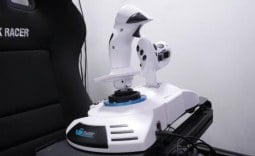 Thrustmaster T.Flight HOTAS 5 MSFS Edition Review
 SteelSeries Arctis Nova Pro Omni Wireless Headset Review - One Headset to Rule Them All
 SteelSeries Arctis Nova 7 Wireless Gen 2 Headset Review - New and Improved, But Is It Enough?
 AMD Ryzen 7 7700X3D Review - Days of Future Past
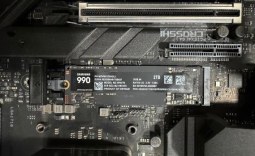 Samsung 990 2TB SSD Review - Ninth Gen QLC at PCIe Gen4 Speeds
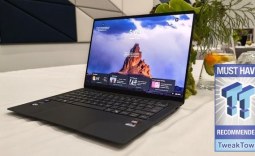 ASUS ExpertBook Ultra (Panther Lake) 14" Business Laptop Review
 ASUS ROG Raikiri II Xbox Wireless Controller Review - Ready to Take Control
 MOZA FMP18 Panel Bundle Review: authentic F/A-18 Hornet cockpit controls for flight sims
 Micron 6600 ION 245.76TB Enterprise SSD Review - Best in Class Programming Speeds
 Printer Not Working in Windows? How to fix detection, print queues and drivers
 The Ultimate Guide to Personalizing Your Windows 11 Taskbar
 How to Turn Your Windows Laptop Into a Second Monitor with Miracast and Wireless Display in Minutes
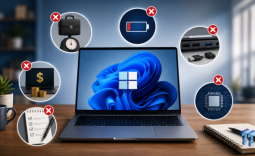 6 Mistakes to Avoid When Buying a Windows Laptop
 I capped Windows Update's bandwidth with Delivery Optimization, and my downloads stopped choking
 I use this decade-old free tool that finds files faster than Windows Search does
 I install and update most of my apps with this Windows command now, and I stopped downloading sketchy installers
 Hisense U6SF 65-inch MiniLED TV: High Performance Meets Leisurely Convenience
 I stopped digging through Windows menus after I set up this one folder
 Don't sell your Windows laptop until you do these things