







Learn about how TweakTown tests and reviews hardware. As an Amazon Associate, we earn from qualifying purchases. TweakTown may also earn commissions from other affiliate partners at no extra cost to you.
Stay Updated
Follow TweakTown for breaking tech news, reviews, and daily updates.


Samsung's next-gen SSDs teased: PCIe 5.0-based 990 Pro in 1TB, 2TB
Samsung's next-gen PCIe Gen5 SSD shouldn't be too much further away, with an official announcement to follow the new entry of the Samsung 990 Pro SSD in the customs database.

We now know the model numbers of Samsung's new 990 Pro PCIe 5.0-powered SSDs in both 1TB and 2TB capacities with the model numbers MZ-V9P1T0 and MZ-V9P2T0. We should see much bigger Samsung 990 Pro SSDs in the capacities of 4TB and 8TB+ but these new 1 TB and 2TB designs could be unveiled first.
Samsung's next-gen 990 Pro PCIe 5.0 SSDs will work inside of any new high-end Z690 and upcoming Z790 motherboard, accompanied by Intel's 12th Gen Core "Alder Lake" CPU and the upcoming 13th Gen Core "Raptor Lake" CPUs. AMD will be launching its new X670E + X670 motherboards and Ryzen 7000 series "Zen 4" CPUs that will rock along with PCIe 5.0 support in the coming months.
Continue reading: Samsung's next-gen SSDs teased: PCIe 5.0-based 990 Pro in 1TB, 2TB (full post)
AMD Ryzen 7000 series CPU: August 29 announcement, September 15 launch
AMD is penciling in its Ryzen 7000 series CPU launch, with a tease that the Zen 4 launch will take place on August 29, while the CPUs themselves (and motherboards) will launch on September 15.

According to Wccftech, here's how the AMD Ryzen 7000 series "Zen 4" CPUs will launch: August 29 announcement, September 13 for review NDAs to be lifted, and then two days later on August 15 we'll see the Ryzen 7000 series CPUs officially launched and onto shelves, and inside of gaming PCs across the world.
AMD is currently meeting with partners for its "Meet The Experts" event, where we should see new details on AMD's upcoming enthusiast-grade X670E + X670 motherboards will be detailed by the likes of ASUS, MSI, GIGABYTE, and others. Zen 4 processors will float out on September 15, with what should be the flagship Ryzen 9 7950X with 16 cores and 32 threads at up to 5.5GHz+ and 170W (and more when overclocking) TDP.
Continue reading: AMD Ryzen 7000 series CPU: August 29 announcement, September 15 launch (full post)
ADATA announces ACE DDR5-6400, features one-of-a-kind pattern design
ADATA has just revealed its new kit of limited edition ACE DDR5-6400 memory, which features a beautiful one-of-a-kind pattern design that was created in collaboration with a designer from Germany.

The new ADATA ACE DDR5-6400 limited edition memory has support for Intel XMP, which means you'll have hassle-free overclocking, while ADATA is tapping high-quality, low-latency chips for its DDR5 memory. You'll be able to use ADATA's new DDR5 memory on either Intel or AMD's latest platforms.
ADATA's custom modules feature bold colors and a lively pattern that "represent the unique brand personality of the ADATA brand". ADATA worked with German designer and illustrator Mister Fred, with his work characterized by crooked lines, bold colors, and quirky expressions. ADATA explains that "through illustrations and patterns, he aspires to project to the world how beautiful diversity and individuality are".
Continue reading: ADATA announces ACE DDR5-6400, features one-of-a-kind pattern design (full post)
ASRock launches new Intel Arc A380 Challenger ITX graphics card
ASRock has just launched its new custom Intel Arc A380 Challenger ITX graphics card, the second custom Arc A380 graphics card to be launched after GUNNIR.

The new ASRock Intel Arc A380 Challenger ITX graphics card is a small dual-slot, single-fan, single 8-pin PCIe power connector graphics card. Inside, the Arc A380 has the full ACM-G11 GPU on the TSMC 6nm process node with 8 Xe-Cores or 1024 ALUs, with a max GPU clock of 2450MHz. 6GB of GDDR6 is here at 15.5Gbps on a 96-bit memory bus that pumps 186GB/sec of memory bandwidth, with a 92W TBP.
ASRock is going with a more simple, not super-gamer design which is fitting for the lower-end GPU. The smaller ITX form factor is beautiful, with a tiny card being perfect for a tiny PC. The single-fan supports 0dB technology, meaning that you won't hear the fan most of the time (especially for productivity work and light loads).
Continue reading: ASRock launches new Intel Arc A380 Challenger ITX graphics card (full post)
Sony does not plan to ship 80 million PlayStation 5s this year
A simple transcription error has led to substantial inaccuracies in Sony's hardware production forecast.

A user on Seeking Alpha has diligently transcribed Sony's recent Q1'22 earnings call to investors, and for the most part the transcription is accurate. However sometimes there's little mistypes and sometimes these errors can have big consequences. Case in point: According to the transcription, Sony CFO Hiroki Totoki said there was "no change" to ship 80 million PS5s by FY23's end.
This was a simple error. Totoki said 18 million, not 80 million. The latter is simply impossible even without COVID-19 restrictions in place. Sony plans to ship 18 million PS5s through FY23, which is the single largest shipment target in PlayStation console history.
Continue reading: Sony does not plan to ship 80 million PlayStation 5s this year (full post)
Monster Hunter Rise is already Capcom's third best-selling game
Monster Hunter Rise is Capcom's latest breakout success and underlines the company's emphasis on platform diversification.

Capcom's latest sales charts show some surprising results. Monster Hunter Rise has reached 10.3 million units sold worldwide, officially making it Capcom's #3 best-selling game of all time. This is quite a feat considering Monster Hunter World has been out for little over a year--it was released in March 2021--and that it skipped mainline consoles like the PS4 and Xbox One. Mon Hun Rise is only available on PC and the Nintendo Switch.
Monster Hunter Rise is now the second fastest-selling game of all time. The mighty Monster Hunter World takes both the best-selling and fastest-selling individual game record with a powerful 18.3 million units sold. With these figures, Monster Hunter World makes up 22% of total franchise sales, and Rise makes up about 12% of unit sales.
Continue reading: Monster Hunter Rise is already Capcom's third best-selling game (full post)
Capcom digital game sales at highest point in the past six years
Capcom's digital game unit sales have reached their highest quarterly peak in the past six years.

Although Capcom's converted earnings dropped 50% since last year the publisher is still doing very well. The Japanese publisher just broke a record on digital game unit sales volume in Q1'22 with 10.4 million games sold. Digital game sales made 89% of total games sold during the quarter. This follows Capcom's comments in 2021 that PC is a "priority platform."
Based on previous comments made by Capcom and data provided in the Q1 reports, we can guess that most of these games were sold during the Steam summer sale on PC.
Continue reading: Capcom digital game sales at highest point in the past six years (full post)
PC made up 50% of Capcom's Q1 game sales, or about 5.8 million
While consoles typically lead the pack, PC is still very important to publishers like Capcom.

PC is a great platform; it's practically all-digital and it's a great place to rake in cash from older evergreen catalog games. Throw in major discounts during a Steam summer sale event and bam, you typically have a formula for boosted sales.
Apparently that's what happened during Capcom's recent Q1 period. PC made up 50% of unit sales during the quarter. Capcom sold 11.7 million games during Q1'22, so PC games sold roughly 5.85 million.
Continue reading: PC made up 50% of Capcom's Q1 game sales, or about 5.8 million (full post)
Artificial 'blowhole' completes year long test, exceeding expectations
The wave energy converter unit was created by Wave Swell Energy (WSE), and is called the UniWave200.

The UniWave200 was constructed in Launceston in Tasmania, Australia, and costs AUD 12 million (US 8.3 million). It was then towed to the nearby King Island and left in the rough ocean off Grassy Harbour. The unit generates 200 kilowatts (kW) of power directly from waves in the sea, acting like an "artificial blowhole."
A concrete chamber underwater allows water in, with the oscillating waves rising high inside and a valve above, letting out the air. As the tide recedes, the valve closes, and the vacuum created by the water level dropping sucks air from the atmosphere through a turbine above, which is connected to a generator.
Continue reading: Artificial 'blowhole' completes year long test, exceeding expectations (full post)
Dark matter detected closer to the birth of the universe than ever
A study on the dark matter titled "First Identification of a CMB Lensing Signal Produced by 1.5 Million Galaxies at z∼4: Constraints on Matter Density Fluctuations at High Redshift" has been published in the journal Physical Review Letters.

A collaboration led by researchers from Nagoya University have detected dark matter surrounding distants galaxies, so far away they appear as they did 12 billion years ago, less than two billion years after the Big Bang and the start of the universe. Previously, scientists have been limited to observing dark matter only as far back as 8 to 10 billion years ago. This is because dark matter does not emit light, so it is observed using the light of even more distant galaxies, whose light shine through the dark matter.
The light that reaches Earth is distorted by this dark matter, and greater amounts lead to greater distortion. However, past a certain point, the light from these distant galaxies is so faint that this technique for detecting dark matter becomes less effective. To overcome this problem, the researchers first found 1.5 million "lens" galaxies which are surrounded by the dark matter they are trying to detect. They then used microwaves from cosmic microwave background radiation (CMBR) left over from the Big Bang to observe the distortion caused by the dark matter surrounding the lens galaxies.
Continue reading: Dark matter detected closer to the birth of the universe than ever (full post)
MIT has created new AI 'neurons' 1 million times faster than the brain
A study on the neurons titled "Nanosecond protonic programmable resistors for analog deep learning" has been published in the journal Science.

Researchers from the Massachusetts Institute of Technology (MIT) have created new artificial "neurons" and "synapses" that exist within a new field of artificial intelligence called analog deep learning. Instead of using transistors like in digital processors, analog deep learning uses programmable resistors to "create a network of analog artificial 'neurons' and 'synapses'" that can exceed the performance of a digital neural network, while using a fraction of the energy.
The MIT team's artificial neurons and synapses are built using a new inorganic material in their fabrication process, boosting the performance of devices using them to one million times faster than previous iterations and one million times faster than the synapses found in the human brain. The new material can also be used with existing silicon fabrication techniques, meaning it can be used to create nanometer-scale devices and potentially integrate the technology with existing computing hardware to facilitate deep-learning applications.
Continue reading: MIT has created new AI 'neurons' 1 million times faster than the brain (full post)
This new flying car is street-legal and now approved for flight
California-based company Samson Sky has been developing its Samson Switchblade for 14 years.

The Switchblade has now passed the Federal Aviation Administration (FAA) inspection requirements to be classified as an Experimental Category aircraft. As such, the Switchblade has begun flight testing to see how the vehicle performs in the air. The Switchblade can fly up to 200 miles (322 kilometers) per hour after switching from its street-legal, three-wheeled car form to aircraft mode by deploying its wings.
The wings are folded beneath the two-seat cabin, and the tail is also stowed away at the back of the vehicle, ready to deploy alongside the wings when a button inside the cabin is pressed. Transforming into its aircraft form takes under three minutes, but this has yet to be performed on a real, full-scale prototype. Despite this, the Switchblade already has 1,670 reservations and will have an estimated starting price of $150,000.
Continue reading: This new flying car is street-legal and now approved for flight (full post)
New hyperloop train will almost break the speed of sound
TransPod, a Canadian-French startup, has unveiled the design for its new hyperloop vehicle.

TransPod is building the TransPod Line, its "ultra-high-speed ground transportation system" that will utilize the newly revealed, fully electric FluxJet vehicle. According to TransPod, the FluxJet makes use of breakthroughs in contactless power transmission and a new field of physics known as "veillance flux," enabling it to cruise at speeds of over 1000 kilometers (621 miles) per hour along an elevated guideway. It will be capable of a top speed of up to 1,200 kilometers (746 miles) per hour, or about Mach 0.97, just shy of the speed of sound.
The company has secured $550 million in financing and has announced an $18 billion infrastructure project that will connect the cities of Calgary and Edmonton in Canada. The project will allow passengers to travel between the two cities in 45 minutes. Once completed, the TransPod Line is expected to cost passengers 44 percent less than a plane ticket while being able to travel faster and reduce carbon dioxide emissions by 636,000 tonnes per year. The FluxJet will also exceed the speed of other high-speed trains three-fold.
Continue reading: New hyperloop train will almost break the speed of sound (full post)
NASA's Webb peers into the chaos of a deep space 'cartwheel'
NASA has released a new image snapped by the now-operational James Webb Space Telescope, and it hones in on a beautiful distant galaxy.

NASA explains on its website that Webb has looked into the chaos of the Cartwheel Galaxy that's located about 500 million light years away from Earth within the constellation Sculptor. At the center of the galaxy resides a black hole, and according to the space agency, the spectacle appearance is a result of a high-speed collision between a large spiral galaxy and a smaller galaxy that isn't visible in the image.
The collision caused the cartwheel-like appearance, which has two rings - a bright inner ring and a colorful outer ring. Closer to the center of the galaxy is a core that contains large quantities of hot dust where very large young star clusters are forming. The outer ring has been expanding for approximately 440 million years, and as it continues to expand, the area is being activated for star formation.
Continue reading: NASA's Webb peers into the chaos of a deep space 'cartwheel' (full post)
New NASA Webb photograph captures our universe's most distant star
Astronomers have used NASA's James Webb Space Telescope (JWST) to perform observations on the furthest known star.

Hubble's image.
The star is called Earendel, which was named after a character in J.R.R Tolkien's "Lord of the Rings" prequel book "The Silmarillion". The half-elven character in the book carries a jewel called a "Silmaril" across the sea, also called the morning star, which translates in Old English to the dawn star. As for the star itself, Earendil was found through gravitation lensing by observations from the Hubble Space Telescope, and its 12.9 billion light-years from Earth, making it the most distant star ever observed.
Continue reading: New NASA Webb photograph captures our universe's most distant star (full post)
NASA's rover captures a new 'exciting' Mars sample
NASA has taken to its social channels to announce that it's Mars rover has snagged its latest sample of the Red Planet.

On the NASA Perseverance Twitter account, the space agency explains that the Perseverance rover has successfully grabbed its eleventh Mars sample, which has the potential to give researchers more clues on the history of Mars and if it ever contained ancient life.
NASA also linked to its website where it outlined its updated plan on getting Perseverance's samples back to Earth and how the new plan now includes two new helicopters that designs will be based on Ingenuity's, Perseverance's scout helicopter currently positioned alongside the rover in the Jezero Crater.
Continue reading: NASA's rover captures a new 'exciting' Mars sample (full post)
Man threw away hard drive worth $150 million, lays out recovery plan
James Howells claims he was one of the first five people running the Bitcoin algorithms, and since 2013 he has been searching for a hard drive that he mined 7,500 Bitcoin on for next to nothing.

The British computer engineer recently sat down for an interview with James Hammond, where he recounted his journey of recovering a computer hard drive worth more than $150 million at the current price of Bitcoin (approximately $23,000). Howell accidentally threw out the hard drive and has been searching for it ever since, with many requests made to the local Newport government to dig through its landfill site. All of his requests so far have been denied, but a new one may be considered with the inclusion of artificial intelligence.
Howell's plan includes human sorters, Boston Dynamics "Spot Dogs", automated sorting systems paired with a special conveyor belt, and an artificial intelligence system that is believed to significantly speed up the identification process. This method would take anywhere between nine to twelve months to complete and would cost an estimated $11 million. Howell also believes a scaled-down model of the same design could be created for $6 million, but would take up to 18 months to complete.
Continue reading: Man threw away hard drive worth $150 million, lays out recovery plan (full post)
AI asked to show an image of humanity's greatest threat
An artificial intelligence model that is designed to produce images out of the text entered into a chat box has been asked to produce images on humanity's greatest threat.

The artificial intelligence used to produce these images is called Craiyon, formerly known as DALLE mini. The change of name followed its rise in popularity as OpenAI, the Elon Musk-founded company behind the GPT-3 model, asked its creators Boris Dayma and Pedro Cuenca to change the name of the text-to-image AI to make the models more distinguishable from each other.
Now the Craiyon AI is asked many questions every day by users around the world that wish to test their imagination on what the AI can produce and at what level of accuracy. Anyone can visit the Craiyon website to try the AI out for themselves. Many users have found that AI can create incredibly artistic and original wallpapers for phones and desktops.
Continue reading: AI asked to show an image of humanity's greatest threat (full post)
AI asked to show an image of the most closely held secret on Earth
A viral artificial intelligence has been asked to produce an original image of the most closely held secret on Earth.

An artificial intelligence formerly called DALL-E, and currently referred to as Craiyon, has been asked to showcase what it believes to be the most closely held secret on Earth. The artificial intelligence uses the "DALL-E mini" model, which was trained by Boris Dayma and Pedro Cuenca using Google Cloud Servers. The AI is capable of producing original images of whatever a user enters into its text prompt box.
The public can enter in any question or phrase they like, and the artificial intelligence will usually spend less than a minute producing a set of images that will show a visual representation of the text entered into the box. While the AI doesn't hold any predictive value for future events, it still can produce incredibly interesting images based on simple text requests. Try the artificial intelligence for yourself to test your imagination.
Continue reading: AI asked to show an image of the most closely held secret on Earth (full post)
SK hynix unveils 238-layer NAND: 50% perf boost, industry's highest
SK hynix has just announced that it's developed the industry's highest 238-layer NAND flash, with its latest 238-layer 512Gb triple-level cell (TLC) 4D NAND flash going out to customers and starting mass production in 1H 2023.

In a statement during Flash Memory Summit 2022 (FMS 2022), SK hynix said: "The latest achievement follows development of the 176-layer NAND product in December 2020. It is notable that the latest 238-layer product is most layered and smallest in area at the same time".
Jungdal Choi, Head of NAND Development at SK hynix said during his FMS 2022 keynote: "SK hynix secured global top-tier competitiveness in perspective of cost, performance and quality by introducing the 238-layer product based on its 4D NAND technologies. We will continue innovations to find breakthroughs in technological challenges."
Continue reading: SK hynix unveils 238-layer NAND: 50% perf boost, industry's highest (full post)
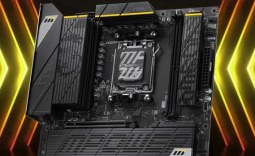 MSI adds a BIOS toggle to tighten standard DDR5 timings closer to EXPO ULL kits
 Keychron is building an open-source gaming mouse firmware called ZGM
 Assassin's Creed Odyssey gains 90% more players due to Christopher Nolan's 'The Odyssey'
 AMD Radeon GPU prices set to increase by 10% in August
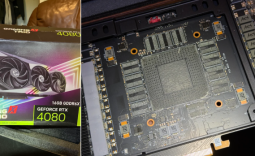 Redditor buys an RTX 4080, opens it up to find no GPU die or VRAM inside
 NVIDIA GPU rumors swirl claiming major price hikes of 20 to 30% - or more - are coming, as VRAM costs climb
 AMD's RX 9050 GPU comes up short in first review, but there's a good reason why it lags behind NVIDIA's RTX 5050 here
 Sony confirms it won't reverse disc phase out: 'We're going to cautiously move forward'
 GeForce RTX 50 Series GPU prices are rumored to increase by 30% in the coming weeks, months
 TSMC's 1.4nm process timeline accelerates, with mass production happening sooner than expected
 Montech TG3 Mid-Tower Chassis Review
 ASUS ROG Strix X870E-A Gaming WiFI7 Neo Review - A New Enticing Option
 Noctua NL-LC1-36 Liquid CPU Cooler Review
 Logitech G316 X 98 Wired Gaming Keyboard Review - Retro-Inspired Board that Falls a Little Short
 Biwin M560 2TB SSD Review - Best Overall Retail-Ready DRAMless SSD
 Logitech G512 X 98 Analog Mechanical Gaming Keyboard Review - An Innovative Two-in-One
 Thrustmaster T.Flight HOTAS 5 MSFS Edition Review
 SteelSeries Arctis Nova Pro Omni Wireless Headset Review - One Headset to Rule Them All
 SteelSeries Arctis Nova 7 Wireless Gen 2 Headset Review - New and Improved, But Is It Enough?
 AMD Ryzen 7 7700X3D Review - Days of Future Past
 I switched my PC to encrypted DNS in Windows 11, and browsing felt more private
 Printer Not Working in Windows? How to fix detection, print queues and drivers
 The Ultimate Guide to Personalizing Your Windows 11 Taskbar
 How to Turn Your Windows Laptop Into a Second Monitor with Miracast and Wireless Display in Minutes
 6 Mistakes to Avoid When Buying a Windows Laptop
 I capped Windows Update's bandwidth with Delivery Optimization, and my downloads stopped choking
 I use this decade-old free tool that finds files faster than Windows Search does
 I install and update most of my apps with this Windows command now, and I stopped downloading sketchy installers
 Hisense U6SF 65-inch MiniLED TV: High Performance Meets Leisurely Convenience
 I stopped digging through Windows menus after I set up this one folder