







Wearable Computing & Fashion - Page 17
Smartwatch, fitness tracker, AR glasses, and wearable tech news - health features, fashion collabs, and new form factors. - Page 17
Stay Updated
Follow TweakTown for breaking tech news, reviews, and daily updates.


As an Amazon Associate, we earn from qualifying purchases. TweakTown may also earn commissions from other affiliate partners at no extra cost to you.
New Google Glass patents reveal four new slim designs
The initial Google Glass model was loved by all for its functionality and refreshing new take on mobile computing, but many also complained about the clunky design and poor battery life. The original version was more of a proof-of-concept design than anything, and technological advances are already in the works. The slim new design eliminates most of the sidebar and the box that hangs behind the ear.
Recent Google Glass patent applications reveal some of the new changes. News that Intel is going to power the next revisions of Google Glass came about last week, and this will provide Google the flexibility to address the bulky hardware. There is no word if there will be more storage capacity, but new 3D NAND designs could provide amazing density as well. A new processor and chipset will enable better battery life and much smaller designs. The original hardware was based off of a 2011 mobile processor that wasn't the best fit for slim applications. Other new designs (pictured below) break the mold entirely and utilize very tiny components.
Many of the press images released by Google conveniently use people with long hair, touching the side of the device, or clever picture angles, to hide the large bulky portion of the device that hangs behind the ear. Completely eliminating this piece of hardware is a big step on the quest to create a device with wide consumer appeal.
Continue reading: New Google Glass patents reveal four new slim designs (full post)
Intel to power next revision of Google Glass
Google Glass has revolutionized interaction with wearable computing devices, and many expect it to be the model for the future of wearable computing devices. The Google Glass concept is extraordinary, but the underlying technology has been a bit of a disappointment. The current models are based on the Texas Instruments OMAP 4430 processor, which is outdated to say the least. The processor first made its debut in the Motorola DROID RAZR back in 2011, and Texas Instruments has since vacated the mobile processor market. The old technology provided Google with a solid base of proven hardware, but falls short in computing power and battery life.
Industry insiders are reporting that Intel processors will power the next revision of Google Glass. Utilizing Intel's mobile processors will provide more computing power and better battery life, along with bringing in x86 functionality. More computing power will speed the interface and allow developers to create powerful apps that are in line with expectations for mobile devices. Current Google Glass models are also a bit bulky, and an updated processor and chipset will enable Google to significantly reduce the size and weight of the device.
The mobile market continues to expand and Intel has been struggling to break into the mobile market. Winning a Google Glass contract will be a big step for Intel's mobile processor division. Google Glass also hasn't had as many apps developed for the platform as hoped, and x86 functionality will also open the door for expanding the software app ecosystem. The initial Glass revisions are a proof-of-concept design that resonated well with users, and moving to a new Intel processor will help Google take the final step to making Glass a mainstream product fit for the masses.
Continue reading: Intel to power next revision of Google Glass (full post)
Cicret Smart Bracelet brings a tablet to your skin
The mobile market is not immune to trends and fads, and sometimes they can run counter to established norms. At first users wanted the smallest phone on the market. In the prehistoric pre-smartphone era some phones were so small they were almost impossible to dial. Smartphones changed that trend, and initial small versions have given way to phablets. Once again, bigger has become better. Cicret looks to solve the problem for us all with the largest useable screen packed into the smallest device possible. It seems a bit counter-intuitive, but the design is genius.
The Cicret Smart Bracelet debuted on Indiegogo and just finished its round of funding. The Smart Bracelet looks like a simple bracelet but has an embedded memory card, processor, accelerometer, vibrator, USB port, Bluetooth functionality, and Wi-Fi. The most important components consist of a pico-projector and an array of 8 proximity sensors. The projector beams the screen down onto the users forearm, and the proximity sensors track fingers to allow device interaction. The video below is simply amazing.
The Cicret brings about a number of amazing possibilities. The accelerometer will be used for user interaction, simply moving your arm could page through screens for instance. Bluetooth connectivity could allow the bracelet to be used as an accessory to an existing smartphone by simply mirroring the screen in your pocket. The video demo is impressive, but is based upon 'possibilities' and isn't representative of the working device. Initial revisions are likely to be short on processing power due to the small size, so using the bracelet in conjunction with other mobile devices would be a great fit. There are a few questions on how well it would work in blazing sunlight, projectors usually do not do well in bright conditions. Either way, we will know soon enough, models will retail for roughly $700 in the coming months.
Continue reading: Cicret Smart Bracelet brings a tablet to your skin (full post)
Razer Nabu smartband confirmed for release next week
We've just received confirmation that Razer's new smartband, the Nabu, is finally confirmed for release - coming next week, first to the North American market, followed by the rest of the world soon after.
We've covered the Nabu's specifications and features before. As quoted by Razer CEO Min-Liang Tan, the Razer Nabu is designed to work as "a cross between a smartwatch and a fitness band. It's a wearable device focused on helping you live smarter."
According to email contact between Razer's Australian promoters, Surprise Attack, the Razer Nabu release will begin next week. Coming at a price of $99.99, this new technology offering has been tested by "500 of Razer's most loyal fans" whom were given the ability "to buy the bands earlier in the year for a single dollar".
Continue reading: Razer Nabu smartband confirmed for release next week (full post)
Sony working on e-paper smartwatch, as innovation is critical
Sony is reportedly working on a new watch that utilizes e-paper, and could be released as early as 2015, as the Japanese electronics company restructures and shuffles focus on select technologies. The watch face and wrist band will be made of e-paper and the surface area will be able to display time and its appearance can be modified.
Instead of being a next-generation smartwatch, Sony hopes that the watch will include style alongside functionality.
"The innovation program is very important, but it will take time and require some risk taking," said Sado Nagaoaka, Hitotsubashi University professor. "It's not that Sony ran out of new ideas, but rather, it's taking too long to restructure, and gigantic losses have starved new businesses of funds."
Continue reading: Sony working on e-paper smartwatch, as innovation is critical (full post)
Deploying police body cameras could help avoid high-profile incidents
The unfortunate incident between officer Darren Wilson and Michael Brown, which left Brown dead and many people rioting in Ferguson, Missouri, has become a prominent platform in the promotion of body cameras. A growing number of police agencies are deploying wearable cameras, typically clipped to an officer's uniform, as a method to record officer interactions with members of the community - and a way to help provide insight into deadly encounters.
"The findings suggest more than a 50 percent reduction in the total number of incidents of use-of-force compared to control-conditions, and nearly 10 times more citizens' complaints in the 12-months prior to the experiment," according to a Police Foundation-commissioned study.
Department of Justice officials and other law enforcement experts share similar findings - and believe the use of body cameras could help prevent future incidents like in Ferguson. Civil liberty groups say the videos would help prevent officers from abusing their authority, while law enforcement groups mention citizens would be less likely to falsely accuse officers of wrongdoing.
Continue reading: Deploying police body cameras could help avoid high-profile incidents (full post)
castAR has shipped its first set of AR glasses, more on their way
Jeri Ellsworth has taken to Twitter to announce that the Technical Illusions team is finally shipping their first pair of castAR glasses. You might remember the startup took to Kickstarter to raise $1 million, spearheaded by ex-Valve engineers Jeri Ellsworth and Rick Johnson.
The AR glasses feature active shutter glasses, a camera for input and a projector that displays 3D images onto a surface. The company caalls the device "the most versatile AR and VR system" but it has more strength in its AR side, with its VR side not working until you buy the optional clip-on. We should hopefully have a pair in the coming months, so keep checking back here at TweakTown.
Continue reading: castAR has shipped its first set of AR glasses, more on their way (full post)
Pebble update see's 80 languages added and Android app support
Pebble's smarwatch has just received a version 2.8 firmware update that has seen 80 languages supported alongside notification support for Android applications.
Looking at Pebble's website, you can see their comprehensive list of languages on offer and how some of them are displayed on your handheld interface. But the most exciting update here comes in the form of Android notification support. Available for use with both iOS and Android systems, Pebble was missing the crucial ability to tee up with your Android phone, pushing notifications from this device handily to your wrist watch. Fixed in the latest update, we wouldn't be surprised to see Pebble stocks rise a little in the coming weeks.
Pebble's Vice President of Software Engineering, Kean Wong, released a statement saying: "This new app has been the culmination of months of work by our fantastic Android team to re-build our Android app, focused on notification improvements, increasing stability and performance, and providing a solid platform for the long roadmap of great new features we have planned. Full notifications support, is a significant improvement-one we'll build on to provide more amazing notification features soon."
Continue reading: Pebble update see's 80 languages added and Android app support (full post)
Seattle Police Department will outfit officers with body cameras
The Seattle Police Department will move forward to outfit officers with wearable body cameras, after the deal hit a hiccup due to a large number of open record requests by an anonymous programmer. The programmer operates a YouTube video that posts 911 calls, surveillance and police footage, embracing a beneficial open record laws.
"Under the law, they get requests regardless of whether or not I go away, and they view what I do as part of the solution," the programmer said. The programmer dropped the requests as part of an agreement that will have the police department provide him with video footage of police interactions and arrests with the public.
Police agencies are interested in wearable video cameras for officers as a better method to clear officers - and possibly press additional charges - on suspects. The Seattle Police Department has been under federal monitoring for more than two years, due to excessive force complaints against officers.
Continue reading: Seattle Police Department will outfit officers with body cameras (full post)
First thoughts: Sony's Smartwatch 3
Sony have just launched their latest offering to the ever-growing smart watch market. Even though originally claiming that they weren't interested in entering the Android Wear market in the beginning, they've decided that they want a slice of the market.
Sony's flagship watch comes with the following specifications:
The Smartwatch 3 is designed in a 'low-key' styling, not meant to be so much as of a fashion statement when compared to the Motorola 360, for example. As you may have noticed, the Smartwatch 3 comes in a few very bright color offerings including pink and yellow - not for the feint if heart. Alongside this, Sony's product comes with a silicone wrist strap - giving the feel that this product is designed for an athletic and/or younger audience.
Continue reading: First thoughts: Sony's Smartwatch 3 (full post)
XOO Belt, a belt that can charge your smartphone hits Indiegogo
Nifty has taken to Indiegogo to fund its latest product, the XOO Belt. What is the XOO Belt? It's an actual belt, with a 2100mAh internal lithium ion battery that features either a Lightning connector, or micro USB connector to charge your smartphone.
Your smartphone can be sitting in your pocket while it charges it up, which is a really nice feature. The battery technology that the UK-based company used it actually a flexible battery, placed inside of the belt itself. Nifty explains: "We've hidden six overlapping layers of cutting-edge flexible battery within each belt, giving a base power of 1,300 mAh of charge. Add this to the 400 mAh in each buckle-for a total of 2,100mAh-and you've enough to fully charge an iPhone 6 with some left over".
Nifty is hoping to secure over $50,000 to get the XOO Belt off the ground, and onto your hips, and at the time of writing they had $30,534 of their $50,000 goal, with 29 days left to go. This means that the XOO Belt will receive its funding without a problem, but the two early-bird products are sold out. 'The early-bird belt' had 100 units available, selling them all at $99 each, while 'The early-ish bird belt' is also sold out, at $125 each. The next level is 'the belt belt' which sells for $155.
Continue reading: XOO Belt, a belt that can charge your smartphone hits Indiegogo (full post)
Police adopting officer body cams, and don't inform while recording
A growing number of police agencies are adopting body cameras that officers wear while on patrol, providing a better account of what happens during interactions with the public. The cameras, about the size of a pack of cigarettes and worn on an officer's chest, can record at angles civilian cell phones and police cruiser in-dash cams can miss.
"In a couple of decades... every public safety employee, police officers, firefighters, paramedics, everybody will have them," said Charlie Beck, Los Angeles Police Department (LAPD) chief. "I think it improves behavior on both sides of the camera, which is our goal."
In addition to police officers behaving more appropriately, citizens - and potential suspects - could behave better if they know they are being recorded. However, there are privacy concerns because police officers are not required to inform people if they are recording.
Continue reading: Police adopting officer body cams, and don't inform while recording (full post)
Apple will offload tasks from Watch to iPhone when it launches
We are finally learning more about Apple's first wearable, Watch, as the company has released its WatchKit for developers to tinker with. We now know that third-party apps will require a connected iPhone in order to work, as the processing for Watch is offloaded to the iPhone, with the Watch just rendering the result.
Apple's WatchKit also revealed some animations being pre-rendered as an image sequence on the iPhone, before it is blasted up to the Watch for display. We also don't know what will happen if your iPhone disconnects from Watch while you're looking at it, as the Watch apps are installed to the wearable by "your existing app" found on your iPhone. The documentation does state that Apple will support "fully-native" Watch apps in the future, but this won't happen until this time next year.
One thing we know for sure, is that the Watch will come in two different display resolutions; 272x340 for the 38mm Watch, and the 312x390 for 42mm version. Apple won't start selling its Watch until "early 2015", but it could be delayed a little later into the year yet.
Continue reading: Apple will offload tasks from Watch to iPhone when it launches (full post)
50% of consumers thinking of a smart wristband will buy a smartwatch
The wearable electronic devices market will reach 68.1 million units in 2015, a slight drop from 70.1 million units in 2014, the Gartner research group said. The industry will take a hit as consumers consider a wider adoption of smartwatches, especially devices that can be easily paired with their Google Android or Apple iPhone smartphones.
The five most prominent fitness wearables currently on the market: wristbands, sports watches, heart rate monitors, smart garments, and other fitness monitors. While sport watches and heart rate monitors are common place, newer generation of devices are disrupting the market - but not fast enough to prevent the onslaught of smartwatches that will be released in 2015.
"Smartwatches having retail prices of $149 or more will typically have the capability to track activity and have accelerometers and gyroscopes similar to their smart wristband cousins," said Angela McIntyre, Gartner research director. "The smartwatches differ from smart wristbands in that smartwatches need to display the time and have a user interface oriented around communication. However, some smart wristbands have the ability to display and send text messages. The overlap in functionality between smart wristbands and smartwatches is expected to continue."
Continue reading: 50% of consumers thinking of a smart wristband will buy a smartwatch (full post)
Intel MICA wearable will have Google alerts, AT&T data plan support
Intel previously unveiled the My Intelligent Communication Accessory (MICA) wearable, an expensive and stylish wearable bracelet geared towards women. MICA wearers won't need to carry a smartphone and will be able to connect to Facebook, Google, Yelp, and other online services through an AT&T data plan, and indicates Intel wants to find new ways to connect with consumers.
"We really approached this first and foremost about why would a woman want to wear this everyday, and how can it be incorporated into her wardrobe," said Humberto Leon, Intel creative director. Intel purchased wearables firm Basis earlier in 2014, as a number of hardware companies jump into the wearable market.
Intel CEO Brian Krzanich had to claw its way into the smartphone and tablet markets, after losing out to ARM and other rivals, but wants to ensure it is an early adopter in the wearables market.
Continue reading: Intel MICA wearable will have Google alerts, AT&T data plan support (full post)
Some Google Glass supporters losing faith in the wearable product
The Google Glass wearable could be losing support from early adopters and supporters, as Google pushed back a consumer launch. Wearables have a great opportunity for business and military use, but widespread consumer adoption could prove difficult, especially if developers are jumping ship. Nine out of 16 Glass app makers recently said they have dropped Glass-related projects, with three others shifting from consumer to business focus.
"We are completely energized and as energized as ever about the opportunity that wearables and Glass in particular represent," said Chris O'Neill, Google Glass Head of Business Operations. "We are committed as ever to a consumer launch. That is going to take time and we are not going to launch this product until it's absolutely ready."
Whether it's Glass or some type of wrist-worn wearable, the entire wearables market receives a lot of media attention - and analysts expect the industry to develop its success in the coming years. However, software and hardware developers must be ready to invest time and money into wearables, knowing that an immediate return on investment (ROI) is unlikely.
Continue reading: Some Google Glass supporters losing faith in the wearable product (full post)
ASUS launches its ZenWatch in the US, priced at $199
After months of allowing competing smartwatches take over the US market, Taiwanese giant ASUS has launched its sleek ZenWatch in the country. The wearable is being sold right now through Best Buy, at $199.
The ASUS ZenWatch features a beautiful 1.6-inch, curved Super AMOLED display, a Qualcomm processor, 512MB of RAM, and 4GB of on-board flash storage. The entire thing is encased in stainless steel, with a beautiful leather strap - making it look more like a watch than some of the competing devices.
There's over 100 watch faces available from ASUS, as well as a feature that locates your smartwatch quickly by tapping the ZenWatch. Google Play won't be available at launch, but ASUS has promised that it will be coming in an update.
Continue reading: ASUS launches its ZenWatch in the US, priced at $199 (full post)
Report: 3D usage for children under six should be avoided
Children under six years of age should not watch 3D content, and access for adolescents up to 13 years old should be limited, according to the French-based Agency for Food, Environmental and Occupational Health and Safety (ANSES) group said.
"In children, and particularly before the age of six, the health effects of this vergence-accommodation conflict could be much more severe given the active development of the visual system at this time," the group said in a statement.
When Nintendo released the 3DS in 2010, there were safety warnings that children under six could have their eyesight damaged from using the device. However, as 3D technology becomes more common, health experts are again becoming concerned of potential long-term vision damage among users.
Continue reading: Report: 3D usage for children under six should be avoided (full post)
Study: Google Glass could hurt your peripheral vision over time
Google Glass has proven to be an appealing wearable for some consumers, but there is an elephant in the room that is now receiving more attention: potential vision problems suffered by wearers. It's not the software that could be doing it, instead it's the physical frame structure of the glasses that limit peripheral vision - and creates safety hazards.
"But I almost got into a car accident when I was driving with it. And the device was even turned off at the time," said Dr. Tsontcho Ianchulev, clinical associate professor in the ophthalmology department at the University of California, San Francisco, and lead author of the study.
Dr. Ianchulev explained how they used a rather simple, yet effective way to study how Google Glass impacted the vision of wearable owners.
Continue reading: Study: Google Glass could hurt your peripheral vision over time (full post)
Snoop Dogg helps Avegant reach $9.37 million in funding for its HMD
Oculus VR gets all the headlines when it comes to VR, but Avegant has just secured itself $9.37 million in series A funding, which was lead by Intel Capital, NHN Investment and... Snoop Dogg. Yes, the rapper. Avegant says that the injection of funds will "help carry Avegant through its manufacturing milestones".
Avegant has an interesting HMD in the Glyph, as it is a head-mounted display that has built-in over-ear headphones, something where the headphone band can be tweaked down to position something the company refers to as a "virtual retinal display" in front of users' eyes. It is let down by its 45-degree viewing angle, but the company is pushing it as a unique display tech device, with a portable form-factor.
At the Intel Capital Global Summit, it was announced that Avegant had raised an additional $9.37 million in series A funding, an investing roun that included Kaiwu Capital, Crunch Fund, 500 Startups, DN Capital, Calvin Broadus Jr., and the Michigan Angel Fund. Avegant's final design of the Glyph will be shown at CES 2015, where we will hopefully get some hands-on time with it.
Continue reading: Snoop Dogg helps Avegant reach $9.37 million in funding for its HMD (full post)
 Giveaway: 12 Winners Will Score MONTECH NX400 and NX600 CPU Coolers
 GTA 6 leaks have reportedly led to a morale drop at Rockstar, with Netflix frustrated as well
 The Blood of Dawnwalker won't hit 60 FPS on any console, PS5 Pro tops out at 40 FPS
 AMD claws back ground against Intel in the CPU market, climbs to 35% share in desktop CPUs
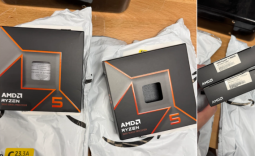 Redditor receives not one but TWO empty boxes of Ryzen 5 9600X from Amazon
 Xbox Series X25 Limited Edition Console is priced at $900, arrives November 2026
 Dave Bautista officially cast as Kratos in Amazon's 'God of War' TV Series, replaces Ryan Hurst
 Take-Two begins the hunt for GTA 6 leaker CyberLeek, subpoenas Microsoft and Discord
 PlayStation 6 handheld not expected to stay under $600, warns leaker
 AMD confirms the Radeon RX 9050 4GB will have a tiny 64-bit bus and just 16MB Infinity Cache
 Intel 'Nova-Lake-S' 28-core CPU with bLLC reportedly draws 296W at PL2
 Cooler Master MasterFan A120 Fan Review
 GIGABYTE MO27Q2A Gaming Monitor Review: 1440p, 280Hz, and QD-OLED is a winning combination
 Cooler Master V8 ACE 3DHP BLACK CPU Cooler Review
 ASUS ROG Strix XG129C Review: A $199 Gaming Monitor You Don't Play Games On
 Cooler Master HAF II 500 Mid-Tower Chassis Review
 Corsair HS35 v3 Wireless Gaming Headset Review - An Affordable Winner
 D-Link F518 5G Wi‑Fi 6 AX1800 Mobile Hotspot Review: All-Day Mobile Hotspot
 Bose Lifestyle Ultra Speaker Review - Impressively Detailed Room-Filling Sound
 MSI Z890 Gaming Plus WIFI6E Review - Z890 for under $200
 Mortal Kombat (1995) 4K Ultra HD Blu-ray Review
 Using Multiple Monitors? Change these Windows settings for a Better Experience
 Windows Sandbox is The Windows Security Feature Most People Never Use
 I ditched the Windows 11 context menu for this open-source tool, and here's why
 Windows 11 may be encrypting your drive already, and I checked where my recovery key went
 GIGABYTE's 40 Days of INFINITY celebrates 40 Years of Innovation with stunning GeForce RTX graphics cards and rewards
 I swapped File Explorer for this free file manager and finally got the layout I wanted
 How to tell if someone has been using your Windows PC without your permission
 6 Task Manager tips for troubleshooting Windows performance problems
 ASUS ROG's 20th Anniversary Line-up of Premium PC Gaming Gear has Arrived - Here's Everything You Need to Know
 Six File Explorer tips every Windows user should know