







Wearable Computing & Fashion - Page 18
Smartwatch, fitness tracker, AR glasses, and wearable tech news - health features, fashion collabs, and new form factors. - Page 18
Stay Updated
Follow TweakTown for breaking tech news, reviews, and daily updates.


As an Amazon Associate, we earn from qualifying purchases. TweakTown may also earn commissions from other affiliate partners at no extra cost to you.
Fitbit announces new Fitbit Surge, a $250 'superwatch' with GPS
Fitbit will soon launch three new fitness trackers, with the top-of-the-line model being the new Fitbit Surge. Surge will be more than the average wearable, with the company referring to it as a "superwatch".
The new Fitbit Surge should be priced at $249, with the superwatch featuring built-in GPS tracking, PurePulse heart rate monitoring, and the ability of real-time workout data for various activities. The superwatch will provide users with stats on distance, pace, elevation climbed, heart rate intensity, and more. The new Surge will also carry over Fitbit's 24/7 activity tracking, where it'll make sure that you're getting enough sweat generated on your body each day.
Sleep tracking continues over, with the Surge having its, and your stats wirelessly synced over to the Fitbit app. Surge will also have "smart" notifications for phone calls and texts, and you can also control your music playback from Surge, which is a nice touch - pun not intended, but hey it works. Surge will launch in three colors: black, slate, and a colorful tangerine option.
Continue reading: Fitbit announces new Fitbit Surge, a $250 'superwatch' with GPS (full post)
Google invests $500m into 'cinematic reality' tech from Magic Leap
Google is laying out plans to invest $500 million into Magic Leap, and its "cinematic reality" technology. The $500 million investment hopes to see Magic Leap reach its goal, building the next big VR device.
Re/code is reporting that Magic Leap's technology can "deliver a more realistic 3-D experience than the kind offered by current technologies, including Oculus Rift, the 3-D headset". Earlier in the year, Magic Leap raised $50 million, but an injection of a half a billion dollars will surely boost things up considerably.
Rony Abovitz, the founder of Magic Leap, explains his idea of "cinematic reality", where he said: "Those are old terms - virtual reality, augmented reality. They have legacy behind them. They are associated with things that didn't necessarily deliver on a promise or live up to expectations. We have the term cinematic reality because we are disassociated with those things. When you see this, you will see that this is computing for the next 30 or 40 years. To go farther and deeper than we're going, you would be changing what it means to be human".
Continue reading: Google invests $500m into 'cinematic reality' tech from Magic Leap (full post)
Using Google Glass while driving is no safer than using a smartphone
It doesn't matter what type of technology is developed, when it comes to driving behind the wheel, your attention should be focused on the road. Recent research found that drivers in a simulator using both Google Glass and a smartphone to text were equally slow to respond to their environment, posing significant safety hazards.
"While Glass-delivered messaging has benefits, it does not in any way make driving-while-messaging safe," said Ben Sawyer, lead researcher, in a University of Central Florida peer-reviewed study done alongside the Air Force Research Laboratory.
Google Glass wearers reportedly recovered slightly faster than those using a traditional smartphone, but there was less distance between their vehicle and other vehicles ahead - dropping risk perception of a changing environment. There were hopes that the head-mounted display would allow drivers to keep their attention on the road in front of them, but interacting with Glass still proves to be too distracting for drivers.
Continue reading: Using Google Glass while driving is no safer than using a smartphone (full post)
The rumors of the Apple Watch 2 have begun, before Watch is released
When Apple announced its first wearable, Watch, people were excited for a good reason. It's Apple's first wearable, and it is a great offering in the same-old-same-old wearable market we see materializing in front of us right now. Well, now there's rumors of the Watch 2, already.
Reuters is behind the rumor, talking with its "insider sources" on the upcoming successor to Watch, Watch 2. Reuters' sources say that development of Watch 2 is well under way, but beyond that there's not much to report on. Health and fitness activities will continue to be the cornerstone of the Watch, and its successor, which is something we can take away from this.
Apple seem to be covering the entry into the smartwatch market with Watch, with its successor probably drilling into the areas it does well, and improving on the things it doesn't. Health and medical experts aren't too sold on Watch right now, but Apple is probably taking all of their opinions and recommendations on board, mixing it into the melting pot for Watch 2. But the question remains: with the rumors of a successor to the Watch being talked about months before Watch is even released, would most people skip Watch to wait for Watch 2?
Continue reading: The rumors of the Apple Watch 2 have begun, before Watch is released (full post)
Apple teases 'one more thing', announces the Watch
For over a year, rumors have circulated about Apple's iWatch, but now we know the official deal: it's the Watch. No 'i', just Watch. Tim Cook has just unveiled it, with Watch featuring a square display with curved edges, and much more. Watch requires the iPhone, as it will not work with any other device.
Cook said: "An entirely new product. We believe this product will redefine what people expect from its category. I am so excited and I am so proud to share it with you this morning." Watch will be available in silver, gold and an 18-karat gold edition. Different straps will be offered for Watch, too.
When Cook announced Watch, he said that "Apple Watch is the most personal device we've ever created". But Watch isn't just a watch, it is "also a comprehensive health and fitness device".
Continue reading: Apple teases 'one more thing', announces the Watch (full post)
Intel unveils MICA smart high-tech, luxury smart bracelet to consumers
Intel has unveiled the My Intelligence Communication Accessory (MICA), a luxury smart bracelet that will be available at Barney's in time for Christmas. The bracelet has water snakeskin and semi-precious gems in a design that features a touchscreen display for wearers to interact with.
The only hardware features currently available from Intel is that it includes a 3G cellular radio. However, it will support SMS messaging, messages sent to the bracelet and calendar reminders from your mobile phone.
"The wearables market currently exists in two categories - sports wearables that track performance and wearables that are pretty much a cell phone crammed into a small space," said Aysegul Ildeniz, Intel new devices VP, in a recent interview. "We have to grow the pie collectively. We need to go after audiences not addressed currently by wearables and make them much more aesthetically pleasing."
Continue reading: Intel unveils MICA smart high-tech, luxury smart bracelet to consumers (full post)
ASUS makes its ZenWatch official, powered by Android Wear for $260
ASUS has finally taken the wraps off of its ZenWatch, the company's first wearable, at IFA 2014 in Berlin, Germany. The new ZenWatch is powered by Google's wearable OS, Android Wear, and features a 1.63-inch, 320x320 AMOLED touchscreen.
The body of the ZenWatch sports a curved stainless steel case which is surrounded by a rose-gold-colored inset, with the top of the smartwatch featuring a piece of 2.5D curved Gorilla Glass 3. It includes a genuine stitched-leather strap with a quick release clasp in the box, but this can be swapped out with your own 22mm band.
Inside of ASUS' first wearable is the same processor that powers some of the smartwatches from Samsung and LG: a 1.2GHz Snapdragon 400 SoC. We also have 512MB of RAM, 4GB of internal flash storage, a 1.4Wh battery, Bluetooth 4.0, a microphone and a biosensor that can monitor your heart rate and activity. ASUS has splashed an IP55 rating on the ZenWatch, so you don't have to take it off if you're going to jump in the shower. The Taiwanese manufacturer has also ported some of its ZenUI elements onto the ZenWatch, with some pre-loaded functions making the cut.
Continue reading: ASUS makes its ZenWatch official, powered by Android Wear for $260 (full post)
Swatch tries to jump into smartwatch market on its own terms
Watch maker Swatch looks forward to launch its own smartwatches next year, with the aim of competing for a multi-billion-dollar industry that analysts expect Samsung, Apple, and other companies to dominate in the coming years. Swatch is the largest watchmaker in the world, and hopes its new Swatch Touch - scheduled for release in 2015 - will help shake up the smartwatch market even further.
"Our first message for customers is the watch," said Nick Hayek, Swatch CEO, in a recent interview posted on Reuters. "If they like it, they might also be interested in the extra functions. It is a problem if you only define a product by its technology. Technology alone doesn't sell, not in watches."
Analysts believe Swatch could take a two percent revenue and earnings hit from potential Apple iWatch growth with each 10 market share the iWatch can capture. Swatch and Apple would be able to offer a lucrative product, but Swatch wants to continue selling fashionable watches - and not just focus on technology.
Continue reading: Swatch tries to jump into smartwatch market on its own terms (full post)
Leaked photos of the purported OneWatch smartwatch from OnePlus
When OnePlus launched its One smartphone earlier this year, most were wondering when the company would release something else - were they working on the next version of One (Two?) or a wearable? Well, BGR India has an exclusive look at the OneWatch from OnePlus, something the company is reportedly close to launching.
The OneWatch will be build from some high-end materials, something that includes titanium for screen borders, leather for bands, and sapphire for the OLED display's cover. OnePlus kicks it up a notch with the OneWatch though, with Qi wireless charging capabilities, a circular screen like the beautiful Moto 360 smartwatch, and a curved battery. We should also see the OneWatch arrive with a user-configurable physical button on the side.
We don't know if OnePlus will use Android Wear on the OneWatch, or whether it'll feature a customized version of Cyanogen mod. OnePlus levied the custom Android-based OS for its One smartphone, so it might do the same with the OneWatch, too. The biggest selling point of the upcoming OneWatch will be its price, with OnePlus pricing its One smartphone incredibly cheap, at under half the price of the competition, with similar, if not better specifications inside of the One smartphone.
Continue reading: Leaked photos of the purported OneWatch smartwatch from OnePlus (full post)
Google's Larry Page clashes with Samsung over smart watch direction
Google's CEO Larry Page has slammed Samsung for picking its own Tizen in its smart watches over Android Wear, according to a report.
The Information claims Samsung's chairman Jay Y Lee and the Google CEO held a "tense private meeting" at the Sun Valley Allen & Co conference. Page allegedly spoke to Lee about his frustrations Samsung was heavily pushing Tizen devices like the Gear 2 and Gear 2 Neo over the Android Wear enabled Gear Live, and told Lee how he'd prefer it if the company focused on Android Wear, particularly as the latter is compatible with a wider range of Android smartphones and tablets.
The report, if true, could be indicative of a larger debate about the future of smart watches. As we reported earlier this year, there was some controversy when Samsung appeared to favor its own software rather than Android. Consumer wearable tech, specifically smartwatches, is very much in its infancy - with some of Samsung's own efforts largely being considered a swing and a miss to date. Although Samsung is the top Android manufacturer at the moment, tensions over which direction to take the emerging market could well cause conflict. That is, of course, reliant on if smart watches take off at all.
Continue reading: Google's Larry Page clashes with Samsung over smart watch direction (full post)
Scientists patent a new flexible nano-pixel bendable screen technology
Scientists were able to invent a nano-pixel ultra high definition. The researchers at the Oxford University were able to achieve this by using a very small layer of a phase-change material which also allows you to be bend while maintains thousandths of a millimetre thickness.
Phase change materials are used for heat management purposes, and is used in rewritable DVDs. The layer is kept between two transparent electrodes and were able to produce pixels are as small as 300 nanometers which is smaller than the width of a human hair.This technology and has a lot of usefulness especially for wearable technology that benefits from foldable or flexible screens while having minimum thickness, such as smart contact lenses.
This implementation will still time take to appear as ready-to-use products. As of now, they aren't able to use it to display movable pictures but it is able to produce different colour changes. Professor Harish Bhaskaran explained,"The cool part about this is that the functional part is very thin. Because of that you could actually have displays that are non-intrusive, because you can keep the electronics far away."
Continue reading: Scientists patent a new flexible nano-pixel bendable screen technology (full post)
Google orders a pizza on the Android Wear-powered Moto 360 smartwatch
Google I/O 2014 - There's a meme here, surely? I don't always order pizza, but when I do, it's from my smartwatch. Well, Google did just that at Google I/O when it showed off the Moto 360 smartwatch.
The Moto 360 smartwatch is powered by Google's upcoming Android Wear OS, which has some nifty tricks up its sleeve. Whenever you update an application on your smartphone, the smartwatch will update the counterpart app on your smartphone. But ordering a pizza from what your watch? Now that is something I've never seen before.
The Moto 360 will be available for sale later in the summer, but Google also took the time at the event to announce that LG's G Watch will be available to order later today from the Play Store.
Continue reading: Google orders a pizza on the Android Wear-powered Moto 360 smartwatch (full post)
Google updates Glass hardware, doubles the RAM to 2GB
Google only just announced it was launching its Glass Explorer program in the UK, but now we have news that the Mountain View-based search giant has refreshed the hardware in its Glass headset.
Glass now features 2GB of RAM, double the RAM from its previous iteration. The company has been pushing out constant software enhancements that have been slowly increasing battery life, but the refreshed Glass headset also sports a slightly larger battery. Google says that with the blend of software enhancements and the increased battery, we should expect an additional 15% charge on Glass.
The extra RAM on the other hand, according to Glass' Product Manager, Steve Lee, "will allow for more Glassware [apps] to run in parallel and for each Glassware to start more quickly. You'll notice the device generally feels a bit faster and more reliable". The new software baked into Glass will pave the way for a voice-activated viewfinder that will help users frame photos better - something that has been needed since Glass was released.
Continue reading: Google updates Glass hardware, doubles the RAM to 2GB (full post)
Samsung, Pebble control more than 90 percent of smartwatch market
Samsung and Pebble became early supporters of smartwatches, and that decision has paid off with both companies controlling the estimated $96 million market. Samsung has 78 percent of market revenue with its Gear smartwatch, as Pebble is in No. 2 with 18 percent revenue share.
The smartwatch market is poised to explode in popularity, as one in 5 consumers have expressed interest in the technology, according to the NPD research group. The average price of a smartwatch is $189, with prices varying from $160 up to $257 - and 25-34 year olds are most interested in smartwatches.
"The smartwatch market is poised to continue to grow in 2014," said Ben Arnold, NPD executive director of industry analysis, in a statement. "With nearly $100 million in U.S. sales in less than a year, the category is off to a promising start with just two major brands."
Continue reading: Samsung, Pebble control more than 90 percent of smartwatch market (full post)
Ringly smart ring alerts users of calls, texts, and email
There are plenty of smartwatches on the market today that will give the wearer alerts for emails, texts, and calls. The problem for some people is that smartwatches are often not that attractive. A new wearable device has turned up that brings some of the notification features of a smartwatch to users who don't like the looks of a smartwatch.
The product is called Ringly and it looks like some sort of fashion ring that people would wear normally. The big difference between Ringly and normal fashion rings is that Ringly has tech inside to sync with your smartphone. Ringly can alert the wearer of smartphone app notifications, texts, phone calls, and emails. It's aimed mostly at women.
Ringly will work with iOS and Android devices and will be offered starting at $145. Eventually the device will sell for $195. Ringly will be offered in four styles that all feature gold plated bands with different square semi-precious stones set inside. Power in the battery for the ring will last up to three days. When the user taps their pointer finger and thumb together, the ring lights up and a combination of lights and vibrations tell the user what notifications are active on the phone. A tiny flashing light is also on the side of the ring.
Continue reading: Ringly smart ring alerts users of calls, texts, and email (full post)
Microsoft Surface watch specs leak in dubious fashion
Sometimes new gadgets turn up in the strangest places before they are actually announced. A perfect example is the time when an unreleased iPhone was found in a bar after a drunken Apple employee left it on a bar stool. A report is making the rounds that a gadget writer happened to be in New York City walking around when he ran into a person testing the Microsoft Surface watch.
That is hard to believe, but not much harder than believing an unreleased iPhone could be found in a random bar. The person wearing the watch originally tried to say it was a random wristband from China before spilling the beans according to the report.
First thing to note is that the image here is said to be a parody, but the watch has an elongated form factor along the lines of the Fitbit One or Galaxy Gear Fit. The icons are said to have been in flat Windows 8 style. The watch uses Bluetooth 4.0 Low Energy. The person who saw the watch says that the screen had low resolution. Lots of sensors were inside the watch including a heart rate monitor, accelerometer, gyroscope, GPS, and a galvanic skin response sensor in the watchband. Only time will tell if these leaks are correct.
Continue reading: Microsoft Surface watch specs leak in dubious fashion (full post)
Microsoft reportedly ready to jump into crowded smartwatch market
Microsoft is gearing up to release a smartwatch that will be compatible with its Windows Phone OS, along with support for Google Android and Apple iOS devices. Using technology refined by Kinect engineers, the watch will have two days of battery life and support continuous heart rate monitoring. A product announcement and launch date have not been released, though it could be available to consumers later this summer.
Throughout much of its dominant era, Microsoft didn't put a lot of effort into cross-platform compatibility, though including support for Android and iOS makes smart business sense. Both the iPhone and Android-powered smartphones currently control the market, and excluding users would greatly hurt potential sales.
It is an exciting time for the smartwatch market, with Samsung, Fitbit, Nike, Jawbone, and other companies already deeply involved - with Microsoft, Apple, and other companies expected to release their own devices. However, continuous heart rate monitoring would be a valuable asset for Microsoft, providing a better overall health analysis of watch owners.
Continue reading: Microsoft reportedly ready to jump into crowded smartwatch market (full post)
Samsung introduces major digital health initiative during event
During its event in San Francisco this morning, Samsung launched the Digital Health Initiative, pushing open software and hardware platforms to the next level, investing $50 million to help startups and companies work together. The company previously announced the Samsung Catalyst Fund, a $100 million offering, in what could innovate digital health in the future.
The recently announced Simband wearable is one piece of the puzzle, offering a hardware platform for others to build off of. Innovation of medical sensors, which unlike hospitals don't require additional government scrutiny, is moving along with the idea of "intelligent digital health" being promoted by Samsung.
Focused on software, the Samsung Architecture for Multimodal Interactions (SAMI) relies on cloud-based sensor data that is open and secure. The software relays heart rate, blood pressure, respiration, hydration, glucose concentrations, and other readings, which can be stored online and shared with medical professionals.
Continue reading: Samsung introduces major digital health initiative during event (full post)
Samsung patent app for new smartwatch shows image recognition and more
Samsung has a new patent application out there that shows some tech that may eventually make its way into the firm's next generation smartwatch. The patent app outlines several new bits including a circular face, gesture controls, and image recognition. The gesture tech supports different hand gestures and movements to launch certain apps.
The app also shows a feature that lets users tap on the screen to control items around the house remotely. Other features that the patent highlights for smartwatches include sensors for monitoring pulse and the ability to show inactivity.
The smartwatch described in the patent is expected to be one of Samsungs first entries into the market with Android Go as the OS. One of the more interesting features of the watch will be its ability to identify barcodes, images, and objects. The user would only need to point the device at an image to read a barcode or read text with optical character recognition.
Continue reading: Samsung patent app for new smartwatch shows image recognition and more (full post)
Google's Glass cost only $80 to build, so why does it cost $1500
While Google Glass has been regarded as a major advancement in wearable technology, the general public has been, for the most part, hesitant to purchase a pair of Google Glasses themselves. While I am sure that there are thousands of early adopters, techies, and trend followers who have dived head first into the world of Glass, the $1500 price tag makes it very hard for many consumers to swallow, including myself.
According to new estimates, Google Glass is only comprised of about $80 in components which leaves one to wonder why exactly the new technology is worth the $1500 premium that Google has placed on it. Now before anyone jumps on me, I am sure that manufacturing, packaging and marketing cost are factored in as well, but at tops, I see Glass being worth only about $350-500. I also get that Google needs to recoup some of the R&D cost on Glass, but even then a $550-700 price tag would see fair.
When Teardown.com broke Google Glass down piece by piece, the company itemized each part and figured out the fair-market value on each component. Looking at the bill of materials below the most expensive piece of the whole device is its processor, coming in at $13.96, and the next highest component being the non electronic parts including the frame and such which accounted for an additional $13.63. Overall the entire list comes out to just under $80, and assuming that Google orders these parts by the tens of thousands, I am willing to bet they only pay about $50-60 per Glass device they ship.
Continue reading: Google's Glass cost only $80 to build, so why does it cost $1500 (full post)
 Giveaway: 12 Winners Will Score MONTECH NX400 and NX600 CPU Coolers
 GTA 6 leaks have reportedly led to a morale drop at Rockstar, with Netflix frustrated as well
 The Blood of Dawnwalker won't hit 60 FPS on any console, PS5 Pro tops out at 40 FPS
 AMD claws back ground against Intel in the CPU market, climbs to 35% share in desktop CPUs
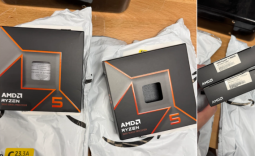 Redditor receives not one but TWO empty boxes of Ryzen 5 9600X from Amazon
 Xbox Series X25 Limited Edition Console is priced at $900, arrives November 2026
 Dave Bautista officially cast as Kratos in Amazon's 'God of War' TV Series, replaces Ryan Hurst
 Take-Two begins the hunt for GTA 6 leaker CyberLeek, subpoenas Microsoft and Discord
 PlayStation 6 handheld not expected to stay under $600, warns leaker
 AMD confirms the Radeon RX 9050 4GB will have a tiny 64-bit bus and just 16MB Infinity Cache
 Intel 'Nova-Lake-S' 28-core CPU with bLLC reportedly draws 296W at PL2
 Cooler Master MasterFan A120 Fan Review
 GIGABYTE MO27Q2A Gaming Monitor Review: 1440p, 280Hz, and QD-OLED is a winning combination
 Cooler Master V8 ACE 3DHP BLACK CPU Cooler Review
 ASUS ROG Strix XG129C Review: A $199 Gaming Monitor You Don't Play Games On
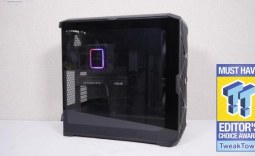 Cooler Master HAF II 500 Mid-Tower Chassis Review
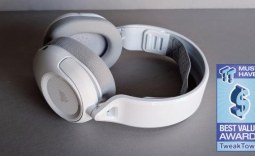 Corsair HS35 v3 Wireless Gaming Headset Review - An Affordable Winner
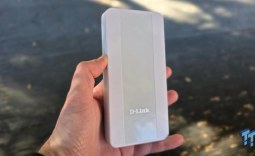 D-Link F518 5G Wi‑Fi 6 AX1800 Mobile Hotspot Review: All-Day Mobile Hotspot
 Bose Lifestyle Ultra Speaker Review - Impressively Detailed Room-Filling Sound
 MSI Z890 Gaming Plus WIFI6E Review - Z890 for under $200
 Mortal Kombat (1995) 4K Ultra HD Blu-ray Review
 Using Multiple Monitors? Change these Windows settings for a Better Experience
 Windows Sandbox is The Windows Security Feature Most People Never Use
 I ditched the Windows 11 context menu for this open-source tool, and here's why
 Windows 11 may be encrypting your drive already, and I checked where my recovery key went
 GIGABYTE's 40 Days of INFINITY celebrates 40 Years of Innovation with stunning GeForce RTX graphics cards and rewards
 I swapped File Explorer for this free file manager and finally got the layout I wanted
 How to tell if someone has been using your Windows PC without your permission
 6 Task Manager tips for troubleshooting Windows performance problems
 ASUS ROG's 20th Anniversary Line-up of Premium PC Gaming Gear has Arrived - Here's Everything You Need to Know
 Six File Explorer tips every Windows user should know