







Wearable Computing & Fashion - Page 16
Smartwatch, fitness tracker, AR glasses, and wearable tech news - health features, fashion collabs, and new form factors. - Page 16
Stay Updated
Follow TweakTown for breaking tech news, reviews, and daily updates.


As an Amazon Associate, we earn from qualifying purchases. TweakTown may also earn commissions from other affiliate partners at no extra cost to you.
Apple Watch has great potential, but smartwatches may be too gimmicky
The Apple Watch is expected to hit the market sometime this spring, and analysts believe it's going to be a major seller - quickly becoming the most popular smartwatch. More than 40 million smartwatches and fitness bands will be sold in 2015, according to CCS Insight, and that number is going to be boosted by the Watch's release.
Both smartwatches and fitness trackers may have received a lukewarm reception in 2014, and trying to keep people using their wearables will be a major challenge - but Apple will be ready to support app developers, hoping they make wearable-centric offerings.
"Apple has access to the best developers in the world, so they've given them all the tools they need to make apps for the Apple Watch, and they will now be having a beauty contest with all of those developers, saying come and show us what you've done," stated Ben Wood, chief of research at CCS Insight. "Then out of those thousands of apps they can pick five knock-out ones that really make the Watch sing, and use them to bring it to life."
Continue reading: Apple Watch has great potential, but smartwatches may be too gimmicky (full post)
Key to wider wearable adoption could be to just keep things simple
Wearable products will invade the consumer and business markets in the coming years, but will take patience from manufacturers and buyers. There is a lot of confusion regarding the current wearable market, as there is a clutter of different products, multiple platforms, and rather uneven marketing efforts from manufacturers.
Integrating faster and more powerful hardware doesn't seem to be a problem for wearables, but manufacturers are now trying to create more visually appealing products. Early generations of consumer wearables were rather bulky and didn't seem to be fashionable at all, though that is beginning to change.
Wearables were quite popular during the 2015 Consumer Electronics Show (CES), with many new product announcements and public launches. However, analysts still are unsure what to make of the industry, even though they expect it to rapidly grow in the coming years.
Continue reading: Key to wider wearable adoption could be to just keep things simple (full post)
Apple Watch battery life is going to iSuck, 3.5 hours of standard use
One of the big parts that Apple left out of its Watch unveiling last year was the battery life, something that is shaping up to be more than lackluster. Sources familiar with the device have told 9to5Mac that Watch users can expect just 3.5 hours of battery life with standard use, and just 2.5 hours of heavy use.
Watch will be powered by Apple's S1 processor, which should have the same type of performance as its A5 processor that is powering the current iPod touch. Watch will be running a cut down version of iOS codenamed SkiHill that will be providing content to a Retina-class display that will be pushing content out at 60FPS. If the Watch is being used with its built-in fitness tracking software, users can expect around four hours of battery life.
Mixed use of the Apple Watch has battery life at around 19 hours, and during standby and low-power modes, Watch users can expect around 203 days of use from a single charge. Battery life has been a big problem for Apple, which is reportedly one of the big reasons behind the company delaying Watch from last year, to this year.
Continue reading: Apple Watch battery life is going to iSuck, 3.5 hours of standard use (full post)
Meet the original Apple watch
Not exactly revolutionary, this now-collectors item is a watch that was given to Mac customers back in 1995 as a way to help convince them to upgrade their OS. Originally a straight forward give-away, this item now fetches a pretty penny if sold online thanks to its history and now apparent rarity.
Jonathan Morrison from TechFast brought one along to CES and showed it off to various technology media companies, displaying it's beautiful lack of features and interesting design qualities - looking like something possibly made for primary school children.
Don't be surprised if you see this design set as an optional new face for the latest Apple iWatch release.
This wearble will measure your laughter or when you've fallen over
Amidst the hectic week that was everything-CES 2015, the WaratTell rose from the ashes - set as a sensor based on 10 years of "laugh-detecting technology" and designed by Masafumi Matsumura of Osaka Electro-Communication University - this product actually has a real purpose.
Designed for when your oldies are put away in a home, this sensor will allow you to monitor how happy seniors are via an internet connection and an linked application, showing you how often they laugh or even if they've fallen over or are in any other kind of distress. This is thanks to audio-processing software that is linked to the sensor automatically distinguishing between various vocal sounds.
Fully optioned with a microphone, Bluetooth connectivity, Wi-Fi modules and an accelerometer, this device is located within a bright orange casing painted with a smiley face - which is then connected to a lapel or hangs around your neck.
Continue reading: This wearble will measure your laughter or when you've fallen over (full post)
Google Glass sales stop, as company revamps wearables offering
Google has halted sales of its Glass wearable system, but said there is still interest in launching the smart glasses to consumers again in the future. The company has struggled to woo app developers and plans to transition a new department to take over for the Google X division that initially conducted research for Glass.
Despite halting Glass sales, Google pledged to help continue support companies and consumers using the product - including police agencies and other major testers.
The first version of Glass was released in April 2013 to a small number of testers, available through the Explorer program for $1,500. About one year later, Google released Glass to the public, but analysts said sales were small, as price, privacy concerns, and a lack of apps limited interest.
Continue reading: Google Glass sales stop, as company revamps wearables offering (full post)
Smartwatch makers should focus on better apps to drive ownership
Fitness trackers grabbed headlines throughout 2014, but with 42 percent of owners leaving behind their wearable devices in the first six months, smartwatches have a great opportunity to pick up the slack.
"The best way to engage athletes interested in using wearable technology is to provide them with applications and devices that target their specific, and often sophisticated needs that can be measured and used to improve performance," said Matt Powell, VP of industry analysis of sports and leisure trends at The NPD Group, in a blog post. "For example, a tennis player might want to measure lateral quickness and backhand speed, while a golfer might want to measure posture, stance and hand speed."
As wearable technology continues to evolve, and more consumers become aware of features and functionality, there are unique sales opportunities available. However, it's up to OEMs and app developers to entice owners to continue using their wearable products, otherwise it could end up being a fruitless effort.
Continue reading: Smartwatch makers should focus on better apps to drive ownership (full post)
Apple Watch Edition gold 42mm 32GB with no band will cost around $2499
In what should come as a total lack of surprise, the larger Watch from Apple will be more expensive than the smaller Watch. Apple has said that the Watch pricing will start at around $349, but what about the larger versions of its wearable? BGR is reporting that the two variants, the 38mm and 42mm, will come with differing pricing, but they are guestimating the following prices:
I think we will see a small change between the prices and sizes too, but that gold edition is hitting scary territory. 99% of consumers will not spend that much money, but for those who are sitting in the 1% category, $2499 isn't too much to dump down on the first-generation Watch from Apple, right?
Continue reading: Apple Watch Edition gold 42mm 32GB with no band will cost around $2499 (full post)
NPD: Smartwatches attracting different customers than fitness wearable
The wearables market is growing, and has consumer attention as witnessed during CES 2015, but age, income and gender demographics are quite different between smartwatch and fitness tracker owners. Trying to create appealing products and price points requires insight into who is purchasing these devices - and how to cater to their specific needs - but that can be a daunting task for manufacturers.
Thirty-six percent of fitness tracker consumers in the United States are 35 to 54 years old, 41 percent make an average income of more than $100,000, and 54 percent were women. The NPD Group report also found that one in 10 US adults own some form of a fitness tracker.
Meanwhile, 69 percent of smartwatch owners are 18 to 34 years old, 71 percent are male, and 48 percent have an income below $45,000.
Continue reading: NPD: Smartwatches attracting different customers than fitness wearable (full post)
Intel and Oakley team up for next-generation smart wearables
CES 2015 - Intel is pushing further into the wearables market after announcing a strategic partnership with eyewear maker Oakley. Intel will provide hardware and Oakley is going to roll out luxury and sports eyewear products mixed with smart technology - a great test platform for Intel's Curie ship.
"The product has to be authentic for us to be credible," said Colin Baden, CEO of Oakley, during a session at the Oakley booth. "If we are going to produce something that has this augmented experience, we can't have the front row laughing at us. We have to have the respect of the people who have represented us for the last 40 years, and if we fail at that, then we are making something that is novelty. And we are not about novelties. We are about real science and real technology."
CES 2015 has seen a large number of wearable-related news, as companies produce cheaper, functional smart devices.
Continue reading: Intel and Oakley team up for next-generation smart wearables (full post)
Introducing the Hexoskin Junior, first biometric shirt for kids, teens
Biometric smart clothing company Hexoskin has announced the Hexoskin Junior, the world's first biometric shirt for kids and teenagers.
The shirt makes it possible to track the following: heart rate, step count, sleep duration, calories burned, heart rate recovery, heart rate variability, breathing rate, breathing volume, activity level, acceleration, cadence, and more.
The custom biometric shirt can measure 42,000 data points per minute, with data sent via Bluetooth in real-time, designed to help coaches and athletes better understand their performance. Manufactured to be extremely lightweight, warm, and comfortable, it can measure biometrics during physical activity and sleep - with the Bluetooth device connected to fabric sensors inside of a built-in pocket.
Continue reading: Introducing the Hexoskin Junior, first biometric shirt for kids, teens (full post)
Intel throws weight behind wearbles, unveils button-sized Curie module
CES 2015 - Intel has publicly unveiled its Curie module, a button-sized hardware product that utilizes Quark SE to help power wearable products. It is so small that it can actually be used in a coat button, as demonstrated during the keynote.
The Quark SE system-on-chip (SOC) module uses a low-power, 32-bit microcontroller with 384 kb of flash, Bluetooth Low Energy support, and an accelerometer and gyroscope combination sensor. The chip will publicly launch during Q3 or Q4 this year, with partners including Fossil Group, MICA and Opening Ceremony, SMS Audio, and Basis Peak.
"The rise of new personal computing experiences, intelligent and connected devices, and the wearable revolution are redefining the relationship between consumers and technology," said Brian Krzanich, Intel CEO. "Our goal with Intel technology is to help solve real problems and enable experiences that are truly desired by people and businesses."
Continue reading: Intel throws weight behind wearbles, unveils button-sized Curie module (full post)
GUESS Watches debuts its Connect smartwatch wearable at CES
CES 2015 - GUESS Watches announced the launch of the GUESS Connect, a smartwatch that supports hands-free and eyes-free notifications directly from a mobile device to the device.
Based on Martian technology, the smartwatch has a microphone and audio speaker, and supports a voice command app so wearers can issue voice commands, talk, listen, and respond to text messages from the watch. Google Android and Apple iOS mobile users will be able to modify which alerts are sent to the smartwatch, with vibration patterns alerting them to received messages, emails, text messages, and other data.
"The GUESS Connect Smartwatch, powered by Martian, represents one of the first true marriages of a fashion watch powerhouse and a wireless technology innovator," said Cindy Livingston, president and CEO of Sequel/GUESS Watches, in a press statement. "We are thrilled to move in this direction with a proven technology innovator to create smart, GUESS designs."
Continue reading: GUESS Watches debuts its Connect smartwatch wearable at CES (full post)
Garmin introduces vivofit 2 activity tracker wearable
CES 2015 - GPS product company Gartner has unveiled the vivofit 2 activity tracker, a smart device that has one year of battery life and can be worn 24/7. The wearable also includes interchangeable stylish bands that gives owners extra fashion flexibility.
The device tracks progress all day and includes audible alerts that remind users when they need to get up and moving.
The Garmin vivofit 2 has a $129.99 MSRP and $169.99 with a heart hate monitor strap.
Continue reading: Garmin introduces vivofit 2 activity tracker wearable (full post)
Trackimo personal-tracking platform launches in North America
CES 2015 - Tracking device company Trackimo officially launched in North America during the 2015 Consumer Electronics Show (CES), with the company promoting its small, affordable and feature-rich tracking devices in Las Vegas.
The company is showing off the Trackimo Universal, a compact, lightweight device that measures just 45mm x 18mm x 40mm. The device can be quickly attached to backpacks, bikes, luggage, and similar products - and can be hardwired directly into a vehicle.
"We're very excited to be part of the Trackimo Worldwide team and to be launching Trackimo into the North American market," said Jim Prandine, VP of sales of Trackimo North America. "Trackimo Universal covers dozens of applications in various channels, and our new upcoming products will broaden consumer demand even further."
Continue reading: Trackimo personal-tracking platform launches in North America (full post)
Introducing the nevo solar, the world's first solar powered smartwatch
Smartwatch manufacturer nevo has announced the nevo solar, the world's first solar powered analog smartwatch for the consumer market. Even with frequent use, nevo partnered with Sunpartner Technologies, utilizing the Wysips solution to help generate electricity through exposure to light.
The nevo solar will be released in August 2015, but no pricing details were made available.
"When we developed nevo we made battery life a top priority," said Sebastien Druven, co-founder and CEO of nevo. "Our standard dual battery system and low-consumption technology freed users from the inconvenience of nightly charging and now we're taking that concept to its ultimate conclusion - solar power. With nevo solar we capture the unlimited power of light. Our users will never have to worry about charging."
Continue reading: Introducing the nevo solar, the world's first solar powered smartwatch (full post)
Vuzix receives $24.8M cash injection from Intel for next-gen wearables
Intel has given Vuzix a $24.8 million investment, as the hardware manufacturer wants to help Vuzix possibly create fashion-based wearable glasses. Vuzix will use the Intel cash investment to accelerate fashion-based wearable display products directly to the consumer market, as Google Glass seemingly fell flat.
Intel missed the boat on smartphones and tablets, but is interested in making sure it has a major presence in the wearables market. The Silicon Valley company has already created a partnership with Opening Ceremony to create a wearable smart bracelet, catering to a higher-end market.
Meanwhile, Vuzix has had success in wearable development - and the enterprise market seems most appealing to manufacturers - but with Google Glass unable to appeal to most consumers, Vuzix has a unique opportunity to use Intel's investment to invade the market.
Continue reading: Vuzix receives $24.8M cash injection from Intel for next-gen wearables (full post)
FitLinxx AmpStrip fitness wearable for athletes hits Indiegogo
CES 2015 - FitLinxx has taken its AMpStrip fitness wearable for athletes to Indiegogo, trying to raise funds for the wearable device. Financial support on Indiegogo ranges from $25 up to $10,000, with different level of support based on monetary contributions.
The waterproof, sensor-filled device is able to monitor heart rate, respiration, skin temperature and posture around the clock, able to stick to the wearer's torso.
"This is our first foray into direct-to-consumer products and we want to do it right," said Dave Monahan, president and CEO of FitLinxx. "We're excited to share our product on Indiegogo and get feedback from athletes. We know having them as part of our AmpStrip team will make our product that much better."
Continue reading: FitLinxx AmpStrip fitness wearable for athletes hits Indiegogo (full post)
Taser betting big on becoming body camera industry leader
The market for wearable police body cameras is rising because of national interest, and investors expect Taser International to benefit from an "outperform" rating - as the company known for nonlethal weapons will benefit from interest in body cameras. Half of the US domestic police force currently use Taser's stun guns, and analysts believe wearable body cameras could outperform that number in the next few years.
"In a time where even the most minute news stories of excessive police force have the ability to instantly go viral, pressure will mount on police departments to provide video evidence that qualifies actions," noted an Oppenheimer report. "TASR shares surged 30 percent following the shooting in August of unarmed teen Michael Brown, and the lack of crime scene documentation."
The company's shares closed at $23.98 on Friday, and are currently trading at $25.96 - closing in on the Oppenheimer target price of $28.
Continue reading: Taser betting big on becoming body camera industry leader (full post)
TAG Heuer plans to compete in smartwatch market, create partnerships
TAG Heuer plans to jump into the smartwatch market to compete with Apple and other competitors, as the wearable market accelerates. The company started on its wearables industry about four months ago, creating several partnerships, while also exploring potential acquisitions. TAG Heuer plans to wait until it has a working product to present to the public, which could take until late 2015 at the soonest, the company says.
"Smartwatches represent a challenge to the Swiss watch industry that is comparable to the appearance of quartz technology," said Guy Semon, Tag Heuer general manager. "We cannot ignore this tsunami that is coming closer."
The smartwatch market should increase in popularity next year, as more tech companies and watchmakers dive into wearables.
Continue reading: TAG Heuer plans to compete in smartwatch market, create partnerships (full post)
 Giveaway: 12 Winners Will Score MONTECH NX400 and NX600 CPU Coolers
 GTA 6 leaks have reportedly led to a morale drop at Rockstar, with Netflix frustrated as well
 The Blood of Dawnwalker won't hit 60 FPS on any console, PS5 Pro tops out at 40 FPS
 AMD claws back ground against Intel in the CPU market, climbs to 35% share in desktop CPUs
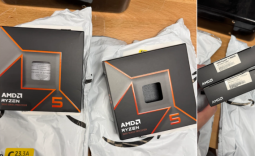 Redditor receives not one but TWO empty boxes of Ryzen 5 9600X from Amazon
 Xbox Series X25 Limited Edition Console is priced at $900, arrives November 2026
 Dave Bautista officially cast as Kratos in Amazon's 'God of War' TV Series, replaces Ryan Hurst
 Take-Two begins the hunt for GTA 6 leaker CyberLeek, subpoenas Microsoft and Discord
 PlayStation 6 handheld not expected to stay under $600, warns leaker
 AMD confirms the Radeon RX 9050 4GB will have a tiny 64-bit bus and just 16MB Infinity Cache
 Intel 'Nova-Lake-S' 28-core CPU with bLLC reportedly draws 296W at PL2
 Cooler Master MasterFan A120 Fan Review
 GIGABYTE MO27Q2A Gaming Monitor Review: 1440p, 280Hz, and QD-OLED is a winning combination
 Cooler Master V8 ACE 3DHP BLACK CPU Cooler Review
 ASUS ROG Strix XG129C Review: A $199 Gaming Monitor You Don't Play Games On
 Cooler Master HAF II 500 Mid-Tower Chassis Review
 Corsair HS35 v3 Wireless Gaming Headset Review - An Affordable Winner
 D-Link F518 5G Wi‑Fi 6 AX1800 Mobile Hotspot Review: All-Day Mobile Hotspot
 Bose Lifestyle Ultra Speaker Review - Impressively Detailed Room-Filling Sound
 MSI Z890 Gaming Plus WIFI6E Review - Z890 for under $200
 Mortal Kombat (1995) 4K Ultra HD Blu-ray Review
 Using Multiple Monitors? Change these Windows settings for a Better Experience
 Windows Sandbox is The Windows Security Feature Most People Never Use
 I ditched the Windows 11 context menu for this open-source tool, and here's why
 Windows 11 may be encrypting your drive already, and I checked where my recovery key went
 GIGABYTE's 40 Days of INFINITY celebrates 40 Years of Innovation with stunning GeForce RTX graphics cards and rewards
 I swapped File Explorer for this free file manager and finally got the layout I wanted
 How to tell if someone has been using your Windows PC without your permission
 6 Task Manager tips for troubleshooting Windows performance problems
 ASUS ROG's 20th Anniversary Line-up of Premium PC Gaming Gear has Arrived - Here's Everything You Need to Know
 Six File Explorer tips every Windows user should know