







Business, Financial & Legal - Page 113
Catch up on business, finance, and legal news shaping tech, gaming, and science - mergers, lawsuits, antitrust, IPOs, Big Tech earnings, and market trends. - Page 113
Stay Updated
Follow TweakTown for breaking tech news, reviews, and daily updates.


As an Amazon Associate, we earn from qualifying purchases. TweakTown may also earn commissions from other affiliate partners at no extra cost to you.
EA revenues drop 18%, increases its predictions for Q1 2015
EA has been in the news a fair bit in the last 24 hours, where we only just reported that Battlefield: Hardline has a release date of March 17, 2015 and we have a release window of Q4 2015 for DICE's Star Wars Battlefront. Now we're hearing about EA's financials for the quarter that finished on September 30.
The company reported $990 million in net revenue for the three-month period, which is an 18.5% slide from the $1.21 billion in revenue it posted from its last quarter. When comparing it to the same quarter from last year however, it shows the company has a nice 42.4% year-over-year increase. Net income for the company has improved from the same time last year, posting $3 million in income versus the $273 million loss from last year.
Digital revenues slipped 5.2% from $536 million to $508 million for the quarter, but this is still a 12.9% increase year-over-year. EA is still hoping to make a massive $1 billion in digital add-on content this year, and looks to be on track to reach that big goal. The company has adjusted its expectations for the fiscal year, something that ends on March 31, 2015, too. It has added $75 million to its projections, for a total of $4.375 billion. For the next three months, EA expects a net revenue of $1.1 billion.
Continue reading: EA revenues drop 18%, increases its predictions for Q1 2015 (full post)
Former EA CEO is now the boss Unity Technologies
After resigning from Electronic Arts last year amid multiple problems the company was experiencing, John Riccitiello hasn't made much noise in the last twelve months, until now.
Unity Technologies' founder, David Helgason, is stepping down as CEO of the company, with Riccitiello replacing him. Helgason will stay with the company, but said that Riccitiello is "the right person to help guide the company to the mission that we set out for ourselves over a decade ago: democratize game development!". The founder of Unity also said that the company has been "making some big moves" lately, reiterating that Unity has been investing in new partnerships and technologies.
Helgason wrote: "This is a lot to take on as a company and building it right is going to take a huge effort. We keep our eyes out for the best talent and help wherever we feel we can use it at every level. That's why today, I'm pleased to welcome John Riccitiello onto the Unity team as our new CEO. Sure, that sounds odd, as it also means I'm stepping down from the role, but this is an amazing win for Unity and the community. Many of you are likely familiar with John. He's been in the games industry for a long time, both as COO and later CEO of Electronic Arts. He's also helped fund and guide some notable startups like Oculus and Syntertainment among many others, and is a heartfelt believer in the indie scene and its importance to the overall well-being of the industry".
Continue reading: Former EA CEO is now the boss Unity Technologies (full post)
Lenovo rumored to announce BlackBerry acquisition, this week
Lenovo is really hitting a stride lately, especially with their great Yoga range of slates and Ultrabooks, but what about smartphones? The latest rumor is that the Chinese electronics giant will announce an acquisition bid for Canadian phonemaker, BlackBerry... this week.
Unnamed sources have talked with Benzinga.com, a financial news site, that Lenovo is going to offer BlackBerry $15 per share, which is a premium over the $9 or so that its stock has been trading at lately. If BlackBerry declines the first offer, Lenovo will reportedly back it up with an increased offer of $18 per share.
Both Lenovo and BlackBerry have declined to comment on the rumors so far, but this isn't the first time they have been floating around. We heard about this back in October last year, but nothing happened. The issue was that the Canadian government wouldn't give its approval for Lenovo to acquire BlackBerry due to national security concerns.
Continue reading: Lenovo rumored to announce BlackBerry acquisition, this week (full post)
Apple has shipped 39 million iPhones, 12 million iPads in 3 months
Apple has posted its Q4 earnings, revealing that the company has shipped a massive 39.3 million iPhones in the three-month period. Apple also shipped some 12.3 million iPads, and 5.5 million Macs across the world in the quarter.
The record-breaking 10 million iPhone 6/iPhone 6 Plus smartphone sales in the opening weekend alone would've kicked this along, but iPad sales have not only dipped in the quarter, but year-over-year, too. To make it even more clear, Apple's iPad has reached a new low, something it hasn't hit since it first started reporting tablet sales separately back in 2012.
Why would this be happening? Well, Android tablets are getting much, much better with each iteration, and now we have the bigger 5.5-inch iPhone 6 Plus, the iPad is becoming more irrelevant to some users. The iPad did well in Japan according to Apple, and its slate is also the United States' education tablet of choice. Tim Cook, CEO of Apple, said during the Q&A session after the earnings report that Apple is looking at the slump in iPad sales as a "speedbump and not a huge thing" and said that he personally sees a "great future" for its tablets.
Continue reading: Apple has shipped 39 million iPhones, 12 million iPads in 3 months (full post)
bitcoin ATM seized during $2.6 million drug raid in Australia
Police authorities in Australia seized a Bit2Bit bitcoin ATM during a multi-million-dollar drug trafficking network bust, according to reports. The raid was targeting the Bandidos motorcycle gang, accused of high-level drug trafficking, and was the culmination of a two-year investigation. The ATM was located in the South Brisbane Roastery Café, and was the first ATM in Queensland, with investigators conducting a forensics search of the seized machine.
It's unknown if the ATM was used by gang members to help conduct drug-related business, including potential money laundering.
"The arrested individual has no relationship to Bit2Bit Holdings Pty Ltd.," according to a statement released by Bit2Bit. "he is not a shareholder, either directly, or indirectly. Rouge Coffee, and The Roastery Cafe do not own, or operate the ATM. The ATM is the sole property of Bit2Bit and is operated by us. The ATM does not allow large volume transactions. Bit2Bit's staff have been instructed to cooperate fully with any legal requests they get from the police."
Continue reading: bitcoin ATM seized during $2.6 million drug raid in Australia (full post)
TSMC delays the mass production of 16nm FinFET chips by up to 6 months
TSMC was meant to be ramping up its 16nm FinFET production any time before the end of the month, but the manufacturing company has provided an update for this, saying it is happy with the yield, but is pushing back mass production of 16nm to early 2015.
The company said this would happen in early 2015, but finished by saying it could even fall into Q3 2015. Once TSMC has reached mass production of its 16nm FinFET process, it will provide added performance and power savings when compared to current technologies. TSMC has said that it is happy with the first yields of 16nm FinFET, but will not start mass producing it until around the second half of next year. The company said: "On the yield learning side, the progress [of 16nm] is much better than our original plan".
TSMC continued "This is because the 16nm uses similar [BEOL] process to 20SOC, except for the transistor. Because of the excellent progress in yield learning and readiness in manufacturing maturity and also to meet customers' demand, we plan to pull in 16-nanometer volume production through the end of Q2 next year or early Q3 year 2015". The full reason behind the delay isn't known right now, but the demand of 20nm is growing quick with the launch of the new iPhone, with Apple tapping TSMC for the production of its A8 and A8X chips.
Continue reading: TSMC delays the mass production of 16nm FinFET chips by up to 6 months (full post)
Code Red: AMD to lay off 710 employees after a harsh quarter
Weeks after NVIDIA's launch of its second-gen Maxwell GPUs, its competitor AMD has experienced "challenging market conditions" for its last quarter, just as its new CEO, Lisa Su gets used to her new position of power.
For AMD's third quarter, the company saw revenues of $1.43 billion, with an operating income of $63 million, and net income of $17 million. When things get split into individual units, we see things getting messy. AMD's Computer and Graphics division, the side of AMD that takes care of its successful Radeon business, and is considered as the "bread and butter" of Team Red, posted revenues of $781 million. This is a 16% year-on-year drop, with the division posting an operating loss of $17 million, compared to its $6 million loss in the same quarter of 2013.
AMD's Enterprise, Embedded, and Semi-Custom Division, posted higher revenues of $648 million, which is up 21% from the same quarter of 2013. This division posting earnings of $108 million, up from the $92 million of Q3 2013. The problem is, AMD says that there are harsher times to come, warning that it expects revenues to drop another 10% to 16% in its next quarter, sequentially. The company also had to slash jobs as part of its restructuring plan, culling some 710 employees from its global workforce, a number that makes up 7% of its total staff.
Continue reading: Code Red: AMD to lay off 710 employees after a harsh quarter (full post)
Intel reports record-breaking Q2 revenue, ships over 100 million CPUs
According to the company's quarterly report, Intel has enjoyed a massive revenue boost, with it being the first time Intel was able to ship so many processors in a quarter. As the chipmaking giant shipped over 100 million processors in the last three months, the company generated a revenue of $14.6 billion during this time.
Intel is very confident that the fourth quarter will generate consistency, with analysts predicting a $14.7 billion in revenue. As a result, the company generated $3.3 billion in net profits. Intel CEO Brian Krzanich said, "We are pleased by the progress the company is making, ". He continued, "We achieved our best-ever revenue and strong profits in the third quarter. There is more to do, but our results give us confidence that we're successfully executing to our strategy of extending our products across a broad range of exciting new markets."
The PC Client group generated a revenue of $9.2 billion, which is a 6% growth compared to Q3 2013 and a 9% boost year-over-year. Other business groups such as Data Center Group generated a total revenue of $3.7 billion during the previous quarter, which amounts to 16% growth year-over-year. But other groups such as Internet of Things group generated about $500 million in revenue which reflects a 2% down slide compared to the same three-month period of 2013. The Mobile and Communications groups generated a revenue of $1 million, but according to the company, it's consistent with its expectations. Meanwhile, the software and services group generated $558 million.
Continue reading: Intel reports record-breaking Q2 revenue, ships over 100 million CPUs (full post)
Apple fines sapphire screen maker $50 million for leaking info
Apple is cracking a whip to set an example over smaller companies and suppliers who received (or will receive) contracts from the company to make components for its devices. The company slapped a sapphire display maker with a $50 million fine for leaking the information about its devices' specification and other information that they were obligated to be silent about.
According to the report, the information came out because GT Advanced Technologies filed for bankruptcy once they have decided to sell off their sapphire crystal manufacturing factories. The company was responsible for leaking information about the presence of sapphire display for iPhone 6 before its release. But at the time when it was found that iPhone 6 will be using 'ion-strengthened glass', the share prices took a nose dive. Furthermore, the company owes about $600 million for the displays that are not used.
According to the bankruptcy report, the company said that its deal with Apple for iPhone screens was oppressive and burdensome where they had to terminate the agreement to deal with the situation. As a result, the company's facilities in Arizona and Massachusetts will close down, affecting up to 890 people's jobs. 13 employees would be getting bonuses adding up to $64,700.
Continue reading: Apple fines sapphire screen maker $50 million for leaking info (full post)
Finland's Prime Minister blames Apple for killing two industries
Some blame the recession and the weak economy for many businesses failing: small, medium and large. But Finland's Prime Minister Alexander Stubb suggested that Apple is the company that killed two of its important export industries. The first one is paper, the second one in Finnish-based, once-dominant and well-known maker of phones, Nokia.
During an interview with CNBC, Finnish PM said, "I guess one could say that the iPhone killed Nokia and the iPad killed the Finnish paper industry,". He added, "The iPhone killed Nokia and the iPad killed the paper industry, but we'll make a comeback". Recently, ratings agency Standard & Poor's downgraded the country's rating from AAA to AA+. Finland's GDP has been taking a nose dive for three years in a row, and started to reflect a negative perspective about the country's economy.
Though blaming Apple (or anyone) is simply wrong. Nokia's dominance collapsed not only it stuck with Symbian OS to a point that switching to other OS was too late. Android and iOS picked up the pace and dominated, not to mention Samsung's various smartphones and feature phone spree in almost every price range. Paper on the other hand gets replaced with other electronic devices, especially e-readers and tablets. Even airline pilots have slowly started replacing manuals and maps for a tablet where required information is easily available. At one point, even Apple had trouble and was in the brink of collapse, which was the turning point when the company brought back Steve Jobs in the '90s.
Continue reading: Finland's Prime Minister blames Apple for killing two industries (full post)
Google could beat Apple to be the world's first $1 trillion company
It was only April of 2014 where most, ourselves included, thought Apple were well on its way to be valued at over $1 trillion. But, it looks like Google will beat Apple to this milestone, but it would have to more than double Apple's stock performance before 2020.
While Apple makes consumer electronics and online services, like the iPhone, iTunes, and more, Google steps right out of those boundaries. It has a massively used search engine, mobile OS and hardware, partnerships with virtually every player in the technology and manufacturing industry, artificial intelligence, robotics, health technology, the list truly goes on.
Colin Gillis, an analyst with BGC Capital, wrote in a research note to clients on Friday: "If you look at the range of [projects] Google is attacking, it represents opportunities on a much more massive scale than Apple is addressing". He added: "What are we going to get from Apple - a thinner iPad?". Right now, Apple is the most valuable US company, with a market capitalization of $599 billion, compared to Google's $372 billion.
Continue reading: Google could beat Apple to be the world's first $1 trillion company (full post)
Apple remains the No. 1 most valuable brand in the world
Apple has been awarded the most valuable brand in the world for a second consecutive year, worth an estimated $119 billion, according to the Interbrands 2014 Best Global Brands list. There are four technology companies in the top 10 this year, though tech remains extremely fickle, forcing companies to try to adapt to changing customer demands.
"A lot of our thinking about this year's report is really around the 'Age of You,'" said Alfred DuPuy, Interbrand Executive Director.
Trailing behind Apple is Google ($107.4 billion), a 15 percent increase year-over-year, and Coca-Cola round out the top three - with IBM, Microsoft, General Electric, Samsung, Toyota, McDonald's, and Mercedes-Benz round out the top 10 overall most valued brands in the world. As an honorable mention, Facebook's value increased 86 percent, and the company jumped up to No. 29 on the list - and will likely continue to rise.
Continue reading: Apple remains the No. 1 most valuable brand in the world (full post)
Flipkart Big Billion Day sale angers Tech giants, cries foul
Flipkart barely can step out of the oven now that the Indian government plans to crack down 'predatory discount' and unfair trade practice claims. But now its all ready to be grilled thanks to top electronic makers like LG, Sony and even Samsung.
While Flipkart claimed that its Big Billion Day Sale was a huge success despite the server downtime issues it faced, consumer good manufacturers were not amused. The companies did not like what Flipkart did, and is considering a legal action over 'predatory pricing and discount scheme' allegations. Several personnel assumed that Flipkart intends to disrupt the livelihood of the organized retail market in India.
One of the company's staff also claimed that goods that are sold via Flipkart with unrealistic pricing are via unauthorized channels. Therefore, they will be compelled not to provide warranty to those consumers who have purchased from such sites. An executive said, "This is a clear case of predatory pricing just to shoot up traffic at their website, and build up valuations unrealistically. This is not acceptable and we will ensure that this does not happen again."
Continue reading: Flipkart Big Billion Day sale angers Tech giants, cries foul (full post)
Man sues Red Bull because the energy drink didn't give him wings
Ever enjoyed a Red Bull, but wondered why you didn't grow wings? Well, so did Benjamin Careathers, who has sued the energy drink company. Careathers filed a lawsuit last year with the US District Court of the South District of New York, arguing that Red Bull mislead him and consumers about their claim that "Red Bull gives you wings", as well as the claims of increased performance, concentration and reaction speed.
His suit argued: "Such deceptive conduct and practices mean that (Red Bull's) advertising and marketing is not just 'puffery,' but is instead deceptive and fraudulent and is therefore actionable". The result of his lawsuit? Red Bull agreeing to pay $13 million to settle the US class-action lawsuit, for his claims of false and misleading advertising.
The settlement includes many millions of people who had purchased at least one Red Bull in their life, over the last 12 years. Red Bull has offered class members the option of either a $10 reimbursement, or $15 worth of Red Bull products, which probably won't give you wings. This means that if you've purchased one if their energy drinks between January 1, 2002 and October 3, 2014, you can claim either of the two options from Red Bull, without proof of purchase required.
Continue reading: Man sues Red Bull because the energy drink didn't give him wings (full post)
Indian govt to investigate Flipkart over 'Big Billion Day' complaints
The Government of India's Commerce and Industry minister said that the government will investigate Flipkart over numerous complaints made during and after the e-commerce site's 'Big Billion Day' sale on October 6th. These complaints are accompanied by several hashtags like fraudkart, Big Scam Day and Big Billion. The company co-founders did issue a statement of apology via its company blog, but it didn't have any affect on most consumers.
Numerous consumers and potential buyers complained that Flipkart was luring in consumers. Throughout the day of the sale, many said via Twitter that Flipkart already increased the prices of products before the sale. It was followed with complaints for lack of stock for several items that was listed as available in search results and website outage complaints.
Besides the consumers, retailers and traders have also serious concerns over Flipkart's 'predatory discount'. They've claimed that the e-commerce is damaging many small and larger retail businesses that find it impossible to compete with Flipkart's unrealistic discount offers. The Confederation of All-India Traders also pressured the Commerce and Industry Ministry to intervene in this matter, and implement procedures to monitor and control such predatory pricing and allegedly unrealistic sales. The Enforcement Directorate will also be investigating Flipkart after an order from the Reserve Bank of India.
Continue reading: Indian govt to investigate Flipkart over 'Big Billion Day' complaints (full post)
Samsung is preparing for a 60% drop in profits for Q3 2014
Samsung is anticipating a massive drop in its profits for Q3 2014, with the company forecasting an operating profit of $3.8 billion for Q3 2014, which represents a massive 59.7% decline compared to the same three-month period from 2013. Total sales for the quarter are expected to be at around $43.9 billion, which is a 20% drop from the same quarter of 2013.
Analysts had expected much better results from the company, which just launched its Galaxy Note 4, and has had an extremely good run with its Galaxy S5 smartphone. But, these declines are going to represent the biggest the company has experienced in five years. Analysts were expecting the South Korean electronics giant to have operating profits drop by 42% to $5.52 billion, while sales were pegged at dropping 14% to $47.6 billion.
Right now, according to Sanford Bernstein analyst Mark Newman, Samsung's only strong spot on its upcoming earnings report is its memory department.
Continue reading: Samsung is preparing for a 60% drop in profits for Q3 2014 (full post)
Bitcoin value drops to just $290 over the weekend, as investors cringe
The lack of central-backing of bitcoin, among other long-term concerns, has left investors worried about bitcoin - and the value of the most popular cryptocurrency dropped to just $290.83 over the weekend. The sudden decrease was a shocking 18 percent drop in less than 24 hours, though have increased at the start of the week back up to $330.
"It's actually a lot harder to get bitcoins than it is to spend them and there have been some suggestions that that's caused a supply/demand imbalance... PayPal integration would also improve that onboarding process," said Hugh Madden, bitcoin exchange ANX co-founder.
It's true that a growing number of companies are accepting bitcoin payments from customers, but the cryptocurrency's volatility, related to speculative trading, will remain a problem that won't go away anytime soon.
Continue reading: Bitcoin value drops to just $290 over the weekend, as investors cringe (full post)
Bill Gates says that Bitcoin is 'better than currency'
During the Sibos 2014 financial services industry in Boston, Bill Gates weighed in on the Bitcoin discussion, where he was asked about the digital currency and its potential to ease the cost of payment transactions for moving money from one place to another.
Gates was in favor of Bitcoin, where he said: "Bitcoin is exciting because it shows how cheap it can be. Bitcoin is better than currency in that you don't have to be physically in the same place and, of course, for large transactions, currency can get pretty inconvenient". Gates said that there will be a time in the near future where financial transactions will "be digital, universal and almost free".
Although Gates had positive things to say about Bitcoin, it wasn't all good news, as he is worried over the anonymity of the digital currency. He added: "The customers we're talking about aren't trying to be anonymous. They're willing to be known, so Bitcoin technology is key and you can add to it or you could build a similar technology where there's enough attribution where people feel comfortable that this is nothing to do with terrorism or any type of money laundering". After the mammoth year Gates had this year, I'm interested why he's not investing heavily into Bitcoin, yet?
Continue reading: Bill Gates says that Bitcoin is 'better than currency' (full post)
HP rumored to split into two companies, consumer and enterprise
According to The Wall Street Journal's sources, HP could be splitting itself into two separate companies, under the same roof. One side of the new HP would deal with its PC and printer operations, while the other would do software and services to its corporate and enterprise customers.
We should hear about the deal sometime today, according to The Journal's sources, with the separation to take place sometime in 2015. This could all be part of Meg Whitman's plans, as the fresh CEO of HP, joining back in 2011, promising a five-year restructuring project. This restructuring project included a major overhaul of the printer and PC business in 2012, and layoffs totaling 45,000 staff, which saves the company some $4.5 billion per year.
Continue reading: HP rumored to split into two companies, consumer and enterprise (full post)
Microsoft rakes in more money from Samsung than it does from Xbox
Microsoft might not make much money from its Windows Phone division, but that doesn't matter: it makes up for it in droves with the royalty fees from Android handset owners such as Samsung and HTC. It was recently revealed that Samsung has handed over $1 billion per year to Microsoft for the use of these royalties, making Microsoft bundles of cash for doing, well, not much at all.
Considering the Entertainment and Devices Division, where the Xbox brand, Kinect and Xbox Live sit, oh and not to mention Skype, and Windows Phone, only made $848 million last year - the $1 billion Microsoft raked in from Samsung means the company made more from its loyalty fees to just one company - Samsung - than it did for all of those massive brands and divisions, combined.
Remember, this is just the money Samsung pays Microsoft, and doesn't represent all of the other Android handset manufacturers on the market. Microsoft has quite the stranglehold on Android it seems, with the Chinese Ministry of Commerce approving Microsoft's purchase of Nokia having Microsoft said the authorities: "concluded after its investigation that Microsoft holds approximately 200 patent families that are necessary to build an Android smartphone".
Continue reading: Microsoft rakes in more money from Samsung than it does from Xbox (full post)
 Giveaway: 12 Winners Will Score MONTECH NX400 and NX600 CPU Coolers
 GTA 6 leaks have reportedly led to a morale drop at Rockstar, with Netflix frustrated as well
 The Blood of Dawnwalker won't hit 60 FPS on any console, PS5 Pro tops out at 40 FPS
 AMD claws back ground against Intel in the CPU market, climbs to 35% share in desktop CPUs
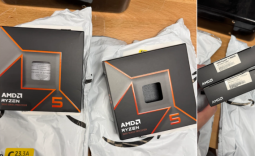 Redditor receives not one but TWO empty boxes of Ryzen 5 9600X from Amazon
 Xbox Series X25 Limited Edition Console is priced at $900, arrives November 2026
 Dave Bautista officially cast as Kratos in Amazon's 'God of War' TV Series, replaces Ryan Hurst
 Take-Two begins the hunt for GTA 6 leaker CyberLeek, subpoenas Microsoft and Discord
 PlayStation 6 handheld not expected to stay under $600, warns leaker
 AMD confirms the Radeon RX 9050 4GB will have a tiny 64-bit bus and just 16MB Infinity Cache
 Intel 'Nova-Lake-S' 28-core CPU with bLLC reportedly draws 296W at PL2
 Cooler Master MasterFan A120 Fan Review
 GIGABYTE MO27Q2A Gaming Monitor Review: 1440p, 280Hz, and QD-OLED is a winning combination
 Cooler Master V8 ACE 3DHP BLACK CPU Cooler Review
 ASUS ROG Strix XG129C Review: A $199 Gaming Monitor You Don't Play Games On
 Cooler Master HAF II 500 Mid-Tower Chassis Review
 Corsair HS35 v3 Wireless Gaming Headset Review - An Affordable Winner
 D-Link F518 5G Wi‑Fi 6 AX1800 Mobile Hotspot Review: All-Day Mobile Hotspot
 Bose Lifestyle Ultra Speaker Review - Impressively Detailed Room-Filling Sound
 MSI Z890 Gaming Plus WIFI6E Review - Z890 for under $200
 Mortal Kombat (1995) 4K Ultra HD Blu-ray Review
 Using Multiple Monitors? Change these Windows settings for a Better Experience
 Windows Sandbox is The Windows Security Feature Most People Never Use
 I ditched the Windows 11 context menu for this open-source tool, and here's why
 Windows 11 may be encrypting your drive already, and I checked where my recovery key went
 GIGABYTE's 40 Days of INFINITY celebrates 40 Years of Innovation with stunning GeForce RTX graphics cards and rewards
 I swapped File Explorer for this free file manager and finally got the layout I wanted
 How to tell if someone has been using your Windows PC without your permission
 6 Task Manager tips for troubleshooting Windows performance problems
 ASUS ROG's 20th Anniversary Line-up of Premium PC Gaming Gear has Arrived - Here's Everything You Need to Know
 Six File Explorer tips every Windows user should know