







Learn about how TweakTown tests and reviews hardware. As an Amazon Associate, we earn from qualifying purchases. TweakTown may also earn commissions from other affiliate partners at no extra cost to you.
Stay Updated
Follow TweakTown for breaking tech news, reviews, and daily updates.


Software glitch causes financial services firm Knight Capital $440 million in just 45 minutes
All it took was 45 minutes for financial services firm Knight Capital to lose an astonishing $440 million on Wednesday, the money was lost during a newly-installed trading piece of software was installed, and it went wrong, very wrong.
$440 million represents nearly double the company's second quarter revenue, and could be enough to see the firm head into an unescapable downward spiral. Automated high-speed trading on the stock market seems to have caused the company this massive problem, but how does it seem to happen so easily? Well, according to the New York Times, Knight Capital "accidentally sold all of the stocks it bought on Wednesday morning":
iPad numbers are insane, currently taking on Samsung 7-to-1 in Q2 2012 shipments
Research firm Strategy Analytics have some interesting numbers out, where it shows that Apple still have complete and utter dominance when it comes to the tablet market, with 68% of shipments secured by the Cupertino-based company for Q2 2012.
Google's Android platform scooped up 29% of the remaining share. IDC have also released their own estimates of tablet shipments for the same quarter, with their estimates similar to those from Strategy Analytics, with estimates of 25 million tablets shipped, and 68% share for Apple's iPad. IDC breaks these numbers down by manufacturer, instead of platform.
According to IDC's report, Samsung is sitting comfortably at second position, behind Apple. But, even with a very strong 117.6% year-over-year shipment growth, Samsung still can't touch Apple, being outsold at a margin of 7-to-1. IDC says:
Microsoft inks deal with Honeywell, covers their Android devices under their patent portfolio
Microsoft have just announced that they've inked an intellectual property (IP) deal with Honeywell, adding them to their ever-growing list of third parties who have to pay to use its software. Microsoft said in a statement:
This deal includes mentions of Chrome OS and Android, and now Microsoft has been quite effective in bringing Android OEMs into agreements that see the company collecting fees. It's not known whether all companies pay a per-unit cost, but at the end of the day they're having to hand over cash to Microsoft, or grab the closest lawyer.
Activision Blizzard have sold 10 million copies of Diablo III
According to Activision Blizzard's recently quarterly report, the powerhouse developer earned $1.1 billion in net revenue for the second fiscal quarter and a total of $2.2 billion for the first six months of the fiscal year.
These numbers were boosted by the huge sales of Diablo III, which saw 10 million copies sold and counting. 10 million copies is only until June 30, and there are sure to be more to come. This has made it "the #1 best-selling PC game in North America and Europe for the first six months of 2012".
Activision Blizzard also gave credit to other titles, such as Call of Duty: Modern Warfare 3, and Skylanders: Spyro's Adventure. All three of these games became "the top three best-selling games in North America and Europe", for the same period of time. Whilst these three games saw some insanely good numbers and praise, Blizzard's other game, World of Warcraft, did not.
Continue reading: Activision Blizzard have sold 10 million copies of Diablo III (full post)
Microsoft dumps "Metro" name, now calls it "Windows 8-style UI", escapes trademark dispute
Well, Microsoft is having quite the week, aren't they? First they hit the Release to Manufacturing state for Windows 8, meaning that is is finished and shipped off for mass duplication. Then, just hours ago, we reported that an 'N' version of Windows 8 RTM had hit file sharing sites, and now the company is having to fight off rumors of a possible trademark infringement for the use of the word "Metro" for their user interface in Windows 8, according to a piece over at Ars Technica.
I stumbled over it, and first thought it was a joke, but realised that I was fooling myself. Sources have told Ars that Metro is now dead after the company's Legal and Corporate Affairs team sent out a memo banning the word "Metro". LCA's memo reportedly said that Microsoft had been threatened with legal action for infringing on "Metro" trademarks that are held by German retailer Metro AG.
This means that from here on out, Microsoft is using a new terminology they're calling "Windows 8-style UI" when talking about Windows 8 applications, and "New User Interface" when talking about the company's full product line-up. Ars asked Microsoft for a comment, which they replied with:
8.7% of Facebook users aren't real people, hopefully not cyborgs
Facebook had their first earnings report as a public company last week, where a bunch of facts, and figures were released. But, according to some information released during their 10-Q filing this week, approximately 8.7% of active Facebook users don't represent real people.
8.7% may not sound like a huge amount of people, but considering that the social network has a staggering 955 million users, 8.7% represents a 83.09 million accounts. That figure has also ballooned out from the social network's pre-IPO estimate of between 5-6%, but CNET has said that its probably the result of Facebook adjusting the way it calculates the bogus accounts.
CNET also says that someone can quality as an "active" Facebook user if they use the service to log into other websites, but don't actually need to visit Facebook. The document also shows that 4.8% of Facebook's monthly active users (MAUs) are duplicates, or an extra account that someone created in addition to their main profile. This could be by mistake, to 'cheat' in social games, or because of other reasons.
Continue reading: 8.7% of Facebook users aren't real people, hopefully not cyborgs (full post)
Android 4.0 ported to Raspberry Pi
As another feather in Android's cap, Ice Cream Sandwich has been ported to the pint-sized Raspberry Pi. Where the two foods mix nicely, the actual hardware isn't quite as nice. While Android allows Raspberry Pi to act like a smartphone or tablet, the single 700MHz core and 256MB of RAM aren't quite up to the same snuff as most smartphones or tablets.
As such, there is a bit of lag in some places. However, it is still quite the achievement as they have gotten hardware accelerated video and graphics working as expected. The next step in the process is to get audio on the system working. As of right now, the port is not publicly available, although they plan to release it as soon as two kernels merge.
The video above shows Ice Cream Sandwich on Raspberry Pi. As delicious as that may sound, we're talking about hardware. Considering Raspberry Pi is only $25, the versatility it offers is rather impressive!
Continue reading: Android 4.0 ported to Raspberry Pi (full post)
Valve ports Left 4 Dead 2 to Linux, outperforms Windows version
Linux gamers rejoice! Valve, continuing to show its distaste for the upcoming Windows 8, has redoubled its efforts on bringing gaming to Linux. The latest example of this effort is the porting of Left 4 Dead 2 to Linux and with it came an interesting result: the Linux version performed better than the Windows version. What???
It's true! According to internal testing done by Valve, they found the Windows version performed around 14% slower, once the Left 4 Dead 2 Linux version was optimized. When the Linux version was originally ported to the high-end hardware, Valve only received 6 FPS. They say this is typical at the beginning of a successful port.
The hardware was a powerful system: Intel Core i7 3930k, NVIDIA GeForce GTX 680, and 32 GB RAM. Valve optimized the engine to make use of the more efficient Linux kernel and then moved onto making it more efficient with OpenGL. Interestingly, they managed to optimize the Windows version that used OpenGL to the point where it also performed better than Windows and DirectX.
Continue reading: Valve ports Left 4 Dead 2 to Linux, outperforms Windows version (full post)
Activision announces release dates for last two content packs for Call of Duty: Modern Warfare 3
Activision has released the launch dates for the last two downloadable content packs for Call of Duty: Modern Warfare 3. With the new packs come new multiplayer maps, game modes, and missions to the popular first-person shooter. Incredibly, these two packs bring the DLC count up to 29 in just under a year.
Collection #3 will be released on August 9 and is titled Chaos Pack. With it comes a new game mode: Special Ops Chaos Mode; three new Face Off maps: Vortex, U-Turn and Intersection; and four new Special Ops missions: Vertigo, Arctic Recon, Light 'Em Up and Special Delivery. The new game mode sounds somewhat similar to Zombies in Black Ops as it pits players against unending waves of enemies, helped by power-ups.
Collection #4 is due to be released on September 6 and is called Final Assault as it is the last DLC that is planned to be released for Modern Warfare 3. Final Assault adds five new multiplayer maps to the game. Boardwalk will see players fighting on a beach in Jersey Shore, Gultch will be set in a mining town, Parish will be set in the French district of New Orleans, and Decommission and Offshore will be set on an ocean liner and oilrig.
NVELO show off their SSD caching software, with some impressive results
NVELO have opened their arms to The SSD Guy, who provided the site with some benchmark data comparing the company's Dataplex software's performance versus Intel's iSRT caching software that is getting baked into more and more Ultrabooks as they arrive.
For those, like me, who aren't fully aware of this technology, they are both caching software that "automatically maintains "Hot" data within a low-capacity SSD while leaving "Cold" data on the system HDD. The end result is that the PC performs as if it boasts a large SSD when, in truth, it uses a standard HDD and a modest-sized SSD, giving SSD-like performance at HDD-like prices, with full HDD capacity."
The above chart was provided to The SSD Guy by NVELO, shows a few standard benchmarks run on three different systems. The first is an off-the-shelf HP Envy 4-103 Ultrabook using the iSRT-based write-back cache that it ships with (represented by the grey columns), the same system but adapted to use a write-around implementation of NVELO's Dataplex (shown in pale blue), and finally, the same system sporting Dataplex running in write-back mode (shown in dark blue).
Google improves Play Store by clamping down on dodgy Android apps
Google have updated the developer program policy page, which has now made the platform more secure and easier to navigate for users. Google had sent out an e-mail to its developer community with the news that Google Play would be undergoing some changes to clamp down on suspect behavior in the Android market.
Google outlined the types of apps that aren't allowed on the platform, with apps that disclose personal information like credit card and social security numbers without authorization are now, not allowed. Google are also restricting developers from using names, or icons that are similar to existing apps, which should cut down on piracy and dodgy apps that look the same as real apps, but aren't.
Google have said on their policy page:
Continue reading: Google improves Play Store by clamping down on dodgy Android apps (full post)
Facebook's App Center is now global
Facebook have officially launched their App Center, which is the social network's storefront of desktop and mobile applications, which is now available in every country that Facebook is. The App Center first debuted in English-speaking countries such as Australia, Canada, India, Ireland, New Zealand, South Africa, and the United Kingdom.
Then, last week the App Center hit Brazil, France, Germany, Russia, Spain, Taiwan and Turkey. Now, it is completely global, in every country Facebook can be used in, the App Center is there. If you log into Facebook.com, you'll see an App Center bookmark on the left side of your homepage, as well as in the Facebook apps for iPhone, iPad and Android.
Facebook continues to grow, and needs to feed itself into new markets, with mobile being a very important one. Considering that international users make up 81-percent of Facebook's staggering 995 million monthly active users, it's a step in the right direction. I don't personally play any games on Facebook anymore, I'm tied up working so much that I don't have the time to mess with them anymore. But it's nice to know that my wife can jump into SongPop now, direct from the App Center on her notebook, or Galaxy S III.
Continue reading: Facebook's App Center is now global (full post)
OUYA inks partnership deal with VEVO, has also passed $6 million in funding
Kickstarter funded OUYA has passed $6.2 million in funding, and has also teamed up with VEVO to make sure that "music lovers have plenty of places to watch videos", even on an indie game console. OUYA also announced another partnership just a few days ago, inking a deal with cloud gaming company OnLive.
OUYA chief, Julie Uhrman, has said that OUYA is all about entertainment, and that means expanding "beyond gaming", and she is right. As for the VEVO deal, its SVP of Product and Technology, Michael Cerda, has said that the company supports "OUYA's vision that the future lies in being open and accessible for users looking for high quality entertainment experiences". OUYA also adds:
EA's first quarter financial results show that PC is still making some serious bank
I stumbled across some interesting news today, with EA's financial results for the first quarter of this year, which have some interesting facts for the games industry. EA's report is broken down into platforms, PC, Xbox 360 and PlayStation 3.
EA made $292 million from the Xbox 360, $276 million from the PC and $267 million from the PS3. This means that as one of the world's biggest publishers, EA made more money on the PC than they did from the PlayStation 3, which to me, is quite surprising. EA's surge in business for the PC is looking to be attributed from digital sales.
EA has made $342 million from digital sales, up considerably from $232 million last year. Physical sales represent $592 million, dropping from $647 million last year. So, we're seeing that more and more people are going digital, like myself, compared to buying physical copies of games. If this trend continues, we could see digital thrashing physical copies, and when (note that I'm not using the word if) this happens, we're going to see an interesting shift in the gaming world. This is coming from a company who has said that it's "inevitable" that they'll become a 100% digital company.
Apple offers new build-to-order configuration options for Retina MacBook Pro
Apple have today expanded the available options for configuring a new Retina MacBook Pro. The company is now offering a heap of individual upgrade options on the base model that starts at $2199. Previously, if you wanted a base model rMBP, you were stuck with the 2.3GHz Core i7 model with 256GB of SSD storage, with the only configurable onboard option being a RAM upgrade from 8GB to 16GB for $200.
If you wanted a faster CPU, or more flash storage, you were required to jump to the high-end $2799 model, which sports a 2.6GHz Core i7 processor, and 512GB of storage. But now, Apple are offering a slew of upgrades to the processor, memory and storage options. Customers can now upgrade storage on the base $2199 model from the stock 256GB to 512GB for an additional $500, or 768GB for an additional, wait for it, $1000.
The CPU options can also get upped from the base 2.3GHz Core i7 to the 2.6GHz model for $100 extra, or for $350 extra you can get it ramped up to 2.7GHz. Memory options stay the same with an upgrade option to 16GB for the same $200. Apple still has a 1-2 week shipping estimate for the rMBP, as they try to keep up with demand. I really want one, but dumping down that much moola on a single product is hard.
Google launches official Android blog, finally
Google have finally opened up an official Android blog, as up until now, all of the Android-based news had to find its home in the Google Mobile blog. Now, it has its own home, its own man cave, dungeon and experimental lab. Call it what you will, but Android has its own home within a blog.
The Google Mobile team had some words to express for the new home for Android:
Continue reading: Google launches official Android blog, finally (full post)
Facebook release their 2011 energy usage report detailing your carbon footprint
You know what? I love numbers. I think this is why I love technology so much, specs, GHz, core clocks, frame rates, power consumption, I could go on forever. Social networking site, Facebook, have released their energy usage report for the year of 2011, with some interesting details.
Facebook's total annual carbon footprint for each monthly active Facebook user is 269 grams. Facebook have put this into context in the report as detailing that for one person's Facebook use for the entire of 2011, had roughly the same carbon footprint as one medium latte, or three large bananas, or a couple of glasses of wine. I'll take the latter, thanks.
Facebook's total energy usage from office space, data centers, and other facilities was approximately 532 million kWh. Greenhouse gas emissions, also known as our carbon footprint, comes from many different areas: data centers, office space, employee commuting, employee air travel, data center construction and server transportation totaled approximately 285,000 metric tonnes of CO2e (carbon dioxide equivalent, which includes greenhouse gases CO2, CH4, N2O, and HFCs).
Minecraft's Notch joins in on the anti-Windows 8 campaign
So it looks like its not just Valve's Gabe Newell, or Blizzard who are against Microsoft's Windows 8, which just hit RTM, by the way. Minecraft developer Notch is cautious of the shift to the Windows Store, and third-party outlets.
Notch sees any further lockdown of Windows 8 as potentially "very very bad" for indie game developers, and overall competition in the gaming business. It was all during an interview on Reddit, where the Minecraft dev predicted a bright future for indie game developers, as long as there are "open and free" platforms to support their work. Notch says:
Continue reading: Minecraft's Notch joins in on the anti-Windows 8 campaign (full post)
Google Wallet now has its head in the cloud, now accepts all credit and debt cards
Google Wallet, since its launch, has been held back by numerous limitations, the biggest was its lack of support for most major credit and debit cards. But, the Mountain View-based company, Google, have just opened up Google Wallet's heart to the cloud.
Google Wallet now supports any credit or debit card, and allows you to take them from one Google-based device, to the next. Early versions of Wallet used the phones secure storage to protect your card details, but now these details sit in the cloud allowing you to sync your preferred payment method across more than one device, as well as keeping track of both your in-store, and online purchase's through Google's web Wallet.
Worried about security? Google have your back, as they allow you to disable individual devices. So if you were to lose your Nexus for example, and you were scared someone might use the device to buy something, you can just jump online and disable that single device. Once you've acquired a new device, your details can slide over onto the new device, all with a few taps of your finger.
Jim Keller rejoins AMD as Corporate Vice President and Chief Architect for CPU Cores, lured away from Apple
AMD has been losing talent left and right over the past year. December saw the loss of VP of strategy Patrick Moorhead and Product Director Carrell Killebrew, among others. Just last week week, AMD lost the person responsible for getting AMD GPUs into every single one of the current consoles to NVIDIA.
AMD hasn't been very competitive on the CPU front, and the GPU front seems to be falling behind NVIDIA. Bulldozer had lackluster performance and Piledriver improvements don't seem to be enough to put AMD back into direct competition with Intel. Enter Jim Keller.
Jim Keller worked at AMD between 1998 and 1999 where he led development of the K8 architecture, arguably AMD's biggest lead over Intel, and co-authored the x86-64 specification. Even though he was only there for a short time, he certainly left his mark on the company. His resume is even more impressive with the work he has been doing lately.
 God of War Laufey gets a release date and Kratos is making a return
 GTA 6 trailer 3 expected to arrive within two weeks, according to insider
 Thieves stole 16 RAM sticks from Chinese eSports hotels, arrested
 Lisuan LX7G100 GPU achieves playable FPS in system with no Intel AMD or NVIDIA hardware inside
 Elder Scrolls 6 roadmap not affected by layoffs, Bethesda says
 Intel and AMD are locking Chinese customers into long-term CPU deals as server chip prices climb more than 40%
 Ubisoft CEO says Sony's PlayStation disc shutdown will not disturb the industry too much
 Vibe coding is flooding the App Store with new apps - on track for record submissions in 2026
 Geekbench 7 is out with CUDA support, smarter multi-core scoring, and new AI workloads across all major platforms
 GTA 6 physical copies in Japan have a 170-day expiration date
 Thrustmaster T.Flight HOTAS 5 MSFS Edition Review
 SteelSeries Arctis Nova Pro Omni Wireless Headset Review - One Headset to Rule Them All
 SteelSeries Arctis Nova 7 Wireless Gen 2 Headset Review - New and Improved, But Is It Enough?
 AMD Ryzen 7 7700X3D Review - Days of Future Past
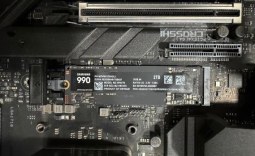 Samsung 990 2TB SSD Review - Ninth Gen QLC at PCIe Gen4 Speeds
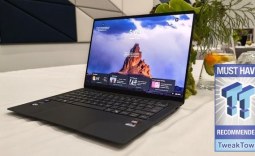 ASUS ExpertBook Ultra (Panther Lake) 14" Business Laptop Review
 ASUS ROG Raikiri II Xbox Wireless Controller Review - Ready to Take Control
 MOZA FMP18 Panel Bundle Review: authentic F/A-18 Hornet cockpit controls for flight sims
 Micron 6600 ION 245.76TB Enterprise SSD Review - Best in Class Programming Speeds
 MOZA MA3F EFCM Flight Control Module Review: authentic Airbus A320 autopilot panel for simulators
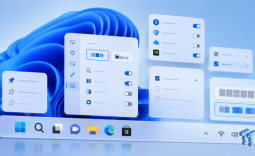 The Ultimate Guide to Personalizing Your Windows 11 Taskbar
 How to Turn Your Windows Laptop Into a Second Monitor with Miracast and Wireless Display in Minutes
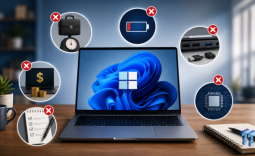 6 Mistakes to Avoid When Buying a Windows Laptop
 I capped Windows Update's bandwidth with Delivery Optimization, and my downloads stopped choking
 I use this decade-old free tool that finds files faster than Windows Search does
 I install and update most of my apps with this Windows command now, and I stopped downloading sketchy installers
 Hisense U6SF 65-inch MiniLED TV: High Performance Meets Leisurely Convenience
 I stopped digging through Windows menus after I set up this one folder
 Don't sell your Windows laptop until you do these things
 6 PC cleaning mistakes to avoid for safer hardware maintenance