







Learn about how TweakTown tests and reviews hardware. As an Amazon Associate, we earn from qualifying purchases. TweakTown may also earn commissions from other affiliate partners at no extra cost to you.
Stay Updated
Follow TweakTown for breaking tech news, reviews, and daily updates.


Android phones should be supported for a minimum of two years
The one thing that is probably going to keep me from buying another Android phone for my next phone is the lack of upgrades to Android over the life of my contract. If you live in the United States, and you likely do since you're reading this on a US publication, you know that two-year contracts are the norm for cell phones. Pre-paid and pay-as-you-go products are catching on here, but they are still way behind the big 4: Sprint, Verizon, AT&T, and T-Mobile.
To encourage customers to buy or renew a two-year contract, the companies offer subsidies on the phones, usually $150 or so, if you sign a two-year contract. In essence, this enables the customer to buy a nicer phone and amortize the cost over two years. The issue then becomes you can't get a new phone for two years unless you want to pay the full price which can be upwards of $400.
This is why Google should require all Android manufacturers to provide Android updates for a minimum of two years. Three years or more would be the most ideal as most phones aren't on the market for more than a year. This way if you purchased a phone right at the end-of-life, you would still be covered with updates until you could purchase another subsidized phone.
Continue reading: Android phones should be supported for a minimum of two years (full post)
Apple scoff down mobile industry revenue
Even though Samsung sold close to double the smartphones that Apple did last quarter, with 50 million sold, which is the largest number of units ever shipped by a single vendor in a single quarter, Apple are still absolutely kicking the asses of the competition when it comes to the industry's operating profits.
Apple have much higher gross margins on their iPhone and iPad's, which completely eclipses its rivals in both revenue, and operating profits. Apple only shipped around 6% of the industry's smartphones and tablets in Q2, but they took a surprising 43% of the industry's revenue, according to Raymond James analyst Tavis McCourt. Apple also generated an absolutely huge 77% of the industry's operating profits, even in a seasonally weak period for iPhone sales.
So, now we find ourselves in a position of weirdness with competitor Samsung. The Korean-based company outsold Apple's ever-so-popular iPhone two-to-one, and still couldn't touch Apple's insane grab of industry operating profits. But, things can change quickly, and all it takes is a single release from a company (a new, surprising, 'magical' iPhone), or a constant stream of releases (Galaxy phones that continue to sell more and more) to turn things around.
Continue reading: Apple scoff down mobile industry revenue (full post)
Microsoft unveils Windows 8 packaging
The Verge has been the first out of the gate with exclusive pictures of the retail packaging of Microsoft's upcoming, and already leaked OS, Windows 8. Packaging has been shown off for Windows 8, and Windows 8 Pro, which will be the only boxed versions of the OS to hit retail shelves.
Microsoft have opted to show off their Windows 8-style UI on the boxes, which looks quite delicious, if I may say so myself. Windows 8 sports a brighter styled package in white, with the Professional version shown off in black. Both are looking very nice indeed.
Windows 8, Windows 8 Pro and Windows RT will be available either on new PCs, and tablets from October 26. Upgrade versions will hit stores, or as a download on the same day. What do you think of the newly-styled Windows 8 boxes?
Continue reading: Microsoft unveils Windows 8 packaging (full post)
Windows 8 won't be allowing you to boot to desktop, you'll have to say hello to the 'I'm not Metro' homescreen first
If you were looking forward to booting directly to the desktop in Windows 8, you're going to be sorry, because Microsoft won't be allowing this. This means that users will be totally forced to look at that "Windows 8-style UI", aka Metro, before you can hit that usual desktop screen you're used to.
We don't know if this will effect all users, but right now it looks like it is a possibility. If the move is concrete, we can see just how serious Microsoft are at pushing their new Windows 8-style UI, or Metro, and how its going to effect Microsoft going forward. The Windows 8 Start Screen isn't just a feature that can be ignored, but will be a component of every single system that sports the OS. Maybe it sounds annoying now, but when we're used to it, we could have tiles for temperatures, e-mail, and the like, and we'll totally get over it.
But, Microsoft have also been talking about this type of move since BUILD, with it looking like it's going to be a staple feature of the OS now. The more I think about it, the more it doesn't directly effect me, as I don't fully turn off my PC all that often anyway.
Samsung's Galaxy Note II might only have Ice Cream Sandwich on release, not Jelly Bean
I have yet to of had the pleasure of using Android 4.1 Jelly Bean, but I hope to soon when I get my paws on ASUS' Nexus 7. What disappoints me is the news of Samsung's Galaxy Note II might be shipping with Android 4.0 Ice Cream Sandwich (ICS).
The news is unconfirmed, but its far from being a rumor, so for now it stays as a normal news post. The news came off the back of Sam Mobile's report that Samsung's Galaxy S III would receive Jelly Bean, and that the initial firmware on the Galaxy S III that had passed testing, this enabled developers to focus on the public release. But, the S III should receive Jelly Bean sometime in Q3, pending final approval and if it's all smooth sailing from here on out.
The Galaxy Note II, according to the report, might only ship with ICS. Current testing software is said to be ICS, which could allow Samsung to fast track the 5.5-inch 'phablet', instead of waiting for more testing with Jelly Bean. If the Note II ships without Jelly Bean, it'll be a saggy point of the phone, I think any flagship smart devices shipped from now on should be driven by Jelly Bean, with devices not pegged to be flagship with ICS, with updates the Jelly Bean in the near future.
OMGTT: Evidence of Source 2, Half-Life 3 has been found in Source Filmmaker SDK
When typing this news, I had to type the 'summary', where I fumbled and typed "Half-Life 2", because I'm not used to referencing Half-Life 3, and in my fanboy excitement, mistakes happen. I picked it up, and here we go: some very eagle-eyed developers at ValveTime have seen some discoveries worth posting some news about. It was also worthy of a new creation 'OMGTT', in the title of this news.
The discovery is that Valve are working on a next-gen Source engine, Source 2, the next version of their 10-year-old engine. Valve's Source engine has powered some of the biggest PC games of all time, such as Half-Life 2, Portal and its sequel, Team Fortress 2, Left 4 Dead and its sequel, and more. Evidence of Source 2 comes from Valve's own Source Filmmaker, which is a free movie-making tool that allows users to create videos using the same assets from within the Source engine itself.
A comment was found on one of SFM's python files provides the best evidence of Source 2's existence to date:
Founder of Best Buy offers $8.5 billion to buy the company
Richard Schulze, founder of Best Buy, has offered to buy the retailer for roughly $8.5 billion, according to reports. Schulze resigned as chairman after ex-CEO Brian Dunn was investigated for "personal misconduct" issues, has offered to pay between $24 and $26 per share for Best Buy, which he hopes to make private.
Best Buy has confirmed that they have indeed received the proposal, and says it will be considering it in the near future. As of June, Schulze held over 20% of the company, and plans to put forward $1 billion from that stake into the proposed deal. The remaining $7.5 billion (or so) would come from "premier private-equity firms" who claim to have a "deep experience in retail", as well as debt financing.
While according to Minnesota corporate law, permission from company directors is required in order to form a group for a more complete offer, which is requested in Schulze's offer letter, and has no deadline set. There is reportedly a source close to the matter that says that Schulze entered into the negotiations for the board's permission in the last couple of weeks, but wasn't successful due to the board claiming that it wasn't a good time to go public.
Continue reading: Founder of Best Buy offers $8.5 billion to buy the company (full post)
Apple removing YouTube app from iOS 6, Google working on standalone version
Apple seems to be on an anti-Google rampage with iOS 6. The obvious change is the lack of Google Maps in the upcoming mobile operating system, but now Apple has said that the YouTube app will also be removed. It would seem that the reason for this change is due to the licensing agreement between Apple and Google has run out.
Don't fret, however, as Apple has confirmed that YouTube will work in Safari. They also said that Google is working on a standalone version of the app which will be available through the App Store. It's not clear whether Apple wanted to free the iOS experience of Google or if they got tired of paying Google's licensing fees.
It's likely that this change will be good for consumers. The stock YouTube app hasn't seen any major changes or improvements for years, however, now that Google has its own app, it can change and update it as much as it would like. A YouTube spokesperson said that "we are working with Apple to ensure we have the best possible YouTube experience for iOS users."
Microsoft tightening Windows 8 activation policy to curb piracy
There's no denying that piracy is a huge problem for Microsoft. Just two days after Windows 8 was released to OEMs, the operating system showed up on file sharing sites for download. Microsoft has declined to comment on the leak, but there's little reason to think it was someone other than an employee at an OEM.
This isn't the first example of piracy for Microsoft. Almost every previous product they have released has been pirated to some extent. While they won't be able to get the problem completely stamped out with the changes they are making, it should at least close some loopholes and make it harder for pirates to do what they do best.
The changes relate to how OEMs active Windows on pre-built machines. Windows is activated at the factory so that consumers don't have to take any additional steps when they purchase a computer. Prior activation schemes saw OEMs using a single activation key on all machines so that they could use the same image across them all.
Continue reading: Microsoft tightening Windows 8 activation policy to curb piracy (full post)
Demonoid shut down as gift to United States government
It's been a roller coaster of emotion for users of the popular torrent and tracker site Demonoid. The site has been down for around a week now, and it would appear that the downtime is set to continue. The site was originally taken offline by a DDoS and users rejoiced when they heard that this was the case.
However, more bad news has hit users of the site. Out of Ukraine, word has come that the site has been shutdown by authorities as a gift for the United States government. The takedown was timed to coincide with the very first trip of Deputy Prime Minister Valery Khoroshkovsky to the United States where the topic was copyright infringement.
"Investigators have copied all the information from the servers Demonoid and sealed them," an anonymous ColoCall source confirmed. "Some equipment was not seized, but now it does not work, and we were forced to terminate the agreement with the site." It seems that this week has been a bad week for the site.
Continue reading: Demonoid shut down as gift to United States government (full post)
More fire for iPad mini rumors: Mr. Jobs 'very receptive' to 7" screen
Rumors have been heating up regarding a possible iPad mini that sports a 7-inch screen. As of late, the rumors have been identifying a launch next to the upcoming iPhone 5. Publicly, Steve Jobs was completely against an iPad mini: "The reason we [won't] make a 7-inch tablet isn't because we don't want to hit that price point, it's because we think the screen is too small to express the software."
It turns out that it could all have been clever misdirection. As part of the on-going litigation between Samsung and Apple, new e-mails have been released which show that Mr. Jobs was actually receptive to the idea. The e-mail, sent January 24, 2011 by Eddy Cue, was received by Steve Jobs, Scott Forstall, and Tim Cook.
It reads:
Continue reading: More fire for iPad mini rumors: Mr. Jobs 'very receptive' to 7" screen (full post)
Google's PageSpeed Service gets updated, websites now load even quicker
Google launched their PageSpeed Service last year with the aim of improving the experience of web surfing, without making them a dime. The idea sounded great, as it worked like similar services such as Akamai, where it would boost web browsing speeds by caching pages in the same way, but as always, there's always improvements that can be made.
Google's latest PageSpeed beta uses some simple techniques that improve performance even more, using a new rewriter called "Cache and Prioritize Visible Content". Using this new tool, your browser will load content before it even appears "above the fold" before fetching text and photos that would be initially hidden on the page, all while prioritizing other content ahead of Javascript, which isn't needed as much as more basic elements.
Also, for pages that include HTML that isn't cacheable, such as personalized info, is returned, standard portions of the side and cache are displayed immediately, whilst other content loads in its normal fashion. This new tool isn't the best for every website on the web, but it's great to see these changes, all for free.
Russian billionaire wants to make immortality a reality by 2045
Technology has done wonderful things for us, if you went back 200 years and thought we'd be here with smart devices, or even 30 years ago and told me quad-core processors would rule your smartphone, I wouldn't believe you. But, it hasn't really extended our lifespan all that much, yes health technology has improved, but not in the pure leaps and bounds that consumer-based electronics have.
Well, a Russian billionaire wants to change that, who plans on making immortality a reality by 2045. Dmitry Itskov, a 31-year-old billionaire, has planned "The 2045 Initiative", and only needs a few billion to make it happen. Itskov's project has multiple phases, each bringing mankind closer to the dream of living forever. The first step in his plan is to create robotic humans that are controlled remotely. This step has a goal of 2020, or earlier.
By 2025, "Avatar B" happens, which is where the human brain is transferred into a robotic skeleton so that life can be enjoyed after death. By 2035 "Avatar C" begins, where the brain will be constructed separately, and your own personality will be "transferred" into the robot when you're ready to stop living life as a weak human being. By 2045, the fourth and final stage, "Avatar D" begins and gives us the option to walk around in holographic avatars, for eternity.
Continue reading: Russian billionaire wants to make immortality a reality by 2045 (full post)
Apple's top-secret market research surveys of iPhone, iPad users could be made public in Apple vs. Samsung trial
The late Steve Jobs famously said that Apple did "no market research", so Apple never really knew what consumers want. But, it looks as though Apple were lying through their teeth, as new documents have been bought up during the Apple vs. Samsung patent lawsuit.
Network World's Yoni Heisler writes that Apple is positively freaking out that the possibility of their extensive market research surveys of iPhone and iPad users could be made public. That sentence should send shivers down Apple's spine, as it is considered the 'secret sauce' to attracting, and keeping loyal Apple users.
Apple's Bible could be thrown in for evidence, as the Cupertino-based company lost their bid to keep the market research, with Samsung now able to use it as evidence for their trial. Heisler also reports he found a declaration to the court that had been submitted by Apple's Vice President of Product Marketing, Greg Joswiak, explaining why Apple's customer surveys should remain a secret:
Samsung begins mass production on new mobile flash memory, up to 4x faster than previous chips
Samsung have started mass production on a slew of new mobile flash memory chips that could give us nearly four times the speed of current chips. Samsung's Pro Class 1500 high-speed embedded memory will hit 'SSD-like' speeds in read/write operations in smart devices with capacities of 16, 32 and 64GB.
With smartphones already reaching 2GHz clock speeds running four cores, the CPU can't be the one to do all of the heavy lifting and continue to make the device feel fast. The job of system RAM is to keep an eye on all open programs, and if this part of the device is lacklustre, you'll feel it. Samsung have claimed that the new flash modules can reach speeds of up to 140MB/sec with write speeds hitting 50MB/sec at 1,500 IOPS writes and 3,500 IOPS reads.
Samsung seem to have leant on multiple technologies in order to reach these speeds, such as the 20nm manufacturing process, quick toggle DDR 2.0 memory that sports its own controller and a new JEDEC memory standard. At the moment there's no ETA when we should expect this tech to be baked into devices, but it shouldn't be too long.
Samsung Galaxy Note 10.1 should start shipping this week
According to a tweet from electronics retailer Negri Electronics, it looks as though they'll be selling the Samsung Galaxy Note 10.1 this week. The 10.1-inch tablet comes with a price of $750, which isn't too bad considering what this tablet is capable of.
The closest competition is the iPad, which can be found for around $250 cheaper, but it's the Nexus 7 that is going to be the strongest competitor, and nearly $500 cheaper than the Note 10.1. Negri Electronics' listing shows that the Note 10.1 will include the 1.4GHz quad-core Exynos processor, 16GB of internal storage, a 10.1-inch 1,280x800 resolution touchscreen, and as the radio, it looks like it'll sport quadband 21Mbps HSPA 1900/1800/900/850.
The firm is listing it for shipping as of 8/3, which was a few days ago, meaning that people should be getting their hands on these bad boys any day now.
Continue reading: Samsung Galaxy Note 10.1 should start shipping this week (full post)
Oculus Rift VR headsets arrives on Kickstarter, over $1 million in funding, backed by Epic Games, Valve and more
I don't get excited for technology that often anymore, but it looks like I'm going to have to put that aside for now because Oculus' latest project Rift, currently on Kickstarer, will supposedly deliver "truly immersive virtual reality". Oculus Rift, according to the guys and girls behind it "is a new virtual reality (VR) headset designed specifically for video games that will change the way you think about gaming forever."
Rift sports a wide field of view, high resolution display and ultra-low latency head tracking. The team is raising money on Kickstarter where they can build development kits for the unit, meaning that they can get the Rift into developer's hands, quicker. The team note that VR has been stagnant for quite a while, and in order to provide believable immersion, you'd be looking at $20,000 or more. Oculus want to change that up with Rift, which is designed to "maximise immersion, comfort and pure, uninhibited fun", all while sitting at a price that is affordable to everyone.
Oculus have raised just over $1.2 million from 5,113 backers, and have 26 days to go. I'll be making a pledge in the next few days, this project is looking to be great for the gaming community.
Logitech to bring Skype video calling to the living room
Logitech and Skype have jointly announced the new Logitech TV Cam HD. The new device features an HD camera that sits on top of your TV and outputs the video via an HDMI cable. This device should make it easier for families to share everyday moments from the room that a large amount of time is spent in.
"Amazing connections happen when the video calling experience moves to the TV in the living room: the most popular and comfortable place in the house," said Joerg Tewes, vice president of Logitech's digital home business group. "Because of the size of the TV screen and the quality of the video, the new Logitech TV Cam HD with Skype brings a whole new social element to the living room, helping you feel like your family and friends are right there with you. It's a transformative experience."
All that is required to make calls is the device and an Ethernet or Wi-Fi connection. Users operate the device using the included remote to sign in and make video calls to other Skype users on any Skype-supported device. Users can also call mobile or landlines using their Skype credit straight from the device.
Continue reading: Logitech to bring Skype video calling to the living room (full post)
Matrix One 7-inch Android ICS tablet for under $90, what a deal!
Need to get your kids to stop asking you for an iPad? How about spending a mere $90 on a full Android ICS tablet to get them to leave you alone. Not a bad deal, and the new Matrix One slate is a perfect solution which fits the bill. You aren't going to get much in the way of specs for only $90, but for $90, you get a reasonable amount.
The device features a 7-inch screen which has 5-point multi-touch support. The screen resolution is a pitiful 800x480 and won't be able to compete with most tablets on the market. It also features a 2MP front camera, a Cortex A8 clocked at 1.5GHz, 512 MB or 1 GB RAM, Wi-Fi connectivity, a 3200 mAh battery, and Android 4.0.3 ICS.
The best feature is probably its mini HDMI port which supports full HD. Theoretically, you can use this tablet to stream full HD to your home 50-inch big screen TV. The 4GB base model comes in at $89.99 and the 16GB model will only set you back $129.99. They are also available in black, white, blue, and pink which should match any style your kid might have. Save the money here and buy yourself an iPad or Nexus 7.
Continue reading: Matrix One 7-inch Android ICS tablet for under $90, what a deal! (full post)
Acer, Intel, Qualcomm and SingTel-Optus join Futuremark to develop 3DMark for Android
It's about time one of the big manufacturers jumped into making benchmark software for Android phones and tablets, and with today's announcement, that's just what Futuremark has done. Futuremark has joined forces with hardware manufacturers Acer, Intel, Qualcomm, and SingTel-Optus in order to produce the best, most accurate benchmark possible for Android.
Jukka Mäkinen, Futuremark CEO said, "For more than ten years we have worked with the world's leading PC hardware manufacturers to create 3DMark and PCMark. As a result, Futuremark benchmarks are the industry standard for PC performance measurement used by hundreds of press publications and millions of end-users. As we bring 3DMark to Android, we are excited to expand our cooperation to include Acer, Intel, Qualcomm and SingTel-Optus, technology leaders who will bring unparalleled insight, experience and vision to the development of 3DMark for Android."
We will see the new benchmark later this year. It's certainly something that is craved by reviewers and journalists around the web. Even better, the results will be able to be directly compared to those of the new Windows version also coming out later this year. Here's what some of Futuremark's partners have to say about the new benchmark:
 God of War Laufey gets a release date and Kratos is making a return
 GTA 6 trailer 3 expected to arrive within two weeks, according to insider
 Thieves stole 16 RAM sticks from Chinese eSports hotels, arrested
 Lisuan LX7G100 GPU achieves playable FPS in system with no Intel AMD or NVIDIA hardware inside
 Elder Scrolls 6 roadmap not affected by layoffs, Bethesda says
 Intel and AMD are locking Chinese customers into long-term CPU deals as server chip prices climb more than 40%
 Ubisoft CEO says Sony's PlayStation disc shutdown will not disturb the industry too much
 Vibe coding is flooding the App Store with new apps - on track for record submissions in 2026
 Geekbench 7 is out with CUDA support, smarter multi-core scoring, and new AI workloads across all major platforms
 GTA 6 physical copies in Japan have a 170-day expiration date
 Thrustmaster T.Flight HOTAS 5 MSFS Edition Review
 SteelSeries Arctis Nova Pro Omni Wireless Headset Review - One Headset to Rule Them All
 SteelSeries Arctis Nova 7 Wireless Gen 2 Headset Review - New and Improved, But Is It Enough?
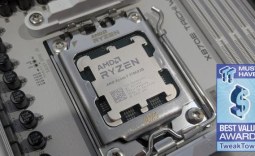 AMD Ryzen 7 7700X3D Review - Days of Future Past
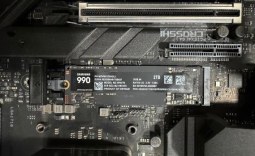 Samsung 990 2TB SSD Review - Ninth Gen QLC at PCIe Gen4 Speeds
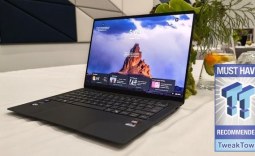 ASUS ExpertBook Ultra (Panther Lake) 14" Business Laptop Review
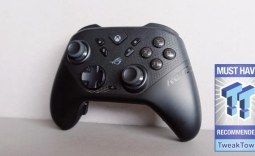 ASUS ROG Raikiri II Xbox Wireless Controller Review - Ready to Take Control
 MOZA FMP18 Panel Bundle Review: authentic F/A-18 Hornet cockpit controls for flight sims
 Micron 6600 ION 245.76TB Enterprise SSD Review - Best in Class Programming Speeds
 MOZA MA3F EFCM Flight Control Module Review: authentic Airbus A320 autopilot panel for simulators
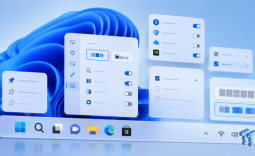 The Ultimate Guide to Personalizing Your Windows 11 Taskbar
 How to Turn Your Windows Laptop Into a Second Monitor with Miracast and Wireless Display in Minutes
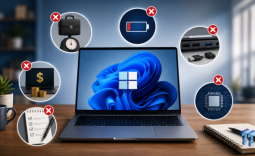 6 Mistakes to Avoid When Buying a Windows Laptop
 I capped Windows Update's bandwidth with Delivery Optimization, and my downloads stopped choking
 I use this decade-old free tool that finds files faster than Windows Search does
 I install and update most of my apps with this Windows command now, and I stopped downloading sketchy installers
 Hisense U6SF 65-inch MiniLED TV: High Performance Meets Leisurely Convenience
 I stopped digging through Windows menus after I set up this one folder
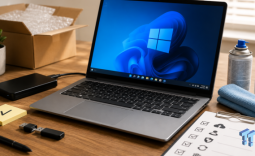 Don't sell your Windows laptop until you do these things
 6 PC cleaning mistakes to avoid for safer hardware maintenance