







Science, Space, & Robotics - Page 72
Explore the latest Science, Space, Health, and Robotics news from TweakTown. Coverage includes space launches, medical tech, discoveries, and rockets. - Page 72
Stay Updated
Follow TweakTown for breaking tech news, reviews, and daily updates.


As an Amazon Associate, we earn from qualifying purchases. TweakTown may also earn commissions from other affiliate partners at no extra cost to you.
US scientists successfully revive organ cells in a dead animal
Researchers are on their way to slow down the process of dying, or perhaps, more accurately, healing damaged organs.

A team of Yale researchers have successfully revived dead pig organ cells by mixing the animals' blood with artificial hemoglobin and OrganEx, which is a solution that contains anti-inflammatory medicine as well as nerve blockers. The researchers also added nutrients and drugs that are known to slow down the death of cells.
Notably, the results from the study don't directly correspond to human cell revival, as further testing is required on OragnEx without the presence of nerve blockers. Furthermore, the researchers wish to perform the tests on humans eventually, but it isn't yet clear when those tests will happen or if any ethical barriers would present themselves in the researchers' quest to slow down the dying process. If proven to be effective, OrganEx could extend the viability of organ transplants.
Continue reading: US scientists successfully revive organ cells in a dead animal (full post)
NASA confirms origin for spaghetti-like object found on Mars by rover
Last month NASA's Perseverance rover snapped an image of the martian surface that caused the internet to claw for answers at what was seen in the image.

Perseverance managed to capture a strange string-like object in the photograph on July 12, sparking viral internet debate about the origin of the object and if it came from Earth or was natural to Mars. Following the widespread speculation from many individuals on Twitter, and the numerous reports from publications, NASA has confirmed the origin of the string-like object, and the answer is unsurprisingly underwhelming.
Originally, NASA speculated that the object was likely some part of Perseverance's own landing gear, and the space agency wasn't too far off from its first guess as it has now confirmed in a statement on Monday that the origin of the string-like object is Dacron netting, which is commonly used in thermal blankets. Notably, NASA concluded that the above netting has undergone significant "unraveling/shredding, suggesting that it was subjected to strong forces".
Continue reading: NASA confirms origin for spaghetti-like object found on Mars by rover (full post)
Artificial 'blowhole' completes year long test, exceeding expectations
The wave energy converter unit was created by Wave Swell Energy (WSE), and is called the UniWave200.

The UniWave200 was constructed in Launceston in Tasmania, Australia, and costs AUD 12 million (US 8.3 million). It was then towed to the nearby King Island and left in the rough ocean off Grassy Harbour. The unit generates 200 kilowatts (kW) of power directly from waves in the sea, acting like an "artificial blowhole."
A concrete chamber underwater allows water in, with the oscillating waves rising high inside and a valve above, letting out the air. As the tide recedes, the valve closes, and the vacuum created by the water level dropping sucks air from the atmosphere through a turbine above, which is connected to a generator.
Continue reading: Artificial 'blowhole' completes year long test, exceeding expectations (full post)
Dark matter detected closer to the birth of the universe than ever
A study on the dark matter titled "First Identification of a CMB Lensing Signal Produced by 1.5 Million Galaxies at z∼4: Constraints on Matter Density Fluctuations at High Redshift" has been published in the journal Physical Review Letters.

A collaboration led by researchers from Nagoya University have detected dark matter surrounding distants galaxies, so far away they appear as they did 12 billion years ago, less than two billion years after the Big Bang and the start of the universe. Previously, scientists have been limited to observing dark matter only as far back as 8 to 10 billion years ago. This is because dark matter does not emit light, so it is observed using the light of even more distant galaxies, whose light shine through the dark matter.
The light that reaches Earth is distorted by this dark matter, and greater amounts lead to greater distortion. However, past a certain point, the light from these distant galaxies is so faint that this technique for detecting dark matter becomes less effective. To overcome this problem, the researchers first found 1.5 million "lens" galaxies which are surrounded by the dark matter they are trying to detect. They then used microwaves from cosmic microwave background radiation (CMBR) left over from the Big Bang to observe the distortion caused by the dark matter surrounding the lens galaxies.
Continue reading: Dark matter detected closer to the birth of the universe than ever (full post)
MIT has created new AI 'neurons' 1 million times faster than the brain
A study on the neurons titled "Nanosecond protonic programmable resistors for analog deep learning" has been published in the journal Science.

Researchers from the Massachusetts Institute of Technology (MIT) have created new artificial "neurons" and "synapses" that exist within a new field of artificial intelligence called analog deep learning. Instead of using transistors like in digital processors, analog deep learning uses programmable resistors to "create a network of analog artificial 'neurons' and 'synapses'" that can exceed the performance of a digital neural network, while using a fraction of the energy.
The MIT team's artificial neurons and synapses are built using a new inorganic material in their fabrication process, boosting the performance of devices using them to one million times faster than previous iterations and one million times faster than the synapses found in the human brain. The new material can also be used with existing silicon fabrication techniques, meaning it can be used to create nanometer-scale devices and potentially integrate the technology with existing computing hardware to facilitate deep-learning applications.
Continue reading: MIT has created new AI 'neurons' 1 million times faster than the brain (full post)
NASA's Webb peers into the chaos of a deep space 'cartwheel'
NASA has released a new image snapped by the now-operational James Webb Space Telescope, and it hones in on a beautiful distant galaxy.

NASA explains on its website that Webb has looked into the chaos of the Cartwheel Galaxy that's located about 500 million light years away from Earth within the constellation Sculptor. At the center of the galaxy resides a black hole, and according to the space agency, the spectacle appearance is a result of a high-speed collision between a large spiral galaxy and a smaller galaxy that isn't visible in the image.
The collision caused the cartwheel-like appearance, which has two rings - a bright inner ring and a colorful outer ring. Closer to the center of the galaxy is a core that contains large quantities of hot dust where very large young star clusters are forming. The outer ring has been expanding for approximately 440 million years, and as it continues to expand, the area is being activated for star formation.
Continue reading: NASA's Webb peers into the chaos of a deep space 'cartwheel' (full post)
New NASA Webb photograph captures our universe's most distant star
Astronomers have used NASA's James Webb Space Telescope (JWST) to perform observations on the furthest known star.

Hubble's image.
The star is called Earendel, which was named after a character in J.R.R Tolkien's "Lord of the Rings" prequel book "The Silmarillion". The half-elven character in the book carries a jewel called a "Silmaril" across the sea, also called the morning star, which translates in Old English to the dawn star. As for the star itself, Earendil was found through gravitation lensing by observations from the Hubble Space Telescope, and its 12.9 billion light-years from Earth, making it the most distant star ever observed.
Continue reading: New NASA Webb photograph captures our universe's most distant star (full post)
NASA's rover captures a new 'exciting' Mars sample
NASA has taken to its social channels to announce that it's Mars rover has snagged its latest sample of the Red Planet.

On the NASA Perseverance Twitter account, the space agency explains that the Perseverance rover has successfully grabbed its eleventh Mars sample, which has the potential to give researchers more clues on the history of Mars and if it ever contained ancient life.
NASA also linked to its website where it outlined its updated plan on getting Perseverance's samples back to Earth and how the new plan now includes two new helicopters that designs will be based on Ingenuity's, Perseverance's scout helicopter currently positioned alongside the rover in the Jezero Crater.
Continue reading: NASA's rover captures a new 'exciting' Mars sample (full post)
Stunning new photos of 'violent' Tarantula Nebula unveiled
Astronomers have captured new images of the 30 Doradus, a star-forming region, also known as the Tarantula Nebula.

The images were captured using the Atacama Large Millimeter/submillimeter Array (ALMA) in Chile, focusing on the Large Magellanic Cloud, a satellite galaxy that orbits the Milky Way galaxy. Contained inside the galaxy is the Tarantula Nebula, home to some of the most massive stars known, greater than 150 times the mass of our Sun. It is one of the most active star-forming regions in the galactic neighborhood, found approximately 170,000 light years from Earth.
The latest image shows data from ALMA overlaid over infrared images taken previously of the nebula. This data is shown in the bright orange parts of the image, representing very cold, dense gas that could collapse to form new stars. A study has been published accompanying the images has been published in The Astrophysical Journal.
Continue reading: Stunning new photos of 'violent' Tarantula Nebula unveiled (full post)
First-ever images of atoms 'swimming' in liquid have been captured
A study on the atoms titled "Tracking single adatoms in liquid in a Transmission Electron Microscope" has been published in the journal Nature.

Researchers from the University of Manchester have stacked two-dimensional materials to create a novel "nano-petri dish," allowing them to observe individual atoms as they move in liquid. The "double graphene liquid cell" contains a 2D layer of molybdenum disulfide (MoS
The new footage from the experiment shows platinum atoms swimming in the liquid surrounding the (MoS
Continue reading: First-ever images of atoms 'swimming' in liquid have been captured (full post)
This parasite can make you more attractive, infects over 1/3 of people
A study on the parasite titled "Are Toxoplasma-infected subjects more attractive, symmetrical, or healthier than non-infected ones? Evidence from subjective and objective measurements" has been published in the journal PeerJ.

Researchers from the University of Turku found that the common Toxoplasma gondii parasite may change a human host's appearance to make them more attractive to prospective partners. It's been estimated that 30-50% of people worldwide are infected with T. gondii, and the parasite has been shown in a previous study to make infected male rats more sexually attractive to uninfected female rats, allowing the parasite to spread further.
T. gondii infections also appear to correlate with higher testosterone levels in human males compared to uninfected males, and both infected men and infected women appear to have higher facial symmetry than their uninfected counterparts. Beyond physiological correlations, psychological changes were also apparent, with infected people more likely to engage in riskier entrepreneurial behavior.
Continue reading: This parasite can make you more attractive, infects over 1/3 of people (full post)
Pet cats classified as 'invasive alien species' by scientific academy
The Polish Academy of Sciences now maintains that "from a purely scientific perspective," domesticated house cats in Europe, and therefore in Poland, should be considered an "invasive alien species."

Felis catus, the domestic cat, was only domesticated roughly 10,000 years ago in the ancient civilizations of the Near East. The presence of cats in Europe is only due to human activity, meaning it can be classified as an alien or non-native species to Europe. The Institute of Nature Conservation in Poland noted the "clear scientific evidence" of the negative impact that domesticated cats have on native biodiversity, leading to their classification as invasive.
Poland's alien species database includes almost 1,800 species', including raccoons, mandarin ducks, and more. According to accepted definitions, the majority are also invasive, though this does not mean they are a threat to Poland or the European Union (EU). As such, no regulation requires domesticated cats to have their population controlled or permits needed for ownership.
Continue reading: Pet cats classified as 'invasive alien species' by scientific academy (full post)
Earth will be hit by a solar storm that came from a hole in the Sun
Earth may soon, or possibly has already, been hit by a solar storm that came from a hole in the surface of the Sun.

Officials at the National Oceanic and Atmospheric Administration (NOAA) have warned that on August 2, there is a chance that Earth will be smacked with a high-speed stream of solar wind that has a chance of causing a minor G1-class geomagnetic storm. The G1-class is the lowest on the 5-point scale, with G5 being the more severe. A storm of such low caliber still has an impact on the planet, with officials' scale indicating it can cause weak or mild degradation of radio communications and GPS signals.
The solar stream of "gaseous material is flowing from a southern hole in the sun's atmosphere," writes spaceweather.com. Notably, the solar material is capable of rushing out of coronal holes, such as the one that recently released this solar stream, at speeds of 1.8 million miles per hour. If lined up with Earth, these particles collide with Earth's magnetic field, compressing it and charging the molecules in the atmosphere. This interaction causes auroras, such as the Northern and Southern lights.
Continue reading: Earth will be hit by a solar storm that came from a hole in the Sun (full post)
Shortest day ever recorded after Earth experienced a 'wobble'
The shortest day in recorded history has been confirmed to have occurred on June 29th, 2022.

The speed of Earth's rotation, and thus its day length, has been measured by atomic clocks daily since the 1960s. On June 29th, Earth completed one full rotation in 1.59 milliseconds (ms) less than 24 hours, and continues a trend found in recent years. The previous shortest day was recorded on July 19th, 2020, at 1.47 ms fewer than 24 hours, and the one before that was on July 16th, 2019, and was shorter than 24 hours by 0.95 ms.
Earth's rotational speed has decreased over time, taking a handful of milliseconds longer to complete a rotation every century. However, fluctuations are still observed on a smaller time scale, with some days being shorter or longer than the standard 24 hours. Some scientists suggest the change in day length could be the result of various factors, including the 'Chandler wobble,' which refers to the small movement of Earth's North and South Poles.
Continue reading: Shortest day ever recorded after Earth experienced a 'wobble' (full post)
Empire State Building-sized asteroid will approach Earth at 72,000 mph
NASA's database that tracks all of the discovered near-Earth objects has been updated with an asteroid that was only discovered on July 26, 2022.

Using NASA's Center for Near Earth Object (CNEOS) database that includes all of the known objects that are due to make a close approach with Earth, the asteroid now dubbed 2022 OE2 has been added.
The diameter of 2022 OE2 is believed to be anywhere between 558 and 1,247 feet, with astronomers giving such a large discrepancy from the assumptions that have to be made on the asteroids composition, or outer material, which dictates how much light is reflected from its surface, and therefore the data astronomers interpret to generate a prediction of the diameter of the asteroid.
Continue reading: Empire State Building-sized asteroid will approach Earth at 72,000 mph (full post)
Researchers warn in a new study of a mass extinction level event
A new study published in the journal Biogeosciences by Tohoku University climate scientist Kunio Kaiho has offered a new perspective on the future of the planet.

The study that details that over the last hundreds of millions of years, the Earth has gone through many different changes and that throughout that time, it has undergone mass extinction level events that have wiped out plant and animal species. Many of these drastic changes were triggered by naturally occurring events such as volcanoes or asteroid impacts, but regardless of the source, the surrounding environment, and its inhabitants were required to adapt to survive.
Published last month, the study states that evolution needs time to adapt to a new environment and according to the study's results, human-made climate change may trigger a mass extinction event that will occur over a much shorter window of time than previous events of its caliber. Notably, the last mass extinction happened over about 60,000 years.
Continue reading: Researchers warn in a new study of a mass extinction level event (full post)
Navy pilot: famous UFO video shows one when there was an entire fleet
Former Navy fighter pilot Lt. Ryan Graves has sat down with Lex Fridman to discuss his encounter with UFOs, his profession, and many more interesting topics surrounding autonomous weapons systems, AI, and more.

The former Navy fighter pilot was asked about his perspective on the famous 2015 UFO "Gimbal" video that was captured by US fighter pilots that were traveling back to the nuclear aircraft carrier USS Theodore Roosevelt when an object popped up on their radar. The footage shows one mysterious object in center frame, but listening to the footage, the pilots can be heard saying, "there's a whole fleet of them, look on the SA". This statement was backed up by Graves, who was airborne during the Gimbal encounter.
Graves explains that his squadron of pilots, and other squadrons of pilots were observing multiple objects and not just a singular UFO. The SA, or Situational Awareness page, gives pilots what Graves describes as a "God's eye" or "top-down" of all the contacts on the radar. "What they essentially saw was, if we were to consider we're above the object, offset to the north of the object, there was a formation of about somewhere between four and six of these in a rough wedge formation."
Continue reading: Navy pilot: famous UFO video shows one when there was an entire fleet (full post)
Navy fighter pilot UFO witness explains the famous Gimbal video
A former Navy fighter pilot who has encountered multiple UFOs or now refferred to as Unidentified Flying Phenomena (UAP) has sat down to explain some of the most famous UFO videos from the perspective of a pilot.

Lt. Ryan Graves is a former Navy fighter pilot that has worked on advanced researchers and development programs for DARPA, the Office of Naval Research, and Airforce Research Labs - specializing in advanced topics such as AI-assisted air-to-air combat, manned-unmanned teaming technology and more.
Notably, Graves and his squadron have encountered UFOs on multiple occasions, with one of instances being the famous declassified and released "Gimbal" UFO video that was captured by a Navy fighter jet from the nuclear aircraft carrier USS Theodore Roosevelt, off the eastern seaboard, near the Florida coast.
Continue reading: Navy fighter pilot UFO witness explains the famous Gimbal video (full post)
NASA's Webb photographs its first supernova in phenomenal new image
A team of researchers have published a photograph snapped by NASA's James Webb Space Telescope, and it's believed to be of a supernova occurring out in deep space.

The team of scientists released a group of images that showcase the galaxy SDSS J141930.11+525159.3, and according to reports, the team believes it may have captured Webb's first supernova as the object that was photographed gained in brightness between the several photographs that were taken.
More specifically, the researchers say that objects dimming and brightening are key indicators of a supernova occurring, however, this has yet to be confirmed as more observations are needed. Furthermore, Webb isn't designed to capture supernovas as it's equipped to observe distant planets, scan their atmospheres for signs of life, see far into the early universe, and much more.
Continue reading: NASA's Webb photographs its first supernova in phenomenal new image (full post)
2,000 year-old decapitated Egyptian mummy head found in attic
Researchers have taken a decapitated Egyptian mummy head and performed a CT scan revealing clues about its origin.

The decapitated head was found in an attic in Kent, England, and has recently been put under a CT scan that revealed it's at least 2,000 years old. Preliminary results from X-ray scans performed at Canterbury Christ Church University found that the head was once an adult female, which was then followed up by CT scans at the Maidstone Hospital that revealed the woman had a poor diet as her teeth were worn down.
Notably, the testing found tubing inside the left nostril as well as in the spinal canal. The researchers noted that the tubing is made of an unknown material and that it's unknown if the tubing was placed there during the mummification process or at a later date. Furthermore, the brain was removed as a part of the mummification process.
Continue reading: 2,000 year-old decapitated Egyptian mummy head found in attic (full post)
 Redditor improves his gaming laptop temps by 15C simply by changing the table
 Phantom Blade Zero on PC will launch with DLSS 4.5 and Ray Tracing on day one
 Razer announces its first Artisan Keycap with the Triple-Headed Snake Edition
 ZOTAC's 20th Anniversary Edition GeForce RTX 5080 features a titanium colorway and mirror-like backplate
 GeForce NOW app for Linux leaves beta, while DLSS Frame Generation cloud latency also improves
 Twitch opts streamers into gen AI training by default, faces harsh backlash
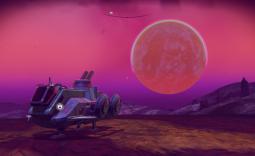 Sean Murray still plays the 2016 launch version of No Man's Sky
 China's YMTC has climbed to third place in global NAND flash shipments
 $100 GTA 6 version makes up 89% of pre-orders, analysts estimate
 HWiNFO's latest update quietly confirms Intel is working on Razor Lake-AX
 Corsair HS35 v3 Wireless Gaming Headset Review - An Affordable Winner
 D-Link F518 5G Wi‑Fi 6 AX1800 Mobile Hotspot Review: All-Day Mobile Hotspot
 Bose Lifestyle Ultra Speaker Review - Impressively Detailed Room-Filling Sound
 MSI Z890 Gaming Plus WIFI6E Review - Z890 for under $200
 Mortal Kombat (1995) 4K Ultra HD Blu-ray Review
 CPS PCCOOLER YS1200 ATX 3.1 80 PLUS Gold PSU Review
 ASRock X870E Taichi White Review: a premium AM5 motherboard with 10G LAN and WiFi 7
 Asetek Initium Pedal Modular Upgrades Review
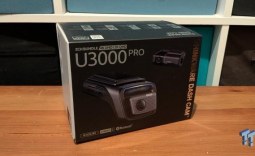 Thinkware U3000 Pro Review - Smart Dashcam with Wi-Fi quirks
 Montech TG3 Mid-Tower Chassis Review
 I ditched the Windows 11 context menu for this open-source tool, and here's why
 Windows 11 may be encrypting your drive already, and I checked where my recovery key went
 GIGABYTE's 40 Days of INFINITY celebrates 40 Years of Innovation with stunning GeForce RTX graphics cards and rewards
 I swapped File Explorer for this free file manager and finally got the layout I wanted
 How to tell if someone has been using your Windows PC without your permission
 6 Task Manager tips for troubleshooting Windows performance problems
 ASUS ROG's 20th Anniversary Line-up of Premium PC Gaming Gear has Arrived - Here's Everything You Need to Know
 Six File Explorer tips every Windows user should know
 I switched my PC to encrypted DNS in Windows 11, and browsing felt more private
 Printer Not Working in Windows? How to fix detection, print queues and drivers