







Science, Space, & Robotics - Page 69
Explore the latest Science, Space, Health, and Robotics news from TweakTown. Coverage includes space launches, medical tech, discoveries, and rockets. - Page 69
Stay Updated
Follow TweakTown for breaking tech news, reviews, and daily updates.


As an Amazon Associate, we earn from qualifying purchases. TweakTown may also earn commissions from other affiliate partners at no extra cost to you.
Nightmare-level 'sea bugs' discovered can grow 1.5 feet in length
A video of an alligator being eaten by seemingly giant "sea bugs" went viral back in 2019 and has now received a follow up study detailing the recently discovered species.

The creatures seen in the above video are called Bathynomus yucatanensis, and while they certainly resemble a type of bug, they aren't actually bugs at all - they are isopods. A new study published in the Journal of Natural History in August looked into the Bathynomus yucatanensis and detailed their behavior, with the researchers writing that these isopods don't appear to hunt their prey and behavior more like a scavenger of food.
The researchers write that these strange creatures search for leftover corpses of sea creatures or any other food they can safely get access to. Notably, these isopods are capable of consuming an entire alligator corpse in just 51 days. The study details the location of the Bathynomus yucatanensis, with the researchers writing that they are common in tropical temperature areas in the deep sea. When seen in the ocean, they appear as large floating white pieces as this species can grow up to 1.5 feet in length.
Continue reading: Nightmare-level 'sea bugs' discovered can grow 1.5 feet in length (full post)
Brand-new humanoid robot unveiled, the CyberOne
The new bipedal, humanoid robot has been developed by Chinese company Xiaomi and unveiled at a launch event in Beijing.

Named the CyberOne, its reveal followed Xiaomi's presentation for a new foldable phone, thinner than Samsung's and only available in China. The robot joined Xiaomi CEO Lei Jun on stage, walking over to him to hand him a flower. The humanoid robot adds to Xiaomi's growing robotics line-up, known as its Cyber series, which includes the Cyberdog released last year, a robotic dog sharing a similar design to Spot, Boston Dynamics' robot dog.
The CyberOne stands 177 centimeters (5 feet 9.7 inches) with a wingspan of 168 centimeters (66 inches). It supports up to 21 degrees of freedom in motion, which, paired with a response time of 0.5 milliseconds per degree of freedom, allows it to simulate human movements completely. Visually, the CyberOne also shares some strong design similarities with renders of the upcoming Tesla Bot, also known as Optimus.
Continue reading: Brand-new humanoid robot unveiled, the CyberOne (full post)
New timeline reveals when and how the Sun will burn out and die
A paper on Gaia's new data titled "Gaia Data Release 3: Astrophysical parameters inference system (Apsis) I -- methods and content overview" is available on the arXiv preprint server.

The European Space Agency (ESA) has released the third dataset from its Gaia mission, which maps the stars. The mission has identified stars of similar mass and composition to our Sun, which provides insight into the timeline of the Sun. Gaia also captures information about a star's apparent brightness and temperature and can also derive a star's absorption and emission spectra.
When a star's light is split with a prism, the colors of light that separate out correlate to the presence of various elements in the star. Astronomers from the late 19th and 20th centuries realized these spectra could be ordered in a way that correlates with the temperature. Additionally, they discovered the width of the lines along the spectra indicated the star's luminosity and age.
Continue reading: New timeline reveals when and how the Sun will burn out and die (full post)
Astronauts may soon breathe oxygen created using magnets
A study on oxygen and magnetism titled "Magnetic phase separation in microgravity" has been published in the journal npj Microgravity.

An international team of researchers has found a new way to produce oxygen in space for astronauts to breathe, such as on the International Space Station (ISS) and other space vehicles. The method NASA currently uses aboard the ISS is to split water into hydrogen and oxygen using an electrolytic cell. The gases have to be removed from that system so they can be utilized, which requires a centrifuge to separate the gases from the electrode and liquid electrolyte of the water electrolyzer system.
However, such a centrifuge is typically large, has a lot of mass, and requires significant power and maintenance. A recent analysis by a NASA Ames researcher indicated that the current infrastructure for creating oxygen in space "wouldn't make any sense to use" for a trip to Mars. Researchers have now found that gas bubbles can be separated from electrode surfaces using simple neodymium magnets in simulated microgravity conditions.
Continue reading: Astronauts may soon breathe oxygen created using magnets (full post)
TikTok employees say the company had a 'kill list' for workers
A new report has revealed that TikTok officials kept a "kill list" of staff members they wanted to be pushed out of a TikTok office.

The report from the Financial Times details four anonymous employees that spoke to the publication regarding a list that included the names of several staff members at the London TikTok office, with some of the names on the list only being at the company for a few weeks. Notably, the unnamed employees said that TikTok would sometimes hire replacements before letting the individual go from the company and that senior officials would intentionally create a hostile work environment.
BusinessInsider contacted TikTok for comment and a spokesperson for the company said that if any list such as the one detailed by the employees exists, it would not be "condoned or in accordance with our internal policies on probation and performance management." The Financial Times report also details one employee that stated senior officials singled her out which led her to self doubt about her ability. This employee described the environment as "If they don't like you, they gaslight you or make your job untenable."
Continue reading: TikTok employees say the company had a 'kill list' for workers (full post)
Tinnitus treatment breakthrough achieved using smartphones
A study on tinnitus titled "A randomized single-blind controlled trial of a prototype digital polytherapeutic for tinnitus" has been published in the journal Frontiers in Neurology.

Researchers from the University of Auckland in New Zealand have developed a new smartphone-based therapy for treating tinnitus patients. Their clinical trial involved 61 patients, who were separated into a group of 31 that received the new "digital polytherapeutic" and a group of 30 that used a popular, generic app for producing white noise. After 12 weeks, the group receiving the polytherapeutic treatment showed significant improvement, while those using white noise did not.
Tinnitus refers to phantom noises like a ringing in the ears that isn't generated by an external source nearby and can be brought on by excessive exposure to loud noises and various other causes. About five percent of people with tinnitus are distressed by it, which can impact sleep and emotional health. Currently, no cure exists. However, the researchers hope that the new polytherapeutic approach will be available in approximately six months.
Continue reading: Tinnitus treatment breakthrough achieved using smartphones (full post)
Bioengineered cornea successfully restores sight in 20 patients
A study on the bioengineered cornea titled "Bioengineered corneal tissue for minimally invasive vision restoration in advanced keratoconus in two clinical cohorts" has been published in the journal Nature Biotechnology.

Researchers from Linkoping University in Sweden have developed a bioengineered version of the human cornea, the clear, protective outer layer of the eye. Their version is made from collagen sourced from pig skin and purified for its resemblance to the proteins found in the human cornea. It is an alternative option for transplants compared to those sourced from deceased human donors, which can only last for five to seven days without specialized cold storage.
A small trial by the research team involved 20 patients with a corneal condition known as keratoconus, resulting in 14 of whom were legally blind, and the rest visually impaired. The implant restored or improved sight in 20 individuals, with three previously blind participants having 20/20 vision two years after the operation. Over 12 million people worldwide have blindness due to damage to the cornea or corneal disease, and only 1 in 70 patients can receive a corneal transplant to correct this.
Continue reading: Bioengineered cornea successfully restores sight in 20 patients (full post)
Elon Musk's SpaceX Starlink internet hacked with $25 homemade device
A security researcher has warned that because Starlink satellites are widespread, they are at risk of hardware hackers.

Lennert Wouters explained on Blackhat.com that he performed the first black-box hardware security evaluation of the SpaceX Starlink UT, which uses a custom quad-core Cortex-A53 System-on-Chip (SoC) that runs a verified boot based on the ARM trusted firmware (TF-A) project. Wouters writes that he was able to bypass firmware signature verification during the ROM bootloader execution through a voltage fault injection.
The process of the hack was broken down by Wouters, who is a security researcher from Belgian university KU Leuven, in a conference in Las Vegas this week. The security researcher explained that he constructed a small homemade circuit board out of many off-the-shelf items and added them to his Starlink dish. The devices allowed hackers to execute a code that would grant them access to the entire Starlink network while also revealing parts of the systems that weren't available before.
Continue reading: Elon Musk's SpaceX Starlink internet hacked with $25 homemade device (full post)
Uranus' name sucks, but it smells like farts where it rains diamonds
Uranus is the seventh planet from the Sun and has the third largest diameter in the solar system, yet it's commonly overlooked and joked about due to its name.

James Webb Space Telescope project scientists and NASA veteran Heidi Hammel knows all too well about the jokes and laughter that Uranus' name has caused in the classroom, with Hammel even stating that the chosen name for the large blue planet is "definitely distracting". The NASA veteran worked on the Voyager 2 mission and said that for a while, she attempted to educate people on the correct pronunciation of Uranus, which she later gave up on after discovering the word 'urinous' which means "relating to, like, or having the qualities or odor of urine."
Now when Hammel discusses Uranus, she tells the class a few jokes about the planet to get the laughter out of the way so the science can begin. So, why has Uranus been named such a way? The planet was discovered by Sir William Herschel on March 13, 1781, with German astronomer Johann Elert Bode's observations solidifying the discovery.
Continue reading: Uranus' name sucks, but it smells like farts where it rains diamonds (full post)
Europe's largest nuclear plant hit by Russia, now Europe is at risk
Multiple publications have reported that the situation around the largest nuclear power plant in Europe is growing worse as Russian forces tempt fate by bombing the area.

Ukraine's Zaporizhzhia nuclear power plant.
Officials from the International Atomic Energy Agency (IAEA), the United Nations' watchdog for nuclear energy, said on Thursday that the time is a "grave hour", with IAEA Director General Rafael Mariano Grossi warning the public that multiple parts of the Zaporizhzhia nuclear plant were destroyed from bombing runs conducted by the Russian military. The director general said the plant is now risking an "unacceptable" potential radiation leak.
Continue reading: Europe's largest nuclear plant hit by Russia, now Europe is at risk (full post)
Our Milky Way galaxy's destiny was photographed by a telescope
A newly released image taken by an advanced telescope in Hawaii has shown the distant fate of our humble Milky Way galaxy.

The new image was snapped by the Gemini North telescope located in Hawaii and operated by the National Science Foundations' NOIRLabs. The image showcases a gorgeous galaxy merger between two interacting spiral galaxies called NGC 4568 and NGC 4567. These galaxies have been on a collision course for millions of years, and researchers estimate that in about 500 million years, they will complete the merger into one singular elliptical galaxy.
As explained by the researchers, the image of this galactic merger is a window into the future of our own galaxy, the Milky Way, which is set to merge with our closest neighboring galaxy Andromeda. Scientists estimate that the merger between the Milky Way and Andromeda will take place in approximately 5 billion years. Notably, the recently published image shows the glowing remains of a supernova that was detected by researchers in 2020.
Continue reading: Our Milky Way galaxy's destiny was photographed by a telescope (full post)
24 of Russia's most-used fighter jets have been shot down
Reports indicate that Russia is taking heavy losses on the fighter jet front as the General Staff of the Armed Forces of Ukraine takes to social media to tout the country's jet count.

According to a Facebook post by the General Staff of the Armed Forces of Ukraine, Russia has been forced to turn to "outdated" fighter jets after an attack resulted in the Kremlin losing two squadrons of SU-35 aircrafts, which accounts for about "24 units". As a result of the attack, the nation has reportedly been forced to turn to "old" SU-24M bomber aircraft.
Furthermore, Brigadier General Oleksiy Hromov reportedly has said that Russia's success rate on its attacks has been very low as the pilots are concentrating on avoiding being shot down. As for the SU-35 fighter jet and its capabilities, the jet is a renowned 4th generation fighter jet that was first used in 2014. Since then, the SU-35 has been used in active combat regularly, with it seeing use in the Syrian Civil War.
Continue reading: 24 of Russia's most-used fighter jets have been shot down (full post)
New AI algorithm detects brain abnormalities that lead to epilepsy
A study on the artificial intelligence (AI) algorithm titled "Interpretable surface-based detection of focal cortical dysplasias: a Multi-centre Epilepsy Lesion Detection study" has been accepted for publication in the journal Psychological Science.

Researchers from the University College London (UCL) have created a new AI algorithm that can detect subtle brain abnormalities that are the source of epileptic seizures. The Multicentre Epilepsy Lesion Detection project (MELD) analyzed more than 1,000 MRI scans from 22 epilepsy centers worldwide, looking at brain abnormalities associated with drug-resistant focal cortical dysplasia (FCD).
FCDs are a leading cause of epilepsy and refer to abnormally developed brain regions that often lead to a patient having drug-resistant epilepsy, typically requiring surgery to be treated. However, identifying the areas that need to be operated on is challenging. The researchers began developing their algorithm by examining brain features like its thickness and how folded it is at approximately 300,000 locations throughout the cortex.
Continue reading: New AI algorithm detects brain abnormalities that lead to epilepsy (full post)
Scientists confirm the Mandela Effect exists, creating false memories
A study on the Mandela Effect titled "The Visual Mandela Effect as evidence for shared and specific false memories across people" has been accepted for publication in the journal Psychological Science.

Researchers from the University of Chicago have released the first-ever study on the internet phenomenon known as the Visual Mandela Effect, where people adopt a widespread and consistent false memory of various famous icons, confident in their flawed recollection. Previous evidence shows consistent trends in what people tend to remember; however, it's now clear there is also a consistency to what is misremembered.
The research team collected forty different icons to determine how widespread the phenomenon was and the underlying cause. Their experiments also explored how common false variations of icons were on Google Images, and whether people would spontaneously produce these common errors if made to draw the icons from memory.
Continue reading: Scientists confirm the Mandela Effect exists, creating false memories (full post)
Ancient Maya played games with rubber balls made from cremated rulers
A team of archaeologists has been excavating the Maya city of Tonina in southern Mexico, but some experts disagree with their claims.

The archaeologists released a Spanish-language statement in which they claim that after cremating their rulers, the Maya people used their ashes to help make rubber balls to be used in the famous Maya game known simply as ballgame. The game originated over 3,000 years ago and has gone through many iterations, but numerous ball courts have been found throughout the known Maya cities, including Tonina.
Juan Yadeun Angulo, an archaeologist at Mexico's National Institute of Anthropology and History whose team uncovered a 1,300-year-old crypt in Tonina in 2020, formulated the new theory about the rubber balls. The crypt is located beneath a pyramid called the Temple of the Sun and contained 400 vessels with ash, charcoal, natural rubber, and other organic materials being found inside.
Continue reading: Ancient Maya played games with rubber balls made from cremated rulers (full post)
NASA challenges US students to design vital equipment for a Moon base
NASA wants innovative ideas from university students across the country on how to construct a metal production pipeline on the surface of the Moon.

The space agency has taken to its blog and social channels to reveal its 2023 Breakthrough, Innovative, and Game-Changing (BIG) Idea Challenge, where it detailed that this year's challenge will be to design a metal production pipeline that can extract metal from lunar minerals to create structures and tools. NASA explains that metal will be a vital resource on the Moon when structures are being created due to its strength and resistance to corrosion.
However, metal is heavy, making it very expensive to transport, hence the challenge of designing a pipeline to create it out of lunar materials. Notably, NASA states that drilling, excavation, and transportation of mined materials are not included within the challenge and that a team will be eligible when it has five members, no more than 25 members, and is from U.S.-based colleges and universities affiliated with their state's Space Grant Consortium. Furthermore, the space agency states that there is a non-binding notice of intent due by September 30 and the design proposals in both written and video format on January 24, 2023.
Continue reading: NASA challenges US students to design vital equipment for a Moon base (full post)
Quality new concrete made from 100% rubber, using only old tires
A study on the new rubber-based concrete titled "Design and strength optimization method for the production of structural lightweight concrete: An experimental investigation for the complete replacement of conventional coarse aggregates by waste rubber particles" has been published in the journal Resources, Conservation and Recycling.

Researchers from the Royal Melbourne Institute of Technology (RMIT) University in Australia have developed a new method for creating concrete comprised entirely of recycled rubber from discarded tires. The rubber replaces the conventionally used concrete aggregates like gravel and crushed rock but still allows the end product to meet building codes. The team believes this breakthrough promises "a boost for the circular economy."
Small amounts of rubber are currently in use to partially replace some of the typical concrete aggregates, but using too much has typically resulted in weaker end results that don't meet the relevant requirements. Their new manufacturing process, which builds upon previous breakthroughs by RMIT, produces lighter and greener concrete that performs as well as traditional concrete.
Continue reading: Quality new concrete made from 100% rubber, using only old tires (full post)
Pentagon furious as Russian spy satellite tailgates US spacecraft
Russia launched its Kosmos 2558 spy satellite on August 1st, 2022, into a nearly identical orbit to a classified American reconnaissance satellite launched on February 2nd, 2022, named USA 326.

Kosmos 2558 is suspected of being an "inspector" satellite, launched to keep tabs on the U.S imagery intelligence (IMINT) satellite and has been tracked since launching by Marco Langbroek, a satellite tracker from the Netherlands. The orbit of Kosmos 2558 differs from that of USA 326 by only 0.04 degrees, and its altitude is about 60 kilometers (37.28 miles) below that of USA 326.
Kosmos 2558 made its closest approach to the USA 326 satellite on August 4th, coming as close as 67 kilometers (41.6 miles) to USA 326, though most of that distance was due to altitude difference. The capabilities of the U.S. satellite are unknown, so it's not possible to know if similar satellites have been launched previously.
Continue reading: Pentagon furious as Russian spy satellite tailgates US spacecraft (full post)
NASA's new James Webb Space Telescope photographs UFOs
NASA's James Webb Space Telescope (JWST) has snapped some images of what researchers are calling UFOs.

A new study published on the pre-print server arXiv on August 2, 2022, details objects called HST-dark galaxies, or Ultra-red Flattened Objects (UFO). These galaxies feature the same spherical or oval shape that the classic depiction of UFOs confirmed by the US government and seen regularly by Air Force personnel conducting a reconnaissance missions.
Webb is observing these galaxies in infrared light, and the light that Webb is looking at is anywhere between 10.3 to 12.7 billion years old, meaning we are observing the galaxies as they were in the universe nearly 13 billion years ago (total universe age is 13.7 billion years old). The researchers detail in the study that these galaxies shine the most when observed in infrared light, and out of the images that Webb has already taken, they found 29 of these galaxies.
Continue reading: NASA's new James Webb Space Telescope photographs UFOs (full post)
Scientists prove origin story of the Moon with rare meteorite
One of the theories of the origin of the Moon is Earth collided with a planet named Theia, which was approximately the size of Mars, and the debris of that collision eventually formed the Moon we see today.

A new study published in Science Advances provides significant evidence to support that theory as researchers analyzed fragments of a lunar meteorite. The meteorite was originally debris from a large asteroid impact into the lunar surface, and after analyzing the fragments, the researchers discovered noble gasses such as helium and neon trapped within the fragments, which match up with the same isotopes found in solar wind. However, the fragments were never exposed to solar wind.
The team noticed that the same isotope ratios found within the fragments were very similar to the isotope ratios of neon in Earth's mantle located deep within the surface. The similarity between the isotope ratios within the fragments and Earth's molten mantle that hasn't been disturbed since its early formation approximately 4.5 billion years ago has led researchers to believe the gases within the fragments came from Earth.
Continue reading: Scientists prove origin story of the Moon with rare meteorite (full post)
 Xbox Elite Series 3 controller gets leaked with a built-in screen, quickly gets taken down
 Redditor improves his gaming laptop temps by 15C simply by changing the table
 Phantom Blade Zero on PC will launch with DLSS 4.5 and Ray Tracing on day one
 Razer announces its first Artisan Keycap with the Triple-Headed Snake Edition
 ZOTAC's 20th Anniversary Edition GeForce RTX 5080 features a titanium colorway and mirror-like backplate
 GeForce NOW app for Linux leaves beta, while DLSS Frame Generation cloud latency also improves
 Twitch opts streamers into gen AI training by default, faces harsh backlash
 Sean Murray still plays the 2016 launch version of No Man's Sky
 China's YMTC has climbed to third place in global NAND flash shipments
 $100 GTA 6 version makes up 89% of pre-orders, analysts estimate
 Corsair HS35 v3 Wireless Gaming Headset Review - An Affordable Winner
 D-Link F518 5G Wi‑Fi 6 AX1800 Mobile Hotspot Review: All-Day Mobile Hotspot
 Bose Lifestyle Ultra Speaker Review - Impressively Detailed Room-Filling Sound
 MSI Z890 Gaming Plus WIFI6E Review - Z890 for under $200
 Mortal Kombat (1995) 4K Ultra HD Blu-ray Review
 CPS PCCOOLER YS1200 ATX 3.1 80 PLUS Gold PSU Review
 ASRock X870E Taichi White Review: a premium AM5 motherboard with 10G LAN and WiFi 7
 Asetek Initium Pedal Modular Upgrades Review
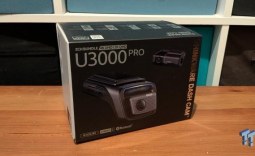 Thinkware U3000 Pro Review - Smart Dashcam with Wi-Fi quirks
 Montech TG3 Mid-Tower Chassis Review
 I ditched the Windows 11 context menu for this open-source tool, and here's why
 Windows 11 may be encrypting your drive already, and I checked where my recovery key went
 GIGABYTE's 40 Days of INFINITY celebrates 40 Years of Innovation with stunning GeForce RTX graphics cards and rewards
 I swapped File Explorer for this free file manager and finally got the layout I wanted
 How to tell if someone has been using your Windows PC without your permission
 6 Task Manager tips for troubleshooting Windows performance problems
 ASUS ROG's 20th Anniversary Line-up of Premium PC Gaming Gear has Arrived - Here's Everything You Need to Know
 Six File Explorer tips every Windows user should know
 I switched my PC to encrypted DNS in Windows 11, and browsing felt more private
 Printer Not Working in Windows? How to fix detection, print queues and drivers