







Science, Space, & Robotics - Page 75
Explore the latest Science, Space, Health, and Robotics news from TweakTown. Coverage includes space launches, medical tech, discoveries, and rockets. - Page 75
Stay Updated
Follow TweakTown for breaking tech news, reviews, and daily updates.


As an Amazon Associate, we earn from qualifying purchases. TweakTown may also earn commissions from other affiliate partners at no extra cost to you.
Scientists can finally produce pufferfish toxin, plans for painkillers
A study on the neurotoxin titled "A concise synthesis of tetrodotoxin" has been published in the journal Science.

Researchers from the New York University (NYU) have devised a new 22-step process for synthesizing tetrodotoxin (TTX), the most potent natural neurotoxin known to humanity. Pufferfish and other marine animals produce TTX, and researchers have attempted to synthesize the toxic molecule for over a century. While not the first synthesis of tetrodotoxin, Professor Dirk Trauner from NYU, one of the study's authors, told Interesting Engineering that their method "is the most efficient to date, improving on state of the art by 30 fold."
Though TTX is highly poisonous to humans, blocking nerves from sending signals to muscles and leading to paralysis, it is believed to serve other functions such as acting as a pheromone or a feeding stimulant in other organisms. However, the nerve-blocking action of TTX interests researchers for its potential to unlock a new class of painkillers, circumventing the need for opioids or similar painkillers with addictive properties.
Continue reading: Scientists can finally produce pufferfish toxin, plans for painkillers (full post)
Satellite captures stunning views of Mars' gigantic 'Grand Canyon'
The European Space Agency's (ESA) Mars Express satellite captured the new images.

The Mars Express captured views of the Ius Chasma and Tithonium Chasma, comprising part of the Mars' Valles Marineris canyon system. Valles Marineris is 4,000 kilometers (2,485 miles) long, 200 kilometers (124 miles) wide, and up to 7 kilometers (4.3 miles) long. The canyon is almost ten times longer, twenty times wider, and five times deeper than the Grand Canyon in the United States.
The canyon system is the largest in the Solar System, and on Earth would reach from the northernmost point of Norway to the southernmost point of Sicily. The above high-resolution image was taken with the Mar Express' High Resolution Stereo Camera (HRSC) on 21 April 2022 and is a "true colour" image, appearing as it would to the human eye. The resolution captures about 25 meters (82 feet) per pixel.
Continue reading: Satellite captures stunning views of Mars' gigantic 'Grand Canyon' (full post)
Carbon offsetting reforestation company accidentally starts wildfire
Dutch company Land Life has inadvertently triggered a wildfire in Spain.

Land Life is a reforestation company that uses a technology-focused approach to scale up its tree planting efforts in areas that need to be reforested. This contrasts with afforestation, which plants trees to create forests where there never was one. Land Life helps companies offset their carbon footprint by planting trees to remove carbon dioxide directly from the atmosphere.
The company is currently working on a reforestation project in Ateca in Zaragoza, Aragon, Spain. Unfortunately, Spain and many other European countries are currently experiencing widespread droughts and fires amidst a severe and ongoing heatwave. The poor conditions primed the area for disaster, and when contractors working for Land Life were working in the area, their activity on July 18th sparked a fire that led to roughly 35,000 acres of land being burnt.
Continue reading: Carbon offsetting reforestation company accidentally starts wildfire (full post)
Huge study reveals low serotonin levels aren't the cause of depression
A study on serotonin depression titled "The serotonin theory of depression: a systematic umbrella review of the evidence" has been published in the journal Molecular Psychiatry.

Researchers from the University College London (UCL) have conducted a major review of the studies that have looked at serotonin activity and depression, including previous meta-analyses and reviews, and found no evidence of a link between the two. This suggests that depression is not the result of a chemical imbalance as is often claimed and raises questions about what antidepressants are actually doing.
Most antidepressants are selective serotonin reuptake inhibitors (SSRIs), designed to raise unusually low serotonin levels. The review looks at various mechanisms tested by many studies, with one approach artificially lowering serotonin levels by depriving individuals of specific amino acids in their diet required to make serotonin, which did not produce depression in hundreds of healthy participants.
Continue reading: Huge study reveals low serotonin levels aren't the cause of depression (full post)
Ancient Greek shipwreck discovered by divers, and its full of treasure
A team of divers has stumbled across an ancient shipwreck full of treasure within the Bay of Abou Qir located near Alexandria.

The discovery was announced by the European Institute for Underwater Archaeology (IEASM), and according to reports, the ancient Greek shipwreck dates back to the Ptolemaic era (305 to 30 BC). The team of divers detected the ship with a prototype sonar ray, and when they approached, the divers noticed it was under approximately 15 feet of clay.
According to Franck Goddio, the president of IEASM, the ship sank in the depths after large blocks from the temple of Amun fell onto it. Notably, Goddio and his fellow colleagues believe that the ship was originally docked at a wharf before a cataclysmic event triggered the destruction of the Amun temple. Furthermore, the blocks that crushed the ship pinned it to the bottom of the canal and simultaneously provided it with the correct conditions to be preserved for such a long amount of time.
Continue reading: Ancient Greek shipwreck discovered by divers, and its full of treasure (full post)
NASA's Webb space telescope photographs oldest galaxy ever
NASA's James Webb Space Telescope has only just begun its science operations, and it's already breaking records.

Since it began science operations, Webb has been making headlines for the phenomenal images it has produced, and now researchers believe the world's most advanced space telescope has snapped an image of the oldest galaxy ever observed. Reports indicate that NASA's newest space telescope has detected light from the galaxy called GLASS-z13, that's estimated to be 13.5 billion years old.
GLASS-z13 being 13.5 billion years old means that Webb has observed light from a galaxy that's age is only 300 million years after the Big Bang. Notably, Webb's recent observation has beaten the previous record holder for the oldest galaxy ever observed by 100 million years, which was a galaxy called GN-Z1 spotted by the famous Hubble Space Telescope in 2016.
Continue reading: NASA's Webb space telescope photographs oldest galaxy ever (full post)
Massive new space telescope has a 300x wider field of view than Hubble
The new Chinese space telescope is expected to become operational around 2024, joining China's Tiangong space station.

The space observatory is called the Chinese Survey Space Telescope (CSST) and is also known as the Chinese Space Station Telescope, or Xuntian, meaning "survey to heavens." Its mission is planned to last at least ten years, though this could be extended down the line. It will launch at the end of 2023 and join the same orbit as the Tiangong space station while staying a fair distance away from it, though it will be able to dock with the station.
It remains closer to Earth, unlike the new James Webb Space Telescope (JWST), but similar to the Hubble Space Telescope (HST), so it can be serviceable. The bus-sized telescope weighs over 10 tonnes (11 tons) and is as long as a three-story building is tall. The telescope comprises five observation apparatuses, including the wide field of view (FOV) Xuntian camera module. The 2.5-billion-pixel camera has a FOV 300 times greater than that of Hubble but retains a comparable resolution.
Continue reading: Massive new space telescope has a 300x wider field of view than Hubble (full post)
New plasma boring robot bores tunnels 100x faster at 1/50th the cost
The boring robot, named the Rapid Burrowing Robot (RBR), was developed by Earthgrid, a startup based in the San Francisco Bay Area.

The robot uses has a large array of plasma torches mounted on the end of rotating arm, arranged in a spiral pattern following the Fibonacci sequence. The extremely high temperatures produce by the plasma torches result in spallation, where material is blown away from rocky walls as they are heated by the torches, which can reach temperatures of 27,000 °C (48,600 °F).
The design allows tunnel boring without any machinery touching any walls, so the process can continue unimpeded, resulting in 98% less tunnel boring than current methods at one hundredth the cost. Traditionally, tunnels have been bored with large, mechanical rotary boring machines that grind away the rock, leaving much debris in their wake and requiring more maintenance, while taking much longer and being more expensive than Earthgrid's new method.
Continue reading: New plasma boring robot bores tunnels 100x faster at 1/50th the cost (full post)
NASA's next-gen Artemis 1 moon rocket finally gets a launch date
NASA has announced it will finally launch the first mission in its Artemis program, Artemis I, with lift-off planned for August this year.

The uncrewed test flight of the Space Launch System (SLS) and the Orion spacecraft around the Moon is scheduled to take place as soon as August 29th, 2022. NASA associate administrator Jim Free told reporters this date marked the opening of the first possible launch window for the mission, with other potential launch dates available on September 2nd and September 5th.
The spacecraft has completed its wet dress rehearsals as of June, with most things going smoothly. One of the remaining problems was a hydrogen leak on the SLS due to faulty seals, which has since been rectified.
Continue reading: NASA's next-gen Artemis 1 moon rocket finally gets a launch date (full post)
Brand-new phase of matter created acts like it has two time dimensions
A study on the new phase of matter titled "Dynamical topological phase realized in a trapped-ion quantum simulator" has been published in the journal Nature.

An international team of researchers has fired a specific sequence of laser pulses at atoms in a quantum computer, causing them to adopt a never-before-seen phase of matter. The quantum computer's ten atoms, ions of ytterbium, acquired an "extra" time dimension. The laser pulse sequence used on the atoms was inspired by Fibonacci numbers, the sequence of numbers that starts with 0, then 1, and the next number is the sum of the previous two, resulting in 0, 1, 1, 2, 3, 5, 8, and so on.
The ytterbium ions in the quantum computer serve as quantum bits, or qubits. These qubits store information much more information than traditional bits in conventional computers, with a qubit existing as either a 0 or 1, like a traditional bit, or any combination of the two, in what's known as a superposition. However, upon observation, a qubit must become either a 0 or 1, so researchers have sought to make qubits more robust by adding "symmetries," which make them more resistant to change.
Continue reading: Brand-new phase of matter created acts like it has two time dimensions (full post)
Watch this robot dog armed with a machine gun tested in Russia
A recently posted video shows a robot dog similar to Boston Dynamics' Spot robot.

The robot dog featured appears to be the Unitree Yushu Technology Dog, which can be bought on AliExpress for around $3,000. Boston Dynamics has made it clear they won't sell their robots to people interested in using them as weapons. Hence, people appear to have turned to cheaper imitations for experimentation. Footage of the armed robot first appeared on the YouTube account of Alexander Atamov on March 22nd, 2022, which he has appropriately named "Skynet."
Atamov lives in Moscow, Russia, and the dog has had a Russian flag and wolf's head attached to its sides using Velcro. The gun strapped to its back appear the be the Russian PP-19 Vityaz, a submachine gun derived from the AK-74. Atamov is not the first person to equip such robots with weapons; defense contractor Ghost Robotics showed off a robotic dog of its own equipped with a weapon akin to a sniper rifle late last year.
Continue reading: Watch this robot dog armed with a machine gun tested in Russia (full post)
UK records hottest ever day and night as 'heat apocalypse' continues
An ongoing heat wave starting in June 2022 is leading to record temperatures and wildfires across Europe.

The United Kingdom's Met Office announced that the night of Monday, July 19th, saw temperatures fall no lower than 25°C (77°F), exceeding the previous highest minimum nighttime temperature of 23.9°C (75°F) that was set in 1990. The following day saw the Met Office announce that "for the first time ever, 40 Celsius has provisionally been exceeded in the UK," after it recorded the U.K.'s highest daytime temperature ever of 40.2°C (104.36°F), smashing the previous all-time high of 38.7°C (101.66°F) that was recorded in 2019.
The heatwave has caused the Met Office to issue a Red Extreme heat warning for parts of England for the first time. The heatwave spreading across Europe and the United Kingdom has also triggered wildfires in various countries, and the death of over 3,600 people has been attributed to the heat wave. The fires have forced tens of thousands of people from their homes, with meteorologist Francois Gourand saying that fires in some areas of France "will be a heat apocalypse."
Continue reading: UK records hottest ever day and night as 'heat apocalypse' continues (full post)
New class action lawsuit deems Skittles 'unfit for human consumption'
The class action lawsuit was filed against Mars, Incorporated, the parent company of the Wrigley Company, which produces Skittles.

The lawsuit was filed by U.S. citizens in California, claiming Mars has committed a fraud of omission by failing to warn consumers about the presence of titanium dioxide (TiO2) in Skittles, which is "unfit for human consumption." TiO2 is found in food items like confectionery and pastries as a white coloring agent, as well as in paints, paper, toothpaste, and more. However, it was recently banned as a food additive in Europe given concerns about its potential genotoxicity or its ability to cause damage to DNA, which can lead to cancer.
Mars asserts that it produces Skittles in alignment with regulations set by the U.S. Food and Drug Administration (FDA), that require that "the quantity of titanium dioxide does not exceed 1 percent by weight of the food." Studies used by the European Food Safety Authority that led to Europe's banning of TiO2 as a food additive were due to the findings that though most TiO2 passed through the body after consumption, some was absorbed and could accumulate, potentially causing issues. However, the United Kingdom and Australia have yet to take definitive action against TiO2's inclusion in food products, citing inconclusive evidence.
Continue reading: New class action lawsuit deems Skittles 'unfit for human consumption' (full post)
Real-life 'Helm's Deep' found in the form of an ancient lost city
A study on the city titled "Rabana-Merquly: a fortress in the kingdom of Adiabene in the Zagros Mountains" has been published in the journal Antiquity.

An international team of archaeologists has uncovered the ruins of what they believe to be the lost city of Natounia in the mountains of Iraqi Kurdistan. The 2000-year-old stronghold known as Rabana-Merquly is believed to be the lost city of Natounia, based on intricate rock carvings depicting leaders found at the site. Also known as Natounissarokerta, the city has only been known to exist on depictions on coins dating back to the first century B.C.
Entrances to the city are found at Rabana and Merquly, with intricate art present at both sites. The Rabana-Merquly fortress was part of the Parthian Empire, also known as the Arsacid Empire, that reigned between 247 B.C. and A.D. 224 and warred with the Roman Empire. The new finds at the site suggest that Rabana-Merquly could have been one of the Parthian Empire's regional hubs.
Continue reading: Real-life 'Helm's Deep' found in the form of an ancient lost city (full post)
Iconic Hoover Dam rocked by explosion, causing fire to break out
The A5 transformer at the Hoover Dam suffered an explosion and caught fire at approximately 10 a.m. local time on July 19th, 2022.

The Reclamation/Hoover fire brigade managed to extinguish the blaze by about 10:30 a.m. before Boulder City Fire Department firefighters arrived on the scene. No employees or visitors were injured due to the incident, and the cause of the fire is still being investigated. The transformers on-site are responsible for changing the voltage of electricity at the hydroelectric plant.
The United States Bureau of Reclamation noted that there is no risk from the event posed to the power grid, and power generation was not interrupted. The federal government built the Hoover Dam in the 1930s during the Great Depression. It produces three terawatt-hours of electricity per year while holding back Lake Mead, the largest-capacity reservoir in the United States. The dam is a popular tourist attraction; around seven million tourists visit each year.
Continue reading: Iconic Hoover Dam rocked by explosion, causing fire to break out (full post)
Scientists can now remotely control fruit flies' brains with magnetism
A study on the flies titled "Subsecond multichannel magnetic control of select neural circuits in freely moving flies" has been published in the journal Nature Materials.

Researchers from Rice University can now activate targeted neurons in the brain of fruit flies using magnetic signals, allowing them to control their bodies. Their new technology enabled the team to activate neural circuits roughly 50 times faster than the previous best demonstration of magnetic stimulation of specific neurons. The targeted neurons were genetically engineered to make them heat sensitive.
The neurons were responsible for causing the flies to spread their wings partially and were manipulated by the researchers by injecting the flies with magnetic nanoparticles that could be heated using an electromagnet. Constraining the flies to an enclosure above an electromagnet allowed the researchers to manipulate the magnetic field to heat the nanoparticles, activate the neurons, and cause the flies to spread their wings.
Continue reading: Scientists can now remotely control fruit flies' brains with magnetism (full post)
Record-breaking suspension bridge built with robots cuts travel by 97%
The newly constructed Luzhijiang Bridge in Yunnan province is now the world's longest suspension bridge with a single tower.

The bridge started a load test on July 11th and completed it a week later on July 18th, using trucks that carried 1,280 tonnes (1,411 tons) and continually drove back and forth across it. The bridge sits 300 meters (984 feet) above the ground, spans 800 meters (2,625 feet), and connects the cities of Yuxi and Chuxiong, reducing the travel time between them from about 90 minutes to only 2 minutes.
The region is some of China's least developed territory. The Luzhijiang Bridge comprises part of a new 200-kilometer (124 miles) long expressway through Yunnan province as part of China's Belt and Road Initiative. The expressway will help connect China with nearby countries like Myanmar, Vietnam, and Laos.
Continue reading: Record-breaking suspension bridge built with robots cuts travel by 97% (full post)
Elon Musk's SpaceX sent 5,800 pounds of new experiments to the ISS
NASA has taken to its blog to announce that Elon Musk's SpaceX has successfully transported thousands of pounds of new science experiments and crew supplies to the ISS.

SpaceX's Dragon capsule arrived at the International Space Station (ISS) and was met by NASA Flight Engineers Jessica Watkins and Bob Hines, who both got to work on unloading the spacecraft's cargo. NASA explains that Hines and Watkins unloaded 5,800 pounds of science equipment and crew supplies on Saturday, with some of the experiments focusing on the human immune system, protein production, and cancer treatments.
Both NASA Flight Engineers transported "transferred time-critical research samples into the orbital lab to begin exploring a variety of space phenomena to benefit humans on and off the Earth". Hines and Watkins weren't the only ISS astronauts at work as NASA Flight Engineer Kjell Lindgren helped Watkins and Hines move science freezers, while European Space Agency (ESA) astronaut Samantha Cristoforetti performed tests on computer connections within the European Physiology Module.
Continue reading: Elon Musk's SpaceX sent 5,800 pounds of new experiments to the ISS (full post)
Majority of Americans think NASA's $10 billion telescope was worth it
A poll has been conducted, and it found most Americans believe that the $10 billion spent on the James Webb Space Telescope (JWST) was a good idea.

The poll was conducted by marketing and data analytics company YouGov, which took 1,000 Americans and asked them a couple of questions regarding NASA and its projects. The data analytics company asked participants if they have a favorable opinion of NASA, which garnered results of seven in ten Americans having a "somewhat favorable" opinion of the US space agency, with 13% viewing NASA unfavorably and 16% saying they aren't sure.
The company also asked participants what their thoughts were on several different NASA projects, such as the Hubble Space Telescope, the International Space Station, sending astronauts to the moon, the space shuttle program, and others. Participants were asked if they thought the investments made into each of these ventures had been a good or bad investment. The survey's results indicated that 3 in 5 Americans believe the JWST has been a good investment, with 33% saying they are unsure and 13% saying it's been a bad investment.
Continue reading: Majority of Americans think NASA's $10 billion telescope was worth it (full post)
Elon Musk may lose the Mars race to a 3D-printed rocket
The race for the first commercial trip to the Red Planet is progressively getting more participants, with two companies recently announcing plans to arrive on Mars sometime in 2024.

Terran R rocket illustration.
Relativity Space, founded in 2015, and Impulse have announced a partnership to develop the Terran R rocket, a reusable 3D-printed rocket, and a Mars Cruise Vehicle, as well as a Mars Lander. Relativity Space has raised more than $1 billion for its metal 3D-printing technology, which is being used to develop rocket fuselages, engines, and more. Notably, Relativity Space claims that 3D-printing technology alleviates many of the struggles of manufacturing rocket parts.
Continue reading: Elon Musk may lose the Mars race to a 3D-printed rocket (full post)
 Phantom Blade Zero on PC will launch with DLSS 4.5 and Ray Tracing on day one
 Razer announces its first Artisan Keycap with the Triple-Headed Snake Edition
 ZOTAC's 20th Anniversary Edition GeForce RTX 5080 features a titanium colorway and mirror-like backplate
 GeForce NOW app for Linux leaves beta, while DLSS Frame Generation cloud latency also improves
 Twitch opts streamers into gen AI training by default, faces harsh backlash
 Sean Murray still plays the 2016 launch version of No Man's Sky
 China's YMTC has climbed to third place in global NAND flash shipments
 $100 GTA 6 version makes up 89% of pre-orders, analysts estimate
 HWiNFO's latest update quietly confirms Intel is working on Razor Lake-AX
 Nintendo puts Switch 2 price increase warnings on store demo kiosks ahead of September 1 hike
 Corsair HS35 v3 Wireless Gaming Headset Review - An Affordable Winner
 D-Link F518 5G Wi‑Fi 6 AX1800 Mobile Hotspot Review: All-Day Mobile Hotspot
 Bose Lifestyle Ultra Speaker Review - Impressively Detailed Room-Filling Sound
 MSI Z890 Gaming Plus WIFI6E Review - Z890 for under $200
 Mortal Kombat (1995) 4K Ultra HD Blu-ray Review
 CPS PCCOOLER YS1200 ATX 3.1 80 PLUS Gold PSU Review
 ASRock X870E Taichi White Review: a premium AM5 motherboard with 10G LAN and WiFi 7
 Asetek Initium Pedal Modular Upgrades Review
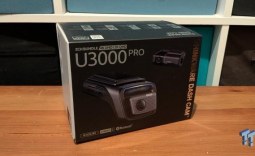 Thinkware U3000 Pro Review - Smart Dashcam with Wi-Fi quirks
 Montech TG3 Mid-Tower Chassis Review
 I ditched the Windows 11 context menu for this open-source tool, and here's why
 Windows 11 may be encrypting your drive already, and I checked where my recovery key went
 GIGABYTE's 40 Days of INFINITY celebrates 40 Years of Innovation with stunning GeForce RTX graphics cards and rewards
 I swapped File Explorer for this free file manager and finally got the layout I wanted
 How to tell if someone has been using your Windows PC without your permission
 6 Task Manager tips for troubleshooting Windows performance problems
 ASUS ROG's 20th Anniversary Line-up of Premium PC Gaming Gear has Arrived - Here's Everything You Need to Know
 Six File Explorer tips every Windows user should know
 I switched my PC to encrypted DNS in Windows 11, and browsing felt more private
 Printer Not Working in Windows? How to fix detection, print queues and drivers