







Science, Space, & Robotics - Page 73
Explore the latest Science, Space, Health, and Robotics news from TweakTown. Coverage includes space launches, medical tech, discoveries, and rockets. - Page 73
Stay Updated
Follow TweakTown for breaking tech news, reviews, and daily updates.


As an Amazon Associate, we earn from qualifying purchases. TweakTown may also earn commissions from other affiliate partners at no extra cost to you.
NASA puts China on blast over massive rocket crash landing into Earth
On Saturday, a large rocket fell back to Earth, causing many onlookers to believe it was a meteor entering Earth's atmosphere.

It was later confirmed that the rocket was China's Long March 5B which was launched from Earth on July 24. The rocket rook a new laboratory module to China's new space station that is currently under construction, marking the third flight of the Long March 5B since its first launch in 2020. Now, US Space Command has confirmed that the Long March 5B rocket reentered Earth's atmosphere over the Indian Ocean at approximately 12:45 pm EDT on Saturday.
NASA administrator Bill Nelson commented on the event and said that China's space agency failed to provide technical details such as "specific trajectory information" for where the rocket would fall, potential debris impacting a certain area, and the dispersal impact location. Notably, Nelson goes on to say that all space-faring nations should do their own due diligence with sharing this vital information before the reentry is made. Nelson added, "Doing so is critical to the responsible use of space and to ensure the safety of people here on Earth."
Continue reading: NASA puts China on blast over massive rocket crash landing into Earth (full post)
Pristine fossil jackpot found in a random field, amazing 3D models
A collection of over 180 fossils has been uncovered in a farmer's field in Gloucestershire, England.

The site contained roughly 183-million-year-old fossils, including fish, marine reptiles, squids, and insects. The part of the country where the fossils were found was deep underwater when these animals died, explaining how they were found inland. Among the fossils was an exquisite Pachycormus fish from the Jurassic period, which was digitally modeled in 3D by Steven Dey of ThinkSee3D.
The site was discovered at Court Farm, Kings Stanley, with the fossils being found in rock layers that haven't been exposed for over a century. Sally and Neville Hollingworth found the site and were also responsible for uncovering mammoth remains at a nearby location that were ultimately featured in the 2021 "Attenborough and the Mammoth Graveyard" BBC documentary. Most of the fossils found at the new site will be donated to the local Museum in the Park in Stroud, England.
Continue reading: Pristine fossil jackpot found in a random field, amazing 3D models (full post)
Backflipping 'Mini Cheetah' robot breaks speed record
The Mini Cheetah robot was made at the Massachusetts Institute of Technology (MIT), and has previously been seen backflipping.

The robot learned to run faster than ever before after the researchers from MIT's Improbable AI Lab replaced its running controller with a "learn-by-experience model." The previous running controller was "analytically designed" and was a system designed by human engineers to manage the robot's balance and general locomotion. However, this process is tedious and requires too much manual labor to account for every potential terrain or situation the robot can encounter.
Simulations allow the robot to "accumulate 100 days' worth of experience on diverse terrains" in only three hours, equipping it with skills to handle those situations that it can pull from when it encounters a similar scenario in real life. This approach allowed the Mini Cheetah to learn how it could run at record speeds without requiring a human to design the capability manually. The team at MIT is expanding this approach to other robotic systems, like hands that can pick up and handle various objects, to teach them diverse skills without as much manual work.
Continue reading: Backflipping 'Mini Cheetah' robot breaks speed record (full post)
Earth's next mass extinction now has a new timeline
A study on the Sixth Mass Extinction titled "Relationship between extinction magnitude and climate change during major marine and terrestrial animal crises" has been published in the journal Biogeosciences.

Kunio Kaiho, a Japanese climate scientist from Tohoku University, has estimated when we might see the next mass extinction event on Earth. Five major extinction events have been identified in Earth's history and are usually associated with some form of extreme climate change, either due to heating or cooling, such as what followed from the impact of the Chicxulub asteroid that caused the last mass extinction event.
Kaiho found a roughly linear relationship between Earth's average surface temperature and Earth's biodiversity, with greater deviations from the norm associated with extinction events of a greater magnitude. Global cooling events resulted in the largest mass extinctions with cooling of about 7°C, while for global warming events, they occurred with about 9°C warming.
Continue reading: Earth's next mass extinction now has a new timeline (full post)
'Alternative physics' discovered by artificial intelligence
A study on the physics discovery titled "Automated discovery of fundamental variables hidden in experimental data" has been published in the journal Nature Computational Science.

Researchers from Columbia Engineering have developed a new artificial intelligence (AI) program that could derive the fundamental variables of physics from video footage of physical phenomena. The program analyzed videos of systems like the swinging double pendulum, which researchers already know four "state variables" exist for; the angle and angular velocity of each arm. Within a few hours, the AI determined there were 4.7 variables at play.
Two of the variables it identified correlated with the angles of each arm. However, the other two were unclear, as the program interprets and visualizes the variables differently from how humans intuitively understand them. Nevertheless, as the AI was making accurate predictions about the system, it is clear it managed to identify four valid variables. The researchers then tested the AI on systems we don't fully understand, like a lava lamp, and a fireplace, identifying 8 and 24 variables, respectively.
Continue reading: 'Alternative physics' discovered by artificial intelligence (full post)
Remains of potential SpaceX spacecraft crash land on farm
The space junk crash-landed on a sheep paddock in outback New South Wales (NSW), Australia.

Mick Miners, who runs a sheep farm in Numbla Vale, NSW, found an almost three-meter-high (9.8 feet) object that had struck the ground on his property. Jock Wallace, the owner of a nearby farm, reported a similar foreign object that had appeared on his land. Many residents in NSW reported a loud bang on July 9th throughout the state that is believed to be associated with the re-entry of a SpaceX Dragon spacecraft through Earth's atmosphere.
After visiting the farms and inspecting the objects for himself, Dr. Tucker told Space.com "there is not a doubt in my mind it is space junk." Dr. Tucker believes the debris is from the unpressurized crew compartment of the spacecraft, which was likely traveling at about 25,000 kilometers (15534 miles) per hour when it was headed for an ocean landing between Australia and New Zealand.
Continue reading: Remains of potential SpaceX spacecraft crash land on farm (full post)
Two gigantic asteroids are headed for Earth this weekend
The two asteroids are due to make their close approaches past Earth on Friday, July 29th, and Saturday, July 30th, respectively.

The first of the two asteroids is named 2016 CZ31 and will make its close approach at 23:02 UTC on Friday, missing the planet by about 1,740,000 miles (2,800,000 kilometers). The asteroid orbits within the solar system and makes its closest pass by Earth every few years, with the next one due in January 2028. 2016 CZ31 measures roughly 400 feet (122 meters) across, with a width comparable to the height of a 40-story skyscraper.
The second asteroid, 2013 CU83, will make its close approach to Earth at 23:37 UTC. 2013 CU83 won't come as close to Earth, only coming as close as 4,320,000 miles (6,960,000 km) from Earth. This distance is 18 times the average distance between the Earth and the Moon, compared to 7 times that distance for 2016 CZ31's close approach. However, 2013 CU83 is much larger, measuring roughly 600 feet (183 meters) across at its widest point.
Continue reading: Two gigantic asteroids are headed for Earth this weekend (full post)
New study suggests putting devices down and to just enjoy thinking
A study on the thinking experiment titled "Thinking About Thinking: People Underestimate How Enjoyable and Engaging Just Waiting Is." has been published in the Journal of Experimental Psychology: General.

Researchers have conducted six experiments involving 259 participants, comparing how people expected to enjoy sitting around and thinking with how much they actually enjoyed the experience. Participants were made to sit alone for 20 minutes without any distractions such as smartphones, books, or being able to walk about, and to predict how much they would enjoy it beforehand. Multiple variations of the same experiment were performed, reducing the time to 3 minutes, removing visual stimulation by sitting participants in a dark, tented area or empty conference room, and more.
The researchers found that in every scenario, participants enjoyed the experience more than they initially predicted. One experiment saw a group of participants predict their enjoyment of a bout of thinking, and another predicted their enjoyment of checking the news online. The thinking group more greatly underestimated their actual enjoyment, and both groups reported similar enjoyment levels after their respective activities. Overall, thinking on its own was rated between 3 to 4 on a 7-point scale of enjoyment.
Continue reading: New study suggests putting devices down and to just enjoy thinking (full post)
Russia plans to assemble its own space station, coming in 2028
Russia's space agency Roscosmos announced on July 26th, 2022, that it would abandon its role in the International Space Station (ISS) after 2024.

The nation has since shared plans for its own space station called the Russian Orbital Service Station (ROSS), which it plans to begin assembling in space in 2028. It is unknown exactly when Russia will fully sever its ties with the ISS, but it will likely coincide with the ROSS approaching operational status. The first construction phase is due to begin in 2028, and a second phase will begin in 2030, expanding the station with additional modules.
The need for a new station is partly because the aged modules making up the ISS require evermore work to upkeep. The Russian modules are up to 25 years old, despite initially being designed for a 15-year lifespan. As such, Russian cosmonauts have been less able to focus on science experiments in space as they attend to maintenance and repairs.
Continue reading: Russia plans to assemble its own space station, coming in 2028 (full post)
New 'origins of life' discovered, creating amino acids and more
A study on the origins of life titled "Prebiotic synthesis of α-amino acids and orotate from α-ketoacids potentiates transition to extant metabolic pathways" has been published in the journal Nature Chemistry.

Researchers from The Scripps Research Institute have discovered a new group of chemical reactions that can produce amino acids and nucleic acids, foundational molecules for life used to build proteins and deoxyribonucleic acid (DNA). The reactions involve cyanide, ammonia, and carbon dioxide, all molecules thought to have been present on Earth early in the planet's existence.
Amino acids are formed by present-day lifeforms in their cells from precursors called α-keto acids, using a process that requires nitrogen and enzymes, special proteins that increase the speed of the reaction. Previous hypotheses for how amino acids were made before life arose on Earth involved other precursors, as the enzymes would not have been present for the pathway we see in life now. However, researchers have now found that cyanide, ammonia (which contains nitrogen), and carbon dioxide can work with α-keto acids, which were also present in early-Earth conditions, to create amino acids.
Continue reading: New 'origins of life' discovered, creating amino acids and more (full post)
Earth has reached 'Overshoot Day' by the earliest date ever
The planet has reached Earth Overshoot Day for this year on July 28th, 2022.

Earth Overshoot Day marks the date on which humanity has consumed the number of resources since the start of the calendar year that the Earth is capable of sustainably regenerating in an entire year. Passing this milestone about a month past the halfway mark of the year indicates that it would take 1.75 Earths to produce the resources required by the world's population sustainably.
The first year an Earth Overshoot Day was recorded for is 1971, with the date falling on December 25th, 1971. The date has steadily crept earlier into the year, with July 28th becoming the first date earlier than August for Overshoot Day in 2018. It came a day later in 2019 and much later in 2020, near the end of August, due to the Covid-19 pandemic. However, by 2021, the trend had almost restabilized, with July 30th marking Overshoot Day, and this year with July 28th marking the day once more in a tie for the earliest Overshoot Day yet.
Continue reading: Earth has reached 'Overshoot Day' by the earliest date ever (full post)
NASA announces it will 'inspire' the world in 2033
NASA is planning to inspire the world with its plan to get Martian samples back on Earth's soil for analysis.

NASA's Perseverance rover, which landed in the Jezero Crater on February 18 2021, has been hard at work collecting Mars samples, and so far, it has collected 11 scientifically-compelling rock core samples along with one atmospheric sample. NASA is devising a plan to get those samples and more back on Earth. The space agency has taken to its blog to reveal its updated plan for retrieving the Mars samples, and according to NASA, it's coming to the end of its conceptual design phase.
NASA writes that the retrieval mission will include a craft called the Sample Retrieval Lander that will feature two sample recovery helicopters that will be designed off the helicopter currently sitting on the surface of Mars, Ingenuity. These two helicopters will provide a secondary capability to retrieve the Mars samples cached on the surface of Mars. Here's how it will work. NASA's Perseverance rover will take its samples to the Sample Retrieval Lander, where a robotic arm provided by the European Space Agency (ESA) will load them into an ascent vehicle.
Continue reading: NASA announces it will 'inspire' the world in 2033 (full post)
NASA snaps jaw-dropping image of huge rings surrounding a black hole
Black holes have been a center point for scientific exploration for many years now, and while progress is being made on their understanding, researchers still have a long way to go.

NASA has published a new image of a black hole using its Chandra X-Ray Observatory and the Neil Gehrels Swift Observatory. NASA explains on its website that the above image showcases rings around a black hole located in the binary system called V404 Cygni, that's located approximately 7,800 light-years from Earth. So, what causes these rings to appear in the X-ray image?
The space agency explains that the rings are caused by the black hole pulling material away from a companion star located within its approximate vicinity. The star is estimated to be about half the size of the Sun, and the rings that are clearly seen in the image aren't visible in visible light, but are clear as day through X-ray vision as the material "glows". Astronomers refer to systems such as these as "X-ray binaries". For more information on this story, check out this link here.
Continue reading: NASA snaps jaw-dropping image of huge rings surrounding a black hole (full post)
Researchers capture video of rare 8-foot-long bizarre sea creature
A team of researchers has captured insane footage of a rare sea creature living at the extreme depth of nearly 10,000 feet.

The team of researchers called Nautilus Live has taken to their YouTube channel to share footage of an expedition down to the unexplored seamount north of Johnston Atoll in the Pacific Ocean. During the expedition, the researchers observed and captured glorious footage of a rare sea creature known as a Solumbellula Sea Pen. The observation marked the first time the sea creature has been spotted in the pacific ocean.
Notably, the Solumbellula Sea Pen is about 15 inches from its 6.5-foot-long stalk. The tentacles seen attached to the creature are for gathering food particles that have floated down to the depths from above, and from the video, you can hear the researchers gasping at their discovery, with one researcher saying that "My mind is blown right now." The researchers speculated on the creature's age and estimated that it would be anywhere between seven to ten years old.
Continue reading: Researchers capture video of rare 8-foot-long bizarre sea creature (full post)
25-ton rocket will soon fall back to Earth and hit unknown location
The falling piece of space junk is the core stage of a Chinese Long March 5B rocket.

The rocket launched on Sunday, July 24th, 2022, taking the Wentian module for China's Tiangong space station to orbit, the second module for the under-construction space station. Experts estimate that the rocket stage will stay in orbit for about a week before re-entering Earth's atmosphere on July 31st, around 3:30 a.m. EDT (07:30 UTC), plus or minus 22 hours, and then crashing to the ground to an as-of-yet unknown location.
The Aerospace Corporation noted that about "20-40% of the mass of a large object will reach the ground," meaning 5-9 tonnes (5.5-9.9 tons) of rocket will reach Earth, with the rest burning up in the atmosphere. The uncontrolled return of the Long March 5B rocket is the second of its kind, after an identical rocket did the same after delivering the first module of the Tiangong space station, Tianhe, to orbit on April 29th, 2021.
Continue reading: 25-ton rocket will soon fall back to Earth and hit unknown location (full post)
World's earliest predator discovered, named after David Attenborough
A study on the predator titled "A crown-group cnidarian from the Ediacaran of Charnwood Forest, UK" has been published in the journal Nature Ecology & Evolution.

Paleontologists have discovered a 560-million-year-old fossil of the earliest known predator from the animal kingdom. The animal has been named the Auroralumina attenboroughii in honor of Sir David Attenborough, with the first portion of its name meaning "dawn lantern" in Latin. The A. attenboroughii is related to the group of animals that includes corals, jellyfish, and anemones.
The fossil was found in Charnwood Forest near Leicester, England, where many famous fossils have been found. It is the oldest animal discovered to have a skeleton, and it predates the emergence of animals like jellyfish around 540 million years ago by about 20 million years. Jellyfish and many other animals appeared during the Cambrian Explosion, from which point much of the anatomy of living animals became fixed. However, this find suggests that this general anatomy may have been fixed at least 20 million years earlier.
Continue reading: World's earliest predator discovered, named after David Attenborough (full post)
Naturally-occuring bacteria discovered that prefer to eat plastic
A study on the bacteria titled "Plastic pollution fosters more microbial growth in lakes than natural organic matter" has been published in the journal Nature Communications.

Researchers from Cambridge University have studied 29 European lakes, finding that bacteria that were naturally present in the lakes grew faster and more efficiently when consuming degraded plastic bags instead of organic matter like leaves or wood. The bacteria broke down and ate the carbon compounds making up the plastics and appear to prefer the carbon compounds sourced from the plastic as they are easier to break down than carbon in organic matter.
Only a 4% increase in carbon levels due to plastic in water bodies resulted in a doubling in bacterial growth rate. The team believes that increasing the concentration of these bacteria in other water bodies polluted with plastic could be a viable means to remove the pollution. However, the researchers warn that this finding does not condone continued plastic pollution, which has a wide gamut of adverse consequences.
Continue reading: Naturally-occuring bacteria discovered that prefer to eat plastic (full post)
Human footprints from the Ice Age uncovered in Utah desert
The footprints were spotted by researchers from Cornell University and the Far Western Anthropological Research Group.

Driving along the salt flats at the United States Air Force's Utah Testing and Training Range (UTTR), they spotted "ghost tracks" that only appear when the moisture conditions are right before disappearing again. They returned to the site the next day with ground-penetrating radar, and more tracks were discovered, created by bare feet and totaling 88 footprints from adults and children.
Wetland conditions haven't been present in the area for over 10,000 years, with the researchers saying the footprints are likely more than 12,000 years old. The last ice age ended 11,700 years ago, meaning these footprints were left by humans who lived during the last ice age. Further research is being conducted to verify their age and to uncover any other potential archaeological finds.
Continue reading: Human footprints from the Ice Age uncovered in Utah desert (full post)
Non-profit removes 100,000 kg of trash from the ocean's largest patch
The trash was collected from the Great Pacific Garbage Patch (GPGP) by the non-profit organization, The Ocean Cleanup.

The Ocean Cleanup has collected its first 100,000 kilograms (220,462 pounds) of plastic from the patch, as announced by the organization on LinkedIn, saying "we have now officially cleaned up 1/1000th of the GPGP." The GPGP is the single largest collection of plastic in the ocean worldwide and is located between Hawaii and California. It is estimated to cover a surface area of 1.6 million square kilometers (617,763 square miles), about twice the size of Texas.
The GPGP is estimated to weigh approximately 80,000 tonnes (88,185 tons), equivalent to about 500 jumbo jets. This estimation only considers the densest, central region of the patch, as the density of mass decreases towards the outer boundaries. When factoring in the mass in both areas, the total mass is estimated to be around 100,000 tonnes (110,231 tons).
Continue reading: Non-profit removes 100,000 kg of trash from the ocean's largest patch (full post)
Massive object caught on video lighting up night sky over Texas
Over the weekend, hundreds of people reported seeing a fireball light up the night sky over Texas, with some individuals seeing the event from surrounding states.

The object has been confirmed to be a meteoroid entering Earth's atmosphere over the Texas region, and according to the American Meteor Society (AMS), the fireball flew overhead at 10:52 pm on Sunday. The fireball that hundreds of people saw was unusually large when compared to the typical space debris entering Earth's atmosphere. According to the AMS, the meteoroid was approximately the size of a small car when it entered Earth's atmosphere and began burning up.
Furthermore, the AMS states that initial computer-generated trajectory indicates that it entered Earth's atmosphere over Cistern, Texas, and its flight ended a few miles west of Austin. Additionally, the AMS writes that many of the witnesses of the event reported hearing a sonic boom just after the fireball appeared in the sky, leading officials to say that it's possible that pieces of the meteor broke off and impacted the surface of Earth somewhere along its travel path.
Continue reading: Massive object caught on video lighting up night sky over Texas (full post)
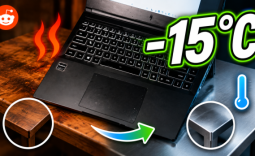 Redditor improves his gaming laptop temps by 15C simply by changing the table
 Phantom Blade Zero on PC will launch with DLSS 4.5 and Ray Tracing on day one
 Razer announces its first Artisan Keycap with the Triple-Headed Snake Edition
 ZOTAC's 20th Anniversary Edition GeForce RTX 5080 features a titanium colorway and mirror-like backplate
 GeForce NOW app for Linux leaves beta, while DLSS Frame Generation cloud latency also improves
 Twitch opts streamers into gen AI training by default, faces harsh backlash
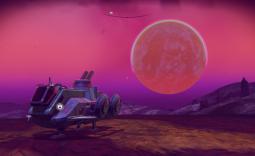 Sean Murray still plays the 2016 launch version of No Man's Sky
 China's YMTC has climbed to third place in global NAND flash shipments
 $100 GTA 6 version makes up 89% of pre-orders, analysts estimate
 HWiNFO's latest update quietly confirms Intel is working on Razor Lake-AX
 Corsair HS35 v3 Wireless Gaming Headset Review - An Affordable Winner
 D-Link F518 5G Wi‑Fi 6 AX1800 Mobile Hotspot Review: All-Day Mobile Hotspot
 Bose Lifestyle Ultra Speaker Review - Impressively Detailed Room-Filling Sound
 MSI Z890 Gaming Plus WIFI6E Review - Z890 for under $200
 Mortal Kombat (1995) 4K Ultra HD Blu-ray Review
 CPS PCCOOLER YS1200 ATX 3.1 80 PLUS Gold PSU Review
 ASRock X870E Taichi White Review: a premium AM5 motherboard with 10G LAN and WiFi 7
 Asetek Initium Pedal Modular Upgrades Review
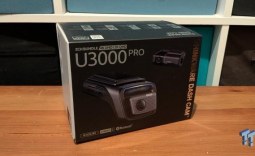 Thinkware U3000 Pro Review - Smart Dashcam with Wi-Fi quirks
 Montech TG3 Mid-Tower Chassis Review
 I ditched the Windows 11 context menu for this open-source tool, and here's why
 Windows 11 may be encrypting your drive already, and I checked where my recovery key went
 GIGABYTE's 40 Days of INFINITY celebrates 40 Years of Innovation with stunning GeForce RTX graphics cards and rewards
 I swapped File Explorer for this free file manager and finally got the layout I wanted
 How to tell if someone has been using your Windows PC without your permission
 6 Task Manager tips for troubleshooting Windows performance problems
 ASUS ROG's 20th Anniversary Line-up of Premium PC Gaming Gear has Arrived - Here's Everything You Need to Know
 Six File Explorer tips every Windows user should know
 I switched my PC to encrypted DNS in Windows 11, and browsing felt more private
 Printer Not Working in Windows? How to fix detection, print queues and drivers