







Science, Space, & Robotics - Page 214
Explore the latest Science, Space, Health, and Robotics news from TweakTown. Coverage includes space launches, medical tech, discoveries, and rockets. - Page 214
Stay Updated
Follow TweakTown for breaking tech news, reviews, and daily updates.


As an Amazon Associate, we earn from qualifying purchases. TweakTown may also earn commissions from other affiliate partners at no extra cost to you.
7 years of Mars secrets revealed by NASA's 'Curiosity' rover
Back in 2011, NASA launched their 'Curiosity' rover from Earth with the mission of landing it on Mars to scour the surface in search for new information. It now has been there seven years, and its still kicking about doing research.

The 'Curiosity' rover spent several months floating through space before safely landing Mars' surface on August 6th, 2012. NASA and Jet Proplusion Laboratory and giving 'Curiosity' a birthday celebration and by doing this we have learned where Curiosity is at the moment and what it is doing.
According to a new blog post, Curiosity is currently stationed in a spot known as the "clay-bearing unit" which is in inside the Gale Crater. The rover is currently using drills to get some of the soil, and with these samples scientists will be able to determine what the conditions of the crater were like long ago. Scientists know that Mars once had traces of what seems to be water, but it is still unclear if this water harbored any form of life whether it be microbial, or intelligent.
Continue reading: 7 years of Mars secrets revealed by NASA's 'Curiosity' rover (full post)
Astronomers find ancient Big Bang 'time machine' star
A new discovery has been made by astronomers scouring the observable universe, they have run into what has been called a 'time machine' that takes us back to some of the earliest stars when the universe formed.

According to a recent research that has been published in Monthly Notices of the Royal Astronomical Society: Letters, astronomers from the Australian National University have discovered one of the first stars that formed after the universes Big Bang. Lead study author Thomas Nordlander, spoke out about this research saying, "We've found a time machine that takes us back to the universe's earliest stars."
Since the Big Bang occurred 13.8 billion years ago, many of the stars that formed in the early days were gigantic in comparison to our sun. A bio-product of the stars being extremely big is that they are also short-lived. Once the stars decay to the point of their supernova explosion many of the elements are ejected into space, this is what astronomers search for and have recently found.
Continue reading: Astronomers find ancient Big Bang 'time machine' star (full post)
NASA just acquired its first HUGE data dump from sun probe
NASA has announced that they have received the first data dump from their solar probe they launched back in August 12th, 2018.

Since the Parker Solar Probe is designed to observe the sun and is currently caught in its immense gravitational pull, the probe can only send back data chunks at certain times. NASA has just received their first data dump from the probe and it's 50% bigger than what they expected. 20GB of data was downloaded from the first and second pass of the probe going around the sun.
Nickalaus Pinkine, Parker Solar Probe mission operations manager said "All of the expected science data collected through the first and second encounters is now on the ground. As we learned more about operating in this environment and these orbits, the team did a great job of increasing data downloads of the information gathered by the spacecraft's amazing instruments."
Continue reading: NASA just acquired its first HUGE data dump from sun probe (full post)
SpaceX can Uber your satellite to space for just $2 million
SpaceX is on the forefront of space technology and now they will be allowing for companies to hitch a ride on their prized Falcon 9 rocket for as low as $2 million.

SpaceX has announced a new idea "rocket rideshares" which allows for other companies satellites to hitch a ride with SpaceX's big rocket, the Falcon 9. According to the announcement, SpaceX is basically attempting to create an Uber service for satellites and will be charging patrons a low price of just $2.25 million for 150kg of mass.
SpaceX is planning on launching their ride share program sometime between November 2020 and March of 2021. After those initial flights are conducted, more flights will take to the skies on an annual basis - Q1 of 2022 and 2023.
Continue reading: SpaceX can Uber your satellite to space for just $2 million (full post)
Shaun the Sheep completes his micro-gravity space training
Shaun The Sheep is one of the many childhood favorite characters of the 2000's, and recent news regarding our furry friend revolves around him completing his space training in preparation for a new coming movie.

The movie is called "Farmageddon" and its plot will center around an alien called Lu-La who has crash landed near Shaun's home at Moss Bottom Farm. Shaun recently completed his astronaut training last week in a special flight that simulates what micro-gravity would be like on Earth.
According to the European Space Agency (ESA) who assisted in the training of Shaun, "The flight was intended to prepare Shaun for his role as a space traveller in his new film. It offered him insight into the rigorous training that all astronauts have before their missions" In conclusion, Jan Worner, the director-general of the ESA said "We are very happy to have helped Shaun in his big space adventure". Shaun The Sheep will be launched in theaters in Germany on Sept 26th, Oct 16th in France and Oct 18th in the UK.
Continue reading: Shaun the Sheep completes his micro-gravity space training (full post)
New study suggests that a 'mega-tsunami' once shaped Mars
A new study on the impact craters found on Mars' surface has suggested that if the planet once harbored water, then it could have experienced a "mega-tsunami" that shaped the planet.

The new study has analyzed a meteor crater called Lomonosov, this crater is 75 miles deep and is the same height as the estimated depth of the ocean. This crater also strongly resembles similar marine impact sights on Earth, which has led scientists to believe that a specific impact site might of resulted in "mega-tsunami" that plowed across Mars' surface.
It should be noted that the scientists do caution that there is no definitive proof that Mars once contained water, or better yet, oceans much like ours billions of years ago. They say that more data would be required to be able to confirm that, but if that is true and the Lomonsov theory lines up with new found data, then scientists could truly be onto something in regards to the history of our neighboring red planet.
Continue reading: New study suggests that a 'mega-tsunami' once shaped Mars (full post)
If NASA catch this asteroid everyone on Earth would get $93b
There is an asteroid floating around out in space called that has been estimated to be worth $700 quintillion, if NASA retrieves this asteroid and divided it up with the population everyone would receive about $93 billion each.

While that isn't NASA's plan at all, they will still be visiting the asteroid and much sooner than you might think. Originally the asteroid was found back in 1852 by Italian astronomer Annibale de Gasparis, and NASA now will be going to '16 Psyche' to investigate its properties. Considering the size of 16 Psyche, and the properties which are 95% metals (iron and nickel), NASA won't be traveling to the asteroid for its insane value but instead for a great comparison of its composition versus Earths.
Scientists believe that since the asteroids composition is very similar to that of Earths, we could learn some brand new information about how our own core works, or some new information about how planets are formed. When purely speaking about monetary value, some companies have already formed and are concentrating on building the infrastructure of space mining. Companies such as EuroSun Mining are looking towards the space economy which Morgan Stanley has estimated to $350 billion today, but by 2040 jumps to $2.7 trillion.
Continue reading: If NASA catch this asteroid everyone on Earth would get $93b (full post)
3D model of our Milky Way galaxy mapped like never before
Researchers have announced that they have formed a brand new 3D model of our Milky Way galaxy, giving us a much better understanding of the surrounding stars.

Researchers Dorota M. Skowron, Jan Skowron, Przemek Mroz and more published an article in the American Association for the Advancement of Science, revealing a new large-scale model of our Milky Way galaxy and the thousands of Cepheid stars. Cepheid stars are a type of star that pulsates radially and are found scattered across galaxies.
The new scale that has been devised by the researchers enables us to gain a better understanding of the S-like structure inside the Milky Way's warped stellar disc. Co-author, Przemek Mroz said "Our map shows the Milky Way disk is not flat. It is warped and twisted. This is the first time we can use individual objects to show this in three dimensions." Traditional maps of the Milky Way are built upon indirect measurements to celestial landmarks and interference's of other galaxies in the universe.
Continue reading: 3D model of our Milky Way galaxy mapped like never before (full post)
Astronomers locate 'first nearby super-Earth', possible life
Scientists and astronomers led by Cornell's Lisa Kaltenegger have announced that they have discovered a 'super-Earth' planet in a nearby solar system.

The planet was found using NASA's Transiting Exoplanet Survey Satellite or TESS for short. Kaltenegger, associate professor of astronomy, director of Cornell's Carl Sagan Institute and a member of the TESS science team spoke out about the discovery, saying "This is exciting, as this is humanity's first nearby super-Earth that could harbor life-uncovered with help from TESS, our small, mighty mission with a huge reach."
Astronomers from the Institute of Astrophysics of the Canary Islands and the University of La Laguna, both in Spain, said that this planet is located in the Gj 357 system to the journal of Astronomy & Astrophysics. The solar system GJ 357 contains a sun that is about one-third the size of our own, and only has three other planets in the entire system. GJ 357 d, the Earth-like planet is located in what seems to be habitable zone in comparison to its position with the star.
Continue reading: Astronomers locate 'first nearby super-Earth', possible life (full post)
NASA partners with SpaceX & Blue Origin for future Moon tech
NASA has announced that they have partnered up with Elon Musk's space exploration company SpaceX, and Amazon founder, Jeff Bezos' aerospace manufacturer Blue Origin to advance Moon landing technology.

According to the announcement, NASA has identified areas in which private and public companies can assist them in developing further advancements in space technology. SpaceX and Blue Origin will be working with NASA's Langley Research Center in Virginia and Marshall Space Flight Center in Alabama to develop and evaluate materials that could be used on future lunar rovers.
Other technological advancements that are in the pipeline are a navigation and guidance system for more precise and accurate Moon landings. A SpaceX spokesperson gave a statement regarding the new deals between the company and NASA, saying "We believe SpaceX's fleet of advanced rockets and spacecraft, including Falcon Heavy and Starship, are integral to accelerating NASA's lunar and Mars plans." Jim Reuter, associate administrator of NASA's Space Technology Mission Directorate (STMD) also gave a statement, saying "NASA's proven experience and unique facilities are helping commercial companies mature their technologies at a competitive pace."
Continue reading: NASA partners with SpaceX & Blue Origin for future Moon tech (full post)
First-ever photo of Quantum Entanglement in action captured
Scientists have just captured the first-ever image of the naturally occurring and extremely interesting phenomenon called 'Quantum Entanglement'.

Quantum Entanglement has perplexed scientists for quite some time, even going back to the creator of the general theory of relativity, Albert Einstein. Einstein called Quantum Entanglement "spooky action at a distance" as particles can remain connected to each other such that their physical properties will influence one another no matter the distance between them.
Scientists at the University of Glasgow recently conducted an experiment with an array of lasers and crystals that allowed for them to entangle photons, or light particles. The scientists hit the crystals with the ultraviolet (UV) laser that caused some of the photons to break off, resulting in some of the photons entangling and giving the scientists an opportunity to capture the entanglement in action. Miles Padgett, the professor of physics and astronomy at the University of Glasgow commented on the experiment, saying this is "the pivotal test of quantum entanglement" and that "this is the first time anyone has used a camera to confirm [it]."
Continue reading: First-ever photo of Quantum Entanglement in action captured (full post)
Apollo 11's glass Moon prisms is science we still use today
NASA's Apollo 11 mission was not only a pivotal point in human history, but also a gift that keeps on giving as the work the astronauts did aboard the massive space rock still is helping us out today.

In 1969, Neil Armstrong and Buzz Aldrin blasted off to the surface of the Moon, after a successful landing and an adventure out onto the wasteland-like surface, science needed to be conducted. One of the experiements the two astronauts did was the installation of glass prism arrays on the Moon's surface. These prisms were placed there so scientists back on Earth could fire lasers at them and measure the distance between Earth and the Moon.
While those prisms were placed there back in 1969, they are still being used today and have delivered an extraordinary amount of valuable information. Observatories on Earth have fired lasers at these prisms and waited for the light to return back to Earth to measure the distance between the two floating objects. It was discovered that the Moon is actually moving 1.5 inches away from Earth each year, and that at the moment the Moon is currently 384,400km away from Earth.
Continue reading: Apollo 11's glass Moon prisms is science we still use today (full post)
Tesla Megapack battery could power San Francisco for 6 hours
Tesla has just announced its new Megapack, a new gigantic battery system that will replace "peaker" power plants that will see energy being generated when the local electricity grid gets overloaded.

The new Tesla Megapack is already being deployed, with Pacific Gas and Electric (PG&E) using multiple Megapacks at Moss Landing on Monterey Bay, California. This is just 1 of 4 locations that will see Tesla's new Megapack batteries installed, with each of them storing up to 3 megawatt hours (MWh) of energy at a time.
They can be daisy-chained to store over 1GWh of energy storage, something that Tesla claims is enough energy to power every home in San Francisco for six hours. In typical Tesla engineering fashion, the new Megapacks will include "battery modules, bi-directional inverters, a thermal management system, an AC main breaker and controls".
Continue reading: Tesla Megapack battery could power San Francisco for 6 hours (full post)
ISS uses Earth's atmosphere as a fiery garbage disposal
The International Space Station (ISS), just like anyone's room or house, accumulates garbage or rubbish over time. ISS astronauts have now disposed some of their built up garbage by using Earth's atmosphere.

Just recently, Elon Musk's space exploration company, SpaceX launched a cargo ship to the ISS via their Falcon 9 rocket. The Falcon 9 was carrying their Dragon Capsule that contained supplies for numerous scientific experiments, and other necessities for the astronauts aboard. This morning, the docking compartment on the Russian section of the ISS released the Progress 72 cargo spacecraft. This craft was at the ISS for 4 months and once its supplies were extracted after its arrival it was literally used as one big bin.
When re-entering the Earth's atmosphere, the object is introduced to extreme friction which causes sparks and intense flames to be produced. This is the disposal method for the rubbish on the ISS as Progress 72 is now currently making its way down to Earth's atmosphere loaded with "trash and discarded gear for a fiery, but safe disposal over the Pacific Ocean." In other news about the ISS, the supplies that SpaceX's Dragon Capsule were carrying will allow for scientists to test 3D human tissue printing in low gravity, more on that here.
Continue reading: ISS uses Earth's atmosphere as a fiery garbage disposal (full post)
Blink twice and zoom in +32% with these contact lenses
Considering the thought that glasses technology will soon be adopted by the mainstream, what would be the extent of that technology? Perhaps some sci-fi level contact lenses that allow the user to have mini-binoculars in their eyes.

Scientists at the University of California, San Diego have designed and created some brand new contact lenses that can do just that. The lenses are capable of measuring the electrooculographic signals the eye creates when it is moved up and down. Since these signals are tracked, the lenses measure the impulses that are generated by the eye and when users blink twice the focal length on the lenses is adjusted.
The focal length on these contact lenses can be changed by as much as 32%, simply by the user of the contacts moving their eyes and blinking twice. Shengqiang Cai, a lead researcher for the new contacts told New Scientist, "Even if your eye cannot see anything, many people can still move their eyeball and generate this electro-oculographic signal." Since these signals are always being sent from the eye, researchers say that these contacts could have applications in "visual prostheses, adjustable glasses, and remotely operated robotics in the future."
Continue reading: Blink twice and zoom in +32% with these contact lenses (full post)
France wants GUNS and LASERS on its satellites by 2030
In something out of an evil villain from a superhero movie, the French government is pushing to have lasers and guns on its satellites by as early as 2030.

French President Emmanuel Macron announced news of a French space force defending its satellites recently, which has quickly morphed into seeing France's Ministry of Defense announcing a new project that would see guns and lasers attached to satellites. The country is spending $780 million of its military budget in space defense, adding to the existing $4 billion military program for 2019-2025.
The country has planned for its military to build next-gen satellites that are capable of detecting enemies and other objects with cameras, and then the successor to that gets huge upgrades with on-board submachine guns, and even lasers that will be used in a destructive force to "disable other satellites" by shooting their solar panels.
Continue reading: France wants GUNS and LASERS on its satellites by 2030 (full post)
Nuclear explosion level asteroid had close-shave with Earth
Before you freak out, asteroids whizz past Earth all the time and NASA is currently tracking 90 percent of the most dangerous asteroids in space. There is no immediate global level threat at the moment, but astronomers did just miss an asteroid that could of caused a nuclear-level destruction.

The asteroid was called 2019 OK and on July 25th, it flew passed Earth at a range of 45,000 miles. The asteroid ranged in size from 187-427 feet and according to Michael Brown, an associate professor in astronomy at Monash University in Australia, if the asteroid collided with Earth the destruction would devastating. "The lack of warning shows how quickly potentially dangerous asteroids can sneak up on us" said Brown.
This also isn't the first time an asteroid has appeared out of nowhere to us, back in 2013 a meteor exploded over the Russian city of Chelyabinsk and the blast was stronger than a nuclear explosion. This meteor injured over 1,000 people and was only 66 feet in diameter which is much smaller than 2019 OK which just flew past Earth. Astronomers will still continue to monitor asteroids and better yet NASA are currently working on ways to deflect asteroids that are in route to collide with Earth.
Continue reading: Nuclear explosion level asteroid had close-shave with Earth (full post)
International Space Station begins 3D human tissue printing
A couple of days ago, SpaceX launched their Dragon Capsule spacecraft to the International Space Station (ISS) on a cargo delivery mission. That craft has now be successfully grabbed by the ISS's robotic arm.

On July 25th, SpaceX launched the Dragon Capsule on their Falcon 9 rocket containing more than 5,000 lbs of supplies and equipment. The craft also contains 2,500 lbs of science gear that will enable and fuel many experiments that will be conducted on the ISS by astronauts.
Flight controllers on Earth will operate the ISS's robotic space arm to port the craft on the ISS which will then enable the on-board astronauts to venture into the capsule to acquire the supplies. The supplies that will be on-board of the Dragon Capsule will enable the astronauts to conduct experiments in low-gravitational environments. Some of these experiments include the fabrication of human tissue using a 3D printer and how microgravity affects the process of human tissue healing and regeneration.
Continue reading: International Space Station begins 3D human tissue printing (full post)
Space X-ray observatory snaps gorgeous galaxy cluster images
NASA's 20 year old Chandra X-Ray Observatory launched from the surface of Earth to give NASA, and their researchers a better understanding of how radiation is produced and observed in the universe.

The observatory launched 20 years ago and was named after the Nobel Prize winner Subrahmanyan Chandrasekhar, who was an indian American astrophysicist and was honored for his contribution towards the now current understanding of astronomy. Chandra X-Ray Observatory launched back on July 23, 1999 and has been orbiting earth and observing the structure of huge galaxy clusters ever since.
Belinda Wilkes, Chandra X-ray Center director gave a statement on some newly released images out of Chandra, saying "Chandra remains peerless in its ability to find and study X-ray sources. Since virtually every astronomical source emits X-rays, we need a telescope like Chandra to fully view and understand our universe." Not only is Chandra observing galaxies and star clusters, the observatory is also monitoring gravitational waves (massive ripples in space-time) and black hole mergers.
Continue reading: Space X-ray observatory snaps gorgeous galaxy cluster images (full post)
The Sun will eventually eat Earth, scientists give example
A recent study conducted by some international astronomers has shined a light on a dying star that is very similar to the one that is in our solar system and how it will eventually die.

It is a strange thought to consider the fact that our Sun, literally the source of life in our solar system will eventually die. Perhaps not in our life time (you reading this), but eventually it will. Dr Meridith Joyce, an astronomer at The Australian National University (ANU) in collaboration with Dr Laszlo Molnár and Dr Laszlo Kiss from the Konkoly Observatory of the Hungarian Academy of Sciences conducted the recent study on T Ursae Minoris (T UMi).
The astronomers observed T Ursae Minoris becoming unstable with internal energy flares from nuclear fusion that are deemed "hiccups" by the astronomers. These "hiccups" are scientifically called thermal pulses and according to Dr Joyce, "cause drastic, rapid changes in the size and brightness of the star, which are detectable over centuries. The pulses of old stars like T UMi also enrich the entire Universe with elements including carbon, nitrogen, tin and lead."
Continue reading: The Sun will eventually eat Earth, scientists give example (full post)
 Phantom Blade Zero on PC will launch with DLSS 4.5 and Ray Tracing on day one
 Razer announces its first Artisan Keycap with the Triple-Headed Snake Edition
 ZOTAC's 20th Anniversary Edition GeForce RTX 5080 features a titanium colorway and mirror-like backplate
 GeForce NOW app for Linux leaves beta, while DLSS Frame Generation cloud latency also improves
 Twitch opts streamers into gen AI training by default, faces harsh backlash
 Sean Murray still plays the 2016 launch version of No Man's Sky
 China's YMTC has climbed to third place in global NAND flash shipments
 $100 GTA 6 version makes up 89% of pre-orders, analysts estimate
 HWiNFO's latest update quietly confirms Intel is working on Razor Lake-AX
 Nintendo puts Switch 2 price increase warnings on store demo kiosks ahead of September 1 hike
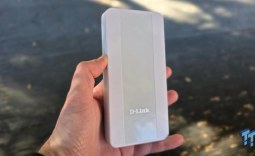 D-Link F518 5G Wi‑Fi 6 AX1800 Mobile Hotspot Review: All-Day Mobile Hotspot
 Bose Lifestyle Ultra Speaker Review - Impressively Detailed Room-Filling Sound
 MSI Z890 Gaming Plus WIFI6E Review - Z890 for under $200
 Mortal Kombat (1995) 4K Ultra HD Blu-ray Review
 CPS PCCOOLER YS1200 ATX 3.1 80 PLUS Gold PSU Review
 ASRock X870E Taichi White Review: a premium AM5 motherboard with 10G LAN and WiFi 7
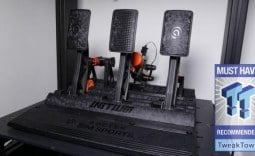 Asetek Initium Pedal Modular Upgrades Review
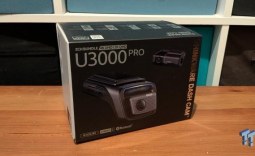 Thinkware U3000 Pro Review - Smart Dashcam with Wi-Fi quirks
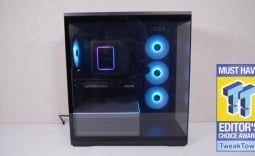 Montech TG3 Mid-Tower Chassis Review
 ASUS ROG Strix X870E-A Gaming WiFI7 Neo Review - A New Enticing Option
 I ditched the Windows 11 context menu for this open-source tool, and here's why
 Windows 11 may be encrypting your drive already, and I checked where my recovery key went
 GIGABYTE's 40 Days of INFINITY celebrates 40 Years of Innovation with stunning GeForce RTX graphics cards and rewards
 I swapped File Explorer for this free file manager and finally got the layout I wanted
 How to tell if someone has been using your Windows PC without your permission
 6 Task Manager tips for troubleshooting Windows performance problems
 ASUS ROG's 20th Anniversary Line-up of Premium PC Gaming Gear has Arrived - Here's Everything You Need to Know
 Six File Explorer tips every Windows user should know
 I switched my PC to encrypted DNS in Windows 11, and browsing felt more private
 Printer Not Working in Windows? How to fix detection, print queues and drivers