







Science, Space, & Robotics - Page 217
Explore the latest Science, Space, Health, and Robotics news from TweakTown. Coverage includes space launches, medical tech, discoveries, and rockets. - Page 217
Stay Updated
Follow TweakTown for breaking tech news, reviews, and daily updates.


As an Amazon Associate, we earn from qualifying purchases. TweakTown may also earn commissions from other affiliate partners at no extra cost to you.
Chinese firm laser rifle burns clothes and skin at 800m
I didn't think we'd be here already but here's where we are now: we're living in a world where a Chinese firm has the aspirations to arm the country's police forces with the next generation of weapons: an assault rifle that fires lasers that burn clothes and skin at 800m away.

If that wasn't scary enough the lasers themselves are silent, and invisible, and they can pass through glass windows as well. ZKZM Laser developed the laser in collaboration with Xi'an Institute Optics and Precision Mechanics at the Chinese Academy of Sciences. The purposes of this rifle if were in the hands of the good guys would be the police in hostage situations, where they could use a precision laser to take the kidnapper down, without hurting the victim.
A research that worked on the super-powered ZKZM-500 rifle said that "the pain will be beyond endurance" and that it will be "non-lethal" as it doesn't kill on impact. The laser rifle weighs around the same 6.6lb of an AK-47, with a lithium battery that is good to fire over 1000 'shots' that last for two second each.
Continue reading: Chinese firm laser rifle burns clothes and skin at 800m (full post)
This new 'computer' makes a grain of rice look big
University of Michigan has reached a new technological milestone, with researchers producing a temperature sensing 'computer' that measures just 0.04 cubic millimeters, which is magnitudes smaller than a single grain of rice.

IBM was the previous record for the world's smallest computer, but U-M researchers had some tricks up their sleeves for reducing the effect of light. The researchers used switched capacitors instead of diodes, where they worked against the relative increase in electrical noise that is created from a device running on low amounts of power.
The sensor that the University of Michigan created is capable of measuring changes in super-small regions, such as groups of cells in your body. Scientists have said for a while now that tumors are ever-so-slightly hotter than healthy tissue, but it has been hard to detect that... until now. This new device could be used in cancer treatments, opening the door to very exciting developments.
Continue reading: This new 'computer' makes a grain of rice look big (full post)
Oculus founder building 'virtual wall', protects US border
Oculus founder Palmer Luckey is one of largest names in Silicon Valley, but since leaving with his bag of $2 billion after Facebook acquired his VR startup, what has he done? He's created a startup called Anduril Industries and they have been working on a virtual wall.

Wired has an awesome piece on Anduril which reports that the startup has constructed a propotype of its virtual wall down on a ranch in Texas, and is also working on a government-funded test of its technology. The virtual wall uses a mix of cameras, sensors, and VR with the startup looking at US defense contracts and making border security in the US magnitudes cheaper.
Lattis is the technology that Anduril is working on, with Luckey talking about the technology earlier in the year, but it has now received the attention of the US government. The startups engineers use open source data to train machine learning systems so that they can tell the difference between people, animals, tumbleweeds, and cars.
Continue reading: Oculus founder building 'virtual wall', protects US border (full post)
NASA has found something on Mars, we find out tomorrow
Well... NASA has discovered something on Mars after 2054 days on the Red Planet, with the US space agency set to hold a press conference tomorrow to tell the world about their discovery.

NASA said in a statement when they announced the press conference: "The media and public are invited to ask questions during a live discussion at 2 p.m. EDT Thursday, June 7, on new science results from NASA's Mars Curiosity rover. The results are embargoed by the journal Science until then".
No one knows what NASA is going to talk about, but we do know that NASA's new drilling technique has worked, and now they're going to talk about something mysterious. The US space agency will have a bunch of scientists and experts on the ready, including:
Continue reading: NASA has found something on Mars, we find out tomorrow (full post)
NASA plans autonomous helicopters to land on Mars in 2020
The next vehicle that NASA is sending to Mars is going to be an autonomous helicopter of sorts, where the US space agency will bundle in an autonomous helicopter into the Mars 2020 rover in order to test airborne vehicles on Mars.

The drone itself weighs 1.8kg (just under 4lbs) while the dual, counter-rotating blades will be spinning at 3000RPM, around 10x faster than a regular helicopter. Why the high-speed blade rotation? The autonomous helicopter needs it because of the low atmospheric density on Mars.
When the helicopter is on the ground, it will be at an Earth-equivalent altitude of 100,000 feet, which is harder on the helicopter.
Continue reading: NASA plans autonomous helicopters to land on Mars in 2020 (full post)
Uber, NASA sign Space Act Agreement for flying taxi service
We already know that Uber is working on a flying taxi service, but the ridesharing giant has just teamed with NASA to sign the Space Act Agreement that will see them making a traffic control system for flying vehicles.

Uber and NASA were already working together, but these new plans will see NASA will take Uber's plans to dominate the skies, and then test them in Texas airspace. Uber will provide NASA with everything they need, with the US space agency simulating issues like air traffic and collisions with routes flying over the skies of Dallas to Fort Worth, and LA.
Jaiwon Shin, associate administrator for NASA's Aeronautics Research Mission Directorate explains: "NASA is excited to be partnering with Uber and others in the community to identify the key challenges facing the UAM market, and explore necessary research, development and testing requirements to address those challenges. Urban air mobility could revolutionize the way people and cargo move in our cities and fundamentally change our lifestyle much like smartphones have".
Continue reading: Uber, NASA sign Space Act Agreement for flying taxi service (full post)
Little Caesars new patent teases pizza-making robots
I can see a pizza-making robot in our very near future, but now Little Caesars has received a new patent for an "automated pizza assembly system". Yeah, a pizza-making robot.

Little Caesars' robot would, according to the patent, be a "robot including a stationary base and an articulating arm having a gripper attached to the end is operable to grip a pizza pan having pizza dough therein". After the robot rotates the pizza pan through "the cheese spreading station" and then the "pepperoni applying station". Automated pizza making, awesome.
You shouldn't expect to walk into Little Caesars anytime soon and watch a robot make your pizza, but for the future (think 10-15 years) we could expect more robotic and autonomous machines making not just our pizzas, but food in general. Robotic kitchen assistants will be a thing in the future.
Continue reading: Little Caesars new patent teases pizza-making robots (full post)
Nissan shows off self-parking robotic slippers in Japan
This stuff seriously only comes out of Japan, but completely blows my mind every time that it does: in order to market their self-driving car and self-parking technology, Nissan has infused an inn in Hakone, Japan with a bunch of next-level stuff.

We're talking about self-parking slippers, that 'drive' themselves back into position, autonomous flood cushions, and even a self-parking TV remote.
It might be a marketing gimmick but this is totally awesome and makes me #wanttostay there just to see my slippers park themselves. I want to go to Japan (for the first time ever) during the 2020 Olympics, and this is now on my bucket list: I want to see my pillow and slippers park themselves.
Continue reading: Nissan shows off self-parking robotic slippers in Japan (full post)
Pornhub bans AI-generated faces on porn actors
Pornhub is on the offensive, with the site to delete something that I've never heard before - "deepfakes", which are AI-generated videos that "realistically edit new faces onto pornographic actors - under its rules against nonconsensual porn, following in the footsteps of platforms like Discord and Gfycat", reports The Verge.

The company recently spoke with Motherboard, where they said: "We do not tolerate any nonconsensual content on the site and we remove all said content as soon as we are made aware of it". They added that non-consensual content includes "revenge porn, deepfakes, or anything published without a person's consent or permission".
Think of deepfakes as porno photoshops, where the faces of porn actors and actresses can be replaced. These videos, as The Verge points out, can get close to copyright infringement or defamation, so this is where lawyers step in and go after big sites like Pornhub to stop deepfakes.
Continue reading: Pornhub bans AI-generated faces on porn actors (full post)
Tesla to slap Powerwall on 50,000 homes in South Australia
Tesla has been using my home state of South Australia as its testing grounds for the future of its solar and lithium ion battery technology, with the SA government working out a deal with Tesla that would see at least 50,000 homes have their Powerwall technology installed.

SA Premier Jay Weatherill is running for the March state election, teasing that Tesla's next-gen solar systems and batteries would be supplied, and installed free of charge. The entire project would be financed through the sale of electricity, given that the solar panels would be taking in the power generated by the sun, with Weatherill saying it would be the largest project of its kind.
The retailer involved would have the ability of using the household batteries that would be installed, and use that power to throw it back into the state power grid. There will be a trial scheme run using Housing Trust properties (government owned), something that has already started, with 100 homes receiving Tesla Powerwall systems by June 30, and another 1000 properties in the next 12 months.
Continue reading: Tesla to slap Powerwall on 50,000 homes in South Australia (full post)
Tesla will sell Powerwall and solar panels at Home Depot
Tesla is wanting to see its Powerwall technology go mainstream, with the company pushing their Powerwall battery packs and new solar panels at 800 Home Depot locations across the US.

Bloomberg is reporting the news, stating that Tesla's solar panels and Powerwalls will be at 800 Home Depot locations soon, with this marking the first time Tesla has inked a major US retain chain to sell their products. Tesla won't be giving Home Depot all the power, as they will just be putting their products on Home Depot's shelves.
Tesla will have their own designated "Tesla-branded selling spaces" in Home Depots, similar to Samsung and Apple with their own specified spots in retail locations.
Continue reading: Tesla will sell Powerwall and solar panels at Home Depot (full post)
Samsung to have AI in all devices and appliances by 2020
CES 2018 - Samsung has just pushed all-in with the future of artificial intelligence, with the company announcing it has a new consumer product strategy for AI during its CES 2018 keynote speech in Vegas.

The news comes directly from Samsung Research boss H.S. Kim who said that every product Samsung makes in 2020 will have built-in AI and would connect to the Internet of Things cloud, making everything the South Korean giant sells a smart product that will learn from everything you do.
Kim said this plan from Samsung would happen in a 3-fold pillar that would simplify its product stack, pushing them into a single-cloud approach that would include connectivity, cloud, and intelligence.
Continue reading: Samsung to have AI in all devices and appliances by 2020 (full post)
LG's new ThinQ smart fridge rocks 29-inch touchscreen
CES 2018 - LG is entering into the smart fridge with a new look and style, mixed in with a bunch of new features, with their new InstaView ThinQ changing up the refrigerator game.

LG's new InstaView ThinQ smart refrigerator packs a 29-inch touchscreen that when tapped twice, becomes transparent so that you can see inside of your fridge. Super cool. LG has been in the touch-your-fridge game for a while now, where they had their Smart InstaView Door-in-Door that run a full version of Windows 10, some two years ago but in the end the company never shipped the fridge.
This new version lets you control your food management using LG's own webOS software with a mix of Amazon Alexa, something that lets owners tag food with virtual stickers and expiration dates, as well as pushing automatic reminders to you when things are running low or about to go off. Very cool.
Continue reading: LG's new ThinQ smart fridge rocks 29-inch touchscreen (full post)
SpaceX launches mystery government payload
SpaceX has already begun with what it does best, launching rockets and landing them back on the ground again. This time though, the space exploration company has not revealed what is on board the rocket or even the motive for the mission in the first place.

The first mission for 2018 has been launched into orbit from Cape Canaveral, Florida. The payload has been given the codename "Zuma" which is basically all that is known about the launch so far as the mission has come under a government initiative.
The 'Zuma' mission has been known about for quite some time and was originally meant to take place last year in November, but due to investigative testing the launch has to be postponed until now. Even though we do not know what was on board the Falcon 9 rocket it has been confirmed that the launch was a success, as the rocket has been landed safely and securely back on the ground.
Continue reading: SpaceX launches mystery government payload (full post)
Samsung Family Hub smart fridge now has Bixby voice control
CES 2018 - Samsung has just unveiled their new Family Hub 3.0 refrigerator that features Bixby voice control, but the company hasn't explained what exactly you can do with voice controls on your fridge.

Samsung has explained that the Bixby-powered smart fridges will be capable of personalized responses to individual voices, where you can ask your fridge about your personal calendar and news updates, just for you... and maybe a drink or snack for you, too.
The new Family Hub 3.0 fridge integrates Samsung's own SmartThings ecosystem, something that lets owners control the lights inside of the fridge, make adjustments to temperature, or even monitor a security camera. Why would you need a speaker with Alexa or Google Assistant, when you can have it all in your fridge? Hell, there are built-in AKG speakers inside the fridge, promising great bass and mid-range... from your... fridge.
Continue reading: Samsung Family Hub smart fridge now has Bixby voice control (full post)
LG's new CLOi robots will serve you at shops in the future
CES 2018 - LG is pushing more and more into the world of robotics, something it seems to be doubling down with at CES 2018 with their new CLOi branded robotics line.

LG's exciting new CLOi line of products come in three models for commercial use: Serving Robot, Porter Robot, and Shopping Cart Robot. Starting with the Serving Robot, we should expect to see LG's first robot creation at hotels, airport lounges, and even restaurants. This robot will deliver drinks and meals to customers with its built-in sliding tray - but hopefully it won't need a tip.
The Porter Robot will be used in hotels for express check-in and check-out, with payments accepted by the robots that will reduce waiting times. LG's new Porter Robot will even carry your suitcase around, but I'm sure it'll be carry-on size only and not your huge suitcase, or two, or five.
Continue reading: LG's new CLOi robots will serve you at shops in the future (full post)
'Uber for blood' being powered by drones in Africa
In the East African country of Rwanda, drones are flying through the sky with medical supplies like blood, thanks to a partnership between the Rwandan health ministry, and drone startup Zipline.

Zipline has already used drones to deliver over 5500 units of blood to aid crews working through remote areas, where medical supplies are near-impossible to f ind. The service is working with 12 hospitals that are all being accessed by the drone network, with these hospitals now able to provide treatment and life-saving aid to over 5 million people.
Drone deliveries make sense when you think that hospitals need a constant flow of fresh supplies on a regular basis, but without the proper infrastructure available, taking to the skies is the next best - and even better, thing.
Continue reading: 'Uber for blood' being powered by drones in Africa (full post)
Musculoskeletal robot spotted mimicking human interactions
Japanese engineers have created two humanoid robots that are designed to study the mechanics of muscle control and how the brain interacts with the body, they are named Kengoro and Kenshiro.

Kengoro and Kenshiro can perform a number of different activities that us humans take completely for granted. The robots humanoid abilities range from doing push-ups, sit-ups and other exercises to playing badminton poorly. It is believed through the robots doing these actions that a better understanding of the "human body in movement" will be achieved.
"We believe that the proposed human mimetic humanoid can be used to provide new opportunities in science, the team's research states. "For instance, to quantitatively analyse the internal data of a human body in movement."
Continue reading: Musculoskeletal robot spotted mimicking human interactions (full post)
Solar-powered highway spotted in China
Jinan, a Chinese city with a population of around 7 million people have begun construction of the world first photovoltaic express-way.

The express-way will be 1.2 miles (2km) and will be able to withstand the weight of medium sized trucks. The photovoltaic express-way is constructed using three separate layers, the first being the transparent concrete which has a very similar feel to that of asphalt.
Next, is the solar panels which are located beneath the concrete layer and are safely protected from nature while also absorbing the rays from the sun.
Continue reading: Solar-powered highway spotted in China (full post)
Russia wants to build $40 million per-week hotel on the ISS
Can you imagine a future where the uber-rich travel to the International Space Station to stay in a $40 million per-week hotel? Well, Russian space corporation Roscomos plans on building a luxury hotel on the ISS for just that reason.

It might cost $40 million per week (and an additional $20 million if you want to go on a spacewalk with a cosmonaut), but Popular Mechanics is reporting that Russian space contractor RKK Energia is working on the idea that will see the construction of the second module it's building that will cost somewhere between $279 million and $446 million.
RKK Energia is already hard at work on the first of two modules, something that will act as a science laboratory and a power supply station. The second module on the other hand, will be paid for by RKK Energia, as the Russian government is only paying for the first one.
Continue reading: Russia wants to build $40 million per-week hotel on the ISS (full post)
 Phantom Blade Zero on PC will launch with DLSS 4.5 and Ray Tracing on day one
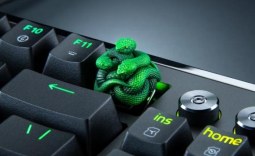 Razer announces its first Artisan Keycap with the Triple-Headed Snake Edition
 ZOTAC's 20th Anniversary Edition GeForce RTX 5080 features a titanium colorway and mirror-like backplate
 GeForce NOW app for Linux leaves beta, while DLSS Frame Generation cloud latency also improves
 Twitch opts streamers into gen AI training by default, faces harsh backlash
 Sean Murray still plays the 2016 launch version of No Man's Sky
 China's YMTC has climbed to third place in global NAND flash shipments
 $100 GTA 6 version makes up 89% of pre-orders, analysts estimate
 HWiNFO's latest update quietly confirms Intel is working on Razor Lake-AX
 Nintendo puts Switch 2 price increase warnings on store demo kiosks ahead of September 1 hike
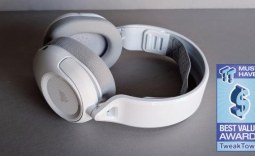 Corsair HS35 v3 Wireless Gaming Headset Review - An Affordable Winner
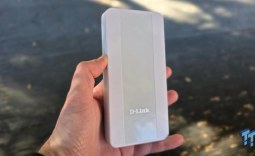 D-Link F518 5G Wi‑Fi 6 AX1800 Mobile Hotspot Review: All-Day Mobile Hotspot
 Bose Lifestyle Ultra Speaker Review - Impressively Detailed Room-Filling Sound
 MSI Z890 Gaming Plus WIFI6E Review - Z890 for under $200
 Mortal Kombat (1995) 4K Ultra HD Blu-ray Review
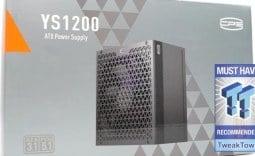 CPS PCCOOLER YS1200 ATX 3.1 80 PLUS Gold PSU Review
 ASRock X870E Taichi White Review: a premium AM5 motherboard with 10G LAN and WiFi 7
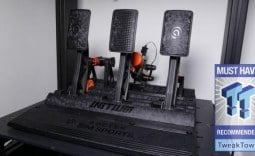 Asetek Initium Pedal Modular Upgrades Review
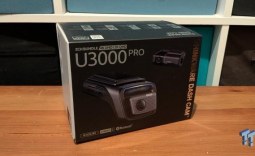 Thinkware U3000 Pro Review - Smart Dashcam with Wi-Fi quirks
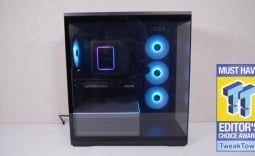 Montech TG3 Mid-Tower Chassis Review
 I ditched the Windows 11 context menu for this open-source tool, and here's why
 Windows 11 may be encrypting your drive already, and I checked where my recovery key went
 GIGABYTE's 40 Days of INFINITY celebrates 40 Years of Innovation with stunning GeForce RTX graphics cards and rewards
 I swapped File Explorer for this free file manager and finally got the layout I wanted
 How to tell if someone has been using your Windows PC without your permission
 6 Task Manager tips for troubleshooting Windows performance problems
 ASUS ROG's 20th Anniversary Line-up of Premium PC Gaming Gear has Arrived - Here's Everything You Need to Know
 Six File Explorer tips every Windows user should know
 I switched my PC to encrypted DNS in Windows 11, and browsing felt more private
 Printer Not Working in Windows? How to fix detection, print queues and drivers