







Science, Space, & Robotics - Page 216
Explore the latest Science, Space, Health, and Robotics news from TweakTown. Coverage includes space launches, medical tech, discoveries, and rockets. - Page 216
Stay Updated
Follow TweakTown for breaking tech news, reviews, and daily updates.


As an Amazon Associate, we earn from qualifying purchases. TweakTown may also earn commissions from other affiliate partners at no extra cost to you.
NASA spacecraft will 3D print solar panels... WHILE IN SPACE
NASA has partnered up with Made In Space to demonstrate a new spacecraft that will 3D print spacecraft components in Earth's lower-orbit.

Made In Space and NASA will soon be bringing Archinaut One to lower-earths orbit when the launch of the Rocket Lab Electron rocket takes to the skies from New Zealand in 2022. The spacecraft will be "positioned in low-Earth orbit, the spacecraft will 3D-print two beams that extend 32 feet (10 meters) out from each side of the spacecraft." The craft will be equipped with solar panels that will generate five times more power than normal solar panles the same size spacecraft. These solar panels will act as energy sources for when the craft is manufacturing.
Here is the official description: "Once it's positioned in low-Earth orbit, the spacecraft will 3D-print two beams that extend 32 feet (10 meters) out from each side of the spacecraft. As manufacturing progresses, each beam will unfurl two solar arrays that generate up to five times more power than traditional solar panels on spacecraft of similar size. The in-space technology demonstration marks the start of the second phase of a partnership established through NASA's Tipping Point solicitation."
Continue reading: NASA spacecraft will 3D print solar panels... WHILE IN SPACE (full post)
NASA Hubble Telescope finds black hole gravitational anomaly
There is many black holes throughout the observable universe, and as humans attempt to try and discover physics behind these strange matter eating giants we are constantly thrown off track by new information. Today is one of those days.

NASA has been using its Hubble Telescope which is designed to view deep into space at objects that are many, many light years away, such as black holes. At the heart of the NGC 3147 galaxy, which is 130 million light years away, the Hubble Telescope spotted a black hole that was acting differently than expected. Supermassive black holes at the center of galaxies are matter swallower's, as their huge mass has been pulled into an infinitely small space, where their gravitational pull becomes infinite and space-time curves inwards infinitely.
Keeping this in mind, active galaxies feed these supermassive black holes which are at the center of galaxies. Black holes having such a large gravitational pulls usually produce a ring of space debris that circle the hole until it is swallowed. Galaxies that are less active and have smaller black holes don't have the gravitational pull to produce these material rings. The black hole that is in NGC 3147 shouldn't be one of those producing a ring, as scientists assumed the hole was starving. That wasn't what the Hubble revealed though.
Continue reading: NASA Hubble Telescope finds black hole gravitational anomaly (full post)
Jeff Bezos unveils giant lunar lander, will go to the moon
The billionaire founder of Amazon and owner of The Washington Post, Jeff Bezos, just unveiled a new giant lunar landing vehicle that was created by Blue Origin, his own rocket company. The new lander is called Blue Moon and comes in varying sizes and will take different payloads to the moon.

Blue Moon is the first step in what would turn into what Blue Origin calls a "sustained human presence" on the moon. Bezos said at the event: "This is an incredible vehicle, and it's going to the moon". The comapny has received multiple grants from NASA adding up into the millions in its mission to create critical lunar lander systems.
Bezos unveiled its new Blue Moon landers that have been designed to carry robotic and infrastructure payloads to the moon, with payloads weighing up to 7 tons (6.5 metric tonnes). The larger variant will, in Blue Moon's words, return Americans to the moon by 2024. Blue Moon explains: "the larger variant of Blue Moon has been designed to land an ascent vehicle that will allow us to return Americans to the moon by 2024".
Continue reading: Jeff Bezos unveils giant lunar lander, will go to the moon (full post)
SpaceX's Dragon spacecraft brings supplies to Space Station
NASA has announced that SpaceX's Dragon spacecraft is set to deliver supplies to the International Space Station today, the craft will bring science supplies and hardware.

NASA has shared the news to its official Twitter account saying that Dragon will be leaving earth and will rendezvous with the Space Station starting on 5:30am ET. The launch will be live-streamed and will be the expected arrival time is 7:30 a.m. Back in early March we learned that the mission would carry 400 pounds of supplies and equipment and that eventually SpaceX will be looking to send astronauts and not just cargo to the International Space Station.
If you are interested in checking out the successful splashdown of the Crew Dragon back in early March visit that footage here. If you want to keep on top of what NASA is doing you can visit the official NASA website here.
Continue reading: SpaceX's Dragon spacecraft brings supplies to Space Station (full post)
US Air Force take missile down with next-gen defensive laser
The US Air Force has gone next-gen in defensive technology and have demonstrated with a ground-based laser that they can shoot missiles out of the air.

The above image is what is called Self-Protect High Energy Laser Demonstrator, or SHiELD for short. SHiELD is located at the White Sands Missile Range and a recent demonstration has proved that the new technology can still perform when intense scenarios are occurring. The laser is intended as a defensive technology, with the end goal being it shrinking down and becoming portable by it being applied to jets.
While this is some pretty darn cool technology don't expect that it will be going live anytime soon. The first airborne tests are expected to be conducted sometime in 2021, so its a fair way off before it is implemented. When that time arrives and SHiELD is fully developed air combat could be changed forever as the ultimate defensive weapons has been created.
Continue reading: US Air Force take missile down with next-gen defensive laser (full post)
NASA to seek proposals for human lunar landing system
NASA plans on putting a man and a women on the Moon by 2014, to do that they are going to need integrated human lunar landing systems.

NASA are sticking to their guns with their goal of putting a man and the first women on the moon by 2024. To do this the Space exploration administration is seeking proposals from the industry in support of rapid development of an "integrated human lunar landing system" that will include "elements such as a descent element, ascent element, and transfer vehicle."
NASA will be going over proposals from U.S industry that fulfill their needs of integrating a crewed demonstration of the elements they require and accurately meet the challenge of getting a man and the first women on the moon by 2024. If you are interested in checking out anymore news regarding NASA, head on over to their website here.
Continue reading: NASA to seek proposals for human lunar landing system (full post)
Black Hole image ran through de-blurring software has focus
Back last week, we gained a new achievement as a human race as for the first time we photographed a black hole. The image was a major success and has been run through some de-blurring software.

Above is the original zoomed up image of the super-massive black hole which has been taken by Earth's Event Horizon Telescope. In the entirety of this post you will find the zoomed out image that captures the other particles floating around the center, and you will also find a simulated focus image in a side-by-side comparison to the original zoomed up image.
WCCFtech has also run the image through both simulated blur and simulated focus which has pulled the color out of the image and given a much more donut defined shape to what we are looking at. From this comparison image, we can see that the stimulated focus image looses resolution and provides a more vibrate increase of color. This use of the focus also deepens the blacks, which improves the quality of the black holes center.
Continue reading: Black Hole image ran through de-blurring software has focus (full post)
First ever image of Supermassive Black Hole captured in HD
The very first image of a supermassive black hole has been taken by Earth's Event Horizon Telescope, bask in its extremely dense but gorgeous gravitational pull.

Firstly, the image has been captured with the Event Horizon Telescope which instead of using a singular telescope to take the image, uses a global network array of radio telescopes. The energy of these radio telescopes are honed in to create one big telescope that gave us enough power to be able to capture the above image.
The supermassive black hole is located somewhat 55 million light years away and is at the very centre of the elliptical galaxy M87. Astrophysicist Luciano Rezzolla of Goethe Universitat in Germany spoke out about the recent achievement, saying "The confrontation of theory with observations is always a dramatic moment for a theorist. It was a relief and a source of pride to realise that the observations matched our predictions so well."
Continue reading: First ever image of Supermassive Black Hole captured in HD (full post)
US astronauts will land back on the Moon in just 5 years
The US has just announced that within the next 5 years NASA plans to return American astronauts to the moon surface.

Vice President, Mike Pence has spoken on behalf of Donald Trump, President of the United States on returning American astronauts to the moons surface. Pence announced at National Space Council that the US is now planning on returning American astronauts to the moon within the next 5 years. The goal is to land the astronauts by 2024 and "establish a permanent presence there, & develop the technologies to take American astronauts to Mars & beyond."
While the time-line is certainly short, Pence expresses that when correctly motivated that the US can move efficiently and effectively towards their desired goal. Pence also talks about how the rockets that will be used will be built and launched from US soil, he even suggested that if required private rockets will be used to make success of the mission. Pence says that the US "must remain first in space" and that the "rules and values of space" need to be written by establishing a more suitable and permanent position.
Continue reading: US astronauts will land back on the Moon in just 5 years (full post)
China hit Space industry milestone by launching 300th rocket
Just last week, China managed to hit a Space milestone with the launch of their 300th rocket. The launch carried a satellite into Earths orbit and marks quite the achievement for China's National Space Administration.

Wu Yansheng, the board chairman of the China Aerospace Science and Technology Corporation has spoken out about the achievement, saying "This is a milestone for China's space industry development." The launch was carried out at Xichang Satellite Launch Center in the southwestern Sichaun Province, and featured a Long March 3B rocket that carried the ChinaSat 6C satellite into orbit.
According to the Xinhua news service, the first Long March rocket that was launched by China dated back to April 24th, 1970. That rocket which was titled Long March 1 carried the country's first satellite, Dongfanghong-1 and could only carry a total weight of 661 lbs, or 300 kilograms into orbit. Since then China has managed to make a staggering 17 variants of the original rocket, and also managed to drastically increase the carrying capacity of each of the rockets. The rocket that can carry the heaviest load weighs is called the heavy-lift Long March 5 and can carry 27.6 tons of weight to low-Earth orbit. If the desired trip is further than low-Earth orbit, the rockets weight must be reduced to 15.4 tons.
Continue reading: China hit Space industry milestone by launching 300th rocket (full post)
Elon Musk & NASA want to send civilians to the space station
Elon Musk has just launched 'Crew Dragon' on the Falcon 9 rocket headed for the International Space Station. The rocket will be performing a six-day demonstration mission that could lead into astronauts being sent to the International Space Station if the mission proves successful.

'Crew Dragon' was launched on March 2nd and is an unmanned mission that will be transporting 400 pounds of "supplies and equipment to the Space Station". The main goal of this launch is to demonstrate that SpaceX has developed a way to safely transport humans to the International Space Station, which would eventuate in Crew Dragon capsule carrying up to four NASA astronaut passengers. If this test which has been titled 'demo-1' is successful we could see two NASA astronauts make the trip sometime this summer.
SpaceX engineers and NASA have been working together under a $2.6 billion commerical-crew contract that could potentially be open to general populous space tourists as well. According to a recent statement from Musk at NASA's Kennedy Space Center, "People have gone to space station on Soyuz", which is in reference to the very small amount of Russian civilians who have paid between $20-$40 million to travel to Russia's 'Soyuz' spacecraft. Musk continues and says "And I think it'd be pretty cool if people went to space station on an American vehicle as well. I think that's something that we'll do, and NASA's very supportive of that."
Continue reading: Elon Musk & NASA want to send civilians to the space station (full post)
NASA snap HD pictures of most distant object ever explored
NASA has showcased their success over the weekend as the space agency has managed to snap some HD images and video of the farthest object ever explored.

The object titled "Ultima Thule" was encountered by NASA's New Horizons spacecraft while it was journeying through the Kuiper Belt. The New Horizons spacecraft managed to snap the "most detailed images of Ultima Thule" as it passed the object at precisely 12:33 a.m. EST on Jan. 1. The images were captured with New Horizons Long-Range Reconnaissance Imager (LORRI), the images offer a resolution of about "110 feet (33 meters) per pixel".
New Horizons Principal Investigator, Alan Stern commented on the achievement saying "Getting these images required us to know precisely where both tiny Ultima and New Horizons were - moment by moment - as they passed one another at over 32,000 miles per hour in the dim light of the Kuiper Belt, a billion miles beyond Pluto. This was a much tougher observation than anything we had attempted in our 2015 Pluto flyby". Now that NASA have these images, the space agency team is currently debating what the crater looking patches are on Ultima and how they were formed.
Continue reading: NASA snap HD pictures of most distant object ever explored (full post)
China sprouts the first life ever made on the Moons surface
China has solidified themselves in the human history books for being the first country to ever grow any biological life on the Moons surface.

China recently launched their space mission titled 'Chang'e 4', the mission's goal was to land successfully on the far side of the moon to gather intelligence and perform tests that have never been done before. 'Chang'e 4' had a successful soft landing and within its cargo there was soil containing cotton and potato seeds, yeast and fruit fly eggs. Now, information has been relayed back to China from the craft with news that the cotton seeds have now grown buds, marking "the completion of humankind's first biological experiment on the Moon".
Why is this relevant and extremely important? Well, now that we have proof that biological life can begin growing in extremely different levels of gravity, future astronauts with goals of colonizing the moon now have the option of growing food naturally in controlled environments. This would be useful when the human race decides to start building infrastructure on the moon with the ultimate goal in mind of eventually using the moon as a space port to travel to and from Earth to Mars or surrounding planets.
Continue reading: China sprouts the first life ever made on the Moons surface (full post)
NASA wants to help save Tony Stark in Avengers: Endgame
NASA is getting in on all of the fun and hype of Marvel's upcoming 'Avengers: Endgame' and its recently released teaser trailer, with the US space agency diving in and lending a hand offering advice on how to save a stranded Tony Stark.

In the Avengers: Endgame trailer, Stark is stranded on the ship and says he has XXX of oxygen left. NASA's social media account is on fire right now, tweeting out to Marvel about Tony Stark, where they said: "Hey @Marvel, we heard about Tony Stark. As we know, the first thing you should do is listen in mission control for "@Avengers, we have a problem." But if he can't communicate, then we recommend ground teams use all resources to scan the skies for your missing man".
Better yet, in the distance you can see one of the desks at NASA has a sign on the desk that reads 'THOR' with a little hammer and a US flag on it. This is a nice touch but not MCU-related, as NASA explained in a follow-up tweet: "The THermal Operations and Resource (THOR) officer is truly one of Mission Control's mightiest heroes. They ensure the operation of multiple @Space_Station subsystems which collect, distribute & reject heat from critical equipment and payloads for the success of the mission".
Continue reading: NASA wants to help save Tony Stark in Avengers: Endgame (full post)
Qualcomm Ventures sets aside $100 million for AI investments
Qualcomm Ventures has just announced a $100 million investment into the future of artificial intelligence, with the corporate venture capital arm of the Snapdragon giant putting the gauntlet down on AI.

While most other companies are working on AI that sits in the cloud, Qualcomm is getting things working closer to home: on-device AI. Qualcomm will be using its $100 million investment to give startups funding for on-device AI that runs on the actual device, whether it be a smartphone or a self-driving car, versus the cloud. The future of AI isn't in the cloud according to Qualcomm, but rather on-device AI.
Albert Wang, Qualcomm Investment Director, explained: "Today's AI processing is very computationally intensive. When you're talking to Alexa, nothing is processed on your device, it gets taken to the cloud and gets scrunched there. There are a few problems with that - performance deteriorates, it consumes a lot of bandwidth and there are privacy issues. Imagine you have an Alexa that is more private and user-friendly, you ask the questions and can get the answers instantly. It doesn't take the round trip all the way to the cloud".
Continue reading: Qualcomm Ventures sets aside $100 million for AI investments (full post)
Elon Musk expects to move to Mars, says there's a 70% chance
Elon Musk is done with this planet it seems, with the SpaceX and Tesla founder saying there is a 70% chance he'll go to Mars, something he recently said in an interview for the Axios on HBO documentary series.

The real life Tony Stark added that leaving for Mars won't be an "escape plan for the rich" in its current form, where he said the marketing spin on a Mars trip would be "like Shackleton's ad for going to the Antarctic" and underlined the fact that travelling to the South Pole wasn't an easy one. It wouldn't be a quick journey, nor would it be comfortable, and you'd have to download your Netflix content offline because I've heard they don't have great Wi-Fi on Mars.
Musk said the time spent on Mars in the first years would be establishing bases and exploring the Red Planet and its harsh conditions, a challenge that would be for the most part, a one-way journey. Anyone going to Mars in the first few trips wouldn't be coming back, and if they survived the trips there the journey back would always be a concern. It would be the next-gen One Small Step For Man, One Giant Leap For Mankind moment... something that plenty of people would sign up instantly, with no hestitation.
Continue reading: Elon Musk expects to move to Mars, says there's a 70% chance (full post)
SpaceX plans first private customer for Moon trip in 2023
SpaceX CEO and Tesla founder Elon Musk has announced that the first private customer to ride around the Moon on SpaceX's new futuristic rocket: the Big Falcon Rocket (BFR). The person in question is Japanese billionaire and founder of Zozotown, Japan's largest online clothing retailer, Yusaku Maezawa.

Maezawa will be jetting off to the Moon inside of SpaceX's new BFR sometime in 2023 in an art project called #dearMoon, where he will take artists on the trip with him, and then ask them to create pieces of art that will inspire the human race once they get back. Maezawa said: "Finally, I can tell you that I choose to go to the Moon! I choose to go to the moon with artists!"
Maezawa "bought all the seats" on the BFR and will be looking for 6-8 artists from a round the world to take the week-lone trip to the Moon and back. He explains: "I would like to invite six to eight artists from around the world to join me on this mission to the Moon. These artists will be asked to create something after they return to Earth, and these masterpieces will inspire the dreamer within all of us".
Continue reading: SpaceX plans first private customer for Moon trip in 2023 (full post)
Coca-Cola looking into making cannabis-infused drinks
Coca-Cola is looking into cannabis-infused drinks, a new market that they could quickly dominate with the legalization of marijuana spreading throughout the world, except in Australia where Reefer Madness plays 24/7 in all government offices.

BNN Bloomberg reports that Coca-Cola is "in talks" with Canadian marijuana producer Aurora Cannabis, with Coca-Cola spokesman Kent Landers telling Bloomberg News: "Along with many others in the beverage industry, we are closely watching the growth of non-psychoactive CBD as an ingredient in functional wellness beverages around the world. The space is evolving quickly. No decisions have been made at this time". The two companies are in "serious talks" with each other according to the sources. The cannabis-infused drink would "ease inflammation, pain, and cramping".
Aurora spokeswoman Heather MacGregor told BNN Bloomberg that the company is looking at the infused-beverage market and has plans for products in that market, but wouldn't comment on the purported deal with Coca-Cola. MacGregor said: "As a rule, we do not discuss business development initiatives until they are finalized, however we have a responsibility to our shareholders to give proper consideration to all relevant opportunities that are presented".
Continue reading: Coca-Cola looking into making cannabis-infused drinks (full post)
Want to make $750K? Turn CO2 into other molecules for NASA
If you are in need of a large injection of funds, you can always put your white coat on and work something out for NASA in their newly-announced CO2 Conversion Challenge.

NASA's new CO2 Conversion Challenge will see a team of scientists and inventors discover a way to convert CO2 into molecules that can be used to produce many other things... if this discovery happens, there will be a winner who secures a huge $750,000.
The initial focus NASA has on the CO2 Conversion Challenge is for teams to convert CO2 to Glucose, in any way they can. NASA explains: "Help us discover ways to develop novel synthesis technologies that use carbon dioxide (CO2) as the sole carbon source to generate molecules that can be used to manufacture a variety of products, including "substrates" for use in microbial bioreactors".
Continue reading: Want to make $750K? Turn CO2 into other molecules for NASA (full post)
DeepMind's AI can play Quake III Arena like a human
I pumped in some serious hours into Quake III Arena when it first launched, so I hereby challenge the DeepMind AI to a game of Quake III and I know I'll destroy it.

As for the story itself, the OpenAI bots were playing Dota 2 last week and moved into the FPS world with Quake III where their training agents were able to beat humans in a game of capture the flag in Quake III Arena. The training agents had to run through the 3D environment of Quake III which isn't the easiest for code to do, but DeepMind's researchers train the AI through reinforcement learning: training by trial and error, in a larger scale.
The AI bots aren't provided instructions on how to play the game in question, so it's serious trial and error on how to win. It takes up to 500,000 games lasting 5 minutes each to train the DeepMind AI bots, and they don't just learn the basic rules of CTF, they'll also define strategies like guarding their flag, camping enemies' bases, and following teammates so that you can attack the enemy in larger numbers.
Continue reading: DeepMind's AI can play Quake III Arena like a human (full post)
 Phantom Blade Zero on PC will launch with DLSS 4.5 and Ray Tracing on day one
 Razer announces its first Artisan Keycap with the Triple-Headed Snake Edition
 ZOTAC's 20th Anniversary Edition GeForce RTX 5080 features a titanium colorway and mirror-like backplate
 GeForce NOW app for Linux leaves beta, while DLSS Frame Generation cloud latency also improves
 Twitch opts streamers into gen AI training by default, faces harsh backlash
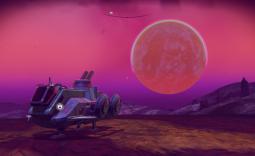 Sean Murray still plays the 2016 launch version of No Man's Sky
 China's YMTC has climbed to third place in global NAND flash shipments
 $100 GTA 6 version makes up 89% of pre-orders, analysts estimate
 HWiNFO's latest update quietly confirms Intel is working on Razor Lake-AX
 Nintendo puts Switch 2 price increase warnings on store demo kiosks ahead of September 1 hike
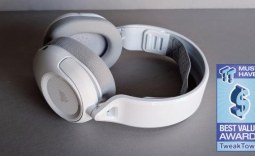 Corsair HS35 v3 Wireless Gaming Headset Review - An Affordable Winner
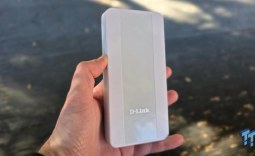 D-Link F518 5G Wi‑Fi 6 AX1800 Mobile Hotspot Review: All-Day Mobile Hotspot
 Bose Lifestyle Ultra Speaker Review - Impressively Detailed Room-Filling Sound
 MSI Z890 Gaming Plus WIFI6E Review - Z890 for under $200
 Mortal Kombat (1995) 4K Ultra HD Blu-ray Review
 CPS PCCOOLER YS1200 ATX 3.1 80 PLUS Gold PSU Review
 ASRock X870E Taichi White Review: a premium AM5 motherboard with 10G LAN and WiFi 7
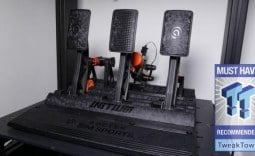 Asetek Initium Pedal Modular Upgrades Review
 Thinkware U3000 Pro Review - Smart Dashcam with Wi-Fi quirks
 Montech TG3 Mid-Tower Chassis Review
 I ditched the Windows 11 context menu for this open-source tool, and here's why
 Windows 11 may be encrypting your drive already, and I checked where my recovery key went
 GIGABYTE's 40 Days of INFINITY celebrates 40 Years of Innovation with stunning GeForce RTX graphics cards and rewards
 I swapped File Explorer for this free file manager and finally got the layout I wanted
 How to tell if someone has been using your Windows PC without your permission
 6 Task Manager tips for troubleshooting Windows performance problems
 ASUS ROG's 20th Anniversary Line-up of Premium PC Gaming Gear has Arrived - Here's Everything You Need to Know
 Six File Explorer tips every Windows user should know
 I switched my PC to encrypted DNS in Windows 11, and browsing felt more private
 Printer Not Working in Windows? How to fix detection, print queues and drivers