







Learn about how TweakTown tests and reviews hardware. As an Amazon Associate, we earn from qualifying purchases. TweakTown may also earn commissions from other affiliate partners at no extra cost to you.
Stay Updated
Follow TweakTown for breaking tech news, reviews, and daily updates.


InWin showed some interesting new computer cases at CES 2024, such as the Mod Free Mini and D5
InWin at CES 2024 in Las Vegas, Nevada, showed us some interesting case designs that show InWin returning to its roots. The header image is InWin's big boi, the Mod Free, which was announced at Computex 2023 in Taipei, Taiwan. The Mod Free can be as big or as small as you like it, which is the beauty of it entirely. Pictured here are four RTX 4090s by Zotac, with two being visible. Available now.

Next is the upcoming version of Mod Free, the Mod Free Mini. Being a mini version, mITX is supported but works on the very same premise as the OG Mod Free. Available for $219, April 2024.
Optional module panels are available to customize the Mod Free Mini.
Apple wants Epic to pay $73 million for its own court costs over their App Store legal spat
Following the Supreme Court;'s decision not to hear appeals by either Apple or Epic Games in a bloody antitrust battle that saw the former win out across nine of 10 issues, the iPhone maker has claimed that Epic should pay $73 million to cover its costs.

Apple's claim is that since Epic lost 90% of the court case last time out and that there is now no appeal to be heard, the game software company should be forced to pay for 90% of its court bills. Apple says that it spent $82,971,401 defending against its case. It then adjusted that to $81,560,362 before deducting the 10% that it believes it should have to pay itself. The result? A cool $73,404,326 tax bill has now landed at the doorstep of Epic.
Apple says that since Epic broke its App Store rules that brought all of this about, it's on Epic to pay for its costs. This comes after Apple pointed to its developer program license agreement which developers agree to when publishing apps and games to the App Store. In that agreement, Epic and other developers agree to indemnify Apple against legal expenses relating to breaches of that agreement.
NVIDIA's new driver brings RTX 4070 Super support, and 100+ games now have Reflex tech
NVIDIA has a fresh Game Ready driver out which introduces support for the new RTX 4070 Super that just hit shelves today, plus it does a fair bit more besides.

Driver version 546.65 ensures that owners of a shiny new RTX 4070 Super GPU are catered for as mentioned, and also optimizes performance for Palworld, introducing DLSS 2 for this game.
Palworld (pictured top of this article) is an open world multiplayer survival game built around collecting monsters and crafting. You can capture these beasts, fight with them, force them to work, sell them, or indeed slaughter them for food, so, yes - there are options for your poor monster minions.
Linux is suddenly 6% faster in one respect after a developer spent 5 minutes tinkering with it
An enterprising Linux developer has managed to cook up some tweaks for Linux that give a 6% boost to file system performance.

As explained on X (formerly Twitter), Jens Axboe made just a couple of changes to a caching algorithm that led to a notable increase in speed for I/O operations.
Apparently Axboe had been meaning to make this code change for years, but only just got around to doing so.
eBay to pay $3 million to a couple after employees sent them live spiders and fetal pig
Unless you're living under a rock, you know what eBay is, and it turns out the staff over at eBay aren't very fond of critics.

Unfortunately for them, the behavior of former staff at the company has landed them in $3 million dollars of hot water to resolve criminal charges against a couple who wrote a critical newsletter about the company in 2019.
Rabbit sells more than 10,000 units of its extremely interesting pocket AI companion
Startup company Rabbit gained massive attention at the CES event this year and has had to open up a second production run of its new AI-powered pocket assistant, the R1, after it sold 10,000 units on the very first day of pre-orders.

After just one day of pre-orders being live, Rabbit announced it has sold out of their first run of AI companions, taking to social platform X to say, "When we started building R1, we said internally that we'd be happy if we sold 500 devices on launch day." absolutely smashing that they added, "In 24 hours, we already beat that by 20x!"
Rabbit unveiled the funky orange pocket pal during a showcase on Tuesday, which comes with a 2.88-inch touchscreen and runs on Rabbits OS. The device uses its "Large Action Model" as a universal controller for apps to allow it to do things like play music, order an Uber, buy groceries, and send messages through one interface without the need for a phone or computer. The device is also trainable, allowing users to set how the R1 interacts with apps.
CES 2024 shaken up by Rabbit's walkie-talkie AI-powered virtual assistant
In this new digital age, you are likely familiar with a digital assistant; most new smartphones come with one from Siri to Google Assistant and are included in popular home devices like Alexa. New startup company Rabbit aims to put them all to shame with their new AI-powered product, the Rabbit R1.

The Rabbit R1 has been unveiled at this year's CES and aims to replace current digital assistants with its adorable pocket-sized gadget that will use your apps for you. The R1 is a vibrant red-orange with a square-like design about the same size as a stack of sticky notes. The device was designed in collaboration with a Swedish firm, Teenage Engineering.
The device has a 2.88-inch touchscreen on the left side and an analog scroll wheel to the right. Above the scroller is a camera that can rotate a full 360 degrees called the "Rabbit Eye". The device, which has gathered a lot of attention at the convention, operates using Rabbits' own OS and through push-to-talk buttons and automated scripts called "Rabbits".
Tech start-up unveils new way to control smartphones and laptops by tilting your head
San Francisco accessibility startup Augmental is working on head tracking and 'Silent speech' for their innovative 'Mouthpad' to give people with physical disabilities the ability to interact with computers and smartphones much more easily.

The idea behind the new technology is to give people with physical disabilities the ability to control their laptop with a slight flick of your tongue or even answering a phone call by tilting their head. Augmental is an inspiring startup and took to CES this year to give the first public demo of its 'MouthPad,' a unique mouse that gives those who have physical disabilities a new way to interact with technology.
Speaking exclusively with TechCrunch, the company shared what they have going on and what's to come, stating, "One of the new features we recently added to the MouthPad is head dragging and head controls. Users can now move their heads to control the cursor, in addition to the tongue gestures we previously announced," said Oscar Rosello, head of Design at Augmental.
NASA telescope photographs two cosmic monsters smashing into each other
NASA has taken to its website and social channels to share an image captured by the iconic Hubble Space Telescope.

The image features two spiral galaxies known as NGC 6040, the tilted, warped spiral galaxy, and LEDA 59642, which are both shown above. Both of the galaxies are called Arp 122, and what we are looking at here is a cosmic collision that has taken millions of years to achieve. The collision is taking place 570 million miles from Earth and is a result of all of the contents of the galaxy causing a strong gravitational pull.
Notably, our own Milky Way galaxy is scheduled to collide with our nearest galactic neighbor, the Andromeda Galaxy. However, that event won't take place for another 4 billion years, and when it does, it will take hundreds of millions of years for both galaxies to fully envelop each other. Why does it take so long? NASA writes that it's simply because of the great distances the galaxies need to travel in order for them to merge.
iOS 17.3 and watchOS 10.3 will be released next week, Apple confirms.
If you're an iPhone or Apple Watch users you can look forward to a new software update in the form of iOS 17.3 and watchOS 10.3, and they'll both be released to the public soon. Apple has been beta testing those releases with developers as well as those on the public beta program, and now we know that the company intends to make the same releases available to the public next week.

Apple confirmed the news in a press release detailing its 2024 Black Unity bands and wallpapers, with the company confirming that its new Black Unity Sport Band will ship on January 23. Apple confirmed that it will also release iOS 17.3, and watchOS 10.3 next week without confirming exactly when that would be, but we can likely expect it on Monday, January 22 to ensure the software is available before the new band is.
The iOS 17.3 software update will bring with it Stolen Device Protection, a new feature designed to lock down specific capabilities and functions even if someone steals your unlocked iPhone. The update will also add support for Apple Music collaborative playlists after it was removed in a previous iOS 17.2 beta.
Continue reading: iOS 17.3 and watchOS 10.3 will be released next week, Apple confirms. (full post)
The $3,499 Vision Pro lacks fast Wi-Fi 6E and any kind of Ultra Wideband technology
If you're buying a new Vision Pro mixed reality headset when it goes on sale on February 2, you're going to get one of the most advanced spatial computing products on the market for your $3,499. But what you won't get is support for Wi-Fi 6E or the even better Wi-Fi 7, nor will you get the same technology that can be found in a $29 Apple AirTag.

That technology is of course an Ultra Wideband chip that allows for precise location information to be collected. The iPhone also has an Ultra Wideband chip inside, while the Apple Watch also features the same technology. The Vision Pro? Not so much.
We know that because the Vision Pro has now worked its way through the FCC which means that we now have a fuller picture of exactly what is and is not inside the headset. The lack of a UWB chip is a disappointment, although it isn't clear how big of an issue it will be. But the lack of Wi-Fi 6E or Wi-Fi 7 is more of an issue, especially considering the price of the headset itself.
S.T.A.L.K.E.R. 2: Heart of Chornobyl now has a final release date - September 5, 2024
S.T.A.L.K.E.R. 2 now has a final release date with the developer, GSC Game World, revealing that Heart of Chornobyl will hit the shelves on September 5, 2024.

The revelation came on X (formerly Twitter) via the official account for the game, accompanied by a somewhat lengthy message.
The developer was keen to make it clear that feedback on the beta versions of S.T.A.L.K.E.R. 2 has been listened to.
Apple could make the iPhone 16 Pro slower in the name of cutting costs
If you're already casting your eye forward and waiting for Apple to announce the iPhone 16 Pro and iPhone 16 Pro Max, you aren't alone. There ar plenty of iPhone owners who skipped the iPhone 15 Pro models with an eye to what will come next, but there's some bad news if you're also someone who likes to get as much storage as possible after it was claimed that the 1TB model will be slower than normal. And the reason is a strange one.

While the 1TB iPhone 16 Pro will have the same A18 Pro chip inside - assuming previous reports and leaks are correct, of course - that particular model could be slower than those with less storage. That's according to a new DigiTimes report which claims that Apple will potentially switch that model to Wuad-Level Cell (QLC) NAND flash memory. Such memory is cheaper than the Triple-Level Cell (TLC) NAND memory that is currently used in Apple's 1TB models.
The move to the different memory type will not only make the chips cheaper but also smaller which will likely help with the limited space available in the iPhone 16 Pro. It's also possible that the switch could open the door to a future 2TB model, too.
Continue reading: Apple could make the iPhone 16 Pro slower in the name of cutting costs (full post)
Apple broke podcasting for everyone with one simple change in iOS 17
Podcasting has gone through something of a golden era thanks in part to the incredible success of shows like This American Life and Serial. The COVID-19 pandemic saw listener numbers boom as well, all thanks to global lockdowns that saw people seeking ways to fill the time. But since then we've seen reports of slowing advertising demand and smaller fees, and things look likely to get worse. Not because the podcasts have changed, nor because advertisers aren't as interested in podcasts as a whole. It's because podcasts around the world have seen their episode download figures plummet, and it turns out they were never right in the first place.

That's following the news that one simple change made in iOS 17 has had a profound impact on the number of episode downloads globally, but it isn't a bug nor is it something that Apple broke as such. It was intentional, and it's better. But it also means that the download figures podcast companies are now receiving are more accurate. And they're much, much smaller.
Semafor reports that prior to the release of iOS 17 Apple's Podcasts app would automatically download all new episodes of any podcast that a user was subscribed to. That meant that if someone subscribed to a podcast three years ago but only ever listened to one episode, their automatic downloads would have counted against download figures regardless. That, multiplied by the millions of iPhone owners, makes for quite the figure of episodes that simply were never being listened to but were being counted. What's more, anyone who started listening again would see all of the prior episodes automatically downloaded which again meant they were counted - whether they were ever heard, or not.
Continue reading: Apple broke podcasting for everyone with one simple change in iOS 17 (full post)
Apple's Vision Pro App Store is now live as early adopters get ready to preorder
The Vision Pro headset is going to go on sale on February 2 and preorders begin at the end of this week and with that in mind, Apple continues to get its ducks in a row ahead of the big launch. The AR/VR headset will likely live or die on the quality and quantity of its apps and to make sure that there are plenty to choose from Apple has started to make them available ahead of time.

The move, which will likely also help reviewers who need to put the headset through its paces ahead of the big day, means that app developers who have submitted apps for review are now starting to see them approved and made available for download. That means that anyone who heads to the App Store webpage for those apps will now see a new entry for the Vision Pro alongside the iPhone, iPad, and Apple Watch. Apps will require visionOS 1.0 or later, which is likely to be the software that the headset will ship with preinstalled.
Apple announced the headset back in June of 2023 during the WWDC event at Apple Park, and while developers weren't able to start working on apps immediately they have had months to get their work ready for launch. Being in the App Store on launch day is a big deal for app developers and has the potential to propel their app to the top of the rankings. For apps that also have iPhone, iPad, or Mac versions available that could also then turn into better sales and revenue on those platforms, too. With that in mind, it's no wonder that some high-profile apps will be ready come February 2.
Elon Musk airs out some of Tesla's dirty laundry on X in new post
Tesla CEO Elon Musk has aired out some of the company's dirty laundry on the social media platform X, formerly called Twitter, as the company's CEO has called for more control before he expands Tesla's presence in AI and robotics.

Musk took to X to write that he simply is "uncomfortable" growing Tesla's AI and robotics capabilities without having 25% of voting control, which would be enough for him to remain "influential, but not so much that I can't be overturned". Musk went as far as to say that unless he is given that control, he would "prefer to build products outside of Tesla". Currently, Musk has about a 13% stake in Tesla, equating to a whopping $206 billion of Musk's $230+ billion net worth.
In the past, Musk has described Tesla as not an electric car company but an AI and robotics company that happens to make electric cars. It seems that Musk wants to pump the breaks on development in both of those areas, whether it be autonomous driving or robotics, until he is given this 25% voting power. Musk added in a follow-up post that if he had 15% voting power or lower, "the for/against ratio to override me makes a takeover by dubious interests too easy."
Continue reading: Elon Musk airs out some of Tesla's dirty laundry on X in new post (full post)
Diablo 4 Season 3 gives you a robotic companion that fights, while adding WASD controls on PC
Diablo 4's new Season of the Construct starts on January 23, and with that, Blizzard has provided the first details on what to expect regarding new content and quality-of-life updates. With the second season's vampiric theme coming to a close, Season 3 is all about magical mechanical 'Constructs beneath the deserts of Kehjistan.'

In addition to new monster types with gears and glowing bits, players will get a robotic mechanized 'Seneschal' companion as part of the new seasonal questline and story.
More than a pet that follows you around, each Seneschal can be customized with new skills and abilities via new seasonal items called "governing" and "tuning" stones. Depending on the configuration, your new pet will fight alongside you or stay back and offer support through healing and buffs.
AVerMedia launches Live Gamer 4K 2.1 and Live Streamer ULTRA HD capture cards
AVerMedia has launched two new capture cards aimed at PC games, streamers, and content creators with the arrival of the Live Gamer 4K 2.1 and Live Streamer ULTRA HD. The Live Game 4K 2.1 is the PCIe version of the excellent Live Gamer ULTRA 2.1 (GC553G2) capture card we reviewed late last year.

The Live Gamer 4K 2.1 (GC575) is a premium HDMI 2.1 PCIe capture card created to take full advantage of HDMI 2.1 - including 4K144 passthrough with HDR and VRR support. This allows for high-quality 4K 60fps capture while enjoying the full benefits of HDMI 2.1 on a modern display. And it looks slick with added RGB lighting that can sync with your setup. For those with PlayStation 5 or Xbox Series X consoles of a new GeForce RTX or Radeon RX GPU - HDMI 2.1 on a capture card like this is a game changer for not compromising visuals while streaming or capturing footage.
The Live Gamer 4K 2.1 is joined by the new Live Streamer ULTRA HD (GC571), it is aimed at those looking for high-quality streaming and capture with entry-level pricing. It offers 4K60 passthrough with VRR support and can capture 1080p120 or up to 4K30.
GALAX GeForce RTX 4090D is 5% slower for gaming and 10% slower for AI when compared to RTX 4090
After new US sanctions on GPU hardware effectively banned NVIDIA's flagship GeForce RTX 4090 from being sold in China, it didn't take long for the company to quietly announce a special cut-down model for the region called the GeForce RTX 4090D.

With fewer CUDA Cores, RT Cores, and Tensor Cores compared to the baseline GeForce RTX 4090 but the same price, we now know the impact on performance. And it's not too bad, and certainly not a massive nerf.
With a new GALAX RTX 4090 D Metal Master card put to the test by Expreview, it turns out that it's only 5.5% slower on average for rasterized gaming, which increases slightly to 5.8% when turning on ray-tracing. However, this gap drops to 5% when DLSS 3 Frame Generation is enabled. Either way, 5% makes the new GeForce RTX 4090 D similar to the RTX 4090 - with the difference barely noticeable for gaming workloads.
Ubisoft director: gamers need to become more comfortable 'not owning' their games
Subscription services in games are certainly a contentious topic, and seemingly all AAA publishers are setting out to try and create their own version that provides value proportionate to the cost. However, in the current state of the gaming market, some subscription services are simply of much better value than others.

Whether you like the idea of subscription services or not, they are here to stay, as many publishers have seen a massive rise in popularity for their own subscription services, such as Microsoft's Game Pass or Ubisoft's Ubisoft+. Speaking with GamesIndustry.biz, director of subscriptions at Microsoft Philippe Tremblay said that in order for subscription services such as Ubisoft+ to expand, gamers will need to become more comfortable not owning their games.
Tremblay is referring to one of the valid points used by people who don't like subscription services, and that is gamers surrender all rights to owning the game they are playing. Tremblay continued and said that consumers moved away from physically collecting CDs or DVDs through subscription services such as Netflix and Spotify, but the gaming industry is moving a bit slower than the two aforementioned transitions.
 If you launch Call of Duty: Black Ops 2 on PS4 or PS5 to be immediately told you're banned - don't panic, there's an easy fix
 MSI launches its 'DRACO EPIC EDITION' 40th anniversary PC gear
 Lower Xbox and PlayStation sales see AMD's Gaming revenue drop by 31%
 Memory capacity for all of 2027 has reportedly been booked and sold, with no more DRAM or HBM available
 GIGABYTE launches flagship AORUS P1600W power supply that supports up to four graphics cards
 GIGABYTE's GeForce and Radeon GPU prices have reportedly increased by up to 40% in Japan
 Adobe Acrobat Alternative: UPDF AI Workflow for Windows
 Battlefield 6 Season 4 update fixes RTX 50 series crashing without requiring an NVIDIA driver update
 Assassin's Creed Black Flag Resynced's new update will let you hide Edward's blowpipe
 A $10 indie game bundle with 100+ games has raised over $100,000 in three days to support laid-off developers
 Asetek Initium Pedal Modular Upgrades Review
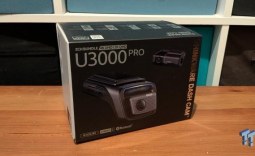 Thinkware U3000 Pro Review - Smart Dashcam with Wi-Fi quirks
 Montech TG3 Mid-Tower Chassis Review
 ASUS ROG Strix X870E-A Gaming WiFI7 Neo Review - A New Enticing Option
 Noctua NL-LC1-36 Liquid CPU Cooler Review
 Logitech G316 X 98 Wired Gaming Keyboard Review - Retro-Inspired Board that Falls a Little Short
 Biwin M560 2TB SSD Review - Best Overall Retail-Ready DRAMless SSD
 Logitech G512 X 98 Analog Mechanical Gaming Keyboard Review - An Innovative Two-in-One
 Thrustmaster T.Flight HOTAS 5 MSFS Edition Review
 SteelSeries Arctis Nova Pro Omni Wireless Headset Review - One Headset to Rule Them All
 I swapped File Explorer for this free file manager and finally got the layout I wanted
 How to tell if someone has been using your Windows PC without your permission
 6 Task Manager tips for troubleshooting Windows performance problems
 ASUS ROG's 20th Anniversary Line-up of Premium PC Gaming Gear has Arrived - Here's Everything You Need to Know
 Six File Explorer tips every Windows user should know
 I switched my PC to encrypted DNS in Windows 11, and browsing felt more private
 Printer Not Working in Windows? How to fix detection, print queues and drivers
 The Ultimate Guide to Personalizing Your Windows 11 Taskbar
 How to Turn Your Windows Laptop Into a Second Monitor with Miracast and Wireless Display in Minutes
 6 Mistakes to Avoid When Buying a Windows Laptop