







Learn about how TweakTown tests and reviews hardware. As an Amazon Associate, we earn from qualifying purchases. TweakTown may also earn commissions from other affiliate partners at no extra cost to you.
Stay Updated
Follow TweakTown for breaking tech news, reviews, and daily updates.


New Arrow Lake rumors are a real concern - might Intel struggle to get these CPUs out in 2024?
Intel's Arrow Lake CPUs have been the subject of plenty of rumors of late, as release nears - but is the launch all that close? Not according to the latest chatter from the grapevine.

YouTuber Moore's Law is Dead (MLID) has been filling us in with his most recent findings on the performance and release timeframe for Intel's next-gen desktop CPUs, and it isn't good news (well - unless you're AMD).
According to the leaker, Arrow Lake will launch in either November or December, and the latter month was also floated as an on-sale date recently in another rumor (we'll come back to that).
How is Intel Arc GPU game compatibility now? Extensive testing reveals a pleasant surprise
Been wondering how Intel Arc GPUs are faring these days in terms of game compatibility? Well, you're in good company, as Hardware Unboxed on YouTube certainly has, and they've tested every game they own with an Arc A770 graphics card, in fact.

So, how did this experiment (flagged up by VideoCardz) go? The good news is that Intel's Alchemist flagship GPU managed to run the vast majority of PC games in Hardware Unboxed's library (using that latest graphics driver, of course).
This was an extensive test of 250 games, and only 2% of them failed to work at all, while a further 5% weren't playable (due to performance issues or other wonkiness). 93% were found to be playable, which means running with at least 40 frames per second and no glitches or artefacts and the like.
Officials announce 'Star Wars' lasers will be used to eliminate drones
Laser weapons will be used to blast drones out of the sky, according to a newly announced project by South Korea's Defense Acquisition Program Administration (DAPA).

The new project was announced on Thursday and describes what DAPA is calling the "Star Wars Project," which includes the deployment of laser weapons to combat North Korea's drones. DAPA describes these laser anti-aircraft weapons as a "new concept future weapon system" that is capable of emitting drones by hitting them with a light source generated from an optical fiber. DAPA states the laser weapon system can precisely strike unmanned aerial vehicles at "close range".
It should be noted that these lasers aren't like what is seen in the Star Wars movies, as they are completely invisible and silent, and there is no ammunition. Furthermore, DAPA is only in the prototype stage but has signed a contract with Hanwha Aerospace Co., to mass produce the new weapons system. Delivery is expected to be fulfilled later this, and according to reports, each blast from one of these laser systems will cost $1.45. At the moment, it remains unclear how many blasts are needed to neutralize a drone.
Continue reading: Officials announce 'Star Wars' lasers will be used to eliminate drones (full post)
TT Show Episode 42 - RTX 5090 Designs, Zen 5 Benchmarks, RDNA 4 Details, and more
This week on The TT Show, Jak and Kosta discuss the week in tech, science, and gaming. They start with a new report outlining that almost half of all internet traffic comes from bots - and most are malicious. Also, a friendly PSA to always be on top of your passwords, especially in light of last week's password leak - the biggest in hacking history.

In the hardware world, it's been a busy week of teases, leaks, and rumors as Kosta goes through everything we know about next-gen Radeon and RDNA, from performance to release timing to how it could shake up the GPU market. Then there's Palit teasing a new flagship GPU design for later in the year, which has to be the GeForce RTX 5090.
We've also got some early benchmark results for this month's launch of Zen 5 and AMD's new Ryzen 9000 Series of CPUs. In the world of Microsoft, Jak and Kosta discuss the elusive bloatware-free Windows 11 'Government Edition,' the rocky Copilot+ PC, and a promising new patent from the company.
Apple Vision Pro unit sales in the US are evidence of a disappointing product
In a world where new technology is released almost every day, it can be quite hard to get excited about a new product release. However, the Apple Vision Pro was an exception, or at least it appeared to be at first.

Reports indicate the Apple Vision Pro is struggling to gain popularity across the United States, with estimates putting its unit sales below the 100,000 mark. Unfortunately, this kind of lackluster response from the US market may mean the newly released virtual/augmented reality headset may not reach even 500,000 units throughout 2024. However, Apple is preparing to release the new spatial computing headset in other markets, which may help bolster its unit sales.
So, why is the Apple Vision Pro not being purchased? Firstly, what is likely preventing the Vision Pro from gaining traction is its price. Apple released the new headset at $3,499, which automatically made the headset an enthusiast-level device unobtainable for the vast majority of consumers. Additionally, the problems don't stop at the price as some people who have bought the Vision Pro are returning it only a few days later, which is an indicator the headset lacks intrinsic utility or value.
NASA identifies thruster problem with Boeing's Starliner spacecraft stuck at the ISS
NASA astronauts Butch Wilmore and Suni Williams have been aboard the ISS for weeks longer than originally planned after Boeing's Starliner capsule began experiencing notable problems as it closed in on the ISS for docking.

NASA and Boeing have launched an investigation into the malfunctions of the Starliner capsule, identifying multiple helium leaks and now thruster problems. According to a recent news conference, Wilmore took over manual control of the Starliner capsule as it approached the ISS, as the handling quality of the spacecraft became degraded due to its thrusters temporarily becoming disabled.
More specifically, five out of 28 reaction control system thrusters were automatically disabled by Starliner's flight software as it detected the thrusters reached extreme temperatures. At the time, four thrusters came back online, but some didn't reach nominal operating levels. However, mid-last month, they were tested again, and thrust levels were close to normal. So, what happens now?
Nintendo officially has a new longest lifespan console, NES now dethroned
Since Nintendo entered the console market, it has released new generations of home consoles faster and faster. That was until the release of the Nintendo Switch.

A new report from VideoGamesChronicle (VGC) pointed out how many days the Nintendo Switch has been on the market, which stacks up to 2,687 days as the Switch was released on March 3, 2017 - seven years ago. Notably, the Famicom, or the Nintendo Entertainment System (NES) as known to markets outside of Japan, was on the market 2,686 days before it was replaced with the SNES.
More interestingly, the successor to the Nintendo Switch, presumably called the Nintendo Switch 2, likely won't be released until at least March next year, increasing the total number of days to 2,920 - if it isn't released before March 1, 2025. As for why the Nintendo Switch has stayed on the market for so long, Nintendo doesn't necessarily need to replace the Switch as it's one of the company's most successful console launches to date.
NASA's Webb photographs 'bejeweled' ring floating in deep space
NASA and the European Space Agency have selected a new picture of the month, and this time around, it's an image snapped by the James Webb Space Telescope (JWST), the world's most powerful space telescope.

The ESA explains via a blog post on its website that Webb has honed its extremely sensitive instruments in on an astronomical object called RX J1131-1231. This object is known as a quasar and is located approximately 6 billion light years away from Earth within the constellation Crater. The ESA writes it's one of the best "lensed" quasars discovered to date as the galaxy located in the foreground of the image smears the image of the background quasar, creating a bright arc and four objects.
What is causing this distortion? Astronomers call this effect gravitational lensing, which was first predicted by Einstein. Gravitational lensing, in a nutshell, is very similar to how a magnifying glass works. In space, objects that have mass bend space and time through gravity. This distortion through gravity creates a magnifying effect that enables astronomers to see further into space than they would without gravitational lensing.
Continue reading: NASA's Webb photographs 'bejeweled' ring floating in deep space (full post)
Microsoft made an AI human voice generator so dangerous it couldn't be released
Artificial intelligence-powered tools such as ChatGPT are only getting more sophisticated and impressive, but what happens when they get too good is that it's impossible to distinguish between humans and machines.

Unfortunately, that has already been achieved, or at least when it comes to AI voice generators. LiveScience spotted Microsoft quietly explaining it created an AI text-to-voice generator that was so powerful the company deemed it too unsafe to release to the public as the model was able to "generate accurate, natural speech in the exact voice of the original speaker". As you can probably imagine, having a tool available to the public would undoubtedly result in an increase in fraud, impersonations, etc.
Microsoft's dangerous AI model is called VALL-E 2, and in a pre-print paper posted on June 17 researchers explain the model marks a milestone in text-to-speech synthesis and it has achieved "human parity for the first time." What this means is Microsoft's internal benchmarks found VALL-E 2 was able to replicate human speech or even exceed it in some cases.
Classic arcade game from the 1980s is getting a 3D remake 38 years after its debut
It's 1987. Predator and Lethal Weapon are on the big screen, while a brand new cartoon called Teenage Mutant Ninja Turtles hits TV screens across America. And if you wanted to play a new video game, your best bet was to take a pocket full of quarters and head down to the local arcade - where you'd find one of the year's hottest games, Double Dragon.

The original Double Dragon introduced many to the concept of the beat 'em up, where up to two players took on the roles of martial artists Billy and Jimmy Lee to bring the pain to street thugs and other baddies. Double Dragon ushered in a golden age for the beat 'em up genre; it spawned sequels, popular console versions for the Nintendo Entertainment System, and even a film adaptation in 1994.
Several new entries have been made, including recent ones for mobile and modern consoles like the Switch. However, Double Dragon Revive is different because it's a complete 3D remake of the 1987 original - one that is set to arrive 38 years after its original debut.
Arm ASR upscaling for mobile is based on AMD's open-source FSR 2.2
Arm has announced details on its new Arm Accuracy Super Resolution, or Arm ASR, upscaling for mobile devices. Described as a 'best-in-class open-source solution,' Arm ASR is based on AMD's open-source FidelityFX Super Resolution 2 or FSR 2. Yes, Arm took AMD's FSR 2 and used the open license to create its upscaler for mobile - a significant win for AMD's focus on developing open-source tools.

In its announcement, Arm specifically mentions PC and console games as the inspiration for creating its upscaling tool for mobile devices and mobile games. With Arm ASR, it aims to address the "disparities that exist between PC and consoles" when it comes to rendering and gaming.
However, Arm has tailored the core tech for mobile to deliver more significant performance increases than standard FSR 2 while reducing the overall GPU load by up to half. Rendering on a mobile device with limited power is very different from rendering on a PC or console plugged into a wall socket.
Continue reading: Arm ASR upscaling for mobile is based on AMD's open-source FSR 2.2 (full post)
XPG's new 'ocean-view' INVADER X BTF PC case supports hidden-cable BTF boards
The new XPG INVADER X BTF Mid-Tower chassis is available now. As the name suggests, this refresh of the popular 'ocean view' or fishbowl-like case from XPG supports ASUS BTF motherboards with hidden connectors. With its wrap-around (front and side) 3mm tempered glass panels, the new XPG INVADER X BTF Mid-Tower chassis showcases components without seeing cables.

And for those wondering, the new XPG INVADER X BTF Mid-Tower chassis still supports standard ATX, Micro-ATX, and all Mini-ITX motherboards, with the addition of ATX and m-ATX BTF 'Reverse-Connector Motherboards.'
The XPG INVADER X BTF Mid-Tower chassis also supports horizontal and vertical GPU mounting (bracket included) and can accommodate a chunky graphics card up to 400mm in length. Having the case ship with the GPU bracket is a nice touch, as is having five pre-installed 120mm fans (out of the up to ten supported by the XPG INVADER X BTF).
Skyrim with over 3100 mods, ray tracing, and a GeForce RTX 4090 looks like a different game
Mods have kept Bethesda's iconic The Elder Scrolls V: Skyrim relevant for over a decade, and there are thousands out there covering gameplay, visual upgrades, new quests, new weapons and items, and ambitious projects that are complete remakes of previous Elder Scrolls game like Oblivion and Morrowind.

With that, YouTube creator Digital Dreams presented a new video showcasing Skyrim running with over 3100 mods, including Complete Ray Tracing Reshade. Now, if you've ever modded Skyrim before, you'll know that playing the game with 20, 30, or more mods requires a specific load order to avoid issues, in addition to using a carefully tuned mod manager.
So yeah, having over 3,100 mods running in Skyrim is a game-changer, but getting the game to run with that many mods is an impressive feat. Visually, it transforms the game to the point where it looks like a different - and stunning - game running on and pushing the GeForce RTX 4090 to its limit.
Intel's new Arrow Lake-S desktop CPUs now rumored for December launch, 5 months after Zen 5
Intel's next-generation Core Ultra 200 series "Arrow Lake-S" desktop CPUs have reportedly been delayed, with a December release window now rumored... giving AMD an entire 5 months with its next-gen Zen 5-based Ryzen 9000 series CPUs to dominate.

In a new post from "HXL" on X, the leaker said this is just a rumor for now... but if true, AMD would have a gigantic 5-month lead on having its next-gen Zen 5-based Ryzen 9000 series "Granite Ridge" processors on the market. Intel will be hosting its "ON" event in September; where we previously expected the Arrow Lake-S processors to launch in the weeks after the event, but it looks like this could change.
The December period is a hot sales period for the holidays and Christmas PC upgrades, but if Intel is only just barely launching its chips in December, AMD will have thousands of its new Ryzen 9000 series CPUs on the market, hundreds of reviews, breakdowns, comparisons, and more. Intel won't have anything on desktop between now and December, which isn't a good position to be in, period.
Intel denies RMA requests for its faulty 13th Gen, 14th Gen CPUs with instability issues
Intel's flagship Core i9-14900K and Core i9-13900K processors and their ongoing instability issues aren't just causing problems for gamers but data center operators, too... with some of them switching to AMD Ryzen CPUs because the issues with Intel are so bad.

We're talking about system crashes, blue screens, and intermittent errors on Intel's highest-end processors. We're not just talking about BIOS and microcode updates to fix these issues, but there seems to be something far deeper -- into the hardware -- with Intel's 13th Gen Core and 14th Gen Core CPUs.
In a new video from Level1Techs, the team dives into game telemetry data (from Oodle) that shows Intel CPUs represent 70% of the error logs compared to AMD with just 30%.
AMD to adopt glass substrate semiconductor tech with its next-gen chips by 2025-2026
AMD is reportedly gearing up to develop glass substrate semiconductors as early as 2025, with Intel and Samsung following closely behind, aiming for 2025-2026.

It's not just AMD, but Intel, Samsung, LG Innotek, and SK Group's US subsidiary Absolics are all systems pushing into glass substrate technology for advanced packaging. Intel announced in September 2023 that its "next-generation advanced packaging glass substrate technology" would change the entire chip packaging business.
Wait, what are glass substrates? Glass is the next generation of substrates, replacing plastic with glass substrates compared to conventional plastic substrates seeing multiple benefits. Glass substrates have a smoother surface, no longer requiring the interposer to mount chips on the substrate. Glass substrates are also thinner, improving chip processing speed by up to 40%, while reducing power consumption by 30%.
Samsung unveils next-gen Galaxy Z Fold 6, Galaxy Z Flip 6 smartphones
Samsung has just unveiled its new Galaxy Z Fold 6 and Galaxy Z Fold 6 smartphones during its Unpacked event, with many of the same features between the new handsets, as well as upgrades to the cameras, displays, and pricing.

The new Galaxy Z Fold 6 smartphone features a 6.3-inch AMOLED cover display at up to 120Hz, while the internal display is a larger 7.6-inch AMOLED panel with up to 120Hz. Samsung's new Galaxy Z Fold 6 handset has a 50-megapixel wide camera, 12-megapixel ultrawide snapper, and 10-megapixel 3x telephoto camera. The new Galaxy Z Fold 6 has a 4-megapixel inner under-display selfie camera, and a better 10-megapixel selfie camera on the cover.
Inside, Samsung is powering both the new Galaxy Z Fold 6 and Galaxy Z Flip 6 smartphones with Qualcomm's new Snapdragon 8 Gen 3 processor, with 12GB of RAM and either 256GB or 512GB of storage, but the Z Fold 6 has a 1TB model on offer.
Continue reading: Samsung unveils next-gen Galaxy Z Fold 6, Galaxy Z Flip 6 smartphones (full post)
Intel Lunar Lake integrated GPU leak shows it's nearly as quick as a discrete NVIDIA GTX 1650
Intel's Lunar Lake CPUs have been spotted in another leak giving us an idea of the power of the integrated Xe2 (next-gen Battlemage) GPU.

The processor in question is the Intel Core Ultra 7 258V (with 8-cores) which Benchleaks noticed had popped up in the Geekbench Vulkan test (as spotted by Tom's Hardware).
The Lunar Lake CPU hit a score of 34,181, albeit it was slightly slower in other tests as Tom's points out - achieving an average of 32,871.
Xbox Game Pass price hike is here, console tier removes day-one access to first-party games
Microsoft's subscription-based Xbox Game Pass for consoles and PC Game Pass for Windows have been game changers in recent years. Offering a library of games to download and install, with day-one access to all first-party Xbox titles, it's one of those things where it's hard to imagine owning an Xbox console without having a Game Pass subscription to go with it.

That changed this week when Microsoft confirmed a confusing pricing increase and tier restructure for Game Pass. Console gamers are being hit the hardest as the Xbox Game Pass for Console subscription tier (which doesn't include PC Game Pass or EA Play titles) is being replaced by Xbox Game Pass Standard. This $15 USD monthly subscription will no longer include access to first-party Xbox titles on day one.
That's right, no day-one access to Age of Mythology Retold, Call of Duty: Black Ops 6, Avowed, or Indiana Jones and the Great Circle this year, and no day-one access to DOOM: The Dark Ages, Fable, Perfect Dark, South of Midnight, Gears of War: E-Day, and more in 2025.
Samsung's new Galaxy Ring is a smart ring for your finger, but what does it do?
Samsung's Galaxy Watch is one of the more well-known pieces of fashionable wearable tech. It offers a suite of smart features that tie into Samsung's smartphone ecosystem with additional wellbeing and health-oriented features. Today marks the addition of a brand-new Samsung wearable device - the new Galaxy Ring. This is the first 'smart ring' from Samsung or big tech companies.

As a ring on your finger, it does not have a display or otherwise clearly visible smart functionality or feature set. So, what's it all about? Health and wellbeing, with 24/7 monitoring and tracking that integrates seamlessly with the Samsung Health platform. And it's lightweight, too, weighing between 2.3 and 3 grams, depending on the size.
"Galaxy Ring delivers a straight-forward approach to wellness, offering health monitoring, tracking, and personalized insights while worn comfortably on a finger, even while asleep," Samsung writes in the announcement.
 Bose launches QuietComfort Headphones with new ActiveSense noise-canceling tech and 24-bit audio
 KIOXIA, Micron, and Samsung earn Best of Show awards at FMS 2026
 Retailer issues warning: If you want a GeForce RTX 5070, RTX 5070 Ti or RTX 5080, you better hurry
 NVIDIA's RTX Neural Texture Compression now runs on RTX Spark and Windows on Arm
 $1 billion in TSMC chips for Apple's new iPhone 18 are reportedly sitting on shelves, waiting for DRAM
 Nintendo's profits jumped 53.5% despite a revenue decline, thanks to a surprise one-time US tariff refund
 Minecraft is getting a native Switch 2 version on October 27, but Switch 1 owners may need to pay to upgrade
 Sony is now putting disc death warning stickers on PS5 boxes, proving it has no plans on reversing its decision
 Quake gets new free episode and roguelite mode in 30th anniversary update
 Call of Duty Black Ops I & II sold 11 million copies on PS4 and PS5, per analyst estimates
 ASRock X870E Taichi White Review: a premium AM5 motherboard with 10G LAN and WiFi 7
 Asetek Initium Pedal Modular Upgrades Review
 Thinkware U3000 Pro Review - Smart Dashcam with Wi-Fi quirks
 Montech TG3 Mid-Tower Chassis Review
 ASUS ROG Strix X870E-A Gaming WiFI7 Neo Review - A New Enticing Option
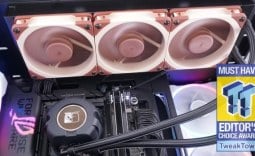 Noctua NL-LC1-36 Liquid CPU Cooler Review
 Logitech G316 X 98 Wired Gaming Keyboard Review - Retro-Inspired Board that Falls a Little Short
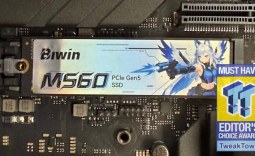 Biwin M560 2TB SSD Review - Best Overall Retail-Ready DRAMless SSD
 Logitech G512 X 98 Analog Mechanical Gaming Keyboard Review - An Innovative Two-in-One
 Thrustmaster T.Flight HOTAS 5 MSFS Edition Review
 GIGABYTE's 40 Days of INFINITY celebrates 40 Years of Innovation with stunning GeForce RTX graphics cards and rewards
 I swapped File Explorer for this free file manager and finally got the layout I wanted
 How to tell if someone has been using your Windows PC without your permission
 6 Task Manager tips for troubleshooting Windows performance problems
 ASUS ROG's 20th Anniversary Line-up of Premium PC Gaming Gear has Arrived - Here's Everything You Need to Know
 Six File Explorer tips every Windows user should know
 I switched my PC to encrypted DNS in Windows 11, and browsing felt more private
 Printer Not Working in Windows? How to fix detection, print queues and drivers
 The Ultimate Guide to Personalizing Your Windows 11 Taskbar
 How to Turn Your Windows Laptop Into a Second Monitor with Miracast and Wireless Display in Minutes