







Learn about how TweakTown tests and reviews hardware. As an Amazon Associate, we earn from qualifying purchases. TweakTown may also earn commissions from other affiliate partners at no extra cost to you.
Stay Updated
Follow TweakTown for breaking tech news, reviews, and daily updates.


Mobile operating system market getting overcrowded as Mozilla plans Firefox OS
It appears that Mozilla, developer of the web browser Firefox and other things, is currently working on an "open mobile OS" that seems similar in many ways to Google's Chrome OS. The new OS will be based off of HTML 5 and open web standards and be designed to remove many of the barriers that currently make mobile website development difficult.
Mozilla has its sites set on emerging markets such as Brazil in 2013. The basic operations of the phone, calling, gaming and messaging, can be developed as HTML 5 applications. Mozilla is already seeing support from Deutsche Telekom, Etisalat, Smart, Sprint, Telecom Italia, Telefonica, and Telenor.
Gary Kovacs, CEO of Mozilla:
Amazon EC2 outage happened because of the "leap second" bug, affected Netflix, Instagram and more
Over the weekend you might have noticed that a few of your popular sites weren't working, such as Instagram, Netflix, and more. This is thanks to a huge storm which took down most of Amazon's Elastic Compute Cloud. Clients that are on this cloud are Netflix, Instagram, Pinterest, and more.
What caused the downtime? The "leap second" bug", which International time keepers adjusted, adding one second to the global time standards in order to offset differences between our ultra-precise atomic clocks and the natural rotation of our planet, a rotation which is ever so slightly irregular. Sometimes, such as back in 2008, there's a second that is added to adjust time as needed.
Amazon's servers weren't the only ones that were affected, Gawker (Lifehacker, Gizmodo and others), Reddit, Mozilla and many, many more fell prey to this leap second bug. During the update, some software can't handle the unexpected change in seconds, and the effects are, well, the events of the weekend.
Mozilla rename Boot to Gecko, now called Firefox OS, will slide onto handsets in 2013
Mozilla have just announced that they are renaming Boot to Gecko to Firefox OS, the company has talked of having support from multiple carriers worldwide, as well as a couple of device manufacturers. Firefox OS is a totally open source OS, and its interface is built from HTML5 and CSS web standards, making it very customizable.
A proof of concept was recently shown off running on Samsung's GALAXY S II, with the company pointing out its responsiveness to touch input, a 3D graphics demo, a full SMS client and on-screen keyboard, as well as a store for various web apps. The first Firefox OS-powered device will feature a Qualcomm Snapdragon processor, and should launch sometime in early-2013 in Brazil through Telefonica's Vivo brand of entry-level handsets.
Manufacturing partners are looking to be TCL Communication Technology, and ZTE, with operators such as Deutsche Telekom, Etisalat, Smart, Sprint, Telecom Italia and Telenor all jumping on the Firefox OS bandwagon. Mozilla ia hoping Firefox OS will change how developers have to re-write their apps to run on the various mobile operating systems, with apps that can run in a browser but still look, and feel like a native app with access to underlying phone capabilities like calling, messaging and games.
Windows 7 has surpassed 50-percent of the global OS market share
According to the latest data from analytics company, StatCounter, Windows 7 has gained more than half of the worldwide operating system market, for the first time ever. Windows 7 had officially surpassed Windows XP as the most popular OS choice globally back in October of 2011, but this is the first time that Windows 7 has passed the 50-percent mark.
StatCounter's data shows that Windows Vista still holds third place, just, with 8.32-percent market share, but Apple's Mac OS X has been making a sprint for third position, sitting at 7.05-percent at the end of June. If Apple continues with this slight jump, they should overtake Windows Vista as the third position by the end of the year.
But, as with all analytical data, there are other sides and companies working at it. Net Applications claims that Windows XP still holds 43.61-percent of the OS market, with their data showing that XP edges out Windows 7 ever so slightly, with Windows 7 sitting at 41.59-percent.
Continue reading: Windows 7 has surpassed 50-percent of the global OS market share (full post)
Google contributed to the US economy in 2011 with big numbers, $80 billion of them
Google's Vice President of Americas Sales, Margo Georgiadis, took to the company's blog to say that the Internet is where business is done and jobs are created. How do you back up such as claim? Well, if you're Google, you can provide $80 billion of economic activity directly to advertisers, website publishers and nonprofit organizations across the US in 2011.
The post highlight that 97-percent of Americans use Internet search to find local goods and services, on both smart devices and computers. Some believe that technology is driving people to shop online versus locally, this isn't always the case.
Boston Consulting Group shows that US citizens who have researched products online throughout 2011 actually went in-store to purchase these goods, and spent around $2,000, rather than online. Google says that's nearly $500 billion in revenue that was spent on local retail. Georgiadis cites a bunch of examples of just how Google and the Internet are helping businesses expand. Citing New England baking company King Arthur Flour, who recently jumped online and has since become an internationally-renowned business.
Microsoft announces Windows 8 Pro upgrade, just $39.99 online, $69.99 in-store
Microsoft have just announced some upgrade plans for their upcoming Windows 8 operating system, where the company will be selling Windows 8 Pro upgrades online for $39.99. If you prefer to make your Windows 8 upgrade purchase in-store, it'll set you back $69.99.
The offer is open to anyone running any version of Windows XP, Vista or 7, and lasts until January 31, 2013. The deal runs for the same amount of time that the $14.99 upgrade deal does, but this one applies to any version of Windows, not just those who have recently purchased a Windows-based PC in the run up to the Windows 8 launch.
Microsoft have also said that the offer will be open to 131 markets, and that it will release more details on the offer as the launch of the OS gets closer. The Verge reports that the upgrade process is quite simple, where it'll offer an upgrade assistant that will help users migrate files, settings, and apps from Windows 7, files and settings from Vista, and files only from XP. After the upgrade, you can add Windows Media Center for free through the "add features" option.
Declaration of Internet Freedom: will you sign it?
In another attempt to make a pointless statement towards Washington D.C., a group of websites and privacy organizations have come together to form the Declaration of Internet Freedom. The Declaration of Internet Freedom is the start of something bigger, a movement to uphold and ensure some basic principles, much like the Declaration of Independence was.
"We've seen how the Internet has been under attack from various directions, and we recognize that it's time to make that stop," said TechDirt, a site involved with the new movement. "The Internet is an incredible platform that we want to grow and to thrive, and thus, a very large coalition got together to produce the following document as a starting point, hoping to kick off a much larger discussion which we hope you'll join in."
As it stands currently, the Declaration of Internet Freedom is composed of 5 basic values:
Continue reading: Declaration of Internet Freedom: will you sign it? (full post)
avast! anti-virus headquarters tour in Prague, Czech Republic
avast! anti-virus invited TweakTown, along with a few other journalists, out to Prague, Czech Republic to meet the staff and check out the headquarters of the world's largest free anti-virus software company. The headquarters is really nondescript as the avast! software team is actually quite tiny considering just how many users they have. The headquarters occupies six floors in a business office shared with other companies. From the outside, all that is visible is the avast! logo on the top.
We were led upstairs to the 8th floor. Into a meeting room we went where we were greeted with refreshments, the CEO of avast!, and Milos Korenko, the Marketing Director at avast!. CEO Vincent Steckler welcomed the 9 of us to Prague and avast!'s headquarters and gave us a brief presentation about the company and some interesting, and quite frankly surprising, statistics about the use of avast!
avast! has had 161 million active and protected computers in the last 30 days. While they have over 200 million registrations, they only count computers who receive updates in a 30 day period in order to be more accurate. Considering there are around 700 million consumer PCs worldwide, avast! protects a large portion of them. Furthermore, avast! basically spends nothing on advertising. The reason they don't is because they don't have the need. Two-thirds of new users come from word-of-mouth referrals.
Continue reading: avast! anti-virus headquarters tour in Prague, Czech Republic (full post)
Samsung, Google team up to take on Apple in the court room
We know that the legal problems between Samsung and Apple are getting more and more serious, with bans imposed on Samsung selling their GALAXY Tab 10.1 in the US, and on Friday the GALAXY Nexus was also denied from sale. The judge in both of these cases is US District Judge Lucy Koh in San Jose, California.
The Korea Times has reported, which Samsung later confirmed, for the first time that they are now getting help from Google in order to better defend themselves over patents. Samsung spokeswoman Lim Yoon-jeong has said that the two companies have been working closely to created a united front. Another undisclosed Samsung insider has been quoted in the article, where they say:
Continue reading: Samsung, Google team up to take on Apple in the court room (full post)
BAE Systems develops GPS alternative, enter Navsop
All around the world, GPS is used by consumers, businesses, and everyone in between. Its used from simple a-to-b navigation from your phone, or car, and for industries like aviation, shipping, and many, many more.
The EU commission has estimated that from these various industries, that over £640 billion of the EU economy is reliant on GPS technology. Knowing this has created financial incentives and funding for alternative GPS technologies, which would be utilised in the event of natural causes such as a solar flare, or man-made causes such as a EMP bomb, war, or similar.
This is where UK defence firm, BAE Systems, has a possible solution: Navsop (Navigation Via Signals of Opportunity). Navsop relies on wireless signals from large comms networks, such as TV, mobile and radio antennas, which then determine locations based on direction and signal strength, with some of the frequencies capable of penetrating walls for indoor use.
Continue reading: BAE Systems develops GPS alternative, enter Navsop (full post)
VLC 2.0.2 now enhanced for Retina-powered MacBook Pros
If you're one of those lucky people with a Retina-powered Apple MacBook Pro, VLC 2.0.2 is now available providing an enhanced experience on Retina-powered displays.
Another good feature is that annoying font caching requirement has been eliminated in the update, meaning you won't need to wait for the cache to finish before a video starts, finally! "Video output improvements" are present for those on PowerPC Macs with ATI Radeon 7500/9200, NVIDIA GeForce FX 5200 Ultra, or Intel GMA 950.
There are other improvements and fixes in VLC 2.0.2, but the Windows 64-bit package currently has no official ETA. There is an experimental Windows 64-bit VLC installer, but for those who like that "official" stamp placed on their software, you'll have to wait that little bit longer.
Continue reading: VLC 2.0.2 now enhanced for Retina-powered MacBook Pros (full post)
Samsung promises "eligible" devices will get Jelly Bean upgrade
Samsung are quickly out of the gate by announcing that they will be providing upgrades for Jelly Bean "eligible" devices. This is good news, especially considering that Samsung only released their GALAXY S III a few weeks ago.
But, the question remains, what does Samsung consider "eligible", and how many would be eligible for Jelly Bean upgrades? Samsung's flagship GALAXY S III will most likely be the first to receive the Jelly Bean goodness, followed by the S II, Nexus and so forth.
Considering that the GALAXY S II just received its Ice Cream Sandwich update, it might be a little while before we can expect Jelly Bean on the S II. The Note II is coming soon, too, so that might just ship with Jelly Bean out of the box. This is the direct quote from Samsung's announcement:
Continue reading: Samsung promises "eligible" devices will get Jelly Bean upgrade (full post)
AMD releases Catalyst 12.6 WHQL and 12.7 Beta
AMD have finally released a new WHQL-certified driver, 12.6 WHQL. Not only that, but they've released the 12.7 beta, too. Catalyst 12.6 WHQL sports a bunch of stability optimizations, whereas 12.7 beta concentrates on performance optimizations, as well as the stability.
A list of changes and resolved issues with Catalyst 12.6 WHQL:
Performance highlights of Catalyst 12.7 beta:
Continue reading: AMD releases Catalyst 12.6 WHQL and 12.7 Beta (full post)
RIM announces Q1 earnings, is hit with a $518 million loss, 5,000 job cuts and BB10 gets delayed until 2013
Every single time I write something about Research in Motion lately, it is negative. Today is no different, but it's actually a little worse than usual. RIM have released their report on the first quarter of its 2013 fiscal year, and the numbers aren't pretty.
RIM reports $2.8 billion in revenue, down 33-percent from the previous quarter, but the net loss is the biggest number here: $518 million. This number is much worse than what analysts were expecting. RIM have also announced they are cutting an additional 5,000 jobs as part of its ongoing restructuring efforts, and that BlackBerry 10 smartphones won't launch until Q1 of 2013.
The reason behind the delay of BB10 handsets? RIM have attributed the delay to the integration of some key BlackBerry 10 features and the "associated large volume of code" has "proven to be more time consuming than anticipated". Personally, I don't think they're going to have it any better until BB10, and if I have to be critical, even post-BB10 is not looking good for Research in Motion.
Nexus 7 was designed, and manufactured in just four months, also sold at cost
We saw that Google's Nexus 7 tablet was unveiled yesterday, where we found out ASUS was the hardware partner in the deal. But ASUS' chairman, Jonney Shih, along with Google's head of Android, Andy Rubin, have revealed at the $199 Nexus 7 tablet is sold at cost.
They also revealed that the Nexus 7 was designed and manufactured in just four months, Shih says to AllThingsD "our engineers told me it is like torture". ASUS was told that they needed to get the Nexus tablet ready in just four months, it had to be high-end, and should not cost over $200.
Shih also said that his team learnt a lot from working so closely with Google's engineers, and in order to get it ready in four months, Shih sent people to work at various locations, including Silicon Valley. This put his workers closer to Google, and also allowed his engineering team to have a 24-hour development cycle.
GALAXY S III received last-minute RAM upgrade, Samsung were preparing for Android 4.1 Jelly Bean
Google unveiled Android 4.1 "Jelly Bean" at their Google I/O conference yesterday, and now news that Samsung had prepared ahead for their flagship GALAXY S III smartphone is floating onto the surface of the Internet.
The Verge has heard that Samsung baked extra RAM into the S III specifically to make sure that it would be capable of handling Google's latest mobile OS. By making this move, Samsung hoped to "future-proof" the smartphone, and to ensure that it would remain comparably fast and powerful no matter what shifts occurred in the OS landscape.
At the time of design and manufacturing, the final specifications for Android 4.1 weren't set in stone. So, in order to be "100-percent sure" that the GALAXY S III would be capable of handling Google's next-gen OS, Samsung's engineers bumped the S III's internal RAM to 2GB.
Some of Apple's new Retina-powered MacBook Pros may be experiencing screen ghosting
Apple's new Retina-powered MacBook Pros may be experiencing screen ghosting, according to some comments from Apple's community forums, YouTube, and long-time Mac pros (not the system, but users).
Lloyd Chambers, whose Mac Performance Guide website for pro photographers and "performance addicts" has shown a photo of the ghosting problem. Chambers wrote on his website:
Android 4.1 Jelly Bean preview is now available
If you want to try a signed copy of the official Android 4.1 Jelly Bean build, then now is your chance. It has just hit the Internet and seems to only be working on the 'takju' (GSM) GALAXY Nexus' given out at Google I/O 2012, reports Android Police.
You can download it for yourself here, coming in at 156MB. The dev community should smash into this pretty quickly and GALAXY Nexus owners should be munching on those delicious jelly beans shortly.
Please do let us know if you get it working, we'd love to hear from anyone running Jelly Bean.
Continue reading: Android 4.1 Jelly Bean preview is now available (full post)
Google unveils Nexus Q, the world's first social streaming media player
Google I/O 2012: Google didn't just talk software, or Google Glass, the company also revealed a new media streaming device dubbed Nexus Q. Google describes this product as the first social streaming media player, and is uniquely shaped like an orb and is able to stream music.
Nexus Q is controlled by your Android-powered device be it smartphone or tablet, but content is yanked directly from the cloud. Google thinks music is best enjoyed with friends, so in order to differentiate themselves from similar products on the market, Google infused Nexus Q with social capabilities. Google describes it as a cloud-connected jukebox, where everyone brings their own music to the party.
The social side of Nexus Q allows friends to create a single playlist that everyone has access to. Anyone in that group can move songs up or down on the queue, or even play a new track instantly before the previous tune has finished. Hardware-wise, we're looking at Nexus Q sporting a dual-core OMAP4460 processor, Android 4.0 Ice Cream Sandwich and 16GB of onboard storage.
Jelly Bean is Android 4.1, will arrive in mid-July
Google I/O 2012: Ice Cream Sandwich has been out for around six months now, and Google have taken the stage at Google I/O to announce Android 4.1 "Jelly Bean". It was previously rumored Jelly Bean would be Android 5.0, but then rumors were flying in that version 4.1 would be Jelly Bean, it looks like the latter rumors were right.
The shift to Jelly Bean from ICS isn't as grand as the Gingerbread to ICS shift was, but this time its more of an evolution, and not a revolution. One of the best features is something Google call "Project Butter", which is an effort to improve performance and response time, Jelly Bean cranks along at 60fps. This should ensure a very, very smooth experience.
Jelly Bean's home screen has been modified, with Google adding some nice features such as the ability to dynamically resize widgets, which means you no longer have to place it, resize it, then move it where you want if there wasn't enough room. If the room is there, but your app icons are sitting in the way, the widget will now automatically push the apps to the side. Apps and widgets can also be removed by simply flicking them off your screen.
Continue reading: Jelly Bean is Android 4.1, will arrive in mid-July (full post)
 God of War Laufey gets a release date and Kratos is making a return
 GTA 6 trailer 3 expected to arrive within two weeks, according to insider
 Thieves stole 16 RAM sticks from Chinese eSports hotels, arrested
 Lisuan LX7G100 GPU achieves playable FPS in system with no Intel AMD or NVIDIA hardware inside
 Elder Scrolls 6 roadmap not affected by layoffs, Bethesda says
 Intel and AMD are locking Chinese customers into long-term CPU deals as server chip prices climb more than 40%
 Ubisoft CEO says Sony's PlayStation disc shutdown will not disturb the industry too much
 Vibe coding is flooding the App Store with new apps - on track for record submissions in 2026
 Geekbench 7 is out with CUDA support, smarter multi-core scoring, and new AI workloads across all major platforms
 GTA 6 physical copies in Japan have a 170-day expiration date
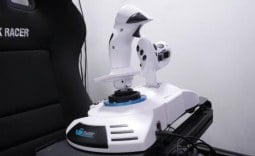 Thrustmaster T.Flight HOTAS 5 MSFS Edition Review
 SteelSeries Arctis Nova Pro Omni Wireless Headset Review - One Headset to Rule Them All
 SteelSeries Arctis Nova 7 Wireless Gen 2 Headset Review - New and Improved, But Is It Enough?
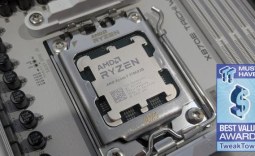 AMD Ryzen 7 7700X3D Review - Days of Future Past
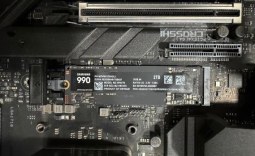 Samsung 990 2TB SSD Review - Ninth Gen QLC at PCIe Gen4 Speeds
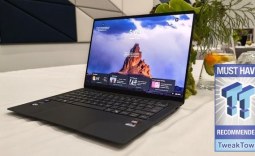 ASUS ExpertBook Ultra (Panther Lake) 14" Business Laptop Review
 ASUS ROG Raikiri II Xbox Wireless Controller Review - Ready to Take Control
 MOZA FMP18 Panel Bundle Review: authentic F/A-18 Hornet cockpit controls for flight sims
 Micron 6600 ION 245.76TB Enterprise SSD Review - Best in Class Programming Speeds
 MOZA MA3F EFCM Flight Control Module Review: authentic Airbus A320 autopilot panel for simulators
 The Ultimate Guide to Personalizing Your Windows 11 Taskbar
 How to Turn Your Windows Laptop Into a Second Monitor with Miracast and Wireless Display in Minutes
 6 Mistakes to Avoid When Buying a Windows Laptop
 I capped Windows Update's bandwidth with Delivery Optimization, and my downloads stopped choking
 I use this decade-old free tool that finds files faster than Windows Search does
 I install and update most of my apps with this Windows command now, and I stopped downloading sketchy installers
 Hisense U6SF 65-inch MiniLED TV: High Performance Meets Leisurely Convenience
 I stopped digging through Windows menus after I set up this one folder
 Don't sell your Windows laptop until you do these things
 6 PC cleaning mistakes to avoid for safer hardware maintenance