







Science, Space, & Robotics - Page 236
Explore the latest Science, Space, Health, and Robotics news from TweakTown. Coverage includes space launches, medical tech, discoveries, and rockets. - Page 236
Stay Updated
Follow TweakTown for breaking tech news, reviews, and daily updates.


As an Amazon Associate, we earn from qualifying purchases. TweakTown may also earn commissions from other affiliate partners at no extra cost to you.
New generation of prosthetics help patients regain sense of touch
Technological advances have allowed researchers to create prosthetic limbs that are able to better mimic the natural movement of human limbs, with medical patients able to regain their sense of touch. In one study, researchers in the United States manufactured a prosthetic hand that uses electric signals sent into a medical patient's harm and brain, providing a sense of "feel."
"The sense of touch is one of the ways we interact with objects around us," said Dustin Tyler, Case Western Reserve associate professor of biomedical engineering and the study's author. "The work reactivates areas of the brain that produce the sense of touch. When the hand is lost, the inputs that switched on these areas were lost."
A group of Swedish scientists created a mind-controlled prosthetic arm that connects to the medical patient's arm, nerves and muscles. This type of research has great potential for those injured in serious incidents, and will continue to be a topic of focus for researchers.
Continue reading: New generation of prosthetics help patients regain sense of touch (full post)
Google is trialing video chat with doctors after Googling for symptoms
We've all been there, there's something wrong with you, you Google for symptoms, worrying that you're going to die, but don't want to call the doctor out of a variety of reasons.
But Google looks like it might be going down an interesting, and why-hasn't-it-happened-sooner path, trialing direct video chat with doctors after you Google your symptoms. Google confirmed the news with Engadget, telling the site that it is trialing a Helpouts-style feature that offers people video chats with doctors when they search for their symptoms.
There aren't many details on how exactly this works, but a search card mentions that Google is covering the costs of any video chats with doctors while in its trial phase. Virtual appointments would be the next step, but there would most likely be costs involved. I think this could be a great step for the company, who is investing and researching into health technology, allowing doctors from all corners to talk to patients who otherwise might not have contacted a doctor about their issues.
Continue reading: Google is trialing video chat with doctors after Googling for symptoms (full post)
Inventors for blue LED lights gets a Nobel Prize in physics
The researchers of blue light-emitting diode (LED) are the recipients of the 2014 Nobel Prize in physics. The winners are Isamu Akasi, a professor at Meijo University and Nagoya University, Hiroshi Amano, also a professor at Nagoya University and Shuji Nakamura who is a professor at the University of California. Along with the Nobel Prize, the scientists will also be splitting $1.1 million award money.
The three scientists were the ones who found a way to produce blue light beams in the early 1990s, but the red and the green light diodes were produced by others. According to the Royal Swedish Academy of Sciences in its prize citation that white light couldn't have been invented if it wasn't for the blue LED invention. The invention of blue LED is 20 years old, but has been used in multiple electronic appliances, devices, day-to-day electronic equipment, traffic signals, headlights and even PCs.
The main advantage of LEDs is that it significantly reduces the consumption of electricity in comparison with incandescent and fluorescent lights. The widespread adoption of the practical invention, and the versatility in other fields is what makes them deserve this award. LEDs are used in smart bulbs that are made by few companies like GE and Phillips.
Continue reading: Inventors for blue LED lights gets a Nobel Prize in physics (full post)
India teams up with the United States for the exploration of Mars
With Mars being orbited by India's satellite Mangalyaan, it has spurred scientists back here on Earth for their next mission, with NASA and the Indian Space Research Organization (ISRO) signing a new agreement to work together on the future exploration of Mars.
The two space agencies also agreed to collaborate on observations and scientific analysis from their respective satellites that are orbiting Mars. With India now the first Asian nation to research to reach Mars, and the only country in the world that succeeded on its first attempt. NASA has its own Maven satellite that entered Mars' orbit two days before Mangalyaan arrived, with Maven the first spacecraft to explore the upper atmosphere of Mars, and Mangalyaan studying the surface of the planet, in search for evidence of methane, and more.
NASA spent north of $740 million on its latest journey to Mars, with India spending just a tenth of that, at a cost of $74 million. Analysts have said that this puts India directly into the big league when it comes to space, nudging out China and Japan in space exploration in one small step for the country. So far, Chinese and Japanese missions to orbit Mars have failed. In six more years, the two space agencies hope to launch NASA-ISRO Synthetic Aperture Radar, or NISAR. NISAR will observe the Earth, measuring changes in our land surface. NASA said in a statement: "Nisar will improve our understanding of key impacts of climate change and advance our knowledge of natural hazards".
Continue reading: India teams up with the United States for the exploration of Mars (full post)
US setting aside some nuclear weapons to combat asteroids
The United States military has slowed down efforts to dismantle some of its aging nuclear warheads, just in case they are needed for use against asteroids that threaten the Earth. Until an evaluation is conducted to determine "their use in planetary defense against earth-bound asteroids," according to officials.
Nuclear weapons could be used to strike asteroids to either knock them off course - or detonate asteroids to create smaller fragments - that would no longer pose a threat to the planet. Of course, such controversial research has garnered some criticism, including the idea that this is just an excuse for the U.S. military to keep a functional nuclear arsenal.
NASA previously outlined its interest in trying to capture an asteroid which could be used by researchers for further studies. The U.S. space agency will test capabilities by 2030 as part of the Asteroid Redirect Mission (ARM), and it could also be used to help manned missions reach Mars.
Continue reading: US setting aside some nuclear weapons to combat asteroids (full post)
NASA chooses Boeing and SpaceX to send Americans to the ISS
NASA has announced that astronauts will once again travel to and from the International Space Station (ISS) from the US on American spacecraft, thanks to new contracts announced just hours ago. The US space agency announced its partnerships with Boeing and SpaceX to transfer US crews to and from the ISS using their CST-100 and Crew Dragon spacecraft, ending its reliance on Russia by 2017.
NASA administrator, Charlie Bolden, said at the agency's Kennedy Space Center in Florida: "From day one, the Obama Administration made clear that the greatest nation on Earth should not be dependent on other nations to get into space. Thanks to the leadership of President Obama, the hard work of our NASA and industry teams, and support from Congress, today we are one step closer to launching our astronauts from U.S. soil on American spacecraft and ending the nation's sole reliance on Russia by 2017. Turning over low-Earth orbit transportation to private industry will also allow NASA to focus on an even more ambitious mission - sending humans to Mars".
This deal has seen Boeing end up with $4.2 billion, while SpaceX receives a cheque from NASA for $2.6 billion. These new contracts include at least one rewed flight test per company, with NASA having one astronaut aboard to "verify the fully integrated rocket and spacecraft system can launch, maneuver in orbit, and dock to the space station, as well as validate all its systems perform as expected".
Continue reading: NASA chooses Boeing and SpaceX to send Americans to the ISS (full post)
hitchBOT is thumbing its way across British Columbia
A group of researchers from a university in British Columbia came up with a very odd, yet very cool project called hitchBOT. The idea was to make a robot of sorts, put it on the side of the road, and see if it could hitch a ride across the country. This isn't the sort of bot that can't walk on its own, but it is computerized enough to interact with the people who help it.
So far, the bot has hitched numerous rides and ended up in some interesting places. It has hung out with folks on summer vacation, a rock band, and wound up at a wedding. During the wedding hitchBOT reportedly interrupted the groom's thank you for coming speech to say it likes to make friends.
HitchBOT began its cross-country trip on July 27 after being left on the side of the road near the Halifax airport. The bot has been taking photos and sharing them online as well as tweeting during its trip. The bot is expected to end its trip at the Victoria Open Space Gallery next week.
Continue reading: hitchBOT is thumbing its way across British Columbia (full post)
1000 strong robot swarm can make shapes on command
Researchers around the world are working on robotics to make them able to operate on their own and perform complex tasks. In the US, a group of engineers has designed a swarm of 1000 tiny robots that are able to shuffle their way into specific shapes when told to. Each of the bots is given an image of the shape controllers want and then they work together to make the shape.
It's not a fast process; it reportedly takes about 12 hours for the bots to take the desired shape. This is the largest swarm of robots to ever be used in a study of this type. Researchers from the group behind the project say that each of the bots is identical and have the exact same program.
The throng of robots is inspired by cells that form organs or ants that are able to build bridges to span water. The team hopes that knowledge gleaned from this study will help develop self-assembling tools and structures in the future. Each of the little bots is 3cm across and said to be about the size of a sushi roll and each has three straight legs. Commands are given using an infrared light overhead and a sensor on the robots.
Continue reading: 1000 strong robot swarm can make shapes on command (full post)
Michael J Fox Foundation and Intel team for Parkinson's research
Michael J Fox's charity, the Michael J Fox foundation, has partnered with Intel to examine how wearable technology can be of benefit to people with Parkinson's disease.
Michael J Fox founded the charity after he was diagnosed with the disease. Its cause is not known and there is no cure, however, the symptoms, such as shaking and trouble with co-ordination, can be treated to a degree. The wearable tech will be used to unearth more data, for example, by recording the movements of patients and volunteers. An accompanying smartphone will upload this data to an Intel system, which will then dedicate data scientists to the project.
Ex Intel boss Andy Grove has acted as adviser to the foundation since he was also diagnosed with the disease. Chief executive of the foundation, Todd Sherer, said, according to the BBC: "This opportunity really will allow us the chance to uncover novel breakthroughs in Parkinson's disease by truly understanding how people are living with the disease today, how are they responding to treatments, what are their unmet needs."
Continue reading: Michael J Fox Foundation and Intel team for Parkinson's research (full post)
Robot butler Botlr goes to work in California hotel
I'm sure many people out there have imagined having a robot that could bring them stuff when they want it like food or drinks. A hotel in California called Aloft Hotel has started to roll out robotic butlers that can bring things to your room for you. These robot butlers are called Botlr and perhaps the best part for hotel visitors is that all the Botlr wants for a tip is a tweet.
Botlr will bring things to your room like toothpaste, towels, and just about anything else that a person would normally bring you. Botlr will go into use for the first time on August 20 at the Aloft Hotel in Cupertino, California.
The bot will be named A.L.O. and will even wear a butler uniform and nametag. A compartment on top of the robot is where items are stored for delivery. When the robot arrives at your door, the phone in the room will ring. Botlr is the product of a company called Savioki, which is backed by Google Ventures.
Continue reading: Robot butler Botlr goes to work in California hotel (full post)
NASA's New Horizons captures unique footage of Pluto and Charon
Launched by NASA in 2006 and tasked to study Pluto, the New Horizons spacecraft captured unique footage of Charon revolving around Pluto, filmed from 265 million miles. Pluto has five moons, but Charon, at 750-miles across and is just 11,200 miles from Pluto.
A total of 12 photos were captured and researchers are using images to help accurately identify where Pluto is and the path it takes around the sun. Only one-third of the dwarf planet's orbit around the sun has been accurately recorded, space researchers have noted.
The New Horizons is expected to arrive at Pluto around 2015, and is finalizing its pre-Pluto annual systems instrument calibration before arriving. The spacecraft will be placed into "hibernation" mode from late August until early December, which is when it will be used for two years to conduct flyby missions while relaying information back to researchers.
Continue reading: NASA's New Horizons captures unique footage of Pluto and Charon (full post)
Follow the ISEE-3 spacecraft using Google Chrome
If you are familiar with the ISEE-3 spacecraft we have talked about a few times around here, you might like this. Google has announced that it has launched a new Chrome Experiment that is called "A spacecraft for All" that allows you to follow the incredible odyssey of the ISEE-3 using Chrome interactive WebGL graphics and video.
ISEE-3 is a spacecraft that launched in 1978 with the original mission for studying the sun; it was retasked after launch to study a comet. A group of amateur scientists established contact with the satellite to get it back on its original mission, but the spacecraft thrusters failed to get the craft back into the correct orbit. The spacecraft did recently fly past the moon for the first time in decades.
"In a new Chrome Experiment called A Spacecraft for All, you can follow the unlikely odyssey of the ISEE-3 using Chrome's interactive WebGL graphics and video. You can re-live its story, read its re-activated data instruments, learn about its current position and trajectory - and explore space along the way. It's all designed to make space science simple, fun and accessible enough for anyone eager to learn - whether you're a PhD or grade school student", says Suzanne Chambers, executive producer and space cadet, Creative Lab New York.
Continue reading: Follow the ISEE-3 spacecraft using Google Chrome (full post)
US Navy successfully recovers Orion capsule in splashdown test
The Orion capsule is the spacecraft that will help American astronauts get back into space in the future. It's first flight is set for December, but preparations for other aspects of Orion operations are underway. One of those practice aspects is the recovery of the capsule after a splashdown in the Pacific Ocean off the coast of California.
This week, US Navy dive teams aboard the USS Anchorage recovery vessel successfully recovered the Orion capsule during a practice test using a cradle and winch system. This test is the last time the Navy and NASA get to practice before the Orion is sent 3600 miles above the earth.
During that unmanned test flight, Orion will land in a splashdown in the ocean where it will be recovered and used again. NASA hasn't performed an at sea recovery of a spacecraft in a real mission since 1975.
Continue reading: US Navy successfully recovers Orion capsule in splashdown test (full post)
Elon Musk says that AI could be 'more dangerous than nukes'
Elon Musk has founded some of the biggest companies involving technology, such as PayPal, SpaceX and Tesla Motors. Musk thinks we need to build a home for humans on Mars as soon as possible, but when it comes to artificial intelligence (AI), he has his reservations.
Over the weekend, Musk tweeted about a book recommendation, but after that he said: "We need to be super careful with AI. Potentially more dangerous than nukes." Musk isn't new to his stance on AI, where back in June the SpaceX founder said he has even considred the possibility of a 'Terminator'-like scenario. Musk has also admitted that he's even invested money into AI companies, where he wants to keep an eye on where AI is going.
Continue reading: Elon Musk says that AI could be 'more dangerous than nukes' (full post)
Cappuccino and fuel among items heading to ISS on ESA resupply ship
The International Space Station requires a constant stream of new components, food, and water to remain in operation. Sometimes the US send up supplies and scientific gear and sometimes the resupply ships come from Europe. A new supply mission is underway from the ESA that sent an Ariane 5 rocket into space with a cargo ship aboard to resupply the ISS.
This particular resupply mission had something onboard that astronauts on the ISS will really appreciate, cappuccino and tiramisu. The resupply ship is set to dock with the ISS on August 12 at about 9:30 am. This is the last resupply mission that the ESA will perform.
After this resupply mission all future resupply will be handled by Russian Progress spacecraft and the Japanese HTC cargo ships. In the US resupply, missions will be handled by SpaceX and Orbital Sciences. Among the 5941 pounds of material on the resupply ship are cappuccino, water, oxygen, air, research gear, and spare parts. The cargo ship also contains 1896 pounds of fuel to be used by the Russian thrusters aboard the ISS.
Continue reading: Cappuccino and fuel among items heading to ISS on ESA resupply ship (full post)
Detailed Moon analysis determines it to be slightly lemon-shaped
There has been a bit of debate over the years amongst scientists and astronomers on how exactly the Moon was formed. A detailed study of the shape of the moon has revealed some new details on its shape, which in turn shed a bit of light on how the moon may have formed.
When you look at the night sky, the moon appears to be a sphere. However, the analysis of the shape of the moon shows that it is actually slightly lemon-shaped. This study looked at the Moon as it would be if millions of meteorites hadn't hit the surface and knocked chunks off it.
"If you imagine spinning a water balloon, it will start to flatten at the poles and bulge at the equator," Ian Garrick-Bethell said. "On top of that you have tides due to the gravitational pull of the Earth, and that creates sort of a lemon shape with the long axis of the lemon pointing at the Earth."
Continue reading: Detailed Moon analysis determines it to be slightly lemon-shaped (full post)
Scientists discover origin of 18th century wood ship under WTC
One of the big mysteries that remained after the September 11 attacks was an old wooden ship that was discovered under where the towers once stood during clean up. While excavating the site, a wooden ship was discovered in the earth leaving scientists to wonder where the ship came from and what it was doing there.
Scientists have used tree rings in the lumber used to build the ship to learn something about where it came from and when it was built. The rings in the lumber reveal that the trees matched other lumber that was cut down about 280 years ago near Philadelphia. The researchers believe the wood was harvested in 1773 and was cut down somewhere around the time of the Boston Tea Party.
The rings in the lumber help the scientists pinpoint its year and location of origin while providing a bit of history about the climate in the area where it was harvested. The ship is believed to have been constructed by a small shipyard, because details in the design of the ship are unlike those used by larger shipyards. The ship is believed to have been retired in the city, coved by garbage and landfill, and then the Twin Towers were built over it.
Continue reading: Scientists discover origin of 18th century wood ship under WTC (full post)
Scientists measure record waves in Arctic Ocean that may break up ice
Historically much of the Arctic Ocean is covered in ice, even in the summer. Scientists say with global warming that ice pack is starting to melt. Arctic Sea ice faces another way that ice may break up and melt faster, massive waves.
Typically, with ice covering the surface of the ocean, waves aren't recorded. Scientists have recently measured record setting waves in the Arctic Ocean. Sensors under the water that communicate via satellite have recorded swells in the Arctic Ocean of around 16-feet high.
The largest wave measured was 29-feet high. The scientists say these massive and uncommon waves could break ice up and make it melt faster than it would from global warming alone. These waves were measured in a part of the Arctic Ocean near Alaska called the Beaufort Sea.
Continue reading: Scientists measure record waves in Arctic Ocean that may break up ice (full post)
An artificial leaf could be the future of space travel
Space travel has a variety of restrictions, especially when it comes to humans making that trip across the sea of stars. Humans rely on oxygen to live, and so do other things like trees and plants.
Julian Melchiorri, a graduate from the Royal College of Art, has created the very first man-made, biologically functional leaf that is capable of taking in carbon dioxide, water, and light and releases oxygen. This leaf features chloroplasts, which are the part of a plant cell where photosynthesis happens, suspended in body made of silk protein.
Melchiorri explains: "This material has an amazing property of stabilizing (the chloroplast) organelles. As an outcome I have the first photosynthetic material that is living and breathing as a leaf does". Most can see the potentials of this for space travel, but it has big potential here on Earth, too. We could see front of buildings and lampshades made from the material, where it would exhale fresh air with just a thin coating of this new leaf material.
Continue reading: An artificial leaf could be the future of space travel (full post)
Prepare yourself for the next-generation of water balloon fights
As a kid, I spent countless hours in the battlefield that was water balloon fights, but filling up those little balloons and tying them up took so much valuable time, but not anymore! Tinnuss Enterprises' Bunch O Balloons looks to revolutionize water balloon fights, and has taken to Kickstarter to fund its device.
The company has raised over $690,000 from Kickstarter, and considering it only asked for $10,000 - this might end up being one of the most successful Kickstarter projects of all time. The idea behind Bunch O Balloons is to fill as many balloons as possible, in the shortest amount of time. The device is capable of both filling, and typing up a crazy 100 water balloons per minute.
The Bunch O Balloons can fill 37 balloons up simultaneously, meaning that no party will be without water balloons. If you want one of these awesome Bunch O Balloons, you can pledge for the $17 version, which ships in September... of 2015. Most of the other packages are gone, but this isn't surprising. Now I'm off to pledge some money, as my daughter will be four years old by the time I get this, and she's going to love it.
Continue reading: Prepare yourself for the next-generation of water balloon fights (full post)
 Phantom Blade Zero on PC will launch with DLSS 4.5 and Ray Tracing on day one
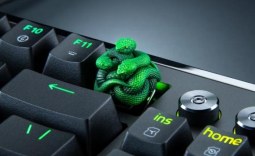 Razer announces its first Artisan Keycap with the Triple-Headed Snake Edition
 ZOTAC's 20th Anniversary Edition GeForce RTX 5080 features a titanium colorway and mirror-like backplate
 GeForce NOW app for Linux leaves beta, while DLSS Frame Generation cloud latency also improves
 Twitch opts streamers into gen AI training by default, faces harsh backlash
 Sean Murray still plays the 2016 launch version of No Man's Sky
 China's YMTC has climbed to third place in global NAND flash shipments
 $100 GTA 6 version makes up 89% of pre-orders, analysts estimate
 HWiNFO's latest update quietly confirms Intel is working on Razor Lake-AX
 Nintendo puts Switch 2 price increase warnings on store demo kiosks ahead of September 1 hike
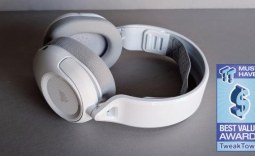 Corsair HS35 v3 Wireless Gaming Headset Review - An Affordable Winner
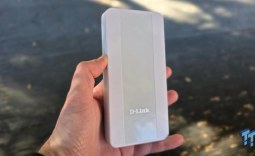 D-Link F518 5G Wi‑Fi 6 AX1800 Mobile Hotspot Review: All-Day Mobile Hotspot
 Bose Lifestyle Ultra Speaker Review - Impressively Detailed Room-Filling Sound
 MSI Z890 Gaming Plus WIFI6E Review - Z890 for under $200
 Mortal Kombat (1995) 4K Ultra HD Blu-ray Review
 CPS PCCOOLER YS1200 ATX 3.1 80 PLUS Gold PSU Review
 ASRock X870E Taichi White Review: a premium AM5 motherboard with 10G LAN and WiFi 7
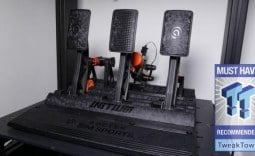 Asetek Initium Pedal Modular Upgrades Review
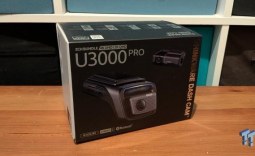 Thinkware U3000 Pro Review - Smart Dashcam with Wi-Fi quirks
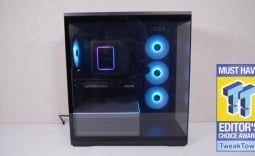 Montech TG3 Mid-Tower Chassis Review
 I ditched the Windows 11 context menu for this open-source tool, and here's why
 Windows 11 may be encrypting your drive already, and I checked where my recovery key went
 GIGABYTE's 40 Days of INFINITY celebrates 40 Years of Innovation with stunning GeForce RTX graphics cards and rewards
 I swapped File Explorer for this free file manager and finally got the layout I wanted
 How to tell if someone has been using your Windows PC without your permission
 6 Task Manager tips for troubleshooting Windows performance problems
 ASUS ROG's 20th Anniversary Line-up of Premium PC Gaming Gear has Arrived - Here's Everything You Need to Know
 Six File Explorer tips every Windows user should know
 I switched my PC to encrypted DNS in Windows 11, and browsing felt more private
 Printer Not Working in Windows? How to fix detection, print queues and drivers