







Science, Space, & Robotics - Page 234
Explore the latest Science, Space, Health, and Robotics news from TweakTown. Coverage includes space launches, medical tech, discoveries, and rockets. - Page 234
Stay Updated
Follow TweakTown for breaking tech news, reviews, and daily updates.


As an Amazon Associate, we earn from qualifying purchases. TweakTown may also earn commissions from other affiliate partners at no extra cost to you.
AI researchers called upon to sign open letter for safe development
Research into artificial intelligence (AI) continues to evolve, and there is growing concern that uncontrolled AI could have a significant impact on mankind. To prevent this from happening, the Future of Life Institute (FLI) wants AI researchers to sign an open letter to protect humans from intelligent machines.
"We recommend expanded research aimed at ensuring that increasingly capable AI systems are robost and beneficial: our AI systems must do what we want them to do," the letter reads. "The attached research priorities document gives many examples of such research directions that can help maximize the societal benefit of AI. This research is by necessity interdisciplinary, because it involves both society and AI. It ranges from economics, law and philosophy to computer security, formal methods and, of course, various branches of AI itself."
AI is being used in autonomous weapons systems, robots and humanoids, and in autonomous vehicles - raising serious ethical questions that must be answered.
Continue reading: AI researchers called upon to sign open letter for safe development (full post)
Study: Apple iPhone separation really does cause anxiety to users
Apple iPhone users separated from their smartphone can suffer from "physiological anxiety" and "poor cognitive performance," according to "The Extended iSelf: The Impact of iPhone Separation on Cognition, Emotion, and Physiology" study, published by the University of Missouri.
The researchers first tasked survey participants to sit down and complete a puzzle while near their smartphone, and then had to take a second survey with their phone in a different part of the room. However, researchers called the phone, with participants able to see their iPhone and could hear it ring - but couldn't answer the phone.
Participants had increased heart rate and blood pressure while trying to complete the puzzle in the second scenario. Researchers recommend iPhone users keep their smartphones nearby when completely tasks that involve significant attention, so no anxiety occurs.
Continue reading: Study: Apple iPhone separation really does cause anxiety to users (full post)
Defector: North Korea's Bureau 121 actually located in Shenyang, China
The city of Shenyang, the largest city in Northeast China with more than 6 million residents, could have been home base for the North Korean government's secretive Bureau 121 hacker group, according to defector Kim Heung-Kwang.
Kim left North Korea in 2004 and previously served as a computer science professor in Pyongyang, saying some of his students graduated and began hacking for the North Korean government.
"Bureau 121 began its large-scale operation in China in 2005," Kim recently said in an interview published by CNN. It was established in the late 90s. Team members entered China separately - in smaller groups - 20 members at a time. When they entered China, they came under different titles. For example an office worker, an official with a trade company or even as a diplomatic staffer."
Continue reading: Defector: North Korea's Bureau 121 actually located in Shenyang, China (full post)
Escort Radar shows off Bluetooth-equipped radar detectors
CES 2015-Escort Radar plans to show off its Passport and Passport Max2 radar detectors during the 2015 Consumer Electronics Show (CES), featuring Bluetooth-equipped products tied to the Escort Live ticket protection app.
As more devices, especially inside of vehicles, continue to include Bluetooth, Wi-Fi, and mobile apps, Escort wants to make sure its products provide the same connectivity. The company will unveil its Air Patrol and Intelligent Speed Traps social app, able to alert drivers to aircraft and "intelligent speed traps" that are located in the area.
If you're attending CES, Escort will first demo the solution tomorrow during the CES Unveiled Show in the Mandalay Bay Hotel and Casino.
Continue reading: Escort Radar shows off Bluetooth-equipped radar detectors (full post)
New NASA scientific balloon fails after only a short period
The freshly designed balloon, said to carry a telescope that detects gamma rays unseen by human eyes, was set off with the task of floating over Antarctica for 100 days - marking it as NASA's longest scientific balloon mission ever.
Er, Houston - We have a problem. After only two days of soaring through the sky, the balloon has sprung a leak and plunged back to earth. As according to the COSI '14 Balloon Campaign and Shenanigans website: "I'm saddened to report that the COSI/SPB balloon flight was terminated much earlier than expected. The balloon developed a leak after the first day at float and we decided to increase the chances of instrument recovery this season instead of continuing operations for as long as the balloon maintained altitude."
Currently sitting at 350 miles from McMurdo at an elevation of 8000 ft, this unfortunate situation has seen a daring mission end extremely early. The previous balloon flight mission record sits at 55 days total, with this ambitious mission looking to almost-double this number. Judging by the wrap-up on this website, there are no repair and re-launch plans currently made - it seems like a completely dead project.
Continue reading: New NASA scientific balloon fails after only a short period (full post)
Robots could explore space station because of Wi-Fi access
The Wi-Fi networks aboard the International Space Station (ISS) could allow robots to autonomously roam the orbiting research lab. The SPHERES robots have been aboard the ISS since 2006, mainly used in a small cube location that is marked by ultrasound beacon limiters.
This would be a unique opportunity to determine if robots would be able to carry out menial tasks board the ISS, so astronauts are able to handle more pressing activities. Operators from the NASA Ames Research Center want to discover if it'd be possible to direct SPHERES using the current ISS Wi-Fi infrastructure.
NASA and other participating space nations have shown increased interest in using robotics technology aboard the ISS - hoping to make the environmental safer to work in, while also helping astronauts with their workloads.
Continue reading: Robots could explore space station because of Wi-Fi access (full post)
NASA creates ape-like robot for enhanced disaster response
The NASA Jet Propulsion Laboratory (JPL) recently showed off its RobotSimian, an ape-like robot with four limbs that act as arms and legs. The RobotSimian is able to move across rough terrain, pick up objects, and better interact with its environment.
Robot developers want to create new robotic designs that can be used following natural disasters and other potentially catastrophic events. The RobotSimian will compete against 18 other robotic finalists in a DARPA Robotics Challenge.
"We included industrial designers in the team in an effort to create a robot that looked professional rather than either threatening or overly cute," said Brett Kennedy, JPL Robotic Vehicles and Manipulators Group supervisor, in a media statement. "Basically, we wanted the perceptual equivalent of a St. Bernard."
Continue reading: NASA creates ape-like robot for enhanced disaster response (full post)
DARPA wants to develop agile UAV for use in urban environments
DARPA wants companies to submit plans for military unmanned aerial vehicles (UAVs) that can be used as part of the Fast Lightweight Autonomy (FLA) program. The FLA program wants to make it possible for small UAVs to be agile and navigate urban warfare environments, such as rooms, corridors, stairways, and other tight areas before ground troops begin their operation.
The drones should be able to travel up to 45 m.p.h., and be nimble enough to fit through an open window, without the need of GPS waypoints. DARPA hopes the algorithms will allow for UAV enhancements so troops can conduct unmanned surveillance to identify ambush points, traps, and other potential threats while out in the field.
"Birds of prey and flying insects exhibit the kinds of capabilities we want for small UAVs," said Mark Micire, DARPA program manager, in a statement published by Phys.org. "Goshawks, for example, can fly very fast through a dense forest without smacking into a tree. Many insects, too, can dart and hover with incredible speed and precision. The goal of the FLA program is to explore non-traditional perception and autonomy methods that would give small UAVs the capacity to perform in a similar way, including an ability to easily navigate tight spaces at high speed and quickly recognize if it had already been in a room before."
Continue reading: DARPA wants to develop agile UAV for use in urban environments (full post)
Christmas lights are so bright, NASA can see them from space
There is such a drastic increase in lighting during the holidays that NASA has picked up on it, according to a press release published by the U.S. space agency. Specifically, the NOAA/NASA Suomi National Polar-orbiting Partnership satellite found that metropolitan areas increased 20 to 50 percent brighter during the Christmas holiday season and New Year's.
"It's a near ubiquitous signal. Despite being ethnically and religiously diverse, we found that the U.S. experiences a holiday increase that is present across most urban communities," noted Miguel Roman, NASA Goddard research physical scientist. "These lighting patterns are tracking a national shared tradition."
Continue reading: Christmas lights are so bright, NASA can see them from space (full post)
NASA's Kepler spacecraft finds HIP 116454b alien exoplanet
It wasn't too long ago when the Kepler planet-hunting spacecraft was considered a lost cause, due to problems with its reaction wheels. Instead, the spacecraft proved its worth yet again, as it found the HIP 116454b exoplanet, larger than Earth and smaller than Neptune, orbiting around a star in just nine days. The planet is too hot for life, and is more than 180 light-years away from Earth, located in the Pisces constellation.
Planets such as HIP 116454b are good prospects for future follow-up ground studies, as researchers try to gain mass measurements.
"Today, thanks to an innovative idea and lots of hard work by the NASA and Ball Aerospace team, Kepler may well deliver the first candidates for follow-up study by the James Webb Space Telescope to characterize the atmospheres of distance world's and search for signatures of life," said Paul Hertz, NASA astrophysics division director.
Continue reading: NASA's Kepler spacecraft finds HIP 116454b alien exoplanet (full post)
ST develops first microchip for rapid Ebola identification
The Ebola outbreak has largely lost popularity in the press, but the war wages on in Africa, and over 6,800 people have died in the recent scourge. Unfortunately, the death toll continues to climb. One of the keys to combating Ebola is quick detection. Isolating patients away from the general population reduces risk of that infected person spreading the disease. The World Health Organization has set a goal of have 70% of Ebola victims quarantined, and 70% of the dead safely buried, in order to begin to turn the tide back. To achieve this goal a fast and reliable test is needed to streamline the process. Even the sad task of ensuring proper burial protocols is simply impossible if there isn't a confirmed Ebola diagnosis.
Enter technology. An IC developed by STMicroelectronics and Clonit, in collaboration with Italy's National Institute for Infectious Diseases, has led to development of a portable analyzer that can identify an Ebola infection in under 75 minutes. The portable analyzer is based on the Real-Time Polymerase Chain Reaction (RT-PCR) molecular biology technique and utilizes a stamp-sized silicon microchip. The device only requires a few microliters of human blood, and can even detect Ebola in samples that have been diluted up to a million times. The key is to get this device through regulatory agencies and in the field as soon as possible.
The kit has four components. An extractor to gather samples, a stamp-sized silicon microchip, specific reagents, and a portable optical reader. The detection kit is small enough to be easily deployed in the field. This is a great example of companies racing the clock and rushing out a new technology to address a disaster. Several vaccines are also in the works, so hopefully continued development will help rid the planet of Ebola once and for all.
Continue reading: ST develops first microchip for rapid Ebola identification (full post)
Stanford University will study effects of artificial intelligence
Stanford University will study artificial intelligence over the next 100 years, as part of a long-lasting study to see how AI impacts the US economy, war, crime, and society as a whole. There is growing concern that AI developments, while extremely impressive, could displace human workers and create something that may have disastrous long-term effects.
"Loss of control of A.I. systems has become a big concern," said Dr. Horvitz, Microsoft Research managing director, in a statement to the New York Times. "Rather than simply dismiss these dystopian claims, he said, scientists instead must monitor and continually evalutate the technologies. Even if the anxieties are unwarranted, they need to be addressed."
Dr. Horvitz will lead a committee of leading computer, math and engineering professors and representatives from around the country - and carefully chosen scientists will create a report on the current state of AI that will be published in late 2015.
Continue reading: Stanford University will study effects of artificial intelligence (full post)
Study indicates addictive social media use linked to substance abuse
Excessive use of social media in itself can be addicting, especially as access to Twitter, Facebook and other sites is readily available, but the habit also shows links to substance abuse and other impulse control disorders. In a study that was published in the "Addiction" journal, researchers from the University of Albany discovered 10 percent of users suffer from "disordered social networking use," with people addicted to social media more likely to have drinking problems.
Survey respondents who suffered from disordered social networking use also reported problems related to emotion regulation and poor impulse control. These respondents also had strong urges to browse Facebook, and became irritable when they were unable to reach the social networking website.
"Our findings suggest that disordered online social networking may arise as part of a cluster of risk factors that increase susceptibility to both substance and non-substance addictions," said psychologist Julia Hormes, who led the University of Albany study, in a statement.
Continue reading: Study indicates addictive social media use linked to substance abuse (full post)
DARPA creates self-guiding, mid-flight-changing .50-caliber bullet
DARPA has developed something that is quite amazing: a self-guided, mid-flight-changing .50 cal projectile. This allows snipers to hide behind cover, and still hit their target with accuracy - even if they move.
The project comes from DARPA's "Extreme Accuracy Tasked Ordinance" (EXACTO), with the team having the job of "developing more accurate military artillery that will enable greater firing range, minimize the time required to engage with targets, and also help reduce missed shots that can give away the troops' location".
A few months ago now, DARPA tested the .50 cal bullet at a distance of 1.2 miles, with the projectile using optical sensors on its nose to pull in-flight information. It also featured an internal electronic system that controls the fins on the projectile, which fling out in-flight, as they can't be seen in EXACTO photos. The video above shows a live testing of DARPA's impressive guided bullet, with the rifle intentionally aimed to the right of the target. The video shows that the projectile finds its target, changes its flight path on-the-fly, and then connects. DARPA's EXACTO team recently conduced the first successful live-fire tests using the in-flight guidance of .50-caliber bullets, which means it could be close to being used by snipers in the field.
Continue reading: DARPA creates self-guiding, mid-flight-changing .50-caliber bullet (full post)
Japanese firm shows off GPS-guided robotic lawn mower for golf courses
Japanese company Mamiya-OP plans to begin selling a pricey robotic lawn mower that will be able to autonomously take care of golf courses. Mamiya-OP partnered with Jacobsen, a company that manufacturers golf course lawn mowing products, to create the "Robot Mower for Five Successive Fairways."
Mamiya-OP said customers could be able to pay off purchasing one unit within three years, as the robot mower is able to travel up to 6 m.p.h. along a preset route. Utilizing a GPS, three-axis gyroscope and encoder, the robot mower has sensors so it is able to spot - and avoid - humans and other obstacles on the course.
The lawn mower utilizes a custom autonomous driving system and each unit will cost between $70,000 and $90,000.
Continue reading: Japanese firm shows off GPS-guided robotic lawn mower for golf courses (full post)
US Navy creating Silent Nemo robotic fish for surveillance, defense
The US Navy is progressing in its Silent NEMO Rapid Innovation Cell (CRIC), with the GhostSwimmer unmanned underwater vehicle (UUV), an underwater craft that is 5-feet in length and weighs almost 100 pounds. Silent Nemo can operate in water as shallow as 10 inches down to depths of 300-feet, providing additional low-visibility intelligence, surveillance and reconnaissance (ISR) to keep ships safe - and to conduct hull inspections.
Silent Nemo is able to mimic the same swim motion as a regular fish, oscillating its tail back and forth, according to developers.
"GhostSwimmer will allow the Navy to have success on more types of missions, while keeping divers and sailors safe," said Michael Rufo, Boston Engineering director of the Advanced Systems Group program. "The unit is a combination of unmanned systems engineering and unique propulsion and control capabilities."
Continue reading: US Navy creating Silent Nemo robotic fish for surveillance, defense (full post)
NASA's OPALS system provides broadband Internet in space
NASA hopes the International Space Station (ISS) will have better Internet courtesy and communications access courtesy of the laser-based Optical Payload for Lasercomm Science (OPALS) instrument. A SpaceX Dragon cargo vehicle delivered OPALS to the ISS in April, and has successfully completed four months of testing - with a focus on minimizing atmospheric turbulence that leads to increased data loss.
OPALS uses four individual lasers to send a beam down to the JPL's Optical Communications Telescope Laboratory ground station in California. The ground station is able to send four lasers and deliver a payload, and is working on daytime testing.
"OPALS has shown that space-to-ground laser communications transmissions are practical and repeatable," said Matthew Abrahamson, NASA Jet Propulsion Laboratory OPALS mission manager, in a statement published by Space.com. "As a bonus, OPALS has collected an enormous amount of data to advance the science of sending lasers through the atmosphere. We look forward to continuing our testing of this technology, which sends information to and from space faster than with radio signals."
Continue reading: NASA's OPALS system provides broadband Internet in space (full post)
NASA being given extra funds in 2015, as space research accelerates
The House of Representatives issued the "Cromnibus" bill that will give NASA an $18 billion budget in 2015, a 2 percent increase than 2014, while also giving NASA more than $500 million it requested. Pres. Obama's original $17.5 billion budget request asked for $4.79 billion to be used for the Science Mission Directorate, $1.28 billion to planetary sciences research - the Science Mission Directorate will receive $5.24 billion and $1.44 billion towards planetary sciences.
The additional budget should be welcome news for the US space agency, which has fallen short of federal budget targets in past years. This is good news for NASA, which must spend at least $100 million of the budget to launch a robot probe to Jupiter's icy moon of Europa.
"They added nearly $300 million to the entire science mission directorate," said Casey Dreier, Planetary Society advocacy director, in a statement to the American Association for the Advancement of Science (AAAS). "No one paid the price for restoration of the cuts to planetary science. That's a big deal."
Continue reading: NASA being given extra funds in 2015, as space research accelerates (full post)
The world's largest telescope will be completed by 2024
The European Southern Observatory's Council has announced that it has approved plans to start construction of the world's largest telescope, which will be built-in Chile, and completed by 2024.
Tim de Zeeuw, the Director General of the ESO said in a statement: "The decision taken by Council means that the telescope can now be built. Major industrial construction work for the E-ELT is now funded and can proceed according to plan". The ESO will build the massive telescope on top of a mountain in Chile called Cerro Armazones, in Chile's Atacama Desert.
Back in mid-2012, the telescope was approved, but construction could only start once 90% of the funding required had been secured. This has now obviously happened, with de Zeeuw adding: "the most powerful of all the extremely large telescope projects currently planned". How big will the telescope be? We should see it featuring a 39m aperture optical and infrared telescope, which means we should see scientists capable of seeing the details of Earth-sized exoplanets, and study star populations in nearby galaxies. de Zeeuw added: "the next few years will be very exciting".
Continue reading: The world's largest telescope will be completed by 2024 (full post)
Stephen Hawking concerned artificial intelligence might end mankind
Professor Stephen Hawking is concerned that artificial intelligence development will evolve to the point of AI being able to not only match - but surpass - human capabilities, opening up the door to potentially aid in the end of mankind.
"The development of full artificial intelligence could spell the end of the human race," Hawking recently told BBC. "It would take off on its own, and re-design itself at an ever increasing rate. Humans, who are limited by slow biological evolution, couldn't compete, and would be superseded."
Despite the concerns shown by Hawking, not everyone is worried about AI: "I believe we will remain in charge of the technology for a decently long time and the potential of it to solve many of the world problems will be realized," said Cleverbot creator Rollo Carpenter.
Continue reading: Stephen Hawking concerned artificial intelligence might end mankind (full post)
 Phantom Blade Zero on PC will launch with DLSS 4.5 and Ray Tracing on day one
 Razer announces its first Artisan Keycap with the Triple-Headed Snake Edition
 ZOTAC's 20th Anniversary Edition GeForce RTX 5080 features a titanium colorway and mirror-like backplate
 GeForce NOW app for Linux leaves beta, while DLSS Frame Generation cloud latency also improves
 Twitch opts streamers into gen AI training by default, faces harsh backlash
 Sean Murray still plays the 2016 launch version of No Man's Sky
 China's YMTC has climbed to third place in global NAND flash shipments
 $100 GTA 6 version makes up 89% of pre-orders, analysts estimate
 HWiNFO's latest update quietly confirms Intel is working on Razor Lake-AX
 Nintendo puts Switch 2 price increase warnings on store demo kiosks ahead of September 1 hike
 Corsair HS35 v3 Wireless Gaming Headset Review - An Affordable Winner
 D-Link F518 5G Wi‑Fi 6 AX1800 Mobile Hotspot Review: All-Day Mobile Hotspot
 Bose Lifestyle Ultra Speaker Review - Impressively Detailed Room-Filling Sound
 MSI Z890 Gaming Plus WIFI6E Review - Z890 for under $200
 Mortal Kombat (1995) 4K Ultra HD Blu-ray Review
 CPS PCCOOLER YS1200 ATX 3.1 80 PLUS Gold PSU Review
 ASRock X870E Taichi White Review: a premium AM5 motherboard with 10G LAN and WiFi 7
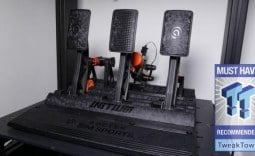 Asetek Initium Pedal Modular Upgrades Review
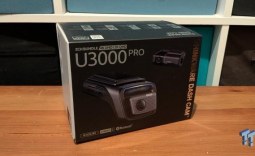 Thinkware U3000 Pro Review - Smart Dashcam with Wi-Fi quirks
 Montech TG3 Mid-Tower Chassis Review
 I ditched the Windows 11 context menu for this open-source tool, and here's why
 Windows 11 may be encrypting your drive already, and I checked where my recovery key went
 GIGABYTE's 40 Days of INFINITY celebrates 40 Years of Innovation with stunning GeForce RTX graphics cards and rewards
 I swapped File Explorer for this free file manager and finally got the layout I wanted
 How to tell if someone has been using your Windows PC without your permission
 6 Task Manager tips for troubleshooting Windows performance problems
 ASUS ROG's 20th Anniversary Line-up of Premium PC Gaming Gear has Arrived - Here's Everything You Need to Know
 Six File Explorer tips every Windows user should know
 I switched my PC to encrypted DNS in Windows 11, and browsing felt more private
 Printer Not Working in Windows? How to fix detection, print queues and drivers