







Science, Space, & Robotics - Page 235
Explore the latest Science, Space, Health, and Robotics news from TweakTown. Coverage includes space launches, medical tech, discoveries, and rockets. - Page 235
Stay Updated
Follow TweakTown for breaking tech news, reviews, and daily updates.


As an Amazon Associate, we earn from qualifying purchases. TweakTown may also earn commissions from other affiliate partners at no extra cost to you.
'Text Neck' causing medical problems among mobile tech enthusiasts
It seems more people are suffering from "Text Neck," a medical condition when people suffer from pain and damage due to the head and neck position of people texting on smartphones and using tablets. A mix of the angle - and gravity - is the equivalent of carrying 60 pounds, and with more people looking down, the problem only seems to be escalating.
"Everyone is heads down," said Kenneth Hansraj, chief of spine surgery at the New York Spine Surgery and Rehabilitation Medicine. "It's in every mall and in every city. It's my opinion that this kind of heads down position is the cause of pain and suffering on the planet and a contributor to spinal surgery."
Previous reports recommend users take breaks, let their eyes adjust on their natural environment, and stretch before continuing to use PCs, smartphones or tablets.
Continue reading: 'Text Neck' causing medical problems among mobile tech enthusiasts (full post)
Flying robots will help deliver your meals and drinks in Singapore
Robotics research has focused on factory automation, greeting customers in malls and shopping centers, but could one day soon have a new purpose: flying your meals and drinks to you while you dine at restaurants in Singapore. Infinium-Serve is the new fleet of autonomous flying robotic waiters that will be able to serve as waiters - and help reduce burden on labor problems in Singapore.
The robotic waiters could be deployed by the end of 2015, with Infinium Robotics currently trying to receive government grants to help pay for the project. Prime Minister Lee Hsien Loong saw an in-person test of the Infinium-Serve earlier this year, however, it remains unknown where he stands on the research.
"Introducing this technology into restaurants would take away mundane tasks of serving food and drinks," said Woon Junyang, Infinium Robotics CEO, in a statement. "It will allow human waiters to focus on higher-value tasks such as getting feedback from customers. This will result in an enhanced dining experience, which will eventually lead to increased sales and revenue for the restaurants."
Continue reading: Flying robots will help deliver your meals and drinks in Singapore (full post)
3D-printed body parts helping save the lives of medical patients
Using 3D printing technology to create replicas of the human heart presents the opportunity to save babies' lives, according to a new study submitted to the American Heart Association. Surgeons have the ability to better treat congenital heart defects, while also being able to strategize where they cut tissue and make other improvements.
The ability to 3D print hearts gives surgeons the opportunity to prepare prior to surgery, but it's unsure if heart replicas will help increase success from surgical outcomes. A clinical trial would give medical experts the chance to work on enough cases to see how 3D-printed hearts could help, especially among young children with complicated heart defects.
"From the first two cases straight out of the gate, we've had this dramatic impact," said Dr. Matthew Bramlet, pediatric cardiologist at the University of Illinois College of Medicine and Children's Hospital of Illinois and study co-author.
Continue reading: 3D-printed body parts helping save the lives of medical patients (full post)
Army researching soldier-generated power for troops on patrol
US soldiers in the field could be able to one day generate power using wearable technologies that also reduce the weight of their gear. The Maneuver Fires Integration Experiment (MFIX) project was conducted at Fort Benning earlier in the year, with researchers testing prototypes of energy-harvesting products.
The Natick Soldier Research, Development and Engineering Center (NSRDEC) is leading the effort, with a focus on smaller, lightweight, and energy efficient batteries. Small amounts of energy can be harvested, and would have otherwise would have been wasted as heat, sound, vibration, movement or light, according to researchers.
"MFIX is looking at new concepts with energy-harvesting devices and how they fit in a tactical environment," said Noel Soto, NSRDEC Warfighter Directories' project engineer on the Power and Data Management Team.
Continue reading: Army researching soldier-generated power for troops on patrol (full post)
Elon Musk says the pace of progress is 'close to exponential' for AI
In a comment made on an essay written by 'virtual godfather' Jaron Lanier, titled "The Myth of A.I." on Edge.org last week, SpaceX and Tesla founder Elon Musk the threats of AI might become real, and that he is worried that "the risk of something seriously dangerous happening is in the five year time frame. 10 years at most" according to CNET.
Musk posted his comments on the Edge.org, but they were quickly removed; not quick enough for some media outlets to pick it up, though. Musk talked about his involvement as an early investor in the British artificial intelligence company, DeepMind, which is now a cog in Google's ever-growing machine. He wrote: "The pace of progress in artificial intelligence (I'm not referring to narrow AI) is incredibly fast. Unless you have direct exposure to groups like DeepMind, you have no idea how fast-it is growing at a pace close to exponential".
The founder of SpaceX continued, saying that AI companies "recognize the danger" and are working toward controlling the "bad" superintelligences "from escaping the Internet". Well, that sounds safe enough.
Continue reading: Elon Musk says the pace of progress is 'close to exponential' for AI (full post)
Amazon has fleet of 10,000 robots helping fulfill orders in warehouses
Amazon is rolling out a fleet of robots that will help the company boost productivity and ensure timely deliveries ahead of what should be an extremely busy 2014 Christmas holiday shopping season. The robots can help locate and pick items, which are verified by a human picker before being boxed up and sent from the facility - the company will be able to save upwards of $900 million each year, with robotic assistance able to help save 20 percent to 40 percent per shipped order.
To help ensure it would have a robotics inventory it could call upon, Amazon purchased Robots maker Kiva Systems for $775 million in 2012 - and there have been more than 1,400 Kiva robots already working in Amazon's logistics chain.
Amazon tends to have successful shopping seasons, but as the US economy has recovered - and consumers have extra money to spend this Christmas - Amazon wants to ensure everything runs smoothly and customers will be happy.
Continue reading: Amazon has fleet of 10,000 robots helping fulfill orders in warehouses (full post)
Police officers in California, Texas testing networked guns
YardArm is working with several police agencies in California and Texas, testing a mobile network-connected technology that sends signals when an officer unholsters and fires their weapon. The company originally developed a consumer technology that could monitor a weapon's location - but didn't find many interested customers. Instead, the company revamped and wanted to develop new solutions that could be used for potential police and military use.
"You have a social demand for smart gun technology, but not necessarily a market demand," said Jim Schaff, VP of marketing at YardArm. "As a consumer product, it's going to be a long road."
YardArm also is developing new methods to send wireless data of which direction a weapon is pointing, offering data that can be viewed via smartphone and fed to dispatch. If implemented, YardArm's technology could help prevent public outrage - and clear officers of wrongdoing - when officers use their weapons accordingly.
Continue reading: Police officers in California, Texas testing networked guns (full post)
Knightscope hopes to build generation of robotic security guards
Silicon Valley startup Knightscope has developed the five-foot-tall, 300-pound K5 robot designed to serve as security robots for businesses wanting a new twist on traditional security patrols. The robots are currently being tested by Knightscope and will launch at a Silicon Valley company that can detect movement and behavior - and report back to a security center.
The K5 uses cameras, sensors and navigation equipment, giving the autonomous robot the ability to patrol while also avoiding obstacles. In addition to four high-definition cameras, the K5 has a license-plate recognition scanner, weather sensor, GPS, internal laser ranging instruments, four microphones, and Wi-Fi to communicate with operators.
"This takes away the monotonous and sometimes dangerous work, and leaves the strategic work to law enforcement or private security, depending on the application," said Stacy Stephens, Knightscope co-founder and VP of sales and marketing.
Continue reading: Knightscope hopes to build generation of robotic security guards (full post)
TAC executive sits inside of vehicle as it is shot with AK-47
The Texas Armoring Corporation (TAC) believes in its product so much that company CEO R. Trent Kimball sat in the driver's seat of a Mercedes-Benz while sales manager Lawrence Kosub shot the windshield with an AK-47. The 240fps slow-motion video shows Kimball getting into the vehicle as Kosub shoots one dozen rounds directly into the windshield.
"When it comes to assuring our clients' safety, we take product testing very seriously," Kimball says in the YouTube video.
The company says it produces the world's lightest weight armored vehicle passenger vehicles, and sets the standard for luxury, and our vehicles provide the absolute finest finishing available on the market."
Continue reading: TAC executive sits inside of vehicle as it is shot with AK-47 (full post)
Mars One co-founder on colonizing Mars: 'next giant leap for mankind'
The Mars One project is an ambitious program, where Mars One wants to see human beings on the red planet by 2025. Not only that, but Mars One CEO and co-founder Bas Lansdorp has said that he wants to leave the astronauts on Mars, and establish a self-sufficient settlement.
During the Engadget Expand show, there was a Life on Mars event where Lansdorp took the stage to talk about all-things Mars. He said that human settlement on the planet isn't just challenging, but it's almost close to achievable. He explained that the technology required for the Mars One project to succeed already exists, so that side of the problem isn't that bad. Then we have the issue of blasting a rocket in the right direction for the trip to succeed, with the first Mars One probe to touch down in 2018, and another to hit the red planet in 2020.
In 2022, life support systems and other essential equipment will be sent to Mars ahead of the first manned missions to the red planet, something that will launch in 2024 if all things go to plan. Why bother going to Mars? Lansdorp has said that it's simple, it's just "progress". He said that's why the human race is such a successful species, is that we're always pushing the boundaries. He said that the Mars One project is an excuse to expand on our exploration of the cosmos, where he hopes that the adventure to Mars will bring together the world in "one common goal". He added that by televising the journey of the first off-world settlers, we can live with them. He teased that "it's literally the next giant leap for mankind".
Continue reading: Mars One co-founder on colonizing Mars: 'next giant leap for mankind' (full post)
North Korea banking on Soviet-era ballistic missile submarine
The North Korean military is still likely years away from successfully launching a ballistic missile with nuclear capabilities, but the country now has a Soviet-era submarine that can fire ballistic missiles. South Korean and US military experts are concerned North Korea continues to develop a nuclear weapons program, and utilizing ballistic missiles is an important step in that process.
"While the potential threat from a future North Korean capability to launch ballistic missiles from submarines should not be ignored, it should also not be exaggerated," said Joseph Bermudez, a military analyst. "While the development of submarines carrying ballistic missiles could provide North Korea with a survivable second-strike nuclear capability... it also assumes that Pyongyang would entrust an operational nuclear-armed missile to the captain of a submarine who would, in time of war, most likely be out of communication with the leadership."
It appears North Korea is a step closer to the miniaturization of nuclear warheads that could be fitted to ballistic missiles - but whether or not the country could accurately aim these missiles towards South Korea or Japan - remains a frightening unknown. However, fitting a nuclear weapon aboard a submarine opens up new challenges to South Korea, Japan, and the United States, with launch tubes and installation of a fire system possible within the next two years.
Continue reading: North Korea banking on Soviet-era ballistic missile submarine (full post)
Richard Branson still plans to be first SpaceShipTwo passenger
Virgin Galactic founder Richard Branson still plans to be a passenger on the first tourist flight into space, even though SpaceShipTwo suffered a "serious anomaly" and exploded during a test flight. The company plans to move ahead with construction on another aircraft which could be done before the end of 2014.
Even with the recent SpaceShipTwo test incident, the 800 passengers that have signed up for the $250,000 ride have reportedly voiced their support. In fact, two more people signed up and paid for a trip on a future Virgin Galactic flight, Branson said.
Here is what Branson recently told CNN: "There is no way I would ask others to go on a Virgin Galactic flight if I didn't feel it was safe enough myself. They want to see this happen, and they want to show their commitment."
Continue reading: Richard Branson still plans to be first SpaceShipTwo passenger (full post)
Space tourism industry still evolving, despite high-profile incidents
Space tourism is still a growing industry that was recently rocked when the Virgin Galactic SpaceShipTwo exploded after suffering a "serious anomaly" during a test flight last week. Despite the incident, which left one pilot dead, Virgin Galactic confirmed it will move forward to finish a second SpaceShipTwo aircraft before the end of the year.
The high risk, high reward nature of the commercial space industry - where flight accidents sometimes seen unavoidable - with Virgin Galactic competing with XCOR Aerospace and others in the commercial space race. Meanwhile, SpaceX, Boeing, Orbital Sciences and other companies hope to win NASA and US federal government contracts worth billions of dollars.
"We've always known that the road to space is extremely difficult - and that every new transportation system as to deal with bad days early in their industry," said Virgin Galactic founder Richard Branson.
Continue reading: Space tourism industry still evolving, despite high-profile incidents (full post)
Nintendo working on sleep and deprivation sensor in health venture
Gaming company Nintendo announced a new health and fatigue technology from its health care division, manufactured with the assistance of the ResMed medical equipment company, to help better treat sleep disorders. The QOL Sensor will roughly be the size of an average human hand, and should be available on the consumer market before April 2016.
Here is what Nintendo head Satoru Iwata said regarding the new technology: "All you have to do is place the QOL Sensor on your bedside. Inside the QOL Sensor is a non-contact radio frequency sensor, which measures such things as the movements of your body, breathing and heartbeat, all without physically touching your body. This automatically gathered data will be transmitted to the QOL cloud servers, which will then analyze the data measured by the sensor and visually represent sleep and fatigue results."
Iwata hopes the new Nintendo division will be profitable within the next two years, but didn't say what else Nintendo has in the pipeline. It isn't a secret that Nintendo wants to ensure its customers are as healthy as possible, hoping to visualize sleep and fatigue things.
Continue reading: Nintendo working on sleep and deprivation sensor in health venture (full post)
Virgin Galactic SpaceShipTwo suffered 'serious anomaly' during crash
The Virgin Galactic SpaceShipTwo suffered a "serious anomaly" during a test flight in California over the Mojave desert, with one pilot killed in the incident. The other pilot suffered serious injuries and is being transported to the hospital, according to the company.
"The WhiteKnightTwo carrier aircraft landed safely," said Virgin Galactic after the incident. "We will work closely with relevant authorities to determine the cause of this accident and provide updates ASAP."
The SpaceShipTwo is designed to be carried on a mother ship and then can be released to ignite its rocket to head into suborbit, and can return to Earth by gliding back. A flight starts at $250,000 and passengers undergo three days of pre-flight preparation to verify they are physically and mentally prepared for the trip.
Continue reading: Virgin Galactic SpaceShipTwo suffered 'serious anomaly' during crash (full post)
USAF hospital plans to use virus-zapping robot to kill germs
The US Air Force Hospital Langley is now using the "Saul" virus-zapping robot to try to keep hospitals safer by killing viruses, including Ebola, working with the Xenex company. The robot is able to use powerful ultraviolet light to ensure the hospital's patient and operating rooms are safe from germ pathogens that could infect others. It only takes five minutes for the robot to disinfect an entire room, with surfaces cleaned in just two minutes, according to Xenex.
"We are very proud to be the first Air Force hospital to have this robot," said Col. Marlene Kerchenski, 633rd MDG Surgeon General chief of nursing services. "Saul will provide an extra measure of safety for both our patients and our intensive care unit staff."
Xenex has already grabbed headlines when it was announced the Gigi robot would be used in hospitals to help kill viruses, including Ebola, in hospital rooms. These pricey machines are designed to help keep hospitals a cleaner, safer environment for staff, patients, and visitors.
Continue reading: USAF hospital plans to use virus-zapping robot to kill germs (full post)
Google hires more experts to "accelerate" its efforts in AI research
Google is getting much more serious about artificial intelligence, with the Mountain View-based search giant hiring more than a dozen leading academics and experts in the field of AI. The company has also announced it has reached a partnership with Oxford University, to "accelerate" its efforts in AI.
When it comes to the partnership between Oxford and Google, the company will be making a "substantial contribution" in order to kick start a new research partnership with the University's computer science and engineering departments. Google's goal? To develop the intelligence of machines and software, to reach human-like levels. Google hasn't said just how much it will be contributing, but it will have a program of student intern ships and a series of joint lectures and workshops so that it can "share knowledge and expertise".
It was only in January that the company dumped down $400 million to acquire DeepMind, an AI firm. This new partnership with Oxford University will see a quicker, and brighter future in AI, even if Elon Musk, the founder of PayPal, SpaceX and Tesla Motors says that pioneering AI will be like "summoning the devil".
Continue reading: Google hires more experts to "accelerate" its efforts in AI research (full post)
Elon Musk warns of AI again, says it's like "summoning the demon"
The last hyperbolic headline we had about Elon Musk and artificial intelligence was just a couple of months ago now when the Tesla Motors founder said that AI could be "more dangerous than nukes" and now he's back with a new statement. Musk has said that pioneering AI is like "summoning the demon".
Musk had some interesting things to say during a speech at MIT on Friday, where he told an audience that the technology sector should be "very careful" of pioneering AI, calling it "our biggest existential threat". Why is Musk afraid? Multiple times during his speech, he reiterated that such a technology is a massive risk, because it can't be controlled. He ended up using the metaphor of "with artificial intelligence we are summoning the demon".
We've all seen AI and what it does to the human race in movies like the Terminator and The Matrix franchises, but Musk lined AI up in the real-world to a horror movie, where the protagonists call forth spirits who end up doing a lot of bad things. Musk said: "In all those stories where there's the guy with the pentagram and the holy water, it's like yeah he's sure he can control the demon. Didn't work out". Considering there's already a lot of important things that computers do for us on the daily, such as financial trading, high-end computing and countless other important jobs, AI is an eventuality.
Continue reading: Elon Musk warns of AI again, says it's like "summoning the demon" (full post)
New tech alerts dispatchers to when, and where a cop fires their gun
An incredible new technology created by a Silicon Valley startup would allow dispatchers some crucial details on when, and where police offers fire their weapons. Yardam Technologies' latest device would notify dispatchers in real-time when an officer's gun has been removed from its holster, when it was fired, and in which direction it was fired, as well as tracking the gun's location.
Phil Wowak, Santa Cruz County Sheriff is one of two officers testing the technology, saying it would allow the sheriff's office to see whether deputies are in trouble, and unable to ask for assistance. He said: "That's the worst nightmare for any police officer in the field". As it stands, this technology will not allow for a remote disabling mechanism, even though the company was showing off that technology in Las Vegas last year, it has since abandoned that effort.
In the previous iteration of the technology, it would've allowed a dispatcher, or someone else in control, to hit a button and safely disable the weapon. This would've come in handy in countless scenarios, such as when an officer drops their gun, is hit, or killed and their weapon can be used by the assailant. Jim Schaff, the Marketing Vice President of Yardarm Technologies didn't detail the reasoning behind removing the remote disabling feature, but the company has said that their latest technology is not out to create a smart gun, but is more "police gunfire tracking technology".
Continue reading: New tech alerts dispatchers to when, and where a cop fires their gun (full post)
Researchers create solar battery able to run powered by light and air
Researchers from Ohio State University are working on a solar battery that is able to store its own power inside of an internal solar cell. The unique hybrid device uses a mesh solar panel that provides an opening for air to enter the battery, and electrons can be transferred between the solar panel and the battery electrode.
"The state of the art is to use a solar panel to capture the light, and then use a cheap battery to store the energy," said Yiying Wu, Ohio State chemistry and biochemistry professor, said in a press statement. "We've integrated both functions into one device. Any time you can do that, you reduce cost."
When licensed to companies, this could help companies drop costs up to 25 percent, according to Wu and his students. Light is converted inside of the battery, ensuring almost 100 percent of electrons are saved, as opposed to the 80 percent standard when electrons travel between a solar cell and an external battery.
Continue reading: Researchers create solar battery able to run powered by light and air (full post)
 Phantom Blade Zero on PC will launch with DLSS 4.5 and Ray Tracing on day one
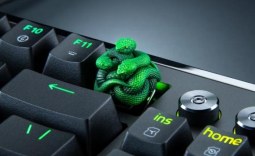 Razer announces its first Artisan Keycap with the Triple-Headed Snake Edition
 ZOTAC's 20th Anniversary Edition GeForce RTX 5080 features a titanium colorway and mirror-like backplate
 GeForce NOW app for Linux leaves beta, while DLSS Frame Generation cloud latency also improves
 Twitch opts streamers into gen AI training by default, faces harsh backlash
 Sean Murray still plays the 2016 launch version of No Man's Sky
 China's YMTC has climbed to third place in global NAND flash shipments
 $100 GTA 6 version makes up 89% of pre-orders, analysts estimate
 HWiNFO's latest update quietly confirms Intel is working on Razor Lake-AX
 Nintendo puts Switch 2 price increase warnings on store demo kiosks ahead of September 1 hike
 Corsair HS35 v3 Wireless Gaming Headset Review - An Affordable Winner
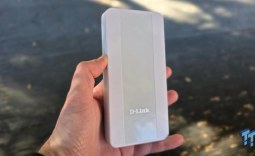 D-Link F518 5G Wi‑Fi 6 AX1800 Mobile Hotspot Review: All-Day Mobile Hotspot
 Bose Lifestyle Ultra Speaker Review - Impressively Detailed Room-Filling Sound
 MSI Z890 Gaming Plus WIFI6E Review - Z890 for under $200
 Mortal Kombat (1995) 4K Ultra HD Blu-ray Review
 CPS PCCOOLER YS1200 ATX 3.1 80 PLUS Gold PSU Review
 ASRock X870E Taichi White Review: a premium AM5 motherboard with 10G LAN and WiFi 7
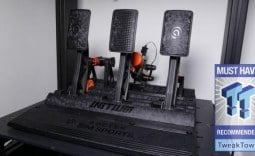 Asetek Initium Pedal Modular Upgrades Review
 Thinkware U3000 Pro Review - Smart Dashcam with Wi-Fi quirks
 Montech TG3 Mid-Tower Chassis Review
 I ditched the Windows 11 context menu for this open-source tool, and here's why
 Windows 11 may be encrypting your drive already, and I checked where my recovery key went
 GIGABYTE's 40 Days of INFINITY celebrates 40 Years of Innovation with stunning GeForce RTX graphics cards and rewards
 I swapped File Explorer for this free file manager and finally got the layout I wanted
 How to tell if someone has been using your Windows PC without your permission
 6 Task Manager tips for troubleshooting Windows performance problems
 ASUS ROG's 20th Anniversary Line-up of Premium PC Gaming Gear has Arrived - Here's Everything You Need to Know
 Six File Explorer tips every Windows user should know
 I switched my PC to encrypted DNS in Windows 11, and browsing felt more private
 Printer Not Working in Windows? How to fix detection, print queues and drivers