






Science, Space, & Robotics - Page 124
Explore the latest Science, Space, Health, and Robotics news from TweakTown. Coverage includes space launches, medical tech, discoveries, and rockets. - Page 124
Stay Updated
Follow TweakTown for breaking tech news, reviews, and daily updates.


As an Amazon Associate, we earn from qualifying purchases. TweakTown may also earn commissions from other affiliate partners at no extra cost to you.
Elon Musk agrees Tesla Bot's future may be a 'friend' in the household
Elon Musk has sat down with Lex Fridman to discuss the future of Tesla and the Tesla Bot, with the CEO agreeing it could enter the household sometime in the future.

SpaceX and Tesla CEO Elon Musk has sat down with Lex Fridman for a two-and-a-half-hour podcast that covers a variety of different topics that Musk is involved in. One of the many questions asked was about the future of the Tesla Bot, and if it's possible that one day in the future that the Tesla Bot could act as a human companion.
Musk answered by saying that the Telsa Bot hasn't been initially designed for human companionship and is targeted towards alleviating jobs from people who wouldn't do if they weren't paid (for example, washing dishes), allowing them to do something they would prefer instead. However, Elon Musk agrees that the Tesla Bot could be a great "buddy" as the artificial intelligence would map the behavior of its human companion down to the subtle imperfections that every human bares.
Continue reading: Elon Musk agrees Tesla Bot's future may be a 'friend' in the household (full post)
NASA drops update on James Webb Space Telescope unfolding
NASA recently launched the extremely fragile and expensive James Webb Space Telescope, and now the agency has given an update on the timeline for its unfolding process.

NASA has taken to its blog on its website as well as its social media to announce that the team behind Webb has decided to focus on optimizing Webb's power systems and developing a deeper understanding of how the new observatory operates in space.
According to NASA, the Webb team will begin the sun shield tension activities no earlier than Monday, January 3, as this new timeline will ensure that the space telescope has the highest possible chance of a smooth next step in its unfolding process. NASA explains that it's taking a very simple approach towards the extremely complex unfolding system, and that is keeping mission operations "focused on as few activities as necessary at a time".
Continue reading: NASA drops update on James Webb Space Telescope unfolding (full post)
All of these tiny dots aren't glittering stars, they're something else
Astronomers have created a map that showcases thousands of tiny dots that appear to be normal stars, but they aren't.

The above image isn't of the typical night sky you see when you walk out into your backyard; it's actually an image that showcases thousands of active supermassive black holes devouring all material that comes close to them. Astronomers have created the most detailed map of black holes at low radio frequencies, which is a result of years of hard work processing incredibly difficult data.
The data was captured by the LOw-Frequency ARray (LOFAR) that's located in Europe and consists of an interferometric network of around 20,000 radio antennas that are positioned across 52 locations around Europe. The above image only covers four percent of the Northern sky, and is the first of the network's plan to image the entire Northern sky in ultra-low frequencies. If you are interested in reading more about this story, check out this link here.
Continue reading: All of these tiny dots aren't glittering stars, they're something else (full post)
Elon Musk gives a time frame for when humans will walk on Mars
Tesla and SpaceX CEO Elon Musk has returned to the Lex Fridman podcast to answer several questions about the future of space travel and Tesla.

Musk sat down with Fridman for a 2.5-hour podcast that touches on several topics that Musk is working on - from SpaceX launch vehicles to Tesla vehicles and artificial intelligence. During the interview, Fridman asked Musk when he thinks SpaceX will land a human being on Mars (27.25 minutes). Musk paused for several seconds before answering the question and said that the best-case scenario would be five years, and the worst-case scenario would be ten years.
Fridman followed up by asking Musk what the determining factors are that impact the timeline of getting a human on Mars, to which Musk said that the engineering of the vehicle is fundamentally the main bottleneck. Musk explains that SpaceX's newest launch vehicle, Starship, is fundamentally optimized to minimize cost per ton to orbit and cost per ton to the surface of Mars.
Continue reading: Elon Musk gives a time frame for when humans will walk on Mars (full post)
Scientists photograph monstrous supermassive black hole feeding
Astronomers have captured the emissions from a monstrous black hole located 12 million light-years away from Earth at the center of a galaxy.

While black holes are quite difficult to detect, researchers have a few tactics that allow them to locate these phenomena. One way researchers detect black holes is to observe regions of space in different wavelengths of light, and while black holes engulf everything that is close to them, including light, some black holes glow with emissions coming from the event horizons.
An example of this is a supermassive black hole located at the center of the galaxy Centaurus A. This black hole is currently sucking in large amounts of gas, which results in material being ejected out of the black hole at high speeds. This material causes "radio bubbles", which can then be detected by researchers. The above image is the most comprehensive image of radio emissions from the nearest actively feeding supermassive black hole, according to Icrar.org.
Continue reading: Scientists photograph monstrous supermassive black hole feeding (full post)
Mars orbiter photographs 'powdered sugar on a rich velvet cake'
A new image posted by the European Space Agency (ESA) has revealed the incredible colors of the surface of Mars.

Red velvet Mars.
The above image showcases a Martian crater that the ESA writes looks "like a sprinkle of powdered sugar on a rich red velvet cake." The image was taken by the ESA/Roscosmos ExoMars Trace Gas Orbiter that is typically used to measure gases in Mars' atmosphere. However, the Trace Orbiter is also used to take images of the Red Planet's surface as well as act as a communication link between rovers on the surface and Earth.
Continue reading: Mars orbiter photographs 'powdered sugar on a rich velvet cake' (full post)
NASA reveals how you can watch fireballs in the night sky very soon
NASA has taken to its website to explain that within the first few days of 2022, skywatchers will be able to see the Quadrantid meteor shower.

According to NASA, the Quadrantid meteor shower is slated to be one of the best meteor showers of 2022 as it coincides with a new moon beginning on January 2nd, which means the few days before and after the new moon, the sky is at its darkest. NASA explains that individuals in the northern hemisphere should head outside, angle yourself northeast, and look up towards the constellation Bootes.
NASA adds that the meteors can appear anywhere in the sky, and that the best viewing time will be after midnight on January 2nd. Earth experiences a meteor shower when our planet passes through debris from an asteroid or comet. NASA explains that the Quadrantid meteor shower is believed to be debris from the asteroid 2003 EH1, which may be an extinct comet. If you are interested in reading more about this story, check out this link here.
Continue reading: NASA reveals how you can watch fireballs in the night sky very soon (full post)
Half of Germany's remaining nuclear power plants are being shut down
Three of Germany's power plants are being turned off before the new year.

As part of the German government's plan to phase out nuclear energy production, nuclear power plants at Brokdorf, Grohnde, and Gundremmingen are being closed on December 31st, 2021. These plants make up half of those remaining in Germany. Their closure will reduce the energy coming from nuclear sources by roughly four gigawatts, equivalent to that produced by a thousand wind turbines.
Following the Fukushima nuclear disaster of 2011, Chancellor Angela Merkel began phasing out nuclear power from the country entirely. With three power plants remaining, the process will be complete with the planned closing of those at Neckarwestheim, Essenbach, and Emsland.
Continue reading: Half of Germany's remaining nuclear power plants are being shut down (full post)
NASA has now extended the sunshield booms for the James Webb Telescope
The James Webb Space Telescope (JWST) is so close to completing the first stage of its deployment.

On 7 p.m. EST December 31st, 2021 (00:00 UTC January 1st, 2022), NASA confirmed the port side mid-boom was successfully extended, designated the +J2 side.The boom was extended with a motor, after the sunshield covers were rolled up in the previous preliminary step for eventually unfurling the sunshield.
Almost four hours later, NASA announced the second mid-boom on the starboard side (-J2 side) of the JWST was successfully extended. The mid-booms pull out the five sunshield membranes into a large diamond shape, which will next be tensioned to finalize their deployment.
Continue reading: NASA has now extended the sunshield booms for the James Webb Telescope (full post)
First ever magnetic field detected from an exoplanet
The exoplanet, HAT-P-11b, was found using the Hubble Space Telescope (HST) data.

Astronomers have identified and confirmed 4,884 planets outside our solar system, with another 8,288 potential candidates. However, no magnetic fields around any of these exoplanets had been detected until now. A team of astronomers from NASA's Jet Propulsion Laboratory (JPL), the European Space Astronomy Centre (ESAC), and many other institutes and universities published their findings in a new paper in Nature Astronomy.
The team observed HAT-P-11b, an exoplanet roughly the size of Neptune that orbits a K-type (orange dwarf) star found 123 light-years away from Earth, designated HAT-P-11. They found it using a technique known as Transit Spectroscopy, or the Transit Method, where the decrease in the brightness of a star periodically indicates a planet passing in front of it. It is used to detect exoplanets and reveal details about their atmospheres.
Continue reading: First ever magnetic field detected from an exoplanet (full post)
The International Space Station just had its lease on life extended
The White House has extended the International Space Station's (ISS) operational lifespan.

NASA Administrator Bill Nelson announced in a statement that the Biden-Harris administration has extended the operations of the ISS through 2030. NASA will continue to work with the international space agencies from Europe (European Space Agency, ESA), Japan (Japan Aerospace Exploration Agency, JAXA), Canada (Canadian Space Agency, CSA), and Russia (State Space Corporation Roscosmos) to upkeep the station and conduct research.
So far, the ISS has hosted over 3,000 research investigations involving over 4,200 researchers globally. Almost 110 countries and areas have been involved in activities aboard the ISS, including over one and a half million students involved with STEM.
Continue reading: The International Space Station just had its lease on life extended (full post)
The world's new brightest ever laser is almost ready to fire
The next-generation laser made by researchers from the Department of Energy's SLAC National Accelerator Laboratory is almost complete.

The laser will be the world's bright x-ray laser, called the Linac Coherent Light Source II (LCLS-II). It will be approximately 10,000 times as bright as its predecessor, the Linac Coherent Light Source (LCLS). The LCLS became operational in 2009 and can create a beam that pulses light 120 times per second.
In comparison, the LCLS-II will produce one million light pulses per second, a rate of one pulse every femtosecond. The beam will be shot into a series of alternating magnets (known as an undulator) to produce X-rays, which can then be used to take snapshots during experiments. The laser apparatus of the LCLS-II spans two miles (3.2 kilometers) of a long tunnel excavated near Stanford University.
Continue reading: The world's new brightest ever laser is almost ready to fire (full post)
Sunshield uncovered in James Webb Space Telescope's latest deployment
NASA's James Webb Space Telescope (JWST) has completed another two preliminary step necessary to deploy its sunshield.

The previous step in ultimately deploying the JWST's sunshield was the extension of the Deployable Tower Assembly (DTA) on December 29th. On December 30th, the Aft Momentum Flap was deployed, followed by the sunshield covers being released.
The Aft Momentum Flap is used to offset some solar pressure impinging upon the large sunshield. It also helps to minimize fuel usage by the JWST. Just after 9 a.m. EST (14:00 UTC), the hold-down devices were released, and a spring drove the rotation of the aft flap into its final position. The process took about eight minutes. An animation of the deployment is viewable here.
Continue reading: Sunshield uncovered in James Webb Space Telescope's latest deployment (full post)
Hubble snaps a stunning photo of a nearby galaxy's star cluster
The Hubble Space Telescope has captured a beautiful image of the open star cluster, designated NGC 1755.

NGC 1755 resides in the Large Magellanic Cloud, a nearby galaxy neighboring Milky Way approximately 200,000 light-years from Earth. The collection of stars measures 120 light-years across but is still on the smaller side for a star cluster.
Two main varieties of star clusters exist, open clusters and globular clusters. NGC 1755 is an open star cluster, a variety of star cluster that houses up to a few thousand relatively young stars. The other main type is globular clusters, which are much larger, containing millions of older stars in a denser, more spherical arrangement.
Continue reading: Hubble snaps a stunning photo of a nearby galaxy's star cluster (full post)
A new study uncovers why comet heads glow green but never their tails
Researchers from the University of New South Wales (UNSW) have published a new study that explores why only comet heads appear green and not their tails.

Comets are frozen masses of gas, rock, and dust leftover from the formation of a solar system. When approaching the sun, their ice sublimates from solid form directly into a gas, contributing to a bright green glow in some comets, but not all.
The researchers used a vacuum chamber and lasers to recreate the chemical reaction between ultraviolet radiation from the sun and diatomic carbon (dicarbon). The process, known as photodissociation, breaks apart the two carbon atoms and gives the comets their green appearance.
Continue reading: A new study uncovers why comet heads glow green but never their tails (full post)
Decades-long dilemma solved with a new study of cell membranes
A recent study published in Developmental Cell has shown how cell membranes curve to consume material in their environment.

Cells can use their membrane to envelope material in their extracellular environment, then bring it into the cell, in a process known as endocytosis. After encircling a given substance, the membrane buds off into a vesicle, a tiny sac that carries substances around and in and out of the cell.
The cell membrane first needs to form a highly curved basket-like structure before closing around its target. Scientists previously believed the structure began as a flat lattice, but the mechanics of the membrane forming a pocket to move the substances it encounters has eluded scientists for almost forty years.
Continue reading: Decades-long dilemma solved with a new study of cell membranes (full post)
The mission for the James Webb Space Telescope just got much longer
The James Webb Space Telescope (JWST) is expected to operate for a lot longer than the mission engineers most hopeful estimate before launch.

The JWST was designed with a mission length of at least five years, with those working on the project hoping for closer to ten. NASA now expects that the JWST should have enough propellant to support continued science operations for "significantly more" than ten years.
This revelation comes after analysis of the JWST's current progress toward the second Lagrange point, L2, and the two mid-course corrections undertaken so far to keep it on track. The rocket propellant onboard the JWST not only has to carry it toward this point but will contribute to keeping it in orbit around it throughout its mission, firing its thrusters in what is known as "station keeping" maneuvers.
Continue reading: The mission for the James Webb Space Telescope just got much longer (full post)
You can now track the James Webb Space Telescope in real-time
As NASA's James Webb Space Telescope (JWST) makes its way to the second Lagrange point, L2, you can keep an eye on its progress.

The JWST has already made it more than a third of the way to its final destination, orbiting around L2. In addition to the recent instrument deployments to help unfold its sunshield, the JWST has finished deploying its temperature sensors, measuring both the hot side of the observatory facing the sun and the cold side shaded by the sunshield.
NASA's website allows you to see the JWST's flight time elapsed since launch, distance traveled from Earth, distance until orbit around L2 is reached, the cruising speed, and the temperature readings from each of the four temperature sensors. The site also provides information on the deployments of other instruments aboard the observatory.
Continue reading: You can now track the James Webb Space Telescope in real-time (full post)
Study shows how red meat affects heart health via the gut microbiome
A new study has been published in Nature Microbiology examining the link.

Studies in previous years have correlated diets with high red and processed meat consumption with increased risk of heart disease and strokes, but scientists don't fully understand the mechanisms causing this. The new research has found that a particular bacteria in the gut microbiome is responsible for turning carnitine into a harmful chemical known as TMAO, which promotes blood clotting and clogged arteries. The bacteria are found in larger quantities in individuals who consume more red meat.
Previously, scientists suspected that the saturated fats found in these foods contributed to the higher risks of heart disease and strokes. Saturated fats can boost LDL cholesterol, which contributes to cardiovascular disease. However, Stanley Hazen of the Cleveland Clinic's Center for Microbiome and Human Health, co-author of the study, says the research on saturated fats shows its adverse effects are not enough to explain the increased risks associated with red meat consumption.
Continue reading: Study shows how red meat affects heart health via the gut microbiome (full post)
China's lunar station will now be ready eight years sooner, in 2027
The China National Space Administration (CNSA) recently announced that its uncrewed station on the moon will be completed around 2027.

The station will be built in partnership with Russia and is now expected to be completed eight years ahead of the previous schedule. The Chang'e 8 scheduled for 2027 was set to conduct science operations such as 3D printing using lunar dust but has now been expanded to include the construction of the uncrewed lunar station.
Wu Yanhua, the Deputy Director of CNSA, made the announcement, stating the mission is to "build a solid foundation for the peaceful use of lunar resources." The updated timeline could be in response to the proposed Artemis Accords put forward by the U.S. government and NASA, which would allow governments and private companies to cordon off their facilities and certain zones on the moon, forbidding entry by others.
Continue reading: China's lunar station will now be ready eight years sooner, in 2027 (full post)
 HDMI 2.2 products are coming in 2027 as chip makers begin sampling FRL2 silicon this year
 Solo dev tries to make his own GTA 6 with AI, as he got tired of waiting for Rockstar
 A HandBrake update just gave Threadripper owners up to a 215% performance boost for free
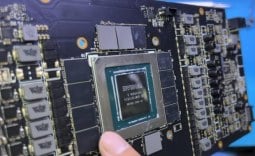 Repair channel buys ASUS RTX 4090 for $222 and finds plastic die with fake NVIDIA markings
 Epic's gen AI use deters partners, Vampire Survivors x Fortnite might get cancelled
 Sony seems to confirm singleplayer first-party PlayStation games will remain console exclusive
 NVIDIA GeForce GTX 1650 modded with 8GB of GDDR6 memory doubles performance in God of War and Unigine Superposition
 Apple will be working with Intel to design and build its chips in the USA, confirms President Donald Trump
 GTA 6 pre-order date revealed by Rockstar
 Anthropic's CEO confirms he can be fired as CEO through the company's own authority
 UGREEN FineTrack Mini 2 Air Tracker Tag Review - Long battery life, lesser performance
 Speed Racer (2008) 4K Ultra HD Blu-ray Review: a stunning remaster of the cult classic
 MOAIPLAY ORA PRO G1 850W ATX 3.1 PSU Review: high efficiency and 10-year warranty for $119.99
 Navman MiVue Smart True 4K Surround Dashcam Review - Seeing In All Directions At Once
 IQUNIX Magi96 Pro Aluminum Low Profile Mechanical Keyboard Review - Premium Build, Satisfying Sound
 Asetek Forte S-Series Racing Simulator Bundle Review
 Razer Pro Type Ergo Wireless Split Ergonomic Keyboard Review - Built for Comfort and Support
 ASUS ROG Strix Morph 96 Wireless Gaming Keyboard Review - Great Performance, More Affordable
 SAPPHIRE Radeon RX 9070 GRE PULSE OC Review - A New 1440p Challenger Has Arrived
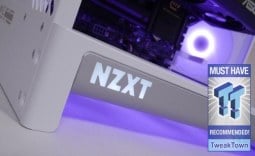 NZXT H6 RGB+ Compact Dual-Chamber Chassis Review
 7 ways to transfer data from Android to Windows PC quickly and easily
 I read the Windows Backup app screen carefully, and it does not back up what most people think
 Low Sound Volume on Windows 11? How to fix audio issues and restore normal volume
 8 Critical Warning Signs You Should Never Ignore in Windows 11
 This Windows security feature protects Documents from ransomware, but it is off by default
 Windows 11 already has a voice typing tool, and it is the one most people are not using
 Quick Assist is the only remote-support tool I open when a relative calls about their PC
 The PowerToys utilities I keep enabled on every Windows 11 PC, and the ones I turned off within a week
 TweakTown's Best of Computex 2026 Awards - The Best Hardware, Gaming Gear, and AI
 Phison E37T SSD Controller Exclusive Preview - The Fastest DRAMless SSD Platform Yet