







Learn about how TweakTown tests and reviews hardware. As an Amazon Associate, we earn from qualifying purchases. TweakTown may also earn commissions from other affiliate partners at no extra cost to you.
Stay Updated
Follow TweakTown for breaking tech news, reviews, and daily updates.


Corsair blames disappointing financials on Grand Theft Auto VI not being out
Corsair's second-quarter for 2024 financial report has been released and it revealed the company is in a tough spot, with net revenue down more than $50 million compared to the previous year of the same period.

During the financial call, Corsair informed investors of the reasons why Corsair is falling short of growth, with the company saying that refresh cycles of gaming components are lengthening, meaning buyers of gaming components aren't purchasing an upgraded component as quickly as they once were, leading to a declining demand for high-end gaming components. This lengthening of refresh cycles can be attributed to there being no games calling for an upgrade in hardware,
Corsair's CEO, Andy Paul, co-founder of the company, said during the earnings call that refresh cycles for high-end components used to be on a 3 to 5-year cadence, and now they are moving to a four to six-year cadence. Additionally, Corsair said its still feeling the "echo" of the COVID-19 surge, which was a period where people purchased a lot of products to enjoy at home. Corsair is now moving back to pre-COVID normalcy.
200,000 students, staff and parents personal data exposed in recent hack
An Arizona tech school has informed Maine's attorney general in a recently filed report that nearly 209,000 individuals' data was potentially compromised in a hacking incident earlier in the year.

The tech school is East Valley Institute of Technology (EVIT), and according to the filing, the data of the 209,000 individuals is of current and former students, parents, guardians, and faculty. As for what data was leaked, reports indicate the compromised data included personal, health, and financial information.
The Register reports that nearly 50 types of personal information were stolen, such as student ID numbers, date of birth, race/ethnicity, grades, home phone numbers, email addresses, driver's license, health insurance information, medical information, allergy information, medical record number, passport numbers, prescription information and more.
Doom II: Ray Traced is an incredible Path Tracing mod that transforms the 1994 original
id Software's Doom II from 1994 is not only an iconic first-person shooter; it helped change how PC games were made and played forever. Hot on the heels of Bethesda releasing a moddable and notable mod-friendly upgrade to the original Doom and Doom II on PC, it's time to feast your eyes on Doom 2: Ray Traced.

A new and stunning path tracing mod based on the popular GZDOOM port of the game. Okay, so there's a lot going on here - which includes the improved hardware support and visuals of GZDOOM and the fantastic voxel-based character models from the 'voxel doom project' that recreates all of the game's 2D sprites as full 3D characters.
On top of this, you've got the ray-tracing renderer used in previous ray-tracing mods for Half-Life 1 and Quake 1 - supercharged. With improved particle support and better overall performance, with NVIDIA DLSS 3 Frame Generation and AMD FSR 3 Frame Generation support. The result? Insanity. Doom II, like you've never seen before.
AMD has its highest server CPU market share in DECADES, slowly kicking Intel's ass in CPUs
AMD has been kicking ass in the CPU market for years now, with another great quarter enjoyed by the company for Q2 2024... recording the highest server CPU market share in DECADES.

In a new report from Market Research picked up by Tom's Hardware, we're learning that while Intel still dominates the client PC market (the CPU inside of your PC) in Q2 2024 with a huge 78.9% market share, AMD holds onto 21.1%. AMD still increased its unit share by 0.5% sequentially, and by 3.8% year-over-year.
But in the server CPU market, AMD's impressive EPYC processors are chomping away at Intel's range of Xeon CPUs, where in Q2 2024, AMD took another 5.6% market share from Intel. If we rewind the clock back to Q4 2017, AMD held just 0.8% of the server CPU market share, in Q2 2020 the company had 5.8%, Q2 2022 it increased to 13.9%,and now... AMD has a chunky 24.1% of the server CPU market share. Slowly but surely, AMD is eating away at Intel's massive dominance of the server CPU market.
SK hynix developing 3D DRAM it calls 4F2 DRAM: joins South Korean competitor Samsung's 3D DRAM
SK hynix has just announced it's planning to develop a 4F2 (square) DRAM, joining South Korean rival Samsung and its journey into the world of 3D DRAM.

The cost of EUV (extreme lithography) processes has continued to skyrocket since the commercialization of 1c DRAM, with SK hynix researcher Seo Jae Wook noted during an industry conference in Seoul, South Korea, on Monday.
The Elec reports that Seo said at the time whether manufacturing DRAM this way (using EUV) was profitable, where in response, SK hynix said it was considering manufacturing vertical gate (VG) or 3D DRAM for future DRAM. VG is what SK hynix internally calls 4F2, while Samsung calls theirs vertical channel transistor (VCT).
Radeon 890M 'RDNA 3.5' iGPU bests GeForce GTX 1650 in gaming benchmarks
The Radeon 890M GPU or 'RDNA 3.5' is the revamped and overhauled integrated graphics found in AMD's Ryzen AI 9 HX 370 mobile chip. YouTube outlet TechEpiphany has posted a new video showcasing Radeon 890M gaming benchmarks (captured via an ASUS Vivobook 16) in ten games, pitting it against NVIDIA's entry-level GeForce GTX 1650 desktop gaming GPU. And, impressively, it comes out on top.

Released in 2019, the GeForce GTX 1650 is an entry-level desktop 75W GPU introduced by NVIDIA that uses the first-generation 12nm Turing 'RTX' architecture without the dedicated AI or RT bits. Sure, it's now pretty old as a desktop gaming GPU, but it's still a viable card. It's great to see integrated graphics reach a point where you can play most games with decent performance and visual fidelity settings on a low-powered APU.
The ten titles include Devil May Cry 5, God of War, Hellblade: Senua's Sacrifice, Cyberpunk 2077, Resident Evil 6, RoboCop: Rogue City, The First Descendant, Forza Horizon 5, Tomb Raider (2013), and Shadow of The Tomb Raider.
AMD's Radeon partners are all 'focused' on creating RDNA 4 graphics cards
Last week, we got word that AMD wasn't entirely done with the RDNA 3-powered Radeon 7000 Series of graphics cards, with the potential release of entry-level Radeon RX 7400 and Radeon RX 7300 GPUs set to compete with the likes of NVIDIA's GeForce RTX 3050. The news came from a reliable source. However, a follow-up report now states that AMD and its partners are all-in on RDNA 4.

This means Acer, ASUS, ASRock, Biostar, GIGABYTE, MSI, Powercolor, Sapphire, and XFX are developing and testing new Radeon RX 8000 Series GPUs. As spotted by Videocardz.com, Taiwanese outlet Benchlife notes that none of AMD's Radeon partners are working on entry-level RDNA 3 GPUs.
"Everyone is currently focused on the next generation of Radeon graphics cards based on the RDNA 4 GPU architecture," the Benchlife report reads.
AMD acquires Silo AI for $665 million in cash, 'AI is our number one strategic priority'
Last month we reported on AMD's announcement that it was acquiring the largest private AI lab in Europe - Silo AI. Today, AMD has followed up on the announcement to confirm that the "all-cash transaction valued at approximately $665 million" has now been completed, with Silo AI's scientists and engineers now a part of the AMD family.

$665 million in cash is nothing to sneeze at, and for AMD, the acquisition is the latest step in the company's broader pivot that puts its main focus on AI and AI-related technologies. This is nothing new; we've seen the same shift happen in other companies like Google, Meta, Apple, and, of course, NVIDIA. However, NVIDIA's AI focus started many years ago.
"AI is our number one strategic priority," said Vamsi Boppana, AMD senior vice president, AIG. "We continue to invest in both the talent and software capabilities to support our growing customer deployments and roadmaps."
Borderlands movie flops at the box office, one of the worst-reviewed blockbusters in years
The high-budget, star-studded Borderlands film currently in theaters could be the most ill-conceived video-game to-movie adaptions to date, with many calling it a flop - one of the biggest in Hollywood history. With a reported $145 million budget, including marketing, the film only managed $8.8 million in its opening weekend at the box office in the U.S., falling massively behind recent hits Deadpool and Wolverine and Twisters.

The Borderlands franchise from Gearbox is undeniably popular, with the second game in the series being one of the highest-selling games of all time - blending mature-rated, over-the-top violence with humor and first-person shooting that incorporated Diablo-style loot for the game's seemingly countless guns.
The film adaptation ditches the story found in the games to present a brand-new take on the universe with familiar characters like Lilith, played by Cate Blanchet, alongside a star-studded cast that includes Kevin Hart, Jamie Lee Curtis, and Jack Black voicing the robot Claptrap. The film also ditches the game's hyper-violent presentation for a more family-friendly PG-13 rating.
Valve's next game hasn't even been announced and it already has over 18,000 concurrent players
Valve has been running Closed Beta testing on its next game for months, and it is an Overwatch-style third-person hero shooter called Deadlock. In May, we got our first glimpse at the game and some of its characters, albeit low-quality footage.

Those playing early have undoubtedly digitally signed Non-Disclosure Agreements (NDA) with Valve; however, based on the latest SteamDB data on the game - it's on its way to becoming a massive hit.
Will it reach the same heights as Valve's Team Fortress 2, DOTA 2, and Counter-Strike 2? Time will tell, but with 18,254 peak concurrent players recorded overnight, it seems that those who have gained access to the game are enjoying it. Steam peak concurrent player counts are a good indicator of a multiplayer game's popularity and player retention. The data also shows Valve is potentially ramping up to an official release.
STALKER 2 just got a 35-minute developer deep dive video, and it looks incredible
S.T.A.L.K.E.R. 2: Heart of Chornobyl from developer GSC Game World has been a long time coming, and after several delays, the final product is right around the corner - launching November 20, 2024, for PC and Xbox Series consoles. And with that, the development team has just dropped a new 35-minute deep-dive video, taking a closer look at the game and The Zone.

Fans of the original games will undoubtedly feel a sense of familiarity with the bleak isolation from exploring the Zone. The developers note that even though STALKER 2 has a story to tell, with quests, factions, and missions to discover and undertake, players will be free to explore the world, and it will be as tough and challenging as the original games.
Making the game easy would not be an authentic "STALKER experience," GSC adds, and a player's skill and familiarity with the environment will drive progression - not skills and abilities that unlock.
Historic Donald Trump and Elon Musk interview on X hit by 'massive' DDOS attack
Elon Musk teased an upcoming interview with former US President Donald Trump in X Spaces, and according to Musk the social media platform has been hit with a DDOS attack ahead of the interview going live.

Ahead of the historic interview, Musk said he was performing system scaling tests to ensure that X servers could host all of the expected listeners. The interview is currently live at the time of writing, but it didn't go live until 40 minutes after the scheduled time of 8 pm ET, as the site was showing "not available" even though Musk said X tested its servers for 8 million concurrent listeners earlier in the day.
It was presumed that X went down from the massive traffic spike for the interview, but Musk, less than 10 minutes later, posted that X was experiencing a DDOS (distributed denial-of-service) attack. Musk said the interview would continue but with a "smaller number of concurrent listeners." It appears X was a victim of a targeted DDOS attack to prevent Musk and Trump from having their conversation. At the moment, there are 1.2 million people listening in on the conversation.
James Cameron says he's working on something Terminator related, says 'it's totally classified'
James Cameron returning to the Terminator franchise would be crazy good, as the director is currently knee-deep in Avatar sequel production... but now he's teased he's working on "Terminator stuff".

In a new interview with The Hollywood Reporter (THR) the Avatar and Terminator director said he's working on new Terminator stuff, adding: "It's totally classified. I don't want to have to send out a potentially dangerous robotic agent if you were to talk about it, even retroactively".
Cameron was asked about the work that he previously did on Netflix's Terminator Zero animated series, to which Cameron told THR: "It looks interesting. My relationship to that is very much like The Sarah Connor Chronicles - other people spinning stories in a world I set in motion is interesting to me. What's their takeaway? What intrigued them about it? Where are they going with it? It looks like they're going back to the root cause of Judgment Day - the nuclear war - and whether that's an ultimate timeline".
NVIDIA and MediaTek's new Arm-based AI chip rumored for 1H 2025 to fight Intel, AMD, Qualcomm
The rumors earlier this year about NVIDIA and MediaTek co-developing an Arm-based AI processor continue marching on, with the new Arm-based AI processor for Windows systems expected in the first half of 2025.

In a new report from MyDrivers, we're learning that the new Arm-based SoC co-developed between MediaTek and NVIDIA will debut this year, and aim directly for Qualcomm's new Snapdragon X series SoCs (as they're Arm-based chips). The new AI processor will also compete against AMD and Intel, with their respective AI processors based on the x86 architecture.
NVIDIA and MediaTek's new AI processor will reportedly be made on TSMC's new 3nm process node, based on the Arm architecture, and feature RTX everywhere (of course). The new chip is reportedly in the design phase, with verification and sampling expected to occur in Q4 2024, which leads directly into a 2025 launch.
Western Digital teases Gen5 SSD: up to 15GB/sec reads with just 5W in low-power mode
Western Digital showed off its next-gen storage solutions at FMS 2024 last week, including a new Gen5 SSD using its in-house Gen5 SSD controller pushing 15GB/sec with just 7W power consumption.

The company has been pushing out Gen4 SSDs with great speeds, but Western Digital has yet to enter the Gen5 SSD space, but we're getting close. Western Digital will use its in-house Gen5 SSD controller which uses BiCS8 218-layer 3D TLC NAND and features up to 8-channel DRAM and 4-channel non-DRAM.
Western Digital says its new Gen5 SSD will have up to 2TB capacity and twice the performance of its Gen4 SSDs, with a 55% efficiency uplift over Gen4 SSDs. The company also showed off its new Gen5 SSDs inside of laptops (mobile workstations) which marks the first time we've seen Gen5 SSDs inside of a laptop (which is so good to see).
Here's how to watch the historic interview with President Donald Trump and Elon Musk on X today
Edit: Don't worry, X spaces isn't broken right now... but the interview hasn't started (22 minutes late so far) with thousands not able to even get in. I'm currently enjoying some rather pleasant elevator music, waiting for President Trump and Elon Musk to start their discussion.

Edit #2: DDOS attack, records broken... 1 million in the X space, but now we're LIVE!
Elon Musk has been doing system scaling tests for the last few days, for his upcoming historic interview with President Donald Trump, and we're here to point you in the right direction to watch it.
Windows 11 has a rare Start menu change inbound, possibly - one that might make you smile
Windows 11 could get a change to the Start menu which would make it easier to deal with your apps, rather than having them in a long list that you're forced to scroll through.

In case you didn't guess, we're talking about the All Apps section of the Start menu in Windows 11, which is currently laid out in a clunky list format - but all that could change if clues in testing are anything to go by.
You may recall that Microsoft is testing a grid layout instead of the current scroll-athon of a list, and also that a new category view was spotted in testing quite recently.
World's fastest charging to be officially unveiled on August 14
The speed at which you can charge your phone can always be improved, and it appears we are about to showcase what the future of fast charging will look like with a new battery charging technology scheduled to be unveiled on August 14.

Realme will unveil the Realme 320W SuperSonic battery charging system, according to posts on Weibo and X, formerly Twitter. According to the teaser posts, the new charging system will be the "world's fastest charge ever," and users will now be able to "say goodbye to long waits and hello to lightning fast-power." Unfortunately, there isn't any official to go by yet, so these claims from Realme are just that, claims.
However, the brand did unveil a 240W charging system that was capable of charging a 4,600mAh battery in under 10 minutes. This incredible speed can be attributed to the combination of GaN charging technology, special USB cables, and several chipsets managing power, cooling, thermals, etc. Considering the 240W system from last year can charge a 4,600 mAh battery in under 10 minutes, we can expect the 320W to come with some pretty big improvements.
Continue reading: World's fastest charging to be officially unveiled on August 14 (full post)
Big 3 console hardware revenues compared: Xbox made just 13% of annual earnings from hardware
Microsoft's latest gaming results underline its core focus as a service-first company as hardware sales drop over time. These results yield interesting comparisons against PlayStation and Nintendo.

Hardware has always been a weak spot for Microsoft, at least where gaming is concerned. It's not that the tech giant hasn't seen success with video games hardware--it has, especially during the Xbox 360 days, and Xbox Series is currently doing well in the United States. But there's been one problem that has plagued Xbox hardware from the get-go: The consoles have never been produced at a profit.
Unlike Sony and Nintendo, who both sell their respective hardware at a profit (an eventuality for Sony, but the Switch was sold at a profit on day one), Microsoft makes its gaming profits solely from Content & Services. This includes game sales (both first- and third-party), monetization, and subscriptions. Xbox has slowly become a digital-first enterprise over the years as a result.
John Carpenter is helping make a new Halloween game
Two new games based on the legendary slasher franchise Halloween are currently in development, and the team behind Evil Dead: The Game are making the new projects.

Halloween fans are in for a treat: Not only are two games based on Michael Myers' blood-thirsty rampage on the horizon, but John Carpenter is actually helping with the new video games.
"As a huge gamer myself, I'm thrilled to help bring Michael Myers to life again in this game, and my hope is to scare you silly," the iconic horror maven said.
Continue reading: John Carpenter is helping make a new Halloween game (full post)
 Take-Two boss: 'discs, especially for big games, don't make sense to the consumer'
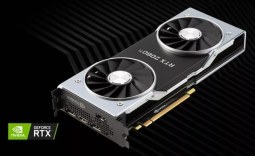 Modders are selling RTX 2080 Ti GPUs with 22GB VRAM on eBay for AI use
 Take-Two CEO Strauss Zelnick backs game streaming, says it will help fix hardware prices
 Take-Two CEO on GTA 6's $100 price: 'I think Rockstar got it right; given the hype, we could have made other pricing choices'
 GTA 6 pre-orders demand is 'astonishing and unprecedented,' Take-Two CEO says
 Bose launches QuietComfort Headphones with new ActiveSense noise-canceling tech and 24-bit audio
 KIOXIA, Micron, and Samsung earn Best of Show awards at FMS 2026
 Retailer issues warning: If you want a GeForce RTX 5070, RTX 5070 Ti or RTX 5080, you better hurry
 NVIDIA's RTX Neural Texture Compression now runs on RTX Spark and Windows on Arm
 $1 billion in TSMC chips for Apple's new iPhone 18 are reportedly sitting on shelves, waiting for DRAM
 CPS PCCooler YS1200 ATX 3.1 80 PLUS Gold PSU Review
 ASRock X870E Taichi White Review: a premium AM5 motherboard with 10G LAN and WiFi 7
 Asetek Initium Pedal Modular Upgrades Review
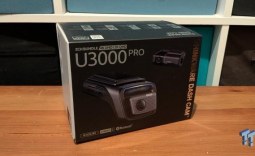 Thinkware U3000 Pro Review - Smart Dashcam with Wi-Fi quirks
 Montech TG3 Mid-Tower Chassis Review
 ASUS ROG Strix X870E-A Gaming WiFI7 Neo Review - A New Enticing Option
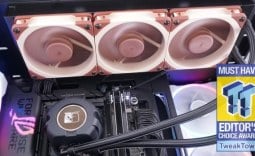 Noctua NL-LC1-36 Liquid CPU Cooler Review
 Logitech G316 X 98 Wired Gaming Keyboard Review - Retro-Inspired Board that Falls a Little Short
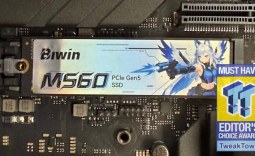 Biwin M560 2TB SSD Review - Best Overall Retail-Ready DRAMless SSD
 Logitech G512 X 98 Analog Mechanical Gaming Keyboard Review - An Innovative Two-in-One
 GIGABYTE's 40 Days of INFINITY celebrates 40 Years of Innovation with stunning GeForce RTX graphics cards and rewards
 I swapped File Explorer for this free file manager and finally got the layout I wanted
 How to tell if someone has been using your Windows PC without your permission
 6 Task Manager tips for troubleshooting Windows performance problems
 ASUS ROG's 20th Anniversary Line-up of Premium PC Gaming Gear has Arrived - Here's Everything You Need to Know
 Six File Explorer tips every Windows user should know
 I switched my PC to encrypted DNS in Windows 11, and browsing felt more private
 Printer Not Working in Windows? How to fix detection, print queues and drivers
 The Ultimate Guide to Personalizing Your Windows 11 Taskbar
 How to Turn Your Windows Laptop Into a Second Monitor with Miracast and Wireless Display in Minutes