







Learn about how TweakTown tests and reviews hardware. As an Amazon Associate, we earn from qualifying purchases. TweakTown may also earn commissions from other affiliate partners at no extra cost to you.
Stay Updated
Follow TweakTown for breaking tech news, reviews, and daily updates.


Call of Duty is about to fix one of the biggest problems with the franchise
Heavy lay the crown is a great way to describe of the Call of Duty franchise, as the first-person-shooter continues to top charts in terms of popularity, but is constantly criticized.

One of the biggest griefs players have with Call of Duty is the sheer file size it requires, which has been a problem since 2022 when the decision to couple Call of Duty: Warzone with each new Call of Duty title within what is now called the Call of Duty HQ launcher. Unfortunately, with each new update, the COD HQ launch only gained more in size, getting to the point where Call of Duty was taking up the majority of space on hard drives and SSDs.
However, that is all about to change as Call of Duty has explained in a new blog post that it will be rolling out an update on August 21 as part of Call of Duty: Modern Warfare 3's Season 5 Reloaded update that will be decoupling the download of Warzone from any Call of Duty title. Players will be able to opt-in to the Warzone download when downloading a new Call of Duty game or simply download Warzone at any point.
Microsoft responds to backlash from Windows 10 users about Windows 11
Microsoft has been pushing Windows 10 users to adopt Windows 11 since the new operating system was released in 2021, but the Redmond company has been hitting the marketing campaign especially hard since it announced Windows 10 support will be ending in October, 2025.

Windows 10 is still by a large margin the world's most popular operating system, according to data from Statcounter, and since the end-of-support announcement, Microsoft has been rolling out new advertisements in Windows 10 to push users over to Windows 11. Some of these advertisements came in the form of full-screen ads. Additionally, Microsoft has begun integrating more advertisements within Windows 10, which has caused many users to express negative feedback about the changes.
Microsoft has now officially recognized this feedback from both Windows 10 and 11 users, writing, "To honor our user's feedback, these invitations will no longer begin with the April 2024 monthly security update. We will share a new timeline in the coming months." Microsoft initially planned on rolling out these full-screen advertisements for Windows 11 to more swaths of Windows 10 users, but Redmon conceded in a Microsoft 365 advisory post that it will pause Windows 11 ads for managed Windows 10 devices.
Continue reading: Microsoft responds to backlash from Windows 10 users about Windows 11 (full post)
Scientists take big step forward in creating renewable concrete
It's always nice to see researchers and technology making progress in the field of renewables, especially in areas that aren't commonly thought of as big contributors to greenhouse gases.

The construction industry isn't the first area that comes to mind when someone mentions greenhouse gases, but perhaps unsurprisingly, it contributes quite a lot. The UN Environment Programme estimates that the buildings and construction sector is by far the largest emitter of greenhouse gases, accounting for a staggering 37% of global emissions.
To reduce global emissions, researchers from the University of Tokyo penned a new process of making renewable concrete bricks out of old building materials and CO2 from the air. The team first revealed the process in 2021, and since then, it has significantly improved. The renewable concrete bricks were made out of demolished school building material, which was grounded down into a fine powerder before it was then mixed with CO2 over three months.
Continue reading: Scientists take big step forward in creating renewable concrete (full post)
Scientists discover the origin of the asteroid that wiped out the dinosaurs
A new study that has been published in the peer-reviewed journal Science has detailed the origins of the asteroid that caused the Chicxulub Crater, or the impact crater left behind by asteroid that ended the rein of the dinosaurs.

The Chicxulub Crater is located off the Yucatán Peninsula in Mexico and is believed to be caused by an asteroid 66 million years ago that measured six miles wide. The impact was catastrophic for life on Earth, causing a mass extinction-level event that wiped out the already declining population of dinosaurs. Researchers have penned a new study that has examined the origins of the dino-killing asteroid, tracing back its origin to the far outskirts of the solar system beyond the biggest planet in the solar system, Jupiter.
Mario Fischer-GÜdde, who researches the origin of asteroids and planets at the University of Cologne in Germany, spoke to Mashable and said the dino-killing asteroid was a "C-type asteroid," which means its composition was mostly carbon. Notably, C-type asteroids are the most common variety of asteroid, accounting for 75% of all known asteroids.
Geekbench AI 1.0 benchmark is now available: AI tests for CPUs, NPUs and GPUs
Geekbench AI 1.0 is here, after years of feedback and test iteration with its customers, partners, and the AI engineering community, Primate Labs is proud to announce its latest machine learning benchmark is now ready, and it has a new name: Geekbench AI. You can download Geekbench AI 1.0 here.

Geekbench AI is a new benchmarking suite with a testing methodology for machine learning, deep learning, and AI-centric workloads, all with the same cross-platform utility and real-world workload reflection that Primate Labs' benchmarking software (Geekbench, duh) is known for.
The developer explains on its website: "Measuring performance is, put simply, really hard. That's not because it's hard to run an arbitrary test, but because it's hard to determine which tests are the most important for the performance you want to measure - especially across different platforms, and particularly when everyone is doing things in subtly different ways. At Primate Labs, we build our tests to reflect the sort of use cases that developers build their applications to do through detailed and ongoing conversations with software and hardware engineers across the industry, rather than just crunching basic math for hours".
Japan's SoftBank kills plans for Intel to make an AI chip to compete with NVIDIA, goes to TSMC
SoftBank was talking with Intel about making an AI chip that would compete with NVIDIA's dominant AI GPUs, but the plan "floundered" after Intel failed to meet the requirements of Japan's SoftBank.

In a new report from the Financial Times, we're hearing that negotiations to partner with Intel would've rapidly accelerated SoftBank's efforts to combine the chip design of its "crown jewel" as the FT puts it: Arm. Japan's SoftBank owns Arm Holdings, so with its Arm architecture and Intel fabbing the chip with SoftBank's production expertise of its latest acquisition -- Graphcore -- according to "people familiar with the matter".
SoftBank boss Masayoshi Son plans to dump billions of dollars into putting Japan at the center of the AI boom, where the Arm owner wants to create a rival to NVIDIA's dominant AI GPUs. Son has pitched his ideas to the usual Big Tech companies, with chip production and software through to providing power for the data centers that would be powered by its chips.
MSI unveils AMD Ryzen 9000 feature that boosts performance by up to 22%
The Ryzen 9 9950X, 9900X, 9700X, and 9600X have officially launched, and recent reviews are putting AMD's generation in a bit of a mixed bag, as raw performance numbers were quite disappointing, while efficiency was impressive.

However, if you are on the side of being disappointed by the raw performance of the Ryzen 9000 series, MSI has your back, as owners of MSI AM5 motherboards will be able to tweak a few settings in their BIOS and get up to 22% more performance in select applications. MSI explains in a blog post that its introducing PBO Enhanced Mode, which builds on AMD's Precision Boost Overdrive (PBO).
According to the company, MSI's PBO was capable of pushing an extra 10% more performance out of the Ryzen 9 9950X in Cinebench R23, versus AMD's standard PBO of just 5%. Furthermore, the setting being enabled on the 9700X resulted in a gain of as much as 15%. Additional features such as Set Thermal Point enable a user to set a thermal max point - 85°C, 75°C, and 65°C. MSI claims setting these thermal points won't impact performance, and cited testing with a 9950X when Set Thermal Point was at 85°C. The temperature lock didn't result in a performance hit.
Apple could launch a $1000 tabletop home robot in 2026
A new report from Bloomberg's Mark Gurman, a known and reliable Apple insider, has revealed the Cupertino company is planning on releasing a smart home command center sometime in 2026.

Gurman writes that Apple's new project is a tabletop robot that will have a display that's similar in size and design to a large iPad, but this display will be mounted on a "thin robotic arm". The display is capable of being rotated 360º and would be used to control smart devices around the house, FaceTime calls, and a home security monitoring tool. Additionally, the Apple command center will also come with Apple Intelligence and Siri functionality, and would be capable of distinguishing the different voices from each member of the house.
Reports indicate that Apple has thrown the company's VP of technology, Kevin Lynch, on the project, along with several hundred other Apple employees. Gurman writes the release date isn't solid and Apple is aiming for a debut sometime between 2026 and 2027 for a price tag around $1,000. Currently Apple is testing this device with a modified version of the iPadOS, with it remaining unclear if it would get its own dedicated OS or would continue using a modified version of iPadOS.
Continue reading: Apple could launch a $1000 tabletop home robot in 2026 (full post)
Eurocom's new Blitz Ultra enterprise laptops: TPM 2.0 module, up to 96GB RAM, up to 16TB SSD
Eurocom has just unveiled its new Blitz Ultra enterprise-class workstation laptops, in both 14-inch and 16-inch display size, with oodles of security and manageability , with insane amounts of connectivity and expandability.

Inside, you'll have the new Intel Core Ultra 100 series "Meteor Lake" CPU with either the Core Ultra 5 125H (14 cores, 28 threads) or the Core Ultra 7 155H (16 cores, 22 threads). You can configure the new Eurocom Blitz Ultra enterprise laptops with up to 96GB of DDR5 RAM, and up to 16TB of NVMe M.2 SSD storage.
This is a heavy-duty beast, with the new Eurocom Blitz Ultra laptops designed for the government, military, security, healthcare, and corporate professionals that are handling very, very sensitive data. This is why the Blitz Ultra laptops have built-in TPM 2.0 data encryption modules, BIOS support for SED (Self-Encrypting Drives) and a Kensington lock which make it the ultimate enterprise-class laptop for security, connectivity, and expandability.
Bethesda is releasing a new Elder Scrolls game in September
Bethesda Game Studios is launching a new Elder Scrolls game in September. However, it's not the highly anticipated The Elder Scrolls 6 or a remaster or Oblivion. The Elder Scrolls: Castles launches worldwide on September 10 for Apple and Android devices. The game puts players "in control of their very own castle and dynasty in The Elder Scrolls universe."

Bethesda has released a deep-dive video on what to expect. The development team describes it as a spiritual successor to the popular mobile game Fallout Shelter. The game's presentation and look are similar to Fallout Shelter, albeit with the Elder Scrolls fantasy theme.
Fallout Shelter was Bethesda's first mobile game, and it was a huge free-to-play success. The Elder Scrolls: Castles looks to be another winner, offering a similar experience.
Continue reading: Bethesda is releasing a new Elder Scrolls game in September (full post)
World of Warcraft now playable on the cloud, iconic MMO arrives on GeForce NOW
World of Warcraft is a veritable institution that is still going strong after 20 years. The popular MMO's latest expansion, The War Within, launches on August 26, and ahead of its launch, NVIDIA has announced that World of Warcraft is now available to stream via the cloud on GeForce NOW.

NVIDIA simply hasn't added World of Warcraft to GeForce NOW; it has also partnered with CurseForge to support the top mods or Addons for the game. CurseForge Addons are popular with WoW players as they offer revamped UI layouts, combat tools, action bars, and even quest helpers. For veteran players, modding WoW is a key part of the experience, so it's great to see NVIDIA go all out and work with CurseForge to bring World of Warcraft to GeForce NOW.
How will Add-Ons work over the cloud? Just like they do on a gaming PC, you need to enable them from the game's menu and start playing. NVIDIA offers a quick guide on the feature that you can read here.
Steam updates its User Reviews with a new AI-powered Helpfulness System
Valve is updating its User Review system to prioritize relevant reviews that "best help players make a purchase decision about the game." Valve calls it the 'Helpfulness System,' designed to push one-word reviews, reviews full of ASCII art, memes, and unrelated information to the bottom of the list.

Valve won't remove reviews deemed unhelpful, and the new helpfulness system can be toggled on or off within the user review section of each game - by default, it will be enabled.
"The primary goal of Steam User Reviews is to help potential players make informed decisions about the games they are considering purchasing by understanding the attributes of the game that other players like or don't like," Valve writes. "Historically, we've sorted reviews by the number of 'helpful' votes given to each review by other players. However, we've seen that many players use reviews for sharing jokes, memes, ASCII art and other content that might not be the most helpful for a potential purchaser."
TSMC board approve $37 billion in new capital spending to 'meet long-term capacity plans'
TSMC's board of directors has just approved $37.1 billion in new capital spending, with $29.62 billion that will be used "to meet long-term capacity plans... and TSMC's technology development roadmap".

In this new injection of spending, there will be $7.5 billion for TSMC's new plant in Arizona, US, noting that in June 2024, TSMC approved $17.36 billion for fab construction and $5 billion for TSMC global. Ctee reports that we don't know exactly what this money will be funding, but the money is going towards long-term capacity plans and TSMC is pretty much booked deep into 2024, and even into 2025 with some companies.
TSMC isn't just expanding its operations in Taiwan, its home country, but also its production capacity and leading semiconductor technology worldwide, especially in the US with multiple fabs under construction (of which Intel is trying to poach senior engineers for its own Intel Foundry business, away from TSMC's new operations in Arizona).
Corsair launches its new iCUE LINK TITAN RX RGB AIO cooler family, ready for all next-gen CPUs
Corsair has just launched its new family of next-generation AIO CPU coolers, the new iCUE LINK TITAN RX RGB. Check them out:

The new Corsair iCUE LINK TITAN RX RGB AIO coolers have new levels of performance, a slick new look, and unique iCUE LINK connectivity, which makes for the best-performing cooler that the company has ever made. Corsair says they poured "thousands of hours" into the in-house engineering, and years of experience bringing award-winning CPU coolers to market have culminated in the new iCUE LINK TITAN RX RGB, a generational breakthrough in cooling that "sets a new standard for the industry".
The company explains that the phenomenal performance of its new TITAN RX RGB cooler is found within the new FlowDrive cooling engine, which is powered by a 3-phase motor that improves power efficiency, quieter operation, and a higher flow rate than its predecessors.
SiFive intros new SiFive Performance P870-D, a new RISC-V processor with up to 256 cores
SiFive has just announced its new SiFive Performance P870-D, a new RISC-V processor with up to 256 cores, designed for data center applications.

The new SiFive Performance P870-D continues the journey for the company from its regular P870, which had a six-wide out-of-order core with an RVA23 profile of the RISC-V instruction set architecture with vector and vector crypto processing acceleration.
The new P870-D adds an open AMBA CHI bridge for energy-efficient cross-cluster communications (each of the clusters has 1-4 cores with shared L2 cache) as well as cross-cluster reliability, and serviceability (RAS) features that enable building CPUs with up to 256 cores, all aimed at mission-critical applications.
NVIDIA launches cute and tiny RTX 2000E Ada workstation GPU: single-slot, 16GB GDDR6 ECC memory
NVIDIA has just introduced its new RTX 2000E Ada workstation graphics card, featuring a single-slot design and 16GB of GDDR6 memory with ECC support.

The company unveiled its new RTX 2000 Ada entry-level workstation GPUs earlier this year, but the new RTX 2000E Ada is something different: the "E" means it has ECC memory. The new NVIDIA RTX 2000E Ada is a low-profile, single-slot workstation GPU with ECC memory that will detect and fix single-bit errors in real-time.
ECC memory is a big deal in the professional world, where processing data accuracy simply can't be compromised, and that's exactly with the new entry-level RTX 2000E Ada workstation GPU is here for. Inside, it features 22 RT cores, 88 Tensor cores, and 2816 CUDA cores.
AMD to unveil its beefed-up Strix Halo and Kraken APUs at CES 2025 in January
AMD is expected to unveil its beefed-up Strix Halo APU at CES 2025, which will succeed the just-released Ryzen AI 300 series "Strix Point" APU with a helluva lot more gaming performance.

In a new post on X by leaker @AnhPhuH, we're learning that AMD's new Strix Halo and Kraken silicon will be shown off at CES 2025 in January 2025. This is moving right along with earlier rumors of a CES 2025 release for Strix Halo, which will feature up to a higher 16 cores and 32 threads of Zen 5 processing power, and a massively upgraded RDNA 3.5 GPU system over the current Strix Point APUs that will deliver discrete GPU levels of gaming performance.
There's been some juicy leaked thermal design data for AMD's upcoming Strix Halo APU (links on that below), where we're to expect three different configurations: 55W, 80W, and 120W.
Ubisoft rumored to port five Assassin's Creed games to the Nintendo Switch 2
Ubisoft is rumored to be preparing for the launch of Nintendo's next-generation console, which is presumably called the Nintendo Switch 2, given the absolute homerun success of the Nintendo Switch.

The latest rumors come from Nintendo leaker Nash Weedle, who took to X, formerly Twitter, to announce that Ubisoft is currently working on a port of Assassin's Creed Shadows that is planned for the Nintendo Switch 2. In addition to the latest Assassin's Creed game, which is scheduled to release later this year, coming over to Nintendo's next console, Ubisoft is also rumored to be working on Switch 2 ports for the following Assassin's Creed titles: Mirage, Valhalla, Odyssey, and Origins.
Notably, Weedle points out that Ubisoft is planning on bundling Odyssey and Origins together, which is presumably going to be some kind of Greek and Egyptian-themed deal. Furthermore, the leaker added in follow-up posts that the ports would be outsourced. To add some credibility to this rumor, Universo Nintendo editor-in-chief Necro Felipe responded to Weedle's claims and said, "can back up the Shadows part". It appears at the very least, Nintendo's next-gen console will feature the latest Assassin's Creed game.
AMD's new Zen 5-based Ryzen 9000 CPU issues: leaker says it needs a 'reboot'
AMD's new Zen 5-based Ryzen 9000 series CPUs are officially here... but it's not the party we expected. There are some glaring issues and questions about Granite Ridge, where in some cases the new Zen 5 chips are SLOWER than Zen 4 chips.

In a new video from leaker Moore's Law is Dead, who compiled a bunch of very good questions I'd like to see answers from AMD on, as well as pulling some quotes from the tech media that have reviewed AMD's new Ryzen 9000 series "Granite Ridge" processors.
The weird 'software issues' that come with Zen 5, with MLID pointing out that Tom's Hardware said: "AMD needs to fix its drivers. The situation with the chipset drivers making irreversible changes to the operating system is nonsensical and problematic for end users and reviewers alike. AMD has known about this issue for 16 months, and despite endless public complaints from end users and the press, it hasn't been addressed".
Google's fully self-designed Tensor G5 chips made on TSMC 3nm node, breaks up with Samsung
Google's next-generation flagship Tensor G5 processor will be made on TSMC's new 3nm process node, seeing the US giant moving away from Samsung, which even made its just-announced Tensor G4 processor that powers the new Pixel 9 and Pixel 9 Pro Fold smartphones.

In a new report from Ctee, we're learning that Google has tapped TSMC for its 3nm process node, of which it'll use for its new Tensor G5 processor. The new Tensor G5 processor is a fully self-designed chip by Google, and will use new InFO-POP advanced packaging, which will provide Google with an edge extending its software to hardware, to compete in the edge AI market.
Google's in-house chips aren't just limited to smartphones, with the TPU tensor processors deployed for a while now, hitting the 7th generation. Ctee's source believes that ANXION is also built with the help of TSMC and produced on its 5nm process node to "achieve excellent power saving effects" adds Ctee.
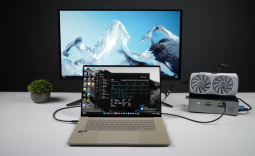 YouTuber benchmarks RTX 4060 on Snapdragon X2 Elite laptop using RTX Spark developer driver
 Dev builds a unique 3D operating system for multitasking, gets terrible performance
 Take-Two boss: 'discs, especially for big games, don't make sense to the consumer'
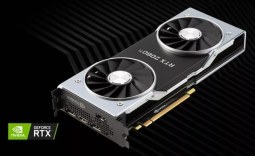 Modders are selling RTX 2080 Ti GPUs with 22GB VRAM on eBay for AI use
 Take-Two CEO Strauss Zelnick backs game streaming, says it will help fix hardware prices
 Take-Two CEO on GTA 6's $100 price: 'I think Rockstar got it right; given the hype, we could have made other pricing choices'
 GTA 6 pre-orders demand is 'astonishing and unprecedented,' Take-Two CEO says
 Bose launches QuietComfort Headphones with new ActiveSense noise-canceling tech and 24-bit audio
 KIOXIA, Micron, and Samsung earn Best of Show awards at FMS 2026
 Retailer issues warning: If you want a GeForce RTX 5070, RTX 5070 Ti or RTX 5080, you better hurry
 CPS PCCooler YS1200 ATX 3.1 80 PLUS Gold PSU Review
 ASRock X870E Taichi White Review: a premium AM5 motherboard with 10G LAN and WiFi 7
 Asetek Initium Pedal Modular Upgrades Review
 Thinkware U3000 Pro Review - Smart Dashcam with Wi-Fi quirks
 Montech TG3 Mid-Tower Chassis Review
 ASUS ROG Strix X870E-A Gaming WiFI7 Neo Review - A New Enticing Option
 Noctua NL-LC1-36 Liquid CPU Cooler Review
 Logitech G316 X 98 Wired Gaming Keyboard Review - Retro-Inspired Board that Falls a Little Short
 Biwin M560 2TB SSD Review - Best Overall Retail-Ready DRAMless SSD
 Logitech G512 X 98 Analog Mechanical Gaming Keyboard Review - An Innovative Two-in-One
 GIGABYTE's 40 Days of INFINITY celebrates 40 Years of Innovation with stunning GeForce RTX graphics cards and rewards
 I swapped File Explorer for this free file manager and finally got the layout I wanted
 How to tell if someone has been using your Windows PC without your permission
 6 Task Manager tips for troubleshooting Windows performance problems
 ASUS ROG's 20th Anniversary Line-up of Premium PC Gaming Gear has Arrived - Here's Everything You Need to Know
 Six File Explorer tips every Windows user should know
 I switched my PC to encrypted DNS in Windows 11, and browsing felt more private
 Printer Not Working in Windows? How to fix detection, print queues and drivers
 The Ultimate Guide to Personalizing Your Windows 11 Taskbar
 How to Turn Your Windows Laptop Into a Second Monitor with Miracast and Wireless Display in Minutes