







Learn about how TweakTown tests and reviews hardware. As an Amazon Associate, we earn from qualifying purchases. TweakTown may also earn commissions from other affiliate partners at no extra cost to you.
Stay Updated
Follow TweakTown for breaking tech news, reviews, and daily updates.


Working Apple I Computer from the 1970s has sold for over $315,000 at auction
The Apple-1 Computer was developed and conceived by Steve Jobs and Steve 'Woz' Wozniak in the mid-1970s as a complete hobbyist kit. It was also one of the first 'personal computers' you could buy, as it didn't require any soldering or additional components - even though the exposed board makes it look like a prototype.

Not many Apple-1 Computers were produced, and even fewer still exist in working order today - many were traded in for an Apple II. One of them, which belonged to an early Apple employee named Dana Redington, was recently put up for auction, where it sold for $315,914 USD.
"In early 1978, while preparing for a move to a new building, I noticed a pile of soon-to-be-discarded Apple I boards," Dana Redington says of the working Apple-1 Computer. "Apple had offered a trade-in program for upgrading to the Apple II to help phase out the older board. With Wozniak and Jobs' permission, I selected the best motherboard and a couple of cassette interface cards from the pile."
MSI MEG X870E GODLIKE motherboard teased: the most powerful board for AMD's new Zen 5 CPUs
MSI has just teased its next-gen MEG X870E GODLIKE motherboard, which looks absolutely over-the-top and we love to see it, with 28 phases of VRM design ready for overclocked Zen 5-based AMD Ryzen 9000 series CPUs, and future-gen Zen chips.

The new MSI MEG X870E GODLIKE motherboard should rock a huge 288 x 304.8mm design, using the same E-ATX form factor as the current-gen X670E GODLIKE board. MSI provides an insane 28 power phases and 110A power stages, which is one more VRRM over the X670E GODLIKE which had 105A power stages.
There are 2 x 8-pin power connectors to feed into the MSI MEG X870E GODLIKE motherboard, with 4 x DDR5 DIMMs that support over DDR5-8000+ speeds and up to 256GB of DDR5 if you've got the latest 64GB DDR5 memory modules.
Supermicro confirms NVIDIA B200 AI GPU delay: offers liquid-cooled H200 AI GPUs instead
Just before NVIDIA announced its issues with its new Blackwell AI GPUs, partner Supermicro seemingly confirmed Blackwell B200 AI GPUs being delayed, offering its customers liquid-cooled Hopper H200 AI GPUs in their place.

Supermicro CEO Charles Liang said that the possible delay of NVIDIA's new Blackwell GPUs for AI and HPC systems will not have a dramatic impact on AI server makers, or the AI server market. Liang said: "We heard NVIDIA may have some delay, and we treat that as a normal possibility".
Liang continued: "When they introduce a new technology, new product, [there is always a chance] there will be a push out a little bit. In this case, it pushed out a little bit. But to us, I believe we have no problem to provide the customer with a new solution like H200 liquid cooling. We have a lot of customers like that. So, although we hope better deploy in the schedule, that's good for a technology company, but this push out overall impact to us. It should be not too much".
GIGABYTE's new X870 EAGLE Wi-Fi 7 motherboard supports Zen 5 CPUs, up to 256GB of DDR5-8000 RAM
GIGABYTE has just introduced its new X870 EAGLE Wi-Fi 7 motherboard, featuring the X870 non-E chipset, ready for AMD's new fleet of Zen 5-powered Ryzen 9000 series CPUs.

The company is using a 6-layer PCB and robust VRM setup with 14+2+2 power phases ready for overclocking, and a reliable voltage supply to the AMD Ryzen CPU you've installed. GIGABYTE's new X870 EAGLE Wi-Fi 7 motherboard features long aluminum grooved heatsinks that are installed onto the VRM components, keeping things a little cooler.
GIGABYTE's new X870 EAGLE Wi-Fi 7 motherboard also features a small I/O shroud with an RGB-lit "EAGLE" logo that makes the board 'pop' a little more.
NVIDIA says it will tweak Blackwell AI GPUs, issues with the 'GPU mask' needing B200 re-spin
Yep, NVIDIA has admitted it has had issues with its new Blackwell AI GPUs that are causing low yields, forcing the company to re-spin some of the layers of its new B200 AI GPU to boost yields.

NVIDIA said in a statement: "We executed a change to the Blackwell GPU mask to improve production yield. Blackwell production ramp is scheduled to begin in the fourth quarter and continue into fiscal 2026. In the fourth quarter, we expect to ship several billion dollars in Blackwell revenue".
The design flaws plaguing NVIDIA's new Blackwell AI GPUs hit headlines a couple of weeks ago, where we began hearing about design flaws that analyst firm KeyBanc says NVIDIA will need to "respin" the Blackwell tile that will cause a 3-month delay on shipments. Now these reports ring true. KeyBanc explained at the time: "Given the Blackwell delay, we believe NVIDIA will prioritize the ramp of B200 for hyperscalers and has effectively canceled B100, which will be replaced with a lower cost/performance GPU (B200A) targeted at enterprise customers".
HighPoint's new 128TB Gen4 AIC card has 16 x Sabrent Rocket 4 Plus 8TB SSDs: costs $25,999
HighPoint has just unleashed its new RocketAIC 7749M2, the world's first 128TB Gen4 x16 AIC drive family, supporting up to 16 x Sabrent Rocket 4 Plus 8TB Gen4 SSDs for a total of 128GB Gen4 SSDs at up to 28GB/sec insanity.

You'll be able to buy two different variantsof HighPoint's new RocketAIC 7749M2 AIC card: 64TB and 128TB of Gen4 SSD goodness. The 64TB option includes the RocketAIC 7749MC AIC and 16 x Samsung 990 PRO 4TB SSDs for a total of 64TB Gen4 SSDs for $9900.
The monster 128TB Gen4 SSD configuration includes the HighPoint RocketAIC 7749M2 and 16 x Sabrent Rocket 4 Plus 8TB SSDs for a total of 128TB (!!!) of Gen4 SSDs for a much higher $25,999.
Intel at Hot Chips 2024: Lunar Lake has over 20% more MT, ST performance than Meteor Lake
Intel has detailed its next-generation Core Ultra 200V series "Lunar Lake" processors at Hot Chips 2024 this week, highlighting major 3x improved latency and bandwidth improvements over Meteor Lake.

The company will launch its new Lunar Lake CPUs as its new flagship SoC for the next-gen of AI PCs, with a breakthrough in x86 power efficiency -- up to 40% lower SoC power consumption. Intel promises "exceptional core performance" with similar single-threaded performance at half the power.
Intel says its new Xe2-based Battlemage GPU inside of Lunar Lake chips will offer a "massive leap in graphics" performance, with 50% more gaming performance from the integrated GPU inside of Lunar Lake -- Battlemage -- versus the integrated GPU inside of current-gen Meteor Lake chips: Alchemist. There will be "unmatched AI compute" performance from Lunar Lake with up to 120 TOPS platform-wide (CPU, GPU, NPU combined).
Lexar's PLAY 2280 Gen 4 SSD for PS5 actually looks like a PlayStation 5
One of the great things about the PlayStation 5 is that Sony made expanding the limited internal storage with a high-speed PCIe Gen4 SSD relatively easy. Best of all, the Sony PlayStation 5 supports any compatible off-the-shelf SSD if it meets the minimum speed requirement of 5,500 MB/s.

With the advent of Gen5 SSD storage on PC, the price of Gen4 has come down dramatically, especially when you look at the prices of PCIe Gen4 SSDs when the PlayStation 5 first launched in 2020. Lexar's new PLAY 2280 PCIe Gen 4.0 SSD sports a massive 4TB capacity for $379.99 USD, with 2TB and 8TB options set to arrive in Q4 2024.
The integrated heatsink is designed to keep the SSD running cool while installed in a PS5, but it also features a design inspired by the PlayStation 5 console. Once installed, you won't see it when you're gaming, but it's a nice touch that makes it feel like a perfect fit for the console.
SK hynix develops the world's first 16Gb DDR5 memory chip using its new 1c node
SK hynix has announced it has developed the industry's first 1c DDR5, with mass production expected this year for volume shipment in 2025.

SK hynix announced the industry's first 16Gb DDR5 built using its 1c node, the sixth generation of its 10nm process. The company says that the success of this marks the beginning of the extreme scaling to the level closer to 10nm in the memory process technology.
The company continues: "the degree of difficulty to advance the shrinking process of the 10nm-range DRAM technology has grown over generations, but SK hynix has become the first in the industry to overcome the technological limitations by raising the level of completion in design, thanks to its industry-leading technology of the 1b, the fifth generation of the 10nm process".
Razer's new $200 controller for PC and Xbox features 'mouse-click back paddles'
The new Razer Wolverine V3 Pro is being described as the "ultimate wireless esports controller for Xbox and PC," which is what you'd expect for a gaming peripheral that costs $199.99 USD. Of course, the wireless controller is packed with customization options and additional features not present on a standard Xbox controller. Plus, ergonomic features like rubberized grips for extra comfort.

You'll find paddles on the back of the controller, which is typical for this type of pad; however, Razer makes a special note to call them "mouse-click back paddles" here, as they offer the same fast actuation as Razer's high-end gaming mice. The company has also added two more programmable bumpers on the top of the controller for gamers that use a "claw grip."
In addition, the Hall Effect analog thumbsticks are more accurate and durable and feature interchangeable thumbstick caps - the Razer Wolverine V3 Pro ships with two variants, one taller and one shorter.
AI creates a playable version of the original Doom, generating each frame in real-time
Google's research scientists have published a paper on its new GameNGen technology, an AI game engine that generates each new frame in real-time based on player input. It kind of sounds like Frame Generation gone mad in that everything is generated by AI, including visual effects, enemy movement, and more.

AI generating an entire game in real-time is impressive, even more so when GameNGen uses its tech to recreate a playable version of id Software's iconic Doom. This makes sense when you realize that getting Doom to run on lo-fi devices, high-tech gadgets, and even organic material is a right of passage.
Seeing it in action, you can see some of the issues when it comes to AI generating everything (random artifacts, weird animation), but it's important to remember that everything you see is being generated and built around you in real-time as you move, strafe, and fire shotgun blasts at demons.
NVIDIA's Gaming revenue is up, while Data Center and AI earnings exceed analyst predictions
NVIDIA has announced its financial results for Q2 2025, and as expected (or as has become the norm of late), the company saw "record quarterly revenue" of $30 billion - up 15% from Q1 2025 and a whopping 122% from a year ago. Of course, Data Center and AI hardware revenue makes up the bulk of this figure, $26.3 billion, an increase of 154% compared to the previous year.

"Hopper demand remains strong, and the anticipation for Blackwell is incredible," said Jensen Huang, founder and CEO of NVIDIA. "NVIDIA achieved record revenues as global data centers are in full throttle to modernize the entire computing stack with accelerated computing and generative AI."
Jensen Huang confirmed that "Blackwell samples are shipping to our partners and customers" and that the anticipation for its next-gen AI hardware is "incredible." However, as someone who reviews gaming GPUs and primarily covers news surrounding the PC gaming industry, I found it interesting that NVIDIA's Gaming revenue was also up.
Windows Update brings double digit gaming performance improvement to AMD Ryzen CPUs
Last week, we reported on a new Windows-specific "branch prediction" patch for AMD's Zen 4 and Zen 5 Ryzen desktop processors that would increase performance when gaming with a Ryzen 9000 Series or Ryzen 7000 Series processor.

With a massive 13% improvement in some games (some apps and games would experience no change), the only catch was that this free performance upgrade for Ryzen owners was limited to the Windows 11 24H2 - which is currency in preview as part of the Windows Insider Program.
Well, it's no longer a catch as Microsoft has back-ported these specific AMD Ryzen "branch prediction" optimizations to the current Windows 11 - 23H2 version. Early testing of the update from outlets like Hardware Unboxed shows impressive gaming performance, making this a must-have for Ryzen 9000 Series or Ryzen 7000 Series CPU owners.
AMD RDNA 4 leak: Navi 48 GPU at up to 3.2GHz, 16GB GDDR6, RTX 4080 perf, priced at $499 to $599
AMD's next-gen RDNA 4-based Navi 48 GPU leaks suggest we can expect gaming performance of RTX 4080 levels, with far better ray tracing performance out of RDNA 4, too.

In his latest video, leaker Moore's Law is Dead notes that the rasterization performance is "expected to at least trade blows with the RTX 4080" while ray tracing performance is expected to "trade blows with the RTX 4070 Ti SUPER, and in some AMD optimized games, there's suggestion that it could get close to the RTX 4080!"
The leaker continues, explaining that Navi 48 will have "high volume" in Q4 2024, and that the company "hopes it will be a hit with system integrators". The new Radeon RX 8800 XT (or whatever it is called) will "have a reference cooler, but not be sold on AMD.com".
Concord made less than $1 million on Steam on the high end, analysts estimate
Sony's new live service shooter Concord has bombed on Steam, with sales estimates lower than 20,000 copies sold on the PC storefront.

We've known for a while that Firewalk's new hero shooter Concord is a dud on PC. The game had fewer than 700 concurrent players in its launch weekend, and at the time of writing, Concord only has 170 players in-game on Steam.
The numbers haven't grown, either. Headlines of the game's apparent demise on PC have not driven up interest, sales, or active players of the game, as sometimes happens with titles that get this kind of exposure. In fact, sales estimates for Concord's PC version are between 8.4K - 17.7K, with the high end being estimated by analyst firm VG Insights (as per info on SteamDB).
Witcher 4 release date teased by developer CD Projekt
When will Polaris, aka The Witcher 4, release onto the market? There's no launch date just yet, but CD Projekt has delivered some clues on when we can expect to jump back into the monster-ridden fantasy world.

No one knows exactly when the next Witcher game will launch--not even CD Projekt RED. The studio certainly has some sort of internal target, but AAA game development is not a linear and perfect process, and delays are always possible. Even still, CDPR is starting to ramp up work on Polaris with 410 developers attached to the new Witcher RPG, and company management has given a bit of a clue on when we could see the game release.
In a recent Q&A with investors, CD Projekt executives revealed an interesting tidbit about pre-order policies for the PlayStation and Xbox digital storefronts that also gives somewhat of a clue or a hint on The Witcher 4's release.
Continue reading: Witcher 4 release date teased by developer CD Projekt (full post)
Witcher 4 dev team won't grow any larger, CD Projekt confirms
CD Projekt Group management confirms that the dev team for Polaris, aka the new Witcher game, is pretty much as big as it will get.

The Witcher 4 is about to go into full production with 410 developers attached to the project. The game, codenamed Polaris, will be the first chapter in a new Witcher trilogy built in Unreal Engine 5, but CDPR is not expected to expand its dev team past its current size.
"So in general terms, the biggest part of the team is working on Polaris right now and in this respect we feel the team is kind of complete. Probably it will grow a bit, but we believe we have the force, we have all or absolutely most of the people that are required for the project in this part of our activity," CD Projekt joint CEO Michal Nowakowski said in a recent Q&A with investors.
Continue reading: Witcher 4 dev team won't grow any larger, CD Projekt confirms (full post)
Witcher 4 won't be influenced by player survey feedback: 'We trust our gut,' CD Projekt says
CD Projekt is about to start principal development of the new Witcher trilogy...but fan feedback won't be a direct guide for the new saga.

If it's anyone that gamers trust with Witcher games, it's the devs at CD Projekt RED. Despite the past hiccups with Cyberpunk 2077, players have always had great respect for CDPR's excellent handling of Geralt's adventures in the Witcher trilogy. The Witcher 3 is hailed as one of the best games ever made, and has captured an entire generation of fans.
That's the kind of expertise and goodwill that CD Projekt RED will be leaning on with Polaris, aka The Witcher 4, and the future games in the new Witcher trilogy. In a recent Q&A with investors, CD Projekt Group joint CEO Michal Nowakowski affirms that the team will be mostly trusting its gut with The Witcher 4's themes, story arc, and gameplay instead of relying on direct survey info from fans and gamers.
Cyberpunk 2 sequel Project Orion entering development soon, dev team to double across next year
CD Projekt executives confirm that Cyberpunk 2077's incoming sequel, Project Orion, will enter development phases soon.

Project Orion, aka the new Cyberpunk sequel, is moving from the R&D research and development phase into pre-production development. The game had previously entered R&D earlier this year.
"Moreover, as I mentioned with Orion, we are close to moving from the research phase to the development phase in IFRS terms, so this part of the expenditures that was so far booked in our P&L will soon become treated as development expenses and presented as capitalized in our balance sheet," CD Projekt CFO Piotr Nielubowicz said in a recent Q&A with investors.
Why cutting back on screen time is harder than you think
It's nearly impossible to imagine life without digital devices in today's day and age. From smartphones to laptops, screens are integral to how we work, play, and communicate. But as our digital lives expand, a growing number of people are advocating for something different: digital minimalism. This trend, which focuses on reducing screen time and being more intentional with technology use, is gaining traction worldwide. Yet, despite its benefits, cutting back on screen time is often easier said than done. Let's explore why.

Digital minimalism, a term popularized by author Cal Newport in his book "Digital Minimalism: Choosing a Focused Life in a Noisy World," is all about simplifying our digital lives. The core idea is to use technology in ways that enhance our well-being rather than detract from it. Digital minimalists advocate for decluttering our digital spaces, limiting screen time, and focusing on activities that genuinely enrich our lives.
This philosophy is becoming more popular as people seek to reclaim their time and mental space from the constant demands of digital devices. The ever-present notifications, the pressure to be always available, and the endless scrolling can lead to stress, anxiety, and a sense of being overwhelmed. As a result, more individuals are choosing to prioritize meaningful, offline experiences over digital ones.
Continue reading: Why cutting back on screen time is harder than you think (full post)
 GTA Online will continue after GTA 6's release, Take-Two reiterates
 YouTuber benchmarks RTX 4060 on Snapdragon X2 Elite laptop using RTX Spark developer driver
 Dev builds a unique 3D operating system for multitasking, gets terrible performance
 Take-Two boss: 'discs, especially for big games, don't make sense to the consumer'
 Modders are selling RTX 2080 Ti GPUs with 22GB VRAM on eBay for AI use
 Take-Two CEO Strauss Zelnick backs game streaming, says it will help fix hardware prices
 Take-Two CEO on GTA 6's $100 price: 'I think Rockstar got it right; given the hype, we could have made other pricing choices'
 GTA 6 pre-orders demand is 'astonishing and unprecedented,' Take-Two CEO says
 Bose launches QuietComfort Headphones with new ActiveSense noise-canceling tech and 24-bit audio
 KIOXIA, Micron, and Samsung earn Best of Show awards at FMS 2026
 CPS PCCooler YS1200 ATX 3.1 80 PLUS Gold PSU Review
 ASRock X870E Taichi White Review: a premium AM5 motherboard with 10G LAN and WiFi 7
 Asetek Initium Pedal Modular Upgrades Review
 Thinkware U3000 Pro Review - Smart Dashcam with Wi-Fi quirks
 Montech TG3 Mid-Tower Chassis Review
 ASUS ROG Strix X870E-A Gaming WiFI7 Neo Review - A New Enticing Option
 Noctua NL-LC1-36 Liquid CPU Cooler Review
 Logitech G316 X 98 Wired Gaming Keyboard Review - Retro-Inspired Board that Falls a Little Short
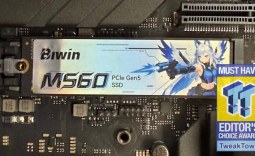 Biwin M560 2TB SSD Review - Best Overall Retail-Ready DRAMless SSD
 Logitech G512 X 98 Analog Mechanical Gaming Keyboard Review - An Innovative Two-in-One
 GIGABYTE's 40 Days of INFINITY celebrates 40 Years of Innovation with stunning GeForce RTX graphics cards and rewards
 I swapped File Explorer for this free file manager and finally got the layout I wanted
 How to tell if someone has been using your Windows PC without your permission
 6 Task Manager tips for troubleshooting Windows performance problems
 ASUS ROG's 20th Anniversary Line-up of Premium PC Gaming Gear has Arrived - Here's Everything You Need to Know
 Six File Explorer tips every Windows user should know
 I switched my PC to encrypted DNS in Windows 11, and browsing felt more private
 Printer Not Working in Windows? How to fix detection, print queues and drivers
 The Ultimate Guide to Personalizing Your Windows 11 Taskbar
 How to Turn Your Windows Laptop Into a Second Monitor with Miracast and Wireless Display in Minutes