







Learn about how TweakTown tests and reviews hardware. As an Amazon Associate, we earn from qualifying purchases. TweakTown may also earn commissions from other affiliate partners at no extra cost to you.
Stay Updated
Follow TweakTown for breaking tech news, reviews, and daily updates.


Homeworld 3 ditches controversial Denuvo, the latest in a line of PC games to drop the DRM
Homeworld 3 is the latest PC game to drop the controversial Denuvo DRM protection.

Neowin noticed the move and reports it was made in a stealthy manner, with no formal announcement of the ditching of Denuvo by developer Blackbird (or publisher Gearbox).
Homeworld 3 arrived back in May 2024 to a very lukewarm reception from fans, who particularly rubbished the game's storyline. Also, as you might imagine, the inclusion of Denuvo was not popular in some quarters - well, many quarters, let's face it - as the DRM system is often blamed for dragging down the performance of the games that incorporate it. (And substantially, at least if some theories are correct - and we should note they are just theories).
Dying Light director highlights the most important feature in the PS5 Pro
The release of the PlayStation 5 Pro is right around the corner, and ahead of the highly anticipated release, Dying Light director Tymon Smektala has revealed what has excited developers about Sony's new console.

The director of Techland, the studio behind the Dying Light franchise, spoke to GamingBolt and explained the studio is beginning to understand the capabilities of the new console, and with the increase in hardware, developers now have much more "flexibility with graphics and performance". Smektala specifically pointed out the increase in GPU power in the PS5 Pro compared to the standard PS5 as being what has enabled Techland to increase the visual fidelity of its upcoming titles. Moreover, Smektala pointed out that "complex environmental details" benefit immensely from the GPU power.
However, an increase in GPU power isn't the star player Sony has on its PS5 Pro team, as Smektala highlights the future potential of PSSR, or PlayStation Spectral Super Resolution, which is Sony's new upscaling technology that's essentially the company's version of NVIDIA's DLSS, or AMD's FSR. Smektala explains that PSSR enables developers to focus less on performance, enabling more creative liberty.
Microsoft seems to have botched the rollout of a nifty AI feature for Windows 11's Photos app
Microsoft's new super resolution ability - which was recently applied (in preview) to the Photos app in Windows 11 - has suffered from a seemingly botched rollout by the software giant.

This is a new AI ability - one for Copilot+ PCs, as it requires a beefy NPU for acceleration - and it allows for enhancing or enlarging images, by a factor of up to 8x. The idea is you can blow up a photo for a large print, or improve very low quality photos to something a bit sharper and more palatable.
This was supposed to be in testing for Windows Insiders, but as leaker PhantomOfEarth reports, super resolution was appearing on some devices that it wasn't supposed to be on. Presumably, that means non-Copilot+ PCs, rather than the feature coming to users outside of the Windows Insider programme.
Microsoft confirms US government officials are being targeted by notorious hackers
Microsoft has taken to its security blog to shine a light on the company's recent observations in the cybersecurity space, and according to the Redmond company, a known hacking group is now going after US government officials in a series of highly-targeted spear-phishing email waves.

According to Microsoft, the hacking group is Russian government-backed bad actors Midnight Blizzard, which have been on Microsoft's radar since October 22, 2024. Microsoft Threat Intelligence is quite familiar with Midnight Blizzard, as the hacking group targeted Microsoft servers on January 12, 2024, which ended up becoming compromised and Midnight Blizzard gaining access to federal government email accounts, Microsoft's corporate email accounts, and more.
At the time, Microsoft described these attacks by Midnight Blizzard as a "sustained, significant commitment of the threat actor's resources, coordination, and focus." Now, Microsoft has put out a new warning that Midnight Blizzard is sending a series of highly targeted spear-phishing emails to individuals in government, academia, defense, non-governmental organizations, and other sectors. Microsoft writes this activity is ongoing, and the likely goal of this operation is to collect intelligence.
Russia officially fines Google more money than what exists in total on Earth
Google revealed its quarterly revenue recently was approximately $88 billion, and while that is certainly an incredible amount of money, it falls extremely short of what a Russian court has ruled Google owes Russian media outlets.

A Russian court has ruled that Google owes Russian media stations an astonishing $2.5 decillion, which if you thought a million dollars was hard to mentally picture, is unfathomable amount of money. For perspective sake, the World Bank reported Earth's global revenue over a year, or the amount of money the planet generated as a whole was approximately $100 trillion. So, if Earth as a whole paid every cent to Russia, it would take the planet 200 quintillion years, or 200,000,000,000,000,000,000 years, to pay off the fine completely.
How did Russia arrive at this number? The ridiculous fine is the conclusion of a four year court battle that began after YouTube banned the Russian channel Tsargrad in 2020 in response to US sanctions. Additionally, more Russian-owned or backed channels were banned from Google's platform in 2022 following Russian President Vladimir Putin's invasion into Ukraine. So far, seventeen Russian stations have been banned from YouTube.
Robert Downey Jr. threatens to sue from the grave if Hollywood recreates him with AI
In a recent episode of the "On With Kara Swisher" podcast, Oscar winner and Marvel superstar Robert Downey Jr. revealed he plans to sue any Hollywood executive who uses his likeness in the form of a digital AI replica to recreate him after his death.

Downey was asked about what he thinks the future of Hollywood will look like with the emergence of AI technologies and how he feels about the technology being used to recreate popular actors after they have passed away. The topic presented itself through questions asked about Downey and his tenure as Iron Man. Downey said he is confident that Marvel executives won't recreate him as Iron Man, as he believes the people in control know him very well and "they would never do that to me, with or without me."
However, when asked 'what about future executives?' Downey acknowledged there will certainly be a push, at one stage or another, for his likeness to return to the Marvel Cinematic Universe (MCU) after he has passed away. But that push by future executives will be met with legal ramifications by Downey's law firm, as the Oscar-winning actor explained,"I would like to here state that I intend to sue all future executives just on spec."You'll be dead," Swisher noted. "But my law firm will still be very active," responded Downey
Sony seals Concord and its developers fate after catastrophic $400 million failure
The CEO of Sony Interactive Entertainment has officially given an update on what's happening at PlayStation Studios, and within it is the confirmation of Concord's fate.

Concord is one of the biggest video game flops of all time and has been identified as Sony's biggest flop ever. Reports indicated that the title cost as much as $400 million to develop, but upon release, it only generated a few million. Concord didn't even reach a critical mass to sustain players, resulting in Sony pulling the game down from public access and refunding any buyers of the title. Since then Concord has remained in somewhat Limbo, as Sony considers what to do with its multi-million investment.
Firewalk Studios, the developer behind Concord, also went quiet while Sony deliberated on its decision: spend more money implementing free-to-play infrastructure into Concord or cut its losses and abandon the tile completely. It appears Sony has selected the latter, as Hermen Hulst, the CEO of Sony Interactive Entertainment, explained in a new blog post the decision has been made to "permanently sunset the game."
OpenAI to build its first AI chip with Broadcom and TSMC, scaling back its foundry ambitions
OpenAI is working with Broadcom and TSMC on building its first in-house chip designed to support its extensive AI systems.

The news is coming directly from Reuters, which is reporting from its sources who "requested anonymity as they were not authorized to discuss private matters" (but I guess, did so with one of the largest publications in the world). OpenAI did consider building everything in-house, with CEO Sam Altman having ambitious plans to have a global network of dedicated chip fabrication plants, but that is now not happening.
Reuters reports that OpenAI "dropped the ambitious foundry plans for now due to the costs and time needed to build a network, and plans instead to focus on in-house chip design efforts".
Turtle Beach's Stealth Pivot controller for PC and Xbox has a rotating stick and button layout
The Turtle Beach Stealth Pivot is a brand-new premium wireless and wired controller for Xbox consoles, Windows PCs, and Bluetooth devices. Its unique design includes "rotating thumbstick and button control modules," so you can switch between a traditional stick and button layout and one optimized for fighting games and other 2D titles.

Turtle Beach notes that "modules can be easily rotated and locked back into place," giving the Stealth Pivot controller seamless 2-in-1 functionality and control over the layout. As a premium controller, the Turtle Beach Stealth Pivot's $129.99 MSRP is higher than that of standard pads; it includes things like built-in Hall Effect sensors and AntiDrift thumbsticks for optimal performance and a 'Connected Command Display' that offers access to onboard customization options without the need for software.
Of course, in-depth customization is also available via the Turtle Beach Control Center 2 app for Xbox, PC, iOS, and Android. "Turtle Beach's Stealth Pivot delivers a new level of innovation in controllers by giving gamers the ability to play more of their favorite games using one controller," said Cris Keirn, CEO, Turtle Beach Corporation.
G.SKILL and ASUS break DDR5 frequency world record with incredible DDR5-12112 speed
With the arrival of Intel's new Core Ultra Series 2 processors and the Z890 motherboard platform expanding and pushing DDR5 memory to new heights - it's currently world record season for memory overclockers. A few days ago, we reported on Kingston's new FURY Renegade DDR5 CUDIMM memory setting a new 'insane 12,108MT/s speed' with Intel's Core Ultra 7 265KF processor and MSI's MEG Z890 UNIFY-X motherboard.

Today, G.SKILL and the ASUS ROG team have announced that they've broken the DDR5 frequency record with an even more insane 12,112 MT/s speed. The new record has already been submitted to HWBOT and CPU-Z, detailing the hardware used and DDR5 timings of CL52.0 92-92-12.
The 'unprecedented' DDR5-12112 record was recorded by ASUS ROG extreme overclocker Safedisk, using G.SKILL Trident Z5 RGB DDR5 memory, an ASUS ROG Maximus Z890 Apex motherboard, and the new flagship Intel Core Ultra 9 285K CPU. And lots of LN2 cooling.
Phanteks launches Revolt 2200W PSU: weighs an insane 5.7kg, supports dual Xeons, dual RTX 4090s
Phanteks has been cooking with its new power supply family for high-end workstations, introducing the new Revolt 2200: offering up to 2200W of power for dual Intel Xeon CPU + dual NVIDIA GeForce RTX 4090 graphics cards in a single workstation. Check it out:

The company hasn't officially announced its new 2200W power supply just yet, but it looks like the Phanteks Revolt 2200W PSU has been unleashed in China. Phanteks hasn't designed its beasty new 2200W power supply for a regular gaming PC, as it's aimed at the workstation PC market with configurations like dual Intel Xeon CPUs and dual RTX 4090 graphics cards.
Phanteks' new Revolt 2200W PSU meets the ATX 3.1 specifications (its 1600W PSUs are only ATX 3.0 compliant) and feature the new PCIe 5.1 specification for GPU power connectors (12V-2x6). The company includes two native 12V-2x6 power connectors for the GPUs, which means no nasty adapters need to be used.
Dragon Age: The Veilguard's 'Ultra Ray Tracing' is so well optimized on PC it doesn't need DLSS
BioWare's Dragon Age: The Veilguard is out this weekend, and based on reviews (the game is currently sitting on an 84 rating on Metacritic), many critics are hailing it as a return to form for the studio that made a name for itself for creating engaging single-player RPGs. Outside of the actual content, the good news for PC gamers is that it's one of those rare releases that is well-optimized and pushes the visuals much further than what's possible on consoles.

The gaming tech gurus at Digital Foundry have posted a new video praising the PC version's visuals, performance, and stability. In addition, NVIDIA's latest DLSS round-up for the week shows that the game runs incredibly well on GeForce RTX 40 Series GPUs with full ray-tracing without DLSS - a rare feat for a modern AAA cinematic release.
At 1080p, everything from the GeForce RTX 4070 and up can run the game with Ultra Settings and Ultra Ray Tracing at 70+ FPS without DLSS. Bump this up to 1440p, and the GeForce RTX 4070 SUPER hits an average of 61.4 FPS without any DLSS action. Bump things up one step further to 4K, and one GPU delivers 4K 60+ FPS Ultra Ray Tracing without DLSS.
Linux creator Linus Torvalds: AI is useless: it's '90% marketing' while he ignores AI for now
Linux creator Linus Torvalds has come out blasting AMD, Intel, and NVIDIA recently calling their hardware "buggy" and now has said that the AI industry is full of it and that it's "90% marketing" and "10% reality".

During a recent interview at the Open Source Summit with TFIR, Torvalds talked about the hype surrounding AI, and how the technology has been shadowed by the overwhelming marketing of tech giants (of which I agree).
He said: "I think AI is really interesting and I think it is going to change the world. At the same time, I hate the hype cycle so much that I really don't want to go there. So, my approach to AI right now is I will basically ignore it because I think the whole tech industry around AI is in a very bad position, and its 90% marketing and 10% reality. And, in 5 years, things will change and at that point, we will see what of the AI is getting used for real workloads".
AMD's Q3 2024 financial results - Data Center revenue up 122%, Gaming revenue down 69%
AMD has reported its Q3 2024 or third quarter financial results, and as expected, Data Center segment revenue drove the overall year-over-year growth to 18% compared to Q3 2023. With $3.5 billion, AMD's Data Center segment revenue was up 122% compared to Q3 2023, thanks to strong AMD Instinct GPU and AMD EPYC CPU sales. Bolstered, of course, by the AI boom.

"We delivered strong third quarter financial results with record revenue led by higher sales of EPYC and Instinct data center products and robust demand for our Ryzen PC processors," said AMD Chair and CEO Dr. Lisa Su. "Looking forward, we see significant growth opportunities across our data center, client and embedded businesses driven by the insatiable demand for more compute."
Although the response to Zen 5 and the latest Ryzen 9000 Series has been mixed, AMD's Client segment revenue of $1.9 billion represents 29% year-over-year growth attributed to Zen 5's launch - another win. That said, it's a very different story regarding AMD's Gaming segment revenue.
NVIDIA GeForce RTX 50 laptops to be mostly powered by older Intel and AMD processors
CES 2025 is right around the corner and we're going to be flooded with next-gen gaming laptops powered by NVIDIA's new GeForce RTX 50 series Laptop GPUs... but older-generation AMD and Intel CPUs.

In a new post on Weibo by leaker "Golden Pig Upgrade" we're learning that CES 2025 will deliver a wave of next-gen RTX 50 Laptop GPUs inside of new gaming laptops, but they'll be powered mostly by older-generation AMD and Intel processors. Intel will use its 14th Gen Core-HX "Raptor Lake Refresh" CPUs + RTX 50 Laptop GPUs while AMD will use its Ryzen 7000 series "Zen 4" CPUs + RTX 50 Laptop GPUs.
Golden Pig Upgrade writes: "It is predicted that the notebook platform combination next year will be mainly N-1 or even N-2 generation GPU + 50 series. If Intel wants to stop the 13th generation HX, then 14650HX + 50 series will be the main force. AMD has Zen4 + 50 series. It is becoming more and more difficult to launch new CPU products economically. The notebook CPU product position should be readjusted in the future. At least the desktop U should be the last generation, but that will be in 2027".
PNY's new XLR8 Gaming DDR5 memory - Intel XMP and AMD EXPO, RGB and no RGB
PNY has announced new DDR5 desktop memory options for gamers: the new XLR8 Gaming DDR5 and XLR8 Gaming EPIC-X RGB DDR5 modules. Sporting a new heat spreader design for enhanced performance, both support Intel XMP 3.0 and AMD EXPO overclocking, with speeds ranging from 5600MHz to 6400MHz and a CAS latency of 36.

The big difference between the two variants is that the low-profile PNY XLR8 Gaming DDR5 modules don't have any RGB, just a matte black finish. The PNY XLR8 Gaming EPIC-X RGB DDR5 modules add a vibrant light strip to the top of the module that can sync up with all your other lighting for a more colorful build.
Although they're not the fastest kits on the market, these new XLR8 Gaming 32GB Kits (2x16GB) are built with high-quality components and premium ICs and are tuned for low-latency performance. PNY notes in the announcement that it has tested these new modules extensively on motherboards from ASRock, ASUS, GIGABYTE, and MSI.
Apple's flagship M4 Max processor teased, will power next-gen MacBook Pro laptops
Apple's flagship M4 Max processor has been teased ahead of the new MacBook Pro announcement, with the new high-end 14-inch and 16-inch MacBook Pros to be powered by the M4 Max chip.

The new details of the M4 Max processor were spotted by developer Charlie Joseph, with the M4 Max image shown on Apple's website (but it's gone now, obviously). The details were shared with Bloomberg's Mark Gurman, who shared it far and wide on social media.
Apple's new M4 and M4 Pro chips were just announced, powering the new Mac mini systems, but the new M4 Max chip will find itself into the higher-end configurations of the 14-inch and 16-inch MacBook Pro laptops. The new M4 Max chip will feature even more CPU and GPU cores, and more unified RAM support (up to 128GB).
Apple M4 Pro chip has 'world's fastest CPU core': up to 14 CPU cores, 20 GPU cores, 64GB of RAM
Apple announced its new Mac mini systems with new M4 and M4 Pro chips, with the company claiming its new M4 Pro has the "world's fastest CPU core".

The new Apple M4 Pro chip features a 14-core CPU and 20-core GPU with a 16-core Neural Engine, with the company claiming on its website that the new Mac mini with the M4 Pro features the "world's fastest CPU core with lightning-fast single-threaded performance".
Apple's new Mac mini can be configured with the M4 Pro processor and up to 64GB of unified memory, with the 16 cores of CPU split between 10 performance cores and 6 efficiency cores. The new Mac mini also supports Thunderbolt 5 connectivity, offering a huge 120Gbps of bandwidth. Apple has also bumped up the memory bandwidth inside of the new M4 Pro Mac mini to 273GB/sec, which is a 75% increase over the M3 Pro.
Apple's Mac mini M4: faster, smaller, 16GB standard, and the firm's first 'carbon neutral' Mac
Apple has revealed the second of its Macs for this week of announcements at the close of October, and this time it's the Mac mini M4 to follow the iMac M4 that was unveiled yesterday - with only the MacBook Pro M4 remaining, surely to follow tomorrow.

The Mac mini M4 doesn't have much in the way of surprises up its tiny little sleeve, though, as all the rumors came to fruition - and Amazon actually leaked the spec by accident yesterday.
We're getting a more compact Mac mini, as predicted, measuring 5-inches x 5-inches, with the M4 CPU inside, and the choice of one faster model which has the M4 Pro. The latter sports a 12‑core CPU, 16‑core GPU (and 16-core Neural Engine), with the option to upgrade to a 14-core CPU (and 20-core GPU) at the very top end. Of those 14-cores, 10 are performance and 4 are efficiency cores, so it's a powerful split.
AMD could have a ton of reveals for CES 2025: Strix Halo, RDNA 4 GPUs, new X3D CPUs and more
AMD supposedly has a whole heap of revelations set for CES 2025, and that includes new RDNA 4 graphics cards, and Strix Halo APUs, among many other goodies.

On X, Everest flagged up a fellow leaker from Chiphell, Zhangzhonghao, who aired a long list of the products AMD wants to wow us with at the big Consumer Electronics Show in January.
In the laptop arena, that includes top-end Strix Point Halo APUs, plus 'Krackan Point' (Kraken Point), as well as next-gen Fire Range chips (to succeed Dragon Range).
 Leaked Xbox controller for Gears of War E-Day features a cracked volcanic rock design and blood-red Crimson Omen
 Doom co-creator John Romero reveals id Software turned to Taiwanese pirates to help distribute the game to more people
 GTA Online will continue after GTA 6's release, Take-Two reiterates
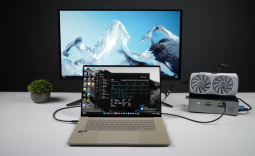 YouTuber benchmarks RTX 4060 on Snapdragon X2 Elite laptop using RTX Spark developer driver
 Dev builds a unique 3D operating system for multitasking, gets terrible performance
 Take-Two boss: 'discs, especially for big games, don't make sense to the consumer'
 Modders are selling RTX 2080 Ti GPUs with 22GB VRAM on eBay for AI use
 Take-Two CEO Strauss Zelnick backs game streaming, says it will help fix hardware prices
 Take-Two CEO on GTA 6's $100 price: 'I think Rockstar got it right; given the hype, we could have made other pricing choices'
 GTA 6 pre-orders demand is 'astonishing and unprecedented,' Take-Two CEO says
 CPS PCCooler YS1200 ATX 3.1 80 PLUS Gold PSU Review
 ASRock X870E Taichi White Review: a premium AM5 motherboard with 10G LAN and WiFi 7
 Asetek Initium Pedal Modular Upgrades Review
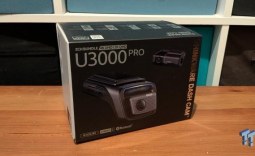 Thinkware U3000 Pro Review - Smart Dashcam with Wi-Fi quirks
 Montech TG3 Mid-Tower Chassis Review
 ASUS ROG Strix X870E-A Gaming WiFI7 Neo Review - A New Enticing Option
 Noctua NL-LC1-36 Liquid CPU Cooler Review
 Logitech G316 X 98 Wired Gaming Keyboard Review - Retro-Inspired Board that Falls a Little Short
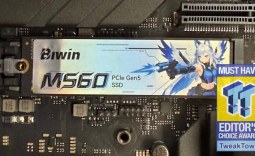 Biwin M560 2TB SSD Review - Best Overall Retail-Ready DRAMless SSD
 Logitech G512 X 98 Analog Mechanical Gaming Keyboard Review - An Innovative Two-in-One
 GIGABYTE's 40 Days of INFINITY celebrates 40 Years of Innovation with stunning GeForce RTX graphics cards and rewards
 I swapped File Explorer for this free file manager and finally got the layout I wanted
 How to tell if someone has been using your Windows PC without your permission
 6 Task Manager tips for troubleshooting Windows performance problems
 ASUS ROG's 20th Anniversary Line-up of Premium PC Gaming Gear has Arrived - Here's Everything You Need to Know
 Six File Explorer tips every Windows user should know
 I switched my PC to encrypted DNS in Windows 11, and browsing felt more private
 Printer Not Working in Windows? How to fix detection, print queues and drivers
 The Ultimate Guide to Personalizing Your Windows 11 Taskbar
 How to Turn Your Windows Laptop Into a Second Monitor with Miracast and Wireless Display in Minutes