







Learn about how TweakTown tests and reviews hardware. As an Amazon Associate, we earn from qualifying purchases. TweakTown may also earn commissions from other affiliate partners at no extra cost to you.
Stay Updated
Follow TweakTown for breaking tech news, reviews, and daily updates.


NVIDIA withdraws overclocking support in latest GTX 900M drivers
Many users are reportedly outraged due to NVIDIA's cancellation of overclocking capabilities for their 900M series - through the latest driver release. Although mobile video cards are not generally overclocked, customers who purchased systems containing GTX 980M GPU's were applying mild overclocks to get the most out of their system.
This driver update is the GeForce R347 (347.29), which has removed its overclocking tools and withdrew support for any third-party tools you may wish to install. Users have been issuing complaints on NVIDIA's official forums, which saw a response from NVIDIA staff. Manuel Guzman replied "unfortunately GeForce Notebooks were not designed to support overclocking. Overclocking is by no means a trivial feature, and depends on thoughtful design of thermal, electrical, and other considerations. By overclocking a notebook, a user risks serious damage to the system that could result in non-functional systems, reduced notebook life, or many other effects."
As seen on HotHardware, Guzman went on to express that allowing mobile GPU overclocking in the first place was a mistake made by his team and should have never been implemented.
Continue reading: NVIDIA withdraws overclocking support in latest GTX 900M drivers (full post)
Recent data breaches forcing companies to rethink cybersecurity fight
Companies are scrambling to defend against cyberattacks in an effort to prevent data breaches, but are struggling to find success. Cybersecurity experts warn they must realize that hackers will likely enter their systems, and have to find ways to defend attacks after unauthorized access already occurs.
Worldwide IT security spending was around $70 billion in 2014, according to Gartner research group estimates - but that figure will top $109 billion by 2020 for just banks, energy and defense contractors. Spending is going to keep increasing with the number of attacks also reaching new levels, experts warn.
"Once an attack has made it past those defenses they're in the gooey center, and getting around is relatively simple," said Ryan Wagner, director of product management at vArmour, in a statement to Reuters. "You need to make sure that when you close the door, the criminal is actually on the other side of the door."
Continue reading: Recent data breaches forcing companies to rethink cybersecurity fight (full post)
Companies must expect cybersecurity attacks, prepare for problems
Insurance companies and other healthcare-related businesses can expect additional cybersecurity scrutiny in the future, after Anthem suffered a major data breach.
To better fight against cyberattacks - and subsequent data breaches - companies should conduct cyber vulnerability risk assessments and penetration testing. Just a few years ago, these types of activities were seen as luxuries that very few companies engaged in, but now business leaders must look to ensure their networks are secure.
Cybercriminals are extremely opportunistic and look for any opportunity they can manipulate for their benefit:
Continue reading: Companies must expect cybersecurity attacks, prepare for problems (full post)
Obama wants an open debate regarding encryption security
President Barack Obama claims he supports strong computer data encryption more than many law enforcement agencies, though sided with them regarding the need to keep the public safe.
To help address the issue, Obama wants a "public conversation" to discuss encryption and security efforts.
"And so this is a public conversation that we should end up having," Obama told Re/code. "I lean probably further in the direction of strong encryption than some do inside of law enforcement. But I am sympathetic to law enforcement because I know the kind of pressure they're under to keep us safe. And it's not as black and white as it's sometimes portrayed."
Continue reading: Obama wants an open debate regarding encryption security (full post)
Microsoft releases Windows 10 Technical Preview for smartphones
Microsoft has had its Windows 10 Technical Preview out for the PC now for a while, but it looks like it's time for the smartphone world to see the release of the Windows 10 Technical Preview.
Select Lumia-branded handsets can have the Windows 10 Technical Preview installed, with the Lumia 630, 635, 636, 638, 730 and 830 smartphones be the only ones capable of having it installed. The flagship Windows Phone-based handsets in the Lumia 1520 and Lumia 930 are not capable of having the Technical Preview installed, which is a shame. This latter two smartphones reportedly can't handle Windows 10 because of the very tight OS partitions.
So if you've got one of the aforementioned Lumia handsets, you can download the Windows 10 Technical Preview from the Windows Insider Program page after signing up for an account.
Continue reading: Microsoft releases Windows 10 Technical Preview for smartphones (full post)
Samsung wants to invest $3.6 billion into OLED panel production
After a not-so-great year with the Galaxy S5 smartphone and its sales, Samsung is wanting to offset those loses by investing a huge $3.6 billion into OLED panel production, where it hopes other manufacturers will buy more of its components, and new OLED screens.
A spokesperson for Samsung Display spoke with Reuters, where they said that a new production line will be manufacturing small and medium-sized OLED panels that would make their way into smartphones, tablets and other small devices - VR headsets, for example. The large investment will take place over the next three years or so.
But it's not just Samsung that is investing into the future of OLED panel production, with its South Korean rival LG spending around $915 million on its TV-sized OLED panel production this year, after it cited increased demand. LG has already spent $726 million on OLED production, too.
Continue reading: Samsung wants to invest $3.6 billion into OLED panel production (full post)
Nexusguard: Expect DDoS cyberattacks aimed at the Internet of Things
The Internet of Things (IoT) offers great connectivity for consumers, but is becoming a soft target for cyberattacks, according to the Nexusguard "2015 Internet Security Trend" report. Of note, distributed denial of service (DDoS) attacks greatly concern cybersecurity researchers, with criminals hoping to interrupt access to connected technology.
The current IoT infrastructure largely relies on shared libraries and a fast development cycle, with security sometimes included as an afterthought. To make matters worse, cybercriminals can hijack poorly secured "Things" and help use them in botnet attacks against other targets.
"With the Internet of Things, people are posting personal or commercially sensitive information," said Terrence Gareau, Chief Scientist of Nexusguard. "It's a very complex question how people are going to secure that data, especially with increasingly sophisticated attacks. Furthermore, hackers may be incentivized to infect IoT devices and use them as an army for botnet attacks. Additionally, the smokescreen of DDoS attacks used for covering up data exfiltration, market manipulation and extortion, are ever more present."
Continue reading: Nexusguard: Expect DDoS cyberattacks aimed at the Internet of Things (full post)
Visa will use smartphone tracking that will help clamp down on fraud
Credit card company Visa plans to release a new location-based feature that will give cardholders the chance to update their location via smartphone. Banks will include the Visa software in their smartphone apps starting in April, and cardholders will have a chance to opt into the program.
When the cardholder's smartphone enters a new city or country, the app updates Visa so they are aware if credit card transactions take place in the new geographic location. This will prevent charges from being declined - and members won't have to call to confirm their whereabouts.
"We will be able to compare the merchant's location to the most recent cellphone location to show it's a less risky transaction," said Mark Nelsen, executive at Visa, in a statement published by the AP.
Continue reading: Visa will use smartphone tracking that will help clamp down on fraud (full post)
Smartphone apps able to track physical activity as good as wearables
Wearable supporters promote fitness trackers and smartwatches as valuable tools to help monitor physical activity and general health - but a new study found that most smartphone applications are just as accurate, according to researchers from the Perelman School of Medicine and the Center for Health Incentives and Behavioral Economics at the University of Pennsylvania.
During a trial conducted at Penn, participants wore the following: a pedometer and two accelerometers, three wearable devices, and two smartphones (one with three apps and the other smartphone running one app. Smartphone data apps tracked step counts that were similar to one another, while the wearables provided greater variance.
"In this study, we wanted to address one of the challenges with using wearable devices: they must be accurate," said Meredith Case, Penn medical student and study author. "After all, if a device is going to be effective at monitoring - and potentially changing - behavior, individuals have to be able to trust the data. We found that smartphone apps are just as accurate as wearable devices for tracking physical activity."
Continue reading: Smartphone apps able to track physical activity as good as wearables (full post)
Xiaomi taking baby steps in United States, but not with smartphones
Chinese smartphone manufacturer Xiaomi plans to begin offering products to consumers in the United States, but that won't include smartphones any time soon. The company will offer smart wristbands, headphones, earbuds and a few other select items in a custom Xiaomi store - but still doesn't want to rush to compete with Apple, Samsung, and other manufacturers in the competitive US market.
"We felt that coming right after launching (the Mi Note) in China was actually ideal, because this is the best product we've ever made," said Hugo Barra, international VP of Xiaomi, in a statement to The Verge. "Our devices are really nice, but this is ultimately nice."
Launching Mi.com is a big deal for the five-year-old Chinese company, and could help create a roadmap towards future smartphone and tablet product launches. Investors and analysts are curious to see if Xiaomi can eventually crack the US mobile market, which remains the most financially lucrative market in the world.
Continue reading: Xiaomi taking baby steps in United States, but not with smartphones (full post)
Report: Google Android under pressure by iPhone, with sales dropping
Google Android smartphone shipments dropped quarter-on-quarter for the first time during Q4 2014, as Apple iOS shipments increased a whopping 90 percent. iPhone shipments rose from 39.3 million up to 74.5 million, while Android sales slid from 217 million down to 206 million, according to ABI Research.
"Google's Android is being attacked by Apple's iOS at the high-end and forked Android and AOSP at the low-end in high growth emerging markets," said Nick Spencer, Senior Practice Director of Mobile Devices at ABI Research. "The Android One initiative has slowed forked Android and ASOP growth outside China, but Apple's success has taken the high-end of the market away from certified Android's premium tier vendors."
Android-powered devices still topped 1 billion throughout 2014 - but a strong sales quarter from Apple shows that it still has plenty of fight left while promoting new iPhones.
Continue reading: Report: Google Android under pressure by iPhone, with sales dropping (full post)
Apple increases iCloud security with two-step verfication security
Apple has today announced a two-step verification process for iMessage and FaceTime applications, announced in the wake of the massive celebrity leak uncovered late last year.
This new system means that users will be asked to supply their username and password alongside a verification code that Apple will send to a device with granted access to these services. This process has been recommended by computer security experts, with them stating the obvious - a hacker gaining control to your username and password is much easier than doing the former and stealing your phone.
The username and password issues most commonly seen are due to people using the same email and password combination for numerous accounts. This means that if a hacker has access to your iCloud, they likely have access to your Facebook, email, Twitter and more.
Continue reading: Apple increases iCloud security with two-step verfication security (full post)
Another great sticker-bombed PC hits our radar - try this one yourself
Thanks to our Facebook fan 'Daniel Ozankan', we've been told about another great sticker-bombed PC project. This CM690 II isn't quite as in-depth as our previously shared HEX GEAR R40 black and white build, but we've shared it because it's something a little more realistically obtainable for most would-be modders( including myself).
We've always been happy to share more simply modded PC builds, there's always $10,000 monster builds out there with multiple GPU's, SSD's and crazy water cooling loops - just like there are a thousand Ferrari's to gawk at online. But how about something you can actually do for yourself?
Janac has gone about modding this Cooler Master CM690II with a 'JDM style' sticker-bomb set, creating a shroud to cover the PSU and radiator - further display the sticker goodness.
Continue reading: Another great sticker-bombed PC hits our radar - try this one yourself (full post)
Samsung rumored to unveil Galaxy S6 without its own bloatware apps
One of the biggest downsides to any of Samsung's mobile devices is that there are so many pre-installed apps and bloatware on the phone, but according to the latest rumors, the Galaxy S6 could arrive without any of its pre-installed apps.
SamMobile is reporting that the Galaxy S6, while it won't have any of the Samsung pre-installed apps installed, would have some of Microsoft's applications such as OneNote, OneDrive, Office Mobile and Skype, which is due to an agreement between Microsoft and Samsung. The Galaxy S6 would arrive not only without the pre-installed applications, but it would also be faster, too. Faster than that of the Galaxy Note 4, which is already a quick handset. There are some nice UI changes to expect too, which you can check out below:
Continue reading: Samsung rumored to unveil Galaxy S6 without its own bloatware apps (full post)
NVIDIA reiterates that TSMC is a 'very important' foundry partner
It has been rumored that NVIDIA would slide out from under those warm cuddles that TSMC provide to manufacturer its GPUs, into the arms of Samsung or GlobalFoundries, but it looks like this won't be happening any time soon.
NVIDIA's CEO and co-founder Jen-Hsun Huang said during the company's recent conference call with investors and financial analysts during the week, where he said that TSMC will continue to be a big partner of theirs, but didn't confirm or deny that it could shift some of its production to another company. Huang said: "We always look at all foundries, and TSMC remains our most strategic [partner]. They are going to continue to be a very important partner for us for the foreseeable future".
TSMC will begin its 16nm FinFET production in the second half of the year, much later than the likes of its competitors in Samsung and GloFo. When it came to talking about the 16nm FinFET process, Huang said: "TSMC is a fabulous supplier, [...] their FinFET technology is excellent. [We have been] working with TSMC on FinFET now for a couple of years, and so we have quite a bit of confidence in their ability to deliver amazing FinFET transistors".
Continue reading: NVIDIA reiterates that TSMC is a 'very important' foundry partner (full post)
Lando Calrissian may return to a galaxy far, far away
With the return of Han Solo, Luke Skywalker and Princess Leia to the next 'Star Wars' sequel 'The Force Awakens', some fans have questioned why the galaxy's smoothest dude Lando Calrissian hasn't yet made return. While Billy Dee Williams returned to the franchise voicing his CG animated character in the 'Star Wars: Rebels' TV show in the episode 'Idiot's Array', Williams has made his first comments on his possible live-action return.
Speaking with Cinelinx to promote his 'Rebels' guest starring role, Williams says: "I have a feeling I'm going to show up. There's nothing I can really discuss about it at this stage... I didn't come in until the second movie. I did 'Empire' and then I did 'Return of the Jedi', but I came in after everyone else was introduced. So I think they're probably proceeding in that way."
The next 'Star Wars' film; 'The Force Awakens' is currently scheduled for a 3D, IMAX and 2D worldwide release on December 18th, 2015.
Continue reading: Lando Calrissian may return to a galaxy far, far away (full post)
Crytek will unveil a new VR experience at GDC 2015 next month
It looks like Crytek is ready to push into the world of VR gaming, as the studio will be showing off a new VR experience on the Oculus Rift at the Game Developers Conference (GDC) 2015 next month.
VRFocus is reporting that Crytek has confirmed with the site that it will be showing off a "a brand new experience" for VR, especially when compared to what it was showing off at last year's GDC. Last year, Crytek was showing off a VR technology demo running in CryEngine on the Oculus Rift DK2 at 100FPS.
Crytek will be showing off its CryEngine running on Android, too. GDC takes place between March 2-6 in San Francisco, California. You can be sure we'll be reporting about any and all things from the event.
Continue reading: Crytek will unveil a new VR experience at GDC 2015 next month (full post)
Ubisoft sees future success for Far Cry game franchise
In less than two months, Ubisoft has sold more than 7 million units of Far Cry 4, and it doesn't look like the game franchise is going to end just yet.
Ubisoft CEO Yves Guillemot didn't confirm a new Far Cry video game, but indicated Far Cry 4 may not be the last title for gamers. "The Far Cry franchise is here for the long-run and is a stronger contender in the shooter genre," Guillemot said during a recent earnings call.
Meanwhile, Ubisoft released the Overrun Far Cry 4 DLC for PC and console gamers, providing new maps, a new vehicle, and a new PvP mode. The game publisher seems focused on releasing updates for Far Cry 4 and will keep any rumblings of a new title under wraps for the time being.
Continue reading: Ubisoft sees future success for Far Cry game franchise (full post)
Cybercriminals want to compromise your identity, steal personal data
Cybercriminals have their pick of vulnerable targets to compromise, and want to focus more on conducting identity theft over just stealing payment information.
After a data breach, especially if a debit or credit card information has been stolen, compromised users ask their banks to cancel cards. However, a data breach in which names, addresses, Social Security numbers and other personal data are stolen give criminals the ability to take their time to launch future attacks.
"We're clearly seeing a shift in the tactics of cybercriminals, with long-term identity theft becoming more of a goal than the immediacy of stealing a credit card number," said Tsion Gonen, VP of strategy for identity and data protection of Gemalto. "Identity theft could lead to the opening of new fraudulent credit accounts, creating false identities for criminal enterprises, or a host of other serious crimes."
Continue reading: Cybercriminals want to compromise your identity, steal personal data (full post)
Damballa: Majority of antivirus solutions fail to detect malware
Antivirus products missed almost 70 percent of malware infections within the first hour of submission, according to Damballa's "Q4 2014 State of Infections Report." In addition, only 66 percent of malware signatures were accurately identified when rescanned within 24 hours of infection - with that number going up to 72 percent within seven days.
Antivirus security companies share malicious file findings with one another, but it takes time for new discoveries to be integrated into their own programs.
"What's clear from these figures is that we have to turn the table on infection 'dwell' time," said Brian Foster, CTO of Damballa. "In much that same way that a flu vaccine hinges on making 'best-guess' decisions about the most prevalent virus strains - AV is only effective for some of the people some of the time. Viruses morph and mutate and new ones can appear in the time it takes to address the most commonly found malware."
Continue reading: Damballa: Majority of antivirus solutions fail to detect malware (full post)
 US Army is giving soldiers time off to play GTA 6 as an incentive
 GTA 6 nears $500 million in pre-order revenue with 77% sales on PS5, per analysis
 Crucial offers a $250 refund for a RAM kit that costs $1,800, forgets to ship back the working module
 Noctua has no plans to introduce RGB lighting or screens to its coolers, instead it wants to focus on raw performance
 Iconic N64 shooter GoldenEye 007 is getting a native PC port
 Diablo 4 is coming to the Switch 2 with both expansions in a special Age of Hatred Collection
 CXMT DDR5 memory hits 9,000 MT/s speed milestone on AMD AM5 motherboard
 Sony says PlayStation 6 release date and pricing are still up in the air
 Lexar's DRAM-less Thor Ultra series PCIe Gen 5 SSDs are built for desktop and laptop PC gaming
 Gaming monitors are next in line for a price hike as manufacturers can no longer absorb costs
 ASUS ROG Strix XG129C Review: A $199 Gaming Monitor You Don't Play Games On
 Cooler Master HAF II 500 Mid-Tower Chassis Review
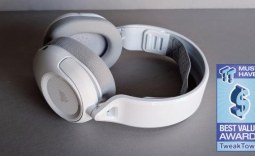 Corsair HS35 v3 Wireless Gaming Headset Review - An Affordable Winner
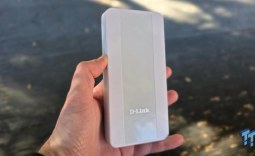 D-Link F518 5G Wi‑Fi 6 AX1800 Mobile Hotspot Review: All-Day Mobile Hotspot
 Bose Lifestyle Ultra Speaker Review - Impressively Detailed Room-Filling Sound
 MSI Z890 Gaming Plus WIFI6E Review - Z890 for under $200
 Mortal Kombat (1995) 4K Ultra HD Blu-ray Review
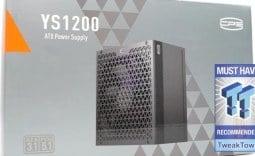 CPS PCCOOLER YS1200 ATX 3.1 80 PLUS Gold PSU Review
 ASRock X870E Taichi White Review: a premium AM5 motherboard with 10G LAN and WiFi 7
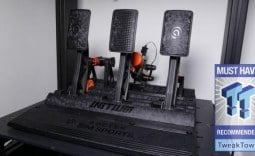 Asetek Initium Pedal Modular Upgrades Review
 Using Multiple Monitors? Change these Windows settings for a Better Experience
 Windows Sandbox is The Windows Security Feature Most People Never Use
 I ditched the Windows 11 context menu for this open-source tool, and here's why
 Windows 11 may be encrypting your drive already, and I checked where my recovery key went
 GIGABYTE's 40 Days of INFINITY celebrates 40 Years of Innovation with stunning GeForce RTX graphics cards and rewards
 I swapped File Explorer for this free file manager and finally got the layout I wanted
 How to tell if someone has been using your Windows PC without your permission
 6 Task Manager tips for troubleshooting Windows performance problems
 ASUS ROG's 20th Anniversary Line-up of Premium PC Gaming Gear has Arrived - Here's Everything You Need to Know
 Six File Explorer tips every Windows user should know