







Learn about how TweakTown tests and reviews hardware. As an Amazon Associate, we earn from qualifying purchases. TweakTown may also earn commissions from other affiliate partners at no extra cost to you.
Stay Updated
Follow TweakTown for breaking tech news, reviews, and daily updates.


Hubble snaps a beautiful nebula & receives a new status update
NGC 6891 exists in the constellation Delphinus, or the Dolphin, and is a bright, asymmetrical planetary nebula.

NGC 6891 is a bright, asymmetrical planetary nebula. It is made from gas that has been ionized by the central white dwarf star, stripping electrons from hydrogen atoms in the nebula. The glowing gas of the nebula results from light emitted as electrons lose energy recombining with hydrogen nuclei.
Hubble has captured this image, showing several structural elements, including a spherical outer halo, expanding faster than the inner nebula, and at least two ellipsoidal shells. Astronomers estimate from their motion that one of the shells is 4,800 years old, while the outer halo is 28,000 years old. Also revealed in the nebula's interior are filaments and knots surrounding the white dwarf star in the center. These elements indicate periodic outbursts radiating from the dying star.
Continue reading: Hubble snaps a beautiful nebula & receives a new status update (full post)
$414 million of Bitcoin was just purchased by one company
An announcement from the CEO of MicroStrategy has revealed the company has purchased a whopping $414.4 million worth of Bitcoin.

The news comes from MicroStrategy CEO Michael Saylor, who announced via his personal Twitter account that MicroStrategy has purchased 7,002 Bitcoins valued at $414.4 million in cash at an average price of %59,187 per Bitcoin. Saylor goes on to state that MicroStrategy currently owns 121,044 Bitcoins bought for an average price of $29,534, which is currently valued at $3.57 billion.
Cointelegraph reports that MicroStrategy sold 571,001 shares of its company at $732.16 a share for approximately $414.4 million in cash. The analytics company is no stranger to picking up large quantities of Bitcoin, as it has purchased Bitcoin almost every quarter since it announced that it was declaring Bitcoin as a treasury reserve asset back in August 2020. If you are interested in reading more about this story, check out this link here.
Continue reading: $414 million of Bitcoin was just purchased by one company (full post)
Comet to approach Earth very soon, first visit for about 70,000 years
A comet that was first discovered at the beginning of the year will soon approach Earth. It will be its first visit for about 70,000 years.

Gregory J. Leonard, a senior researcher at the Department of Planetary Sciences at the University of Arizona, discovered the comet at the Mount Lemmon Observatory, which has been appropriately named C/2021 A1 Leonard. The comet is now expected to make a close approach to Earth in December, and researchers are hoping that it will be close enough and bright enough to be visible with the naked eye. Researchers suspect that C/2021 A1 Leonard may be visible for several days despite the speed at which it will be traveling by Earth.
So, why hasn't it flown past Earth for 70,000 years? Research suggests that the comet's orbit is severely elliptical. A good way to envision this is to picture Earth's circular orbit around the Sun and change the circle shape into an oval. C/2021 A1 Leonard is due to enter the inner solar system, where it will then gain speed and be shot off in slingshot-like fashion by the immense gravity of the Sun back into deep space, where it will remain there for some tens of thousands of years.
Continue reading: Comet to approach Earth very soon, first visit for about 70,000 years (full post)
Amazon Cyber Monday deals are insane: laptops up to 22% off
If you are after awesome deals on technology, then Amazon's Cyber Monday deals are exactly what you need to check out.

Amazon has slashed prices across a large range of technology and electronic products, and one range of items seeing massive price reductions is laptops and Chromebooks. Looking at Amazon's Cyber Monday listings for discounts on Chromebooks and laptops, you will notice a variety of different brands have been discounted. Known laptop and Chromebook brands such as Lenovo, Acer, HP, and ASUS are included.
If you were thinking about getting a new laptop or Chromebook or were considering changing from a laptop to a Chromebook, now is definitely the time to have a look at some prices. Additionally, sales such as these are an excellent opportunity to secure a Christmas present for a technology-inclined friend, child, or family member. In the entirety of this article, you will find some of the deals listed. To see the full list check out this link here.
Continue reading: Amazon Cyber Monday deals are insane: laptops up to 22% off (full post)
NASA wants your help getting a nuclear reactor to the Moon
A statement from the Department of Energy's Idaho National Laboratory (INL) are partnering with NASA to get a nuclear reactor onto the Moon within the next 10 years.

According to the statement, the INL is partnering with NASA to figure out a way to get a uranium-powered nuclear reactor to fit inside a 12-foot-long by 18-foot-wide rocket. Both agencies are currently seeking proposals from the private industry and the proposal has requirements, which are as follows; the reactor must be a uranium-powered nuclear fission reactor that weighs no more than 13,200 pounds, that gives at least 40 kilowatts of power for at least 10 years and has controls to make sure the temperature is regulated.
Continue reading: NASA wants your help getting a nuclear reactor to the Moon (full post)
Scientists shrunk a working camera to the size of a grain of salt
The possibilities are endless with micro-cameras as they could be used for health purposes such as detecting problems within the human body, or being outfitted to robots that have severe size and weight requirements.

However, the technology has quite made it there yet as previous creations of nano or micro cameras haven't been able to produce high-quality images with accurate color. Now, researchers from Princeton and the University of Washington have overcome some of those previous hurdles with a new micro-camera that is about the size of a grain of salt.
Instead of using curved glass as a typical camera would, the tiny camera uses what is called a "metasurface", which is about half a millimeter wide and is covered in cylindrical posts that are about the same size as the virus HIV. All of these posts seen on the metasurface serve as an optical antenna, and when partnered with machine learning algorithms, the camera is able to produce an image that far exceeds previous creations in its category.
Continue reading: Scientists shrunk a working camera to the size of a grain of salt (full post)
Blast from the Sun hits Earth, photographer captures the aftermath
Space weather forecasters announced that the Earth was going to be sideswiped by a blast from the Sun, and now the blast has arrived.

On November 27, forecasters predicted that a coronal mass ejection (CME) was going to hit Earth and possibly cause G1-class geomagnetic storms, and as predicted, the blast from the Sun hit Earth's magnetic field but didn't cause any geomagnetic storms. Instruments monitoring the Sun observed a plasma filament snapping, which caused a "canyon of fire" to be seen for more than six hours.
Spaceweather watches predicted that the CME could cause Arctic auroras to appear, which is a fantastic opportunity for incredible photographs. As Earth passed into the wake of the CME, a crack was opened in Earth's magnetic field, which caused the solar wind to hit the atmosphere, sparking an aurora to be created around the Arctic Circle. An aurora tour guide, Marianne Bergli, photographed the above aurora from Tromso, Norway. Bergli said, "My guests were a little skeptical at first ... then Boom! Wow, Fantastic. The colors were absolutely amazing."
Continue reading: Blast from the Sun hits Earth, photographer captures the aftermath (full post)
Meteor caught on video lighting up the night sky over the US
The American Meteor Society (AMS) has confirmed multiple sightings of a fireball lighting up the night sky over multiple US states.

A new event has been confirmed on the American Meteor Society website details a fireball sighting reported by 34 individuals across L, AR, GA, MS, and TN on Sunday, November 28th, 2021, at around 23:50 UT. For those that don't know, a fireball is a meteor that has entered Earth's atmosphere and has begun burning up. For a meteor to be considered a fireball, it must shine brighter than the planet Venus.
The above video was captured and sent to the AMS by Justin Oden from Dora, Alabama. The video shows the fireball entering the field of view in the top right and exponentially getting brighter and brighter. The AMS event log states that Oden saw the fireball for around 3.5 seconds before it disappeared in the night sky. If you are interested in reading more about these fireball sightings, check out the AMS event log here.
Continue reading: Meteor caught on video lighting up the night sky over the US (full post)
International Space Station captured in stunning high-res photographs
A collection of images of the International Space Station (ISS) have been published by NASA, showcasing the floating laboratory in all its glory.

The images were taken back on November 8 when the SpaceX Crew Dragon capsule Endeavor was leaving the ISS for a return journey back to Earth with four astronauts. Before Endeavor made its way back down to the surface of Earth, it did a complete 360-degree fly-around the ISS, which Space.com reports is a maneuver that hasn't been performed since NASA retired its space shuttle fleet back in 2011. So, why fly around the ISS?
Besides the fun that the astronauts would have had flying around the ISS, the maneuver was also practical as it assisted Endeavors navigation system and allowed for astronauts to take photos of the ISS from angles that aren't usually visible to ISS managers. The photos are truly stunning and capture an incredible feat the human civilization has achieved. The ISS is a $100 billion floating laboratory used by many nations around the world, and these images represent a successful joint effort between many countries. What an achievement!
Continue reading: International Space Station captured in stunning high-res photographs (full post)
This is your last chance to save $3500 on Samsung's huge 85-inch 8K TV
Samsung has a big discount on its gargantuan 85-inch 8K TV, offering an instant savings of $3500 bringing the original $9000 price down to "just" $5500, and that this is the last chance to save $3500 on the 85-inch 8K TV.

This is the very latest 2021 model with the 8K side of things giving you a huge 7680 x 4320 @ 60Hz, while 4K is offered at a much-smoother 120Hz. In Samsung's own words: "Feel the power of every frame with 33 million pixels that provide an incredible sense depth and clarity, all with four times the resolution of 4K".
You can buy the 85-inch Class QN800A Samsung Neo QLED 8K Smart TV for $3500 discount right here.
Continue reading: This is your last chance to save $3500 on Samsung's huge 85-inch 8K TV (full post)
Innosilicon Fantasy One GPU: up to 32GB of ultra-fast GDDR6X memory
Innosilicon has just held its "Fantasy One GPU Product Press Conference" where it unveiled the new Fantasy One GPU family, and a few interesting new graphics cards.

Starting with the Innosilicon Fantasy One GPU itself, which is based on a multi-chip (chiplet) design and flagship dual-GPU graphics card in the form of the new "Type-B" dual-GPU solution uses 2 x Fantasy One GPUs and are connected using Innosilicon's just-announced Innolink interface.
Innosilicon's dual-GPU card has up to 10 TFLOPs of compute performance, and can handle 32 simultaneous 1080p 60FPS streams, or up to 64 streams at 720p 30FPS. The dual-GPU beast packs 32GB of GDDR6X memory, but they're super limited by the 128-bit memory bus on each of the respective Fantasy One GPUs.
Continue reading: Innosilicon Fantasy One GPU: up to 32GB of ultra-fast GDDR6X memory (full post)
AI has designed the first living robot, makes its own robot babies
Well, the moment has come... our AI "xenobot" self-replicating robots are going to rule us all and we won't be able to stop it.

But seriously, researchers have just announced they've created tiny living robots capable of self-replicating themselves inside of a dish by pushing loose cells together. They're called "xenobots" and they're made from frog cells, representing the first time a multicellular organism has found a way to reproduce in this particular way.
The cells collect together in clumps where they'll form a sphere that would have around 3000 cells, taking around 5 days to happen. Each individual clump is around half a millimeter wide and is covered in a minuscule hair-like structure, which sounds weird but the hair-like structure acts like flexible oars in water... they move the xenobots forwards in corkscrew paths, explains Joshua Bongard, senior author and computer scientist at the University of Vermont.
Continue reading: AI has designed the first living robot, makes its own robot babies (full post)
SAPPHIRE GPRO X080 cryptomining GPU: Navi 22 + 10GB GDDR6 @ 41MH/s
SAPPHIRE is about to introduce a couple of new crypto-mining graphics cards, with the new SAPPHIRE GPRO X080 and GPRO X060 models.

SAPPHIRE's family of GPRO graphics card is usually found in workstations, but the new GPRO X080 and X060 are purely crypto-mining graphics cards. SAPPHIRE says that the GPRO X080 will give you 38MH/s on Ethash (Ethereum algorithm) with its default 165W TGP, while when optimized that will increase to 41.6MH/s for only 93W.
The SAPPHIRE GPRO X080 is based on the Navi 22 GPU with 2304 Stream Processors clocked at 2132MHz, it has an interesting allotment of 10GB GDDR6 memory on 160-bit memory bus and clocked at 16Gbps. The card requires a PCIe 4.0 x16 slot and only works with Linux. There are no display outputs on the card, so don't go thinking you can buy it and play Crysis.
Continue reading: SAPPHIRE GPRO X080 cryptomining GPU: Navi 22 + 10GB GDDR6 @ 41MH/s (full post)
Palit unleashes GeForce RTX 3060 Ti ColorPOP, has color-shifting paint
Palit has just unleashed its beautiful and very unique new ColorPOP graphics card series, with the introduction of the new Palit GeForce RTX 3060 Ti ColorPOP graphics card.

The new Palit GeForce RTX 3060 Ti ColorPOP is a full-custom design with a 2.7-slot cooling solution, with Palit changing things up by rebranding their GamingPro series to the new ColorPOP series. The changes are extensive: new colors, new stickers, and of course; new packaging.
What is special here with the Palit GeForce RTX 3060 Ti ColorPOP is that it features beautiful color-shifting paint dabbed on its shroud and backplate, where the card will flex between different colors including green, violet, and blue when you look at it from different angles and lighting conditions.
Continue reading: Palit unleashes GeForce RTX 3060 Ti ColorPOP, has color-shifting paint (full post)
NVIDIA GeForce RTX 3090 Ti confirmed: will rock Micron's 21Gbps GDDR6X
NVIDIA is currently preparing another flagship graphics card for a big unveiling in January 2022, with the purported GeForce RTX 3090 Ti graphics card that will rock Micron's even-more-ultra-fast 21Gbps GDDR6X memory.

The current flagship NVIDIA GeForce RTX 3090 arrives with 24GB of GDDR6X memory clocked at 19.5Gbps, but it easily overclocks to 21Gbps and barely offers any perceivable performance difference. But, the new GeForce RTX 3090 Ti will not only have upgraded GDDR6X memory (21Gbps vs 19.5Gbps) but with it, it'll have slightly more memory bandwidth at 1008GB/sec (1TB/sec) compared to 936GB/sec on the RTX 3090.
Inside, NVIDIA is expected to use the GA102-350 GPU which bumps up everything across the board: 84 GPU clusters (versus 82 on the GA102-300 inside of the RTX 3090) while there's 10752 CUDA cores (up from 10496 CUDA cores), 84 RT Cores (up from 82 RT Cores) and finally: 336 Tensors/TMUs (up from 328 Tensors/TMUs).
Continue reading: NVIDIA GeForce RTX 3090 Ti confirmed: will rock Micron's 21Gbps GDDR6X (full post)
Watch how a black hole destroys stars in this supercomputer simulation
Researchers have published a new study in The Astrophysical Journal, simulating tidal disruptions and analyzing their dependence on stellar and black hole mass.

Using supercomputer simulations, the research team modeled the outcome of eight different stars approaching a black hole with a mass of one million times our Sun. All of the stars are stretched and deformed by the gravitational forces of the black hole, undergoing spaghettification, with gravity destroying some entirely. When destroyed in a "tidal disruption event," the star is pulled apart into a long stream of gas and absorbed by the black hole.
The simulations are the first to combine realistic stellar density models with the physical effects of Einstein's general theory of relativity. Simulated stars had masses ranging from one-tenth to ten times the mass of the Sun. The team found that the star's survival depends more on its density than its mass alone.
Continue reading: Watch how a black hole destroys stars in this supercomputer simulation (full post)
Samsung Lifestyle TVs up to 33% off in Amazon Black Friday deals
In addition to Samsung's more traditional QLED offerings, which have also gone on sale on Amazon for Black Friday, Samsung's range of lifestyle TVs are up for grabs with some sweet deals.

The lifestyle range includes The Frame, which mimics a regular photo frame and can be put into Art Mode to display art and complement the room's aesthetic with high-quality paintings or photographs. The Frame is available in 85", 75", 65", 55", 50", and 43" sizes.
The Terrace is another series under the lifestyle range designed for outdoor use and weather resistance. It comes in 75", 65", and 55" sizes for partial sun rating and 75" and 65" for full sun variants.
Continue reading: Samsung Lifestyle TVs up to 33% off in Amazon Black Friday deals (full post)
Trees are greening sooner than they should be, and new data shows why
Lin Meng won the grand prize for 2021's Science & SciLifeLab Prize for Young Scientists for her research into how city environments impact tree phenology.

"Phenology is the study of periodic events in biological life cycles and how these are influenced by seasonal and interannual variations in climate, as well as habitat factor," according to Wikipedia. Meng set out to determine how global warming and bright artificial lighting conditions in cities changed when trees started growing leaves in spring.
Previous research has shown that higher temperatures impact vegetation growth in cities, so the following question is how global warming affects that. Meng analyzed satellite data spanning 2001 to 2014 and 85 cities in the United States to find when trees began growing leaves. Trees "greened up" an average of six days earlier and were responding more rapidly to climate change in urban areas than in rural areas.
Continue reading: Trees are greening sooner than they should be, and new data shows why (full post)
Huge deals on Shure headphones for Black Friday, up to 29% off!
Black Friday is here on Amazon, and Shure has listed its iconic SE range of earphones for some significant discounts.

The SE range of in-ear headphones has a professional form factor perfect for live performers and studio monitoring, with wires arching up and around the ear to trail away behind the body subtly. All of the headphones in the range have wires which can be disconnected at the base of each earpiece, so you never have to worry about binning any of them due to broken cables, which is super reassuring given the cost of the higher-end offerings.
This interchangeability also enables Bluetooth via an accessory Shure also sells. As you opt for more expensive options, more drivers are added to each earpiece, for up to four per earpiece, dedicated to different frequencies for detailed and expansive sound separation.
Continue reading: Huge deals on Shure headphones for Black Friday, up to 29% off! (full post)
New Russian docking module Prichal successfully joins the ISS
Prichal, the new Russian docking module, has successfully arrived at the International Space Station (ISS).

Prichal joined with Russia's Nauka module aboard the ISS at 15:19 UTC, slightly ahead of schedule, with the docking hooks closing at 15:25 UTC. The module arrived with around 2,200 pounds (1,000 kilograms) of cargo and supplies for the crew aboard the ISS.
Continue reading: New Russian docking module Prichal successfully joins the ISS (full post)
 Xbox console gamers get free copies of Ubisoft titles on PC
 Xbox outage turns ugly as players use Xbox App glitch to download and play titles for free
 Xbox servers go down just days after PlayStation outage, giving us a glimpse into our digital-only future
 Xbox Series X survives a devastating house fire and still works!
 'PS5 is currently the Call of Duty box,' analyst says after Black Ops II re-release takes over PlayStation
 Colorful and MSI RTX 50 graphics card prices spike in China as GDDR6 and GDDR7 memory costs rise
 SEGA won't abandon its physical culture, but stresses importance of digital for sales growth
 PC classic Myst returns with mysterious new Project Mudfish
 Minecraft now recommends 16GB of RAM and a much newer CPU
 007 First Light ditches Denuvo DRM just as first patch arrives packing a ton of bug fixes and some new content
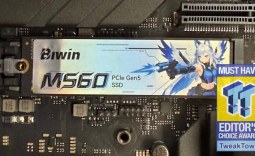 Biwin M560 2TB SSD Review - Best Overall Retail-Ready DRAMless SSD
 Logitech G512 X 98 Analog Mechanical Gaming Keyboard Review - An Innovative Two-in-One
 Thrustmaster T.Flight HOTAS 5 MSFS Edition Review
 SteelSeries Arctis Nova Pro Omni Wireless Headset Review - One Headset to Rule Them All
 SteelSeries Arctis Nova 7 Wireless Gen 2 Headset Review - New and Improved, But Is It Enough?
 AMD Ryzen 7 7700X3D Review - Days of Future Past
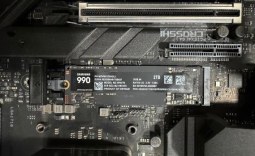 Samsung 990 2TB SSD Review - Ninth Gen QLC at PCIe Gen4 Speeds
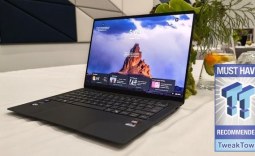 ASUS ExpertBook Ultra (Panther Lake) 14" Business Laptop Review
 ASUS ROG Raikiri II Xbox Wireless Controller Review - Ready to Take Control
 MOZA FMP18 Panel Bundle Review: authentic F/A-18 Hornet cockpit controls for flight sims
 Printer Not Working in Windows? How to fix detection, print queues and drivers
 The Ultimate Guide to Personalizing Your Windows 11 Taskbar
 How to Turn Your Windows Laptop Into a Second Monitor with Miracast and Wireless Display in Minutes
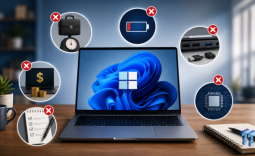 6 Mistakes to Avoid When Buying a Windows Laptop
 I capped Windows Update's bandwidth with Delivery Optimization, and my downloads stopped choking
 I use this decade-old free tool that finds files faster than Windows Search does
 I install and update most of my apps with this Windows command now, and I stopped downloading sketchy installers
 Hisense U6SF 65-inch MiniLED TV: High Performance Meets Leisurely Convenience
 I stopped digging through Windows menus after I set up this one folder
 Don't sell your Windows laptop until you do these things