







Mobile Devices - Page 153
Mobile device news - smartphones, tablets, iPhone, Android, and foldables. Launches and trends from TweakTown. - Page 153
Stay Updated
Follow TweakTown for breaking tech news, reviews, and daily updates.


As an Amazon Associate, we earn from qualifying purchases. TweakTown may also earn commissions from other affiliate partners at no extra cost to you.
ROCKI is a wireless home music system that will change your world
There's always something exciting coming out, and this is something you should prepare for when learning about ROCKI. ROCKI is a small device that connects to any audio system you own. ROCKI is a little startup which is run by a team of "audio and tech enthusiasts" that want to create a music product we all want to own.
Once it's physically connected, you can control the ROCKI device with the ROCKI app from any compatible smartphone or tablet. From here, you can play music from your device, to the ROCKI and thus your sound system, wirelessly. ROCKI features 802.11 b/g/n access, so you can be a few rooms away enjoying your music.
The ROCKI app is capable of pulling all of the music from your device, home network through DLNA and UPnP, or even online streaming services. ROCKI will be adding even more features into the already feature-packed device, with global crowdfunding beginning very soon. We'll keep you posted on all things ROCKI as it happens. You can go and 'like' the ROCKI Facebook page right here!
Continue reading: ROCKI is a wireless home music system that will change your world (full post)
Retina iPad mini will not be released this year due to supply issues
One of the biggest downsides with Apple's iPad mini is its truly shocking 1024x768 resolution, in a world controlled by "Retina" displays unleashed by the company on its full-sized iPad and Retina-based Macs, the iPad mini is well and truly behind.
Now it looks like the company won't be releasing a refreshed, higher resolution iPad mini this year at all, according to Cantor Fitzgerald analyst Brian White, who recently met with several electronics manufacturers and suppliers in both China and Taiwan. His sources backed up claims that Apple is having issues getting the refreshed iPad mini to the market.
The original iPad min faced supply issues thanks to manufacturing difficulties, with Apple facing deja vu over the refreshed iPad mini.
Continue reading: Retina iPad mini will not be released this year due to supply issues (full post)
Nexus 5 to feature 4.95-inch 1080p display and Snapdragon 800 SoC
It looks like we have more of an idea of what to expect from Google and LG's upcoming Nexus 5 smartphone thanks to a leaked technical manual on the smartphone. The manual is a 281-page document, which is filled with troubleshooting materials, circuit schematics and pinouts, and much more.
It is pretty much identical to the LG G2 smartphone, with some changes. The back of the Nexus 5 is featured, where we can see the Nexus logo placed vertically, like the 2013 Nexus 7, which we absolutely loved by the way. The specs on the Nexus 5 are definitely something worth getting excited over, check them out:
This could all be a lie, but I think this is what we should expect from the Nexus 5. I'm hoping to see LG and Google push a price of $399-$449 on this new device, starting at 32GB of on-board storage. I'm hoping to see a 64GB model, which would be nice, too. This will be a day one purchase for me, that's for sure.
Continue reading: Nexus 5 to feature 4.95-inch 1080p display and Snapdragon 800 SoC (full post)
New reports say that Samsung boosted benchmarks on Galaxy Note 3
Samsung's Galaxy Note 3 may not be as powerful as once believed. A new report has surfaced that is suggesting that Samsung designed the phablet to artificially enhance its scores in popular benchmarking apps. Ars Technica says that they discovered the inflated scores after their test came back higher than anticipated.
The "juicing" is taking place when popular, well known benchmarking apps are ran on the device. It locks the CPU's clock speed to 2.3GHz with all cores running wide open. Unfortunately when lesser known benchmarking applications are ran, the CPU is allowed to throttle itself down, and even put cores to sleep while switching power modes. This is how the phone handles normal apps, and is the way things are supposed to be.
By locking the CPU clock and forcing all cores to stay on, the phone post the best benchmark scores possible. These results are useless for real-world comparisons, and give consumers a false sense of performance. During normal use, the Galaxy Note 3 will turn off cores and even switch power cycles based on the load the CPU is seeing from the app. The correct way to benchmark a phone, is to let its cores run as they would normally, which gives a better real-world result.
Continue reading: New reports say that Samsung boosted benchmarks on Galaxy Note 3 (full post)
Samsung to make its three top smartphones work with Galaxy Gear soon
Something that should not even be news and should just be 'the way it is' is the fact that Samsung has announced that its Galaxy S III, S4 and Note II smartphones will work with its Galaxy Gear smartwatch this year.
The South Korean giant will launch its Galaxy Gear this week, so it's perfect timing for this announcement. When Samsung announced its Galaxy Gear, it said it would only work with a single smartphone: the Galaxy Note III, which no one in the US owns yet. The Note III launches in the US on the same day as the Galaxy Gear smartwatch.
Samsung will push out updates later this year to make the Galaxy Gear smartwatch work with its Galaxy S III, Galaxy S4 and Note II smartphones. I really don't understand why Samsung didn't build support in for its flagship devices, considering there's tens of millions of them out there.
Continue reading: Samsung to make its three top smartphones work with Galaxy Gear soon (full post)
Android KitKat leaks show the Nexus 5 featuring wireless charging
A newly leaked log file from Android 4.4 KitKat is suggesting that Google's upcoming Nexus 5 smartphone could include an exciting new feature. If the leaked code (around 1,330,000 lines total) is correct, the new Nexus 5 will indeed feature a full HD resolution of 1920x1080-pixels.
More interesting, however, is a little snippet of code that alludes to the the Nexus 5 sporting a fancy new wireless charging feature that could see the removal of a USB port all together. While I feel that the removal of the port would be a bad idea, I really hope that this kicks off a new era of wireless charging and that all of the next-gen phones will remove the tether and break into the realm of cord free charging!
Continue reading: Android KitKat leaks show the Nexus 5 featuring wireless charging (full post)
iPad loses its lead in the tablet market to Android-based slates
The iPad came out years ago now and has been enjoying being the leader of the tablet market share game from Android-based slates, but that ends now. New numbers are in from ABI Research, which reports that during Q2 2013, Android-based tablets overtook Apple iPads in terms of volume.
The total amount of money spent on the two tablets, iPads and Android-based slates, was reportedly split nearly down the center. This is a big difference, because normally Apple has enjoyed throwing its arms in and raking in all of that glorious cash. The benefit Android has over iPad is that there are plenty of manufacturers making Android-based slates, versus only Apple making the iPad.
This ends up with no one being the true leader against Apple, so it's not Samsung, ASUS or any other manufacturer. ABI Research's numbers indicate that 60% of iPads sold in Q2 2013 were iPad minis, and not the full-sized iPad.
Continue reading: iPad loses its lead in the tablet market to Android-based slates (full post)
BlackBerry's failed Z10 cost the company almost $1 billion in losses
We are finding out why BlackBerry decided to cancel its investors call this afternoon. The company has released its financial report that suggests that it lost almost $1 billion due to its flagship Z10 failing to excite customers. Last quarter, the Z10 accounted for more than $934 million in losses with an overall loss of $965 million.
The BlackBerry Z10 is not solely responsible for the company's downfall, however. Years of stagnant progress and lack of innovation led up to the once king of smartphones being rendered a beggar peasant among kings. The company reported only $1.6 billion for the quarter, which was off by almost 50 percent from last year. It did manage to ship 3.7 million smartphones, which pales in comparison to Apple who claimed 15 million iPhones last weekend alone.
Continue reading: BlackBerry's failed Z10 cost the company almost $1 billion in losses (full post)
Benchmarks leak on Google's upcoming Nexus 5, appears to dominate all
Google's Nexus smartphones have always been powerful and respectable devices in the Android world, and the upcoming Nexus 5 is shaping up to the biggest and baddest flagship for Google ever. Today, benchmark results have leaked that are giving us a clue as to just how powerful the new Nexus 5 will be.
The benchmarks suggest that the Nexus 5 will be the top model in its class in terms of performance, graphics, and hardware specifications. One benchmark even suggests that graphics performance will be on-par with or better than Apple's new 64-bit iPhone 5S. Additionally, the Nexus 5 will feature a full HD screen, which is a much higher resolution than the iPhone 5S.
Other rumored specifications include a quad-core Qualcomm Snapdragon 800 processor, 3GB of RAM, a 13-megapixel camera, and a 7-band LTE radio. It will run Android 4.4 KitKat and will be upgradeable to Android 5.0, if Google's past upgrade maps are any indication.
Continue reading: Benchmarks leak on Google's upcoming Nexus 5, appears to dominate all (full post)
Amazon unveils next-gen Kindle Fire HDX slates, and more
Amazon has announced its third generation Kindle Fire slates, which bring the Kindle Fire HDX branding with it. The US retail giant has also unveiled a refreshed version of its Kindle Fire HD tablets, which have seen a drop in price.
The Kindle Fire HDX arrives in two sizes: 7-inch and 8.9 inches, with both slates seeing some nice increases in horsepower and specs. Both HDX models feature the Qualcomm Snapdragon 800 SoC (2.2GHz quad-core processor), 2GB of RAM, 16/32/64GB of on-board flash storage, and high resolution displays. The 7-inch model sees a 1920x1200-pixel display (323PPI) but the 8.9-inch features a gorgeous 2560x1600-pixel panel which provides 339PPI.
The 8.9-inch HDX also features an 8-megapixel rear-facing camera, too. Better yet, the 8.9-inch HDX is 34% lighter than its predecessor. Moving onto the software side of things, the new HDX slates are running Fire OS 3.0 "Mojito" which provides a bunch of new features such as X-Ray for Music, Prime Instant Video downloads and updates to all of the pre-installed apps.
Continue reading: Amazon unveils next-gen Kindle Fire HDX slates, and more (full post)
Samsung to unveil 'curved display smartphone' next month
Samsung used its event today to show off the Galaxy Gear and Galaxy Note 3, but took some time away from the event to tease the world by saying that the South Korean giant plans to "introduce a curved display smartphone in October."
There's no more information apart from those handful of words, no price, release date, or what OS it would arrive in. We could see Samsung unleash its Tizen handset tease with the curved display, or the Galaxy S5. We could even expect a totally new handset, or new range of smartphones from Samsung, too.
We have seen Samsung show off a flexible OLED screen, all the way back in January at CES 2013. Could this new curved display smartphone be the fruits of Samsung's labor? We don't have long to wait, folks.
Continue reading: Samsung to unveil 'curved display smartphone' next month (full post)
Samsung's Galaxy S5 to get a metal unibody as the iPhone goes plastic
Today, more rumors have surfaced regarding Samsung moving to a metal unibody design for its upcoming flagship, the Galaxy S5. The phone is set to debut during the second quarter of 2014 and if reports are true, it will ditch the flimsy plastic exterior in favor for a more elegant and sturdy metal chassis.
While arguably one of the best smartphones ever made, Samsung has received a lot of criticism regarding the plastic body construction of its Galaxy S4. HTC, on the other hand, has received nothing but praise for its aluminum unibodied HTC One, even though it features a slower processor and an older revision of Android.
Additionally, Samsung has undoubtedly taken note to the following Apple has with its metal unibody iPhone 5 and 5S. According to a new report from the Taipei Times, a Taiwan-based parts supplier will be receiving orders very soon for a metal casing that is set to house the new Galaxy S5. These supply chain rumors are often true, and with similar rumors been released earlier in the year, we agree that Samsung will most likely release a unibody Galaxy S5 next year.
Continue reading: Samsung's Galaxy S5 to get a metal unibody as the iPhone goes plastic (full post)
Xiaomi's MI3 is the 'fastest smartphone ever', costs just $327
It wasn't too long ago that Hugo Barra joined Chinese manufacturer, Xiaomi, but if you forgot who Barra is, well, he was only the former Vice President of Global for Google.
The first smartphone to launch while Barra is with the company is the new MI3, which is quite the smartphone indeed. We have multiple versions of the phone, which are all limited to China unfortunately. The first is a WCDMA model, with the second being a CDMA2000 model. These two models will feature the Qualcomm Snapdragon 800 processor, with four cores clocked in at 2.3GHz each.
If you purchase the TD-SCDMA version for China Mobile, then you'll enjoy an NVIDIA Tegra 4 SoC. All variations of the MI3 feature 2GB of RAM, but when Xiaomi claim "the fastest smartphone ever" it is referring to the MSM8974AB model which features the Snapdragon CPU, which boosts the clock speeds for the memory interface and Adreno 330 GPU.
Continue reading: Xiaomi's MI3 is the 'fastest smartphone ever', costs just $327 (full post)
Microsoft unveils the Surface 2 which runs Windows RT 8.1
Microsoft also announced its Surface 2 slate today, which is powered by NVIDIA's Tegra 4 SoC. Its bigger brother, the Surface Pro 2 is powered by a full Intel fourth-generation Core processor.
Microsoft wants to see people get more productive on the Surface 2, instead of consumption-only devices like the iPad. It seems as though Microsoft was just as excited about the Surface 2 as it was for the Surface Pro 2, which is great. The Surface 2 is both lighter and thinner than its predecessor, and it also comes in silver, too.
The display has been increased to 1920x1080, which is a great bump for the tablet over its predecessor. Microsoft says it has "increased the CPU speed dramatically" on Surface 2. The Surface logo is on the rear of the device, instead of the Windows logo, just like the refreshed Surface Pro 2.
Continue reading: Microsoft unveils the Surface 2 which runs Windows RT 8.1 (full post)
Microsoft announces the Surface Pro 2, packs Haswell processor
We've been hearing about the Surface Pro 2 tablet from Microsoft for quite a while now, and while that $1 billion write down on the Surface RT may have hurt the Redmond-based giant, that hasn't stopped them from delivering quite the upgrade to the higher-end Surface Pro 2 today.
Microsoft's Vice President of Surface, Panos Panay, took the stage at its NYC event today to unveil the second-generation Surface slates, of which have been under development for over 18 months now. Panay says that the Surface Pro 2 "is literally faster than 95 percent of laptops today." The graphics performance on Surface Pro 2 has been increased by 50%, too.
The kickstand on the Surface Pro 2 has been greatly improved and there is no more Windows logo on the rear of the device, just the Surface branding. The Surface Pro 2 operates cooler, quieter, and includes more battery life - much more battery life. Microsoft has said the Surface Pro 2 features up to 75% more battery life than its predecessor.
Continue reading: Microsoft announces the Surface Pro 2, packs Haswell processor (full post)
iPhone 5S' TouchID fingerprint scanner hacked, not so safe anymore
Apple only started selling its freshly baked iPhone 5S with its TouchID fingerprint scanner built-in, and the biometrics hacking team of the Chaos Computer Club (CCC) has already hacked the biometric security of Apple's TouchID.
The CCC used everyday means of hacking the ToucHID, where they grabbed a fingerprint of the phone user, photographed from a glass surface, which was "easy enough to create a fake finger that could unlock an iPhone 5S secured with TouchID."
A hacker who goes by the name "Starbug" performed the experiments that ended up being successful, said: "In reality, Apple's sensor has just a higher resolution compared to the sensors so far. So we only needed to ramp up the resolution of our fake. As we have said now for more than years, fingerprints should not be used to secure anything. You leave them everywhere, and it is far too easy to make fake fingers out of lifted prints."
Continue reading: iPhone 5S' TouchID fingerprint scanner hacked, not so safe anymore (full post)
Apple still needs Samsung to manufacture the A7 in the iPhone 5S
Rocking an iPhone 5S and think you're 'sticking it to Samsung' when you use it? Think again. The South Korean giant, and main competitor to Apple, is the company who is making the A7 processor inside each and every iPhone 5S.
Chipworks says that it found design and manufacturing processes on the A7 chip that match up with Samsung-built chips such as the Samsung Exynos Application processor that is baked into the Galaxy S4 smartphone. Samsung will also reportedly supply Apple with components for its upcoming second generation iPad mini tablet.
So while they may be competitors, they still require each other to make money. Apple wouldn't have as many iPhone 5S units if it weren't for Samsung, and Samsung wouldn't be racking in billions manufacturing hardware for Apple.
Continue reading: Apple still needs Samsung to manufacture the A7 in the iPhone 5S (full post)
HP launches 4 new Android-based tablets ranging from mild to wild
Earlier today, HP released four new Android-based tablets to their Slate series. The new tablets range in size and hardware and have features that are sure to please almost anyone. While HP did not release many details about the internals, below is a list of what we know.
Starting off, we have the new HP Slate 7 Extreme, a 7-inch upgrade to the original HP Slate 7. The device features an NVIDIA Tegra 4 SoC along with NVIDIA's PureAudio technology to power its front-facing and rear bass-reflex speakers. The display features a resolution of 1280x800 and the company has included a stylus to help make navigation easy.
Up next, we have the new HP Slate Pro, an 8-inch class Android-based tablet that features a 1600x1200-pixel screen in a 4:3 ratio. The new Slate Pro also runs an NVIDIA Tegra 4 processor and features a rear-facing 8-megapixel camera, while a two-megapixel shooter located on the front handles all the self-portraits you want to take.
Continue reading: HP launches 4 new Android-based tablets ranging from mild to wild (full post)
Verizon says Nexus 7 will work with its LTE network soon
Verizon customers who purchased Google's new Nexus 7 were surprised to find out that the tablet would not activate on Verizon's LTE network, even though it is listed as being compatible with the company's 4G service.
When asked about the compatibility by tech blogger Jeff Jarvis, Verizon said that "I'm excited you got your Nexus 7, but not all LTE tablets are created equal." Verizon later apologized for the inconvenience by a Tweet but suggested Jarvis visit the company's website to see compatible tablets.
This prompted a slew of outrage on the Internet, prompting Verizon to offer up an official statement. The company says that Google's Nexus 7 is being certified to work on its network and it should finish up shortly, which will then prompt the company to work with Google to enable LTE support on Verizon's network.
Continue reading: Verizon says Nexus 7 will work with its LTE network soon (full post)
Apple's CEO says that a cheap iPhone was never even considered
Over the past few months, hundreds of rumors surfaced indicating that Apple was building a low-cost iPhone that it would market to those who simply could not afford a $700 premium iPhone. Last week when Apple introduced both of its new iPhone models, many were disappointed that a true low-cost model failed to make an appearance.
During a recent interview with Bloomberg's Businessweek, Apple CEO Tim Cook said that Apple "never had an objective to sell a low-cost iPhone...We're not in the junk business!" He went on to say that instead of developing a phone that could compete with bottom of the barrel Android handsets, Apple's goal with the iPhone 5C was to "sell a great phone and provide a great experience while figuring out a way to do it at a lower cost."
The absence of a sub $450 off contract iPhone has led to a drop in Apple's share price as many investors believed that Apple's new device would at least be priced somewhere in the mid-range. Unfortunately, the once largest company in the world appears to be so detached from reality that they think only offering $550 and $800 models is a good decision. Then again this is Apple we are talking about so none of this should come as a surprise.
Continue reading: Apple's CEO says that a cheap iPhone was never even considered (full post)
 Gaming monitors are next in line for a price hike as manufacturers can no longer absorb costs
 Linux 7.2 makes TSC support mandatory for x86 CPUs, but it's not like Windows 11's TPM 2.0 check
 ChatGPT can now build a timeline of everything you do on your Mac
 Redditor finds a working RTX 2080 Super in the dump, gets a huge free upgrade
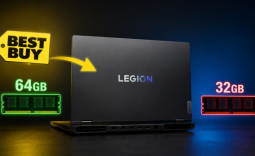 Redditor sends a gaming laptop with 64GB RAM for repair, comes back with 32GB RAM
 GPU Tweak III can now detect and shut down a PC when a 12V-2x6 graphics card goes over a certain current limit
 CPS PCCOOLER unveils all-in-one modular PC where you can replace the display and upgrade its hardware
 NVIDIA and LG are building a next-generation humanoid robot that will make its debut at CES 2027
 Intel will continue supplying Raptor Lake CPUs for 'years to come' thanks to the memory crisis
 NVIDIA's next-gen 'Feynman' GPUs to be built with TSMC's 1.6 nm A16 process
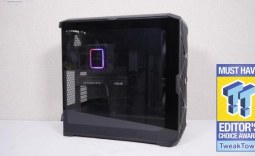 Cooler Master HAF II 500 Mid-Tower Chassis Review
 Corsair HS35 v3 Wireless Gaming Headset Review - An Affordable Winner
 D-Link F518 5G Wi‑Fi 6 AX1800 Mobile Hotspot Review: All-Day Mobile Hotspot
 Bose Lifestyle Ultra Speaker Review - Impressively Detailed Room-Filling Sound
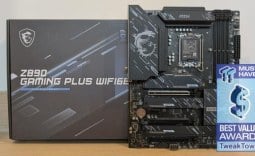 MSI Z890 Gaming Plus WIFI6E Review - Z890 for under $200
 Mortal Kombat (1995) 4K Ultra HD Blu-ray Review
 CPS PCCOOLER YS1200 ATX 3.1 80 PLUS Gold PSU Review
 ASRock X870E Taichi White Review: a premium AM5 motherboard with 10G LAN and WiFi 7
 Asetek Initium Pedal Modular Upgrades Review
 Thinkware U3000 Pro Review - Smart Dashcam with Wi-Fi quirks
 Using Multiple Monitors? Change these Windows settings for a Better Experience
 Windows Sandbox is The Windows Security Feature Most People Never Use
 I ditched the Windows 11 context menu for this open-source tool, and here's why
 Windows 11 may be encrypting your drive already, and I checked where my recovery key went
 GIGABYTE's 40 Days of INFINITY celebrates 40 Years of Innovation with stunning GeForce RTX graphics cards and rewards
 I swapped File Explorer for this free file manager and finally got the layout I wanted
 How to tell if someone has been using your Windows PC without your permission
 6 Task Manager tips for troubleshooting Windows performance problems
 ASUS ROG's 20th Anniversary Line-up of Premium PC Gaming Gear has Arrived - Here's Everything You Need to Know
 Six File Explorer tips every Windows user should know