







Mobile Devices - Page 137
Mobile device news - smartphones, tablets, iPhone, Android, and foldables. Launches and trends from TweakTown. - Page 137
Stay Updated
Follow TweakTown for breaking tech news, reviews, and daily updates.


As an Amazon Associate, we earn from qualifying purchases. TweakTown may also earn commissions from other affiliate partners at no extra cost to you.
Meet the Sonim XP7 Extreme, the 'world's most rugged' Android phone
Sonim has just unveiled the "world's most rugged LTE/Wi-Fi/Android smartphone" with its new XP7 Extreme, featuring a 4-inch 800x480 "glove touchscreen" and oh-so-much more. The company has taken to Indiegogo to raise $150,000 for this awesome device, with the campaign ending on January 7, 2015.
The 4-inch display may be low-res in this QHD world we live in, but it is a high-visible display which is viewable in direct sunlight, a powerful 103 dB speaker, the keys and screen can be used with heavy or wet gloves, it's rated at IP68, which means the XP7 Extreme can be fully submerged in water at up to 6.5 feet, for up to 30 minutes, as well as being rated at IP69, for resistance to high temperature pressure wash.
The Sonim XP7 Extreme is also drop and impact resistant, surviving drops up to 6.5 feet onto concrete, from any angle. It can be used in temperatures ranging from -4C to 131F, can survive in extreme pressures of up to one metric ton, is resistant to oils and chemicals, and is also puncture resistant. But don't worry, Sonim (even with all these technologies keeping it safe) still offer a 3-year comprehensive warranty, covering accidental damage.
Continue reading: Meet the Sonim XP7 Extreme, the 'world's most rugged' Android phone (full post)
Intel learns painful lessons in the mobile industry, as it looks ahead
Hardware maker Intel wanted to rely on its desktop, laptop and server CPUs, and missed the mobile boat when the smartphone and tablet markets began to soar. The company has managed to get its CPUs in tablets, giving away millions of chips to manufacturers, and will continue to expand its offerings in 2015.
"All is not well," said Andy Bryant, Intel board chairman, when speaking at the Intel annual investor meeting. "We are aware we're losing logs of money trying to gain presence in the mobility space. I'm not proud of the money we're losing, but I'm not embarrassed by it. This is the price we pay for sitting on the sidelines for a number of years. We're fighting our way back into a market. We will improve this. We will not accept a business to lose billions of dollars. We are getting back in."
Despite dropping growth in the tablet market - as saturation continues to increase - the mobile market will remain a viable goal for hardware manufacturers. Even though Intel has greatly struggled trying to enter the space, profitability in smartphones, tablets, and other devices can be achieved.
Continue reading: Intel learns painful lessons in the mobile industry, as it looks ahead (full post)
IDC: Tablet boom is over as sales drop, with first year of iPad drop
The tablet market has seen massive deceleration this year, and while year-over-year growth still accounted for 7.2 percent, the figure is down from 52.5 percent in 2013, according to the IDC research group. There will be 235.7 million tablets shipped in 2014, and is a clear indicator consumers need full functionality of PCs and smartphones.
Android has seen 16 percent year-over-year tablet market growth, now amounting for 67.7 percent of the market - Apple iOS is the No. 2 spot, but struggled, losing 12.7 percent year-over-year. Microsoft Windows saw 67.3 percent year-over-year and now has 4.6 percent control of the tablet market.
"The tablet market continues to be impacted by a few major trends happening in relevant markets," said Ryan Reith, IDC Program Director. "In the early stages of the tablet market, device lifecycles were expected to resemble those of smartphones, with replacement occurring every 2-3 years. What has played out instead is that many tablet owners are holding onto their devices for more than 3 years and in some instances more than 4 years. We believe the two major drivers for longer than expected tablet lifecycles are legacy software support for older products, especially within iOS, and the increased use of smartphones for a variety of computing tasks."
Continue reading: IDC: Tablet boom is over as sales drop, with first year of iPad drop (full post)
AMD backs away from the tablet market amidst yet another restructuring
AMD is reportedly stepping away from the tablet chip market as they enter into yet another restructuring period. AMD has struggled financially over the last several years, and the low-margin tablet market isn't likely to provide them much relief. Tablet sales are declining, and the market is awash in Apple and economically-priced Chinese tablets. The beleaguered AMD is changing their focus to the low-wattage CPU space and custom chips for their customers, such as the Microsoft XBOX and the Sony PlayStation 4.
These two custom projects are projected to provide AMD with billion in sales alone, and they indicate that other custom projects are in the works. AMD is not releasing a new tablet chip this year, instead staying with their Mullins chip for the entirety of next year. AMD does not provide chip roadmaps more than a year out, so it is hard to determine if they will ever offer a new line of their currently unsuccessful tablet processors. Intel has also recently took a drubbing in the tablet PC market, as outlined during their recent investor conference, and has shifted priorities as they move forward.
The tablet market is continuing to decline, in large part due to competing smartphones that offer incredible performance and ever-larger screen sizes.
Continue reading: AMD backs away from the tablet market amidst yet another restructuring (full post)
Apple iPhone 6 storage tested with MLC and TLC NAND - TLC slower
Apple iPhone 6 models have been the subject of controversy and swirling rumors lately due to constant rebooting issues. Industry insiders opined that the crashing and reboot loops, only present on specific iPhone 6 models, is due to the use of TLC NAND. TLC NAND is denser and marginally cheaper than its MLC counterpart, but suffers from less endurance and lower performance. Apple only uses TLC NAND in select models with a lot of storage, and the 64GB iPhone and the 128GB iPhone 6 Plus are perfect examples. Whether or not TLC is at the root of the issue remains up for debate, and reports are circulating that Apple will abandon TLC entirely. Kbench, a Korean benchmark developer, has released tests of the 64GB iPhone 6 with MLC NAND against the same model with TLC NAND.
Unfortunately the released tests are limited to write benchmarking. TLC has inherent limitations with random write activity, but fares much better with read workloads. Mobile devices aren't subjected to as much heavy random write data as PC's, and as a general statement TLC fares well with sequential data. We mention this because these tests focused on random write data, which is the worst case scenario for mobile devices. Some read performance benchmarks would also be very helpful, and we are reaching out to Kbench for read performance results.
The Zero Fill test (at the top of the graphic) shows TLC blowing away the MLC competition. Zero Fill isn't a real-world test, it merely writes zero's to every address on the storage device. What isn't mentioned, however, is that this amazing speed with TLC hints at possible compression technology. It is interesting no one has connected the dots on this. SSDs that utilize compression and data reduction technology write Zero Fill data extremely quickly because compression algorithms can compress zero's so well that very little data actually hits the flash. One of the biggest challenges with TLC NAND comes on the endurance front. TLC NAND does not last as long as MLC NAND, and compressing the data results in less data actually written to the NAND, thus increasing endurance. Apple spent an estimated $500 million for Anobit, a company that was brought in specifically to increase the endurance of TLC NAND. Anobit doesn't entirely explain how they accomplish this feat, but adding compression in tandem with other techniques makes perfect sense.
Continue reading: Apple iPhone 6 storage tested with MLC and TLC NAND - TLC slower (full post)
AC Ryan unveils their new VEOLO 4K, an Ultra HD media player
AC Ryan has just unveiled their fresh new 4K video player, known as the VEOLO 4K. AC Ryan's VEOLO 4K features a "staunch focus" on its User Experience (UX), with a fresh UI that is easy for users to navigate their Ultra HD media player.
The company has used what they discovered from their VEOLO 2 into their VEOLO 4K player, with some serious horsepower inside. The VEOLO 4K features a 1.8GHz quad-core Cortex-A17 ARM-based processor, a Mali T-764 GPU, 2GB of DDR3 RAM, and 16GB of on-board NAND flash storage. There's H.265 hardware decoding abilities, HDMI 2.0 out that allowed for the 3840x2160 output, Android 4.4 KitKat as its OS, Gigabit Ethernet, dual-band Wi-Fi, and Bluetooth 4.0.
AC Ryan supports the usual slew of media codecs, such as H.264, H.265 (video codec for 4K content), MPEG-4, MVC 4096x2048. Supported formats include but is not limited to AVI, BD-ISO, MKV, MOV, MP4, VOB among others. The company adds: "Having said that, Dolby & DTS naturally comes as a given, wrapping up the UHD experience". Inside of the box, it will include the VEOLO 4K itself, an IR remote, HDMI 1.4a cable, composite AV cables, 5V DC adapter and a quick guide. The company also sells a USB-based RF VEO Navigator Air Mouse, which is around $47, while the player itself is $239.
Continue reading: AC Ryan unveils their new VEOLO 4K, an Ultra HD media player (full post)
New StoreDot technology claims smartphone battery recharge in 30 sec
A new battery recharging solution from Israel promises to recharge smartphones in just 30 seconds, with nanotechnology synthesizing artificial molecules. The new battery stores a higher charge, and while it is still far too large to use while on the go, StoreDot hopes a slim model will be available by 2016.
As the number of smartphone owners is expected to reach almost 1.75 billion by the end of the year, finding new mobile charging solutions will be critical.
"These are new materials, they have never been developed before," said Doron Myersdorf, StoreDot founder and CEO.
Continue reading: New StoreDot technology claims smartphone battery recharge in 30 sec (full post)
Swiss watchmakers fight back against smartwatch digital copies
Smartwatches are becoming more popular, and many analysts expect retailers to experience brisk sales during the holiday shopping season. Android Wear smartwatches are very popular and six of the top models use Android. This has naturally led to an increase in apps for the popular gear, but some aren't that excited. Swiss watchmakers are particularly incensed that their designs are being replicated and distributed for free. Smartwatch users can easily download custom watch faces that feature the same look as $20,000 watches from Rolex, Cartier, Omega, and Patek Philippe, among others.
Swiss watchmakers are up in arms, so to speak, and sending 24 hour take-down notices to several sites hosting 'pirated' watch faces. Watch face patents are valuable IP for watchmakers, and in the past they have pursued vigorous legal action to protect their property. Apple famously paid $21 million dollars in 2012 to licence the Swiss clock face design used in iOS6, and several other Swiss firms are threatening legal action against sites that host pirated watch faces.
Continue reading: Swiss watchmakers fight back against smartwatch digital copies (full post)
Sony's new 5.9-inch, 6.4-inch smartphone leaked to public
TKTechNews has just informed us of a new Sony Xperia Z Ultra flat mobile phone to be released in 2015.
Set to contain a 5.9-inch touchscreen, ensuring that it's the 'perfect fit' for most consumers - not to big, nor too small. Sony's new smartphone offering is rumored for release in black or white color options.
However, we've also received information of a possible Xperia Z4 Ultra. This is rumored to contain a 6.4-inch display supporting a 2K resolution (2560 x 1440), with 4K also a realistic possibility. As far as hardware specifications are concerned, nothing is confirmed but it is rumored to contain similar architecture to the original Xperia models, with a focus on updating the inbuilt camera.
Continue reading: Sony's new 5.9-inch, 6.4-inch smartphone leaked to public (full post)
Apple feeling the pressure, lashing out at No. 3 manufacturer Xiaomi
Chinese smartphone maker Xiaomi has been on a tear, after being founded in 2010 and releasing its first smartphone in 2011. The company is now the No. 3 smartphone maker in the world, trailing behind only Samsung and Apple, with company officials already having their sights set on further growth.
"I believe that no one thought the Xiaomi from three years ago, which just made its first phone, would later rank as the third largest player," said Lei Jun, Xiaomi founder and CEO, recently said. "India is becoming our largest overseas market. Within five or 10 years, we have the opportunity to become the number one smartphone company in the world."
The smartphone market is fiercely competitive, and Xiaomi will likely need to expand its consumer smartphones to the United States and Western Europe to fully move forward.
Continue reading: Apple feeling the pressure, lashing out at No. 3 manufacturer Xiaomi (full post)
Wicked Lasers to End High Power Laser Sales to USA Starting Jan 1st
After ten years in business, Wicked Lasers has a new owner. The company hasn't stated much other than what you see below, a new own and unfortunately, no more sales to the USA for products over 5mW.
The company has come under fire over the last few years from safety groups, people that don't like fun and even George Lucas. Without an official statement we don't know if the unwanted attention played a role in the decision to end US sales.
Wicked Lasers will no longer be shipping >5mW handheld lasers to US-Based cutomers starting Jan 1, 2015.
Continue reading: Wicked Lasers to End High Power Laser Sales to USA Starting Jan 1st (full post)
Starbucks wireless charging technology hitting SF Bay Area locations
Powermat wireless charging stations will be introduced into 200 San Francisco Bay Area Starbucks locations, as the company plans to launch nationwide rollout before heading to Europe and Asia within 12 months. The chargers will be built directly into tables and bars inside of Starbucks, and the popular coffee chain hopes to win over patrons with the wireless charging offering.
It was announced earlier this year that Starbucks was testing the wireless charging stations in the Bay Area, but trying to find them in-store proved difficult for many guests. The Power Matter Alliance produces the Powermat technology, and is supported by Starbucks, Google and AT&T.
"The availability of Powermat Spots in Starbucks is transformative for San Francisco Bay residents who no longer have to worry about making it through their day with limited battery power," said Ran Poliakine, Powermat Technologies CEO, in a press statement. "They know that the nearest charge is only as far away as the nearest Starbucks."
Continue reading: Starbucks wireless charging technology hitting SF Bay Area locations (full post)
90% of US households have at least three Internet-connected devices
More than 90 percent of US households currently have at least three or more Internet-connected devices, according to a recent report published by Ericsson. The average household has 5.2 connected devices per household, and that number will increase as the Internet of Things (IoT) continues to be common place.
The Ericsson survey also found that 97 percent of households have at least one mobile phone, while mobile phone saturation continues to increase. By 2020, 90 percent of the global population over six years of age will own a mobile phone - and many phone owners will be using smartphones.
At the end of 2013 there were 1.9 billion smartphone subscriptions, and that number is expected to increase up to 2.7 billion by the end of this year. Analysts believe that number will increase 15 percent each year through 2020, as smartphones become more affordable.
Continue reading: 90% of US households have at least three Internet-connected devices (full post)
Why do we still not have a fully waterproof smartphone on the market?
In May of 2013, Apple was granted two patents toward waterproofing. One was for a water switch and the other for gauging electronic device moisture. This shows us Apple is thinking about the waterproofing as necessity. Sony and Samsung had already come out with waterproof smartphones by the time Apple received the patents. Motorola introduced its first version of a waterproof smartphone in 2009.
No smartphone is completely waterproof, and it all comes down to the grade given when tested.
Smartphones are graded on Integration Protection (IP), which is a two-digit number indicating how the phone stands up against dust and water. The first number is how a smartphone stands up against dust. The second number is how it stands up against water. For testing purposes, the phone is immersed in up to three feet of water for 30 minutes. The number is also indicative of how hard it can be sprayed with water before it breaks. Each of the two numbers is independent of the other. Numbers 5 and above are considered good.
Continue reading: Why do we still not have a fully waterproof smartphone on the market? (full post)
Report: Americans spend more time using mobile than watching TV
For the first time, US consumers spend more time using their smartphones and mobile devices than watching TV, according to a study released by the Flurry mobile analytics firm. Along with phone calls and texting, smartphone users are able to play games, visit social media, watch Netflix, and enjoy other entertainment - at the expensive of TV viewership - as companies find ways to keep consumers more engaged.
"In our analysis, we found that time spent on mobile devices grew in the US by 9.3% - from 2 hrs. and 42 minutes to 2 hrs. and 57 minutes - in the past nine months," according to Flurry. "That is almost 3 hrs. per day spent on mobile devices by the average American consumer, while time spent on TV has remained flat at 2 hrs. and 48 minutes daily, according to the US Bureau of Labor Statistics."
Of course, there is overlap when consumers watch TV while using their mobile devices, and it's a difficult metric to track, except for asking families.
Continue reading: Report: Americans spend more time using mobile than watching TV (full post)
Nokia announces the N1 Android tablet, pushing forward with mobile
Finnish technology maker Nokia recently announced the N1 Google Android tablet, which will be released to the market in Q1 2015. Nokia has signed a licensing agreement with Foxconn to manufacture and distribute the device, as Nokia no longer directly markets its own consumer products.
The N1 features a 7.9" display and is powered by an Intel 2.4GHz Intel AtomTM quad-core processor, running Google Android Lollipop.
"We are pleased to bring the Nokia brand back into consumers' hands with the N1 Android tablet, and to help make sophisticated technologies simple," said Sebastian Nyström, Nokia Head of Products. "The N1 has a delightfully intuitive interface and an industrial design to match it. This is a great product for Nokia fans and everyone who has not found the right Android tablet yet."
Continue reading: Nokia announces the N1 Android tablet, pushing forward with mobile (full post)
Samsung to reduce the number of smartphones it offers next year by 30%
Profits are stumbling over at Samsung, so the South Korean electronics giant is set to reduce the amount of smartphones it offers next year, by up to 25-30% according to Head of Investor Relations, Robert Yi.
Yi said: "After maintaining smartphone operating-profit margins above 15% for 10 consecutive quarters, Samsung's margins from its mobile and information technology business were squeezed to just 7% in the third quarter ended September-the lowest level since the end of 2008, before it launched its first Galaxy smartphone. Acknowledging the slide in margins, Samsung executives said during an earnings call last month that its new goal is to maintain a sustainable double-digit percentage margin starting in the new year. They reiterated that pledge during this week's investor day meeting".
We don't know which models will be cut, but the company has said that it will focus its attention more on the mid- and entry-level segments. In order to do this, a Samsung executive said it will "increase the number of components shared across mid- to low-end models, so that we can further leverage economies of scale". I'm sure the Galaxy S and Galaxy Note ranges will be left mostly unchanged, especially handsets like the upcoming Galaxy S6 and Galaxy Note 5.
Continue reading: Samsung to reduce the number of smartphones it offers next year by 30% (full post)
iPhone 6 is outselling the iPhone 6 Plus at close to 3-to-1 units
There are two versions of the new iPhone from Apple, the 4.7-inch iPhone 6 and the 5.5-inch iPhone 6 Plus, with the bigger iPhone receiving all of the attention - but which one is selling more? Most wouldn't have guessed it, but it's the smaller iPhone 6.
The information is coming from a new report out of Consumer Intelligence Research Partners, who have said that the iPhone 6 has accounted for 68% of all iPhones sold in the US in its first 30 days. The iPhone 6 Plus on the other hand, only represented 24%. The new iPhones accounted for 91% of all iPhones sold over the period, which should come as no surprise. The remaining iPhones sold were the last two: iPhone 5S and iPhone 5C.
When the iPhone 5S and iPhone 5C were launched, they represented 84% of total iPhone sales, so we can see that more iPhone users have upgraded this time. We don't know the exact sales between the 6 and 6 Plus, but I'm sure we'll hear more about it during Apple's next earnings report.
Continue reading: iPhone 6 is outselling the iPhone 6 Plus at close to 3-to-1 units (full post)
Analyst: Lenovo and ASUS finding success in the tablet market
Lenovo and ASUS continue to find success in the tablet market, as both companies are finding ways to carve out market share against Apple and Samsung, according to the Strategy Analytics research firm. ASUS now controls 6.8 percent of the tablet market, while Lenovo has 4.4 percent - small percentages compared to Apple and Samsung - but haven given a breath of life in the stagnant tablet market.
Meanwhile, Google Android has 72 percent tablet operating system market share, while Apple currently has 22.3 percent - and Windows continues to drag along, capturing six percent of the market. However, Lenovo's Yoga 3 Pro ultrabook and Yoga Tablet 2 run Windows, and are proving to be ideal in the workplace.
"White Box manufacturers continue to contribute a large percentage of the Android market share by offering a wide range of tablets in a wide range of screen sizes, connectivity and price points, simultaneously improving quality and specifications," according to Peter King, Tablet Service Director of the Strategy Analytics research group.
Continue reading: Analyst: Lenovo and ASUS finding success in the tablet market (full post)
BlackBerry CEO John Chen doesn't want to rush into Chinese market
BlackBerry CEO John Chen believes the Asian market is important in his effort to give the struggling smartphone maker new life, but doesn't want to rush any faster than needed. Of note, the Chinese market is appealing to companies, and one that is "too big a market to ignore," but BlackBerry wants to take its time trying to head into China.
"It takes too long to ramp up to a size that is even reasonable (in China)," Chen recently said. "Even if I have that time and money I'll probably have better returns going into a different set of markets that we are already in, like India, South Asia, and Southeast Asia."
The Chinese market is appealing for smartphone manufacturers, with Samsung and Apple both growing their market share in the country. BlackBerry should focus more on redeveloping itself in North America, as trying to compete with Samsung and Apple - among Chinese companies Lenovo and Xiaomi - could prove even more disastrous.
Continue reading: BlackBerry CEO John Chen doesn't want to rush into Chinese market (full post)
 Sony says PlayStation 6 release date and pricing are still up in the air
 Lexar's DRAM-less Thor Ultra series PCIe Gen 5 SSDs are built for desktop and laptop PC gaming
 Gaming monitors are next in line for a price hike as manufacturers can no longer absorb costs
 Linux 7.2 makes TSC support mandatory for x86 CPUs, but it's not like Windows 11's TPM 2.0 check
 ChatGPT can now build a timeline of everything you do on your Mac
 Redditor finds a working RTX 2080 Super in the dump, gets a huge free upgrade
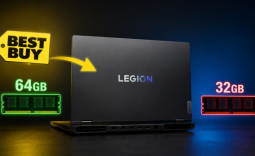 Redditor sends a gaming laptop with 64GB RAM for repair, comes back with 32GB RAM
 GPU Tweak III can now detect and shut down a PC when a 12V-2x6 graphics card goes over a certain current limit
 CPS PCCOOLER unveils all-in-one modular PC where you can replace the display and upgrade its hardware
 NVIDIA and LG are building a next-generation humanoid robot that will make its debut at CES 2027
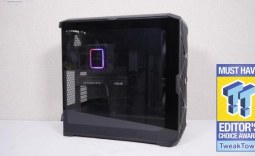 Cooler Master HAF II 500 Mid-Tower Chassis Review
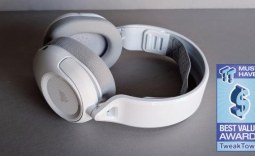 Corsair HS35 v3 Wireless Gaming Headset Review - An Affordable Winner
 D-Link F518 5G Wi‑Fi 6 AX1800 Mobile Hotspot Review: All-Day Mobile Hotspot
 Bose Lifestyle Ultra Speaker Review - Impressively Detailed Room-Filling Sound
 MSI Z890 Gaming Plus WIFI6E Review - Z890 for under $200
 Mortal Kombat (1995) 4K Ultra HD Blu-ray Review
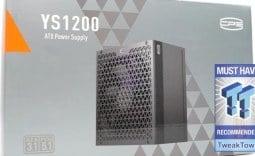 CPS PCCOOLER YS1200 ATX 3.1 80 PLUS Gold PSU Review
 ASRock X870E Taichi White Review: a premium AM5 motherboard with 10G LAN and WiFi 7
 Asetek Initium Pedal Modular Upgrades Review
 Thinkware U3000 Pro Review - Smart Dashcam with Wi-Fi quirks
 Using Multiple Monitors? Change these Windows settings for a Better Experience
 Windows Sandbox is The Windows Security Feature Most People Never Use
 I ditched the Windows 11 context menu for this open-source tool, and here's why
 Windows 11 may be encrypting your drive already, and I checked where my recovery key went
 GIGABYTE's 40 Days of INFINITY celebrates 40 Years of Innovation with stunning GeForce RTX graphics cards and rewards
 I swapped File Explorer for this free file manager and finally got the layout I wanted
 How to tell if someone has been using your Windows PC without your permission
 6 Task Manager tips for troubleshooting Windows performance problems
 ASUS ROG's 20th Anniversary Line-up of Premium PC Gaming Gear has Arrived - Here's Everything You Need to Know
 Six File Explorer tips every Windows user should know