







Learn about how TweakTown tests and reviews hardware. As an Amazon Associate, we earn from qualifying purchases. TweakTown may also earn commissions from other affiliate partners at no extra cost to you.
Stay Updated
Follow TweakTown for breaking tech news, reviews, and daily updates.


Pentagon says no to Intel's $3.5 billion CHIPS Act grant, Department of Commerce to step in
The Pentagon has just pulled out of a plan to spend up to $2.5 billion on a new chip grant through the CHIPS Act to Intel, but now those billions of dollars will come directly from the Commerce Department.

In a new report from Bloomberg, the usual "people familiar with the matter" told the outlet that the Pentagon had pulled out of the billions of dollars going to Intel, which now threatens the total amount that Intel was expecting to receive through federal funding, which can have ripple effects... even though the company has a market cap of $180 billion, that $3.5 billion grant seems to be important.
Intel has been seeking around $10 billion through the CHIPS and Science Act, with defense funding to be part of that spending package that Joe Biden signed into law over the weekend. This would've seen Intel receiving $3.5 billion in funding to create advanced defense and intelligence-related semiconductors.
Thermaltake's new MS-1 M.2 SSD cooler features 8000RPM fan, heat pipe, and heatsink
Thermaltake has just announced its new MS-1 M.2 SSD cooler, which features a high-speed 8000RPM micro blower fan, heat pipe, and heatsink to keep your ultra-fast (and ultra-hot) Gen5 SSDs as cool as possible, keeping those huge 14GB/sec+ read speeds at their peak, all day long.

The company claims that it beats an original passive heatsink and third-party active-cooled competitors with better performance and a smoother gaming experience. During its testing, Thermaltake used a Crucial T700 PCIe Gen 5 SSD to keep the SSD at a maximum of 77C, compared to the original T700 heatsink at 84C, and a third-party active-cooled M.2 SSD heatsink at 81C. Impressive, 4C is a decent margin.
Remember: Thermaltake is using a high-speed 8000RPM blower fan to keep the MS-1 M.2 SSD cooler, so it would have to be noisy as hell, especially compared to Crucial's stock heatsink on the T700 PCIe Gen 5 SSD. The competing actively-cooled M.2 SSD cooler looks to be the ineo aluminum M.2 SSD heatsink with a 10000RPM fan (faster, and noisier than the MS-1), according to Tom's Hardware.
MAINGEAR's new ZERO desktop PC with hidden motherboard cables is now available, starts at $1399
MAINGEAR has officially launched its new ZERO series gaming PC systems, which feature MSI's new Project Zero motherboards and cases.

The new MAINGEAR ZERO series desktop PC systems use MG-RC hidden cables, which shift the connectors and cables to the back of the system, making for a sleek look. MAINGEAR kicks off the pricing of its new ZERO systems at $1399, ranging up to $3929 before you customize your own system.
MAINGEAR uses mostly Intel Core CPUs inside its ZERO systems, par for the Ruby build, which rocks my favorite CPUs, the AMD Ryzen 7 7800X3D and NVIDIA GeForce RTX 40 series GPUs. But the heart and soul are the MG-RC hidden cable technology from MAINGEAR and MSI inside the ZERO.
Kung Fu Panda 4 is the first animated movie in High Frame Rate at 48FPS in select cinemas
Kung Fu Panda 4 is now out in theaters, and DreamWorks Animation has announced that it's their first animation movie released in TrueCut Motion High Frame Rate at 48FPS in select theaters.

This means Kung Fu Panda 4 is the fifth release in the HFR 48FPS format, with previous releases including Avatar, Avatar: The Way of Water, Titanic, and Argylle. We also saw Gemini Man with Will Smith in 48FPS. At the same time, TrueCut Motion's High Frame Rate version uses scene-by-scene grading to retain the cinematic look while reducing problems associated with judder at 24FPS.
Pixelworks, the company behind the TrueCut Motion High Frame Rate standard, said: "The high quality, visual artistry of this amazing, animated work - the first new "Kung Fu Panda" film in almost a decade -will come to premium theatrical screens in cinematic high-frame-rate; achieving dramatically new crystal clear motion playback on the brightest, exceptional high-contrast, high-quality 3D and 2D screens that naturally enhance the look and the feel of the world of the film".
Samsung Display's next-gen OLED plant will spin into full-scale production in 2026
Samsung Display will start installing the required equipment for its 6th Gen OLED line, which is the most advanced in the world, with full-scale production expected in 2026.

The new OLED plant will see next-gen OLED displays made for future laptops, tablets, and other small-to-medium devices over the coming years starting in 2026. Samsung Display announced it was investing 4.1 trillion won (around $3.1 billion USD) into the new plant, which is the world's first 8.6G OLED IT plant, as the company has fully stopped producing LCD panels.
The new 8.6G OLED production will be able to cut more panels from the "mother glass" as you can see above, whereas Samsung Display will be able to cut more panels from its new 8.6G (A6) production, compared to its current 5.5G (A2) production.
SK hynix was the initial exclusive supplier of HBM3 to NVIDIA, Samsung and Micron catching up
NVIDIA and AMD's best AI GPUs use HBM3 memory, but with the introduction of the H200 AI GPU, NVIDIA will be the first to market with an HBM3E-based AI GPU.

HBM3E will be found inside of NVIDIA's upcoming H200 and next-gen B100 AI GPUs, with TrendForce noting that the supply bottleneck through advanced CoWoS packaging technology and the long production cycle of HBM extend the timeline from wafer initiation to the final production past 6 months.
NVIDIA's current H100 AI GPU uses HBM3 memory primarily supplied by SK hynix, which has caused stock worldwide issues due to the crazy-high demand for AI GPUs. Samsung's entry into NVIDIA's supply chain with its new HBM3 memory in late 2023, were "initially minor, signifies its breakthrough in this segment," reports TrendForce.
Intel shipped 50 million CPUs in Q4 2023 alone, 6x as much as AMD
Intel reportedly shipped an insane 50 million CPUs in Q4 2023 alone, leaving its competitor AMD in its proverbial dust.

In a new report from Canalys dubbed "Q4 2023 Global PC (Notebook & Desktop) CPU market" we can see that Intel utterly dominates the competition. Intel shipped over 50 million desktop and laptop processors in the quarter, leaving AMD with just 8 million processors shipped and Apple with only 6 million in Q4 2023.
The desktop PC market is the strongest in APAC (Asia Pacific) and EMEA (Europe and the Middle East, Africa) while the PC notebook market is doing well in China and Latin America regions, while the US customers are jumping towards the tablet market, it seems.
Continue reading: Intel shipped 50 million CPUs in Q4 2023 alone, 6x as much as AMD (full post)
TCL's next-gen X11H Max home cinema TV is a monster 163-inch TV that costs $110,000+
TCL has just unveiled its next-generation mini-LED TVs with the introduction of the new X11H and the monster X11H Max which is a gigantic 163-inch home cinema TV. Check them out:

The new TCL X11H will launch with 14,112 dimming zones and a peak brightness of up to 6500 nits, making the TV the most advanced model in TCL's lineup so far, which is still under development and will launch in China first. TCL claims its new X11H TVs are based on a 4K VA LCD panel with a super-smooth 144Hz refresh rate in 98-inch and 85-inch, coming in very thin... just a little thicker than a standard tablet.
But it's the new 163-inch home cinema TV that has my attention... an absolute monster of a set. TCL's new X11H Max features a 163-inch micro-LED panel with XDR brightness of 10,000 nits, support for the 22-bit color gamut, and support for HDR format up to 12 bits.
Apple just bought a Canadian AI startup as it plans for iOS 18 and beyond
Apple continues to be widely rumored to have plans to make a big push into the world of AI with its upcoming software updates including the iOS 18 release for the iPhone, macOS 15 for the Mac, and others. Now, a new report suggests that Apple has taken a step further in its quest to do just that by buying a new company in the form of Canadian AI startup DarwinAI.

Bloomberg's Mark Gurman reports that Apple actually bought the company earlier this year and that dozens of DarwinAI employees have already joined Apple's artificial intelligence division. Gurman doesn't cite his sources by name because the deal has not been officially announced.
DarwinAI has previously developed AI technology for visually inspecting components during the manufacturing process and already works with other companies in a variety of industries, Gurman says. However, a core technology offered by the company is its ability to make artificial intelligence smaller and faster. That's a good fit for Apple for obvious reasons with the company preferring to offer its AI functionality as an on-device function rather than relying on sending data to its servers in the cloud. Such an approach is not only faster for the user, but also offers improved privacy as well.
Apple's M3 iMac has just landed in its Canadian refurbished store
Buying a new M3 iMac just got a bit cheaper if you happen to be in Canada, with Apple adding its popular all-in-one computer to its refurbished store in the country for the first time. The news means that buyers can choose between a brand-new model or one that has been refurbished, giving them an extra option and a way to save money as well.

Refurbished M3 iMacs are currently offered on the Canadian Apple Store website and are available in a whole host of colors and configurations with prices starting at $1.439 Canadian. That model would normally sell for $1,699 which means buyers save $260. The model in question is the M3 chip with 8 CPU cores and an 8-core GPU and Green, Blue, and Pink colors are currently available. 8GB of RAM and a 256GB SSD round out the main specifications.
Those looking to really save some cash might want to look at the upgraded M3 iMac with an 8-core CPU and 10-core GPU as well as a 512GB SSD and 8GB of RAM. That model would normally sell for $2,199 but if you choose to go the refurbished route you'll pay just $1,869, saving $330 in the process. At the time of writing there is only one color available in that configuration, however.
Continue reading: Apple's M3 iMac has just landed in its Canadian refurbished store (full post)
The Apple Vision Pro is little more than an expensive devkit, one former Oculus chief claims
The Apple Vision Pro has been on sale for a few weeks now which means that it isn't quite the huge story that it was not that long ago. But it's still a big product for Apple and the mixed reality headset market as a whole and now one person who knows a thing or two about that market has weighed in on Apple's so-called spatial computer.

Hugo Barra is the former VP of Android at Google but most recently he was the head of Meta's Oculus headset brand. Now, he's published a post on his blog that looks at Apple's headset and where it currently fits in a market that has so far been mostly Meta's for the taking.
Notably, Barra has once again ignited the complaint that the Apple Vision Pro is nothing more than a devkit, or a device that Apple needed to make and sell in order to give developers something to work with while they fill the visionOS App Store with apps. Barra backs that claim up, saying that the heavy weight and other factors are a reason that the headset is a "high-quality devkit" that is designed to capture the attention of everyone. It's certainly done that, with YouTube and other platforms full of influencers and reviewers and legitimate owners sharing clips of themselves using the headset in various different settings.
Intel APO tech speeds up 12 more games including World of Warcraft, and benefits 12th-gen CPUs
Intel's APO (Application Performance Optimization) feature is now supported by a lot more games, boosting frame rates nicely for newer Intel CPUs.

By newer we mean Alder Lake (12-gen) and onwards, but there's a bit of a catch there which we'll come back to.
APO, which offers fps boosts in the order of 10%, or perhaps more - the mileage will vary depending on the game and exact Intel CPU - only originally arrived with support for two games (Metro Exodus and Rainbow 6 Siege).
A future iPhone could have displays on its sides if this patent is any indication
The current lineup of iPhones has some of the best displays we've ever seen on a smartphone, but Apple still refuses to offer a foldable iPhone in a market where other companies are leaning into such handsets with increasing regularity. That doesn't mean that Apple isn't working on something new or trying to innovate however, and a new display patent appears to drive that point home well.

Spotted by AppleInsider, the patent appears to show a phone-like device that has displays on the outer edges - where you would normally find the volume buttons, power button, and on the iPhone 15 Pro, the Action button.
Putting displays on the side of phones isn't entirely new, however. Motorola and Samsung have both tried the idea of a display that wraps around the side of the display to offer a new way to interact with buttons and controls. But they've largely been moved away from because those buttons are easily accidentally pressed yet oddly difficult to interact with when you want to. However, Apple's implementation seems to be slightly different than what Samsung and Motorola have tried so far.
Intel's Core i9-14900KS is here - and this 6.2GHz CPU isn't as expensive as some feared
Intel has released its Core i9-14900KS processor on the day the rumor mill expected, and the good news is that it's not as pricey as some had feared.

We recently heard some buzz about the limited edition spin on the Raptor Lake Refresh flagship perhaps costing $749 (a leak from Micro Center, in fact), but fortunately Intel hasn't made the Core i9-14900KS that costly.
In fact, Team Blue has stuck with the same asking price as the 13900KS, namely $699 in the US ($689 when buying in volume - although there might not be that much quantity of stock for the 14900KS, if some other rumors are correct).
Almost 60% of new Mac buyers are switchers, new study shows
Apple's Mac lineup has improved greatly in recent years, thanks in no small part to the arrival of Apple silicon and M-series chips, and the ditching of Intel's offering. We already know that the M-series MacBook Air and MacBook Pro laptops are among the best portables on the market in terms of power and battery life, while the desktop iMac and Mac Studio machines are also great buys. Then, of course, there's the Mac Pro. Now, new research has looked into who is buying Macs today and, importantly, what computer they had previously.

According to the research, just 43% of those buying a new Mac in the year ending in December 2023 said that their previous computer was a Mac. That figure means that almost 60% of those buying a Mac had previously used a PC of some description, suggesting that a ton of people are switching right now.
The figures, put together by CIRP, show that 35% of Mac buyers had a PC as their previous computer while 16% came from Chromebook. The remaining 6% was made up of people who were either buying their first computer or were categorized as "other," perhaps suggesting they had a tablet of some sort.
Continue reading: Almost 60% of new Mac buyers are switchers, new study shows (full post)
iFixit's M3 MacBook Air teardown confirms how Apple made its SSD so much faster
When Apple released the new M3-powered 13- and 15-inch MacBook Pro laptops earlier this month it shared plenty of details about the new machines. We know that on the outside at least, not much had changed while the M3 chip was of course the big improvement on the inside. However, as people quickly began to notice when they started to receive their new laptops, there's also a big SSD speed boost to be enjoyed - specifically when you buy the entry-level 256GB version.

People who have been using the new M3 MacBook Air have noticed that the 256GB model is significantly faster when moving files around than the older M2 model with the same configuration. When Apple launched the 256GB M2 MacBook Air it was noted that its SSD file transfer speeds were hampered by the use of a single NAND chip whereas those with more storage had two chips, allowing for faster read and write speeds. Now, it seems Apple has gone a different route with the M3 version.
As confirmed by the iFixit video above, Apple has chosen to use two 128GB NAND chips rather than a single 256GB one for the M3 MacBook Air, allowing for read speeds of up to 82% faster and write speeds of up to 22% faster than the M2 version with the same amount of storage.
The Apple Vision Pro could launch in these NINE countries soon
The Apple Vision Pro has now been on sale for a few weeks having finally been released to the public on June 2. But the mixed reality headset, or in Apple's parlance the spatial computer, is only available to those in the United States right now. That's expected to change sooner or later, and a new report claims that it might know which countries will be next up on the release calendar.

According to that report, there are nine new countries that could potentially see an Apple Vision Pro release next. That's based on code that describes the addition of new languages to the Apple Vision Pro's visionOS software keyboard. Currently, only the English (US) and Emoji keyboards are offered in visionOS 1.1, but new ones are thought be be on the way according to code discovered by MacRumors.
According to the report, the following languages will all be added:
Continue reading: The Apple Vision Pro could launch in these NINE countries soon (full post)
US government warns AI may be an 'extinction-level threat' to humans
A new report commissioned by the US State Department warns the exponential development of artificial intelligence may pose a significant risk to national security and even humanity.

The new report titled "An Action Plan to Increase the Safety and Security of Advanced AI" recommends the US government move "quickly and decisively" with implementing measures that hinder the rise of artificial intelligence-powered systems being developed, even to the point of potentially limiting compute power used to train such models. The report goes on to say that if these hindering measures aren't implemented, there is a chance of AI or Artificial General Intelligence (AGI) being an "extinction-level threat to the human species."
The US State Department report involved more than 200 experts in the field, which included officials from companies that are big players in the AI game, such as OpenAI, Meta, Google, Google DeepMind, and government workers. The report goes on to recommend the US government implement limitations on how much compute power any given party developing AI is able to have at one time while also requiring AI companies to request permission from the US government to train any new AI model.
Continue reading: US government warns AI may be an 'extinction-level threat' to humans (full post)
OpenAI reveals its new text-to-video generator Sora will release 'later this year'
It was only last month that OpenAI revealed its upcoming text-to-video generator platform named Sora, and the general reaction to the new AI-powered tool was impressive yet concerning.

The upcoming AI-powered tool works exactly the same way as OpenAI's extremely popular ChatGPT, but instead of the chatbot responding to user prompts with text its capable of producing high-quality video, even to the point of photorealism. OpenAI took to its YouTube channel to share the above video showcasing Sora's capabilities and at first glance it appears some of the examples shown are shot with a real-life camera.
However, upon closer inspection of the examples tell-tale signs of AI-generated content begin to stand out, such as physics-based movements like people walking, hand movements, and more. OpenAI is currently "red-teaming" Sora to iron out these issues before its released to the public, which means people are pushing the AI model to its brink to bring these vulnerabilities to light so they can be fixed.
NVIDIA projected to make $130 billion from AI GPUs in 2026, which is 5x higher than 2023
NVIDIA has had an absolute record-breaking last 12 months or so, but that momentum isn't slowing down... it's only ramping up... to a huge predicted $130 billion in revenue once we get to 2026.

In a new report from Bloomberg, they predict NVIDIA revenue will swell to a huge $130 billion in 2026, a gargantuan $100 billion increase from 2021. The crazy numbers are fueled by the insatiable AI GPU demand, which NVIDIA is absolutely dominating in... and that's just with current-gen H100 AI GPU offerings, let alone its soon-to-be-released H200 AI GPU, and its next-gen Blackwell B100 AI GPU both right around the corner.
We already heard last year that NVIDIA was expected to generate $300 billion in AI-powered sales by 2027, so the leap from $130 billion to $300 billion in a single year -- 2026 to 2027 -- is absolutely mammoth. We've got market researchers like Omdia, predicting NVIDIA to make $87 billion this year from its data center GPUs, and with next-gen AI GPUs right around the corner... well, NVIDIA is really just getting started.
 Samsung leads the DRAM market in 2026 as China's CXMT gains ground
 Microsoft removes 32GB of RAM recommendation for Windows 11
 EA will be considering 'mass layoffs' soon after going private
 Redditor manages to buy a working RTX 3050 for just $3 from a thrift store
 ASUS cancels buyer's RTX 5090 order even after he paid $4607, wants more money
 AMD confirms it'll deliver opening keynote for IFA 2026 on the 'Era of Personal AI'
 Samsung reveals zHBM: future RAM is stacked above AI accelerator, boasts 8x performance of HBM5 and 3x energy efficiency
 If you launch Call of Duty: Black Ops 2 on PS4 or PS5 to be immediately told you're banned - don't panic, there's an easy fix
 MSI launches its 'DRACO EPIC EDITION' 40th anniversary PC gear
 Lower Xbox and PlayStation sales see AMD's Gaming revenue drop by 31%
 Asetek Initium Pedal Modular Upgrades Review
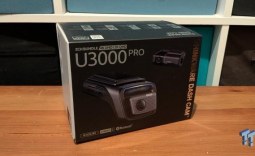 Thinkware U3000 Pro Review - Smart Dashcam with Wi-Fi quirks
 Montech TG3 Mid-Tower Chassis Review
 ASUS ROG Strix X870E-A Gaming WiFI7 Neo Review - A New Enticing Option
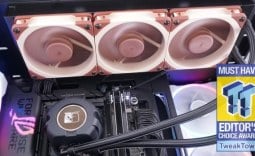 Noctua NL-LC1-36 Liquid CPU Cooler Review
 Logitech G316 X 98 Wired Gaming Keyboard Review - Retro-Inspired Board that Falls a Little Short
 Biwin M560 2TB SSD Review - Best Overall Retail-Ready DRAMless SSD
 Logitech G512 X 98 Analog Mechanical Gaming Keyboard Review - An Innovative Two-in-One
 Thrustmaster T.Flight HOTAS 5 MSFS Edition Review
 SteelSeries Arctis Nova Pro Omni Wireless Headset Review - One Headset to Rule Them All
 GIGABYTE's 40 Days of INFINITY celebrates 40 Years of Innovation with stunning GeForce RTX graphics cards and rewards
 I swapped File Explorer for this free file manager and finally got the layout I wanted
 How to tell if someone has been using your Windows PC without your permission
 6 Task Manager tips for troubleshooting Windows performance problems
 ASUS ROG's 20th Anniversary Line-up of Premium PC Gaming Gear has Arrived - Here's Everything You Need to Know
 Six File Explorer tips every Windows user should know
 I switched my PC to encrypted DNS in Windows 11, and browsing felt more private
 Printer Not Working in Windows? How to fix detection, print queues and drivers
 The Ultimate Guide to Personalizing Your Windows 11 Taskbar
 How to Turn Your Windows Laptop Into a Second Monitor with Miracast and Wireless Display in Minutes