







Learn about how TweakTown tests and reviews hardware. As an Amazon Associate, we earn from qualifying purchases. TweakTown may also earn commissions from other affiliate partners at no extra cost to you.
Stay Updated
Follow TweakTown for breaking tech news, reviews, and daily updates.


ASUS introduces NUC 14 Performance: Core Ultra 9 185H CPU, RTX 4070 desktop GPU
Update: ASUS updated us on the NUC 14 Performance, saying that there would be barebones systems, and systems with pre-installed SSD and RAM.

ASUS has just introduced its new NUC 14 Performance, which is pretty much identical to the ROG NUC, but without the ROG flair. There are more hardware options available for the NUC 14 Performance, too.
Inside, the new ASUS NUC 14 Performance with its highest-end specs will be powered with an Intel Core Ultra 9 185H "Meteor Lake" CPU, an NVIDIA GeForce RTX 4070 desktop GPU, up to 64GB of DDR5 SO-DIMM memory, and support for a Gen4 SSD.
Sabrent's ultra-fast Rocket 5 1TB Gen5 SSD is currently on sale: 14GB/sec+ for just $170
Sabrent currently has 10% off its ultra-fast Rocket 5 1TB Gen5 SSD, offering 14GB/sec+ read speeds for just $170.99, down from its original price of $189.99.

This is a strictly limited-time deal, so if you were looking for some next-gen PCIe Gen5 SSD storage, then the Sabrent Rocket 5 1TB is a fantastic choice at sub $200. You won't need an SSD heatsink with it either, as you'll be able to enjoy those rocket-fueled 14GB/sec+ speeds without an SSD heatsink.
Sabrent explains its Rocket 5 SSD: "All this speed requires careful balance and control. We made sure to include an aesthetically pleasing, highly functional heatsink that will make sure your drive never throttles. The combination of top-grade, thermally conductive materials and an efficient dual-heat pipe design help maintain the Rocket 5 within an ideal temperature zone. The good looks and rugged durability are pleasant side effects. For work or play, we want you to have the fastest and most stable SSD possible. We've engineered the Rocket 5 to be exceptional in older systems, too, so you can enjoy top-tier performance starting today".
Sabrent intros USB-C Enclosure for M.2 2280 PCIe NVMe SSDs, offers up to 10Gbps speeds
Sabrent has just announced its new USB-C Enclosure for M.2 2230 PCIe NVMe SSDs that culminates in an easy-to-use solution for managing your short-form factor SSDs.

If you're wanting to prepare to use your M.2 2230 SSD for installation into your Steam Deck, ASUS ROG Ally, Surface Pro 9, or other portable device, you just need to pop it into the Sabrent USB-C Enclosure for M.2 2230 PCIe NVMe SSDs (EC-NE30) and secure the hatch, and then plug it in through USB-C into your system. Easy!
Sabrent's new USB-C enclosure supports all major operating systems including Windows, macOS, and anything built on Linux. There's an integrated cable that makes for super simple plug-and-play operation, and since it's bus-powered, there's no drivers or additional cables required.
This DIY gaming desk features built-in 45-inch OLED display, water-cooled RTX 4090 gaming PC
This is something you've probably never seen before: a desk with a hidden hatch that reveals a built-in 45-inch OLED gaming monitor, all of your peripherals, and even a liquid-cooled gaming PC with a flagship NVIDIA GeForce RTX 4090 graphics card. Check it out:

YouTube channel DIY Perks is behind this beautiful creation, with a built-in 45-inch Corsair Xeneon Flex ultrawide bendable OLED gaming monitor, which he stripped down to its bare PCB and panel to completely minimize its size. The peripherals used include a full-sized keyboard, gaming mouse, gaming headset, and an external audio interface with the OLED gaming monitor.
On the PC side of things, we have an Intel Core i9-13900K processor, ASRock Z790 PG-ITX/TB4 motherboard, and a ZOTAC GeForce RTX 4090 graphics card, all of which are cooled with water blocks. There are also dual HDPlex 500W GaN power supplies, with one of them dedicated to the RTX 4090. Filling out the specs, we've got an amazing 12 x 4TB Crucial P3 M.2 drives in a Flashtor 12 Pro NAS, which is connected through an M.2 port to the motherboard, and a 10GbE M.2 network card.
MSI's next-gen Z890 and B860 mobos leaked: ready for Intel Core Ultra 200 'Arrow Lake-S' CPUs
MSI has a bunch of next-gen Z890 and B860 motherboards that have just been spotted on Device Report, ready for Intel's next-gen Core Ultra 200 series "Arrow Lake-S" processors.

The new LGA 1851 socket will house the new flagship Z890 chipset, with MSI working on no less than 9 new Z890 motherboards. These include the MEG Z890 GODLIKE, MEG Z890 ACE, MEG Z890 UNIFY-X, MPG Z890 CARBON WIFI, MPG Z890 EDGE TI WIFI, MPG Z890I EDGE TI WIFI, MAG Z890 TOMAHAWK WIFI, and PRO Z890-P WIFI motherboards.
As for MSI's upcoming B860 motherboard lineup, the Device Report lists the MPG B860M EDGE TI WIFI, MPG B860I EDGE WIFI, MAG B860 TOMAHAWK WIFI, and MAG B860M MORTAR WIFI motherboards.
Micron to invest $5.1 billion in new DRAM memory chip fab in Japan by 2027
Micron Technology is reportedly looking to build a new factory to produce DRAM chips in the Hiroshima Prefecture, Japan, and will be operational by 2027 at the earliest.

In a new report from UDN, the total investment that Micron is looking at is between 600 billion and 800 billion yen (around $5.1 billion USD or so). The new DRAM factory will start construction in early 2026, with Micron to install new extreme ultraviolet lithography (EUV) machines.
The Japanese government is also stepping up, approving 192 billion yen ($1.3 billion) in subsidies to support the production of Micron's next-generation DRAM chips at its Hiroshima plant. The Ministry of Economy, Trade, and Industry said in 2023 that the funding would help Micron introduce ASML's leading EUV lithography machines. This is the key to driving generative AI, data centers, and self-driving technologies of the future.
TSMC boss skips his own event, flies to Netherlands to meet with ASML boss about EUV machines
TSMC has been slow to adopt ASML's latest High-NA EUV lithography machines, but it seems that has changed in the last few days with TSMC CEO C.C. Wei skipping his own event, to fly to the Netherlands to meet with ASML to discuss securing equipment.

In a new report from Business Korea, TSMC CEO C.C. Wei skipped the TSMC Technology Symposium 2024 held in Taipei, Taiwan, to visit ASML's headquarters in Eindhoven, Netherlands, and TRUMPF, an industrial laser specialist company located in Ditzingen, Germany.
TSMC didn't make the media aware of where its CEO was, who was on a secret trip, but the secret was revealed through ASML CEO Christopher Fuke, and TRUMPF CEO Nicola Leibinger-Kammüller, and their respective social media accounts.
Elden Ring special edition graphics cards are coming and they're Intel Arc A770 and A750s
FromSoftware and Bandai Namco are prepping to launch the highly anticipated expansion for its smash-hit action RPG Elden Ring on June 21 called 'Shadow of the Erdtree.' As one of the most critically acclaimed and popular game releases this decade, fans are excited to explore the new Land of Shadow region. And thanks to Gunnir, PC gamers can do so in style with a pair of new Shadow of the Erdtree graphics cards.

However, there is a catch: These GPUs are limited to Intel Arc A750 and Intel Arc A770 models sporting custom Gunnir 'Photon' designs inspired by Elden Ring and the new DLC expansion. So yeah, it's not precisely high-end performance. Still, the minimal black and gold look is impressively stylish, with Elden Ring: Shadow of the Erdtree art found on the backplate.
Definite collector's items, these custom GPUs could be limited to the Asian market. There's no word on whether they will ship with in-game bonuses or Elden Ring-related goodies.
Uh-oh, after 30 years the original instant messaging service ICQ is shutting down
If you've been using a PC and going online since the days of dial-up modems and first-gen broadband, then you'll probably remember ICQ - one of the very first instant messaging apps for Windows. If that's the case, you'd probably be surprised to learn that ICQ is still around, though not for long.

The app's official site has a simple message: "ICQ will stop working from June 26." This is a big "Uh-Oh" to those still using the service; one of the reasons ICQ became so memorable was its "Uh-Oh" sound that played whenever you received a message. If you're still on the platform, the site suggests migrating to VK messaging apps and services - the Russian media company that acquired ICQ from AOL back in 2010.
Fun fact: AOL, or America Online, acquired ICQ in 1998 for a cool $400 million, which shows how prevalent the app was during the early days of the Internet. Although it's time is finally coming to an end, ICQ has managed to outlast its rivals like MSN Messenger or Yahoo Messenger.
G.SKILL Announces Trident Z5 Royal Series DDR5 Memory, high-performance bling for your PC
G.SKILL is a name known for creating high-performance memory for PCs. Still, today's announcement from the company is a little different in that it marks the arrival of the opulent, shiny, and jewel-like Trident Z5 Royal Series. We're still talking about high-performance DDR5 memory that you can overclock - up to an extreme DDR5-8400 CL40 with 48GB (2 x 24GB) kit - but with a 'Royal' look and feel.

G.SKILL's description says it all. "Featuring a mirrored-finish heatspreader in gold or silver color and a full-length crystalline light bar, the Trident Z5 Royal is the embodiment of high-class luxury." Yeah, G.SKILL's Trident Z5 Royal series for DDR5 is finally here, and if you're interested, it's like buying a fancy watch or necklace or another piece of shiny jewelry for your PC.
It's so fancy that G.SKILL has released an 'official trailer' for the Trident Z5 Royal Series DDR5 Memory, which you can watch below.
Tape backup isn't dead: 152.9 exabytes of tape shipments in 2023 alone, an increase from 2022
If you thought magnetic tape backup was dead, you'd be wrong... with the manufacturers behind the Linear Tape-Open (standard) shipping 152.9 exabytes of magnetic tape capacity (compressed) in 2023 alone, and increase of 3.14% over 2022.

If you're old enough, tape backup has been around for decades and was slowly fading out of the market as a digital storage medium. Zip drives were disappearing, and external HDDs were meant to replace LTO tape for backup and archival storage. We've got tens of terabytes inside of external HDDs, terabytes of ultra-fast Gen4 and Gen5 SSDs, cloud storage, and other forms of storage... but tape backup isn't dying.
Tape backup has a massive capacity, it's durable, and can safely store data for up to 30 years. Better yet, once the data is stored and doesn't need to be accessed, it can last for decades without maintenance or checking on them. They're cheaper than external HDDs, and can be stored away safely from ransomware infections.
GIGABYTE's new B650E AORUS motherboard can handle GPUs that weigh up to 58kg
GIGABYTE is preparing to launch its new B650E AORUS PRO X USB4 motherboard, which has a PCIe Ultra Durable slot that supports graphics cards that weigh up to an incredibly hefty 58kg (!!!).

In a new report from Benchlife, we're learning that AMD's new AM5 motherboards ready for Zen 5 will feature the 800-series chipset naming, not the 700-series chipset everyone thought would succeed the 600-series chipset that powers current Zen 4-ready motherboards.
Benchlife received a new GIGABYTE B650E AORUS PRO X USB4 motherboard, noting that it should have specs and features one would expect from the new flagship X870 motherboards. GIGABYTE is most likely testing its new features and support for its new motherboards, gearing up for the 800-series motherboards that will debut later this year.
AMD rumored to skip 700 series motherboards for Zen 5, new flagship X870 on the way
AMD's next-gen Zen 5 desktop processors will be released later this year, with new AM5 motherboards featuring the 800-series chipset -- not the 700-series chipset to succeed the current-gen 600-series chipset -- with a new flagship X870 on the way.

This is something we heard about in leaks earlier this year from leaker Moore's Law is Dead, and now we're hearing the 800-series chipset news again, this time from Benchlife. Benchlife has 'confirmed' that AMD's new Ryzen 9000 series "Zen 5" desktop CPUs -- not the Ryzen AI 300 series -- will debut in July, with new 800-series motherboards to join the fun.
Benchlife reports: "Obviously, we can expect various motherboard manufacturers to display AMD and Intel 800 series chip motherboards at Computex 2024; it has been confirmed that the chips used with AMD Ryzen 9000 will be called the 800 series, the same as Intel. However, there are still motherboard manufacturers working hard on the first-generation AM5 pin motherboards, such as the upcoming B650E AORUS PRO X USB4 from GIGABYTE".
Grand Theft Auto franchise breaks $9.1 billion revenue since GTA V's release
Total GTA franchise revenues have broken $9 billion since late 2013.

According to Take-Two Interactive's latest earnings report, Rockstar Games has generated over $9 billion in total revenue from the Grand Theft Auto series since GTA V's launch. Arranged figures indicate the mega-hit franchise has made cumulative earnings of $9.118 billion from GTA 5's original release in Q4'13 all the way through the end of March 2024.
These revenues include full game sales of GTA V across all 3 console generations, sales of the Grand Theft Auto: The Trilogy - Definitive Edition re-release from 2020, in-game purchases in GTA Online, and all other sales of previous games made available.
Gen 9 consoles to hit 111 million in 2024, 175 million by 2027, analyst firm predicts
The total installed base of 9th generation consoles is expected to break 111 million by the end of 2024, new reports from Take-Two Interactive indicate.

Take-Two Interactive's latest Q4 earnings call revealed an interesting snippet on console market expectations. During the call, TTWO CEO Strauss Zelnick gave out IDG's console expansion forecasts for the current 9th hardware generation. These numbers combine both PlayStation 5 and Xbox Series X/S console sales.
IDG expects the installed base for the 9th console generation to reach 111 million by the end of calendar 2024, up +37% from the previous figure given by Zelnick. The most eye-opening figure is for 2027 and beyond, where the 9th gen console installed base is expected to jump to 175 million.
NVIDIA's next-gen GeForce RTX 5090 features 'physically monolithic' GB202 GPU die
NVIDIA's next-generation flagship GeForce RTX 5090 graphics card will sport the "physically monolithic" GB202 "Blackwell" GPU die, according to the latest leaks.

We should expect the GB202 GPU to power the GeForce RTX 5090 with up to 192 SMs that will see a monster 24,567 CUDA cores (if the GB202 chip retains its 128 cores per SM design from the AD102 "Ada Lovelace" GPU inside of the RTX 4090). In a new reply on X, leaker "kopite7kimi" said that the GB202 GPU is a "physically monolithic" chip.
The reason this is important, is that NVIDIA used a chiplet design for its HPC and AI GPUs including the Blackwell B100 and B200 AI GPUs, but looks to use a physically monolithic GPU design for its gaming-focused GeForce RTX 50 series GPUs. We should also see NVIDIA rolling out next-generation GDDR7 memory on its RTX 50 series GPUs, with the RTX 5090 rumored to feature a hefty 32GB of ultra-fast GDDR7 memory.
AMD's next-gen Strix Point APU renamed again: Ryzen AI 300 series to fight Intel Core Ultra 200
AMD's next-generation Zen 5 CPU architecture will be launched at Computex 2024 next week, with name changes all over the place... now we've got the Ryzen AI 300 series.

Why the Ryzen AI 300 series? Intel's next-generation Core Ultra 200 series "Arrow Lake" CPUs will be launching, so AMD can't have the previously rumored Ryzen AI 100 series names, with Chinese leaker Golden Pig Upgrade giving us the update on what he's hearing regarding AMD's next-gen desktop-focused Zen 5 processors.
Golden Pig Upgrade explains: "Strix Point was renamed again: Ryzen AI 9 HX 370, Ryzen AI 9 365, those who are familiar with DIY must be familiar with this practice. After all, the Core Ultra 200 series will be released soon. If AMD starts from 100 again, it will suffer a numerical loss, so they will start directly from the 300 series. If you want to make up for it, you can also say this is the third generation with NPU".
Samsung denies claims its HBM3E memory failed NVIDIA's quality tests for AI GPUs
Samsung Electronics has denied claims alleging its High Bandwidth Memory (HBM, and more specifically, HBM3E memory) products failed NVIDIA's quality standards.

In a recent report from Reuters, the outlet claimed from sources that Samsung had been denied by NVIDIA, failing its HBM quality tests. The issues were reportedly surrounding excessive heat generation and power consumption, but in a new statement released by Samsung on May 24, the South Korean giant said it is "smoothly conducting tests for HBM supply with various global partners".
Samsung emphasized that it is "continuously testing technology and performance in close cooperation with multiple companies" to ensure that the quality and reliability of its products is perfect.
ASML rumored to have rented office space in Kaohsiung, Taiwan to support TSMC's new 2nm plant
ASML is rumored to have signed a contract to lease a commercial office in North Kaohsiung, Taiwan, and has officially entered Kaohsiung, to help the installation of TSMC's new 2nm plant in Kaohsiung.

ASML is the world's largest wafer lithography equipment manufacturer, with TSMC being the world's largest contract chip manufacturer, the two powers combined make for a force to be reckoned with... mostly against Samsung and Intel. ASML has four offices spread out in Taiwan right now, located in Hsinchu, Linkou, Taichung, and Tainan.
Linkou has a smart manufacturing center that is responsible for machine refurbishment and measurement equipment protection, while Tainan has an E-beam electron beam inspection equipment manufacturing center, and an EUV Global Training Center.
Windows 11's new Copilot+ AI features like Recall can be enabled without needing an NPU
Microsoft unveiled its new Copilot+ PC family last week, with its new Recall feature remembering every single thing you type, and do into your PC... but it required an NPU. Well, a developer has worked it out... without needing an NPU.

A developer posted on X with "great progress" on enabling Copilot+ features like Recall on current Arm64 hardware, with no Qualcomm Snapdragon X Elite processor (which is a hardware requirement of Copilot+ on Windows 11). The developer explained in his post that it "should theoretically work on Intel/AMD" processors, too, and that OEMs only received Arm64-specific ML model bundles, so "there's not much I can do yet" added @thebookisclosed on X.
Without an NPU (Neural Processing Unit) to speed-up AI workloads, does that mean that AI workloads run slower without an NPU? We don't know yet, but I'm sure we're not very far from knowing how much slower -- if it is at all -- which would bring into question... do we really need NPUs for AI workloads that are being shoved down our throats by every processor maker on the market? Interesting.
 Nintendo's profits jumped 53.5% despite a revenue decline, thanks to a surprise one-time US tariff refund
 Minecraft is getting a native Switch 2 version on October 27, but Switch 1 owners may need to pay to upgrade
 Sony is now putting disc death warning stickers on PS5 boxes, proving it has no plans on reversing its decision
 Quake gets new free episode and roguelite mode in 30th anniversary update
 Call of Duty Black Ops I & II sold 11 million copies on PS4 and PS5, per analyst estimates
 Redditor builds an open-source tool to prevent RTX 5090 power connector failures, works like a charm
 Gaming titan EA goes private as largest leveraged buyout in history is completed
 Chinese CXMT rejects Apple, leaving the company scrambling for DRAM
 New GTA 6 footage premieres on Netflix on August 27 as games industry doubles-down on subscription synergy
 Modders create Steam Machine faceplate that charges the Steam Controller with its own magnetic puck
 ASRock X870E Taichi White Review: a premium AM5 motherboard with 10G LAN and WiFi 7
 Asetek Initium Pedal Modular Upgrades Review
 Thinkware U3000 Pro Review - Smart Dashcam with Wi-Fi quirks
 Montech TG3 Mid-Tower Chassis Review
 ASUS ROG Strix X870E-A Gaming WiFI7 Neo Review - A New Enticing Option
 Noctua NL-LC1-36 Liquid CPU Cooler Review
 Logitech G316 X 98 Wired Gaming Keyboard Review - Retro-Inspired Board that Falls a Little Short
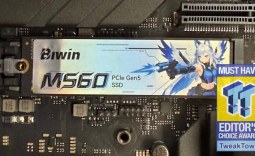 Biwin M560 2TB SSD Review - Best Overall Retail-Ready DRAMless SSD
 Logitech G512 X 98 Analog Mechanical Gaming Keyboard Review - An Innovative Two-in-One
 Thrustmaster T.Flight HOTAS 5 MSFS Edition Review
 GIGABYTE's 40 Days of INFINITY celebrates 40 Years of Innovation with stunning GeForce RTX graphics cards and rewards
 I swapped File Explorer for this free file manager and finally got the layout I wanted
 How to tell if someone has been using your Windows PC without your permission
 6 Task Manager tips for troubleshooting Windows performance problems
 ASUS ROG's 20th Anniversary Line-up of Premium PC Gaming Gear has Arrived - Here's Everything You Need to Know
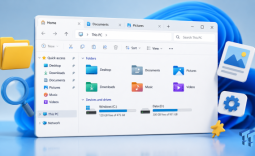 Six File Explorer tips every Windows user should know
 I switched my PC to encrypted DNS in Windows 11, and browsing felt more private
 Printer Not Working in Windows? How to fix detection, print queues and drivers
 The Ultimate Guide to Personalizing Your Windows 11 Taskbar
 How to Turn Your Windows Laptop Into a Second Monitor with Miracast and Wireless Display in Minutes