







Learn about how TweakTown tests and reviews hardware. As an Amazon Associate, we earn from qualifying purchases. TweakTown may also earn commissions from other affiliate partners at no extra cost to you.
Stay Updated
Follow TweakTown for breaking tech news, reviews, and daily updates.


SK hynix HBM3E chip yield hits 80% which has help cut mass production times down by 50%
SK hynix has announced that HBM3E yields are close to 80% and that the South Korean memory giant has reduced mass production times of HBM3E in half.

In a recent interview with the Financial Times this week, SK hynix's Yield Executive Vice President Kwon Jae-soon said: "We have managed to cut the time required for mass production of HBM3E chips by 50%. The chips have almost reached the target yield of 80%".
This is the first time that SK hynix has publicly disclosed yield information for HBM3E memory, with the industry estimating previously that the yield of SK hynix's HBM3E memory was somewhere between 60% and 70%. VP Kwon continued, saying: "our goal this year is to focus on producing 8-layer HBM3E. In the AI era, improving yields becomes even more crucial to stay ahead".
NVIDIA GeForce RTX 5090 rumor: 16 next-gen GDDR7 memory modules, 32GB GDDR7 for RTX 5090
NVIDIA will be rolling out next-gen GDDR7 memory on its next-generation GeForce RTX 50 series GPUs, with the GeForce RTX 5090 Founders Edition graphics card reportedly featuring 16 GDDR7 memory modules in a denser design.

It seems NVIDIA is changing up the memory layout for its new GeForce RTX 5090 over the current-gen RTX 5090, with the GB202 "Blackwell" GPU inside, next-gen GDDR7 memory on a huge 512-bit memory bus. If that's true, it would explain why NVIDIA would need to use additional GDDR7 memory modules around the GPU.
NVIDIA's new GeForce RTX 5090 will use GDDR7 memory arranged in a denser configuration, with the layout shifting from 3-4-1-4 to 4-5-2-5 (clockwise), which allows the board to support up to 16 memory modules.
NVIDIA GeForce RTX 5090 Founders Edition PCB reportedly split into three parts
NVIDIA's next-generation GeForce RTX 5090 Founders Edition graphics card is being teased, with a sophisticated PCB design.

In a new post on X, leaker "kopite7kimi" said that the RTX 50 FE graphics cards have 3 separate PCBs: the motherboard, I/O rigid board, and a separate PCIe slot component, that the leaker adds "perhaps it should not be considered as the third PCB".
The new GeForce RTX 50 series GPUs will have a bunch of new tech: a next-generation Blackwell GPU architecture, and next-generation GDDR7 memory (and some more surprises, I'm sure). We should expect NVIDIA's next-gen GeForce RTX 5090 Founders Edition graphics card to feature up to 16 x GDD7 memory modules surrounding the GPU, something we've learned in new leaks, too.
NVIDIA celebrates its most profitable and highest sales quarter EVER, stock breaches $1000+
NVIDIA has just posted its Q1 2024 earnings, reporting record quarterly earnings of $26 billion, destroying analysts' expectations of $24.59 billion. $26 billion in revenue for Q1 2024 are up 18% from the previous quarter, and up 262% from a year ago.

NVIDIA profits and revenues skyrocketed in Q1 2024, with record quarterly data center revenues of $22.6 billion, which is up 23% from Q4 2023, and a gigantic 427% year-over-year.
Jensen Huang, founder and CEO of NVIDIA, said: "The next industrial revolution has begun - companies and countries are partnering with NVIDIA to shift the trillion-dollar traditional data centers to accelerated computing and build a new type of data center - AI factories - to produce a new commodity: artificial intelligence. AI will bring significant productivity gains to nearly every industry and help companies be more cost- and energy-efficient, while expanding revenue opportunities".
The Mac's terrible System Settings app is getting an overhaul in macOS, report claims
If Apple sticks to the tried and tested plans of recent years we can expect it to release a slew of new software updates this fall, one of which will surely be the macOS 15 software for the Mac computers. Apple is set to preview the changes at WWDC on June 10, but we might not have to wait that long to get a feel for what's in store.

According to a new report by AppleInsider, Apple is planning a number of changes for the big release including one that will be welcome news to many. The System Settings app has been lambasted by many since it replaced the familiar System Preferences, and now the report says that Apple intends to make some changes this year.
One of the changes coming to System Settings is the removal of the Apple ID section with a new Apple Account section taking its place. There are also going to be changes throughout the System Settings app to accommodate new Apple Account settings and features, we're told, with new animations or redesigned interface elements arriving. AppleInsider also believes that the Apple Account rebrand will see the arrival of a new feature called Printable Account Recovery Summary, or PARS. It's not yet clear what that feature will be but it's likely designed to give users easier access to important account information.
Apple's foldable MacBook might not be as big as we first thought, display analyst says
Apple has long been rumored to be working on its first foldable device, but it won't be a phone or a tablet as other companies have brought to the market. Instead, it'll be a foldable laptop. We'd been told to expect that Apple would sell the laptop with a large 20.25-inch foldable display but now a new report suggests that Apple will instead shrink that display to 18.76 inches.

A recent report by analyst Ming-Chi Kuo said that Apple was working on testing both sizes of display which could have suggested that both would reach the market. However, in a paywalled X post that was picked up by 9to5Mac, display analyst Ross Young says that Apple has ditched the 20.25-inch display plans in favor of one that's smaller at 18.76 inches.
Young has a strong track record of detailing Apple's plans based on information gleaned from within the display supply chain and he believes that Apple has now settled on the smaller 18.76 display or, more likely, a rounded figure of 18.8 inches.
AMD all but confirms RDNA 4 is a pair of mid-range GPUs, Navi 48 and 44
The Navi 48 and 44 GPUs have been confirmed by AMD - kind of - to be the only chips that'll make up Team Red's next-gen range of graphics cards with its RDNA 4 architecture.

VideoCardz noticed that Kepler flagged up on X (formerly Twitter) that in an update for its ROCm software, AMD specifically mentions Navi 44 and Navi 48 as gfx1200 and gfx1201 respectively.
There are no other chips in the update, so that all but confirms that Team Red is keeping things down to just Navi 44 and 48, as all rumors have pointed to for some time now.
Apple's first foldable could be a 19-inch laptop, and it might arrive sooner than you think
Apple is yet to enter the world of the foldable phone and there is little to suggest that it intends to change that any time soon. But Apple is indeed reportedly working on a foldable device of some sort and that's believed to be an all-screen laptop. We've seen reports of a potential 20-inch foldable device before, and now a new report by the usually well-connected analyst Ming-Chi Kuo suggests that Apple is also testing a foldable laptop with an 18.8-inch display.

Ming-Chi Ming-Chi Kuo says that Apple is still working on a 20.25-inch option with LG Display being the exclusive panel supplier. But the smaller model is also being considered with the two different foldable panels corresponding to the design of 14- to 15-inch and 13- to 14-inch laptops. What's more, he believes that Apple is aiming to have the displays ready for assembly towards the end of 2025 or early 2026 which means these laptops could go on sale in just a couple of years.
In a lengthy Medium post detailing Apple's plans, Kuo said that Apple is working to put the M4 family of chips into the new laptop. Apple is expected to launch new M4 machines later this year, but the bulk of the lineup - including new 13- and 15-inch MacBook Airs - won't go M4 until 2025. That would then leave Apple's M5 ready for a 2026 debut.
Apple's Tap to Pay on iPhone brings easier contactless payments to Canadian businesses
Following its launch in Japan just a few days ago, Apple has today launched its Tap to Pay on iPhone feature in Canada for the very first time. The feature offers small businesses a new, easy way to accept contactless payments via bank cards, mobile wallets, and Apple Pay using nothing more than their iPhones.

The feature is already available in the U.S., Australia, Brazil, France, Japan, the Netherlands, Taiwan, the U.K., and Ukraine and the expansion will surely continue. Apple's press release says that businesses will be able to accept Tap to Pay on iPhone using apps from Adyen, Moneris, Stripe, and Square at launch while Aurus, Chase, Fiserv, and Helcim will all come online in the coming months.
Accepting Tap to Pay on iPhone payments is easy for businesses so long as they have an iPhone XS or newer that has also been updated to the latest version of iOS that it supports. Payments are handled securely using similar technology to that which powers Appl Pay, but other payment methods like contactless cards are also supported.
Apple may be forced to allow third-party app marketplaces in Japan as well.
Apple iPhone owners in Japan may one day be allowed to install third-party app marketplaces if new legislation goes ahead. The move would mimic that of the European Union and the Digital Markets Act. That act means that third-party app stores are now available across 27 member countries and it now appears that Japanese officials may bring similar legislation to their country as well.

A Japan Times report says that the legislation is currently being debated in parliament and that it would apply to Google as well as Apple. The bill has been submitted by Prime Minister Fumio Kishida and would force dominant platforms, like those operated by Apple and Google, to allow third-party app markets as well as alternative payment options. The move would also prevent technology companies from giving preferential treatment to their own products, the report explains.
Developers have long argued that Apple's high fees and App Store restrictions inhibit innovation, with those in Japan suggesting that they would be able to reduce the prices they charge customers as a result of third-party App Store alternatives. It remains to be seen whether that is how things would ultimately pan out however, especially if Apple chooses to roll a similar system out to the one that's in use in the EU. There, Apple charges a core technology fee and other fees to reduce the loss of revenue that comes about as a result of apps being sold outside of the App Store.
Windows 11 24H2 is in final testing - and it unshackles Copilot, turning the AI into a full app
Windows 11 24H2 is entering the final phase of testing ahead of its likely fall release later this year, and Microsoft has made a big move with Copilot.

In preview build 26100, which is now in the Release Preview channel (the last stage before general availability), Copilot has been transformed into a fully standalone app.
That means the AI assistant is no longer confined to a panel at the right side of the desktop, but it's now in its own window which can be moved around the desktop and resized, just like any other app.
Call Of Duty: Black Ops 6 officially announced in new teaser video
Activision has taken to its official Call of Duty X, formerly Twitter, account to share a short teaser video that confirms the next Call of Duty.

The above teaser video was released only an hour ago, and it confirms the next Call of Duty will be called Call of Duty: Black Ops 6, which Activision writes will bring in "a dark new chapter of the Black Ops franchise." The coming Call of Duty is rumored to be releasing this October on the following platforms: Xbox, PlayStation, and PC. The reason that's worth mentioning is because of Microsoft's acquisition of Activision, which led many to believe that Call of Duty was going to become an Xbox and PC exclusive, only to be released on PlayStation at a later date, but that isn't the case.
The current agreement Microsoft is under is to continue launching the Call of Duty franchise on multiple platforms. As for Black Ops 6, there isn't much officially known about the now highly anticipated game, but we are scheduled to find out more about it at the Xbox Games Showcase penciled in for June 9. Rumors indicate that Black Ops 6 will take players, at least in part, to the Gulf War.
Continue reading: Call Of Duty: Black Ops 6 officially announced in new teaser video (full post)
Former Google CEO predicts military will eventually guard extremely powerful AI systems
Former Google CEO and Chairman Eric Schmidt have predicted that artificial intelligence-powered systems will become so advanced that they will be placed on military bases and guarded with barb-wire and machine guns.

The former head of Google sat down for an interview with Noema Magazine, where he weighed in on the current explosion of AI. Schmidt said that developments in AI will eventually exceed the level the US government is comfortable putting in the hands of a citizen without discrete permission, and the general advancements in AI will reach a point where the system is so incredibly advanced it will have to be housed in an army base, powered by a form of nuclear energy, and protected by military forces.
Additionally, the former Google head said that it's important to keep the capabilities of AI out of the hands of the US's adversaries, which is something that is currently being reflected with the US government implementing export restrictions on the most powerful AI chips to China, in an effort to prevent China getting the upper-hand in the race to develop the most-advanced AI system.
Microsoft's new Copilot+ PC smoked Apple's MacBook M3 in performance and battery life
Microsoft recently unveiled a suite of new PCs integrated with its new artificial intelligence, Copilot+. The first batch of new PCs are coming in the form of AI laptops, and the ones available are powered by Qualcomm's Snapdragon X Elite SoC. It's expected Intel and AMD will release their own versions later this year.

The X Elite was recently put up against Apple's MacBook Air M3 by benchmarking and analysis company Signal64. Ryan Shrout, a former Intel employee and President & GM of Signal65 headed the report, which was commissioned by Microsoft. A common move by companies that want to legitimize the claims they are making about their products.
The report found the X Elite outperformed Apple's M3 silicon in a variety of different tests, with the X Elite-powered Surface Laptop surviving over 21 hours in a local video playback test, which is 15% longer than a MacBook Air M3 and twice as long as the Surface Pro 9. Notably, the X Elite did lose to the M3 silicon in single-core performance in both Cinebench and Geekbench by approximately 15%. However, in multi-core performance, the X Elite was found to be more than 30% faster than Apple's M3.
OpenAI CEO Sam Altman teases GPT-5 makes its current AI look 'embarrassing'
OpenAI hasn't revealed when it will be releasing its next-generation AI model under its GPT branding, but when it does it will make all the company's previous generation look inferior.

The artificial intelligence development company has been at the forefront of the AI industry since the release of its intensely popular AI-powered tool, ChatGPT. Since then, OpenAI has released various other AI-powered products, with the latest being GPT-4o, a new AI model that is significantly better at coding than its predecessors, and is capable of reasoning across audio, vision, and text in real-time. While GPT-4o is certainly impressive, it's apparently nothing compared to GPT-5.
In a recent interview, the Director and GM of Redpoint, Logan Bartlett, OpenAI CEO Sam Altman touched on future AI developments, saying an advanced AI base model could be like a "virtual brain" and may exhibit "deeper 'thinking' capabilities". As for GPT-5, Altman has previously said OpenAI's next model will make GPT-4 look "mild embarrassing at best" as it's significantly more powerful, capable, and intelligent.
Insider says Kingdom Hearts 4 is coming to the Nintendo Switch 2
A gaming industry insider who has previously been correct about the Kingdom Hearts series coming to Steam has said the next installment in the series might be coming to Nintendo's next console.

The insider is Midori, who took to X, formerly Twitter, to share some details about a tip they received back in February. According to Midori, they received a message in February that informed them about Missing Link, Kingdom Hearts 4, and the Kingdom Hearts series coming to Steam. Midori said they didn't believe the information from the source at the time, but the news was confirmed on May 21 via the official Kingdom Hearts X account that announced the series will arrive on Steam on June 13.
Midori revealed further details about what the source told them, writing the Steam ports have been in development since last summer. As for Kingdom Hearts 4, the source said it has some "small online features" and that it "looks very different from the first trailer".
Continue reading: Insider says Kingdom Hearts 4 is coming to the Nintendo Switch 2 (full post)
NVIDIA will now release new GPU architecture every year, 'Rubin' is teed-up for 2025
On average NVIDIA has released new GPU architecture every two years, but due to the overwhelming demand for new chips to power AI models the company is accelerating its manufacturing schedule and therefore the time between generations.

NVIDIA recently reported its first-quarter earnings where the company revealed it made an astounding $14 billion in profit from its dedicated AI chips, which have been in extremely high demand since the AI boom. Companies such as Meta, Amazon, Google, and OpenAI want NVIDIA's advanced GPUs to train and power their new artificial intelligence models. NVIDIA plans on meeting this overwhelming demand by increasing the frequency it releases new GPU architecture generations.
Notably, NVIDIA released new architecture approximately every two years, with Ampere releasing in 2020, Hopper in 2022, and Blackwell in 2024 (rumored to release at end of the year). But NVIDIA's CEO Jensen Huang announced, "after Blackwell, there's another chip. We're on a one-year rhythm." Analyst Ming-Chi Kuo reported earlier in the month that NVIDIA was planning on releasing its next-generation GPU architecture codenamed "Rubin" in 2025, which would likely produce an R100 AI GPU that will be released sometime next year.
NVIDIA share price soars above $1,000 as company reports homerun-level earnings
NVIDIA, the world's leading GPU manufacturer, has just wrapped up its first-quarter earnings report, announcing it has completely exceeded sale expectations, pushing the company's stock above the $1,000 per-share mark.

The new financial report unveiled a remarkable achievement for NVIDIA. The company's revenue for the first three months, which concluded in April, soared to an impressive $26 billion, surpassing the $24 billion expectation set in February. This is the third consecutive quarter where NVIDIA has tripled its sales from a year earlier, a testament to the company's meteoric rise.
The surge is largely attributed to the widespread adoption of artificial intelligence-powered systems by tech giants like Google, Meta, Amazon, OpenAI, and more, further solidifying NVIDIA's position as a key player in this domain.
Investigation launched into Microsoft's new Black Mirror-like tracking Windows AI feature
Microsoft recently announced its Copilot+ artificial intelligence-powered tool that will be arriving on a range of new AI-powered laptops, and one the features of the new AI implementation is a Windows 11 feature called Recall.

The new Windows feature gives the PC a "photographic memory," which enables the user to travel back to a specific time on the PC. Turning on Recall will let a user retrieve their past activities on their PC, but for this feature to work, the user has to opt into Windows, taking a screenshot of their desktop every few minutes.
With these screenshots, or as Microsoft calls them, snapshots, users will be able to access the specific points in time, which Copilot+ will provide additional context on in the form of identifying objects within the screenshot, providing additional information, and more. Essentially, the tool is web browsing history, but for your whole PC. Notably, Microsoft states all of the screenshots the AI takes will be stored locally on the PC and won't be accessed by the company. Furthermore, users are free to delete any of the screenshots.
GALAX launches dual-slot 'Classic' GeForce RTX 4070 SUPER and 4070 Ti SUPERs with blower fans
GALAX recently launched a single-slot GeForce RTX 4060 Ti 16GB GPU that turned a few heads because it was so small and compact for a modern GPU in 2024. Now, the hardware maker and NVIDIA partner are back with a pair of 'Classic' branded compact GeForce RTX 4070 SUPER and RTX 4070 Ti SUPER graphics cards.

Like the GeForce RTX 4060 Ti 16GB, these GPUs feature a minimal, almost data center-like all-black design with a single blower fan - a throwback to the GPUs of yesteryear. This is probably why they are being called 'Classic' GPUs.
The dual-slot design makes these stand out, with both variants including the same cooling and physical design. Unlike other blower-fan designs, including GALAX's recent RTX 4060 Ti 16GB model, the heatsink looks to be partially exposed - so it's not a fully enclosed design with all air being pushed through the outtake vents on the rear.
 Minecraft is getting a native Switch 2 version on October 27, but Switch 1 owners may need to pay to upgrade
 Sony is now putting disc death warning stickers on PS5 boxes, proving it has no plans on reversing its decision
 Quake gets new free episode and roguelite mode in 30th anniversary update
 Call of Duty Black Ops I & II sold 11 million copies on PS4 and PS5, per analyst estimates
 Redditor builds an open-source tool to prevent RTX 5090 power connector failures, works like a charm
 Gaming titan EA goes private as largest leveraged buyout in history is completed
 Chinese CXMT rejects Apple, leaving the company scrambling for DRAM
 New GTA 6 footage premieres on Netflix on August 27 as games industry doubles-down on subscription synergy
 Modders create Steam Machine faceplate that charges the Steam Controller with its own magnetic puck
 Could GTA 6 be pushed back to 2027? Ex-Rockstar animator who worked on GTA 5 'would not be shocked at all' at a further delay
 ASRock X870E Taichi White Review: a premium AM5 motherboard with 10G LAN and WiFi 7
 Asetek Initium Pedal Modular Upgrades Review
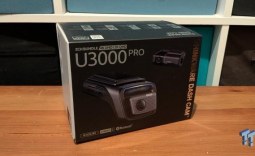 Thinkware U3000 Pro Review - Smart Dashcam with Wi-Fi quirks
 Montech TG3 Mid-Tower Chassis Review
 ASUS ROG Strix X870E-A Gaming WiFI7 Neo Review - A New Enticing Option
 Noctua NL-LC1-36 Liquid CPU Cooler Review
 Logitech G316 X 98 Wired Gaming Keyboard Review - Retro-Inspired Board that Falls a Little Short
 Biwin M560 2TB SSD Review - Best Overall Retail-Ready DRAMless SSD
 Logitech G512 X 98 Analog Mechanical Gaming Keyboard Review - An Innovative Two-in-One
 Thrustmaster T.Flight HOTAS 5 MSFS Edition Review
 GIGABYTE's 40 Days of INFINITY celebrates 40 Years of Innovation with stunning GeForce RTX graphics cards and rewards
 I swapped File Explorer for this free file manager and finally got the layout I wanted
 How to tell if someone has been using your Windows PC without your permission
 6 Task Manager tips for troubleshooting Windows performance problems
 ASUS ROG's 20th Anniversary Line-up of Premium PC Gaming Gear has Arrived - Here's Everything You Need to Know
 Six File Explorer tips every Windows user should know
 I switched my PC to encrypted DNS in Windows 11, and browsing felt more private
 Printer Not Working in Windows? How to fix detection, print queues and drivers
 The Ultimate Guide to Personalizing Your Windows 11 Taskbar
 How to Turn Your Windows Laptop Into a Second Monitor with Miracast and Wireless Display in Minutes