







Learn about how TweakTown tests and reviews hardware. As an Amazon Associate, we earn from qualifying purchases. TweakTown may also earn commissions from other affiliate partners at no extra cost to you.
Stay Updated
Follow TweakTown for breaking tech news, reviews, and daily updates.


G.SKILL's new ultra-low latency DDR5-6000 memory kits for AMD AM5 are the shiny Royal Neo kind
G.SKILL has announced some new DDR5 memory for AMD AM5 platforms, just in time for the arrival of Zen 5 and the new Ryzen 9000 Series of CPUs. These fall under the shiny and sparkly Trident Z5 Royal Neo series and feature "ultra-low latency specifications" and the speed of DDR5-6000.

These new Trident Z5 Royal Neo series kits arrive in DDR5-6000 CL28-36-36-96 and DDR5-6000 CL28-38-38-96 kits, with capacities of 32GB (2x16GB) and 64GB (2x32GB) for the former and 48GB (2x24GB) and 96GB (2x48GB) for the latter. As expected, they support AMD EXPO technology for overclocking, with G.SKILL describing low timing as an "ideal DDR5 memory solution for enthusiasts and overclockers."
This announcement follows from the new Trident Z5 Royal Neo DDR5-8000 memory for AMD AM5 platforms we reported on last week; however, the "ultra-low latency specifications" make these new kits stand out. The lower the CL number, the better.
NVIDIA CEO says Meta has 600,000 H100 AI GPUs, Meta are 'good customers for NVIDIA' says Zuck
Meta's long-term vision for AGI (artificial general intelligence) involved the use of 600,000 x NVIDIA H100 AI GPUs, something NVIDIA CEO Jensen Huang teased Meta CEO Mark Zuckerberg at SIGGRAPH 2024 this week Check it out:

In the video, NVIDIA CEO Jensen Huang says that Meta is "coming up on 100K H100s" to which Zuck replies that yeah, they're "good customers" for NVIDIA and "that's why you invited me to this Q&A", said Zuck in return to Jensen.
600,000 x NVIDIA H100 AI GPUs at an average cost of $30,000 each combines for a total of $15 billion in AI GPU purchases from Meta to NVIDIA alone. We've seen gigantic GPU clusters from Elon Musk and his xAI startup, with its new Memphis Supercluster needing some insane portable power generators just to get 32,000 x NVIDIA H100 AI GPUs operational in the cluster.
Intel Arc Graphics Driver increases Yakuza: Like a Dragon performance by up to 91%
Intel's latest Game On Graphics Driver for Intel Arc covers discrete Intel Arc GPUs and Intel Core Ultra chips with integrated Arc Graphics. It brings a sizeable performance boost to the critically acclaimed RPG Yakuza: Like a Dragon.

According to Intel, if you've got an Intel Arc A750, A770, A580, or A380 desktop graphics card, you can expect up to a massive 91% boost to performance when playing in 1080p using the game's Ultra image quality setting. Bump up the resolution to 1440p, and you'll still find a respectable 35% increase in performance.
Intel Game On Graphics Driver Version: 32.0.101.5768 WHQL also brings performance improvements to Metro: Last Light Complete Edition, which, like Yakuza, is a DirectX 11 title. The difference isn't quite as huge, but the 20% performance bump at 1080p and 23% at 1440p is respectable.
Intel's next-gen Core Ultra 200V series 'Lunar Lake' launching on September 3
Intel has just announced that it will launch its next-generation Core Ultra 200V series "Lunar Lake" processors on September 3.

AMD has just launched its new Ryzen AI 300 series "Strix Point" APUs, which deliver world-class performance to new laptops. They are powered by an upgraded XDNA 2-based NPU for AI workloads. Intel's new Core Ultra 200V series "Lunar Lake" CPUs will compete with AMD's new Zen 5-based Strix Point APUs and Qualcomm's new Arm-based Snapdragon X chips.
The new Lunar Lake CPUs feature new Lion Core P-Cores and Skymont E-Cores, with improved IPC from both expected. On the GPU front, we've got the new Xe2 GPU architecture codenamed Battlemage inside, offering big upgrades in gaming performance and a beefed-up NPU4 chip offering up to 48 TOPS, with a total of 120 TOPS of AI performance from Lunar Lake.
US government moves its $2 billion worth of Bitcoin seized from Silk Road
New on-chain data indicates the United States government has moved more than $2 billion worth of Bitcoin to an unidentified wallet.

The new on-chain data was shared by Arkham Intelligence and comes only a few days after former US President Donald Trump spoke at the Bitcoin 2024 conference in Nashville, Tennesse, where he said that if he was reelected, the US government would not sell any of its currently held Bitcoin, which amounts to as much as $15 billion worth, or approximately 203,000 Bitcoins.
Additionally, Trump said that he was going to make the US the "crypto capital of the world" by implementing several policies that support cryptocurrency. Furthermore, Senator Cynthia Lummis announced the introduction of new legislation that proposes that the US government purchase 5% of the total circulating supply of Bitcoin to hold it as a strategic asset. The proposal was compared to the 1803 purchase from the French for $15 million for the American Midwest by the US government.
Meta will pay Texas $1.4 billion for using facial recognition on the public
The US State of Texas sued Facebook parent company Meta in 2022, allegedly the Mark Zuckerberg-run company "unlawfully" used facial recognition technology on Texans without any prior consent, which is a violation of the state's 2009 Capture or Use of Biometric Identifier (CUBI) Act.

Meta has agreed to a settlement with the state of Texas by agreeing to pay out $1.4 billion over five years, but never admitted any wrongdoing. Texas Attorney General Ken Paxton includes a subtle warning to all other tech firms that any violation of Texas' laws surrounding abusing sensitive data of Texans will be "met with the full force of the law."
The settlement is actually a new record in terms of the maximum amount of action brought by a single state, according to Paxton. Notably, the lawsuit included Facebook's 2011 photo tagging feature that used facial recognition software to identify the people in images. Once identified, the feature suggested a user tag that individual in the image, which embedded a link to that person's profile.
Logitech is working on a 'forever mouse' that you pay per month for
Logitech is no stranger to the peripheral market, making some of the highest-quality peripherals for gamers and creatives alike.

But have you ever considered paying a monthly subscription for one of your peripherals? Logitech has, and the company's CEO Hanneke Faber recently revealed in an interview with The Verge they were shown a "forever mouse" at Logitech's "innovation center" in Ireland. This "forever mouse" was directly compared to the longevity of a watch in the way that people, more often than not, choose not to throw away their old watch. Logitech is aiming to create a product that captures that some longevity.
Faber was asked follow-up questions about this mysterious "forever mouse," such as "What made the mouse a forever mouse?" Faber described it as a "little heavier," having "great software and services you'd constantly update," and "it was beautiful." Faber added, "I don't think we're necessarily super far away from that."
Continue reading: Logitech is working on a 'forever mouse' that you pay per month for (full post)
Micron begins shipping its ninth-generation (G9) NAND flash, inside Micron's 2650 NVMe SSD
Micron has just announced it is shipping ninth-generation (G9) TLC NAND in SSDs, which marks an industry first with this milestone.

The new Micron G9 NAND features the industry's highest transfer speed of 3.6GB/sec, which the company says delivers "unsurpassed bandwidth for reading and writing data". The new G9 NAND enables best-in-class performance for AI and other data-intensive workloads, from personal devices and edge servers to enterprise and cloud data centers.
Scott DeBoer, executive vice president of Technology and Products at Micron, explains: "The shipment of Micron G9 NAND is a testament to Micron's prowess in process technology and design innovations. Micron G9 NAND is up to 73% denser than competitive technologies in the market today, allowing for more compact and efficient storage solutions that benefit both consumers and businesses".
Check out this beautiful die shot of AMD's new Ryzen AI 300 'Strix Point' APU
AMD's new Ryzen AI 300 series "Strix Point" APUs are now out in the wild inside of a new wave of Copilot+ AI systems, and now we've got our first (and most beautiful) die shot of Strix Point. Check it out:

The Zen 5-based Strix Point APU die is larger than the previous-gen Zen 4-based Phoenix APU, measuring 12.06 mm x 18.71 mm (L x W), compared to Phoenix's 9.06 mm x 15.01 mm. This is because AMD has a bigger CPU (Zen 5), a bigger integrated GPU (RDNA 3.5), and a bigger NPU (XDNA 2).
AMD also uses the improved TSMC N4P process node for the Strix Point APU at TSMC after using the N4 process node on its Phoenix and Hawk Point APUs. Nemez (GPUsAreMagic) annotated the die shot in fantastic detail, as seen in the image above.
NVIDIA starts sampling next-gen Blackwell AI GPUs, mass production is still on track
NVIDIA CEO Jensen Huang has confirmed that engineering samples of its next-gen Blackwell AI GPUs will be sent out "all over the world".

The news comes from NVIDIA CEO Jensen Huang himself during a chat at SIGGRAPH 2024 this week, with Jensen saying: "This week, we are sending out engineering samples of Blackwell all over the world".
SIGGRAPH is more tailored towards the "software side of things" so NVIDIA didn't go into the nitty-gritty of its AI hardware, but it did tease that the engineering samples of Blackwell will be headed out this week. That's a very good sign, as it shows that Blackwell AI GPUs are very, very close to being in customers' hands.
Windows 11 has a handy hidden shortcut that lets you kill frozen apps with a minimum of fuss
Windows 11 has a neat little feature hidden away that has just been discovered, and it's all about making it far easier to accomplish a semi-regular chore - namely dealing with a misbehaving app.

Tom's Hardware spotted that a new option is in Windows 11 - though it may have been introduced some time back - to force-close an unresponsive app just by right-clicking it in the taskbar.
Before now, having to deal with a frozen app involved heading to the Task Manager, hunting through the list of running processes, finding the offender, and then force-closing it here via the 'end task' option.
Microsoft low-balled the impact of the Windows outage
Microsoft has provided another update on the fallout of the CrowdStrike outage that knocked out an initially estimated 8.5 million Windows machines around the globe.

The outage affected numerous facets of infrastructure globally, as affected machines were mostly used by big businesses such as airlines, telecommunications companies, banks, stock exchanges, and more. The first revenue loss estimates of the outage approximated a $5.4 billion loss for affected companies in the Fortune 500.
Microsoft initially stated in a blog post that CrowdStrike's outage was caused by a faulty driver update for the company's cybersecurity Falcon Sensor software that triggered kernel errors, and that it estimated 8.5 million Windows machines were affected.
Continue reading: Microsoft low-balled the impact of the Windows outage (full post)
SK hynix says HBM3E expected to make up more than half of HBM shipments in 2024
SK hynix has announced that its new fifth-generation HBM3E memory is expected to make up for over half its HBM shipments in 2024.

During the company's Q2 2024 earnings call on July 25, SK hynix vice president and chief financial officer Kim Woo-hyun said: "We significantly expanded HBM3E shipments in the second quarter as demand was in full swing. In the third quarter, HBM3E shipments will significantly exceed HBM3 shipments, and HBM3E to account for more than half of our total HBM shipments in 2024, we expect".
He continued: "We have already provided HBM3E 12-layer product samples to major customers and will start volume production in the third quarter as planned. With a full product portfolio from HBM2E to HBM3E 12-speed, SK hynix plans to continue its competitive advantage in the HBM market".
Delta is seeking damages from Microsoft and CrowdStrike over $350 million Windows outage loss
CrowdStrike rolled out an update earlier this month that caused an estimated 8.5 million Windows machines to crash worldwide. The outage affected many forms of infrastructure, particularly airlines that were unable to access systems that were caught in infinite blue screen of death boot loops.

The severity of the outage in terms of loss of revenue has yet to be measured exactly, but last week, it was estimated by Parametrix, a cloud monitoring and insurance company, the CrowdStrike outage loss of revenue globally is approximately $15 billion. Out of that $15 billion, Parametrix estimated airlines lost $860 million, which they will likely want returned to them if it were legally possible. Furthermore, the insurance company estimated $5.4 billion was lost from Fortune 500 companies, not including Microsoft.
Delta is the first to seek damages for the event as reports indicate the company has hired prominent attorney David Boies, the chairman of the law firm Boies Schiller Flexner, who rose to fame for his role in the landmark case the US government won against Microsoft, his participating in overturning California's ban on gay marriage, and his work with Harvey Weinstein, the now imprisoned Hollywood producer.
NVIDIA CEO Jensen Huang on next wave of AI: physical AI, has a 'three-body problem'
NVIDIA CEO Jensen Huang has said that the next wave of AI is "physical AI" which will require three computer systems to make happen: AI, robotics, and Omniverse.

At the recent SIGGRAPH 2024 event, NVIDIA CEO Jensen Huang discussed the next wave of AI, something he calls "physical AI" and that it currently has a three-computer problem, or a three-body problem (shout out to the Netflix series "3 Body Problem" which is fantastic).
Jensen said: "Generative AI, the first wave of, it, of course, is all the pioneers. And we know many of the pioneers: OpenAI, Anthropic, Google, Microsoft, a whole bunch of amazing doing this. X is doing this. xAI is doing this. Amazing companies doing this. The next wave of AI, we did talk about, which is enterprise".
Meta's AI Studio lets you create AI friends or an AI twin that can post, chat, and respond
This is a sign of the end times or the latest example of AI moving at a pace that is almost impossible for people to predict. With the recent launch of Meta's open-source and powerful Llama 3.1 AI model, the company hasn't skipped a beat and is currently rolling out its new AI Studio tool in the US.

What is AI Studio? Well, it's described as "a place for people to create, share, and discover AIs to chat with," with no tech skills required. Integrated into Instagram, Messenger, and WhatsApp, these AIs are custom chatbots with a twist. They're your online friends, community, specialists, or even digital twins that can be trained to become you - respond to messages, post content, and even "generate memes."
"You can use a wide variety of prompt templates or start from scratch to make an AI that teaches you how to cook, helps you with your Instagram captions, or generates memes to make your friends laugh - the possibilities are endless," Meta writes in the announcement post.
SK hynix exports of SSDs rose 84% in 1H 2024: big increases for AI data centers
SK hynix has announced its SSD export volume from its M15 production line located in Cheongju, Chungbuk, where SK hynix makes its NAND flash and SSDs, has increased 84% in 1H 2024 compared to 1H 2023.

The South Korean semiconductor manufacturing giant exported around $501 million in SSDs in the first half of 2024, compared to $272 million in the first half of 2023, driven largely by AI demand and data centers' need for more and faster SSDs.
Kim Woo-hyun, SK Hynix's Chief Financial Officer (CFO) said: "We are currently expanding sales of high-capacity enterprise SSDs in response to increasing demand, and to this end, we are increasing the utilization rate of some NAND plants".
NVIDIA CEO believes 'Everybody will have an AI assistant' and it will transform every job
"Everybody will have an AI assistant," NVIDIA CEO Jensen Huang said at SIGGRAPH 2024. "Every single company, every single job within the company, will have AI assistance." This is a bold statement, to be sure, but not a surprising one considering the state of the industry.

SIGGRAPH is a professional graphics conference, and yes, this year, AI was not only on the menu but also included in every dish. From new microservices for 3D modeling to physics, materials, and robotics, generative AI is driving innovation. At SIGGRAPH, NVIDIA also announced that the world's largest advertising company was using generative AI as part of the Omniverse to create content for Coca-Cola - arguably the gold standard for brand advertising.
So, where does the AI assistant fit in? At this year's show, NVIDIA discussed the concept of digital agents, which are digital AIs trained on specific data. For example, an AI modeled after everything you've ever written, said, or done at work (that is measurable) could then become a personal AI assistant.
NVIDIA's new game-changing AI tech could shape the future of game visuals and rendering
Game graphics have evolved at a breakneck pace over the past few decades. We're now at the point where certain materials - metal, glass, ceramic, or cloth - are rendered with accurate and believable detail. In this way, you know the object you're supposed to be looking at because there's depth and detail.

However, creating the look and feel of a real-world material is time-consuming and requires a lot of computational power - driven by the GPU. If you've watched a recent game "compile shaders," after firing it up for the first time, this is why. The alternative would be watching a game stuffer or freeze every time a new material or object enters a detailed 3D world.
At SIGGRAPH 2024, NVIDIA presented new technology called Real-Time Neural Appearance Models, a "complete real-time neural materials system" that aims to add film-like quality to real-time visuals while dramatically improving shading performance versus traditional rendering. Translation: In-game objects will look better than ever.
Apple did NOT use any NVIDIA AI GPUs to train its AI models, used Google TPU chips
Apple has said it has been using Google TPU chips to train its AI software infrastructure, which will power its upcoming suite of Apple Intelligence, AI tools, and features.

In a new research paper from Apple, the company detailed the hardware and software infrastructure of its AI tools and features without any mention of NVIDIA hardware whatsoever. Apple said in its research paper that to train its new AI models, it used two different TPUs from Google that are organized in large clusters of chips.
Apple used 2048 x TPUv5p chips from Google for the AI model that will work on the iPhone and other devices, while the company used 8192 x TPUv4 chips for its server AI model. NVIDIA doesn't design TPUs but instead makes GPUs for gaming, workstations, AI GPUs, and more.
 GTA 6 pre-orders demand is 'astonishing and unprecedented,' Take-Two CEO says
 Bose launches QuietComfort Headphones with new ActiveSense noise-canceling tech and 24-bit audio
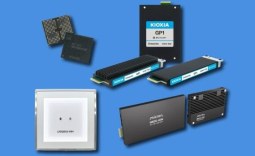 KIOXIA, Micron, and Samsung earn Best of Show awards at FMS 2026
 Retailer issues warning: If you want a GeForce RTX 5070, RTX 5070 Ti or RTX 5080, you better hurry
 NVIDIA's RTX Neural Texture Compression now runs on RTX Spark and Windows on Arm
 $1 billion in TSMC chips for Apple's new iPhone 18 are reportedly sitting on shelves, waiting for DRAM
 Nintendo's profits jumped 53.5% despite a revenue decline, thanks to a surprise one-time US tariff refund
 Minecraft is getting a native Switch 2 version on October 27, but Switch 1 owners may need to pay to upgrade
 Sony is now putting disc death warning stickers on PS5 boxes, proving it has no plans on reversing its decision
 Quake gets new free episode and roguelite mode in 30th anniversary update
 CPS PCCooler YS1200 ATX 3.1 80 PLUS Gold PSU Review
 ASRock X870E Taichi White Review: a premium AM5 motherboard with 10G LAN and WiFi 7
 Asetek Initium Pedal Modular Upgrades Review
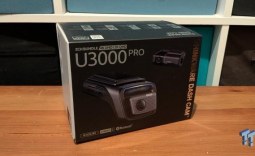 Thinkware U3000 Pro Review - Smart Dashcam with Wi-Fi quirks
 Montech TG3 Mid-Tower Chassis Review
 ASUS ROG Strix X870E-A Gaming WiFI7 Neo Review - A New Enticing Option
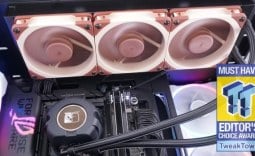 Noctua NL-LC1-36 Liquid CPU Cooler Review
 Logitech G316 X 98 Wired Gaming Keyboard Review - Retro-Inspired Board that Falls a Little Short
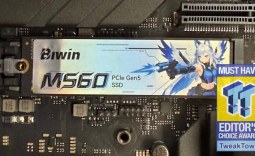 Biwin M560 2TB SSD Review - Best Overall Retail-Ready DRAMless SSD
 Logitech G512 X 98 Analog Mechanical Gaming Keyboard Review - An Innovative Two-in-One
 GIGABYTE's 40 Days of INFINITY celebrates 40 Years of Innovation with stunning GeForce RTX graphics cards and rewards
 I swapped File Explorer for this free file manager and finally got the layout I wanted
 How to tell if someone has been using your Windows PC without your permission
 6 Task Manager tips for troubleshooting Windows performance problems
 ASUS ROG's 20th Anniversary Line-up of Premium PC Gaming Gear has Arrived - Here's Everything You Need to Know
 Six File Explorer tips every Windows user should know
 I switched my PC to encrypted DNS in Windows 11, and browsing felt more private
 Printer Not Working in Windows? How to fix detection, print queues and drivers
 The Ultimate Guide to Personalizing Your Windows 11 Taskbar
 How to Turn Your Windows Laptop Into a Second Monitor with Miracast and Wireless Display in Minutes