







Learn about how TweakTown tests and reviews hardware. As an Amazon Associate, we earn from qualifying purchases. TweakTown may also earn commissions from other affiliate partners at no extra cost to you.
Stay Updated
Follow TweakTown for breaking tech news, reviews, and daily updates.


Heart Aerospace unveils its hybrid-electric plane: 30-seat electric plane takes flight in 2025
Heart Aerospace has just unveiled its first full-scale demonstrator airplane, which marks an important milestone in the development of the Swedish startup and its hybrid-electric airplane journey with its regional hybrid-electric aircraft, the ES-30.

Heart Aerospace's co-founder and CEO, Anders Forslund, said: "Our industry is approaching a 30-year innovation cycle, and we have less than 25 years to decarbonize aviation. We need to develop new methods to get net zero aerospace technologies to market faster. It is a testament to the ingenuity and dedication of our team that we're able to roll out a 30-seat aircraft demonstrator with a brand-new propulsion system, largely in-house, in less than two years".
The 32-meter wingspan in demonstrator form is dubbed Heart Experimental 1 (Heart X1) which will be used as a platform for testing and development of Heart's ES-30 electric aircraft. At first, the new HX-1 will be used for ground-based testing, which will see a focus on the charging operating, taxing, and turnaround procedures. After that, Heart is scheduled to lift off for its first fully electric flight in Q2 2025, where in preparation for this flight, the Swedish aero startup will run critical systems through hardware tests, both on and off the electric plane.
Larry Ellison, Elon Musk, and Jensen Huang had dinner: both 'begging Jensen for GPUs'
Oracle CTO Larry Ellison recently had dinner with SpaceX and Tesla CEO Elon Musk, as well as NVIDIA CEO Jensen Huang, with Ellison saying both he and Elon were "begging" Jensen for GPUs. Check it out:

Ellison said: "I went to dinner with Elon Musk, Jensen Huang, and I would describe the dinner as Oracle and me and Elon begging Jensen for GPUs. Please take our money... no no, take more of it. You're not taking eough. We need you to take more of our money, please".
It was recently revealed that Oracle would be spending over $100 billion on 2000+ data centers in the future, with 130,000+ of NVIDIA's new Blackwell AI GPUs powering its new AI supercluster, with the company talking about requiring 3 nuclear power plants just to power the supercluster.
Blizzard teases Overwatch 2's upcoming World of Warcraft collaboration, new skins and more
Blizzard has just announced its upcoming Overwatch 2 x World of Warcraft collaboration, launching on September 17 and will include 4 new unique skins themed after WoW for heroes Reinhardt, Widowmaker, Torbjorn, and Zenyatta. Check out the trailer below:

We've had previous collaborations with Overwatch 2, most recently is the Transformers collaboration but the World of Warcraft collab keeps it in the Blizzard IP family. The trailer is pretty cool, taking you through a first-person view of a rollercoaster in Blizzard World as Reinhardt, Widowmaker, Torbjorn, and Zenyatta all show off their new WoW skins in Overwatch 2.
Blizzard explains on the official Overwatch 2 x World of Warcraft collaboration: "Experience the magic of Azeroth with Overwatch 2 x World of Warcraft. Check out the Overwatch 2 x World of Warcraft for a peek at what's coming in this crossover event that unites the realms of Overwatch 2 and World of Warcraft! In the Overwatch 2 x World of Warcraft event, choose to represent the Horde or the Alliance as the mighty heroes of Overwatch honor the iconic characters from the world of Azeroth. Overwatch 2 x World of Warcraft arrives on September 17, 2024".
AMD's beefed-up Strix Halo APU, GFX1151 iGPU turn up on ROCm: will be unveiled at CES 2025
AMD is expected to unveil its new Strix Halo APU at CES 2025 early next year, but the new Strix Halo APU as well as the GFX1151 integrated GPU are now supported by ROCm.

The new Strix Halo APU is expected to carry on what AMD did with the recent launch of its Ryzen AI 300 series "Strix Point" APUs, but they'll get a huge upgrade in the integrated RDNA 3.5-powered GPU. Strix Halo is expected to ship with a monster 40 Compute Units of RDNA 3.5 power in the form of the "GFX1151" GPU, up from the 16 CUs on the Strix Point APU inside of laptops launching now.
The leak was spotted by X user David Huang, posting some pics showing that Strix Halo and the GFX1151 GPU have got official support for ROCm. ROCm is the Radeon Open Compute platform, an open-source platform for GPU computing that is a handy tool for developers. AMD's upcoming "GFX1151" is the codename of the integrated graphics inside of Strix Halo, based on the newer RDNA 3.5 GPU architecture.
Nintendo Switch 2 rumored base cost of $400, to be announced early next month says leaker
Nintendo is rumored to announce its next-generation Switch 2 -- which I would personally love to see called the Nintendo Super Switch -- "early next month" according to a PS5 Pro leaker.

In the post on X, the leaker teased that the Nintendo Switch 2 "gets announced early next month" and that he's hearing about a base MSRP of $400. The new Nintendo Switch 2 will come in 2 different SKUs, but he hasn't received clarification and the specification differences between the two SKUs just yet, they could just be simple colors (one SKU is red, another is blue).
Nintendo debuted the original Switch back in 2017 launching at $299, but that works out to around $380 in today's money. So, a base price on the Nintendo Switch 2 of $400 will be fantastic, at close to half the price of Sony's just-revealed PS5 Pro, and will force the price of the original Switch and Switch OLED handhelds down, too.
TT Show Episode 51 - PlayStation 5 Pro: The Good, The Bad, and The Ugly
Sony unveiled the PlayStation 5 Pro console this week, so it's only fitting that Jak and Kosta discuss the announcement presentation, Sony's subsequent blog post, and the lukewarm reaction from PlayStation fans and gamers. Outside of the hefty $699 price, the beefed-up RDNA 4-powered GPU inside the PS5 Pro console sounds promising.

And really, that seems to be the big issue with Sony's PS5 Pro reveal; without new games or new experiences, it's hard to get too excited about replaying The Last of Us Part II on the fourth console it's being optimized for - faster performance or not. The same sentiment applies to Ratchet & Clank: Rift Apart and Marvel's Spider-Man 2, games that already look great on the baseline PlayStation 5.
However, if Sony's AI-based PSSR upscaling hits the same heights as NVIDIA's DLSS on PC and the 45% more GPU horsepower is put to good use, there will no doubt be a bunch of games that look and play best on Sony's new console. When it comes to an announcement like this, you need to show, not tell.
PlayStation 5 Pro Benchmarked: 1600p to 2160p @ locked 60FPS, could also run 8K gaming
Now that Sony's new PlayStation 5 Pro console is official, new leaks are here teasing that the PS5 Pro has been benchmarked... and we get a look at how it ticks inside with the upgraded semi-custom SoC from AMD.

In a new video from leaker Moore's Law is Dead, who has a developer source who reportedly has access to the new PS5 Pro and has compared it against the standard PS5. The unknown developer was consulted on previous leaks sent to MLID about the PS5 Pro in early testing footage of one of their games that compared the PS5 Pro vs PS5.
In this footage, the game uses a 1080p to 1600p dynamic resolution range with a mix of Medium and High graphics settings and hits around 45-60FPS average on the standard PS5. However, the new PS5 Pro pumps out 1600p to 2160p (up to 4K) without Sony's new PSSR (PlayStation Spectral Super Resolution, AI upscaling on PS5 Pro) at a locked 60FPS without any drops. This developer is also considering supporting 4K 120FPS on the PS5 Pro in the future, which is SUPER exciting to hear for console gamers.
OpenAI releases AI capable of thinking video games into existence
OpenAI has released two new AI models designed to improve the reasoning capabilities of artificial intelligence-powered systems. These models indicate a step up in sophistication compared to the company's previous AI models, such as GPT-4o.

The Microsoft-backed company explained in its blog post that it will be launching two new AI models, o1 and o1-mini. The o1 will be available in ChatGPT and its API beginning on Thursday, and the o1-mini will come to ChatGPT Free users. However, it will be a much smaller model, meaning it will be less powerful and, therefore, more affordable than the o1 model. o1-mini is expected to go to ChatGPT Free users at an unknown date.
OpenAI explained in its blog post the o1 model scored 83% on the qualifying exam for the International Mathematics Olympiad, which is a stark jump compared to the 13% scored by its previous model, GPT-4o. This new-found "reasoning" capability was made possible by implementing a technique called "chain of thought," which involves the AI being taught to break down a user's prompt into more logical steps that are then carried out individually rather than addressing the prompt in its entirety.
Continue reading: OpenAI releases AI capable of thinking video games into existence (full post)
PS5 Pro disc drive sells out ahead of launch sparking major concerns of scalping
Sony has officially showcased the highly anticipated PlayStation 5 Pro, but, unfortunately, the reveal was met with heavy criticism over the company's decision to sell the console without a disk drive and a vertical stand, all for the price of $699, or $200 more than the standard retail price for the PlayStation 5.

The three aforementioned reasons, along with Sony showcasing the admittedly impressive performance jump compared to the PS5 on old games, are among the main gripes fans have with the new console. The lack of an optical drive forces buyers to purchase the drive separately for $79.99, which would enable them access to their collection of physical media. This would increase the total price for the console to $778.99.
As you can probably imagine, pre-orders for the separately sold disk drive have skyrocketed since they became available, with reports stating Walmart has already sold more than 1,000 PS5 Disc Drives in just 24 hours, and other online retailers such as Amazon, Best Buy, and Target have already sold out. Unsurprisingly, PS5 Pro disk drives are popping up on eBay and other second-hand marketplaces, but with a significant markup on their price compared to what they are retailing for.
GALAX GeForce RTX 4070 with GDDR6 reviewed, only 1% slower than GDDR6X
Our friends at Wccftech have posted a review of the GALAX GeForce RTX 4070 OC, one of the new RTX 4070 variants that sports 12GB of GDDR6 memory instead of the more advanced GDDR6X. As one of the most popular GPUs for PC gaming, NVIDIA has reportedly switched to GDDR6 for the RTX 4070 due to memory shortages and supply constraints.

When this news broke, and NVIDIA confirmed that GeForce RTX 4070 GPUs with GDDR6 memory would perform similarly to existing models, a mini-controversy broke out. With no price drop, model number change, or specific labeling, many began to believe that people couldn't tell if they were buying the 'faster' or 'slower' RTX 4070 graphics card.
Granted, this is only a single review, but with Wccftech testing the GALAX GeForce RTX 4070 OC and comparing performance between it and the GDDR6X variant, the conclusion is that the new GDDR6 models offer the "same performance."
Continue reading: GALAX GeForce RTX 4070 with GDDR6 reviewed, only 1% slower than GDDR6X (full post)
GeForce RTX 30 Series owners can finally enable Frame Generation in Cyberpunk 2077
Patch 2.13 for Cyberpunk 2077 and the Phantom Liberty expansion is available today, with developer CD Projekt Red finally adding official support for AMD FidelityFX Super Resolution 3 with Frame Generation. FSR 3 has been 'coming soon' to Cyberpunk 2077 for a while, and now that it's finally here, it's excellent news for all PC gamers.

AMD's FSR 3 upscaling and Frame Generation works on all modern GPUs, from the GeForce RTX 20 Series and up on the NVIDIA side to the Radeon RX 6000 Series and up on the AMD side. It even works on Intel's Arc GPU line-up. Like NVIDIA's DLSS 3, AMD's Frame Generation boosts performance by generating frames and inserting them between natively rendered or upscaled frames.
GeForce RTX 20 Series and 30 Series gamers will want to try it out. NVIDIA's impressive AI-powered DLSS 3 Frame Generation is exclusive to the GeForce RTX 40 Series because it uses new specialized AI hardware.
NVIDIA CEO Jensen Huang touts the 'beginning of a new industrial revolution'
NVIDIA CEO Jensen Huang has spoken to CNBC after meeting with the Biden administration and tech executives at the White House about the future of AI development and what it will take to produce it.

Huang joined other major tech executives at the White House who are also assisting in the development of AI, with reports confirming the presence of OpenAI's CEO Sam Altman, Anthropic CEO Dario Amodei, Google President Ruth Porat, Amazon's cloud chief Matt Harman, and Microsoft President Brad Smith. On the other side of the fence were government officials from various agencies, such as Commerce Secretary Gina Raimondo, National Security Advisor Jake Sullivan, and Energy Secretary Gennifer Granholm.
What was the meeting about? Huang explained that the conference focused on how the US government could assist in the development of data centers across the US, particularly in the form of implementing initiatives that ultimately would lead the US to maintain its lead in the global AI race. Companies require a significant amount of energy to power these massive data centers, which was also a topic of the meeting as the Energy Department will help data center owners find clean and reliable power sources along with new resources in the form of loans, grants, and tax credits.
Assassin's Creed Shadows PS5 trailer hit with backlash after showing unfinished animations
The next installment in the Assassin's Creed franchise will be released on November 15, and ahead of the launch Ubisoft has released a new trailer for the title on the official PlayStation YouTube channel.

The new "World" trailer states at the beginning that any footage seen in the video has either been captured on a PS5 or PC. Shadows will take players to Feudal Japan, where they will get to experience an open world similar in scope to previous Assassin's Creed titles, Valhalla and Odyssey, but through two main characters. The new trailer release has been met with heavy criticism as, at the time of writing, it has received 5800 Dislikes versus 3000 Likes of its 54,0000 views.
Many of the criticisms point to choppy and seemingly unfinished animations, with a particularly egregious example being at 0.33 seconds into the video, where the horse appears to be ice skating across the ground. Other criticisms point to Ubisoft's failure to showcase any gameplay of Shadows ahead of its release while still leaving pre-orders open. "Release in two months. Still little to no gameplay showed. Says a lot," read one YouTube comment
Elgato unleashes gigantic new Stream Deck Studio rackmount unit for pro streamers, costs $900
Elgato has just introduced its new Stream Deck Studio, a revamped version of its creative control piece of technology that is aimed at professional broadcasters at a cost of $999. Check it out:

Elgato has teamed with broadcast software specialist Bitfocus for its new Stream Deck Studio, where it can run the Companion software that works on other Stream Deck models, but also supports the company's new Buttons software. The Buttons app allows for additional interface customization designed specifically for the new Stream Deck Studio.
Julian Fest, General Manager of Elgato, said: "Stream Deck has been a home run for Elgato with its intuitive, customizable interface. Our growing relationship with Bitfocus was key in developing Stream Deck Studio solution, which we expect to receive a very strong market reception as we continue to expand our addressable market with an accessible, groundbreaking, solution for the ever-demanding professional broadcast environment".
ASUS intros ROG Strix Platinum PSU family: 850W to 1200W ATX 3.1 PSUs ready for your new PC
ASUS has just announced its new ROG Strix Platinum PSUs that arrive in 1200W, 1000W, and 850W models that are ready for your new gaming PC build.

The new ASUS ROG Strix Platinum PSUs are high-efficiency power supplies, raising the bar with lower connection temperatures, intelligence wattage delivery, ATX 3.1 with Intel lab testing, and a huge 10-year warranty in 1200W, 1000W, and 850W PSU forms.
ASUS is using its GPU-First intelligent voltage stabilizer (IVS) inside of its new ROG Strix Platinum PSU series, ensuring that a high-end overclocked graphics card always has the stable power it requires to perform at peak capacity during intense gaming sessions with up to 45% more stable power flow to the GPU versus not having the stabilizer inside of the PSU.
Robot begins daring journey into Fukushima's melted-down nuclear reactor core
A robot has entered the Unit 2 reactor at the Fukushima power plant and if its mission is successful it will collect a small amount of nuclear waste that will then be examined by researchers.

The Fukushima power plant went into meltdown in 2011 following a magnitude 9.0 earthquake, causing approximately 880 tons of nuclear waste that will take until 2050 to clear away and decontaminate the area completely. Unfortunately, this estimation is on the side of optimistic, as researchers aren't even sure what kind of state the nuclear fuel is in, hence the involvement of a small robot grabber.
Tokyo Electric Power Company Holdings (TEPCO), the company that owns the site, has previously sent robots inside the reactor cores, and, unfortunately, they have experienced mixed success. In 2015, the company sent a robot into Unit 1, where it died three hours later after being exposed to a radioactive area. An underwater robot managed to get more success in 2017. In approximately two weeks, the robot will be pushed into the Unit 2 reactor by metal poles that extend up to 72 feet.
GTA 6 hitting 4K 60FPS on PS5 Pro will be 'extremely challenging' due to CPU limitations
Despite the new GPU upgrades and AI upscaling, demanding games like GTA 6 are unlikely to hit 4K 60FPS on Sony's PlayStation 5 Pro.

Sony's new PS5 Pro looks to be a substantial upgrade that's capable of delivering 4K 60FPS gaming in specific titles, but it lacks the chops to deliver this kind of performance on a universal level. It may not be until the PS6 generation that games hit a more standardized 4K 60FPS target, even with AI upscaling.
Although the PS5 Pro features a beefier RDNA 4 GPU outfitted with 67% more compute units and a supercharged unified RAM combo that can deliver +45% faster rendering, the system still has a big downfall: The CPU. Sony's mid-gen upgrade still features a similar 8-core Zen 2 CPU as the base PlayStation 5 console (the Pro's CPU has been slightly overclocked by +10%). This effectively means that CPU-bound games will deliver similar FPS performance on the Pro as they would on the PS5. And based on what's been revealed so far, GTA 6 is likely to be one such CPU-bound game.
SpaceX go on the offensive against US government over Starship flight delays
SpaceX has decided to voice its opinion on the lack of launch license it has obtained for the fifth launch of the world's most powerful rocket, Starship.

The Elon Musk-led company took to its official blog to share a lengthy update on the current situation Starship is facing, which is delayed launches due to regulatory red tape. SpaceX explains that Starship has been ready at the launch pad since the first week of August, but it still hasn't received a launch license from the US government. "Unfortunately, we continue to be stuck in a reality where it takes longer to do the government paperwork to license a rocket launch than it does to design and build the actual hardware."
As for Flight 5 specifically, SpaceX writes that it received a launch license estimation from the Federal Aviation Administration (FAA), the regulatory body responsible for granting approval for SpaceX to fly Starship. SpaceX is estimated to receive its license for Flight 5 sometime in late November, which would make it more than a two-month delay from the previously estimated date of mid-September.
Samsung S25 Ultra render reveals all four sides of the unreleased smartphone
Apple just wrapped up its Glowtime event, where it showcased the latest generation of iPhone ahead of its release on September 20, and right after the event, we have a brand new Samsung S25 Ultra leak. Techtember is officially here!

Samsung's next-generation flagship smartphone will be the S25 Ultra, and reports currently point to January as the rumored launch date. Before the launch, leaker @OnLeaks and Android Headlines created renders of the upcoming smartphone based on previous rumors about its specifications. For example, the S25 Ultra is rumored to be just 219g, making it lighter than the iPhone 16 Pro Max at 227g and the S24 Ultra at 232g.
According to the renders, the S25 Ultra will have the same 6.8-inch screen size as the Samsung S24 Ultra, but will overall be a smaller phone at 162.8 x 77.6 x 8.2mm versus 162.3 x 79 x 8.6mm. TechRadar notes that while recent reports say the S25 Ultra will have the same display size as the S24 UItra, previous rumors suggested the S25 Ultra was going to have a bigger screen.
Former Samsung employees arrested over stealing $3.2 billion of chip technology
Former Samsung employees have been arrested over allegations of industrial espionage, the process of stealing company IP to take it to another company, and other related charges.

The two former Samsung employees used to work for Samsung Electronics and have since been arrested by South Korean authorities for participating in a scheme to steal Samsung semiconductor technologies valued at more than $3.2 billion. Reports indicate the pair, who have only been identified by their last names, Choi and Oh, were trying to transport the Samsung IP back to China to replicate the Samsung chip factory.
The two former Samsung Electronics employees allegedly worked with Chinese officials to create a joint venture called Chengdu Gaozhen. 66-year-old former Samsung executive Choi is alleged to have begun recruiting South Korean semiconductor experts, along with a former Samsung senior researcher who joined the project as the chief plant designer. So, what were the pair trying to steal? Samsung's 20-nanometer DRAM (Dynamic Random Access Memory).
 Leaked Xbox controller for Gears of War E-Day features a cracked volcanic rock design and blood-red Crimson Omen
 Doom co-creator John Romero reveals id Software turned to Taiwanese pirates to help distribute the game to more people
 GTA Online will continue after GTA 6's release, Take-Two reiterates
 YouTuber benchmarks RTX 4060 on Snapdragon X2 Elite laptop using RTX Spark developer driver
 Dev builds a unique 3D operating system for multitasking, gets terrible performance
 Take-Two boss: 'discs, especially for big games, don't make sense to the consumer'
 Modders are selling RTX 2080 Ti GPUs with 22GB VRAM on eBay for AI use
 Take-Two CEO Strauss Zelnick backs game streaming, says it will help fix hardware prices
 Take-Two CEO on GTA 6's $100 price: 'I think Rockstar got it right; given the hype, we could have made other pricing choices'
 GTA 6 pre-orders demand is 'astonishing and unprecedented,' Take-Two CEO says
 CPS PCCooler YS1200 ATX 3.1 80 PLUS Gold PSU Review
 ASRock X870E Taichi White Review: a premium AM5 motherboard with 10G LAN and WiFi 7
 Asetek Initium Pedal Modular Upgrades Review
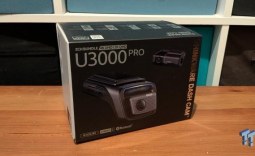 Thinkware U3000 Pro Review - Smart Dashcam with Wi-Fi quirks
 Montech TG3 Mid-Tower Chassis Review
 ASUS ROG Strix X870E-A Gaming WiFI7 Neo Review - A New Enticing Option
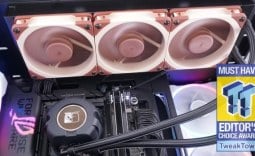 Noctua NL-LC1-36 Liquid CPU Cooler Review
 Logitech G316 X 98 Wired Gaming Keyboard Review - Retro-Inspired Board that Falls a Little Short
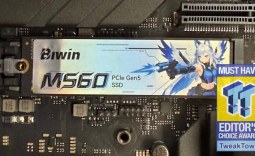 Biwin M560 2TB SSD Review - Best Overall Retail-Ready DRAMless SSD
 Logitech G512 X 98 Analog Mechanical Gaming Keyboard Review - An Innovative Two-in-One
 GIGABYTE's 40 Days of INFINITY celebrates 40 Years of Innovation with stunning GeForce RTX graphics cards and rewards
 I swapped File Explorer for this free file manager and finally got the layout I wanted
 How to tell if someone has been using your Windows PC without your permission
 6 Task Manager tips for troubleshooting Windows performance problems
 ASUS ROG's 20th Anniversary Line-up of Premium PC Gaming Gear has Arrived - Here's Everything You Need to Know
 Six File Explorer tips every Windows user should know
 I switched my PC to encrypted DNS in Windows 11, and browsing felt more private
 Printer Not Working in Windows? How to fix detection, print queues and drivers
 The Ultimate Guide to Personalizing Your Windows 11 Taskbar
 How to Turn Your Windows Laptop Into a Second Monitor with Miracast and Wireless Display in Minutes