







Learn about how TweakTown tests and reviews hardware. As an Amazon Associate, we earn from qualifying purchases. TweakTown may also earn commissions from other affiliate partners at no extra cost to you.
Stay Updated
Follow TweakTown for breaking tech news, reviews, and daily updates.


Some Windows 11 stock apps might soon be much faster to load and more responsive in general
Microsoft is working to make some of its default apps run faster in Windows 11, specifically the clients using Windows App SDK.

That software development kit is used in the likes of the stock Photos app in Windows 11, or Phone Link, but apps leveraging the SDK can often exhibit sluggish behavior when loading, or in terms of general responsiveness, as Windows Latest notes.
However, the tech site has spotted a support document from earlier this month which tells us that Microsoft has brought in native Ahead-Of-Time (AOT) compilation for Windows App SDK.
First Black Myth: Wukong DLC release date rumors begin flying
One of the most successful games of this year is, by far, Black Myth: Wukong. The Chinese developer behind the title Game Science has become the proud leader of the Steam charts in the most-played single-player game.

Now, industry analyst Daniel Camilo has said the title has sold more than 20 million units since its release on August 19, with 18 million of those units being sold in just the first two weeks of its launch. Previous rumors indicated Game Science was planning on releasing at least two DLCs for Black Myth Wukong, and now we have begun hearing the first rumblings of when the first DLC will release.
According to Camilo, who cited "very reliable first-hand sources I heard from," Game Science is planning on releasing the first DLC in early 2025, or around the "Chinese New Year," which puts its release between the end of January and early February. This rumor corroborates previous rumors that suggested Game Science was doing DLCs for Black Myth Wukong before moving on to another game.
Continue reading: First Black Myth: Wukong DLC release date rumors begin flying (full post)
US government pays $3 billion in interest every day from its national debt
A new estimate from a chief economist at an American multinational investment firm that primarily focuses on assets has shone a light on how much interest the US government is paying every day on the national debt.

The estimate comes from Apollo Global Management's Torsten Sløk, a chief economist at the company, who wrote on the official blog for the asset management company the US government is now paying on average $3 billion a day in interest expenses, which includes weekends. The new post by the chief economist cites data from the US Treasury Department, and the $3 billion in interest every day is up from the $1.5 billion the US government was paying at the beginning of 2022.
Reports estimate that continuing at this pace, the US government will pay a staggering $1.157 trillion in interest for the full fiscal year 2024. According to the Treasury Department's own data, the national debt is expected to hit a new record of $35.346 trillion by September 9, and as of September 17th, it's currently $35.378 trillion. "If the Fed cuts interest rates by 1%-point and the entire yield curve declines by 1%-point, then daily interest expenses will decline from $3 billion per day to $2.5 billion per day," writes Sløk
Intel lost the contract to make and fab a chip for Sony's next-generation PlayStation 6 in 2022
Intel lost out on a major contract to design and fab Sony's next-generation PlayStation 6 console back in 2022, which "dealt a significant blow" in the company's efforts to build its struggling contract manufacturing business.

In a new report from Reuters, we're learning Intel could've been inside of the PS6 console which would've had them enjoy billions and billions of dollars of revenue, fabricating thousands of silicon wafers per month. In the competitive bidding process to supply and design the PS6 chip, it was a fight against AMD and TSMC, which have made the chips for both the PS5 and upcoming PS5 Pro consoles.
AMD has been enjoying the fruits of that semi-custom SoC labor, pumping out tens of millions of PS5 chips and 10+ million PS5 Pro consoles... and every single future-gen PS6 in 2026 and beyond. Reuters reports that Intel and AMD were the "final two contenders in the bidding process for the contract".
Black Myth: Wukong played on Huawei's new Mate XT Ultimate Design tri-fold smarpthone
Black Myth: Wukong will melt your gaming PC when its visuals are cranked to the max, but what about running it on a smartphone? Yeah, you can... but what about a tri-fold smartphone? Yep, that works with Black Myth: Wukong as well, and it works incredibly well. Check it out:

A few different videos have popped up into my various social feeds, the first of which I noticed on TikTok which you can check out here, with Black Myth: Wukong running on Huawei's just-released Mate XT Ultimate Design smartphone. This is a new tri-fold smartphone that folds out not once, not twice, but three times for a gigantic display that is oh-so-perfect for on-the-go gaming.
Huawei's new Mate XT Ultimate Design smartphone was running Black Myth: Wukong over the company's cloud servers, so you'll be needing some super-fast 5G connectivity to get the game to even load. Even on its most conservative bitrate consumption, cloud gaming will blow through your mobile data quick smart, so be careful.
Nintendo rumor reveals Switch 2 price and design will be like Nintendo DS
A new week means a new Nintendo rumor, or at least that is what it feels like if you have been following along with the news trail created by the rumblings of Nintendo's mysterious next-generation console.

Unfortunately for Nintendo fans, that news trail has been stretching since 2017, when the original Nintendo Switch was released. Fortunately for Nintendo, this gap between consoles is a testament to the Switch's popularity and success, which has ultimately led to the production of a string of rumors about a successor. Previous rumors suggested the Switch 2 was going to be a much more beefier version of the original Switch, with additional performance being added via the dock and the inclusion of NVIDIA's DLSS upscaling technology.
Other rumors corroborated this performance estimation for the Switch successor and stated the Switch 2's performance would just fall short of the Valve Steam Deck. Now, a new report from Taiwan Economic Daily News reveals Nintendo has moved up the reveal for the Nintendo Switch 2 to respond to Sony's recent unveiling of the PlayStation 5 Pro. According to the publication, an announcement for the Nintendo Switch 2 is expected before the end of the year.
Intel qualifies for up to $3.5 billion in federal grants to make chips for US military
Intel has officially qualified for up to $3.5 billion in federal grants to make semiconductors for the Pentagon, in a new article published by Bloomberg.

The site reports from the usual "people familiar with the matter" saying that Intel has reached a "binding agreement" with US officials that falls under a secretive program called "Secure Enclave". This project will start production for advanced chips that will be used by the US military and intelligence applications, spanning multiple states and including a manufacturing facility in Arizona.
Bloomberg adds that while Intel was always the frontrunner for this award, there has "been pushback by other chipmakers" and concern in Washington "about the wisdom of relying on one firm, and a funding fight across multiple agencies and Capitol Hill that threatened to cut into Intel's total award".
GameMax N80 is a new case with a dual chamber design, two individually cooled compartments
Regarding PC chassis and case designs, we're currently in the era of panoramic views or tempered glass on the front and side in a 'fishbowl-like' design. Earlier this year at Computex 2024, we saw many of these types of cases, and most of them looked great.

The new GameMax N80, from the gamer-focused PC hardware maker GameMax, presents a unique spin on this design by featuring two compartments with independent cooling. The design looks to give the power supply its little case, which sits underneath the panoramic compartment that houses all the main stuff like motherboard, memory, CPU, and GPU.
According to GameMax, having a separate upper chamber allows colder, fresh air to enter, which in turn improves cooling. The GameMax N80 ships with six ARGB PWM fans for total coverage. As seen in the images, it's a looker with stylish rounded corners and a single piece of curved glass wrapping around the side and front of the case.
HighPoint's ultra-fast 8-slot NVMe Gen4 RAID card compliant with immersion-cooled servers
HighPoint has just announced that its SSD7540 RAID AIC is now qualified to be used with LiquidCool Solutions' immersion-cooling rack servers as well as immersion-cooled server platforms in general.

What does this mean? What's immersion cooling? Why does an SSD RAID AIC need that? Immersion cooling is a style of liquid cooling that submerges either most, or the entire PC in a non-conductive liquid, usually mineral oil. This is for aesthetics and sometimes, cooling efficiency, and sometimes both.
In the data center business, where there will be multiple fully-decked systems stacked on top of one another, immersion cooling becomes a savior in cooling servers. HighPoint's SSD7540 RAID AIC is the first to be submerged into the world of immersion cooling, so it'll be interesting to see a data center do this and show some results of the improvements using immersion-cooled RAID AICs with 8 x SSDs per card (and multiple of these cards installed, by the way).
NVIDIA CEO Jensen Huang says 'We can't do computer graphics anymore' without AI
At the recent Goldman Sachs Communacopia and Technology Conference, NVIDIA CEO Jensen Huang was asked about exciting use cases for AI and responded with a nod to DLSS and other RTX technologies. "In our company, we use it for computer graphics," Jensen replied. "We can't do computer graphics anymore without artificial intelligence."

NVIDIA DLSS, or Deep Learning Super Sampling, is a crucial part of modern PC gaming on GeForce graphics cards, where the AI-powered upscaler boosts performance by generating new pixels that hit a target resolution and frame rate. With the arrival of the GeForce RTX 40 Series, NVIDIA expanded this to add Frame Generation, where AI generates entire frames. Throw in the impressive AI-powered Ray Reconstruction, and it's the reason why games like Black Myth: Wukong is playable with all settings maxed out.
"We compute one pixel, we infer the other 32. I mean, it's incredible," Jensen continues. "And so we hallucinate, if you will, the other 32, and it looks temporally stable, it looks photorealistic, and the image quality is incredible, the performance is incredible, the amount of energy we save - computing one pixel takes a lot of energy. That's computation."
Diablo 4 passes $1 billion in lifetime revenue, $150 million from microtransactions
According to information on Harrison Froeschke's LinkedIn profile, a Senior Product Manager at Blizzard, Diablo IV's lifetime revenue has surpassed $1 billion, which includes over $150 of microtransaction revenue. The profile and information have since been removed or made private, but not before publication Gamepressure spotted it and posted a screenshot.

The only official information surrounding Diablo 4's revenue arrived after the game's launch in June 2023, when Blizzard announced it had generated $666 million in sales in a week. Making it the studio's fastest-selling game ever. The LinkedIn post mentioned leading the monetization strategy of the "store cosmetics, pricing, bundle offers, and personalized discounts," which drove the $150 million in microtransaction revenue.
However, this only represents 15% of Diablo 4's total revenue. As a full-priced game in one of the most popular action RPG franchises, most of the money has come from players buying the game.
Alan Wake 2 on PS5 Pro uses PSSR to upscale from 864p, sub Full-HD, to hit 4K 60 FPS
One of the big criticisms of Sony's big PlayStation 5 Pro reveal was that it was hard to see the difference in visual quality when it showcased footage from games like Ratchet & Clank running on the baseline PS5 hardware, comparing it to the beefed-up PS5 Pro. Like others, part of the issue stems from Sony dealing with YouTube compression and artifacts when live-streaming a presentation.

As part of its next DF Direct show, Digital Foundry has gotten access to uncompressed or direct-feed-like footage of the PlayStation 5 Pro running Ratchet & Clank: Rift Apart, Alan Wake 2, Horizon Forbidden West, Hogwarts Legacy, Gran Turismo 7, Assassin's Creed Shadows, and Dragon's Dogma 2. Although currently locked behind a paywall for its members, X user @JMaine518 has posted a summary of Digital Foundry's findings.
Specifically, Sony's brand-new AI upscaler PSSR (PlayStation Spectral Super Resolution). The good news is that PSSR delivers a higher-quality image than AMD's FSR. However, it falls short of NVIDIA DLSS regarding image stability - in that some scenes have noticeable ghosting and shimmering.
Sony's Until Dawn remake will support ray-tracing, DLSS 3, and FSR 3 on PC
Until Dawn is a new PC game developed by Sony, PlayStation Studios, and Ballistic Moon. It's a remake of a fan-favorite PlayStation 4-era cinematic horror game from Supermassive Games that is more of an interactive movie than an action game. Praised for its branching story and engaging characters, the version coming October 4 is a full-blown remake created in Unreal Engine 5.

Ahead of the game's release, PlayStation has announced the PC hardware requirements for the game, which are relatively modest in terms of CPU and GPU requirements to hit the recommended 1080p 60FPS performance. On the CPU side, you'll need at least an Intel Core i5 8600 or AMD Ryzen 7 2700X. On the GPU side, you'll need at least an NVIDIA GeForce RTX 2060 or AMD Radeon RX 6600 XT.
Bump the resolution up to 4K 60FPS, and you'll need more recent and more powerful hardware, like the GeForce RTX 3080 Ti and Radeon RX 6900 XT. To further boost performance and visual fidelity, developer Ballistic Moon has also confirmed that the game will feature ray-traced shadows, reflections, and Ambient Occlusion. Plus, DLSS 3 and FSR 3 support.
AMD CEO Lisa Su, 'We are a data center-first company'
"In our last quarter, I think data center was over 50% of our revenue," AMD CEO Lisa Su said at the recent Goldman Sachs Communacopia And Technology Conference. Adding, "So we really are a data center first company." Although this might sound like a shift in focus for AMD, with the generative AI boom in full swing, it's par for the course for chipmakers feeding the insatiable AI beast.

Looking at AMD's most recent earnings, data center revenue, which includes server-specific EPYC CPUs and other GPU hardware, brought in roughly double the revenue of AMD's client and gaming business. Lisa Su added that AMD's data center-first approach extends to cloud, edge, and client - as seen in the latest Ryzen AI chips for mobile devices.
It's a similar story at NVIDIA, which has seen unprecedented growth and expansion in recent years due to its data center and AI software business.
Continue reading: AMD CEO Lisa Su, 'We are a data center-first company' (full post)
AMD's FSR 4 will be AI-powered like NVIDIA DLSS, and optimized for handhelds
In a recent interview with Tom's Hardware, AMD's Jack Huynh, the company's Computing and Graphics Business Group leader, confirmed that the next version of AMD's FidelityFX Super Resolution or FSR 4 will embrace and use AI. This applies to FSR 4's Frame Generation and Super Resolution components, and the reasoning isn't so much to follow NVIDIA's lead but to improve battery life on handhelds.

Citing devices like the ASUS ROG Ally and Lenovo Legion GO, Jack Huynh states that battery life is the number one priority for AMD's graphics teams and Radeon group. "I need to play a Black Myth: Wukong for three hours, not 60 minutes," Huynh explains. "This is where frame generation and interpolation [come in], so this is the FSR4 that we're adding."
AMD's FidelityFX Super Resolution, or FSR, is the company's response to NVIDIA DLSS. However, unlike Team Green's approach, its algorithms and technology are currently not AI-based. The result is lower image quality and stability than DLSS, with the trade-off being that FSR can run on any GPU.
Intel giving FULL refunds for faulty Core i9-13900K CPUs, some get swapped with the 14900K
Intel is providing a full refund or swapping out affected 13th Gen Core and 14th Gen Core CPUs with the Core i9-14900K, with Intel's hero act possibly starting.

Intel had flaws in its RMA process, seeing the company reject "valid" RMA requests just weeks ago, but now, there has been multiple people posting on social media that have worked the system, leveraging the flaw in Intel's RMA process and benefitting big time.
X user "Pk1" posted that he sent a fully functional "never game me an issue" almost 2-year-old Core i9-13900K, to which he received a $599 check. He didn't need to provide any proof of instability, and Intel even paid for the shipping. In full, Pk1 said: "Well, it's 100% official. I received a check for $599 from Intel today for my fully functional, never gave me an issue, almost 2yrs old 13900k. They required zero proof of instability and even paid for the shipping. I wish this happened every generation!!! Lol"
Sony says setting up a PC can be 'difficult' compared to consoles, after $699 price on PS5 Pro
The $699 pricing for the new PlayStation 5 Pro from Sony has some gamers upset, and now the company is playing defense with some statements to Nikkei that setting up a PC is more "difficult" compared to a console.

Speaking with Nikkei, Hideaki Nishino, the CEO of the Platform Business Group at Sony Interactive Entertainment, said that the key selling point to its userbase with the new PS5 Pro is the simplicity compared to the PC. Nishino said: "I think that with mobile devices, there are a lot of games that show ads, and with PCs, the setup can be difficult. With PS, you can immediately enjoy the content you purchased as soon as you turn it on. Even in the stores where you buy software, the products are clearly displayed, making it an intuitive experience".
He's not wrong.
Sony on evolving into the next-gen PlayStation 6: 'there's still more we can do'
Sony only just unveiled its new PlayStation 5 Pro, but its next-gen PlayStation 6 console is already being discussed... and what improvements we could expect from the PS5 to the new PS6 generation console.

In a chat with Nikkei recently, Hideaki Nishino, the CEO of the Platform Business Group at Sony Interactive Entertainment was asked if the launch of the PS5 Pro would be more of a challenge to create a successful next-gen PS6 in a few years, to which Nishino responded about technology constantly evolving and that there is "still more that we (Sony) can do".
Nishino mentions the shortened loading times by moving from a HDD in the PS4 to the Gen4 SSD in the PS5, and that the sound is now 3D through the PS5 DualSense controller speakers, enhancing immersion. Nishino also mentioned that "visual accuracy is important" and that "we will also be updating other elements". The PS4 to PS5 upgrade was rather large, and I expect the PS5 to PS6 upgrade to be even bigger.
The Legend of Zelda: Echoes of Wisdom gameplay leaks ahead of launch
It was back in June that Nintendo announced its next installment in the main line The Legend of Zelda series, with the company unveiling The Legend of Zelda: Echoes of Wisdom, marking the 21st title in the series and the first time Zelda is the main character.

For those that don't know, in every Legend of Zelda game, players control Link, who sets out to save the kingdom of Hyrule and ultimately rescue Princess Zelda. However, Nintendo has decided to change things up and make Zelda the protagonist in Echoes of Wisdom, as Link has disappeared after he loses in battle to Ganondorf.
In Echoes of Wisdom, Zelda embarks on a quest to save the world from total destruction, and the gameplay players can expect will be different from every other Zelda game Nintendo has released as Zelda won't carry a sword and shield, but instead, a magic wand called the Tri Rod that will be used to summon objects, ally monsters, and interact with the world in different ways.
Continue reading: The Legend of Zelda: Echoes of Wisdom gameplay leaks ahead of launch (full post)
Ubisoft accused of buying bots to promote Assassin's Creed Shadows
Thousands of gamers have called out Ubisoft for allegedly purchasing bots to comment on and like the Assassin's Creed Shadows: World trailer.

Gamers are flocking to the Assassin's Creed Shadows World trailer to call out Ubisoft for allegedly purchasing bots to write positive comments about the upcoming game. The allegations began flying on September 14 when gamers started noticing accounts with similar naming structures (first name, last name, followed by four numbers) gaining a similar number of likes on their positive comments.
Additionally, large portions of these accounts were allegedly created relatively recently, and the likes on their comments all averaged between 3,400 and 5,100. Furthermore, all of these popular positive comments were posted approximately within four hours of each other. What is also pointed out is that each of these comments brought into question are unique comments, meaning a human wrote them and then used bots to drive the number of likes up on that comment.
Continue reading: Ubisoft accused of buying bots to promote Assassin's Creed Shadows (full post)
 Leaked Xbox controller for Gears of War E-Day features a cracked volcanic rock design and blood-red Crimson Omen
 Doom co-creator John Romero reveals id Software turned to Taiwanese pirates to help distribute the game to more people
 GTA Online will continue after GTA 6's release, Take-Two reiterates
 YouTuber benchmarks RTX 4060 on Snapdragon X2 Elite laptop using RTX Spark developer driver
 Dev builds a unique 3D operating system for multitasking, gets terrible performance
 Take-Two boss: 'discs, especially for big games, don't make sense to the consumer'
 Modders are selling RTX 2080 Ti GPUs with 22GB VRAM on eBay for AI use
 Take-Two CEO Strauss Zelnick backs game streaming, says it will help fix hardware prices
 Take-Two CEO on GTA 6's $100 price: 'I think Rockstar got it right; given the hype, we could have made other pricing choices'
 GTA 6 pre-orders demand is 'astonishing and unprecedented,' Take-Two CEO says
 CPS PCCooler YS1200 ATX 3.1 80 PLUS Gold PSU Review
 ASRock X870E Taichi White Review: a premium AM5 motherboard with 10G LAN and WiFi 7
 Asetek Initium Pedal Modular Upgrades Review
 Thinkware U3000 Pro Review - Smart Dashcam with Wi-Fi quirks
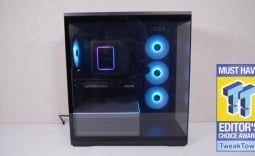 Montech TG3 Mid-Tower Chassis Review
 ASUS ROG Strix X870E-A Gaming WiFI7 Neo Review - A New Enticing Option
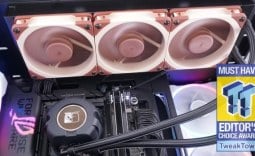 Noctua NL-LC1-36 Liquid CPU Cooler Review
 Logitech G316 X 98 Wired Gaming Keyboard Review - Retro-Inspired Board that Falls a Little Short
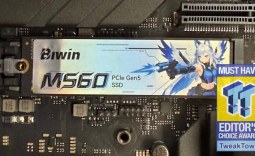 Biwin M560 2TB SSD Review - Best Overall Retail-Ready DRAMless SSD
 Logitech G512 X 98 Analog Mechanical Gaming Keyboard Review - An Innovative Two-in-One
 GIGABYTE's 40 Days of INFINITY celebrates 40 Years of Innovation with stunning GeForce RTX graphics cards and rewards
 I swapped File Explorer for this free file manager and finally got the layout I wanted
 How to tell if someone has been using your Windows PC without your permission
 6 Task Manager tips for troubleshooting Windows performance problems
 ASUS ROG's 20th Anniversary Line-up of Premium PC Gaming Gear has Arrived - Here's Everything You Need to Know
 Six File Explorer tips every Windows user should know
 I switched my PC to encrypted DNS in Windows 11, and browsing felt more private
 Printer Not Working in Windows? How to fix detection, print queues and drivers
 The Ultimate Guide to Personalizing Your Windows 11 Taskbar
 How to Turn Your Windows Laptop Into a Second Monitor with Miracast and Wireless Display in Minutes