







Learn about how TweakTown tests and reviews hardware. As an Amazon Associate, we earn from qualifying purchases. TweakTown may also earn commissions from other affiliate partners at no extra cost to you.
Stay Updated
Follow TweakTown for breaking tech news, reviews, and daily updates.


'Cosmic monster' erupted with the force of a billion suns
A new study examining this magnetar giant flare was published in Nature, described as a "true cosmic monster" by the study's co-author Victor Reglero.

The star, designated GRB2001415, is a magnetar, a kind of neutron star with a magnetic field a thousand times greater in strength than other neutron stars. Magnetars often erupt, spewing out energy and radiation in bright flares unpredictably, ending almost as soon as they begin.
GRB2001415 is found in the Sculptor Galaxy, a spiral galaxy located roughly 13 million light-years from Earth. It was detected by the Atmosphere-Space Interactions Monitor (ASIM) instrument aboard the International Space Station (ISS) when it flared on April 15th, 2020.
Continue reading: 'Cosmic monster' erupted with the force of a billion suns (full post)
NASA estimates wild numbers for meteor that exploded on New Year's
The meteor exploded over Pittsburgh, Pennsylvania, on New Year's Day, 2022.

The bolide, a meteor that explodes in the atmosphere, rattled homes in the area as it exploded just before 11:30 a.m. EST (16:30 UTC) on January 1st. NASA estimates the meteor was traveling at 45,000 miles per hour (72,420 kilometers per hour) and would've been roughly a yard (0.9 meters) in diameter for a weight of around 1000 pounds (454 kilograms). The estimated TNT equivalent of the explosion was 30 tons (27,216 kilograms).
No seismic activity, thunder, or lightning was recorded at the time, so meteorologists determined that a meteor falling through the atmosphere was responsible for the resounding boom felt on the ground. NASA stated that if it were not for cloudy weather, the meteor would have been easily visible during the day, with a brightness a hundred times greater than a full moon.
Continue reading: NASA estimates wild numbers for meteor that exploded on New Year's (full post)
Solar and lunar gravity found to influence animal and plant behaviors
A new meta-analysis has been published in Journal of Experimental Botany examining the effects.

The study examines three previously published studies where researchers did not fully explore the effects of gravitation for the outcomes. These studies were related to isopod swimming activity, reproductive effort in coral, small shell-less crustaceans, and sunflower seedling growth modulation.
Continue reading: Solar and lunar gravity found to influence animal and plant behaviors (full post)
MaganeX: VR glasses with 5.2K HDR micro OLED pancake lenses
It looks 2022 might be the start of a VR hardware innovation race. Today at CES, Shiftall, a subsidiary of Panasonic, introduced the MaganeX VR glasses, a compact VR device with micro OLED displays and all-plastic pancake optics. If this is where VR tech is going, we're in for some exciting new gadgets.

The Shiftall MaganeX features dual 2560 x 2560 micro OLED HDR displays from Kopin Corporation. These 1.3" displays are built directly on the chip (display on chip - DoC), which helps keep the form factor and weight to a minimum. The MaganeX headset also features all-plastic pancake optics from Kopin, which further reduces the device's size requirements and weight compared to most existing VR headsets.
"It is necessary for VR glasses to be lightweight and comfortable to wear as well as deliver life-like images in order to be widely accepted to consumers,"said Takuma Iwasa, CEO of Shiftall. "Kopin's unique 2.6K x 2.6K OLED display and all-plastic Pancake optics are the key to achieving these objectives. We are very pleased with our close partnership with Kopin for the development of our VR glasses."
Continue reading: MaganeX: VR glasses with 5.2K HDR micro OLED pancake lenses (full post)
Death Stranding Director's Cut one of first on PC with Intel XeSS tech
Intel didn't have too much to show off in regards to its Xe-based Arc Alchemist desktop GPUs at CES 2022, but it did talk more about its supersampling technology -- Intel XeSS -- and had some rather large announcements.

Intel Arc graphics cards will work with XeSS but so will competitors' graphics cards, with Intel confirming that you'll receive more performance with its Arc Alchemist + Intel Core CPUs -- especially its new Alder Lake-based 12th Gen Core CPUs. But the bigger announcement was that Hideo Kojima's masterpiece Death Stranding Director's Cut, being one of the first with Intel XeSS support.
We now know that game developers including Ubisoft, IO Interactive, 505 Games, Kojima Productions, and PUBG Studios are stepping up to support Intel XeSS (meaning lots of money has exchanged hands) with many new games coming in 2022 with Intel XeSS support, especially with its Xe-based Arc Alchemist graphics cards launching this year.
Continue reading: Death Stranding Director's Cut one of first on PC with Intel XeSS tech (full post)
NASA's planet hunter satellite detects a dark and mysterious object
A team of astronomers has combed through a data pool sourced by NASA's planet-hunting satellite and have found a mysterious object.

A new study published in The Astronomical Journal details a team of astronomers using machine-learning-based computational tools to search through the observed behaviors of hundreds of thousands of objects that NASA's Transiting Exoplanet Survey Satellite (TESS) has measured. The study details the discovery of object TIC 400799224 that became of interest when astronomers noted its rapid drop in brightness by nearly 25% over just a few hours.
Additionally, astronomers noted that TIC 400799224 was also showcasing several brightness variations that may have been evidence of an eclipse. The astronomers continued to monitor TIC 400799224 with TESS and other observational tools and found that the object is likely a binary star system that harbors a star that pulsates every 19.77 days. The astronomers suspect that the pulsating is likely a result of an orbiting body that emits dust that shrouds the stars.
Continue reading: NASA's planet hunter satellite detects a dark and mysterious object (full post)
ASUS Zephyrus Duo 16: dual-display Mini-LED called 'Nebula HDR'
ASUS has introduced its next-gen Zephyrus Duo 16 dual-display laptop at CES 2022, with a brand new "Nebula HDR" display and Dual Spec panel. Check it out:

ASUS says that the "centerpiece of this flagship machine" is the mind-blowing Nebula HDR display, 100% coverage of the DCI-P3 color space, Pantone Validation, high refresh rate, Adaptive-Sync and under 3ms response time. Better yet, we have a huge 1100-nit peak brightness, with 512 Mini-LED dimming zones that work with AUO's AMLED technology to "reduce haloing, thanks in part to a polling rate of 5400Hz. Vibrant, colorful images pop off the screen with more impact than any laptop gaming display before it".
The Nebula HDR panel offers two resolutions and refresh rates: 4K 120Hz and 1080p 240Hz, for the best of both worlds. The smaller second display is the 14.1-inch ROG ScreenPad Plus, which offers up to 3840x110 resolution and when powered with ScreenXpert, you've got tweaking through control software that lets you tweak your apps and windows across both displays of the Zephyrus Duo 16 laptop.
Continue reading: ASUS Zephyrus Duo 16: dual-display Mini-LED called 'Nebula HDR' (full post)
NASA's drops a critical mission update for James Webb Space Telescope
Following up on yesterday's announcement by NASA, the space agency has dropped a new update for its James Webb Space Telescope.

Yesterday the space agency announced that the first three layers of the five-layer sunshield were successfully deployed and tightened. The tightening of the remaining two layers was scheduled for today, and according to NASA's most recent update, those remaining two layers have successfully been tensioned, marking the completion of the sunshield deployment and a critical milestone in the process of preparing Webb for operational use.
For those wondering why the sunshield is so important, the tennis court-sized multi-layered shield shaped like a kite is designed to protect Webb's delicate instruments from any harmful rays from the Sun. Additionally, the shield keeps Webb's instruments in the shade, which allows them to be able to detect extremely faint infrared signals from very distant corners of the universe. Now, NASA is moving on to deploying Webb's mirrors, scheduled for tomorrow.
Continue reading: NASA's drops a critical mission update for James Webb Space Telescope (full post)
ASUS ROG Swift 360Hz PG27AQN: world's first 1440p 360Hz insanity LCD
ASUS has announced a flood of new gaming monitors at CES 2022 with its new ROG Swift OLED gaming monitors in 42-inch and 48-inch sizes, but there's also a world-first 1440p 360Hz display with the introduction of the ROG Swift 360Hz PG27AQN gaming monitor.

The new ASUS ROG Swift 360Hz PG27AQN gaming monitor rocks a 27-inch 2560x1440 panel, with a blistering 360Hz at its disposal. 1440p + 360Hz is just where it starts: as ASUS made three key innovations in its LCD technology to make sure it is the very fastest gaming monitor that ASUS has ever made.
ASUS includes 3 x HDMI 2.0 ports, and 1 x DisplayPort 1.4 connector -- another high-end ASUS gaming monitor without HDMI 2.1, which just seems so strange -- especially now that we're in 2022 and this bad boy will sell this year, and well into the coming years... all without HDMI 2.1 connectivity.
Continue reading: ASUS ROG Swift 360Hz PG27AQN: world's first 1440p 360Hz insanity LCD (full post)
2022 ushers in new era of space exploration, NASA heads to a new world
2022 will be a big year for space exploration as NASA moves to continue its exploration of the planet Mars and revisit the moon.

James Webb Space Telescope launch.
Space exploration is exponentially heating up as many countries around the world begin to see viable options and incentives for generating a deeper understanding of our solar system. Launched on Christmas Day, the most advanced space telescope ever created, NASA's James Webb Space Telescope is poised to see further back in time than ever before and will start its observations in 2022.
Continue reading: 2022 ushers in new era of space exploration, NASA heads to a new world (full post)
ASUS ROG Swift G32UQXE: 4K 160Hz requires next-gen GPUs to run 160FPS
ASUS has announced a new super-high-end ROG Swift PG32UQXE gaming monitor, which offers a beautiful Mini-LED panel, and native 4K resolution at a blistering 160Hz refresh rate.

Yeah, 4K 160FPS on a single DisplayPort 1.4 cable with DSC (Display Stream Compression) that ASUS has been utilizing on its highest-end ROG Swift gaming monitors for a while now. The new ROG Swift PG32UQXE gaming monitor can drive 4K 160Hz on the PC with the right GPU, while next-gen consoles can enjoy up to 4K 120Hz with the HDMI 2.1 connector.
ASUS is using a Mini-LED panel on its ultra-high-end ROG Swift PG32UQXE gaming monitor, which also includes another two HDMI 2.0 ports, a built-in USB hub (which will let you use peripherals and other devices) as well as the usual ROG Swift design and stand. There's a huge 1000 nits of peak brightness, which means you're going to get near-OLED levels of quality and in some ways, better.
Continue reading: ASUS ROG Swift G32UQXE: 4K 160Hz requires next-gen GPUs to run 160FPS (full post)
4 reasons why we can't build a base on the Moon
NASA and other space agencies around the world are aspiring to construct a base on the moon, and whether that happens in the next ten years or later, there will be a few problems that need to be overcome.

Ian Whitaker, a Senior Lecturer in Physics at Nottingham Trent University, has outlined a few of these problems that engineers and scientists will need to overcome to achieve a viable base on the moon. Whittaker wrote in The Conversation that most of these problems are currently being worked on by people around the world, and some are closer to being solved than others.
Whittaker writes that the Saturn V rocket used to take astronauts to the moon is no longer in production, which means the US doesn't currently have a rocket capable of taking astronauts back to the moon. However, this problem is close to being solved as SpaceX is nearing the end of the development of Starship, a new rocket designed for trips further than the moon. Whittaker's additional problems can be found below, with the solutions in the development stages provided in brackets.
Continue reading: 4 reasons why we can't build a base on the Moon (full post)
ASUS announce 42-inch, 48-inch ROG Swift OLED gaming displays
ASUS has announced a bunch of new gaming monitors at CES 2022, with not one but two new flagship ROG Swift OLED gaming monitors in 42-inch and 48-inch sizes.

The two new ASUS ROG Swift OLED gaming displays have native 4K resolutions, with true 10-bit color that -- along with the beautiful OLED panel -- will give you super-deep blacks and super-bright and colorful highlights. ASUS is also tweaking colors and factory calibrating the new ROG Swift OLED gaming monitors out of the box.
ASUS has two HDMI 2.1 ports that will handle next-gen Sony PlayStation 5 and Microsoft Xbox Series X/S consoles, as well as high-end GPUs with NVIDIA's GeForce RTX 30 series, and AMD's Radeon RX 6000 series graphics cards. ASUS is doing things one better, with the ROG Swift OLED gaming displays including fixed-rate link (FRL) technology -- unlocking the HDMI 2.1 bandwidth up to its max 48Gbps -- alongside 2 x HDMI 2.0 ports, 1 x DisplayPort 1.4 port, and a USB hub.
Continue reading: ASUS announce 42-inch, 48-inch ROG Swift OLED gaming displays (full post)
NASA drops video that looks like a probe using a Star Wars hyperdrive
A recently released video showcases NASA's Parker Solar Probe getting up close and personal with the Sun.

The video shows what is called "coronal streamers" flying past the Parker Solar Probe as it made its extremely close approach with the Sun, passing into our star's corona back in April. This is the first time these mysterious objects have been seen from up close, and when looking at the footage provided by the probe, it can be seen how they look similar to when a hyperdrive is engaged by a spacecraft in Star Wars.
NASA's Parker Solar Probe isn't done gathering information about the Sun, as the space agency plans on sending the probe deeper into the solar atmosphere to gather more data about how the Sun works and how solar wind is generated. Space.com reports that the next flyby of the Sun for the Parker Solar Probe is scheduled to happen later this month.
Continue reading: NASA drops video that looks like a probe using a Star Wars hyperdrive (full post)
NASA spacecraft that will slam into asteroid sent back its first photo
Two weeks after launching, NASA's Double Asteroid Redirection Test (DART) mission has already sent back its first images.

NASA launched its DART mission back at the end of November, and two weeks after the launch, the spacecraft destined to collide with an asteroid opened its "eye" called Didymos Reconnaissance and Asteroid Camera for Optical navigation (DRACO) to snap images of its journey. The images have been shared by NASA, and according to the space agency, the above image showcases about a dozen stars near the constellation Perseus, Aries and Taurus intersect.
The first image was taken about 2 million miles away from Earth, which is still described as "very close, astronomically speaking". Additionally, NASA explains that the DART team used the images of the stars to see how precisely DRACO was orientated, giving the team the first data points for the accuracy of the camera direction relative to the spacecraft. On December 10 the team captured an image of the Starfish Cluster located 4,200 light-years away from Earth in the constellation Auriga.
Continue reading: NASA spacecraft that will slam into asteroid sent back its first photo (full post)
'Naked Alien' caught on camera running in notorious UFO hotspot
A hunter has claimed that he has caught a "naked alien" on camera running past a trial that he was walking down in a notorious area for paranormal sightings.

The hunter Donald Bromley was roaming the remote area of Redgate, Montana, in the United States when he snapped a picture of what he describes as a creature with a "bulbous head". Bromley said that at first, he believed it was a human, but the more he inspected the image, he believed what he had photographed was extraterrestrial.
According to the hunter, this sighting is just one of many that have occurred in the area, with it being "very rich" in the "paranormal field" such as UFOs and "unexplainable things". Bromley added that residents in the area have been reporting seeing mysterious objects flying in the sky. These new sightings have come after the Pentagon confirmed that some objects detected in the US airspace have an unknown origin and that extraterrestrials aren't ruled out as a possibility.
Continue reading: 'Naked Alien' caught on camera running in notorious UFO hotspot (full post)
NASA confirms massive asteroid will approach Earth soon at 43,000 mph
Reports and NASA's own database indicate that a large asteroid will soon be approaching Earth at ridiculous speeds.

According to Latestly.com that cites NASA's Planetary Defense Coordination Office that records and tracks Near-Earth Objects (NEOs), an asteroid that is twice the size of the Empire State Building will be approaching Earth at the end of the month. The report states that the asteroid is set to safely fly past Earth at 0.01325 astronomical units (AU), or 1,231,664 miles - 5 times the distance between Earth and the Moon.
NASA's database states that the closest approach for the asteroid dubbed 7482 (1994 PC1) will be on January 18. It should be noted that this asteroid won't be the only asteroid to approach Earth, as NASA's database indicates there is a selection of much smaller asteroids scheduled to fly past Earth in the days leading up to the 1994 PC1 fly-by. If you are interested in learning more about asteroids, check out the below link.
Continue reading: NASA confirms massive asteroid will approach Earth soon at 43,000 mph (full post)
Sony finally confirmed that the next PSVR is called PlayStation VR2
Sony finally revealed the specs of the PSVR2, and it's a HUGE upgrade from the first one. Sony's next VR headset will put current-gen VR headsets to shame.

It's no surprise that Sony has been working on a new VR headset. The company teased the first details about a year ago, and it was pretty evident that a new PSVR was coming even before the PS5 hit the market. Today, at CES, we finally got some solid specifications about the new headset.
Sony announced that the upcoming headset would officially carry the name PlayStation VR 2, and the fancy controllers would be called PlayStation VR2 Sense controllers. The new headset is supposed to give gamers a "greater sense of presence" and allow them to "become more immersed in their game worlds."
Continue reading: Sony finally confirmed that the next PSVR is called PlayStation VR2 (full post)
Alienware launches world's first Quantum-Dot OLED gaming monitor
Alienware's new QD-OLED curved gaming monitor has been announced, in a beautiful 34-inch ultrawide form -- but this is also the world's first Quantum Dot OLED gaming monitor -- an even bigger deal.

The new Alienware QD-OLED 34-inch gaming monitor has up to 1000 nits of peak brightness thanks to its Quantum Dot OLED panel, which also has a native 3440 x 1440 resolution, super-smooth 175Hz refresh rate, and crazy low 0.1ms response time. We also have HDR and cinematic color that will make the Alienware QD-OLED 34-inch gaming monitor look beautiful in person.
We have a 1800R curvature on the Alienware QD-OLED 34-inch gaming monitor, with a customizable stadium loop OLED AlienFX lighting which is also joined by 360-degree cooling ventilation that will keep the monitor running cool AF. Cable management has been improved inside, with a next-gen centralized OSD 5-axis joystick that lets you tweak settings easily.
Continue reading: Alienware launches world's first Quantum-Dot OLED gaming monitor (full post)
Alienware Concept Polaris: external GPU with built-in liquid cooling
Alienware unveiled its interesting Concept Nyx at CES 2022 this week, but it also showed off its Concept Polaris which turns portable gaming laptops into enthusiast-class beasts.

The new Alienware Concept Polaris is a fancy-looking external GPU solution that can handle huge graphics cards -- up to 16 inches, compared to the original Alienware Graphics Amplifier which took 10.5-inch graphics cards -- as well as rocking built-in liquid cooling.
Alienware Legend 2.0 ID theme is featured throughout, Alien FX loop lighting, and the usual cable management being on point is here with the Alienware Concept Polaris. There's a removable internal PSU, which reroutes the power through to dual 330W adapters, while a higher-end model with dual 425W adapters is also in the pipeline.
Continue reading: Alienware Concept Polaris: external GPU with built-in liquid cooling (full post)
 Xbox outage exposed how your physical Xbox game discs aren't completely safe
 GTA 6 could launch without one of its biggest features in Australia
 Victim of first autonomous agent cyberattack explains what happened and why
 Valve promises Steam Machine reservation holders will get their chance to buy before 2027
 KIOXIA's UFS 5.0 embedded flash memory opens the door to powerful, compact, on-device AI
 KIOXIA's next-gen NX1 Series SSDs for AI deliver close to 40% more performance with support for direct liquid cooling
 NVIDIA is giving away 3-Month Discord Nitro subscriptions to all GeForce gamers
 AMD Software Adrenalin 26.7.1 WHQL driver adds support for a brand-new RDNA 4 GPU
 Xbox Helix's biggest feature may be what hurts the Xbox console the most
 ASRock, PowerColor, and SAPPHIRE launch new entry-level Radeon RX 9050 GPUs
 Logitech G316 X 98 Wired Gaming Keyboard Review - Retro-Inspired Board that Falls a Little Short
 Biwin M560 2TB SSD Review - Best Overall Retail-Ready DRAMless SSD
 Logitech G512 X 98 Analog Mechanical Gaming Keyboard Review - An Innovative Two-in-One
 Thrustmaster T.Flight HOTAS 5 MSFS Edition Review
 SteelSeries Arctis Nova Pro Omni Wireless Headset Review - One Headset to Rule Them All
 SteelSeries Arctis Nova 7 Wireless Gen 2 Headset Review - New and Improved, But Is It Enough?
 AMD Ryzen 7 7700X3D Review - Days of Future Past
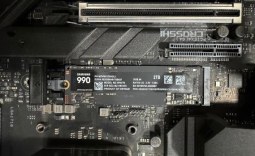 Samsung 990 2TB SSD Review - Ninth Gen QLC at PCIe Gen4 Speeds
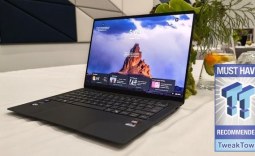 ASUS ExpertBook Ultra (Panther Lake) 14" Business Laptop Review
 ASUS ROG Raikiri II Xbox Wireless Controller Review - Ready to Take Control
 Printer Not Working in Windows? How to fix detection, print queues and drivers
 The Ultimate Guide to Personalizing Your Windows 11 Taskbar
 How to Turn Your Windows Laptop Into a Second Monitor with Miracast and Wireless Display in Minutes
 6 Mistakes to Avoid When Buying a Windows Laptop
 I capped Windows Update's bandwidth with Delivery Optimization, and my downloads stopped choking
 I use this decade-old free tool that finds files faster than Windows Search does
 I install and update most of my apps with this Windows command now, and I stopped downloading sketchy installers
 Hisense U6SF 65-inch MiniLED TV: High Performance Meets Leisurely Convenience
 I stopped digging through Windows menus after I set up this one folder
 Don't sell your Windows laptop until you do these things