







Science, Space, & Robotics - Page 131
Explore the latest Science, Space, Health, and Robotics news from TweakTown. Coverage includes space launches, medical tech, discoveries, and rockets. - Page 131
Stay Updated
Follow TweakTown for breaking tech news, reviews, and daily updates.


As an Amazon Associate, we earn from qualifying purchases. TweakTown may also earn commissions from other affiliate partners at no extra cost to you.
Rare solar eclipse photographed from deep space 1 million miles away
Many people missed out on the only total solar eclipse for 2021, but an observatory located one million miles out in deep space certainly didn't.

The only total solar eclipse for 2021 was only visible to those that were in Antarctica or in the Southern Ocean on Saturday, December 4. If you were located anywhere else you would have only seen a partial solar eclipse, or nothing at all. The remote locations to see the totallity of the solar eclipse didn't stop some resaerchers and photographers, who ventured out to the Union Glacier to take these photographs.
The photographers stationed on Union Glacier weren't the only cameras involved in the event, as NOAA's Deep Space Climate Observatory (DISCOVR) that's located 950,000 miles away from Earth in deep space had its camera pointed at the planet. The observatory was tracking the shadow of the solar eclipse as it passed over Earth and snapped an image using the Earth Polychromatic Imaging Camera (EPIC) built by NASA.
Continue reading: Rare solar eclipse photographed from deep space 1 million miles away (full post)
Alien world discovered, pushes the scientific understanding of planets
A team of astronomers has located a planet in a star system that previously wasn't thought to be able to host stars.

The two-star system is located approximately 325 light-years away from Earth within the constellation Centaurus. The system is called b Centauri and measures in at six times the mass of our Sun, which makes it the largest star system to have a planet orbiting it. Up until now, astronomers only found planets orbiting stars that were maximum three times the mass of our Sun. The discovery of this planet has expanded astronomers' knowledge of where its possible planets can form.
The main star of the system is a B-type star, which are known to be unfavorable environments for planet formation as the star's extreme mass means it gives off more heat. The hotter the star is, the more high-energy radiation it emits, which is damaging to any planet-forming material in the surrounding area. Despite the harsh environment in the star system, the planet that was discovered is estimated to be ten times the mass of Jupiter, which also makes it one of the largest planets ever discovered.
Continue reading: Alien world discovered, pushes the scientific understanding of planets (full post)
Scientists have made rigid crystals stretchy in a new study
In a new study published in the journal Chem, researchers have modified crystalline structures to make them stretchy.

Chenfeng Ke, Assistant Professor of Chemistry at Dartmouth College, and his research team have designed carbon-based, porous crystals that can stretch to more than double their length.
Porous organic frameworks are built from light organic elements like carbon, oxygen, and nitrogen. They form lattice structures with pores forming in the spaces between atoms, which means they can be used as filters for certain pollutants in fluids that can pass through the structure.
Continue reading: Scientists have made rigid crystals stretchy in a new study (full post)
Watch this billionaire's private expedition to the ISS, live from NASA
NASA will be live-streaming the launch of two Japanese private citizens accompanied by a veteran Russian cosmonaut to the International Space Station (ISS) on December 8th, 2021.

A Soyuz MS-20 will carry the Roscosmos cosmonaut Alexander Misurkin and private citizens Yusaku Maezawa and Yozo Hirano from the Baikonur Cosmodrome in Kazakhstan, launching at 12:38 p.m. local time (07:38 UTC). Maezawa is a billionaire entrepreneur joined by his production assistant Hirano, both going for an eleven-day visit to the ISS.
The flight will take six hours, with NASA's covering the launch and the docking sequence. On NASA TV, launch coverage begins at 2 a.m. EST, docking coverage at 8 a.m. EST, and hatch opening and welcoming remarks at 10:15 a.m. EST.
Continue reading: Watch this billionaire's private expedition to the ISS, live from NASA (full post)
Radio signals detected from distant stars may indicate hidden planets
With the most powerful radio antenna on Earth, researchers from the University of Queensland have detected radio signals from distant stars.

Dr. Benjamin Pope of the University of Queensland and colleagues from the Dutch national observatory ASTRON have been using the Low-Frequency Array (LOFAR) in the Netherlands to observe radio waves emanating from distant stars. These waves suggest the existence of unknown planets orbiting these stars.
Previously, only the nearest stars were detectable by astronomers from their steady radio wave emission. Now, radio emissions can be observed coming from regular stars elsewhere, aiding the search for planets nearby. The research team focused on red dwarf stars, which have intense magnetic activity driving stellar flares and radio wave emission. They observed radio emissions from magnetically inactive stars, and they concluded the signals were coming from magnetic connections between the stars and unseen orbiting planets.
Continue reading: Radio signals detected from distant stars may indicate hidden planets (full post)
NASA's new Sentry-II near-Earth asteroid monitoring system goes live
NASA has developed a new near-Earth asteroid impact monitoring algorithm dubbed Sentry-II to help defend Earth against future asteroid threats.

Survey telescopes have identified nearly 28,000 near-Earth asteroids (NEAs) to date, with additional NEAs expected to be discovered and added at a rate of roughly 3,000 per year. With advances in survey telescope technology, this rate will likely increase. In response to the potential threat posed by these asteroids to Earth, NASA has developed Sentry-II, an asteroid impact monitoring algorithm that has just gone online.
The Center for Near-Earth Object Studies (CNEOS), managed by NASA's Jet Propulsion Laboratory (JPL) in Southern California, calculates the orbit of every known NEA, creating impact hazard assessments for NASA's Planetary Defense Coordination Office (PDCO). To do so, CNEOS has used Sentry software developed by JPL in 2002.
Continue reading: NASA's new Sentry-II near-Earth asteroid monitoring system goes live (full post)
Hubble gets green-lit to return to full operation
After being put in safe mode to protect the scientific instruments aboard, the Hubble Space Telescope returns to full scientific operations.

On December 6th, NASA recovered the final instrument aboard Hubble, the Space Telescope Imaging Spectrograph. The previous instrument to be recovered was the Cosmic Origins Spectrograph on November 28th, and before that the Wide Field Camera 3 and Advanced Camera for Surveys on November 22rd and November 7th respectively.
Hubble initially went into safe mode on October 25th in response to the loss of internal synchronization messages. As NASA has worked to bring the scientific instruments back online, no synchronization message issues have been detected since November 1st.
Continue reading: Hubble gets green-lit to return to full operation (full post)
Mysterious 'house' on far side of the Moon photographed by rover
A rover exploring the surface of the Moon has snapped an image of what appears to be a mysterious "house", or "hut" object.

The image comes from an affiliated Chinese media channel called "Our Space", that details the rover Yutu 2 that first landed on the far side of the Moon back in January 2019. According to the post, the Yutu 2 rover spotted the object on the horizon while it was driving across the Von Karman crater last month, and sent back images of the object to the China National Space Administration (CNSA).
Space.com reports that the name "mystery hut" or "house" is currently being used as a placeholder name until the rover can identify what the object is. Additionally, the publication also points out that the object is most likely not a hut of any kind, and is more likely to be a large boulder that has been created from an impact event such as an asteroid. Yutu 2 is only 262 feet away from the object and will make its way over to inspect it over the next two to three months.
Continue reading: Mysterious 'house' on far side of the Moon photographed by rover (full post)
Elon Musk says this may threaten human civilization
Tesla and SpaceX CEO Elon Musk has said during an interview that global birthrates could threaten human civilization.

Musk, who is a father of six, spoke at Wall Street Journal's annual CEO Council and said brought up birthrates being a possible threat towards the existence of human civilization, saying that there is "not enough people" and called for people to have more children. The Tesla CEO went on to say that there is "smart people" who believe that there is too many people, and that Earth is overpopulated, but according to Musk this isn't the case, "It's completely the opposite".
Musk gave these statements in response to questions about the Tesla Bot, which is poised by Musk as being a sustainable generalized replacement for human labor. Additionally, Musk touched on aging, saying that humans should attempt to "live for a super long time", while also highlighting the importance of death and how it plays a pivotal role in human society.
Continue reading: Elon Musk says this may threaten human civilization (full post)
NASA is going to find the universes most violent objects with this
NASA is currently gearing up for the launch of its new telescope that will be used to find the most violent objects in the universe.

The new telescope is called the Imaging X-ray Polarimetry Explorer (IXPE) spacecraft and will be used by the agency and astrophysicists to observe the magnetic field of cosmic objects such as neutron stars and black holes. IXPE will be able to read the polarization between different X-rays that come from the environments of violent celestial objects (black holes, neutron stars). These readings will be able to teach researchers about the environment in the past and future of these objects.
NASA is planning on launching the IXPE spacecraft on the back of a SpaceX Falcon 9 rocket from NASA's Kennedy Space Center in Florida on Thursday after 1 a.m. EDT. As always, the event will be live-streamed by NASA on its website and social media channels, with the livestream beginning on Wednesday at 11:30 a.m. If you are interested in reading more about this new telescope, check out this link here.
Continue reading: NASA is going to find the universes most violent objects with this (full post)
Watch 2021's only total solar eclipse in just 1 minute with this video
The only solar eclipse to happen for 2021 recently occurred, but unfortunately, the totality was only visible in Antarctica and the Southern Ocean.

The extreme conditions of Antarctica didn't stop some photographers and scientists that were determined to see the total solar eclipse, and to everyone else's enjoyment, they have shared video footage of the event. The footage, which is about 1 minute in length, showcases a stunning time-lapse view of the Sun reappearing and disappearing, with only a few seconds of totality. If you find the video too fast, you can slow in down in the settings, which can be found in the bottom right-hand corner of the video.
The video was captured from Union Glacier on Saturday, December 4, by the JM Pasachoff Antarctic Expedition, who also live-streamed the event. The reason the total solar eclipse was only visible at certain locations on Earth is due to the Moon's shadow being very narrow. Antarctica was the best viewing angle of the total solar eclipse, while places such as Australia, New Zealand, Argentina, and South Africa could only see a partial eclipse.
Continue reading: Watch 2021's only total solar eclipse in just 1 minute with this video (full post)
Astronauts left in awe at 2021's only total solar eclipse, drops image
The International Space Station (ISS) is a fantastic vantage point for observing Earth, and recently astronauts aboard the station were left in awe at 2021's only total solar eclipse.

NASA has posted images to its "NASA Astronauts" Twitter account with a caption explaining that the Expedition 55 crew was able to view the total solar eclipse that happened on Saturday, December 4 at 2 a.m. EST (0700 GMT). Seven astronauts squeezed into the cupola, a large glass panoramic viewing dome, to see the phenomenon. NASA astronauts Kayla Barron described the event as "an incredible sight to behold."
A total solar eclipse happens when the Moon passes directly in front of the Sun from a viewer's perspective. The recent solar eclipse wasn't viewable for most people as the best angle to view its totality was in Antarctica, and while this didn't stop some photographers and scientists, it did mean most people missed it. The next total solar eclipse isn't expected to happen until April 20, 2023, and will be mostly viewable over Asia.
Continue reading: Astronauts left in awe at 2021's only total solar eclipse, drops image (full post)
NASA says SpaceX is currently its only option for shuttling astronauts
NASA recently extended its existing contract with SpaceX to include additional missions to send astronauts to the International Space Station (ISS).

SpaceX already has six crewed flights to the ISS using its Crew Dragon system planned as part of its contract with NASA. Now up to three more flights have been added to the contract. NASA solicited other companies before extending SpaceX's contract, but none met NASA's requirements.
Previously, NASA sent astronauts aboard its space shuttle but retired it in 2011 after 30 years of service. Since then, NASA has helped private companies to develop their solutions, eventually awarding SpaceX and Boeing contracts in 2014 as part of its Commercial Crew Transportation Capabilities (CCtCap) contract.
Continue reading: NASA says SpaceX is currently its only option for shuttling astronauts (full post)
Atmospheric anomaly due for study has puzzled scientists for decades
NASA has launched a sounding rocket from Norway to help understand the dense region of the upper atmosphere on Earth's sun-facing side.

There is a gap in Earth's magnetic field in a region known as the polar cusp. This gap allows solar winds from the sun to reach Earth's atmosphere, causes radio and GPS signals to behave strangely, and slows down spacecraft as they pass through this region. The air in this region is denser than elsewhere in spacecrafts' orbits around Earth, but it is not understood how or why.
The Cusp Region Experiment-2 (CREX-2) is funded by NASA and headed by Mark Conde from the University of Alaska Fairbanks Geophysical Institute. The mission aims to understand the dynamics in the cusp, first set to do so in 2019 as part of The Grand Challenge Initiative's Project CUSP. However, it was delayed due to little solar activity, and the Covid-19 pandemic only served to delay the flight further. Now, CREX-2 was finally able to launch on December 1st from a launchpad in Andenes, Norway, at 3:25 a.m. EST.
Continue reading: Atmospheric anomaly due for study has puzzled scientists for decades (full post)
NASA is due to launch $320 million experimental laser comms satellite
On December 7th, 2021, NASA plans to launch and test its $320 million high-speed laser communications device.

The experimental device will be launched aboard a United Launch Alliance (ULA) Atlas 5 rocket as part of a US Space Force mission. It is attached to a Space Force STPSat 6 satellite, the primary payload for the Atlas 5 rocket, which is destined for a geosynchronous orbit above Earth.
Lift-off is due for a two-hour launch window opening at 09:04 UTC on Tuesday, December 7th, from Cape Canaveral. Previously scheduled for December 5th, the launch was delayed due to a leak in the launch pad's kerosene fuel storage system.
Continue reading: NASA is due to launch $320 million experimental laser comms satellite (full post)
Entire cells visualised in 3D in minutes with soft X-ray technique
Researchers have recently used soft X-ray tomography (SXT) to render a high-resolution model of a cell and its internal structures in minutes.

Scanning electron microscopy is often used in cell imaging because it provides high-resolution nanoscale images. However, using scanning electron microscopes takes around a week to scan an individual cell, generating an enormous amount of data to analyze and interpret.
With SXT, scientists can create tomograms of a cell within five to ten minutes. When studying numerous cells, the significantly higher throughput makes SXT a much more practical analysis tool than the more data and time-intensive alternatives.
Continue reading: Entire cells visualised in 3D in minutes with soft X-ray technique (full post)
NASA signs agreements with three companies to build new space stations
NASA has signed agreements with three separate U.S. companies to develop private commercial space stations.

Northrop Grumman's space station concept.
Blue Origin, Nanoracks, and Northrop Grumman have all been awarded contracts worth a combined $415.6 million. They come as part of NASA's Commercial Low Earth Orbit Destinations (CLD) program, which seeks to help the development of private space stations that may one day succeed the aging International Space Station (ISS).
Continue reading: NASA signs agreements with three companies to build new space stations (full post)
Suicide machine approved for use in this country, will launch soon
Switzerland has officially approved the use of a coffin-shaped suicide machine that allows people to decide to kill themselves.

According to the company behind the machine, Exit International, the machine is called Sarco, which is short for sarcophagus and allows users to lay down in a coffin-shaped capsule that then reduces oxygen levels to fatal levels once the user initiates the process. The process takes less than a minute, and after the minute duration, death occurs through hypoxia and hypocapnia, which the Independent reports, "is intended to allow a person to die relatively peacefully and painlessly."
For those that don't know, assisted suicide is completely legal in Switzerland, as services such as Dignitas and Exit provide users with a digestible liquid drug that puts users in a deep coma that eventually results in death. Now, reports indicate that the Sacro has passed legal review, and according to Dr. Philip Nitschke, the creator of the Sacro, also dubbed "Dr. Death", "there are no legal issues at all" with the product and that discussions are currently underway with the goal to roll out the service to the public next year.
Continue reading: Suicide machine approved for use in this country, will launch soon (full post)
NASA confirms 1,000-foot asteroid will break into Earth's orbit soon
NASA is currently tracking on route to enter Earth's orbit, and it's estimated to be worth more than $5 billion.

The asteroid is dubbed "potentially dangerous," as is any space rock or comet that comes within the 4.65 million miles of Earth. The asteroid is dubbed 4660 Nereus, and while it is categorized as a "potentially hazardous" object, it will safely pass by Earth. The asteroid has a diameter of 1,085 feet and will break into Earth's orbit at a speed of 14,700 mph on Saturday, December 11, marking the closest the asteroid has come to Earth within 20 years.
When 4660 Nereus passes by Earth, it will be at a distance of 2.4 million miles, which is around 10 times the distance between the Earth and the Moon (238,855 miles). While 2.4 million miles sounds like an enormous distance when speaking in astronomical terms, it's quite small. According to the Asterank database that is currently tracking more than 60,000 asteroids, 4660 Nereus is estimated to contain $4.71 billion worth of nickel, iron, and cobalt.
Continue reading: NASA confirms 1,000-foot asteroid will break into Earth's orbit soon (full post)
5 outrageous facts about Earth more people should know about
For the entire duration of human existence, we have been trying to make sense of the planet we have been living on, called Earth.

Humans have come quite far in understanding the small blue planet we call home, and the solar system it resides in, but there is still a lot of questions that need answers. Researchers have discovered some quite outrageous facts about Earth throughout their research, and some of these discoveries have broken previously established understandings of our planet.
Below you will find five facts about Earth that aren't common knowledge, and some of them may even break preconceived ideas that teachers established during your early schooling years.
Continue reading: 5 outrageous facts about Earth more people should know about (full post)
 GeForce NOW app for Linux leaves beta, while DLSS Frame Generation cloud latency also improves
 Twitch opts streamers into gen AI training by default, faces harsh backlash
 Sean Murray still plays the 2016 launch version of No Man's Sky
 China's YMTC has climbed to third place in global NAND flash shipments
 $100 GTA 6 version makes up 89% of pre-orders, analysts estimate
 HWiNFO's latest update quietly confirms Intel is working on Razor Lake-AX
 Nintendo puts Switch 2 price increase warnings on store demo kiosks ahead of September 1 hike
 GIGABYTE launches two new B450 motherboards as demand for AM4 stays high in 2026
 Microsoft finally makes up its mind and unifies Copilot features into one big app
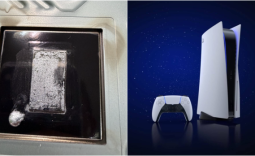 PS5 suffers from severe overheating after liquid metal eats into the heatsink
 D-Link F518 5G Wi‑Fi 6 AX1800 Mobile Hotspot Review: All-Day Mobile Hotspot
 Bose Lifestyle Ultra Speaker Review - Impressively Detailed Room-Filling Sound
 MSI Z890 Gaming Plus WIFI6E Review - Z890 for under $200
 Mortal Kombat (1995) 4K Ultra HD Blu-ray Review
 CPS PCCOOLER YS1200 ATX 3.1 80 PLUS Gold PSU Review
 ASRock X870E Taichi White Review: a premium AM5 motherboard with 10G LAN and WiFi 7
 Asetek Initium Pedal Modular Upgrades Review
 Thinkware U3000 Pro Review - Smart Dashcam with Wi-Fi quirks
 Montech TG3 Mid-Tower Chassis Review
 ASUS ROG Strix X870E-A Gaming WiFI7 Neo Review - A New Enticing Option
 I ditched the Windows 11 context menu for this open-source tool, and here's why
 Windows 11 may be encrypting your drive already, and I checked where my recovery key went
 GIGABYTE's 40 Days of INFINITY celebrates 40 Years of Innovation with stunning GeForce RTX graphics cards and rewards
 I swapped File Explorer for this free file manager and finally got the layout I wanted
 How to tell if someone has been using your Windows PC without your permission
 6 Task Manager tips for troubleshooting Windows performance problems
 ASUS ROG's 20th Anniversary Line-up of Premium PC Gaming Gear has Arrived - Here's Everything You Need to Know
 Six File Explorer tips every Windows user should know
 I switched my PC to encrypted DNS in Windows 11, and browsing felt more private
 Printer Not Working in Windows? How to fix detection, print queues and drivers