












NASA has launched a sounding rocket from Norway to help understand the dense region of the upper atmosphere on Earth's sun-facing side.

There is a gap in Earth's magnetic field in a region known as the polar cusp. This gap allows solar winds from the sun to reach Earth's atmosphere, causes radio and GPS signals to behave strangely, and slows down spacecraft as they pass through this region. The air in this region is denser than elsewhere in spacecrafts' orbits around Earth, but it is not understood how or why.
The Cusp Region Experiment-2 (CREX-2) is funded by NASA and headed by Mark Conde from the University of Alaska Fairbanks Geophysical Institute. The mission aims to understand the dynamics in the cusp, first set to do so in 2019 as part of The Grand Challenge Initiative's Project CUSP. However, it was delayed due to little solar activity, and the Covid-19 pandemic only served to delay the flight further. Now, CREX-2 was finally able to launch on December 1st from a launchpad in Andenes, Norway, at 3:25 a.m. EST.
"We have been waiting more than two years to launch this payload into the cusp, and the space weather conditions that we experienced today were ideal. Preliminary assessments indicate that all aspects of the rocket, its payload, and the supporting observatories worked as intended. We had not dared to hope for such perfect alignment of conditions, and certainly not on the first day of our launch window," said Conde.
The density of the Earth's atmosphere is consistent across the globe for a given altitude, dropping off considerably as the altitude increases. Roughly 250 miles (402 kilometers) above the Earth in the cusp is a pocket of air approximately one and a half times denser than the atmosphere elsewhere around the globe for that altitude.
You can't just increase the mass in a region by a factor of 1.5 and do nothing else, or the sky will fall," Conde said.
With the successful launch of CREX-2, scientists will work towards determining what forces support the extra mass found in this part of the atmosphere.
You can learn more about the rocket and its mission on NASA's website.


 NASA confirms cracked heatshield in Orion test won't kill the astronauts going to the Moon
 Scientists squint their eyes concerningly at Earth-sized shadows appearing on Jupiter's surface
 A SpaceX Falcon 9 rocket is on a collision course with the Moon
 Scientists unveil biggest map of the universe ever created, spanning almost all of time
 Opinion: Game Pass tier with first-party games won't fix the subscription's biggest problem
 ZOTAC's 20th Anniversary Edition GeForce RTX 5080 features a titanium colorway and mirror-like backplate
 GeForce NOW app for Linux leaves beta, while DLSS Frame Generation cloud latency also improves
 Twitch opts streamers into gen AI training by default, faces harsh backlash
 Sean Murray still plays the 2016 launch version of No Man's Sky
 China's YMTC has climbed to third place in global NAND flash shipments
 $100 GTA 6 version makes up 89% of pre-orders, analysts estimate
 HWiNFO's latest update quietly confirms Intel is working on Razor Lake-AX
 Nintendo puts Switch 2 price increase warnings on store demo kiosks ahead of September 1 hike
 GIGABYTE launches two new B450 motherboards as demand for AM4 stays high in 2026
 Microsoft finally makes up its mind and unifies Copilot features into one big app
 D-Link F518 5G Wi‑Fi 6 AX1800 Mobile Hotspot Review: All-Day Mobile Hotspot
 Bose Lifestyle Ultra Speaker Review - Impressively Detailed Room-Filling Sound
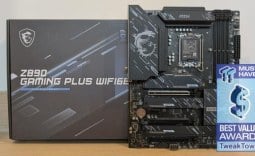 MSI Z890 Gaming Plus WIFI6E Review - Z890 for under $200
 Mortal Kombat (1995) 4K Ultra HD Blu-ray Review
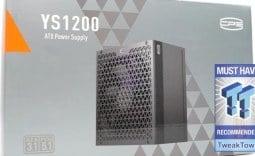 CPS PCCOOLER YS1200 ATX 3.1 80 PLUS Gold PSU Review
 ASRock X870E Taichi White Review: a premium AM5 motherboard with 10G LAN and WiFi 7
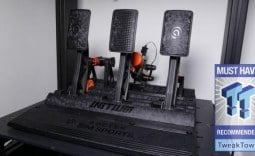 Asetek Initium Pedal Modular Upgrades Review
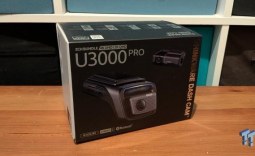 Thinkware U3000 Pro Review - Smart Dashcam with Wi-Fi quirks
 Montech TG3 Mid-Tower Chassis Review
 ASUS ROG Strix X870E-A Gaming WiFI7 Neo Review - A New Enticing Option
 I ditched the Windows 11 context menu for this open-source tool, and here's why
 Windows 11 may be encrypting your drive already, and I checked where my recovery key went
 GIGABYTE's 40 Days of INFINITY celebrates 40 Years of Innovation with stunning GeForce RTX graphics cards and rewards
 I swapped File Explorer for this free file manager and finally got the layout I wanted
 How to tell if someone has been using your Windows PC without your permission
 6 Task Manager tips for troubleshooting Windows performance problems
 ASUS ROG's 20th Anniversary Line-up of Premium PC Gaming Gear has Arrived - Here's Everything You Need to Know
 Six File Explorer tips every Windows user should know
 I switched my PC to encrypted DNS in Windows 11, and browsing felt more private
 Printer Not Working in Windows? How to fix detection, print queues and drivers