







Science, Space, & Robotics - Page 132
Explore the latest Science, Space, Health, and Robotics news from TweakTown. Coverage includes space launches, medical tech, discoveries, and rockets. - Page 132
Stay Updated
Follow TweakTown for breaking tech news, reviews, and daily updates.


As an Amazon Associate, we earn from qualifying purchases. TweakTown may also earn commissions from other affiliate partners at no extra cost to you.
Multiple eruptions on the Sun, impact may reach Earth in coming days
Reports indicate that there has been several eruptions on the surface of the Sun, and that a large magnetic filament has exploded.

Sunspot activity.
According to Spaceweather.com, the Sun featured eruptive activity on its departing southern limb, with a northern coronal hole passing centrally. The eruptive activity that was seen in the Sun's southern hemisphere that was departing can be attributed to sunspots that caused an M-class flare and plasma ejecta to be launched into space. The charged particles from the sunspot eruptive activity are not on track to collide with Earth.
Continue reading: Multiple eruptions on the Sun, impact may reach Earth in coming days (full post)
This giant space catapult literally flings satellites into space
A company is trying to create a faster and cheaper method of putting satellites in orbit, and the design the company has gone with literally flings satellites.

Most companies that are looking to get satellites into orbit decide to use rockets, which is an extremely expensive and costly environmental process. While the cost of launching a rocket was dramatically reduced with the introduction of reusable rockets, the expense of a launch is still very high. For these aforementioned reasons, California-based spaceflight startup SpinLaunch is currently testing out a different method that involves spinning satellites at very high speeds and releasing them through a small chute towards space.
On October 22, SpinLaunch tested its "suborbital accelerator", which measures in at 165 feet, taller than the Statue of Liberty, by spinning a 10-foot-long projectile to speeds of "many thousands of miles an hour," according to SpinLaunch's CEO Jonathan Yaney. After gaining extreme speeds, the projectile was released out of the barrel and ascended to "tens of thousands of feet." SpinLaunch plans on conducting around thirty more test flights within the next eight months at its suborbital accelerator in New Mexico.
Continue reading: This giant space catapult literally flings satellites into space (full post)
5 incredible new discoveries about our next home, the Red Planet Mars
NASA has set a goal of getting a sustainable colony of humans on Mars by 2030, and in the years leading up to 2030 the space agency is collecting any relevant information that will assist them in the pursuit.

A big part of the data collection aspect of the mission is NASA's Mars rovers, Perseverance and Curiosity. Perseverance landed on the Red Planet on February 18, 2021 and has since been inspecting the Jezero Crater for any signs of ancient microbial life. Curiosity landed on Mars on August 6, 2012 and has been studying the geology of Mars for quite some time. Recently, Curiosity snapped an incredible view of the Martian landscape, check it out here.
Since the pursuit of Mars has begun there have been several notable discoveries, and some of them have happened in 2021. Below you will find five recent incredible discoveries about Mars that will assist the human civilization in creating a sustainable presence on Mars.
Continue reading: 5 incredible new discoveries about our next home, the Red Planet Mars (full post)
Nissan may put a vehicle on the Moon, lunar exploration rover unveiled
Nissan has recently unveiled its new lunar exploration vehicle that it has been working on with Japan Aerospace Exploration Agency (JAXA).

The new prototype vehicle was unveiled last Thursday at the JAXA headquarters in Yokohama, south of Tokyo, and it features a sharp four-wheel design that has been equipped with motor control and e-4ORCE four-wheel-drive control technology. Since the surface of the Moon is covered in very fine sand, it can be quite difficult for vehicles attempting to drive on the surface to gain traction with the ground underneath them.
In the above video posted to the Nissan YouTube channel, Nissan demonstrates the difference between having its e-4ORCE technology-enabled versus having it disabled. From the video, we can see that the e-4ORCE technology can be a deciding factor when attempting to take a rover through difficult terrain, as it's designed to be a form of all-wheel precision driving that reacts to specific conditions. If you are interested in reading more about this story, check out this link here.
Continue reading: Nissan may put a vehicle on the Moon, lunar exploration rover unveiled (full post)
Thousands flee erupting volcano spewing big columns of deadly hot ash
On Saturday, December 4, Mount Semeru, the tallest volcano on the island of Java, began spewing out a large plume of volcanic ash.

The deadly columns of volcanic ash drifted from the summit of the volcano high into the sky, with some of the surrounding villages being blanketed in thick ash. On top of the volcanic eruption, there was also a thunderstorm with heavy rainfall, which, when combined with the falling volcanic ash, creates lahars. The United States Geological Service says lahars are an Indonesian term, and describes them as "a moving lahar looks like a roiling slurry of wet concrete."
AccuWeather reports that at least 56 residents have been injured, at least 14 have died, and up to 60,000 people have been affected by the eruption. Deputy Regent of Lumajang, Indah Amperawati, said, "There were 41 residents who had burns due to hot lava who were evacuated at the Penanggal Health Center. We have also referred them to Bhayangkara Hospital and Suyoto Hospital." Reports indicate that the health center where most of the eruption victims are being transported is being overloaded with patients.
Continue reading: Thousands flee erupting volcano spewing big columns of deadly hot ash (full post)
Here's the chances of Elon Musk's Tesla crashing into Earth
A fun fact about Tesla and SpaceX CEO Elon Musk is that he once sent a Tesla Roadster into orbit, and it's still flying around out in space.

On December 5, Musk Tweeted out a render of two Starship rockets attached to individual tower arms, stating that SpaceX "will soon make these real". Following up on that Tweet, Musk wrote, "Starships to ♥️ Mars ♥️", to which Pak replied, "Do you ship to Mars?". Musk replied by writing, "You betcha. My car is currently orbiting Mars".
Musk's off-the-cuff comment about his Roadster orbiting Mars was met by criticism from Harvard Professor, Jonathan McDowell, who works at the university's Center for Astrophysics, who wrote, "Well, no. It's orbiting the Sun, and occasionally passes the orbit of Mars. Not the same thing." McDowell followed up by posting a map that displays the orbits of the Roadster, Earth, and Mars around the Sun.
Continue reading: Here's the chances of Elon Musk's Tesla crashing into Earth (full post)
'Mystery house' photographed on far side of the Moon, rover on its way
What appears to be a cube-shaped object has been photographed on the horizon of the Moon, and now a lunar rover is on its way to check it out.

China's Chang'e-4 lunar lander mission introduced the Yutu-2 rover to the lunar surface back in 2019, and since then, it has been exploring the barren landscape, relaying any valuable information back to China National Space Administration (CNSA). According to Andrew Jones, a journalist that covers China's space program for SpaceNews, the Yutu-2 rover is located in the Von Karman crater, and the cube-shaped object is on the northern horizon approximately 80 meters away from the rover.
Jones goes on to say that the cube-shaped object is being referred to as "mystery house", and that the next 2-3 lunar days will be spent bringing Yutu-2 closer to the object. For those speculating that the cube-shaped object is an alien house/obelisk, Jones says it's more likely that it's a large undiscovered boulder that's been created from an asteroid impact. If you are interested in reading more about this story, check out this link here.
Continue reading: 'Mystery house' photographed on far side of the Moon, rover on its way (full post)
Only total solar eclipse of 2021 photographed, relive the rare event
Over the weekend there was a the only total solar eclipse for the rest of the year, and while it wasn't visible to majority of people, individuals still managed to capture stunning photographs of it.

(Image credit: Felipe Trueba/Imagen Chile/AFP via Getty Images)
A solar eclipse happens when the Moon passes in front of the Sun from a viewers perspective, and depending on your location at Earth at the time, can make quite the spectacle for photography. On Saturday, December 4, a total solar eclipse, which only happens when the Moon is close enough to Earth that it blocks out the entirety of the Sun, was expected to happen for two minutes in Antarctica.
Continue reading: Only total solar eclipse of 2021 photographed, relive the rare event (full post)
Here's how to see 2021's best comet, a once-in-a-lifetime sighting
A recently discovered comet is expected to make a close fly-by of Earth within the coming weeks, and it may even be visible to the unaided eye.

Comet Leonard, or C/2021, will be making its closest approach to Earth on December 12, bringing it 22 million miles away from our planet, which is about 90 times farther away than the Moon. NASA says in the above video that comets are notoriously difficult to predict in terms of brightness/visibility, but Comet Leonard is predicted to be bright enough to be able to view it with binoculars. However, the possibility of it being visible to the unaided eye is still on the table as well.
EarthSky reports that Comet Leonard is "likely to be 2021's best comet, and its brightest comet by year's end". For the first two weeks of December, Leonard is visible in the sky in the east before sunrise, and according to NASA, it can be seen passing between the Big Dipper's handle and Arcturus. The space agency also states that the time of Leonard's closest approach to Earth will coincide with its approach to the horizon in the sky, which means that it will likely be brighter but more difficult to observe.
Continue reading: Here's how to see 2021's best comet, a once-in-a-lifetime sighting (full post)
This food delivery service will give you free Bitcoin when you order
A food delivery service has announced a new partnership with Bitcoin rewards app Lolli, where users will be rewarded Bitcoin when they order food.

On Wednesday, December 1, Lolli announced that it will be partnering with Grubhub to bring Bitcoin (BTC) rewards to the food delivery platform's hungry customer base. The announcement can be found on Lolli's website, where it states that Grubhub customers will be able to earn $1 in Bitcoin every time they order food through Grubhub. The press release states, "To earn on Grubhub orders, users must download Lolli's browser extension or app for iOS and activate Lolli on web or mobile before placing an order at Grubhub."
Users who sign up and complete their first order will receive $5 in Bitcoin. Once a user has reached $15 in confirmed Bitcoin rewards, that user will then be able to withdraw or send their Bitcoin to another virtual wallet. Lolli co-founder and CEO Alex Adelman said that partnerships such as this one is way Bitcoin can become a part of "everyday life", and that combining food delivery, which is a "ritual for many", with Bitcoin makes "Bitcoin a part of that ritual".
Continue reading: This food delivery service will give you free Bitcoin when you order (full post)
World's first living robots created, and they learned how to reproduce
Researchers have achieved something that sounds like the beginning of a science fiction movie - living robots that have learned to reproduce.

Pac-Man-shaped xenobots gathering stem cells into piles, which will then mature into xenobot offspring.
A new study published in the peer-reviewed scientific journal PNAS has detailed a team of researchers using stem cells from the African clawed frog (Xenopus laevis) to create the first living robots called xenobots. Researchers from the University of Vermont, Tufts University and Harvard University's Wyss Institute for Biologically Inspired Engineering who created the living robots said that they have discovered a new form of biological reproduction called "kinetic replication".
Continue reading: World's first living robots created, and they learned how to reproduce (full post)
New lightweight precision robotic arm developed for space applications
In a new paper published in Space: Science & Technology, a team of researchers have created a new lightweight robotic arm with precision controls.

As missions in space increase in scope and variety, so to will the tools necessary to accomplish them. Robots are already used throughout space, but robotic arms used on Earth do not translate well to space. A flat plane relative to the ground enables Earth-bound robotic arms to articulate freely in a three-dimensional coordinate grid with relatively simple programming. However, with constantly changing environments in space, a robotic arm would struggle to orient itself correctly.
Researchers from the Harbin Institute of Technology's (HIT) School of Mechanical Engineering and Automation have developed a robotic arm with the ability to adjust its position and speed in real-time based on its environment. The arm weighs 9.23 kilograms (20 pounds) and can move almost a quarter of its weight.
Continue reading: New lightweight precision robotic arm developed for space applications (full post)
Single photons captured by researchers' new creation
Researchers have found a way to trap a single photon in a cavity to aid in further research involving new quantum technologies, publishing their findings in Science Advances.

Previously, trapping photons in a cavity has involved using materials with an extremely large optical nonlinearity. Adding one photon from a laser significantly alters that cavity's resonance frequency, preventing another photon from entering. For this mechanism to work, extremely large optical nonlinearities are needed in conjunction with very low dissipation, which is extremely difficult to achieve.
Professor Aashish Clerk from the Pritzker School of Molecular Engineering (PME) at the University of Chicago, alongside graduate students Andrew Lingenfelter and David Roberts, devised a system with significantly weaker nonlinearity and two separate photon sources. With precise tuning, destructive interference between the two sources creates a "wall" that blocks photons from entering the cavity once the selected number has been captured.
Continue reading: Single photons captured by researchers' new creation (full post)
Amazing new camera, the size of a grain of salt, has been created
A collaboration between researchers of Princeton University and the University of Washington has resulted in a tiny new camera the size of a grain of salt.

Traditional cameras use curved glass or plastic lenses to focus light rays onto a sensor, while this camera uses a "metasurface." The metasurface measures half a millimeter wide and is covered with 1.6 million cylindrical posts, each approximately 0.1 micrometers in diameter. Each post has unique geometry to allow the best capture of an optical wavefront yet. Using machine learning-based algorithms, computing the interaction of light with all posts generates images with the most detail and widest field of view of any full-color metasurface camera to date. The new camera produced images comparable to a conventional compound camera of more than 500,000 times the volume.
To resolve this, co-lead author Shane Colburn created a computational simulator to test different antennae configurations, approximating a given arrangement's image production capabilities. The metasurfaces themselves are fabricated from silicon nitride, a glass-like material compatible with traditional semiconductor manufacturing processes, allowing metasurfaces to be mass-produced.
Continue reading: Amazing new camera, the size of a grain of salt, has been created (full post)
Arianespace delays satellite launch aboard Soyuz rocket until tomorrow
Arianespace's launch of two Galileo FOC (Full Operation Capability) global navigation satellites has been temporarily delayed.

The VS26 launch was 8 minutes and 22 seconds from lift-off but was scrubbed due to the risk of lightning in poor weather. It has been rescheduled for 21:19 local time in Kourou on December 4th (00:19 UTC on December 5th).
The rocket used for the mission is a four-stage Soyuz ST-B Fregat and will be launching from the Guiana Space Center, the first Soyuz rocket from there in 2021. Soyuz rockets have been used to launch Galileo satellites before. The first two test-bed Galileo satellites were launched aboard a Soyuz rocket in December 2005 and April 2008, respectively, and were ultimately retired in July 2012. Other Galileo launches have also involved Soyuz, but they can only carry two at a time, so Arianespace has also used its Ariane 5 ES to carry four at a time for multiple launches.
Continue reading: Arianespace delays satellite launch aboard Soyuz rocket until tomorrow (full post)
SpaceX announces Starship launch pad construction has begun
SpaceX is starting work on a launchpad for its Starship rocket in Florida, expanding its launch options from only Texas.

The launchpad is being built at Launch Complex 39A, part of NASA's Kennedy Space Center near Cape Canaveral in Florida. SpaceX's Falcon 9 and Falcon Heavy already use the site for their launches, but new infrastructure is necessary to accommodate future Starship launches.
Some preliminary work at Pad 39A was completed in 2019 related to Starship but was put on hold as operations at Starbase, SpaceX's facility in South Texas, were scaled up. Starship is currently manufactured and tested at Starbase, and the site has played host to multiple prototype test flights in previous years.
Continue reading: SpaceX announces Starship launch pad construction has begun (full post)
More CRISPR-like gene editing tools discovered
A new study has been published in Proceedings of the National Academy of Sciences highlighting the discovery of more than a thousand potential gene editing iterations to CRISPR.

CRISPR-Cas are naturally occurring systems in bacteria that can be used to edit small portions in various genes. The sections of genes that use CRISPR to insert themselves into other places in an organism's genome are designated CRISPR-associated transposons (CASTs). Researchers from the University of Texas at Austin have identified many more likely CASTs, up to nearly 1,500 from only about a dozen.
Nobel laureate and CRISPR researcher Jennifer Doudna predicts that in the coming decade, CASTs will make it possible for genetic engineers to introduce "any change, at any genetic location, in any organism."
Continue reading: More CRISPR-like gene editing tools discovered (full post)
Stunning new panoramic view from NASA's Mars Curiosity rover
NASA's Curiosity Rover continues to explore the surface of Mars and has sent back a new 360-degree panoramic selfie.

The rover landed on Mars in August 2012 and has roamed the Gale Crater, Mount Sharp, and many other Mars locales in search of past life since. Curiosity was built by NASA's Jet Propulsion Laboratory (JPL) in Southern California, which Caltech manages from Pasadena, California.
Using the Mars Hand Lens Imager (MAHLI) at the end of Curiosity's robotic arm, the image comprises 81 individual shots taken on November 20th, 2021. That date was the 3303rd Martian day, or sol, of Curiosity's mission. The MAHLI was built by Malin Space Science Systems in San Diego.
Continue reading: Stunning new panoramic view from NASA's Mars Curiosity rover (full post)
Almost pure metal exoplanet identified orbiting a nearby star
A new sub-Earth exoplanet has been discovered 31 light-years or ~9.5 parsecs away from our Sun.

The exoplanet, designated GJ 367b, orbits a red dwarf star in less than 24 hours, making it an ultrashort-period (USP) planet. A year on this planet, the time it takes for it to complete an entire orbit of its host star spans 7.7 hours.
Typically, sub-Earth exoplanets, those smaller in mass than Earth, are challenging to detect due to their small mass and size. No sub-Earth USP planets have been observed previously with enough precision to determine their size and composition. Using NASA's Transiting Exoplanet Survey Satellite (TESS) and High Accuracy Radial Velocity Planet Searcher (HARPS), researchers could use high-precision photometry and spectrographs to determine its characteristics.
Continue reading: Almost pure metal exoplanet identified orbiting a nearby star (full post)
Astronauts aboard the ISS go for a spacewalk, fix faulty antenna
After an initial delay in the scheduled spacewalk due to space debris, astronauts above the ISS have successfully ventured out to fix a faulty antenna.

Two astronauts made the walk to repair the faulty S-band Antenna Sub-assembly (SASA) during U.S. EVA-78 (extravehicular activity) as part of the Expedition 66 mission. Routine testing initially detected the defective antenna when Mission Control in Houston experienced issues with the S-Band string 2. NASA determined the antenna would need to be repaired or replaced.
Ultimately it was decided replacement was the more economical option, and it was scheduled to take place on November 30th, 2021. However, 5 hours before the initial spacewalk was due to be undertaken, it was rescheduled for fear of a collision with on-orbit space debris. It has not been confirmed if this is related to the debris leftover from the recent Russian anti-satellite test that forced ISS astronauts to take shelter.
Continue reading: Astronauts aboard the ISS go for a spacewalk, fix faulty antenna (full post)
 Twitch opts streamers into gen AI training by default, faces harsh backlash
 Sean Murray still plays the 2016 launch version of No Man's Sky
 China's YMTC has climbed to third place in global NAND flash shipments
 $100 GTA 6 version makes up 89% of pre-orders, analysts estimate
 HWiNFO's latest update quietly confirms Intel is working on Razor Lake-AX
 Nintendo puts Switch 2 price increase warnings on store demo kiosks ahead of September 1 hike
 GIGABYTE launches two new B450 motherboards as demand for AM4 stays high in 2026
 Microsoft finally makes up its mind and unifies Copilot features into one big app
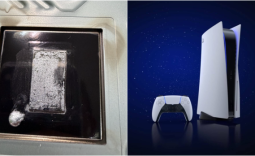 PS5 suffers from severe overheating after liquid metal eats into the heatsink
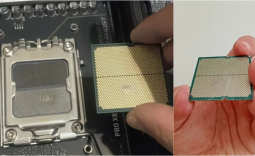 AMD Ryzen 7 7800X3D CPU burns and swells even after using AMD's updated BIOS
 D-Link F518 5G Wi‑Fi 6 AX1800 Mobile Hotspot Review: All-Day Mobile Hotspot
 Bose Lifestyle Ultra Speaker Review - Impressively Detailed Room-Filling Sound
 MSI Z890 Gaming Plus WIFI6E Review - Z890 for under $200
 Mortal Kombat (1995) 4K Ultra HD Blu-ray Review
 CPS PCCOOLER YS1200 ATX 3.1 80 PLUS Gold PSU Review
 ASRock X870E Taichi White Review: a premium AM5 motherboard with 10G LAN and WiFi 7
 Asetek Initium Pedal Modular Upgrades Review
 Thinkware U3000 Pro Review - Smart Dashcam with Wi-Fi quirks
 Montech TG3 Mid-Tower Chassis Review
 ASUS ROG Strix X870E-A Gaming WiFI7 Neo Review - A New Enticing Option
 I ditched the Windows 11 context menu for this open-source tool, and here's why
 Windows 11 may be encrypting your drive already, and I checked where my recovery key went
 GIGABYTE's 40 Days of INFINITY celebrates 40 Years of Innovation with stunning GeForce RTX graphics cards and rewards
 I swapped File Explorer for this free file manager and finally got the layout I wanted
 How to tell if someone has been using your Windows PC without your permission
 6 Task Manager tips for troubleshooting Windows performance problems
 ASUS ROG's 20th Anniversary Line-up of Premium PC Gaming Gear has Arrived - Here's Everything You Need to Know
 Six File Explorer tips every Windows user should know
 I switched my PC to encrypted DNS in Windows 11, and browsing felt more private
 Printer Not Working in Windows? How to fix detection, print queues and drivers