












NASA has signed agreements with three separate U.S. companies to develop private commercial space stations.
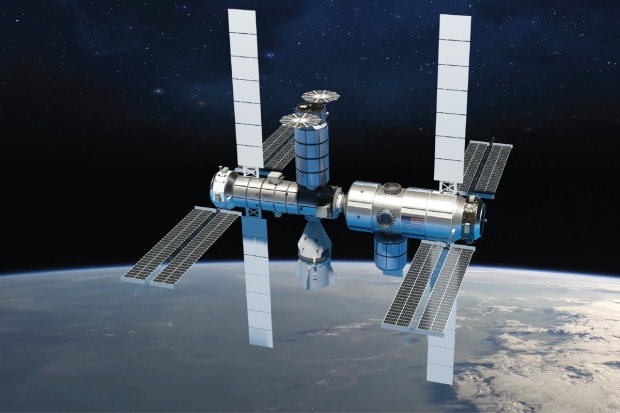
Northrop Grumman's space station concept.
Blue Origin, Nanoracks, and Northrop Grumman have all been awarded contracts worth a combined $415.6 million. They come as part of NASA's Commercial Low Earth Orbit Destinations (CLD) program, which seeks to help the development of private space stations that may one day succeed the aging International Space Station (ISS).
"Building on our successful initiatives to partner with private industry to deliver cargo, and now our NASA astronauts, to the International Space Station, NASA is once again leading the way to commercialize space activities. With commercial companies now providing transportation to low Earth orbit in place, we are partnering with U.S. companies to develop the space destinations where people can visit, live, and work, enabling NASA to continue forging a path in space for the benefit of humanity while fostering commercial activity in space," said NASA Administrator Bill Nelson.
NASA expects to retire the ISS by the decade's end, so viable replacements will be necessary. Funding for the ISS is expected to continue through 2024, with the possibility for extensions to 2028 or 2030 if it remains safely operable. NASA intends to help the chosen companies realize their designs by 2025, after which it will certify one or more for use by NASA astronauts.
Northrop Grumman was awarded a $125.6 million contract for their station. Nanoracks, in collaboration with Voyager Space and Lockheed Martin, was awarded $160 million. Blue Origin, leading a partnership with Boeing, Redwire, and Sierra Space, was awarded $130 million.
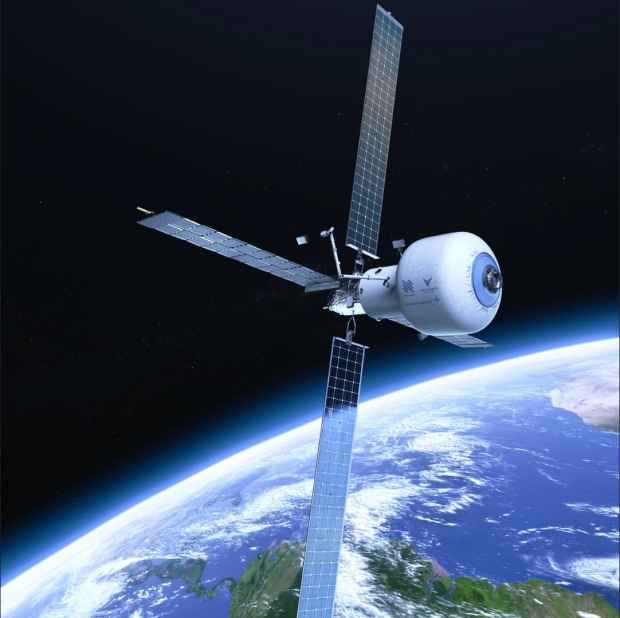
Nanoracks' concept space station named Starlab, targeted for 2027 completion.
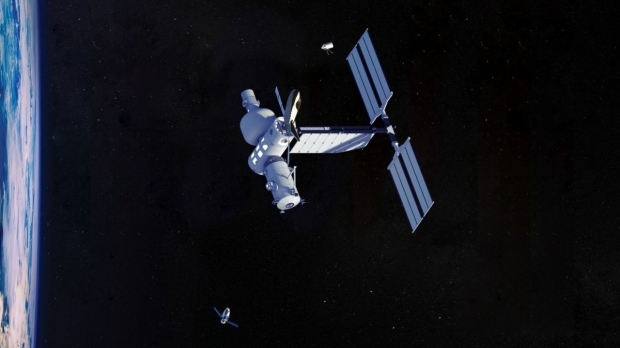
Concept for the Orbital Reef space station by Blue Origin.


 Boeing's Starliner spacecraft returns to Earth without the crew it took to space
 SpaceX is in talks to sell shares at new global top 25 company valuation
 AMD told us its plan for how FSR will eventually kill DLSS
 ZOTAC's 20th Anniversary Edition GeForce RTX 5080 features a titanium colorway and mirror-like backplate
 GeForce NOW app for Linux leaves beta, while DLSS Frame Generation cloud latency also improves
 Twitch opts streamers into gen AI training by default, faces harsh backlash
 Sean Murray still plays the 2016 launch version of No Man's Sky
 China's YMTC has climbed to third place in global NAND flash shipments
 $100 GTA 6 version makes up 89% of pre-orders, analysts estimate
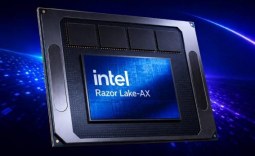 HWiNFO's latest update quietly confirms Intel is working on Razor Lake-AX
 Nintendo puts Switch 2 price increase warnings on store demo kiosks ahead of September 1 hike
 GIGABYTE launches two new B450 motherboards as demand for AM4 stays high in 2026
 Microsoft finally makes up its mind and unifies Copilot features into one big app
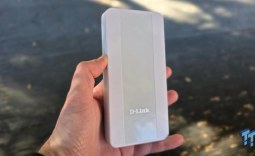 D-Link F518 5G Wi‑Fi 6 AX1800 Mobile Hotspot Review: All-Day Mobile Hotspot
 Bose Lifestyle Ultra Speaker Review - Impressively Detailed Room-Filling Sound
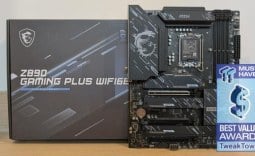 MSI Z890 Gaming Plus WIFI6E Review - Z890 for under $200
 Mortal Kombat (1995) 4K Ultra HD Blu-ray Review
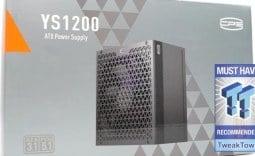 CPS PCCOOLER YS1200 ATX 3.1 80 PLUS Gold PSU Review
 ASRock X870E Taichi White Review: a premium AM5 motherboard with 10G LAN and WiFi 7
 Asetek Initium Pedal Modular Upgrades Review
 Thinkware U3000 Pro Review - Smart Dashcam with Wi-Fi quirks
 Montech TG3 Mid-Tower Chassis Review
 ASUS ROG Strix X870E-A Gaming WiFI7 Neo Review - A New Enticing Option
 I ditched the Windows 11 context menu for this open-source tool, and here's why
 Windows 11 may be encrypting your drive already, and I checked where my recovery key went
 GIGABYTE's 40 Days of INFINITY celebrates 40 Years of Innovation with stunning GeForce RTX graphics cards and rewards
 I swapped File Explorer for this free file manager and finally got the layout I wanted
 How to tell if someone has been using your Windows PC without your permission
 6 Task Manager tips for troubleshooting Windows performance problems
 ASUS ROG's 20th Anniversary Line-up of Premium PC Gaming Gear has Arrived - Here's Everything You Need to Know
 Six File Explorer tips every Windows user should know
 I switched my PC to encrypted DNS in Windows 11, and browsing felt more private
 Printer Not Working in Windows? How to fix detection, print queues and drivers