







Learn about how TweakTown tests and reviews hardware. As an Amazon Associate, we earn from qualifying purchases. TweakTown may also earn commissions from other affiliate partners at no extra cost to you.
Stay Updated
Follow TweakTown for breaking tech news, reviews, and daily updates.


TT Show Episode 57 - AMD's next-gen Ryzen X3D chips, the PS5 Pro's secret weapon, and more
This week on The TT Show, Jak and Kosta discuss the latest in PC and gaming hardware, science, and more. The discussion begins with a look at Apple's new MacBook Pro, iMac, and Mac Mini models powered by the latest M4 chip and how it might only present an incremental update instead of a generational leap forward.

Switching gears to the incremental update that is the PlayStation 5 Pro, it sounds like the console has a secret weapon in the form of the AI-powered PlayStation Spectral Super Resolution (PSSR), which brings a little bit of that NVIDIA DLSS magic to the world of console gaming. Compared to AMD's FSR 3.1, which is available for consoles, there's a night and day difference in image quality - with PSSR making everything it touches look better. And it's exclusive to the PS5 Pro.
Next, the discussion shifts to the world of handhelds, with everything from Valve providing an update on the Steam Deck 2 to leaks for Nintendo's new online Pokemon game. Plus, an in-depth look at the surprise playtest for a Minecraft and Roblox-style massive MMO for the Switch developed by Nintendo.
OpenAI senior safety staffer leaves company to write unbiased warning about coming AI
OpenAI has suffered yet another blow, as a senior staffer in the company's AGI Readiness team, a team dedicated to advising OpenAI on the impact of the powerful AI models it's creating and how ready the world is for them, has left the company. This was promptly followed by a warning published to the former OpenAI's staffer's Substack account.

The former OpenAI senior staffer is Miles Brundage, who, as of Friday this week, will no longer be working at OpenAI's AGI Readiness team. For those that don't know, AGI stands for Artificial General Intelligence (AGI), which is the description of an AI model with the same level of cognitive abilities as a human across all fields. This level of sophistication has yet to be fully achieved, but given the potential impact of such a system coming online or potentially falling into the wrong hands, guardrail teams such as the AGI Readiness team were formed.
However, Brundage states in his post that OpenAI has "gaps" in its readiness policy, but they aren't alone in this problem as every other AI lab also does. According to Brundage, OpenAI, and any other AI company, along with the world, isn't ready for AGI. Additionally, the post by the former OpenAI staffer revealed his departure triggered a complete disbanding of the AGI Readiness team, which comes at a time when OpenAI is attempting an internal restructuring into a for-profit business.
Microsoft CEO responds to rumors Xbox paused game ports for PlayStation and Switch
Microsoft CEO Satya Nadella has taken to his personal LinkedIn account to post his annual letter detailing Microsoft's current position and where it wants to be in the future in relation to where it is now.

Nadella covered everything from AI, infrastructure, Microsoft's achievements, and where the company is striving towards, and throughout the letter, the CEO touched on Microsoft's perspective on gaming. It was only recently that rumors began spreading that Microsoft was squeezing the breaks on its initial plan to bring Xbox games over to other platforms, such as the Nintendo Switch and PlayStation. These rumors came from Spanish insider "eXtas1s," but have now been proven incorrect given Nadella's recent letter.
According to Microsoft's CEO, the company will "continue to extend our content to new platforms," while mentioning the four trial titles that have already received ports - Grounded, Pentiment, Hi-Fi Rush, and Sea of Thieves. Nadella also mentions Microsoft's recent acquisition of Activision Blizzard and how it now has brought "hundreds of millions of players" to Microsoft's gaming ecosystem. Moreover, Nadella reveals Microsoft now has control over "20 franchises that have generated over $1 billion in lifetime revenue".
250-year-old lost city discovered in Amazon rainforest by advanced technology
As technology advances and becomes more sophisticated, researchers are able to view the world differently, revealing aspects of it that have previously gone unnoticed.

An example of that is the recent discovery of a 250-year-old lost city within Brazil's Amazon rainforest, which Brazil's Metropoles publication has detailed in a recent report. According to the news site the team of archaeologist was led by University of Sao Paulo archaeologist Eduardo Neves, and the discover was made possible through the use of advanced sensing technology called Light Detection and Ranging, or LiDAR.
This form of remote sensing uses light in the form of a pulsed laser to measure ranges. The light is fired by a laser within the instrument and then it measures the time it takes for the reflected light to return back to the receiver. With these measurements, researchers are able to produce a high-resolution 3D image or map of the targeted area. The researchers took advantage of Brazil's National Space Researchers Institute's LiDAR equipment and flew over a swath of the Amazon rainforest, scanning as they went.
Researchers discover origins for the majority of meteorites that have hit Earth
A team of international researchers has discovered that the vast majority of the asteroids that collide with Earth come from just three families of asteroids, which can all be traced back to a cataclysmic event approximately 40 million years ago.

A new paper that has been published in the scientific journal Astronomy and Astrophysics, along with two other papers recently published in Nature, outlines that 70% of all known meteorites, asteroids that make it to the surface of Earth, come from the following asteroid families: Karin, Koronos, and Massalia. These families were formed approximately at different times, such as Karin five million years ago, Koronos at seven million, and Massalia at forty million. Notably, Massalia was the source for 37% of all known meteorites.
These asteroid families formed in our solar system's main asteroid belt, which is located some 700 million miles from Earth. As for the meteorites discovered on Earth, cataclysmic events caused by collisions with other asteroids within the asteroid belt resulted in fragments of asteroids being scattered into the solar system. Researchers used simulations to rewind the clock on some of the discovered meteorites and found the source of their origin.
Razer Barracuda X Chroma announced - lightweight gaming and on-the-go audio, now with RGB
The new Razer Barracuda X Chroma edition adds color to the company's most popular wireless gaming headsets. With Razer Chroma RGB, this new headset includes six customizable lighting zones with seamless integration and over 300 games.

According to Razer, adding RGB lighting to the headset stems from community feedback that asked for more "visually immersive features." This extends to Razer's interactive wallpaper Axiom software, which is being updated to include music-responsive wallpapers co-developed with its partners that will sync up with the new headset.
Outside of the new RGB action, the Razer Barracuda X Chroma edition is still a gaming and lifestyle headset. It supports low-latency wireless audio over Razer HyperSpeed with Bluetooth for on-the-go listening.
AYANEO 3 handheld teased, and it's 'not a simple upgrade' but a 'new direction' for the company
AYANEO has been creating highly sought-after portable gaming handhelds and mini PCs for several years - and it feels like the company is always cooking up something tasty. Its products aren't exclusively Windows PC-based; the upcoming Android-based AYANEO Pocket EVO sports a 120 Hz 1080p OLED display powered by the Qualcomm Snapdragon G3x Gen 2 Gaming Platform.

The AYANEO Pocket EVO looks incredible, and its stunning design could make it the portable Android device of choice for gamers. But, the company has something else in the works - a brand-new flagship with the codename AYANEO 3. This is the company's new flagship gaming handheld and its third-gen product in this category.
Although we don't have any official looks at the handheld or its technical specifications, that hasn't stopped AYANEO from going all out to hype this thing. The AYANEO 3 will present a "technological leap" forward for gaming handhelds, but it "aims to change the way we interact with games."
Steam Deck's new SteamOS 3.6.19 update is a must; it boosts performance and battery life
SteamOS 3.6.19 is Valve's latest Stable Release of the operating system, which is available on its Steam Deck line of gaming handhelds. And it's a pretty big one, so be sure to update if you've got a Deck. It updates the OS to the more recent Arch Linux base and the Linux kernel to version 6.5 for improved performance, stability, security, and compatibility.

The patch notes for the update are at the end of this article. There's a lot of ground to cover, so we'll give you the highlights. The big one for PC gamers is the new Mesa 24.1 graphics driver, which brings overall improvements to game performance, faster boost times for the handheld, and a more responsive Steam UI.
The presentation has also improved with brightness uniformity for the display and improved color balance at lower brightness levels. Battery life while gaming is also improving specifically for Steam Deck OLED owners, thanks to the latest SteamOS release plugging a 'memory leak.'
Ryzen 9800X3D benchmarks show up to a 20% performance jump over 7800X3D
The eight-core Ryzen 7 9800X3D is expected to debut on November 7, and it will be the first Zen 5 X3D chip aimed squarely at PC gamers. After the somewhat disappointing gaming performance of the non-X3D Ryzen 9000 Series and Intel's new Core Ultra 200 Series also proving to be 'not ideal' for gamers, there's a lot of pressure on the Ryzen 7 9800X3D to deliver.

According to a leak we reported earlier today, citing AMD's official press release for the Ryzen 7 9800X3D that has yet to be seen, Team Red is calling the 9800X3D's gaming performance a 'strong generational boost' compared to the 7800X3D. However, it's only around an 8% improvement, which isn't exactly earth-shattering.
However, when it comes to non-gaming workloads, the Ryzen 7 9800X3D does look like it will deliver a 'strong generational' performance boost, as seen in these two new Geekbench benchmark results posted to the official site.
Xbox has 20 video game franchises that have earned $1 billion
Microsoft officially confirms that it has 20 video game franchises that have each grossed $1 billion in game sales and microtransactions.

A year ago, after Microsoft closed its $69 billion acquisition of Activision Blizzard King, we attempted to wrangle up the top billion-dollar franchises that Xbox now owns. After all, Activision had a total of 8x separate franchises that each earned over $1 billion in revenue before the Microsoft buyout. Matching that up with other games in Microsoft's already-sizable first-party lineup, we came up with the number 17.
That number is actually a bit higher. In a recent annual report filing, Microsoft says that it owns 20 billion-dollar gaming franchises.
Continue reading: Xbox has 20 video game franchises that have earned $1 billion (full post)
Denuvo rep calls PC gamers 'very toxic' and misinformed when it comes to its DRM software
"You just need to check out Steam forums, for example. Very toxic, very hostile environment." That's Denuvo's product manager, Andreas Ullmann, speaking with Rock Paper Shotgun about the perception surrounding his company's anti-cheat and anti-piracy software.

If you're a hardcore PC gamer, you're probably aware of Denuvo's anti-piracy software, which developers and publishers integrate into releases to combat piracy and maximize profits. Final Fantasy XVI and Black Myth: Wukong are two recent examples of games with Denuvo's anti-piracy software, with the general perception that Denuvo impacts performance. Or worse, it destroys SSDs.
"We simply don't want to leave the floor to these people who are posting all things about us anymore," Andreas Ullmann adds. "We also want to share our view, our opinion on these topics, and also act as a trusted source of information."
Microsoft's DirectSR tool updated to support AMD FSR 3.1 for easy game integration
Microsoft's DirectSR, from the DirectX team, is a tool developed in partnership with AMD, Intel, and NVIDIA to help game developers integrate all of the various upscaling methods into their games.

With support for AMD FidelityFX Super Resolution (FSR), Intel XeSS, and NVIDIA DLSS Super Resolution, the technology breaks upscaling down to a standard set of inputs and outputs that can then be called upon by DLSS, FSR, and XeSS. Upscaling works, generally speaking, by using frame information broken down into pixels and motion vector data for moving objects to create a higher-resolution image.
Upscaling methods employ different algorithms and tech to achieve the same result - an impressive AI model on the NVIDIA DLSS side and an open-source algorithm on the AMD FSR side - but the inputs are the same.
The Last of Us Part 1 and The Last of Us Part 2 have been updated for PS5 Pro
The PlayStation 5 Pro, Sony's mid-generation refresh and beefed-up PS5 console is on track for a November 7 launch. With the release right around the corner, games are already starting to receive their 'PS5 Pro Enhanced' updates - including two of the biggest games from acclaimed first-party PlayStation Studio Naughty Dog.

Both The Last of Us Part 1 and The Last of Us Part 2 Remastered have received new updates, introducing a brand-new 'Pro' mode for each game. As outlined in the patch notes, both 'Pro' modes will be identical - they will render the game at 1440p, with PSSR upscaling increasing the resolution to 4K 'while maintaining a target of 60 FPS.'
The new 'Pro' mode joins the Performance and Fidelity modes as a third option. However, based on early reports, it's assumed that the Pro mode will be similar to the existing 30 FPS Fidelity mode on the base PS5, at 60 FPS.
Joe Rogan to host President Donald Trump on the Joe Rogan Experience podcast on October 25
Joe Rogan is hosting President Donald Trump on the Joe Rogan Experience (JRE) podcast on Friday, October 25... in around 24 hours from now.

In a new post which was then pinned on X, it simply said "Here we go! 🇺🇸 @realDonaldTrump" with a picture of Joe Rogan and Donald Trump, with "Trump on JRE. Friday Oct 25th". President Trump hasn't been on Joe Rogan's podcast, and just days before the November 5 election, what a time for DJT and his first JRE podcast.
President Trump has been non-stop for months now, on multiple podcasts, shows, riding in gifted Cybertrucks from Kick streamer Adin Ross, a hugely successful chat with Tesla and SpaceX boss Elon Musk, and more. But, the JRE podcast and a huge multi-hour chat between Joe Rogan and President Trump just days out from the November 5 election is going to be quite the show. It kicks off on October 25, so we have less than 24 hours to wait.
Call of Duty: Black Ops 6 has a $20 premium 'Enhanced Headphone Mode' tier just for audio
The Call of Duty: Black Ops 6 development team at Treyarch has posted a lengthy article on the game's audio. The article covers the technology being used and how it enhances the 3D spatial sound in the game compared to previous entries. As highlighted in the piece, every weapon and sound in the game has been redesigned or re-captured - nothing is being reused.

With Black Ops 6, the audio team has focused on what it calls the 'adaptive battlefield,' where a changing environment and directional audio play an essential role in giving players the information they need without 'the clutter of extraneous noise.'
Part of this has come from collaborating with Microsoft's Project Acoustics to enhance and make sound propagation throughout an environment sound natural. "Gunshots and grenades will realistically fill the space around them," Expert Audio Engineer William Cornell said. "Footsteps will echo down long hallways, and the sound of rain and crickets chirping will come in through open windows and holes in the wall."
Apple officially reveals new Macs are coming next week - but it all sounds ominously lowkey
If you had any doubts about Apple's intention to launch a bunch of new M4 Macs by the end of October - as strongly rumored for ages - cast those doubts aside now, as the firm has confirmed new devices are coming next week.

Apple's marketing bigwig, Greg Joswiak, announced this on X with a cheeky little pun that we should 'Mac' our calendars for an "exciting week of announcements ahead" starting on Monday morning, October 28.
So, from that we can gather that there isn't going to be a big press event, although when the invites failed to emerge earlier this month, that became clear enough anyway.
Corsair iCUE eating your CPU alive? NVIDIA's new GPU driver has a nasty bug, but there's a fix
NVIDIA's latest Game Ready Driver comes with the usual features, including support for some major new PC games - Call of Duty: Black Ops 6 is one of them - but it packs a sting in the tail for those with Corsair peripherals that sport RGB lighting.

Mainly because NVIDIA's driver v566.03 has a conflict with Corsair's iCUE tool, used for controlling its RGB lighting (and other functionality besides).
Tom's Hardware pointed out the problem (acknowledged by Corsair as you can see above, in its post on X) whereby CPU usage is spiking not just with iCUE, but also Bluestacks, the popular Android emulator for PC.
Reminder: Black Ops 6 launching day one on GeForce Now cloud streaming too
For the first time ever, a mainline Call of Duty game is launching natively within the cloud.

Tomorrow marks an important day for Xbox. The release of Black Ops 6 will be an interesting watershed moment for Microsoft's games division as the numbers will go lengths in proving whether or not Xbox Game Pass is a viable substitute for millions of game sales.
For months now we've known that Call of Duty Black Ops 6 will release day one on Xbox Game Pass Ultimate. It's also been confirmed that Black Ops 6 can be streamed via both Xbox's game streaming service, Microsoft Cloud gaming, and NVIDIA's GeForce Now. The latter requires a full game purchase, though, whereas users don't have to buy the game in order to play it on Game Pass Ultimate.
Microsoft officially unveils tools to create AI employees that work for humans
Microsoft has taken to its blog to announce the release of a suite of autonomous artificial intelligence agents that will serve businesses as virtual employees.

Redmond states in its blog post that it's announcing new capabilities that will enable customers to create autonomous agents with Copilot Studio, along with ten new autonomous agents in Dynamic 365. Microsoft writes that agents should be thought of as the "new apps for an AI-powered world" and that it believes one day, every organization will have a "constellation of agents" that will range from simply prompt and response bots to bots that are completely autonomous.
Copilot will be how customers interact with these agents, and their capabilities will range from sales, supplier communications, customer intent, and customer knowledge management agents. Microsoft states in its blog post that its AI agents will be able to increase the productivity of a business and is an example of how artificial intelligence can increase the output generated by a worker per hour. As for custom agents, Microsoft chief executive Satya Nadella said that Copilot Studio is built as a "no-code way for you to be able to build agents," which means users won't need any prior programming knowledge to create a custom agent successfully.
Beyond Good and Evil 2 not cancelled, new developers assigned to game
Beyond Good and Evil 2 is still in active development, Ubisoft has officially told Eurogamer.

Recent reports from Insider Gaming have prompted Ubisoft to deliver a statement on specific games, including Beyond Good and Evil 2. Sources told IG that the Prince of Persia devteam has been disbanded, with multiple team members moving over to other projects, such as a new Rayman game.
One of these projects is also apparently Beyond Good and Evil 2, which has remained in development for quite some time; Ubisoft showed off BG&E2's first gameplay footage half a decade ago with a cinematic trailer also releasing in 2018. Now the French games-maker has once again commented on the sci-fi sequel.
Continue reading: Beyond Good and Evil 2 not cancelled, new developers assigned to game (full post)
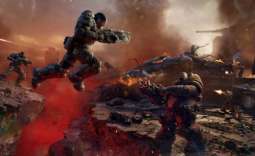 Leaked Xbox controller for Gears of War E-Day features a cracked volcanic rock design and blood-red Crimson Omen
 Doom co-creator John Romero reveals id Software turned to Taiwanese pirates to help distribute the game to more people
 GTA Online will continue after GTA 6's release, Take-Two reiterates
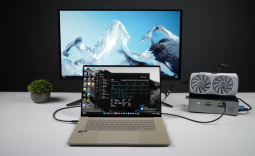 YouTuber benchmarks RTX 4060 on Snapdragon X2 Elite laptop using RTX Spark developer driver
 Dev builds a unique 3D operating system for multitasking, gets terrible performance
 Take-Two boss: 'discs, especially for big games, don't make sense to the consumer'
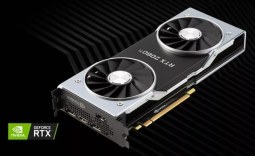 Modders are selling RTX 2080 Ti GPUs with 22GB VRAM on eBay for AI use
 Take-Two CEO Strauss Zelnick backs game streaming, says it will help fix hardware prices
 Take-Two CEO on GTA 6's $100 price: 'I think Rockstar got it right; given the hype, we could have made other pricing choices'
 GTA 6 pre-orders demand is 'astonishing and unprecedented,' Take-Two CEO says
 CPS PCCooler YS1200 ATX 3.1 80 PLUS Gold PSU Review
 ASRock X870E Taichi White Review: a premium AM5 motherboard with 10G LAN and WiFi 7
 Asetek Initium Pedal Modular Upgrades Review
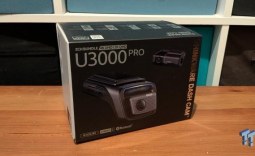 Thinkware U3000 Pro Review - Smart Dashcam with Wi-Fi quirks
 Montech TG3 Mid-Tower Chassis Review
 ASUS ROG Strix X870E-A Gaming WiFI7 Neo Review - A New Enticing Option
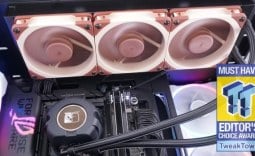 Noctua NL-LC1-36 Liquid CPU Cooler Review
 Logitech G316 X 98 Wired Gaming Keyboard Review - Retro-Inspired Board that Falls a Little Short
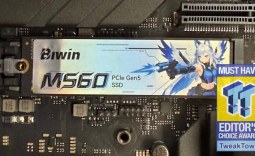 Biwin M560 2TB SSD Review - Best Overall Retail-Ready DRAMless SSD
 Logitech G512 X 98 Analog Mechanical Gaming Keyboard Review - An Innovative Two-in-One
 GIGABYTE's 40 Days of INFINITY celebrates 40 Years of Innovation with stunning GeForce RTX graphics cards and rewards
 I swapped File Explorer for this free file manager and finally got the layout I wanted
 How to tell if someone has been using your Windows PC without your permission
 6 Task Manager tips for troubleshooting Windows performance problems
 ASUS ROG's 20th Anniversary Line-up of Premium PC Gaming Gear has Arrived - Here's Everything You Need to Know
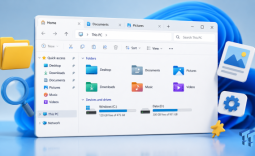 Six File Explorer tips every Windows user should know
 I switched my PC to encrypted DNS in Windows 11, and browsing felt more private
 Printer Not Working in Windows? How to fix detection, print queues and drivers
 The Ultimate Guide to Personalizing Your Windows 11 Taskbar
 How to Turn Your Windows Laptop Into a Second Monitor with Miracast and Wireless Display in Minutes