







Learn about how TweakTown tests and reviews hardware. As an Amazon Associate, we earn from qualifying purchases. TweakTown may also earn commissions from other affiliate partners at no extra cost to you.
Stay Updated
Follow TweakTown for breaking tech news, reviews, and daily updates.


Rats use whiskers like humans use hands, research says
Rats actually use their whiskers in a similar way that humans use their hands and fingers, particularly when exploring the dark, according to a revelatory new piece of research on the rodents.
Although it's long been known that mammals tend to use their whiskers to navigate dark patches, the full extent of control over the facial features was not known until now. Academics at Sheffield University set about using high speed videography to keep an eye on animals, each of which had been trained to run circuits for treats. Undergoing different scenarios, such as putting obstacles in their way or taking away visual cues, showed that the animals used their whiskers in a "purposeful" way to complete the track.
As the rats got quicker at running circuits, they also tended to change their whisker movements accordingly - whether that was to sweep surfaces or pushing their whiskers forward to detect objects that could be in their way. In the scenarios where they were likely to run into objects, the animals were more cautious and deliberately felt their way around using their whiskers. "All mammals except humans use facial whiskers as touch sensors. In humans we seem to have replaced this sense, in part, by being able to use our hand and fingers to feel our way," said Professor Tony Prescott. "The rat puts its whiskers where it thinks it will get the most useful information, just as we do with our fingertips."
Continue reading: Rats use whiskers like humans use hands, research says (full post)
Panzura thumbs nose at competitors by giving product away for free
In what may eventually prove to be a very shrewd move, Panzura announced today that it will provide a free virtual appliance version of its cloud gateway. Further, they have partnered with Google so that customers users of the free gateway also get 2TB of free storage via the Google Cloud Platform for one year.
In reading through the press release and blog post on their website, Panzura is clearly looking to drive home the point that there is a stark difference between simply having cloud storage for one office versus actually setting up cloud storage so that it is both high performant AND collaborative across locations. As they point out, the real value add in the Panzura technology is the file locking capabilities for distributed enterprises that have multiple locations. While the gateway may be free, this file locking feature is not.
Call it coincidence or superior planning, but this Panzura announcement comes just one day after EMC announced the acquisition of TwinStrata, another player in the cloud gateway space. It will be interesting to see what effects the commoditization from Panzura combined with the immediate entry by the giant EMC will have on the remaining companies in this market (i.e. Avere Systems, CTERA).
Continue reading: Panzura thumbs nose at competitors by giving product away for free (full post)
NASA 3D prints a model of light-year-long Eta Carinae nebula
NASA has created a full 3D model of a light-year-long nebula that was coughed out by the Eta Carinae system, 7,500 light years away from Earth, in the 19th century.
Eta Carinae can be found in the Carina constellation, and it's one of the brightest that are known out there by far - its smallest star is roughly 30 times as big as the Sun. In the 19th century, it spewed out the gassy Homonculus Nebula, and this is what the researchers have now printed off as a 3D model. NASA used the European Southern Observatory's appropriately titled Very Large Telescope and the X-Shooter spectrograph to image near-infrared, visible and ultraviolet wavelengths across the nebula to create the most complete image made to date. Researchers took this data to look at spatial and velocity information, which then enabled the creation of the very first high-res 3D model of the nebula.
The model was put together in Shape and allowed NASA staff to inspect the more unusual features of the nebula, including trenches and dust skirts, and because it was developed using an emission line of near infrared light that was created by the molecular hydrogen gas, even allows for a close-up guesstimate of the dust-covered sides facing away from our humble little planet.
Continue reading: NASA 3D prints a model of light-year-long Eta Carinae nebula (full post)
Apple opens eBay store with certified refurbished iPhone 5 smartphones
Apple has quietly opened a store on eBay to sell certified refurbished iPhone 5 smartphones that are unlocked. All of the smartphones on this particular store are GSM version of the iPhone 5. The smartphones include a one-year Apple warranty and are being sold at aggressive prices.
The Apple store is called the Factory Outlet eBay Store and has six devices listed in factory restored and unlocked guise. iPhone 5 model on the store sell for between $449 and $499 per device.
The phone models on the eBay store are exclusive to the store. Devices are noted to be burn-in tested and professionally repacked with a final inspection performed by Apple. It's worth noting that ahead of the official launch of the latest iPad in 2013, a similar store popped up for refurbished older iPad models and disappeared before the launch of the new tablet.
Continue reading: Apple opens eBay store with certified refurbished iPhone 5 smartphones (full post)
EMC goes on PR frenzy with acquisition news and product updates
On a very busy press day for the company, EMC announced several news items spanning across several product lines. Changes include broadening the configuration options for XtremIO and Isilon, a more open and hybrid approach to deploying VMAX, updates for ViPR, and a new Hadoop big data analytics solution.
XtremIO gets a refresh with both a new entry-level configuration of 5TB, as well as a larger scale-out cluster capable of expanding to six 20TB X-Bricks. More interesting than just the configuration expansion, XtremIO is now adding inline compression to its intelligent data handling feature set. Combined with existing snapshot and deduplication, EMC claims the product now supports petabytes of data.
On the VMAX front, EMC announced VMAX3, an open enterprise platform to bridge standard enterprise storage with cloud storage. As part of this release, EMC also announced the acquisition of TwinStrata, Inc., developer of the CloudArray management software. The new offering is engineered to give storage administrators an easy way to provision storage to either in-house storage arrays or out to public cloud storage, all based on workload requirements. According to a letter on the TwinStrata website from Nicos Vekiarides, CEO of TwinStrata, "Working together as part of EMC, we are looking to integrate CloudArray into the new VMAX3 enterprise data service platform to allow you to automatically tier workloads even more seamlessly for off-premise storage capacity expansion, data protection and disaster recovery."
Continue reading: EMC goes on PR frenzy with acquisition news and product updates (full post)
Ford issues recall on 100,610 vehicles in North America
The automotive industry in the US and other parts of the world has been besieged with recalls over the last year. GM has been hit with the brunt of the recalls going so far as to tell dealers in the US that they can no longer sell the Cruze, the company's second bestselling vehicle. Ford has now issued a massive recall in North America that includes 100,610 vehicles.
The massive recall includes six different actions with about 92,000 of the vehicles having a potential issue with the front axles that may not have been installed properly. That improper installation could cause the axle to move outward and eventually disengage.
Cars covered in that axle recall include 2013-2014 Taurus, Flex, and Interceptor models along with Lincoln MKS and MKT. Also included in the axle recall are 2012-2014 Edge and 2014 Lincoln MKX models. Ford also recalled 5264 2011-2014 F59 Commercial Stripped Chassis vehicles with faulty electrical systems that could lead to a fire. 2014 Ford Escape vehicles with the panorama roof were recalled due to glass panels not glued properly during installation.
Continue reading: Ford issues recall on 100,610 vehicles in North America (full post)
VIA could jump back into the CPU game with its next-gen Isaiah chip
If new reports are to be believed, VIA is working on the next-generation version of its x86-based CPU architecture, Isaiah. The company's last try at the x86 CPU game was back in 2006, but the latest version looks like it'll be released in just a few weeks time.
German site 3DCenter is reporting on some of the performance comparisons with other low-power chips, such as AMD's Kabini APU which has a 25W TDP, and a mobile Bay Trail processor from Intel. Isaiah II looks like it can keep its own, but we don't know how genuine these benchmarks are, if they are genuine at all. Centaur is the name of VIA's CPU division, with its website teasing an upcoming refresh which will happen on September 1. This could be the date when we learn about the new CPU, so we'll be keeping our eyes open.
We can also confirm hearing stories from certain VIA employees at Computex that its next-gen CPU may end up being able to compete with Intel Core i5 level parts at low power consuming levels.
Continue reading: VIA could jump back into the CPU game with its next-gen Isaiah chip (full post)
NASA's Voyager I swims into interstellar space
After a 37-year journey through our solar system, NASA's Voyager I has been hit by a third solar 'tsunami'. These solar tsunamis are coming from our sun, in the form of coronal mass ejections - in other words, shock waves from massive, violent eruptions on our sun.
Since 2012, there have been three of these CMEs, with the third one erupting on Monday. These eruptions have been helping NASA confirm something it proposed late last year: that Voyager is the first craft from Earth to travel into interstellar space. But what is interstellar space? Well, it's an area that is just beyond what is known as our heliosphere.
The heliosphere is an area where solar wind pushes back the dense plasma of space, in something that resembles a protective bubble. This plasma is the result of the death of stars millions of years ago. What should really make your scratch your noggin' is that the plasma found outside of the heliosphere, and in interstellar space, is 40 times denser than the plasma inside of the heliosphere.
Continue reading: NASA's Voyager I swims into interstellar space (full post)
NVIDIA will reportedly launch its GeForce GTX 990 in early 2015
Now that we've passed into the second half of 2014, we should expect some new GPUs in the coming months. But what is more exciting, is what is coming in the first half of 2015 according to a new report from SemiAccurate.
We should expect NVIDIA to skip the 20nm process completely, moving directly from 28nm into 16nm. This is just a rumor right now, but if it ends up happening, 2015 is going to be one of the most exciting years for GPUs in a very long time. This would see NVIDIA release the GeForce GTX 990 under the Maxwell architecture, from the GM204B core.
If NVIDIA does skip the 20nm process, we should see some seriously fast GPUs appearing, with much lower than expected power consumption. The core count should also be lower when compared to the GeForce GTX 700 series, as Maxwell is a much more efficient architecture compared to Kepler. So before we have the GTX 800 series, we're already foaming at the mouth about the GTX 900 series. It won't stop there, as we should see NVIDIA unveil the GeForce 1000 series sometime in the next 18-24 months, too.
Continue reading: NVIDIA will reportedly launch its GeForce GTX 990 in early 2015 (full post)
Samsung deploys exclusive NAND technologies in 845DC EVO and PRO SSDs
One of the most important revelations from the Samsung Global SSD Summit 2014 in Seoul was the unveiling of the new 845DC PRO. The 845DC PRO is a V-NAND (3D NAND) SSD that is geared for the SMB and SOHO segment, though we fully expect it to find a home in more intense production environments as well.
The combination of the 6Gb/s SATA 845DC EVO and the 845DC PRO provide a considerable one-two punch for Samsung. These two offerings allow them to address the booming SATA value market with two distinct solutions, much like the M500 and M500DC pairing from Micron. The distinct differentiator is that the two Samsung offerings both offer disruptive new NAND technologies that are not currently offered by other manufacturers.
The 845DC PRO features Samsung's first generation 24-layer V-NAND. V-NAND is 3D NAND that achieves better density, performance, endurance, and power consumption, via vertical stacking of the NAND cells. This runs counter to the established norm of increasing density through NAND shrinks, and with good reason. Shrinks provide more density, but actually reduce endurance.
Continue reading: Samsung deploys exclusive NAND technologies in 845DC EVO and PRO SSDs (full post)
Kaspersky Lab announces 2015 editions of security solutions
Security company Kaspersky Lab today announced its updated product lineup for home consumers, including the Kaspersky Anti-Virus 2015, Kaspersky Internet Security 2015 and Kaspersky Internet Security - Multiple-Device 2015. Designed to protect Microsoft Windows, Apple OS X and Google Android devices from current threats in a rather complex security world.
New features include Webcam protection aimed at keeping built-in Web cameras safe and secure from outside hacking. Kaspersky also included a Wi-Fi security notification module that ensures public Wi-Fi hotspots are secure, informing users of vulnerable network connections or unsecured password transmission. Ransomware which encrypts files also is a major threat to PC users, so the Kaspersky Lab System Watcher module verifies all running processes to prevent criminals from encrypting files.
"Today's threat landscape is persistently evolving and at Kaspersky Lab we're continuously staying one step ahead of the cybercriminals," said Justin Priestley, Kaspersky Lab consumer sales SVP, in a statement. "We provide our customers with the most advanced protection tools available, like the innovative Webcam Protection and System Watcher features. Our 2015 suite of products, especially Kaspersky Lab Internet Security, is equipped with technologies that have proven to be effective not only in independent tests, but in the real-world, protection 300 million people across the globe."
Continue reading: Kaspersky Lab announces 2015 editions of security solutions (full post)
Chinese hacker group Deep Panda targets US think tanks for Iraq data
A team of researchers at CrowdStrike is claiming China's "Deep Panda" cyber offensive group has begun targeting, and has now compromised, US national security think tanks. In an alarming statement, co-founder Dmitri Alperovitch asserted that the attacks seem to be tied into monitoring activity from the newly founded Islamic State of Iraq and the Levant (ISIS).
In a blog post, CrowdStrike's co-found Dmitri Alperovitch outlined the company's work with human rights groups and security think tanks. Former senior government officials frequently work in organizations like these, and so are a natural target of hostile intelligence services, Alperovitch said, adding that he has "great confidence" the Deep Panda group is affiliated with the Chinese government. It's one of 30 CrowdStrike closely follows in China, but the company points out it is also one of the most sophisticated.
As the armed ISIS faction launched an attack on an oil refinery, Alperovitch claims Deep Panda began a hunt for files from US thinktank employees. He pointed out that China is the top foreign investor in Iraq's oil infrastructure, and so espionage fits in with the country's national interests. "It wouldn't be surprising if the Chinese government is highly interested in getting a better sense of the possibility of deeper US military involvement that could help protect the Chinese oil infrastructure in Iraq," Alperovitch wrote. "In fact, the shift in targeting of Iraq policy individuals occurred on June 18, the day that ISIS began its attack on the Baiji oil refinery."
Continue reading: Chinese hacker group Deep Panda targets US think tanks for Iraq data (full post)
Samsung unveils datacenter NVMe solutions at the SSD Global Summit
The 2014 Samsung Global SSD Summit 2014 in Seoul, South Korea, was somewhat of an SSD nirvana. Samsung touted their industry-first 3D NAND (V-NAND), the first 3bit MLC SSDs for the datacenter (the 845DC EVO), the world's first M.2 SSD for the datacenter, and to top it all off we were finally able to take a peek at Samsung's NVMe offerings.
Samsung has the distinct advantage of being the first to receive NVMe interoperability certification from UNH-IOL, but the OEM market has kept the drive hidden from the retail space.
We start with the SM1715 and its unique heat sink that encompasses the entire side of the drive. The SM1715 utilizes the standardized NVMe protocol. NVMe provides numerous advantages with its simplified driver stack, command set, and enhanced queue/pairing mechanisms. For an in-depth view of NVMe, reference our recently released Defining NVMe article.
Continue reading: Samsung unveils datacenter NVMe solutions at the SSD Global Summit (full post)
Samsung displays world's first datacenter M.2 SSD at Global Summit
Samsung is on a roll with V-NAND and 3bit MLC datacenter products making a huge splash at the 2014 Samsung Global SSD Summit in Seoul. The SM953, the world's first M.2 SSD designed for the datacenter, was yet another exciting Samsung-exclusive product on display in the product showcase.
The chains of legacy HDD form factors have been binding SSDs into large bulky cases that are not required for today's dense NAND. M.2 provides a new standardized form factor that limits the device to the size of the NAND, controller, PCB, and other components. This will allow for denser deployments and enable even smaller blade and microserver designs. Storage and performance density are paramount in the datacenter and SSDs provide the ultimate in both respects. It is encouraging to see these new designs finally making their way into the datacenter.
Other than the 1,800 MB /s sequential read performance, there is precious little information publicly available at this point. We do know that the SM953 comes in one capacity of 480GB. M.2 also has standardized designs that are longer, which will allow for even more NAND per device. The inclusion of V-NAND, with its enhanced density, will also provide much more capacity in these 'gumstick' devices. There is no mention of the NAND employed on the SM953.
Continue reading: Samsung displays world's first datacenter M.2 SSD at Global Summit (full post)
Samsung details datacenter SAS and SATA SSD options at Global Summit
The 2014 Samsung SSD Global Summit took place last week in Seoul. With tight schedules, long international flights, and a holiday weekend as well, our detailed analysis will begin rolling today. Chris will dive in on coverage on the consumer side, and also post video of the entire Global Summit presentation. I will be weighing in on some of the datacenter storage solutions provided by Samsung.
The majority of the Global Summit presentations focused on the innovative new V-NAND products from Samsung. V-NAND is 3D NAND that achieves better density, performance, endurance, and power consumption, via vertical stacking of the NAND cells. This runs counter to the established norm of increasing density through NAND shrinks, and with good reason. Shrinks provide more density, but actually reduce endurance. V-NAND provides a revolutionary path forward, and Samsung is the first to mass-produce and bring to market 3D NAND-based solutions.
Samsung christened V-NAND with a release of the world's first mass-produced 3D NAND SSD into the datacenter. The benefits of V-NAND align themselves almost perfectly with the common datacenter pain-points, such as power consumption, density, and endurance. The 6Gb/s SATA SV843 brings higher endurance, 3.6 DWPD (Drive Writes Per Day), and enterprise-centric features such as power loss protection. The SV843 comes in 480 and 960GB capacities and random read/write performance up to 88K/14K IOPS. Sequential read/write is spec'd up to 530/430 MB/s.
Continue reading: Samsung details datacenter SAS and SATA SSD options at Global Summit (full post)
Oculus VR announces Oculus Connect, a two-day conference for VR
Oculus VR is going full steam ahead as it gets closer to the release (which still hasn't got an ETA) of the consumer edition of the Rift. The VR startup has announced that it is hosting its first developer conference, Oculus Connect, in September.
Oculus Connect is a two-day conference for developers and creators that has the goal of creating some of the "best virtual reality experiences available". Oculus VR explains: "In the last two years, we've seen more virtual reality content built than in the last two decades, and that's a direct result of incredible work by the community. With virtual reality's momentum at an all-time high, this is a unique moment for the developer community to come together to take the virtual reality to the next level".
The two-day conference happens on September 19-20 at the Loews Hollywood Hotel in LA. There are going to be four big speakers at the event, with Oculus VR founder Palmer Luckey, id Software founder and now CTO of Oculus VR John Carmack, Oculus VR's CEO Brendan Iribe and Chief Scientist, ex-Valve employee Michael Abrash.
Continue reading: Oculus VR announces Oculus Connect, a two-day conference for VR (full post)
OnePlus One smartphone to have Android L quicker than competitors
It looks like we can expect the elusive OnePlus One smartphone to receive Android L quickly after Google releases, something that OnePlus might be able to bake onto its phone before most of the other leading Android smartphones on the market.
OnePlus announced the news on Friday, after it was hit with questions as to when it would be pushing Android L to One smartphone. The company said that the One's new CyanogenMod build is based on Android L, and will be available after a couple of months after Google makes its final Android L code available.
The company said in its full statement: "So a lot - I mean, a lot - of people are asking about whether we'll be getting on the Android L train. It was announced while I was asleep and when I got back to work the morning after, there were already a bunch of forum posts and (strangely) customer support requests about it. Well, we're keen to announce today that the OnePlus One will indeed be getting the L treatment. When, you ask? That depends on Google. We promise to have it done within three months of their releasing a final build".
Continue reading: OnePlus One smartphone to have Android L quicker than competitors (full post)
$36 million worth of phones and tablets stolen from Samsung factory
Armed robbers have attacked one of Samsung's factories in Brazil, holding workers hostage while they took truckloads of smartphones, tablets and notebooks from a factory near Sao Paulo, Brazil. These goods were valued at $36 million.
The thieves carjacked a shuttle used by factory employees, after which they took the place overnight during the four-hour heist in Campinas. Campinas is an industrial hub in the southeastern state of Sao Paulo. The thieves reportedly made off with an incredible seven trucks of goods, stealing over 40,000 products.
A Samsung spokesperson has said: "We have cooperated fully with the police investigation that is underway and will do our best to avoid any sort of repeat incident".
Continue reading: $36 million worth of phones and tablets stolen from Samsung factory (full post)
Dailymotion hit by attack, leaving video viewers vulnerable
The popular video website Dailymotion was compromised by cybercriminals able to inject malicious code, redirecting visitors and secretly installing malware. The iframe first appeared on June 28 and installed the Sweet Orange Exploit Kit, targeting Oracle Java, Microsoft Internet Explorer and the Adobe Flash Player.
It seems only a small number of users were compromised, and Dailymotion quickly restored videos and ensured they were safe again.
"If the kit successfully exploited any of these vulnerabilities, then Trojan.Adclicker was downloaded onto the victim's computer," according to Symantec researchers. "This malware forces the compromised computer to artificially generate traffic to pay-per-click Web advertisements in order to generate revenue for the attackers."
Continue reading: Dailymotion hit by attack, leaving video viewers vulnerable (full post)
YouTube showing messages on slow videos blaming ISPs
YouTube is one of the most popular sites on the internet for streaming video and as such, it consumes a lot of bandwidth on many IPS networks. Some ISPs are allegedly slowing the streaming of YouTube videos down and YouTube is calling the ISPs out on the practice. YouTube has begun putting little messages on videos that are having streaming issues.
The message pops up over the title of the video and reads "Experiencing Interruptions?" and on the right side of the message, a button for users to click reads, "Find out Why." When the user clicks on that button, they are taken to a Video Quality Report that is localized for the person streaming the video. That report allows the user to compare video consumption times in their area and compare their ISP with the performance of other local ISPs in the area.
The best providers in the area receive a YouTube HD Verified tag with other carriers possibly having badges putting them in Standard Definition or lower tiers. The idea is to give the viewer an idea of why a video is slow rather than just assuming YouTube is having issues and to give the viewer options to change to other carriers that aren't putting limits on video streaming.
Continue reading: YouTube showing messages on slow videos blaming ISPs (full post)
 GPU Tweak III can now detect and shut down a PC when a 12V-2x6 graphics card goes over a certain current limit
 CPS PCCOOLER unveils all-in-one modular PC where you can replace the display and upgrade its hardware
 NVIDIA and LG are building a next-generation humanoid robot that will make its debut at CES 2027
 Intel will continue supplying Raptor Lake CPUs for 'years to come' thanks to the memory crisis
 NVIDIA's next-gen 'Feynman' GPUs to be built with TSMC's 1.6 nm A16 process
 OLED monitor shipments have doubled in a year, with ASUS as the global leader
 SK Hynix is running out of SSD replacements, leaving customers with inadequate refunds
 Kingdom Hearts 4 reveals Pixar's Coco-inspired Land of the Dead world and late 2027 release window
 Budget GPU shortages to get even worse in second half of 2026, warns PC Partner
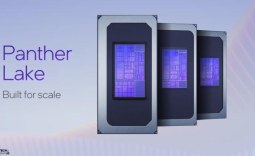 Intel plans an entry-level Panther Lake chip with 4 Xe3 cores for handhelds
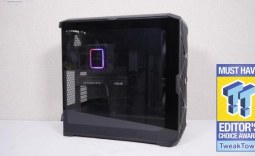 Cooler Master HAF II 500 Mid-Tower Chassis Review
 Corsair HS35 v3 Wireless Gaming Headset Review - An Affordable Winner
 D-Link F518 5G Wi‑Fi 6 AX1800 Mobile Hotspot Review: All-Day Mobile Hotspot
 Bose Lifestyle Ultra Speaker Review - Impressively Detailed Room-Filling Sound
 MSI Z890 Gaming Plus WIFI6E Review - Z890 for under $200
 Mortal Kombat (1995) 4K Ultra HD Blu-ray Review
 CPS PCCOOLER YS1200 ATX 3.1 80 PLUS Gold PSU Review
 ASRock X870E Taichi White Review: a premium AM5 motherboard with 10G LAN and WiFi 7
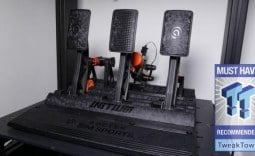 Asetek Initium Pedal Modular Upgrades Review
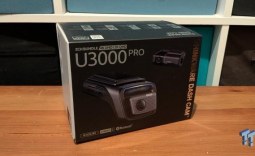 Thinkware U3000 Pro Review - Smart Dashcam with Wi-Fi quirks
 Windows Sandbox is The Windows Security Feature Most People Never Use
 I ditched the Windows 11 context menu for this open-source tool, and here's why
 Windows 11 may be encrypting your drive already, and I checked where my recovery key went
 GIGABYTE's 40 Days of INFINITY celebrates 40 Years of Innovation with stunning GeForce RTX graphics cards and rewards
 I swapped File Explorer for this free file manager and finally got the layout I wanted
 How to tell if someone has been using your Windows PC without your permission
 6 Task Manager tips for troubleshooting Windows performance problems
 ASUS ROG's 20th Anniversary Line-up of Premium PC Gaming Gear has Arrived - Here's Everything You Need to Know
 Six File Explorer tips every Windows user should know
 I switched my PC to encrypted DNS in Windows 11, and browsing felt more private