







Learn about how TweakTown tests and reviews hardware. As an Amazon Associate, we earn from qualifying purchases. TweakTown may also earn commissions from other affiliate partners at no extra cost to you.
Stay Updated
Follow TweakTown for breaking tech news, reviews, and daily updates.


FMS 2014 - Crucial/Micron displays their line of SSD products
Flash Memory Summit 2014 - Scott Shadley stopped by our booth to discuss Micron's latest products at the Flash Memory Summit. Micron's ability to create their own NAND provides them a huge advantage over many non-fab competitors. The consumer SSD market is extremely competitive of late, and Crucial (Micron's consumer arm) leads the pack with some of the lowest price points available. Another key advantage is the use of their 16nm NAND. This allows them to retain a pricing advantage (The MX100 is a perfect example), and its solid performance also keeps Micron's SSDs among the best in price v performance metrics.
Moving to the enterprise side, Micron is very competitive in the value segment and high-end PCIe SSDs. The M500DC sports impressive performance at an equally impressive price point for the 2.5" segment. The P420m fills the role of an affordable PCIe SSD with chart-topping performance, and for those in need of the ultra-high-end, the Micron P320h still holds the overall crown. It doesn't get better than durable SLC NAND paired with speed fast enough to saturate the PCIe 2.0 bus with random data. If we had an SSD Hall of Fame, the P320h would be the first drive in the door.
Of course Micron isn't resting on their laurels. They are releasing their NVMe PCIe and 2.5" SSDs early next year. Much of the secret sauce that provides Micron's chart topping performance with the existing PCIe SSDs is likely due to NVMe knowledge; they are one of the founding members of the NVMe consortium. Micron helped define expectations for high-performance PCIe SSDs, which leads to some excitement to see what Micron brings with their new NVMe SSDs.
Continue reading: FMS 2014 - Crucial/Micron displays their line of SSD products (full post)
Starbucks, McDonald's lead the way when it comes to free Wi-Fi access
When it comes to free public Wi-Fi, your best bet is to head to a local Starbucks coffee shop or McDonald's fast food restaurant, according to a study from wireless specialist OpenSignal.
Starbucks decided to drop AT&T in favor of Google, and that has meant 80 percent faster Wi-Fi for store visitors, according to the study. The coffee shop has speeds reaching 9.01 Mbps, with McDonald's in the No. 2 position with slightly more than 4 Mbps, while Best Buy and Lowe's trail behind.
For hotel visitors, nightly reservation costs tend to increase as Wi-Fi speed and connectivity also increase. It makes sense for companies to roll out Wi-Fi to visitors, which helps keep them engaged and provides a unique sales and marketing opportunity by providing in-store digital coupons to guests - and establishments such as Starbucks, McDonald's, and other similar businesses can get patrons in the door.
Continue reading: Starbucks, McDonald's lead the way when it comes to free Wi-Fi access (full post)
New Xbox One bundles debut with fancy designs and more storage
If you have been holding gout on buying a new Xbox One game console, you might want to consider getting one of these new bundles that Microsoft has unveiled. A white version of the Xbox One will available for the average consumer to buy. That white version was previously only for Microsoft employees.
The white console is available today with the Kinect and on October 28, you can buy it with no Kinect for $399. The second bundle is the more interesting one and it is a Call of Duty: Advanced Warfare edition of the console.
It has a specially designed console with black, gray, and yellow graphics. It will also be the first Xbox One to feature 1 TB of storage, which is twice the storage currently available. The game console will land on November 3 without Kinect with a copy of the game for $499.
Continue reading: New Xbox One bundles debut with fancy designs and more storage (full post)
FMS 2014 - Cachebox explains application-centric CacheAdvance caching
Flash Memory Summit 2014 - The list of software caching solutions is expanding rapidly as manufacturers, and software vendors, try to make their way into this expansive market. Deploying flash is great, but deploying it in a manner that accelerates existing infrastructure is even better. Very few will totally replace spinning disk in their datacenter deployments, so marrying the capacity of HDD with the performance of SSDs is the current go-to solution.
Cachebox wades into this large market with a new method of caching. The CacheAdvance software uses an ASM (Application Specific Module) that analyzes what is important to the application and provides seamless acceleration based upon application-centric performance profiles. The system has predefined knowledge of existing popular programs, but also adjusts to the specific environment.
One of the advantages of application-centric caching is that it doesn't accelerate any unwanted processes or applications, such as backup operations. This maximizes the capacity of the underlying flash solution. Users can use any block-level device for caching, so there is hardware independence from specific vendors and the system is also interface agnostic. PCIe, SAS, SATA, NVDIMMS, and UltraDIMMS can all play equally. Any block-level device is fair game. One particularly exciting aspect of the flexible design is that it will also allow for future storage technologies as well.
Continue reading: FMS 2014 - Cachebox explains application-centric CacheAdvance caching (full post)
Lenovo unveils its redesigned, new-look ThinkStation P Series
Lenovo has just taken the wraps off of its new ThinkStation P Series, P500, P700 and P900 workstations at SIGGRAPH 2014. Completely redesigned and rebuilt from the ground up to offer more flexibility and ease of use with a new look. Features include enhanced thermal management, tool-less upgrades and Lenovo's new FLEX module technology.
"After a period of intensive research, development and testing, we're excited to introduce our next generation workstations to the market, as we truly believe this is the best designed workstation ever," said Victor Rios, Vice President and General Manager, Workstation, Lenovo. "We built on the advancements delivered in our 30 Series workstations and engineered the P Series with new levels of innovation based on extensive customer feedback. The result for users is optimum performance, outstanding reliability and unparalleled usability that is unlike anything they have experienced."
Rios continued: "Performance Boosting productivity starts with incomparable computing and graphics performance. With the Lenovo ThinkStation P Series, users can run their mission-critical applications to their limits - from advanced rendering and simulation to analysis of vast data sets." The following can be found in the new ThinkStation P Series of workstations:
Continue reading: Lenovo unveils its redesigned, new-look ThinkStation P Series (full post)
DirectX 12 uses up to 50% less CPU power consumption, more performance
There's not much reason to be excited over DirectX 12 just yet, but Intel was showing off the performance and power benefits of DirectX 12 at SIGGRAPH 2014. Microsoft used its Surface Pro 2 with Intel HD4400 graphics, showing off some impressive performance improvements, with heavily refuced CPU power consumption.
Intel had a demo that was rendering an asteroid field with 50,000 unique asteroids, each equating to 50,000 draws per frame. Each asteroid then had a unique combination of vertices, textures, and constants. Intel's demo was able to switch between DirectX 11 and DirectX 12 with a single key press, but it could also lock the frame rate in order to keep the workload on the GPU at a constant level.
The company was showing people the benefits of DX12, with massive power gains being unlocked from Microsoft's new API. Intel locked the frame rate of the demo, rendering it for a period of time on DirectX 11, and then switching over to DirectX 12. As you see in the graph above, the CPU power consumption was reduced by over 50% when DX12 was enabled, highlighting the fact that DX12-enabled games could offer some serious reductions in power consumption on our devices.
Continue reading: DirectX 12 uses up to 50% less CPU power consumption, more performance (full post)
Yellowstone Spring may have been damaged by banned drone
The National Park Service banned drones from flying over national markets because of safety issues and noise problems, and it seems a banned drone was crashed into Yellowstone National Park's Grand Prismatic Spring on August 2.
The drone hasn't been recovered and specific damage to the natural spring remains unknown, but will try to determine where the drone crashed. The spring is 300 feet across and up to 160-feet deep, making it the largest in the United States.
"We don't know what damage may have been caused when it entered the hot spring, but we also don't know what kind of damage could be caused by leaving it there or by taking it out," said Amy Bartlett, a U.S. National Park Service official, in a statement to LiveScience.
Continue reading: Yellowstone Spring may have been damaged by banned drone (full post)
NASA's New Horizons captures unique footage of Pluto and Charon
Launched by NASA in 2006 and tasked to study Pluto, the New Horizons spacecraft captured unique footage of Charon revolving around Pluto, filmed from 265 million miles. Pluto has five moons, but Charon, at 750-miles across and is just 11,200 miles from Pluto.
A total of 12 photos were captured and researchers are using images to help accurately identify where Pluto is and the path it takes around the sun. Only one-third of the dwarf planet's orbit around the sun has been accurately recorded, space researchers have noted.
The New Horizons is expected to arrive at Pluto around 2015, and is finalizing its pre-Pluto annual systems instrument calibration before arriving. The spacecraft will be placed into "hibernation" mode from late August until early December, which is when it will be used for two years to conduct flyby missions while relaying information back to researchers.
Continue reading: NASA's New Horizons captures unique footage of Pluto and Charon (full post)
The next Xbox One update will provide MKV support, and much more
Microsoft seems to be having a big time at Gamescom, with some big titles being talked about for the Xbox One, including Quantum Break from Remedy Entertainment, the studio which made Alan Wake and Max Payne, and Rise of the Tomb Raider, which is an Xbox One exclusive.
The company has announced that they are adding many more options to the Xbox One in a future update, which will turn the Xbox One into a much more feature laden media player. Microsoft will be adding the ability to play media files from a USB drive from the Xbox One, as well as teasing that it will be providing support for the very popular MKV format, as well as DLNA network support. Major Nelson has promised that the Xbox One will receive support for new file types, including MPEG2 TS, animated GIF and of course, MKV. There should be a preview version of the app that will include USB support, but DLNA and MKV abilities will be baked into a later update.
Microsoft will also be making the Xbox One a better device for controlling your TV, with a new update to soon let you boot directly to your TV from standby mode, something that will make things easier for non-gamers who want to watch TV and not play games at that particular time. SmartGlass TV streaming is also coming, something that will allow you to be in another room and watch your shows over your home network with your SmartGlass-powered tablet or smartphone, on either Windows Phone, iOS or Android.
Continue reading: The next Xbox One update will provide MKV support, and much more (full post)
Rise of the Tomb Raider is an Xbox One exclusive, arrives in 2015
When the first rumbles started about the next Tomb Raider game, we heard it would reach both the previous generation and current generation consoles, as well as the PC. Well, at Gamescom which is cranking along in Cologne, Germany, Microsoft has announced that Rise of the Tomb Raider will be an exclusive to the Xbox One.
Rise of the Tomb Raider will reach the Xbox One in Holiday 2015 to Microsoft's console, but that exclusivity might not last too long - hopefully. Crystal Dynamic, the studio behind the game, has come out explaining why the game is an exclusive to the Xbox One:
Continue reading: Rise of the Tomb Raider is an Xbox One exclusive, arrives in 2015 (full post)
Quantum Break is like Alan Wake, but with the ability to control time
For the first time since E3 2013, Remedy Entertainment has shown off gameplay footage of its upcoming Xbox One exclusive, Quantum Break. If you haven't heard about Quantum Break, it's Remedy's time manipulation game, a game that comes off of its success with Alan Wake.
Sam Lake, Remedy Entertaiment's Creative Director, and the constipated face of Max Payne, walked up on the stage of Microsoft's Gamescom press conference to show off Quantum Break. Quantum Break sees Jack Joyce as the main character, who has some unique abilities. Joyce can control time for a limited period, where he can freeze enemies in ice-like time crystals, and then dive from cover to cover.
Quantum Break's world is in peril, as the end of time is happening, with the stutters in the game representing the world itself. These stutters are the outcome of time itself breaking, with bodies, debris, and fire frozen in its tracks. One of these stutters sees Joyce climbing onto a highway, where he sees a frozen semi truck, with its front hanging off of the egde of the highway. Joyce can walk through these stutters, as if they are Matrix-like museums, with people, objects and everything in between frozen in time.
Continue reading: Quantum Break is like Alan Wake, but with the ability to control time (full post)
FMS 2014 - Chris looks at the Plextor M6 Pro and PlexTurbo in action
Flash Memory Summit 2014 - Since Computex 2014 last June the SSD market has been buzzing about Plextor's upcoming M6 Pro SSD. The drive is Plextor's long awaited SATA III flagship product, replacing the M5 Pro Xtreme, a product that launched in January 2013.
Plextor has always billed the brand as a premium product with deep ties to Japan, where the company was founded. Some of that foundation made it's way into the M6 Pro. The drive design uses champagne tinted aluminum. This particular color is a big hit in Japan and has been for more than a decade. The color is so popular in fact that several home audio receiver and component makers use the finish for products sold only in Japan. Being Japanese only products, they demand big money in the US from collectors and those of us that like rare pieces.
The Plextor M6 Pro also carries another rare feature. Plextor developed a special cache software that duplicates the SSDs hot data in the systems DRAM. The data is kept on both the SSD and system DRAM so users don't have to worry about data loss. The software can also cache data writes but the data is quickly flushed to the SSD. At FMS 2014 we shot a quick video of PlexTurbo in action.
Continue reading: FMS 2014 - Chris looks at the Plextor M6 Pro and PlexTurbo in action (full post)
FMS 2014 - LiteOn announces PCIe M.2 enterprise SSD lineup
Flash Memory Summit 2014 - LiteOn isn't accustomed to the SSD limelight even though they have been in the OEM SSD business since 2008. In many ways they should receive more recognition in the SSD market. LiteOn is known for their ODD (Optical Disk Drive) offerings, such as CD and DVD players. However, they are also the brains behind the Plextor SSD brand, which gives them quite a bit of experience in the retail space with Plextor, and on the OEM side as LiteOn.
LiteOn is expanding into the datacenter with a new line of enterprise SSDs that are tailored for enterprise applications. They are developing both 2.5" and M.2 form factor SSDs with enterprise-centric features. LiteOn is currently working on a 1TB M.2 SSD with power loss protection that was being demo'd in their booth at the show. The SSD features a PCIe 2.0 x2 interface and blistering sequential speeds of 600 MB/s read and 520MB/s write. Jeffrey Chang, the Technical Product Manager at LiteOn, stopped by the booth to talk about the latest enterprise SSDs from LiteOn.
The N9S will serve the 2.5" market with capacities up to 2TB, and are also available in the small 1.8" form factor. LiteOn is initially using AHCI for their new M.2 SSDs, with NVMe solutions coming next year. Stay tuned to TweakTown for future product evaluations as the new SSDs become available.
Continue reading: FMS 2014 - LiteOn announces PCIe M.2 enterprise SSD lineup (full post)
FMS 2014 - DriveSavers Data Recovery discusses latest projects
Flash Memory Summit 2014 - It's always fun to catch up with DriveSavers, simply because of the interesting stories from the latest data recovery projects they are working on. We were lucky enough to take a tour of the DriveSavers labs in April, and we recently crossed paths with Chris Bross again at the Flash Memory Summit.
Chris detailed the recovery of some of Gene Roddenberry's (the creator of Star Trek) lost files, which were stored on 200 x 5.25" floppy disks. These very old disks held a number of files, which are not yet released, and there will be a public disclosure of the content in the future. This highlights some of the varied storage technologies that DriveSavers encounters every day. While staying up to date with helium and SMR HDDs, they also have to continue to extract data from old devices as well.
Chris also discusses the need for data recovery services for the datacenter, and a word of caution for those using cloud data storage. For instance, when Hurricane Sandy struck five datacenters were literally underwater, so users are cautioned to always keep multiple copies of their data. Of course, if you should lose data DriveSavers will be there to help recover it, and you can take a closer look at our tour of the DriveSavers facility here.
Continue reading: FMS 2014 - DriveSavers Data Recovery discusses latest projects (full post)
FMS 2014 - Viking Technology demos the ArxCis-NV NVDIMM technology
Flash Memory Summit 2014 - NVDIMM was a hot topic at the Flash Memory Summit, and Viking Technology is leading the way in the NVDIMM space with their ArxCis-NV solution. NVDIMM allows the use of DRAM memory as a persistent memory. In the event of a power loss the NVDIMM flushes data from the DRAM down to NAND that is embedded on the device. This allows users to leverage the ultra-fast speed of DDR3 (and DDR4 in future versions) as a block storage device, yet still recover from any power loss event with the data intact.
Users can also leverage the ArxCis-NV as a memory space with their software applications. One of the advantages of using an NVDIMM from Viking is that it can be integrated into industry standard x86 servers via the DDR sockets. The ArxCis-NV is a DDR3 240-pin JEDEX pin compatible ECC registered DIMM with an integrated SSD for data backup. The speed of the device far outstrips any 12Gb/s or 6GB/s products, even when they are aggregated behind a RAID controller or HBA.
The ArxCix-NV can be used for the most bleeding-edge applications, such as a write cache or buffer, and also boosting metadata performance. We have a device in the lab now, and look to these pages soon for a performance breakdown!
Continue reading: FMS 2014 - Viking Technology demos the ArxCis-NV NVDIMM technology (full post)
FMS 2014 - PLX Technology talks about the latest in PCIe technology
Flash Memory Summit 2014 - Avago Technologies recently acquired LSI and their SandForce division, and then scooped up PLX Technology as well. The merger with Avago isn't complete yet, so we couldn't discuss the details of the acquisition with Larry Chisvin, the VP of Strategic Initiatives at PLX Technology. PLX Technology is a right in the middle of the datacenter evolution with the advent of NVMe, and also the need for a new interface for converged server architectures. NVMe is currently a new interface that is still developing to offer multipath and fail-over features which will lean heavily on PCIe switches.
We visited PLX's office and took a tour through the ExpressFabric architecture, which can replace or augment networking infrastructure in the datacenter. The advent of hyperscale and cloud computing has spurred a re-imagination of datacenter architecture. Disruptive technologies and Open Compute initiatives are challenging the old way of thinking and delivering designs purpose-built for optimum efficiency. The emergence of software-defined datacenters (SDDC) and software-designed storage (SDS) requires new designs that allow total control of resource allocation. Using ExpressFabric's PCIe connections as a rack-level interconnect allows for new exciting datacenter designs that will pool server resources in separate chassis for optimum performance.
Integration with Avago will allow for access to a much larger company with a large IP portfolio to accelerate PLX Technology's initiatives.
Continue reading: FMS 2014 - PLX Technology talks about the latest in PCIe technology (full post)
Motorola G2 tipped to ship September 10 packing only 8GB of storage
Motorola launched its slick smartphone called the Moto G a while back and a rumor claims that the successor to that smartphone is coming soon. According to a source who claims to have been given launch details straight from a Motorola rep, the next device will be the Moto G2 and it will launch on September 10.
The devices are tipped to hit dealers by August, but sales won't kick off until September 10. The smartphone is said to sell for around €250, not exactly an inexpensive handset. We have heard spec rumors for the device in the past.
The smartphone is tipped to have a 5-inch 720p screen, Snapdragon 400 chipset, 1GB of RAM, and an 8MP rear camera. The front camera is a 2MP unit and the smartphone will run Android 4.4.4 KitKat out of the box. Internal storage is tipped at a paltry 8GB; presumably, the smartphone will have storage expansion.
Continue reading: Motorola G2 tipped to ship September 10 packing only 8GB of storage (full post)
FMS 2014 - Skyera discusses the skyHawk All-Flash Array
Flash Memory Summit 2014 - Ray Pang, Director of Marketing at Skyera, stopped by our booth to discuss the skyHawk All-Flash Array (AFA). Skyera aims to bring the price of AFA down below $3 per GB, a similar price to disk-based storage subsystems. Skyera accomplishes much of the cost reduction by using their own design that doesn't rely upon traditional form factors. The end result is a remarkably slim 1U device that boasts up to 44TB of screaming flash storage.
skyHawk delivers 88 times more storage density at 1/10th of the power consumption of a like-priced HDD solution. Another key benefit of skyHawk is its converged storage architecture, which unifies block-based iSCSI and NAS file systems (NFS v3). The slim package provides up to 2.4 GB/s of bandwidth and 400,000 IOPS. skyHawk also employs compression and de-duplication technologies to boost the amount of use-able SSD space, but has base configurations before data reduction of 12, 22, and 44 TB.
Delivering all of this performance requires either 40 x 1GBe connections, or only 3 x 10GBe connections. The total package weighs under 20 lbs and pulls less than 350W, which is insanely efficient for a datacenter storage system.
Continue reading: FMS 2014 - Skyera discusses the skyHawk All-Flash Array (full post)
FMS 2014 - Contour Semiconductor displays $10 million DTM wafer
Flash Memory Summit 2014 - As we reach the end of planar (2D) NAND scaling we will begin to see more disruptive products emerge with futuristic technology such as PCM and magnetic and carbon nanotubes, the only question is which will rise to the top as the premier after-NAND technology. These new technologies will initially emerge as complimentary technologies to the existing NAND used in SSDs. Saul Zales, the Chief Executive Officer of Contour Semiconductor, brought along a wafer of their DTM (Diode Transistor Memory)that is valued at nearly $10 million, due to its early design and rarity. DTM is a phase-change based memory (PCM)that reduces the mask and process costs by up to 65% compared to NAND.
The 4F2 self-aligned structure uses a vertical epitaxial diode as the select device. In the future, Contour Semiconductor could include magnetic or carbon nanotube storage elements. The wafer is built on the CMOS process with a cross-point array architecture that supports word, sector, and page-level erase commands, which are very similar to NAND's design and fucntion. This will allow the use of the DTM packages with NAND controllers. We were lucky enough to see one of the only DTM wafers in existence, and had a quick chat with Saul Zales in the booth.
What does all this mean? Up to a billion P/E Cycles, which would be nearly immeasurable endurance compared to current SSDs. Using this type of memory as a cache for less-durable NAND could boost performance and endurance exponentially, and eventually new storage devices could use this type of memory.
Continue reading: FMS 2014 - Contour Semiconductor displays $10 million DTM wafer (full post)
California continues to promote electric-vehicle charging stations
Drivers are used to seeing gas pumps, but California, the No. 1 electric-vehicle market globally, is seeing a wider expansion of electric vehicle charging stations. EV owners are able to recharge their vehicles at home, but there are a number of free charging stations being installed - and helping woo a growing number of car buyers to consider purchase electric vehicles.
Not surprisingly, most of the charging stations can be found in the San Francisco Bay Area, Los Angeles, and Sacramento, but are increasing in number in more rural areas. The state currently has more than 1,840 charging stations statewide, and that figure is only increasing.
"To put it in perspective, I sold 10 (Leafs) last month but the numbers out of the Bay Area are much higher," said John Driebe, Nissan car dealer in Elk Grove near Sacramento, California. "I'm seeing (monthly dealership) sales of 60, 70 and 74 at those dealerships. With the population density and the all high-tech people working in the Bay Area, it's crazy how many they're selling there."
Continue reading: California continues to promote electric-vehicle charging stations (full post)
 Redditor finds a working RTX 2080 Super in the dump, gets a huge free upgrade
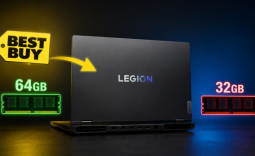 Redditor sends a gaming laptop with 64GB RAM for repair, comes back with 32GB RAM
 GPU Tweak III can now detect and shut down a PC when a 12V-2x6 graphics card goes over a certain current limit
 CPS PCCOOLER unveils all-in-one modular PC where you can replace the display and upgrade its hardware
 NVIDIA and LG are building a next-generation humanoid robot that will make its debut at CES 2027
 Intel will continue supplying Raptor Lake CPUs for 'years to come' thanks to the memory crisis
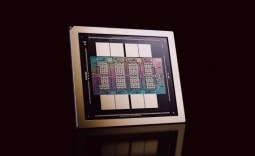 NVIDIA's next-gen 'Feynman' GPUs to be built with TSMC's 1.6 nm A16 process
 OLED monitor shipments have doubled in a year, with ASUS as the global leader
 SK Hynix is running out of SSD replacements, leaving customers with inadequate refunds
 Kingdom Hearts 4 reveals Pixar's Coco-inspired Land of the Dead world and late 2027 release window
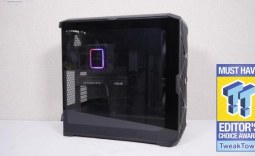 Cooler Master HAF II 500 Mid-Tower Chassis Review
 Corsair HS35 v3 Wireless Gaming Headset Review - An Affordable Winner
 D-Link F518 5G Wi‑Fi 6 AX1800 Mobile Hotspot Review: All-Day Mobile Hotspot
 Bose Lifestyle Ultra Speaker Review - Impressively Detailed Room-Filling Sound
 MSI Z890 Gaming Plus WIFI6E Review - Z890 for under $200
 Mortal Kombat (1995) 4K Ultra HD Blu-ray Review
 CPS PCCOOLER YS1200 ATX 3.1 80 PLUS Gold PSU Review
 ASRock X870E Taichi White Review: a premium AM5 motherboard with 10G LAN and WiFi 7
 Asetek Initium Pedal Modular Upgrades Review
 Thinkware U3000 Pro Review - Smart Dashcam with Wi-Fi quirks
 Windows Sandbox is The Windows Security Feature Most People Never Use
 I ditched the Windows 11 context menu for this open-source tool, and here's why
 Windows 11 may be encrypting your drive already, and I checked where my recovery key went
 GIGABYTE's 40 Days of INFINITY celebrates 40 Years of Innovation with stunning GeForce RTX graphics cards and rewards
 I swapped File Explorer for this free file manager and finally got the layout I wanted
 How to tell if someone has been using your Windows PC without your permission
 6 Task Manager tips for troubleshooting Windows performance problems
 ASUS ROG's 20th Anniversary Line-up of Premium PC Gaming Gear has Arrived - Here's Everything You Need to Know
 Six File Explorer tips every Windows user should know
 I switched my PC to encrypted DNS in Windows 11, and browsing felt more private