







Wearable Computing & Fashion - Page 11
Smartwatch, fitness tracker, AR glasses, and wearable tech news - health features, fashion collabs, and new form factors. - Page 11
Stay Updated
Follow TweakTown for breaking tech news, reviews, and daily updates.


As an Amazon Associate, we earn from qualifying purchases. TweakTown may also earn commissions from other affiliate partners at no extra cost to you.
Windows 95 has been installed onto an Apple Watch... because why not
The Apple Watch hype train is nearly dead, so there's some news that might interest Watch owners - someone has installed Windows 95 onto their Apple Watch. Yeah, that's right.
Nick Lee installed Windows 95 onto his Watch, by using a modified WatchKit app that loaded his own custom code instead of Apple's foundations. The interface is super small, and while there's no mouse input, the touchscreen on the Watch can be used to navigate Windows 95 - tapping the Start menu, and opening up apps, etc.
It took an entire hour to install Windows 95, and the interface response time is pretty damn slow. Lee even used a motor to keep touching the crown so that the Watch screen won't turn off after a few seconds. So while there's not much you can do with Windows 95 on an Apple Watch, it's still a cool achievement to see - I guess?
Continue reading: Windows 95 has been installed onto an Apple Watch... because why not (full post)
Apple Watch alerts man to heart attack, saves his life
62 year-old builder Dennis Anselmo of Alberta, Canada (pictured below) had his life saved by the Apple Watch. He was working on building a fence when he suddenly began to "feel terrible"; at first he thought he must've been coming down with a fever, but a glance at the device told him his heart rate was above 210BPM (55-75 is normal, and Anselmo usually sits at 50). At this point an ambulance was called, and paramedics determined he was having a heart attack before rushing him to the hospital where they cleared artery blockages, preventing a second attack.

"They told me that if I had gone home and gone to bed - as many people do - I would likely have had another, more serious bout in the middle of the night," said Anselmo. "Those second attacks are the ones that kill. That is a common problem."
Amusingly, his wife had told him not to buy the watch (Anselmo is a watch fanatic with 35 others in his possession), but after the incident remarked that it "has paid for itself."
Continue reading: Apple Watch alerts man to heart attack, saves his life (full post)
Microsoft drops the price on their Band 2 to a comfortable $175
The Band 2 from Microsoft is one of the most advanced, if flawed, fitness trackers around, and its price was already decent considering the wealth of sensors it packs into its moderately svelte body. But Microsoft is discounting it to $175.
The $175 price is only for a limited time and won't last forever. But if you do decide to drop the cash down, you'll get a small OLED display attached to a small battery with a gyro meter, barometer, heart rate sensor, UV sensor, VO2 sensor, accelerometer and a GPS for good measure. The strange proportions and the bulk from sensors placed on both sides might take some getting used to, and the battery might only last around two days, but it's a far cry more advanced than the usual bands.
There's certainly a lot of competition lately with fitness bands, many offering some surprising value for the money, and of course, there's the addition of sensors to the burgeoning smartwatch segment making them excellent alternatives. But the lines are being blurred, though. The price reduction of the Band 2 might signal a more permanent price-cut coming in the future, or it might be a sign that we're to see a new Band product from Microsoft in the near future.
Continue reading: Microsoft drops the price on their Band 2 to a comfortable $175 (full post)
Garmin targets outdoor action with its new smartwatches
Designed to appease those who love both adventure and technology, Garmin has announced the Vivoactive HR and Vivofit 3 smartwatch models, set for release sometime in March or April this year.

The Vivoactive HR comes packed with up to eight days of battery life, an always-on touchscreen that can be read in full sunlight, a 24/7 heart rate monitor and plenty of features for those who are looking to take it golfing, cycling, swimming or more. This watch is able to track pace, distance, intervals, speed, calories and more, depending on what sporting or action function you want it for.
The much smaller Vivofit 3 allows for functionality with Gamin's Move IQ, a daily activity tracker. Designed as a thinner model, this product is able to automatically recognize when you are running, riding or swimming, utilizing Gamin in Connect to sync your activity throughout the day, stored for later consideration.
Continue reading: Garmin targets outdoor action with its new smartwatches (full post)
Smart contact lens technology is now here thanks to Australia
Wearable computing is just becoming a little more insane. If you told me 15 years ago that I could be carrying a computer in my pocket, strapping one to my wrist and even having the option to slide one on my finger - I would have called you quite mad. In comes 2016 and Gizmodo has just told us that researchers in Australia have developed the basic technology needed for a smart contact lens.
Developed by RMIT University and the University of Adelaide, this new technology is a stretchable nano-scale device that can be used to manipulate light, allowing it to be fully transparent yet still alter light for the person looking through it. While not a full smart device itself just yet, this is the first (and a major) step towards technology being further incorporated into the lives of many.
Wondering how it works? Adelaide University's Dr Withawat Withayachumnankul stated that "With advanced techniques to control the properties of surfaces, we can dynamically control their filter properties, which allow us to potentially create devices for high data-rate optical communication or smart contact lenses." He further explained that "The current challenge is that dielectric resonators only work for specific colours, but with our flexible surface we can adjust the operation range simply by stretching it."
Continue reading: Smart contact lens technology is now here thanks to Australia (full post)
After 48 hours in the HTC Vive, one man experiences no nausea
One of the first things people think about when VR is talked about; would be the fact that people will eventually 'live' in the virtual world - which is no different to spending 12-18 hours a day playing any form of games (mobile/PC/console).
Well, one artist has spent 48 hours inside of the HTC Vive, reporting a nausea-free VR experience. Thorsten Wiedemann, the founder and artistic director of the A MAZE Festival, told VICE: "I had no physical problems, no burning eyes, killing headaches or nausea". This was after 48 hours inside of the HTC Vive, for an art project called 'Disconnected' earlier this month. In the 25th hour, Wiedemann had a panic attack which nearly caused him to drop out, but he powered through - and all went well.
Wiedemann said that spending considerable time in VR will be common in 2026, where he said: "normal that you jump into VR to meet your international friends in Social VR Rooms and go on crazy adventures together. But a long trip will be still special and could be understood as a controlled drug experience".
Continue reading: After 48 hours in the HTC Vive, one man experiences no nausea (full post)
Apple has reportedly delayed the release of the Apple Watch 2
It looks like Apple will not be unveiling the successor to its first wearable in a few months, with the Apple Watch 2 to arrive later in the year.
It looks like the original 18-month refresh cycle for Watch is true, and there won't be much changed from the original wearable. According to TechCrunch's Matthew Panzarino, Apple Watch 2 will include newer casings and improved battery life, but it won't arrive in the March-April timeframe that has been previously rumored.
Panzarino still says that Apple might unveil new "design partnerships" for Watch 2 in March, and new accessories to keep the momentum of Apple Watch chugging along. He also added that we might see a minor update to Apple Watch with a FaceTime camera early this year, but it will not be a "full Watch 2.0". Panzarino added that he talked with Creative Strategies analyst Ben Bajarin, who said that there's no evidence that Apple would be releasing a full-fledged Apple Watch 2 anytime soon.
Continue reading: Apple has reportedly delayed the release of the Apple Watch 2 (full post)
Oculus founder says 'VR displays will surpass traditional displays'
Oculus founder Palmer Luckey has been on a Reddit AMA spree, saying that the PlayStation VR isn't as high-end as the Rift, and that Nintendo's Virtual Boy 'hurt' the VR industry.
But when it came to the Rift headset itself, he said: "Our OLED displays and control over the viewing environment make it one of the most accurate displays you can get. In the near future, VR displays are going to surpass traditional displays in almost every way".
Palmer continued, saying that the Rift display is calibrated out of the box, so that PC gamers won't have to do it themselves. As for virtual desktops, Palmer did tease that developers are building virtual desktop applications right now. He said: "There are several people building virtual desktop applications. The biggest limitation is resolution per degree and lack of 1:1 pixel mapping compared to traditional displays. You can do it, but applications like PS and Maya are better on a normal monitor for now".
Continue reading: Oculus founder says 'VR displays will surpass traditional displays' (full post)
Oculus founder says Nintendo's Virtual Boy 'hurt' the VR industry
Oculus founder Palmer Luckey has been giving some golden nuggets of information thanks to his AMA session on Reddit, where he even referenced the failed Virtual Boy from Nintendo.
Palmer responded to a Reddit member asking on his comment for the Virtual Boy, where he said that it doesn't qualify as true VR. Palmer said the Virtual Boy had "[no] head tracking, low field of view, [and was] essentially a monochrome 3DTV". He added that the Virtual Boy failing was a "real shame, too, because the association of the Virtual Boy with VR hurt the industry in the long run".
Palmer did say one positive thing about Nintendo's 'VR' device, is that "It did have the first LED display in a consumer device, though - probably the best contrast of any display up to that point!"
Continue reading: Oculus founder says Nintendo's Virtual Boy 'hurt' the VR industry (full post)
Oculus founder on PlayStation VR: 'isn't quite as high-end' as Rift
Palmer Luckey, the flip flop wearing founder of Oculus, has come out slamming the PlayStation VR during his Reddit AMA. During the AMA, he also said that jump scares in VR are "such a cheap way to get a reaction in VR".
Talking with the International Business Times, Luckey said that PlayStation VR isn't as high-end as the Rift. He said: "It's also worth noting that their headset isn't quite as high-end as ours - it's still, I think, a good headset - and the PlayStation 4 is not nearly as powerful as our recommended spec for a PC". I agree, the PS4 just isn't anywhere near as powerful as a PC - and so the PlayStation VR will suffer in some way.
He continued, saying that the PlayStation VR itself is good, but the Rift is better quality - as it requires a better PC than what the PS4 contains, hardware wise. He continued: "I think that there's not many people who already own a PS4 who don't own a gaming PC who are going to go out and make that roughly $1,500 all-in investment in the Rift. It really is a separate market. They're bringing virtual reality to a different group of people who I don't think were ever really a part of our market anyway".
Continue reading: Oculus founder on PlayStation VR: 'isn't quite as high-end' as Rift (full post)
Oculus warns developers against using jump scares on the Rift
With the release of the Oculus Rift now cemented on March 28, Palmer Luckey has been doing some damage control - an AMA on Reddit.
Luckey said that jump scares in VR are a tool that developers will use, but he recommends they don't. Luckey said: "... We are strongly discouraging developers from using jump scares. They are such a cheap way to get a reaction in VR".
Personally, jump scares are what VR horror games should be about. Oculus has promised to keep jump scares out of its games, but I'm sure we'll see developers using them to their advantage.
Continue reading: Oculus warns developers against using jump scares on the Rift (full post)
Casio unveils its first smartwatch, the waterproof Smart Outdoor Watch
CES 2016 - Casio has entered the smartwatch game at CES 2016 with the Smart Outdoor Watch, its new wearable powered by Android.

The Casio Smart Outdoor Watch features a 1.32-inch display with its resolution hitting 320x300. It's water-resistant to 50m, US military standard, has Wi-Fi 802.11 b/g/n, Bluetooth 4.1, and weighs in at just 93g.
The watch has two screens - a touchscreen, active color LCD display, as well as a monochrome power-conserving display. The monochrome display can work like a regular watch for a month between charges, which is pretty damn good. Both screens can be customized, with market availability in April and a price of $500.
Continue reading: Casio unveils its first smartwatch, the waterproof Smart Outdoor Watch (full post)
HTC says 'VR is more important' than its smartphone business
After trying the new HTC Vive Pre at CES 2016 (more than once), I've fallen in love with it over the Oculus Rift (even though I pre-ordered the Rift in the first 2 minutes of pre-orders opening).
But HTC seems to be confident in VR, so much so that company CEO Cher Wang has said that VR and wearables has the company more excited than ever. During an interview with The Telegraph, Wang said "Virtual reality is something people have talked about for 20, 30 years, in movies, in books and finally, it is real. VR has been on our minds for a long time, and now HTC has made virtual reality real".
But it was a particular quote from Wang that had my eyes opened wide, where she defended HTC's stance on smartphones but reiterated their position in the VR market with Vive. She said: "Now we are more realistic. We feel that we should apply our best design to different type of sectors. Yes, smartphones are important, but to create a natural extension to other connected devices like wearables and virtual reality is more important".
Continue reading: HTC says 'VR is more important' than its smartphone business (full post)
Oculus 'don't make money on the Rift' at $599
CES 2016 - Oculus opened up pre-orders on the Rift yesterday, with gamers split on the thought of $599 for their VR headset.
Oculus founder Palmer Luckey took to Reddit, where he said: "To be perfectly clear, we don't make money on the Rift". He added: "The Xbox controller costs us almost nothing to bundle, and people can easily resell it for profit. A lot of people wish we would sell a bundle without "useless extras" like high-end audio, a carrying case, the bundled games, etc, but those just don't significantly impact the cost".
Palmer continued, where he said: "The core technology in the Rift is the main driver - two built-for-VR OLED displays with very high refresh rate and pixel density, a very precise tracking system, mechanical adjustment systems that must be lightweight, durable, and precise, and cutting-edge optics that are more complex to manufacture than many high-end DSLR lenses. It is expensive, but for the $599 you spend, you get a lot more than spending $599 on pretty much any other consumer electronics devices - phones that cost $599 cost a fraction of that to make, same with mid-range TVs that cost $599. There are a lot of mainstream devices in that price-range, so as you have said, our failing was in communication, not just price".
Continue reading: Oculus 'don't make money on the Rift' at $599 (full post)
Paintball goes next-gen, with a new heads-up display for enthusiasts
CES 2016 - Paintball enthusiasts might want to check out the Airwave sports goggles, a collaboration between Recon Instruments and Empire Paintball.
The Empire EVS sports goggles uses the same insides as the Airwave, something Recon collaborated with Oakley on, but throws it into a new mask that can take a barrage of paintball hits to the face. The company says that the heads-up display found inside of the Empire EVS will display important information like ammo counts, field maps, and teammate locations.
Inside, there's a 1GHz dual-core processor, Bluetooth 4.0, Wi-Fi and GPS connectivity, with the Empire EVS powered by Android. The mask includes dual-pane lenses that will prevent internal fogging and a lower skirt that encourages ball bounding.
Continue reading: Paintball goes next-gen, with a new heads-up display for enthusiasts (full post)
Razer launches fitness-centric Nabu smartwatch
CES 2016 - Razer's latest venture in the wearable computing sector has produced the Nabu Watch, a durable smartwatch that's aimed at fitness buffs.

While Razer's new Nabu Watch certainly counts as a smartwatch, the wearable doesn't exactly sport the functionality of an LG Watch Urbane or an Apple Watch. The device is more of a watch-faced fitness tracker, and you won't be able to view a colorful apps as its display is limited to a single color--you guessed it, lime green. As a result, however, the Nabu Watch has stellar battery life that can last up to a week with regular use.
Razer's latest wearable sports an OLED 128 x 16 single color display with a single button for screen interaction. Spec-wise, the usual suspects are in attendance, including a 3-axis accelerometer, vibration capabilities, wireless syncing via low-energy Bluetooth (BLE) connectivity, and charging via a magnetic USB cable. Since its tailored for sport and fitness, the Nabu Watch is quite durable and is shock resistant up to 5m, and is perfect for swimmers with a waterproof rating of up to 50 meters (165 feet) of submergence.
Continue reading: Razer launches fitness-centric Nabu smartwatch (full post)
Under Armour teams with HTC on an entire fitness ecosystem
CES 2016 - HTC has been getting all of the headlines lately for its VR headset, including the announcement of the new Vive Pre which features front-facing cameras, but the Taiwanese giant just teamed up with Under Amour for a slew of fitness-focused devices.
Under Armour teamed with HTC to help design its hardware, with Under Armour launching an entire ecosystem of apps and gadgets - and releasing them at once - go hard or go home, right?
First up, we have the UA Band which is a "simple activity tracker" reports Engadget. HTC's design can be seen here, with an outward facing part of the band featuring a "lightly textured soft black plastic". The UA Band counts your steps, tracks your sleep, has a heart rate monitor, and tracks multiple kinds of exercise.
Continue reading: Under Armour teams with HTC on an entire fitness ecosystem (full post)
Samsung's new bio-processor tracks your health in 5 different ways
Samsung has a new "bio-processor" that's able to track up to five different biometrics at any one time to help keep tighter tabs on your state of health.
The little processor that they've developed is designed to be able to give more metrics and more data to the user. It'll support biometric impedance analysis, ECG readings, skin temperature, galvanic response and a whole lot of other metrics so that you can actually have real measurements of important health data. This should be far more efficient and accurate than any previous non-specific processors for the job. Theoretically at least.
Could you imagine being able to predict a heart attack before it gets to a critical point, letting you get to a doctor well before any permanent damage. That would be a very useful feature. Samsung envisions being able to put this type of technology in their future wearables like the Gear Watch S2.
Continue reading: Samsung's new bio-processor tracks your health in 5 different ways (full post)
Google's next-gen Google Glass eyepiece slides through the FCC
I was a big fan of the original Google Glass, but the new Enterprise Edition version of the headset is looking much more appealing - with a new image shown off thanks to a filing with the FCC.
The work-focused eyepiece looks muhc better, with an improved design - including a larger prism to look through, and a nifty hinge that can be folded up. It looks like there's a spot for a magnetic battery attachment, and inside we should see an Atom processor from Intel.
We don't know when Google will unveil the new Glass headset, but 9to5Google reports that the Mountain View-based search giant will only distribute its new Glass headset to Glass for Work companies, which sucks - because I wanted one.
Continue reading: Google's next-gen Google Glass eyepiece slides through the FCC (full post)
Omate reaches its smartwatch crowdfunding goal in mere minutes
If you're interested in a brand new Omate Smartwatch design, you're too late - for the early bird entries at least. Raising over $100,000 in the first day of trading and currently sitting at $231,618 raised in total on IndieGoGo, Omate's new water resistant and carbon fiber bezel watch was blitzed by the public in no time at all.

Toting Android 5.1 and quoted as "the world's first standalone water resistant smartwatch," this product has already become 766% funded, reaching its original goal on December 9, 2015. There are still Omate Rise Standard Edition packs available for those looking to buy at $299 plus shipping, with the $209 and $199 early bird and early bird developer packs already clearing 500 units each.
This is yet another successful smartwatch crowdfunding campaign by this company and it's likely not the last. Here at TweakTown we will be receiving the TrueSmart+ when it hits the public around CES 2016, stay tuned for our thoughts.
Continue reading: Omate reaches its smartwatch crowdfunding goal in mere minutes (full post)
 Giveaway: 12 Winners Will Score MONTECH NX400 and NX600 CPU Coolers
 GTA 6 leaks have reportedly led to a morale drop at Rockstar, with Netflix frustrated as well
 The Blood of Dawnwalker won't hit 60 FPS on any console, PS5 Pro tops out at 40 FPS
 AMD claws back ground against Intel in the CPU market, climbs to 35% share in desktop CPUs
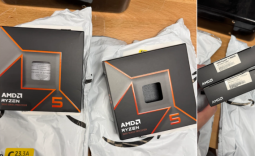 Redditor receives not one but TWO empty boxes of Ryzen 5 9600X from Amazon
 Xbox Series X25 Limited Edition Console is priced at $900, arrives November 2026
 Dave Bautista officially cast as Kratos in Amazon's 'God of War' TV Series, replaces Ryan Hurst
 Take-Two begins the hunt for GTA 6 leaker CyberLeek, subpoenas Microsoft and Discord
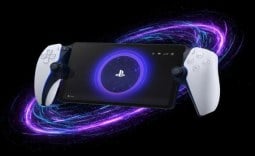 PlayStation 6 handheld not expected to stay under $600, warns leaker
 AMD confirms the Radeon RX 9050 4GB will have a tiny 64-bit bus and just 16MB Infinity Cache
 Intel 'Nova-Lake-S' 28-core CPU with bLLC reportedly draws 296W at PL2
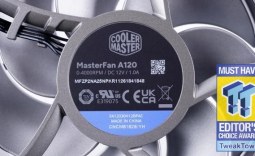 Cooler Master MasterFan A120 Fan Review
 GIGABYTE MO27Q2A Gaming Monitor Review: 1440p, 280Hz, and QD-OLED is a winning combination
 Cooler Master V8 ACE 3DHP BLACK CPU Cooler Review
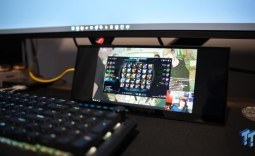 ASUS ROG Strix XG129C Review: A $199 Gaming Monitor You Don't Play Games On
 Cooler Master HAF II 500 Mid-Tower Chassis Review
 Corsair HS35 v3 Wireless Gaming Headset Review - An Affordable Winner
 D-Link F518 5G Wi‑Fi 6 AX1800 Mobile Hotspot Review: All-Day Mobile Hotspot
 Bose Lifestyle Ultra Speaker Review - Impressively Detailed Room-Filling Sound
 MSI Z890 Gaming Plus WIFI6E Review - Z890 for under $200
 Mortal Kombat (1995) 4K Ultra HD Blu-ray Review
 Using Multiple Monitors? Change these Windows settings for a Better Experience
 Windows Sandbox is The Windows Security Feature Most People Never Use
 I ditched the Windows 11 context menu for this open-source tool, and here's why
 Windows 11 may be encrypting your drive already, and I checked where my recovery key went
 GIGABYTE's 40 Days of INFINITY celebrates 40 Years of Innovation with stunning GeForce RTX graphics cards and rewards
 I swapped File Explorer for this free file manager and finally got the layout I wanted
 How to tell if someone has been using your Windows PC without your permission
 6 Task Manager tips for troubleshooting Windows performance problems
 ASUS ROG's 20th Anniversary Line-up of Premium PC Gaming Gear has Arrived - Here's Everything You Need to Know
 Six File Explorer tips every Windows user should know