







Science, Space, & Robotics - Page 229
Explore the latest Science, Space, Health, and Robotics news from TweakTown. Coverage includes space launches, medical tech, discoveries, and rockets. - Page 229
Stay Updated
Follow TweakTown for breaking tech news, reviews, and daily updates.


As an Amazon Associate, we earn from qualifying purchases. TweakTown may also earn commissions from other affiliate partners at no extra cost to you.
Famed astronaut Buzz Aldrin shares his 'master plan' for Mars
Famed astronaut Buzz Aldrin is working on a so-called "master plan" to help colonize the Red Planet of Mars sometime in the next 25 years. Aldrin, the second person in history to walk on the moon, hopes for a Mars settlement by 2039, but admitted it's an "adjustable" schedule..
If a Mars settlement can be created, it wouldn't be a one-way mission, and believes a 10-year duration could be created. NASA hasn't spoken publicly about Aldrin's plans, however, he believes the US space agency would at least listen to the mission plan. NASA is actively working on a next-generation rocket and spacecraft that would allow for the long journey to Mars.
Aldrin has partnered with the Florida Institute of Technology (FIT) to develop the Buzz Aldrin Space Institute - designed to promote manned missions to Mars. The new university program backs the following mission: "commercial and international development of lunar resources to support an eventual Mars settlement."
Continue reading: Famed astronaut Buzz Aldrin shares his 'master plan' for Mars (full post)
NASA begins year-long Mars isolation experiment on Earth
The NASA-funded Hawaii Space Exploration Analog and Simulation (HI-SEAS) experiment has started on Earth, designed to simulate a Mars mission.
The six participants, three men and three women, are scientists - and will be in tight quarters, living inside a 36-foot-wide dome that is 20-feet high. The project began on Friday and will last 365 days. Researchers will collect information regarding cognitive, social and emotional factors between each participant - and how they interact with one another.
NASA believes a mission to Mars could take more than three years to complete, so this is an important step to gather data.
Continue reading: NASA begins year-long Mars isolation experiment on Earth (full post)
Head of Islamic State Cyber Caliphate killed by drone strike
Junaid Hussain, an Islamic State member reportedly in charge of the Cyber Caliphate hacker division, was killed earlier this week by a US drone strike. Hussain served a 6-month sentence after sharing former UK Prime Minister Tony Blair's contacts in 2012.
The 21-year-old convicted computer hacker was the No. 3 person on an IS kill list, because he served as an important part of the Islamic State's infrastructure. Hussain also reportedly played an important role in recruiting members for the group, in addition to influencing "lone wolf" attacks.
"If you don't have anybody who is kind of fluent in computer operations, you've got a problem," said Michael Sulmeyer, project director at the Belfer Center for Science and International Affairs at Harvard Kennedy School. "The ballgame is pretty much the coder or the individual."
Continue reading: Head of Islamic State Cyber Caliphate killed by drone strike (full post)
The United States gearing up for battle in space against China
As China develops new space technologies, including anti-satellite capabilities, it's up to the United States to prepare for a possible space race against China and other rivals, political leaders believe.
"We must treat space for what it is, it is a domain in which we must be prepared to fight and win," said Henry Obering, EVP at Booz Allen Hamilton, in a statement during the Hudson Institute conference. "We should dramatically expand our investment in the battle space [that] is growing into space."
China, which became the third country after the United States and former Soviet Union to send men into space, has dramatically ramped up space technology research. The country developed an anti-satellite interceptor missile capable of hitting targets in low-Earth orbit, and missiles reportedly able to hit high-Earth orbit targets.
Continue reading: The United States gearing up for battle in space against China (full post)
Researchers working on exoskeleton controllable by brainwaves
Researchers from Germany and Korea are developing a new exoskeleton able to be controlled by the wearer's brain waves.
Using electroencephalogram (EEG) technology, wearers are able to move forward, turn left and right, or sit and stand while looking at a computer screen. The five flickering LEDs operate at different frequencies, which are identified in an EEG readout - once the signal is accurately identified, the exoskeleton is able to operate normally.
"Exoskeletons create lots of electrical 'noise,'" said Klaus Muller, a researcher and author of a paper published in the Journal of Neural Engineering, in a statement published by Phys.org. "The EEG signal gets buried under all this noise - but our system is able to separate not only the EEG signal, but the frequency of the flickering LED within this signal."
Continue reading: Researchers working on exoskeleton controllable by brainwaves (full post)
Astronauts recently chowed down on space-grown lettuce
The six crew members stationed aboard the International Space Station (ISS) became the first humans to eat space-grown food, after munching on a harvested crop of red romaine lettuce.
Using technology built with partner company Orbital Technologies, the lettuce was grown without soil in an air or mist environment. Growing plants aeroponically, they don't require as much water or fertilizer, grow faster, and tend not to have a high rate of disease.
Prior to eating the lettuce, astronauts used citric acid-based sanitizing wipes to clean their fresh veggies. This is an important glimpse towards the future, as NASA looks for new ways to provide a sustainable food supply that can be created aboard the space station.
Continue reading: Astronauts recently chowed down on space-grown lettuce (full post)
NASA researchers learning from gecko grippers, helping inspire new R&D
Researchers at the NASA Jet Propulsion Laboratory (JPL) are researching new ways to get things to stick in space, and have found inspiration from geckos.

Unlike tape, which loses its ability to adhere objects together after several uses, geckos have tiny hairs on the bottom of their feet so they are able to easily cling to objects over and over again. Researchers now hope a new material with thin synthetic hairs is able to make the material stick to desired surfaces - even in space.
The new technology has a great advantage over Velcro, a popular solution used in space, as it doesn't leave residue and there is no mating surface required on intended targets. The new gecko-inspired gripping technology is being tested during microgravity tests, including on a 20-pound cube and 250-pound person.
Continue reading: NASA researchers learning from gecko grippers, helping inspire new R&D (full post)
Don't buy into video hype, no asteroid poised to hit Earth next month
Don't worry, no asteroids will be slamming into the Earth in September, NASA has confirmed following a recent viral video caused a bit of a stir.
In the video, it was falsely reported that an asteroid would impact around Puerto Rico, with the incident expected to take place from September 15 to September 28 - but there is no immediate threat to Earthlings. The video made it sound like there would be a threat to the United States, Mexico, Central America and South America.
"There is no scientific basis - not one shred of evidence - that an asteroid or any other celestial object will impact Earth on those dates," said Paul Chodas, manager of the Near-Earth Object office for NASA's Jet Propulsion Laboratory (JPL).
Continue reading: Don't buy into video hype, no asteroid poised to hit Earth next month (full post)
Report: Robots, technology help create jobs, not destroy them
Will robots steal our jobs? There seems to be mounting fear that the human labor force will face pressure from robotic automation, though a new report from Deloitte indicates job creation among the creative, care, tech and business service sectors make up for jobs lost in agriculture and manufacturing.
"It's been very easy to identify where jobs have been destroyed," said Ian Stewart, chief economist at Deloitte, in a statement to CNBC. "Job losses generally are very conspicuous, whether it's a middle manager replaced by software, or checkout staff displaced by auto terminals, whereas job gains [are] harder to identify."
Machines help drive down production costs, and consumers are more willing to spend on new consumer goods and services. Researchers point to increasing sales for things like short holidays, morning cups of coffee at a local café, and other luxuries consumers may not be able to splurge on.
Continue reading: Report: Robots, technology help create jobs, not destroy them (full post)
Robotic chefs will hit the market in 2018 for around $75,000
Imagine walking into a restaurant and seeing a team of robots making your meal for you... sure, some people don't like the idea of machines doing this type of work, but it is the future. Technology runs so much of our lives, from the smartphone in your hand to the cloud it connects to, right up into space to satellites and everything in between.

But now we're looking at a group of experts based in the UK who are working on the first "robotic kitchen" which can be installed into any home. The scientists behind the project have made a machine that is capable of emulating human chefs in the kitchen while packing access to an unlimited library of programmed recipes.
They plan to have the robotic kitchen ready by 2018, for just $75,000 with the costs coming down "substantially" if the unit sells well. But the sheer tease of this is exciting, as custom home builders could start including a robotic kitchen in their designs in the next decade. Imagine walking through a new home that you're planning to buy, and it featuring a robotic kitchen making world-class meals, without you having to lift a finger from food preparation, cooking, and cleaning.
Continue reading: Robotic chefs will hit the market in 2018 for around $75,000 (full post)
Cardiac microchip able to offer patients warning to heart problems
Patients with heart problems can now have a custom microchip installed, able to give them advance notice of potential heart problems. Once inserted into the pulmonary artery, the CardioMEMS system is able to track heart function - and upload data to healthcare supervisors.
"You have more faith and trust. People are looking at, watching me and I feel safer," said Reg Youngman, one of the first people to have the microchip installed, in a statement published by Euronews. "Because in the past I never knew quite when something was going to hit me badly and when it did, it was usually, it had gone too far and hit me really badly."
The CardioMEMS HF System is the first implantable device supporting remote functionality, so health care professionals are able to remotely monitor the condition of their patients. Heart failure is one of the more common reasons people over the age 65 end up in the hospital, so closer evaluation of patients could help save lives.
Continue reading: Cardiac microchip able to offer patients warning to heart problems (full post)
Facebook shows off its solar-powered Aquila aircraft to the world
Facebook has unveiled its Aquila solar-powered drone, designed to help provide Internet access - and connect - as many people across the world as possible.
The aircraft, which has a V-shaped, carbon fiber body, weighs up to 1,000 pounds - and has a wingspan equivalent to a Boeing 737. Once in the air, it can fly at altitudes between 60,000 to 90,000 feet, while staying airborne for up to three months at a time.
Once finalized, Facebook will work with Internet service carriers across the world, and will sell Internet access to residents located in remote areas.
Continue reading: Facebook shows off its solar-powered Aquila aircraft to the world (full post)
NTSB explains what SpaceShipTwo pilot endured during horrific incident
The National Transportation Safety Board (NTSB) has released Virgin Galactic SpaceShipTwo pilot Peter Siebold's frightening account of what happened as the test craft broke apart after suffering a "serious anomaly."
Aware that SpaceShipTwo disintegrated, Siebold blacked out as the cool air was extremely difficult to breathe. The next time he woke up, he desperately tried to active the equipped backup oxygen, and his next memory was when his parachute automatically deployed.
Scaled Composites failed to create a system that would have prevented the braking system from being prematurely unlocked, which caused the issue when the other pilot unlocked it, according to the NTSB.
Continue reading: NTSB explains what SpaceShipTwo pilot endured during horrific incident (full post)
Leading tech experts seek ban on killer robots on the battlefield
Will "killer robots" end up causing harm to humans, especially with militaries interested in developing robots that would be able to engage human forces?
Telsa and SpaceX founder Elon Musk, Apple co-founder Steve Wozniak, physicist Stephen Hawking, and more than 1,000 scientists and engineers have signed an open letter to prevent a future open arms race focused on killer artificial intelligence. The idea of robot regulation was mentioned earlier in the year, and there appears to be growing momentum to make sure things are kept within human control.
"AI technology has reached a point where the deployment of [autonomous weapons] is - practically if not legally - feasible within years, not decades, and the stakes are high: autonomous weapons have been described as the third revolution in warfare, after gunpowder and nuclear arms," according to the letter.
Continue reading: Leading tech experts seek ban on killer robots on the battlefield (full post)
Will humans be able to recreate living dinosaurs within five years?
Dr. Jack Horner consulted on all Jurassic movies, and believes it's just a matter of "fixing" birds so they look "a little more like a dinosaur."
Horner believes research is about 50 percent there in regards to creating a so-called "chickenosaurus." Researchers would need to give the chicken teeth, a long tail, and turn the chicken's wings into arms and hands. In addition, researchers have already successfully created a modified mouth for the chickenosaurus.
It seems like the biological project is "well on its way to becoming reality," and trying to create the tail remains the most difficult challenge. The project requires reverse evolution and a significant amount of trial and error - and researchers will continue trying out new things.
Continue reading: Will humans be able to recreate living dinosaurs within five years? (full post)
Woman receives most 'technologically advanced prosthetic' hand
Lizbeth Uzcategui recently received the i-limb quantum from Touch Bionics, a programmable and more precise prosthetic hand. Uzcategui was born without a hand or arm below her right elbow, but the i-limb quantum will give her the ability to live a more normal life.
The i-limb quantum has greatly improved battery life, has more strength when a wearer needs it, and is faster and smarter than other bionic prosthetics. Uzcategui noted that other prosthetic hands she has used were unable to keep up with her daily tasks - a common complaint among patients with prosthetics.
"This is the latest and greatest in upper extremity prosthetic hands. It's quicker, it's faster, it's lighter and smaller," said Matthew Klein, from the Hanger Clinic, in a statement to CBS News Miami.
Continue reading: Woman receives most 'technologically advanced prosthetic' hand (full post)
Concerns and suspicions of pro cyclists using motors in their bikes
The idea that a professional cyclist in the peloton has a secret electric motor, likely hidden in his seat tube, isn't something new. However, it looks like something the Union Cycliste Internationale (UCI) is taking seriously, after checking bikes following four stages of the 2015 Tour de France.
During the most recent check, which took place after Stage 18, saw yellow jersey Chris Froome, mountains classification leader Joaquim Rodriguez, Peter Sagan, Nairo Quintana, Pierre Rolland, and Romain Bardet all have their bikes inspected.
It simply wouldn't be the Tour de France if the media and fans didn't have something new to complain about - and so-called "moto doping" is just the latest trend.
Continue reading: Concerns and suspicions of pro cyclists using motors in their bikes (full post)
TSMC will crank into volume production of 10nm next year
TSMC will be ramping up its 10nm volume production in 2016, something that will see the Taiwanese semiconductor manufacturer overtaking Intel when it comes to 10nm. Intel will not be shifting to 10nm until 2017, but that's just on the surface. Things are much more complicated when you begin to peel layers away.
Especially when it comes to 7nm, where TSMC will be using "10nm elements" in its 7nm note, which leads us to believe TSMC's implementation of 7nm will heavily borrow from 10nm. Intel on the other hand, should have a true 10nm node in 2017, and when it scales down to 7nm, we should expect it to not be borrowing much from its delayed 10nm process.
KitGuru reports that President and co-CEO of TSMC, C.C. Wei, said: "We ramp up 10nm in the Q4 2016 next year, but the real product shipment will be in Q1 2017". Mark Liu, President and co-CEO of TSMC added: "The recent progress of our 10 nanometer technology development is very encouraging and on track with our plan. Technology risk start qualification is targeted at the end of this year, followed by many customer's product qualifications. Our volume production is planned to start from the end of 2016".
Continue reading: TSMC will crank into volume production of 10nm next year (full post)
Tesla says batteries and solar will usher in cheap electricity soon
Tesla has come along way from being an electric vehicle manufacturer, as it is now stepping out into the limelight of battery technology, and so much more. It wasn't too long ago that Tesla unveiled Powerwall, its Internet-connected home battery.
Now we have Tesla Motors' Chief Technology Officer, JB Straubel, taking to the stage of Intersolar's opening ceremony talk about energy density and other benefits of lithium-ion batteries for electronic cars. The Tesla CEO also said that the company is confident in renewable energy to make solar and wind available on-demand after sunset, or when the wind starts to slow down.
Straubel said that battery costs will tumble much quicker than expected, and that demand for energy storage equipment will expand rather quickly, with the same going for solar panels. This one-two punch will create a great path for cheaper electricity, especially when compared to what the world currently pays from fossil fuel-based power plants. Straubel added that "we are within grasping distance of that goal". He added: "I'm quite certain that it will happen in the next 10 years".
Continue reading: Tesla says batteries and solar will usher in cheap electricity soon (full post)
Toshiba testing its 'scorpion' robot inside Fukushima nuclear reactor
Toshiba is deploying its "scorpion" robot inside of the TEPCO Fukushima No. 1 plant's second reactor next month. The mission is focused on trying to analyze the pressure vessel's melted-down fuel supply, and a robot is needed because of such high levels of radiation inside the reactor. The Japanese electronics company worked with the International Research Institute for Nuclear Decommissioning (IRID) to design the unique scorpion-inspired robot.

A "snake" robot entered a reactor in April, and couldn't find any debris from melted fuel - the robot stalled and researchers had to go back to the drawing board. The 21-inch Toshiba device will enter a fuel rod passageway, and has a physical design that provides increased dexterity and range of motion. It has the ability to raise its tail in a similar fashion as a scorpion, which has LED lights and an equipped camera.
Researchers will likely have to spent decades trying to safely decommission the No. 1 plant, after it was devastated by a major earthquake and following tsunami in 2011.
Continue reading: Toshiba testing its 'scorpion' robot inside Fukushima nuclear reactor (full post)
 Phantom Blade Zero on PC will launch with DLSS 4.5 and Ray Tracing on day one
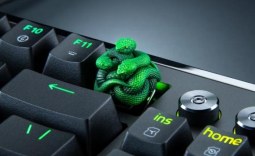 Razer announces its first Artisan Keycap with the Triple-Headed Snake Edition
 ZOTAC's 20th Anniversary Edition GeForce RTX 5080 features a titanium colorway and mirror-like backplate
 GeForce NOW app for Linux leaves beta, while DLSS Frame Generation cloud latency also improves
 Twitch opts streamers into gen AI training by default, faces harsh backlash
 Sean Murray still plays the 2016 launch version of No Man's Sky
 China's YMTC has climbed to third place in global NAND flash shipments
 $100 GTA 6 version makes up 89% of pre-orders, analysts estimate
 HWiNFO's latest update quietly confirms Intel is working on Razor Lake-AX
 Nintendo puts Switch 2 price increase warnings on store demo kiosks ahead of September 1 hike
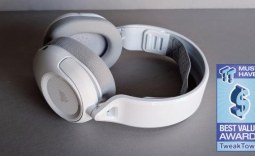 Corsair HS35 v3 Wireless Gaming Headset Review - An Affordable Winner
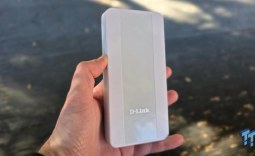 D-Link F518 5G Wi‑Fi 6 AX1800 Mobile Hotspot Review: All-Day Mobile Hotspot
 Bose Lifestyle Ultra Speaker Review - Impressively Detailed Room-Filling Sound
 MSI Z890 Gaming Plus WIFI6E Review - Z890 for under $200
 Mortal Kombat (1995) 4K Ultra HD Blu-ray Review
 CPS PCCOOLER YS1200 ATX 3.1 80 PLUS Gold PSU Review
 ASRock X870E Taichi White Review: a premium AM5 motherboard with 10G LAN and WiFi 7
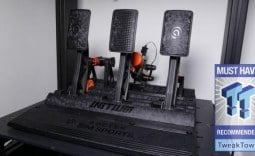 Asetek Initium Pedal Modular Upgrades Review
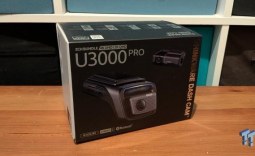 Thinkware U3000 Pro Review - Smart Dashcam with Wi-Fi quirks
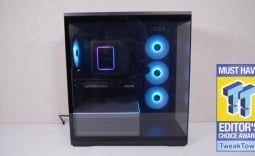 Montech TG3 Mid-Tower Chassis Review
 I ditched the Windows 11 context menu for this open-source tool, and here's why
 Windows 11 may be encrypting your drive already, and I checked where my recovery key went
 GIGABYTE's 40 Days of INFINITY celebrates 40 Years of Innovation with stunning GeForce RTX graphics cards and rewards
 I swapped File Explorer for this free file manager and finally got the layout I wanted
 How to tell if someone has been using your Windows PC without your permission
 6 Task Manager tips for troubleshooting Windows performance problems
 ASUS ROG's 20th Anniversary Line-up of Premium PC Gaming Gear has Arrived - Here's Everything You Need to Know
 Six File Explorer tips every Windows user should know
 I switched my PC to encrypted DNS in Windows 11, and browsing felt more private
 Printer Not Working in Windows? How to fix detection, print queues and drivers