







Mobile Devices - Page 176
Mobile device news - smartphones, tablets, iPhone, Android, and foldables. Launches and trends from TweakTown. - Page 176
Stay Updated
Follow TweakTown for breaking tech news, reviews, and daily updates.


As an Amazon Associate, we earn from qualifying purchases. TweakTown may also earn commissions from other affiliate partners at no extra cost to you.
Parents to get an incredible amount of control over child's phone
A new service offered by Vodafone is set to allow parents almost full control of a child's phone. From reading text messages to preventing contact additions, this new parental control system will give parents a new tool to snoop into the lives of their children. Is this something that parents really should be able to do?
The new parental control system is developed by Bemilo and will allow parents access to read every text message, set timers for the phone to turn on and off at, and review new contact additions before storing them. Unlike an app, this service will work with any cell phone as it is linked to the SIM card. The service is controlled by a website and will cost £2.95 per month.
Bemilo founder Simon Gaff told The Telegraph: "Unlike an app, Bemilo's SIM will work on any mobile device or tablet, and most importantly cannot be bypassed by the child." But, should parents really be doing this? As someone who had a cell phone from grade 8 on and the ability to remember this fact, I can say that it's probably a bad idea. It seems as though the kids with parents who were overly restrictive were the kids who managed to get themselves into the biggest trouble.
Continue reading: Parents to get an incredible amount of control over child's phone (full post)
Samsung GALAXY S III hits Taiwan on June 1, will sell for just over $700
Samsung have said that their upcoming flagship quad-core smartphone, the GALAXY S III, will be on sale in Taiwan come June 1. This is 1-2 days later than its European release, but it looks like they will make up for it on pricing.
It looks like Taiwan will be getting the S III for less than what British retailers and carriers are asking. An unlocked, SIM-free GALAXY S III will set you back 20,900 TWD, which is around $708. This is for the 16GB model and an extra 10-percent of so for the 32GB variant.
To compare this to the British retailers, the S III 16GB model will be selling for around £500 (about $800). Another benefit in Taiwan is that the 32GB model is only $67 more expensive, which is strange because the doubled internal storage usually sets one back $90-100 more. But, who can complain at that?
Samsung Galaxy S3 gets 9 million pre-orders in 3 weeks
If you needed any evidence that the Samsung Galaxy S III was a major competitor to the Apple iPhone, why don't you take a look at the pre-sale numbers. Already the Samsung Galaxy S III has passed 9 million pre-orders, according to an unidentified Samsung official. Towards the end of last month, Samsung had said that the Galaxy S III would "substantially contribute" to Q2 earnings.
Also, it has been leaked that the factory is operating at full capacity, producing as many phones as possible. The number seems to be 5 million a month, so I'm not sure if that will be able to keep up with global demand once the phone becomes available in more places. Currently, Germany is set to be the first to get it on May 29. Afterwards, it will expand to 100 different global carriers.
Samsung has of course declined to comment on these numbers. This year has the makings to be a great year for Samsung. It has recently passed Nokia as top phone manufacturer and looks set to grab even more market share than the 18.4% it did from Q1 2011 to Q1 2012. I know I'm looking forward to getting the new Galaxy.
Continue reading: Samsung Galaxy S3 gets 9 million pre-orders in 3 weeks (full post)
Steve Jobs 'worked closely' on the design of the next-generation iPhone
Bloomberg has reported that the late Steve Jobs was involved with the design work for the next-generation iPhone. The new iPhone is said to feature a larger display, somewhere in the 4-inch area. We reported on this yesterday, but now news is hitting that Steve Jobs was personally involved.
I do have a problem with this, of course media outlets are going to push Steve Jobs was involved in the design. It's great PR for everyone involved. I'm not one to dig on a dead man, but they'll continue to push 'Steve Jobs inspired' for years to come. If we remember, Steve Jobs didn't like the idea of a bigger screen on the iPhone. It would mean fragmented design not just for iOS, but for apps to cater to various iPhones with varying screen sizes and resolutions.
I think we're going to see Apple change, especially with the iPhone, because of increasing competition from Google-based devices. Steve Jobs' passing will of course always be remembered, as will the visionary himself. I expect the iPhone to take on changes in the coming year, the same with iOS. Apple are one of the biggest for back peddling, and we're seeing this now with the news of a larger iPhone screen.
RumorTT: Google to sell Nexus devices with Android 5.0 "Jelly Bean", direct to customers
Well, this came out of nowhere, but The Wall Street Journal is reporting that Google is about to cause quite a stir with carriers across the United States with their new plans. The report says that the latest move from Google, where they've offered their Galaxy Nexus for $399 unlocked is only the beginning of a new initiative.
The new plans will most likely be unfolded at Google I/O, where they're planning to partner up with a bunch of OEMs in roder to have up to five Pure Google devices available, all at once. All five of the devies will sport Google's next-generation Android 5.0 "Jelly Bean" operating system and will be sold directly from Google in unlocked form to end users in America, Europe and Asia. Wow.
This is huge, as it means you'll be able to buy a top-of-the-line Nexus handset directly from Google, and throw it onto a plan, only use it on Wi-Fi, or go pre-paid. Google is said to hoping to have the new Jelly Bean-powered devices on sale before Thanksgiving, right before the Black Friday and holiday sales. This would be perfect, and would combat Apple's next-gen iPhone quite well. The mobile space sure is getting interesting!
Samsung GALAXY S III battery life is quite impressive, holds its own against tablets
Samsung's GALAXY S III is nearly here, and whilst the phone sports a 4.8-inch HD Super AMOLED screen, and an impressive 2,100 mAh battery, the battery life itself was questioned. But, GSM Arena have stepped in and thrown the quad-core smartphone through some tests, which are very surprising.
They started with 3G talk time, where the GALAXY S III beats out the iPhone 4S by a large margin, and also beats the HTC One V and S by just minutes. The iPhone 4S sports 7 hours and 41 minutes of 3G talk time, where the GALAXY S III smashes it with 10 hours and 20 minutes, impressive, Samsung. Next up we have web browsing.
During this test, the GALAXY S III only provides 5 hours and 17 minutes of web browsing, compared to the iPhone 4S' very impressive 6 hours and 56 minutes. I'm guessing this is down to the GALAXY S III's much larger screen. Video playback is something very important on smartphones these days, especially something with a 4.8-inch screen. How did the GALAXY S III go against the iPhone 4S?
Toshiba outs 13.3-inch Regza tablet, features Android 4.0
Have you been sitting there thinking that the current 10-or-so-inch tablets are not big enough? Well, Toshiba is here to save the day. Toshiba's latest tablet is a 13.3-inch beast, dubbed Regza AT830. While the 13.3-inch size may impress, not much else of it does.
The screen resolution is just 1600x900, and with tablets already hitting 1080p, and Apple's hitting 2048x1536, it really is already dated. Filling out the Regza AT830 is NVIDIA's Tegra 3 SoC, clocking in at 1.4GHz, 1GB of RAM, 64GB of eMMC memory for storage, and Google's Android 4.0 OS. Other features are the above-mentioned 1600x900 13.3-inch IPS panel, 802.11b/g/n Wi-Fi, Bluetooth 3.0, support for the Japanese One-Seg TV standard, a 5-megapixel rear-facing camera, 2-megapixel front-facer, a micro HDMI port, an SD card slot, headset jack and micro USB port.
How much does a 13.3-inch tablet weigh? Well, the Regza AT830 is 1kg on the scales, and measures in at 344x211x9.9mm (WxDxH). At this weight, it's not something you'd want to carry around with you at all times, or have in your hands for extended periods of time. But, it does sport 13 hours of continuous playback ability, or 5 hours of TV viewing. There is a huge negative, though.
Continue reading: Toshiba outs 13.3-inch Regza tablet, features Android 4.0 (full post)
Wireless emergency alert texts set to go live this month on AT&T, Sprint, other carriers
It was just a matter of time before the government decided to start blowing up users phones with text messages. At least they aren't campaign text messages, but rather something of a bit more importance. The message in question will be a warning about severe weather warnings in the user's area.
The alerts will be based upon the cell phone's location rather than where it is subscribed. This way, if a user is traveling, he will also get the message and be better aware of upcoming or worrying weather conditions. It's a slightly better method than looking up at the sky like I do. The service is free and actually uses a different method than texting, but it will look like a text when received.
Almost every carrier is participating, including AT&T, Cellcom, Cricket, Sprint Nextel, T-Mobile, US Cellular, and Verizon Wireless. Once the system is up and kicking, every single user will be automatically signed up for three types of alerts. Yes, while the system is for weather, the government has demanded use for national emergencies to.
Apple rebrands LTE iPad, now known as 'iPad Wi-Fi + Cellular'
Apple have found a fix for their LTE or "4G" connectivity advertising in their third-generation iPad, where they've misled customers outside of North America.
The Curpentino-based company has started to change the names of their LTE iPad model to 'iPad Wi-Fi + Cellular' in its online stores, US and Canada. The change also seems to have rolled out to other stores in the UK and Australia.
This should help those who were wanting a 4G-capable iPad outside of the US, as the new iPad was previously advertised as 'Wi-Fi + 4G', that is, until authorities in the UK, Australia, Sweden and other countries threatened Apple with investigations into misleading advertising. Apple then edited a video and altered the UK website in response to complaints from UK advertising standards authority, and even offered refunds in Australia to those who complained about the lack of "4G" functionality".
Continue reading: Apple rebrands LTE iPad, now known as 'iPad Wi-Fi + Cellular' (full post)
Nokia Lumia, Apple iPhone are at odds about which smartphone is best, each recommends the other
As a great way to end the week, we share a story with a bit of hilarity. Many news outlets ran stories today about how, when asked what smartphone is best, Siri recommends the Nokia Lumia 900. While hilarious, it's understandable due to how Siri works. Siri uses Wolfram Alpha for most of its computational knowledge, so it isn't exactly a fair answer since it only uses a few reviews to draw this conclusion.
That little fact didn't stop Microsoft from posting about it on their blog, but, as others have pointed out, it doesn't really mean much. It is still funny, as you would think Apple would have thought about it, considering all of the other stuff they have thought about and programmed into Siri.
Even funnier is that when The Next Web asked a Nokia Lumia 800 what the best phone is, it disagrees with Siri. The Lumia 800 uses Microsoft's TellMe service combined with Bing and returns an article with the headline: "Yes, The iPhone Is Still The Best Smartphone You Can Buy." So, apparently the two devices can't decide which of them is better. Both feel the other is.
Upstart FreedomPop iPhone case offers free 4G data, mobile hotspot, extra battery life
Have an iPhone? Use less than 500MB of data a month? Live in a select few regions? Then do I have some good news for you! A new upstart company based out of LA announced the launch of a preorder process for a new iPhone case which comes with a few perks. FreedomPop's iPhone case comes with 500MB of free 4G data using Clearwire's WiMAX network.
Not only will the iPhone case provide 500MB of free data for your iPhone, it can also boost the battery life of your device or share the connection through Wi-Fi hotspot functionality. The case will retail for $99, so if you cancel your data plan, the case will be paid for in just a few months. Even if you exceed the 500MB, each additional MB is just $0.01, or $10 a Gigabyte.
At this price, it is pretty much in line with what the carriers charge, so it's really a no-risk proposition. Additionally, users can earn up to 500MB extra for free through referrals and other programs. According to FreedomPop VP of Product Mauricio Sastre, "The timing couldn't be better for our product. Carriers are throttling data and increasing prices and users are desperate for affordable alternatives. As the mobile industry flexes its joint oligopolistic power, we want to ensure that we are keeping them honest."
Samsung asserts PenTile AMOLED screens last longer, reason for use in Galaxy S3
During the announcement of the new Samsung Galaxy S III handset, most people were really excited about all of the features that it sported. Not everyone, however, was fully excited about all aspects of the new handset. The issue that most people had with the new device was the fact that Samsung chose one type of screen over another.
It seems as though most people were disappointed that Samsung went with a PenTile AMOLED screen rather than a traditional RGB AMOLED screen. The difference lies in the arrangement of the subpixels, or pieces that make up a pixel. In a PenTile display, the subpixels are aligned RGBG (red, green, blue, green) and the actual sizes of the subpixels varies.
A traditional screen is arranged RGB (red, green, blue) with each subpixel the same size. Due to the odd arrangement and size differences in a PenTile display, some users have complained of screens not being as crisp as a traditional RGB screen. However, when the resolution is increased, this effect is lessened as the pixels themselves become smaller.
Ainol close to releasing their dual-core $190 tablet, could reach shelves this month
If you're looking out for a cheap tablet, you may want to wait a little while longer. Chinese device maker, Ainol, are prepping themselves to launch their Novo 7 Aurora II tablet in late-May. This is set to be the most ambitious offering from the company to-date, at a price point that makes cheap tablets like Amazon's Kindle Fire look expensive.
The Novo 7 Aurora II sports a dual-core 1.5GHz Cortex-A9 processor, 1GB of RAM, a five-point touchscreen with a resolution of 1024x600, 8GB of storage which is expandable by microSD up to 16GB, and Android 4.0 Ice Cream Sandwich as its operating system. The best bit? It's priced at just $190.
Ainol previously made headlines by unveiling the original Novo 7, which was a 7-inch tablet that also rocked Android 4.0, but was priced at just $120. Most reviews found that while it was cheap, the price just didn't make up for its sluggish performance from its MIPS-based processor.
Samsung begins handing out prototype Tizen devices to developers
If you haven't heard of 'Tizen', here's a quick introduction: Tizen is a joint-effort operating system being developed by Intel and Samsung. Tizen is an open-source Linux-based OS with a heavy focus on HTML5 and other web standards. Tizen also borrows from MeeGo, a failed OS that was a mash-up of Intel's Moblin and Nokia's Maemo. MeeGo was officially discontinued in September 2011 in favor of Tizen.
Some lucky few people at the Tizen developers's conference in San Francisco were given prototype Samsung devices loaded with version 1.0 of the new OS. The guys and gals over at The Handheld Blog were there in person and have a video showing off the device.
The Samsung unit sports a 4.65-inch Super AMOLED screen, a Cortex-A9 1.2GHz processor, 1GB of RAM, 16GB of storage, an 8-megapixel rear-snapper, 2-megapixel front-facer, microUSB, Wi-Fi, GPS, NFC and a standard video/audi decoder. Quite the feature-packed device, I'd say. As you can see in the above video, the OS borrows quite a lot from Samsung's TouchWiz UI including its pull-down notification system and support for tethering directly out of the box.
Continue reading: Samsung begins handing out prototype Tizen devices to developers (full post)
The 'new iPad' was actually Apple's 'Plan B'
We've all seen, read about, heard about, or touched the new iPad, but was this really Apple's best? Not according to Raymond Soneria, CEO of DisplayMate Technologies. Soneria thinks that the new iPad is not the device that Apple originally intended on releasing.
Soneria said in an interview with CNET that the third-generation iPad was meant to be thinner, featuring a new display from Sharp, which supposedly featured "IGZO" technology. Soneira said:
But, it has been reported that Sharp's IGZO technology wasn't available at the time for the third-generation iPad, so Apple had to go with their "Plan B". Another reason behind the plan B is that Sharp could not keep up with the manufacturing demand that the new iPad would've ushered for the company. What the new iPad has been, is nothing short of amazing, but it goes to show that we could have so much more, but are given a device to just shut us up.
Continue reading: The 'new iPad' was actually Apple's 'Plan B' (full post)
White and cyan Nokia Lumia 900 models are now available from AT&T
If you are trying to get a white or cyan Nokia Lumia 900, you aren't alone. Due to high popularity of the phone, AT&T has been out of stock for a while now. However, the white and black models are now back in stock and ready to ship. The cyan model will force you to wait a week for it to ship, though. It seems as though Nokia has managed to speed up production to meet demand.
Other retailers are also showing that Nokia has ramped up production, however, the white model is still hard to get. Best Buy has the black and cyan models shipping in two to five days with no mention of the white model. Amazon is offering the black and cyan models with an estimated ship time of 24 hours, but an 8 day delay for the white model.
Certain countries haven't taken to the Nokia Lumia 900 so well. However, in the United States, the device is popular, even with AT&T being the only carrier with it. A Nokia rep stated last month that US consumer reaction has been "positive across the channel -- including direct stores and national retail."
Continue reading: White and cyan Nokia Lumia 900 models are now available from AT&T (full post)
Android reclaims 61% of all US smartphone purchases
As the war between smartphones and smartphone operating systems wages on, Android marched forward and taken back some ground. Over quarter 4 of last year, Android sales dropped from 61% in Q3 to 49% in Q4 as Apple iPhone sales jumped from 25% to 41% over demand for the 4S. Android has returned to being 61% of all smartphone sales during Q1 2012.
Of course, as one group goes up, others must go down. In this case, Apple has declined from 41% down to only 29%. iOS and Android combined make up 90% of US smartphone sales. Overall, however, smartphones have failed to increase as a portion of overall phone sales. They remain pegged at 66% of all handset sales.
Two out of three people aged 25-34 own a smartphone. Distribution between men and women are generally in a dead heat at around 50%. Android is top in the United States with around 49% market share for last quarter. Apple only has 32% during the same quarter, yet it remains the top smartphone maker.
Continue reading: Android reclaims 61% of all US smartphone purchases (full post)
Ematic announces the release of the eGlide XL Pro 2 Android tablet
Android tablets are a dime a dozen nowadays, so something really needs to set new ones off from the competition. Today sees the release of yet another Android tablet, this one made by Ematic. In this case, it would seem that price would be the factor that sets this tablet off from the rest. Retailing for a slim $219.99, you still get loads of features that more expensive tablets offer.
The eGlide XL Pro 2 may have a slightly long and unwieldy name, but it is generally fitting for the long and unwieldy list of features. The tablet features a 10-inch touchscreen and comes preloaded with Android 4.0 (Ice Cream Sandwich). The processor is a multi-core 1GHz beast and also features a 400MHz graphics processor.
"We're thrilled to launch the eGlide XL Pro 2, and add it to our expanding line of tablets which suit various needs and lifestyles," says Roy Rayn, General Manager of Ematic. "This tablet incorporates everything our consumers love about Ematic products: durability, productivity and affordability."
Continue reading: Ematic announces the release of the eGlide XL Pro 2 Android tablet (full post)
Apple's latest patent grab looks like they might move to haptic feedback, reshapes your touchscreen
If we were to go off of the patent pictured below, it looks as though Apple haver finally found the perfect way to solve the issue with touchscreen keyboards discarding the physical keyboard in favor of this new technology.
Haptic technology would allow touchscreen manufacturers to deliver physical feedback when a user touches a button, tries to type on the devices on-screen keyboard, or just interacts in general with the screen. No physical keyboard plus haptic technology could be the perfect middle ground.
The current haptics on most smartphones are nothing but a quick vibration, and not a full solution. Apple's way seems to use a combination of flexible OLED display technology and piezoelectric actuators that would, wait for it, actually alter the contour of your screen. This technology would take into account sensor data to determine usage context, providing situationally-appropriate feedback.
Apple iPad 2 recieves updated 32nm SoC, improves battery life
Apple loves to do minor, and sometimes major, tweaks under the hood and not give a consumer any way to tell which product they are buying until they have opened the box. In this case, Apple has shrunk the 45nm SoC in the original iPad 2 down to 32nm and are still calling it the iPad 2. Unfortunately, there is no marking on the box and you won't know until you open the box and turn it on.
This is a bit unfair to customers as the new iPad revision brings with it lower operating temperatures and better battery life due to the updated SoC. But from a manufacturing standpoint, it's quite understandable. It allows Apple to get used to Samsung's 32nm process and prepare to use it for the next iPhone.
At the same time it also allows stock to be cleared of the old iPad 2 and will allow Apple to keep up with demand should something go wrong with the new process. AnandTech ran some web browsing tests on the new iPad and found an increase of 1.6 hours of battery life, or almost 15.8% better. In gaming, it nears 30% more battery life. Do yourself a favor, return the iPad 2 you buy if you don't get the 32nm SoC.
Continue reading: Apple iPad 2 recieves updated 32nm SoC, improves battery life (full post)
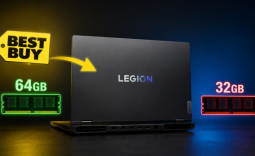 Redditor sends a gaming laptop with 64GB RAM for repair, comes back with 32GB RAM
 GPU Tweak III can now detect and shut down a PC when a 12V-2x6 graphics card goes over a certain current limit
 CPS PCCOOLER unveils all-in-one modular PC where you can replace the display and upgrade its hardware
 NVIDIA and LG are building a next-generation humanoid robot that will make its debut at CES 2027
 Intel will continue supplying Raptor Lake CPUs for 'years to come' thanks to the memory crisis
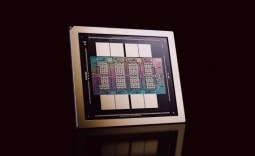 NVIDIA's next-gen 'Feynman' GPUs to be built with TSMC's 1.6 nm A16 process
 OLED monitor shipments have doubled in a year, with ASUS as the global leader
 SK Hynix is running out of SSD replacements, leaving customers with inadequate refunds
 Kingdom Hearts 4 reveals Pixar's Coco-inspired Land of the Dead world and late 2027 release window
 Budget GPU shortages to get even worse in second half of 2026, warns PC Partner
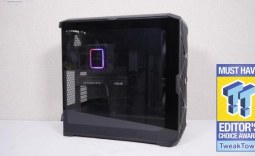 Cooler Master HAF II 500 Mid-Tower Chassis Review
 Corsair HS35 v3 Wireless Gaming Headset Review - An Affordable Winner
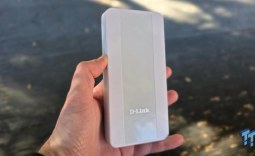 D-Link F518 5G Wi‑Fi 6 AX1800 Mobile Hotspot Review: All-Day Mobile Hotspot
 Bose Lifestyle Ultra Speaker Review - Impressively Detailed Room-Filling Sound
 MSI Z890 Gaming Plus WIFI6E Review - Z890 for under $200
 Mortal Kombat (1995) 4K Ultra HD Blu-ray Review
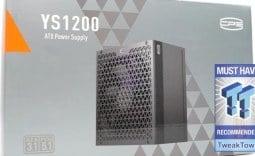 CPS PCCOOLER YS1200 ATX 3.1 80 PLUS Gold PSU Review
 ASRock X870E Taichi White Review: a premium AM5 motherboard with 10G LAN and WiFi 7
 Asetek Initium Pedal Modular Upgrades Review
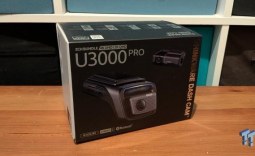 Thinkware U3000 Pro Review - Smart Dashcam with Wi-Fi quirks
 Windows Sandbox is The Windows Security Feature Most People Never Use
 I ditched the Windows 11 context menu for this open-source tool, and here's why
 Windows 11 may be encrypting your drive already, and I checked where my recovery key went
 GIGABYTE's 40 Days of INFINITY celebrates 40 Years of Innovation with stunning GeForce RTX graphics cards and rewards
 I swapped File Explorer for this free file manager and finally got the layout I wanted
 How to tell if someone has been using your Windows PC without your permission
 6 Task Manager tips for troubleshooting Windows performance problems
 ASUS ROG's 20th Anniversary Line-up of Premium PC Gaming Gear has Arrived - Here's Everything You Need to Know
 Six File Explorer tips every Windows user should know
 I switched my PC to encrypted DNS in Windows 11, and browsing felt more private