







Internet & Websites - Page 25
Internet and web news - ISPs, streaming platforms, online trends, and web technology updates from TweakTown. - Page 25
Stay Updated
Follow TweakTown for breaking tech news, reviews, and daily updates.


As an Amazon Associate, we earn from qualifying purchases. TweakTown may also earn commissions from other affiliate partners at no extra cost to you.
'The Interview' release expanding to more theaters, via cable service
Sony Pictures announced it is spreading release of "The Interview" to In Demand, a premium pay-per-view network that includes customers such as Comcast, Time Warner Cable, PlayStation Network, and other major carriers. Even with increased interest among Internet users to illegally pirate the movie, "The Interview" still appears to be racking up strong online rentals and purchases - which is why additional partners wanted to jump onboard.
Considering it wasn't long ago when Sony Pictures announced it would pull the movie from theaters - and online release also seemed in jeopardy - it's good to see the film hit additional markets. "We have always sought the widest possible distribution for "The Interview," and want to thank our new partners for helping us make that happen," said Michael Lynton, Sony Entertainment CEO, in a press statement.
Sony Pictures still hasn't outlined international release schedule for the film, but an announcement is expected to take place sometime in the near future.
Continue reading: 'The Interview' release expanding to more theaters, via cable service (full post)
Microsoft to eliminate original Kinect for Windows in 2015
Microsoft plans to phase out sales of the original Kinect for Windows sensor starting in 2015, after shipping the Kinect for Windows v2 sensor and 2.0 software development kit (SDK) in late 2014.
Kinect users spend $199 to invest in a hands-free motion sensor system that allows them to interact with games, productivity tools and apps, using gestures or voice. However, the Kinect SDK 2.0 allows developers to create Windows Store Kinect-enabled apps, and use the Kinect Adapter for Windows to use the Xbox One sensor and still develop Windows apps.
"The original Kinect for Windows sensor was a milestone achievement in the world of natural human computing," Microsoft wrote in the blog. "It allowed developers to create solutions that broke through the old barriers of mouse and keyboard interactions, opening up entirely new commercial experiences in multiple industries, including retail, education, healthcare, education, and manufacturing."
Continue reading: Microsoft to eliminate original Kinect for Windows in 2015 (full post)
Google to expand Google Fiber services to India
Google is apparently eyeing India, the second largest country in the world, as the next candidate for Google Fiber services. Google is planning to provide fiber broadband services as part of the Digital India program, with a small roll-out planned as a proof-of-concept project. Along with the blazing bandwidth, 100 times faster than normal connections, Google is offering unlimited uploads and downloads, and 1TB of free cloud storage.
There are several hurdles in the way. Google might have to acquire a telecom licence, which is apparently quite the feat in India, and several large native telecom companies are lining up to oppose the plan. The expansion to India would open a massive market of over 1.2 billion people up for Google, but there are numerous challenges and low internet penetration for the average citizen. The latest numbers from 2013 indicate only 15.1 citizens per 100 have internet access in India, which puts India at number 146 of 211 countries globally.
The lack of infrastructure would also present challenges, but Google has done significant experimentation with balloons and solar powered drones on their quest to provide internet service to every corner of the planet. Google is also working on expansion in the US in 34 more cities.
Continue reading: Google to expand Google Fiber services to India (full post)
The Open Bay - an open source Pirate Bay has emerged through Github
The Pirate Bay previously made its website open for hosting by anyone with "minimal web knowledge". After it was closed recently time and time again thanks to various lawsuits, GitHub has seen 372 copies of "The Open Bay" created, seeing The Pirate Bay hit the open source market.
Being starred over 2,282 times and forked 679 times over on GitHub, this source codes front-page reads "we, the team that brought you isoHunt and oldpiratebay.org bring you the next step in torrent evolution. The Pirate Bay source code."
Isohunt has called out to developers across the globe, asking them to band together to make oldpiratebay.org something of a nostalgic improvement to the long-standing and popular torrent website, them stating that "our current goal is not only make it open source, but eventually provide fully decentralized torrent database for the community." As The Pirate Bay still remains shut down, where will users go for their illegal downloads? The answer is basically everywhere - with us previously reporting on the fact that torrent traffic has not slowed down at all since this large-scale shutdown.
Continue reading: The Open Bay - an open source Pirate Bay has emerged through Github (full post)
The Year-in-Review feature by Facebook is under fire
Facebook is in hot water over their recent addition of a "Year-in-Review" feature for all users, with some claiming that their algorithm for choosing what to display was poorly designed. Grieving father, Eric Meyer, wrote on his blog that the "algorithms are essentially thoughtless. They model certain decision flows, but once you run them, no more thought occurs."
Meyer's daughter passed away earlier this year at age six, due to a brain tumor with this tragic occurrence happening on her birthday, June 6th 2014. Thanks to Facebook's "Year-in-Review" feature, Meyer was reminded of this heartbreak as her portrait appeared on his news-feed, being boldly displayed surrounded by partying onlookers.
Adding to the pile of unsettled users, one man was kindly reminded that his friends house had caught ablaze thanks to increased interaction on this post.
Continue reading: The Year-in-Review feature by Facebook is under fire (full post)
Demand for 'The Interview' reportedly increasing in North Korea
In what must be a public relations nightmare for the government in Pyongyang, a growing number of North Koreans are not only aware of Sony Pictures' "The Interview" - but want to view the movie. The North Korean State Security Department and The Ministry of People's Security collaborated in a meeting to try to limit how the movie is able to enter the country.
There are reports of North Korean citizens interested in paying upwards of $50 for a copy of "The Interview," a significantly higher price than other movies available on the black market. North Korean officials have increased border security, and have instructed handlers of black market materials to avoid US material.
"Think of the movie as Chernobyl for the digital age," wrote Rich Klein, from the McLarty Associates advisory firm, in a Washington Post statement. "Just as the nuclear catastrophe in the Soviet Union and the dangerously clumsy efforts to hide it exposed the Kremlin's leadership as inept and morally bankrupt, overseeing a superpower rusting from the inside, so does 'The Interview' risk eroding the myths, fabrications and bluster that keep the Kim dynasty in power."
Continue reading: Demand for 'The Interview' reportedly increasing in North Korea (full post)
North Korea describes Pres. Obama as 'a monkey' in latest tirade
Apparently, the North Korean government isn't happy with the Obama Administration and Sony's decision to release "The Interview." The North Korean National Defense Commission (NDC) released a statement that accuses the US of crippling its Internet - which has happened twice in less than one week - while also lobbing a racial slur towards Obama.
"Obama always goes reckless in words and deeds like a monkey in a tropical forest," said someone from the North Korean Policy Department, in a statement published by the Korean Central News Agency.
Once Sony Pictures reversed its decision to release "The Interview," it seemed likely the North Korean government would issue public statements. Furthermore, this isn't the first time North Korea has issued racially-driven statements aimed towards Obama, though this appears to be nothing more than political posturing.
Continue reading: North Korea describes Pres. Obama as 'a monkey' in latest tirade (full post)
US Internet rolling out fiber-optic 10Gbps internet in Minneapolis
US Internet, a company that offers fiber-optic service to 30,000 households in Minneapolis, has announced that it will offer 10-gigabit per second internet speed to its customers. This equates to 10,000 Mbps, or an amazing download around 1.25 GB/s. Yes, 1.25 Gigabytes per second.
The cost isn't cheap though, a blazing fast connection will weigh in at $399.00 per month. US Internet describes the service as the fastest internet service the world has seen, and if they manage to deliver the service they will take the crown. US Internet has a relatively small user base, so we shouldn't expect this to expand much further than the Minneapolis area. It is good to see this type of service being deployed, it is very likely the larger ISP's are taking note of US Internet's advances.
"The fastest Internet in the world is going to be here in Minneapolis starting this afternoon," said Joe Caldwell, co-CEO of US Internet. "We're talking about a game-changing speed."
Continue reading: US Internet rolling out fiber-optic 10Gbps internet in Minneapolis (full post)
North Korea internet consists of only 1,024 IP addresses
The North Korean internet failures have generated a massive amount of international press coverage. One would expect this to be the work of a sophisticated group of hackers, possibly even with the funding of the United States, or other governments wishing to stem the tide of North Korean hackers. Turns out, a 12 year old kid can likely do it. North Korea only has 1,024 IP addresses for the entire country, compared to the 1.5 Billion IP addresses in the United States.
There are potentially thousands of computers behind each IP address, but the odds of that are very unlikely. Sanctions and embargoes have severely limited access to computers. Researchers monitoring the North Korean internet have detected a few PlayStations and Xboxes on the network, and one solitary MacBook has been detected....in the entire country. The North Korean agency responsible for hacking is likely contained behind only a few IP addresses, so isolating and monitoring them shouldn't be too taxing for a heavyweight like the NSA. North Korean citizens have very limited access to the internet, which is reserved for government officials, foreign ambassadors, and relief agencies.
North Korean internet connections are routed through China and have the bandwidth equivalent of roughly 1,000 U.S. households with high-speed internet. There is access to a heavily censored and government controlled public internet called the Kwangmyong, but considering the economic malaise there can't be many accessing it, and censoring can't be a very big task. North Korea has one of the smallest internet presences in the world, and there are only roughly 5,500 websites with virtually no outside access for the general public. The recent blackouts could have even been the work of the North Korean government to block retaliatory attacks, but like just about anything that happens in the shadowy regime, we will never know.
Continue reading: North Korea internet consists of only 1,024 IP addresses (full post)
Madonna is paranoid about piracy, songs still leaked online
Madonna was forced to release six songs from her new album because 13 pre-released recordings - her entire album - were posted online. Madonna and her manager, Guy Oseary, have taken to Twitter in an effort to identify how the music, along with other data, managed to find their way to the Internet.
"We don't put things up on servers anymore," Madonna recently said in an interview with Billboard. "Everything we work on, if we work on computers, we're not on Wi-Fi, we're not on the Internet, we don't work in a way where anybody can access the information."
Despite increased security protocols Madonna tried to put in place, that doesn't mean her music was safe - it would appear it was an outside attack, as unpublished photos of Madonna were also made available at the same time "Rebel Heart," one of the songs from her album, were leaked online.
Continue reading: Madonna is paranoid about piracy, songs still leaked online (full post)
Sony attorney says 'The Interview' will be released, maybe via Crackle
Sony Pictures originally pulled "The Interview" from theaters, bowing to terrorist threats issued by the Guardians of Peace, but is looking for different online methods to distribute the controversial movie. It's possible Sony could release the movie on the Crackle online streaming video service, as a way for interested fans to watch the movie.
"Sony has been fighting to get this picture distributed," said David Boies, Sony attorney. "How it's going to be distributed, I don't think anybody knows quite yet. But it's going to be distributed."
The entire Sony Pictures drama has taken many peculiar turns, and CEO Michael Lynton admitted the company has struggled to find streaming or video-on-demand distribution partners. However, BitTorrent is willing to help Sony Pictures share The Interview, though sharing it on Crackle could also be extremely effective - as social media will certainly help drive viewers to the movie.
Continue reading: Sony attorney says 'The Interview' will be released, maybe via Crackle (full post)
Facebook again dropping in popularity among teenagers, study indicates
No. 1 social networking site Facebook must do something to appeal more towards teenagers, as the site again dropped in popularity among users 13 to 17 years old, according to a survey conducted by Frank N. Magid Associates. Facebook usage among teenagers dropped from 95 percent in 2012 down to 94 percent in 2013, and further declined in 2014 to 88 percent.
Although 88 percent is still quite impressive, there is growing concern that Facebook no longer is the "in" thing for teenage users. Ironically, Facebook-owned Instagram is cannibalizing its market share, as other social networking websites continue to pressure Facebook. However, Facebook still seems to be in an ideal position to remain the most popular choice among teenagers, even though some have argued that the website has lost its touch.
Facebook COO Sheryl Sandberg noted that the "vast majority of US teens are on Facebook, and the majority of US teens use Facebook almost every day." - and Forrester Research numbers found Facebook is still the top social networking website among those aged between 12 and 17.
Continue reading: Facebook again dropping in popularity among teenagers, study indicates (full post)
Facebook drops Microsoft's Bing search, will unveil its own tool
Facebook has quietly decided to stop showing Microsoft Bing search engine results on its social networking site, as the company continues to develop its own search engine. Facebook plans to roll out a new search tool on Monday so users are able to find past comments, posts and other data published by their friends.
It will be curious to see how Facebook develops its own search tool, as Microsoft, Google, and Yahoo have continually revamped their own search offerings. Furthermore, Facebook has more than 1 billion users and a whopping 1 trillion posts - and despite initial difficulties - will be a crucial endeavor for the No. 1 social networking website.
"We're not currently showing Web search results in Facebook Search because we're focused on helping people find what's been shared with them on Facebook," a Facebook spokesperson told Reuters. "We continue to have a great partnership with Microsoft of lots of different areas."
Continue reading: Facebook drops Microsoft's Bing search, will unveil its own tool (full post)
Mark Zuckerberg is considering a Facebook 'dislike' button
During a Townhall Q&A session today at Facebook HQ, Zuckerberg teased the idea of a dislike button making its way into the heavyweight social media platform. This Q&A was a bid to connect with the Facebook community and media, with Zuckerberg updating his Facebook page to state "For today's Q&A, people flew in and submitted videos from around the world to ask questions ranging from our plans for improving search and why we update our privacy policy to how Facebook can help create stronger communities."
In this talk, one of the most interesting topics covered was that of the much-discussed 'dislike button' which many users want to see added to Facebook's services. In a short video linked on his Facebook page, 'Zuck' stated that "A lot of times, people share things that are sad, or tough cultural or social things", further opening the need for a dislike button to be implemented.
Those against his feature claim that the dislike button can be used by some for online forms of bullying and harassment - allowing them and their friends to band together against a victim and dislike all of their photos and updates. However, maybe they can make this feature turn on and off when needed.
Continue reading: Mark Zuckerberg is considering a Facebook 'dislike' button (full post)
Co-founder of The Pirate Bay hopes for it to stay closed indefinitely
Peter Sunde, citing the network's loss of vision over the years, apparently doesn't mind if The Pirate Bay never sees the light of day again. Commenting that it's now "ugly" and how the new owners haven't taken precautions to improve the experience for the community.
This news comes as we've reported multiple stories in recent months of the controversial site being the centerpiece of multiple arrests, closures and server shuffles.
Further commenting on his claims, Sunde stated "the site was ugly, full of bugs, old code and old design. It never changed except for one thing - the ads. More and more ads was filling the site, and somehow when it felt unimaginable to make these ads more distasteful they somehow ended up even worse." He also mentioned that the original spirit and direction of the site had completely disappeared from his time serving the torrent community - commenting that he would rather the website die a noble death rather than continue to live in on it's current (or former) state.
Continue reading: Co-founder of The Pirate Bay hopes for it to stay closed indefinitely (full post)
Facebook pledges to help users keep embarrassing photos to themselves
Artificial intelligence is reportedly being designed by Facebook engineers to ask users if they would 'really like to post this photo' when out drinking with their friends. This "deep learning" system will be implemented to analyze photos and other Facebook actions, identifying some later-embarrassing posts and urging you not to publish them for your own good.
Facebook's Chief of Artificial Intelligence Research Lab, Yann LeCun, explained this technology as somewhat of a second (sober) conscience, stating that you should "imagine that you had an intelligent digital assistant which would mediate your interaction with your friends and also with content on Facebook". He went on to explain that the warning message could read something similar to "uh, this is being posted publicly. Are you sure you want your boss and your mother to see this?".
Deep learning is said to be a focus of large-name companies in this day and age, boasting big names like Facebook and Google who are heavily researching into this realm of artificial intelligence. Google's purchase of AI start-up Deepmind was their first large foray into the field, of which spawned a computer science research partnership with the well-known Oxford University.
Continue reading: Facebook pledges to help users keep embarrassing photos to themselves (full post)
Instagram tops 300 million users, pulling ahead of Twitter
Social networking site Instagram has reached an impressive milestone, surpassing 300 million monthly active users. Those users post 70 million photos per day and help share 2.5 billion daily "likes" while interacting with the website. Facebook purchased Instagram in 2012 for $1 billion, and has been able to help the site grow even further - especially helping the service steadily grow outside the United States.
"We're seeing a lot of people coming in the fashion world, a lot of people coming in, in the youthful teens world, and a lot of people internationally as well," said Kevin Systrom, Instagram CEO, in a statement to CNBC.
Facebook has done a good job of bringing advertisers onboard, and Instagram should be able to utilize the experience to further monetize. Instagram first rolled out advertising about six months ago, and while Facebook keeps Instagram's revenue figures private, it would appear the sky is the limit.
Continue reading: Instagram tops 300 million users, pulling ahead of Twitter (full post)
The Pirate Bay's former spokesman not saddened by closure
Peter Sunde was one of the original The Pirate Bay founders, and his stint as the official spokesman for the popular torrent site earned him prison time. In comments on his blog Peter outlined his disdain with the current state of The Pirate Bay and expressed his feelings on the matter. "The Pirate Bay has been raided, again. That happened over 8 years ago last time. That time, a lot of people went out to protest and rally in the streets. Today few seem to care. And I'm one of them."
Much of Peter's angst stems from the fact that The Pirate Bay has devolved into a soulless entity hell-bent on running garish ads to receive as much money as possible, at least in his eyes. "The site was ugly, full of bugs, old code and old designs. It never changed except for one thing - the ads. More and more ads were filling the site, and somehow when it felt unimaginable to make these ads more distasteful, they somehow ended up even worse," Peter writes. The suggestive ads began when The Pirate Bay was sold to Reservella, a shadowy company based out of Seychelles. Reservella made several moves to monetize the site, but made very few improvements in actual function and design.
The Pirate Bay owns several other domains that can be used to bring the site back online, but so far there hasn't been a trace of the trusty old pirate ship. There are several scam sites popping up that are attempting to charge subscription fees, so readers are warned to steer clear of those particular bands of pirates. The Pirate Bay pioneered torrenting, and its widespread use has led to an entire constellation of other trackers on the web. This proliferation of alternatives may blunt the blow of The Pirate Bays untimely demise, but many expect the ship to pull back into port soon.
Continue reading: The Pirate Bay's former spokesman not saddened by closure (full post)
Technology companies begin favoring global Facebook pages
We've seen a trend of global technology companies come and go with their local branch Facebook pages, often opening them up in each region and then shutting them down later when they realize how much work and money is required to keep them properly functional.
We've just received information that Corsair are the latest company to do this, shutting down their Australia and New Zealand Facebook page - moving everything to the global page and all under one banner.
There are obviously a few positives to keeping it all under one roof, these being things such as: streamline of content delivery, much less work for staff, only one page to distribute advertisements through and the feeling of a larger community (as they're all-in-one place). But, if you've got the local staff there on the ground, I feel that the benefits quite outweigh this.
Continue reading: Technology companies begin favoring global Facebook pages (full post)
Piratebay servers raided by Swedish police, might be down for good
Some users have noticed that The Pirate Bay has been down for a much longer time than the normal sporadic downtime bursts. At 12 hours, and counting, many have suspected the worst. Google recently moved against apps made for Android devices that accessed the popular site, and many had speculated that Google may have had a hand in The Pirate Bay's disrupted service. It turns out Swedish police are the culprit. The Pirate Bay, deemed "The galaxy's most resilient BitTorrent site", had its apocalyptic safe haven in Sweden raided by the police.
The raid was conducted by Fredrick Ingblad, a specialized inspector in intellectual property crimes. A specialized forensics team and local police seized servers and computers, effectively bringing the popular torrent site to its knees. The Pirate Bay has been under fire for years and the original founders ended up in jail for their efforts. The scrappy site was spread out amongst the wind and managed to continue to thrive for several years, though eventually the website was changed from thepiratebay.org to thepiratebay.se.
The server room was found in a rock shelter in Nacka, Sweden. This is likely the secure Swedish Datacenter AB. This datacenter is housed inside a five-story building inside a gigantic rock cavern. The converted nuclear shelter has concrete walls and the requisite blast doors to hold back the worst of catastrophes, but it couldn't stop the Swedish police. It's hard to believe that one of the largest websites in the world, currently ranked 88 worldwide and 55 in the US, can be kept off-line for long. An employee was arrested during the raid, and there are apparently interrogations underway. We will keep an eye on the status of the site, and shout a joyful "Hallelujah!" if they manage to bring it back online.
Continue reading: Piratebay servers raided by Swedish police, might be down for good (full post)
 Modders are bringing Xbox and PC Game Pass to Linux and Mac
 RTX Spark multi-core CPU benchmarks outperform AMD's 'Strix Halo' Ryzen AI Max+ 395
 More gamers have pre-ordered the $100 GTA 6 Ultimate Edition than the Standard Edition
 Gamdias THOR P2 Series power supplies feature 80 PLUS Platinum certification and a massive 12-year warranty
 Microsoft Word 1.1 from 1990 has been ported to Windows 11
 Windows 11 weather app uses more than 1GB RAM on its own
 GTA 6 is marketing on Netflix to reach gamers who aren't locked in to buy on day 1, says insider
 Modder crams Steam Deck hardware inside a GameBoy chassis, creating the SteamBoy
 Modders figure out how to enable Windows taskbar in GeForce NOW session
 GEEKOM IT13 MAX deal, save big on this powerful Intel Core Ultra 9 Mini PC with this Back-to-School offer
 MSI Z890 Gaming Plus WIFI6E Review - Z890 for under $200
 Mortal Kombat (1995) 4K Ultra HD Blu-ray Review
 CPS PCCooler YS1200 ATX 3.1 80 PLUS Gold PSU Review
 ASRock X870E Taichi White Review: a premium AM5 motherboard with 10G LAN and WiFi 7
 Asetek Initium Pedal Modular Upgrades Review
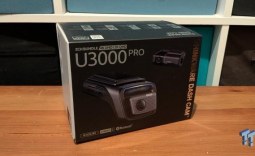 Thinkware U3000 Pro Review - Smart Dashcam with Wi-Fi quirks
 Montech TG3 Mid-Tower Chassis Review
 ASUS ROG Strix X870E-A Gaming WiFI7 Neo Review - A New Enticing Option
 Noctua NL-LC1-36 Liquid CPU Cooler Review
 Logitech G316 X 98 Wired Gaming Keyboard Review - Retro-Inspired Board that Falls a Little Short
 Windows 11 may be encrypting your drive already, and I checked where my recovery key went
 GIGABYTE's 40 Days of INFINITY celebrates 40 Years of Innovation with stunning GeForce RTX graphics cards and rewards
 I swapped File Explorer for this free file manager and finally got the layout I wanted
 How to tell if someone has been using your Windows PC without your permission
 6 Task Manager tips for troubleshooting Windows performance problems
 ASUS ROG's 20th Anniversary Line-up of Premium PC Gaming Gear has Arrived - Here's Everything You Need to Know
 Six File Explorer tips every Windows user should know
 I switched my PC to encrypted DNS in Windows 11, and browsing felt more private
 Printer Not Working in Windows? How to fix detection, print queues and drivers
 The Ultimate Guide to Personalizing Your Windows 11 Taskbar